• Skip to primary navigation
  • Skip to main content
  • Skip to primary sidebar

Clever Homeschool

Fun courses based on your child's interests!

  • Home
  • Free Photo Lessons for Kids
  • “Get That Shot!” photo tags

Uncategorized

How to Build Your Own Homeschool Curriculum From Scratch

May 5, 2026 by Valerie Leave a Comment

A person organizing educational materials and subject folders on a desk to build a homeschool curriculum.

Choose Your Framework Before You Pick Resources

Before buying a single textbook or signing up for any online courses, families need a clear framework that guides every decision that follows. The most effective homeschool curriculums start with purpose, not products.

A well-chosen framework shapes the daily rhythm, the types of materials used, and how progress gets measured across the year.

Define Your Goals, Family Rhythm, and Reasons for Homeschooling

Every family homeschools for different reasons. Some want more flexibility.

Others want a faith-centered education or need to accommodate a child’s unique learning pace. Writing down those reasons helps keep the curriculum aligned with what actually matters.

It also helps to think about the family’s daily rhythm. A household with a parent who works from home part-time will look different from one with a stay-at-home parent available all day.

Setting realistic expectations early prevents burnout and keeps the schedule sustainable.

Pick a Teaching Approach That Fits Your Child

Homeschooling offers a wide range of teaching philosophies, and each one shapes what a typical day looks like. Some popular approaches include:

  • Charlotte Mason focuses on living books, nature study, and short lessons.
  • Montessori emphasizes hands-on, self-directed learning.
  • Unschooling follows the child’s interests with minimal formal structure.
  • Unit studies organize learning around a single theme across multiple subjects.
  • Eclectic homeschool blends elements from several methods.

Parents should observe how their child learns best. A child who thrives with movement and tactile activities may do well with a Montessori-inspired approach, while a bookworm might gravitate toward a Charlotte Mason style.

As noted by the Coalition for Responsible Home Education, home educators often rely on purchased curriculum for some subjects while creating their own learning experiences for others.

Use Standards as Reference Points, Not Rigid Rules

State learning standards like Common Core or Next Generation Science Standards can serve as helpful benchmarks. They show what skills and knowledge are generally expected at each grade level.

Families do not need to follow them line by line, but reviewing them helps identify gaps and ensures children stay on track for future transitions into traditional school settings if needed. Many states also have specific homeschool requirements.

Checking those before building anything prevents headaches later.

Decide What to Teach at Home and What to Outsource

Not every subject needs to be parent-taught. Some families outsource subjects like foreign languages, advanced math, or lab sciences through online courses, co-ops, or community college classes.

This is especially common as children reach high school. Being honest about personal strengths and limitations makes the whole plan stronger.

A parent who loves literature but struggles with algebra might teach language arts at home and use an online platform for math.

Assemble Your Curriculum Subject by Subject

Once the framework is in place, families can start selecting actual materials for each subject. The key is to pick resources that serve specific learning goals rather than grabbing whatever looks popular.

A strong homeschool curriculum combines core academics with room for exploration and personal interests.

Map Core Subjects Into Teachable Yearly Goals

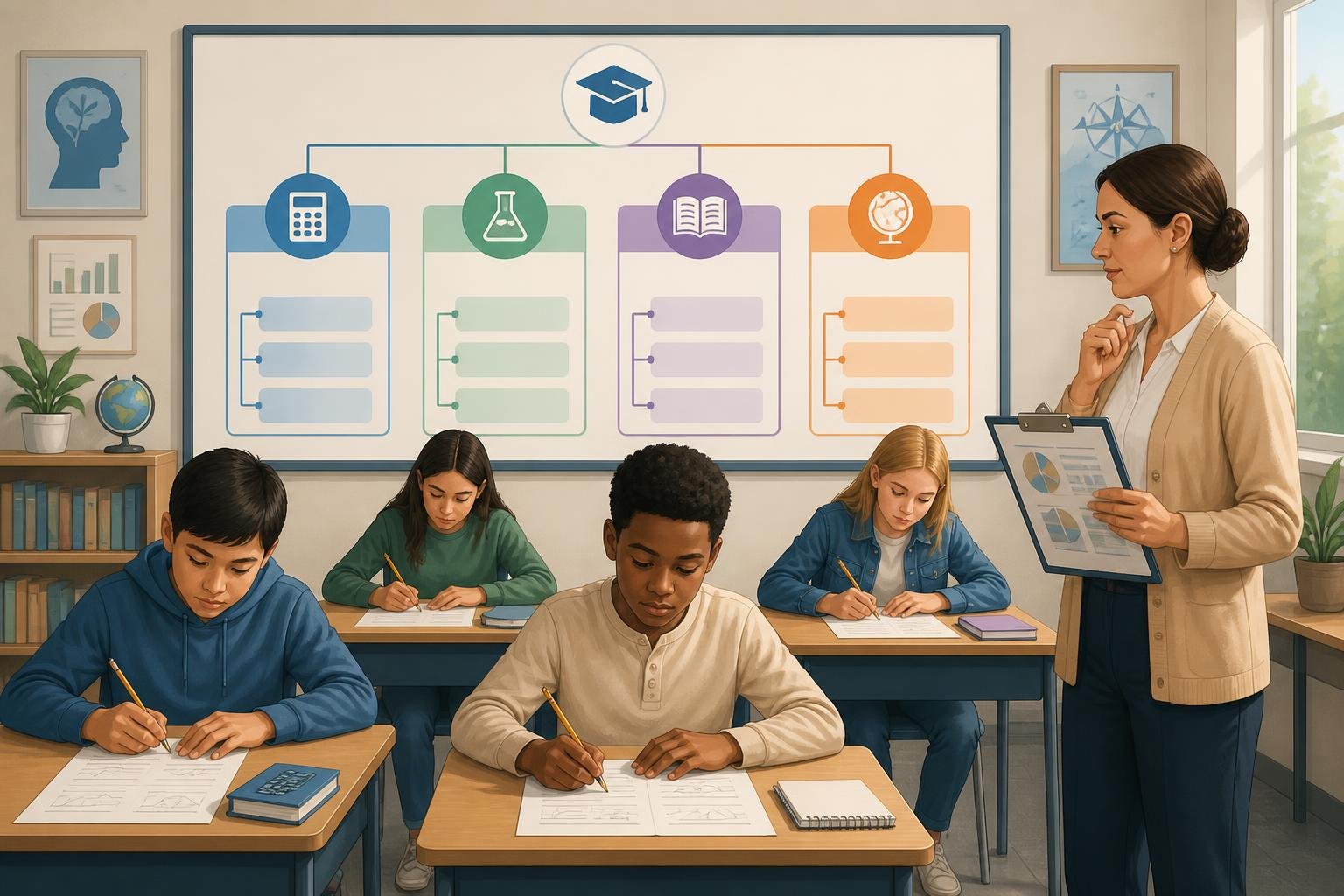
Start by listing the core subjects: language arts, math, science, social studies or history, and any required subjects in the family’s state. For each one, write down three to five big goals the child should reach by the end of the year.

These goals do not need to be complicated. For a third grader, a math goal might be “master multiplication facts through 12” and a reading goal might be “read 20 chapter books independently.”

Yearly goals act as a roadmap and make it easier to measure progress.

Build Language Arts With Separate Skill Strands

Language arts covers a lot of ground, so it helps to break it into individual strands:

  • Phonics and reading (for younger learners)
  • Spelling
  • Grammar and writing mechanics
  • Composition and creative writing
  • Literature and read-aloud time

Families do not need one boxed curriculum to cover all of these. Many experienced homeschoolers mix and match.

They might use a structured phonics program, a separate spelling workbook, and living books for literature. This approach lets parents customize each strand to the child’s current skill level.

Choose Math, Science, and History Resources With Purpose

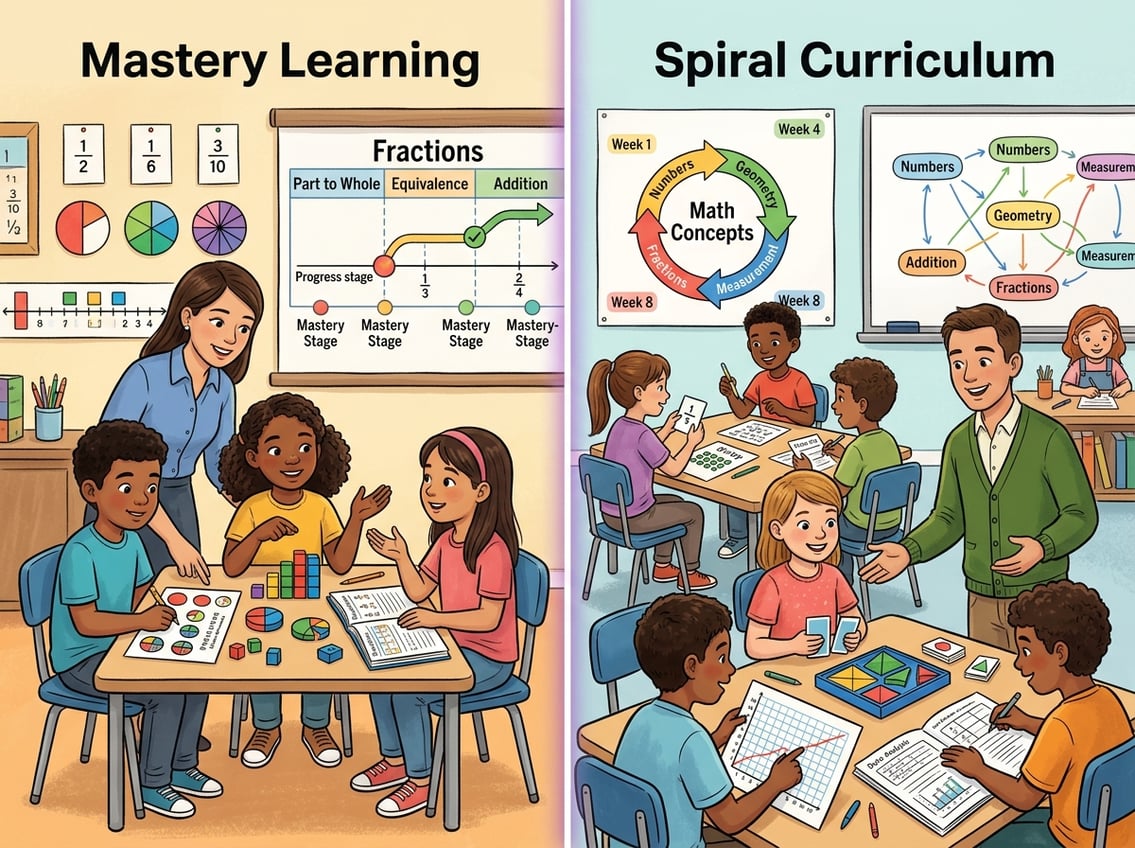
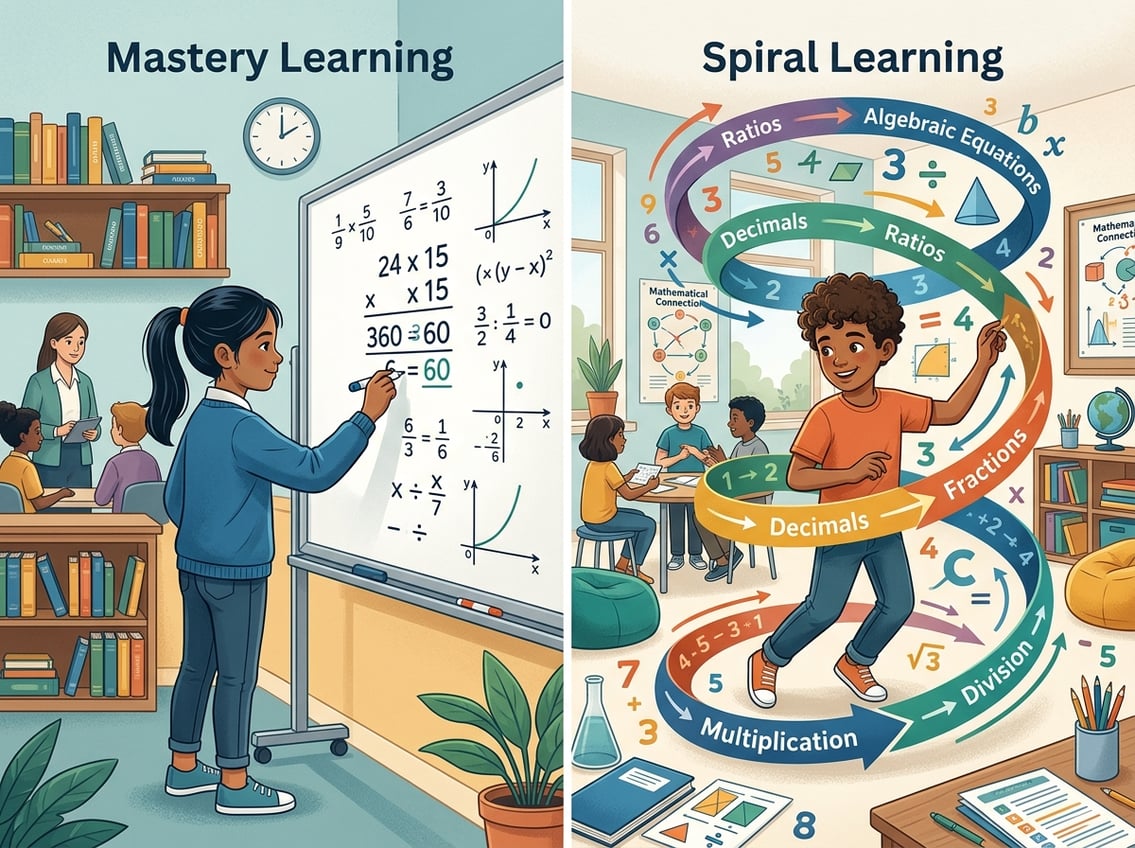
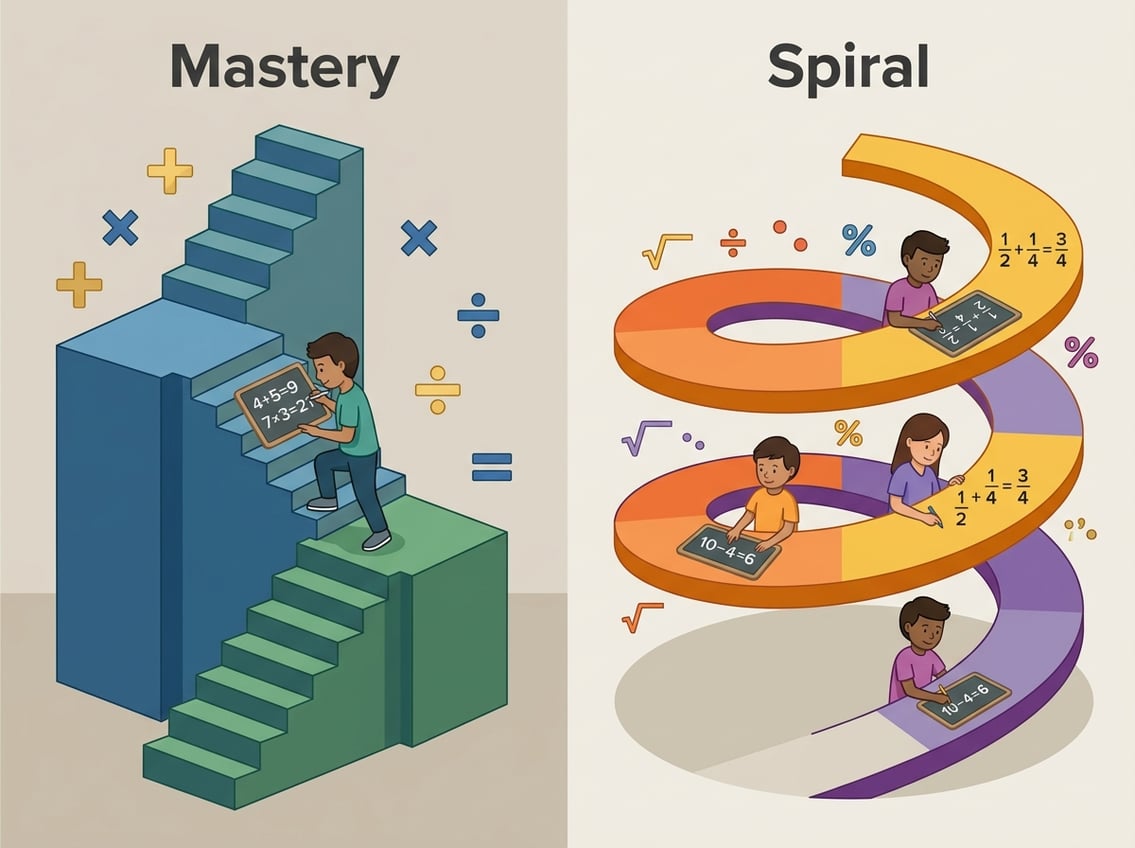
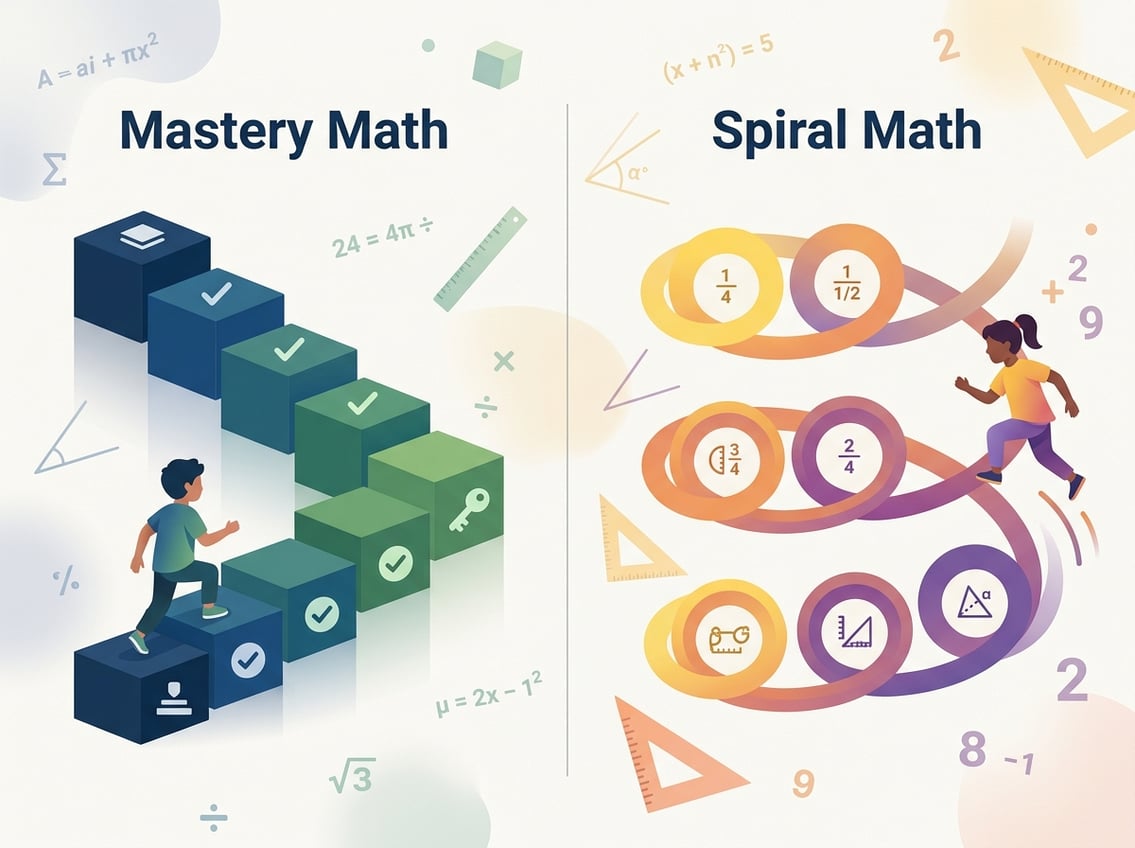
For math curriculum, the choice often comes down to mastery-based programs (which teach one concept deeply before moving on) versus spiral programs (which revisit concepts throughout the year).

Free resources like Khan Academy can supplement or even serve as the primary math instruction for some families. Science can be taught through textbooks, experiments, virtual field trips, or project-based learning.

Many families find that hands-on science sticks better than reading from a textbook alone. History curriculum varies widely.

Some families prefer a chronological approach using living books and primary sources. Others use a Charlotte Mason-inspired method with narration and timeline work.

The important thing is choosing an approach that makes history feel relevant and engaging rather than like a list of dates.

Add Enrichment, Electives, and Interest-Led Learning

A complete education goes beyond core academics. Enrichment subjects bring variety and keep children excited about learning.

Some ideas include:

  • Art, music, or drama
  • Physical education or organized sports
  • Foreign languages
  • Coding or technology
  • Life skills like cooking, budgeting, or gardening

Interest-led learning is one of homeschooling’s biggest advantages. If a child becomes fascinated with marine biology or architecture, families can weave that interest into science, math, and even writing assignments.

Clever Homeschool frequently highlights how unit studies can connect a single topic across multiple subjects, turning a child’s curiosity into deep, meaningful learning.

Turn Materials Into a Flexible Weekly Plan

A person arranging educational materials on a weekly planner at a desk filled with books, notebooks, and sticky notes.

Having great resources means little without a workable plan to use them. The goal is to create a structure that keeps the family on track without making every day feel rigid.

Flexibility is one of homeschooling’s greatest strengths, and a good weekly plan preserves that.

Create a Simple Scope and Sequence

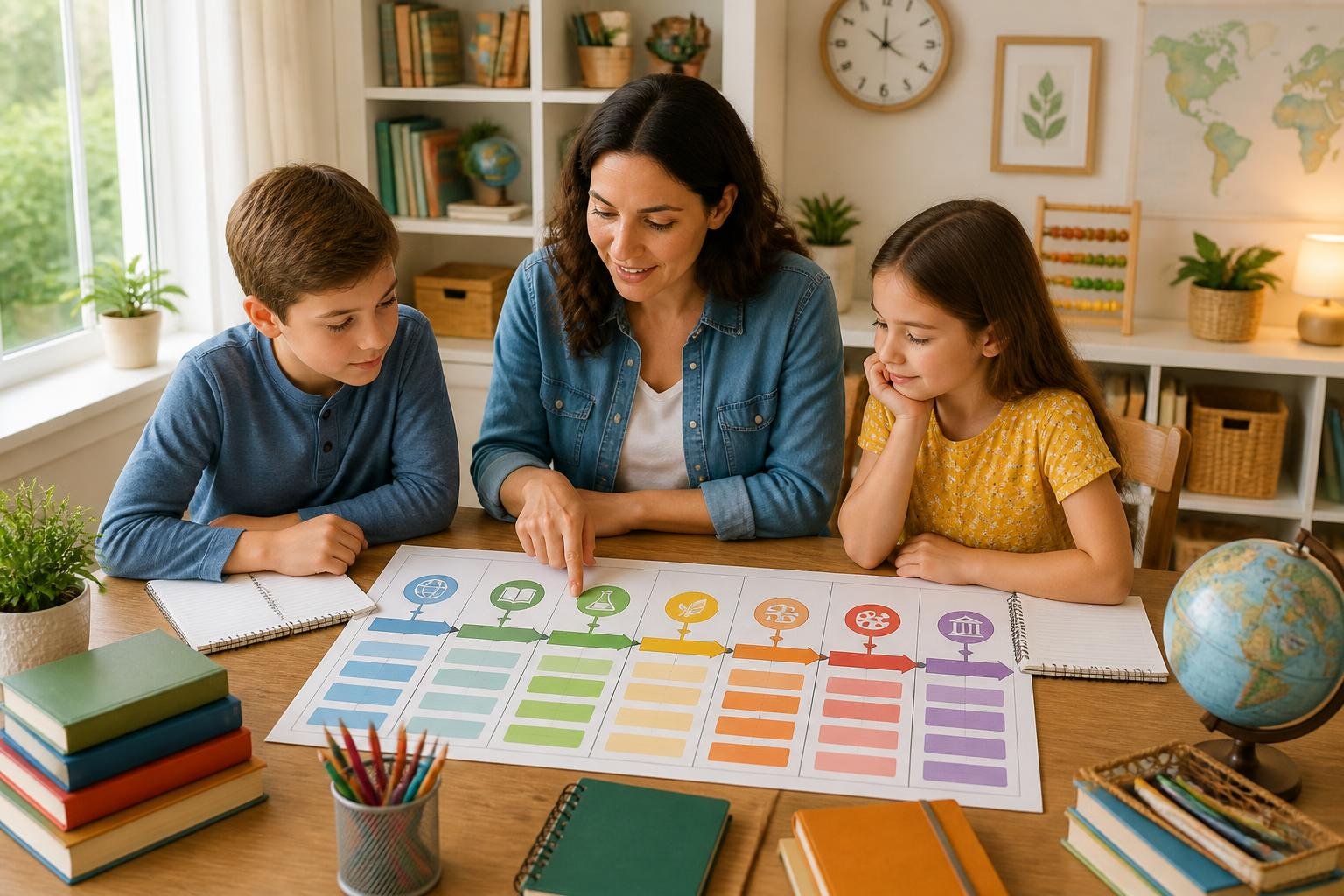
A scope and sequence is just a fancy term for an outline of what will be taught and when. It does not need to be a 40-page document.

A simple spreadsheet or chart works well. List each subject down one side and the months or weeks across the top.

Then fill in the major topics or units for each time period. For example, a history scope and sequence might look like:

MonthHistory Topic
SeptemberAncient Egypt
OctoberAncient Greece
NovemberAncient Rome
DecemberReview and projects

This gives the year a shape without locking families into an inflexible day-by-day schedule.

Build Weekly Lesson Plans That Leave Room for Real Life

Weekly lesson plans work better than daily ones for most homeschooling families. They allow for sick days, field trips, and those moments when a child needs extra time on a concept.

A basic weekly plan might include:

  • Math: 4 lessons per week, 30 minutes each
  • Language arts: Daily reading plus 3 writing or grammar sessions
  • Science: 2 sessions per week with one hands-on activity
  • History: 2 sessions per week with living books or videos
  • Enrichment: 2-3 sessions per week for electives and interests

Some families prefer a loop schedule, where subjects rotate rather than being assigned to specific days. This keeps everything moving forward even when the week does not go as planned.

Use a Homeschool Planner to Track Progress and Records

A homeschool planner, whether digital or paper, helps families stay organized and creates a record of what was accomplished. Many states require some form of documentation, so tracking attendance, subjects covered, and materials used is practical and sometimes legally necessary.

Good planners include space for:

  • Weekly lesson assignments
  • Books and resources used
  • Notes on the child’s progress
  • Attendance or hours logged

According to the Homeschool Start Guide, mapping out grade-level goals and building a weekly schedule are essential steps in creating a curriculum from scratch. Free printable templates and digital planning tools make this process much simpler than it used to be.

Review, Revise, and Transition Without Starting Over

No curriculum plan survives the entire year unchanged, and that is perfectly fine. Families should plan to review their approach every few months.

If a math program is causing daily frustration, it might be the wrong fit. If a child races through a reading curriculum, they may need more challenging material.

The beauty of a self-built curriculum is that adjustments do not require scrapping everything. Families can swap out one resource, shift the schedule, or change the teaching method for a single subject while keeping everything else in place.

As the Coalition for Responsible Home Education points out, if a child develops an interest in a particular area, parents have the freedom to go deeper or shift direction as new resources are found.

Frequently Asked Questions

How do I figure out what subjects and skills my child needs at their grade level?

State learning standards are a great starting point. Most states publish grade-level expectations for math, reading, writing, science, and social studies online for free.

Families can use these as a checklist to identify what skills to focus on, even if they choose not to follow them exactly.

What steps should I follow to plan a full year of homeschool lessons and schedule them?

Start by defining yearly goals for each subject. Then create a simple scope and sequence that maps topics to months or quarters.

Break that down into weekly lesson plans, and use a homeschool planner to assign tasks and track what gets done. Keeping plans flexible makes them easier to stick with.

How can I choose resources and materials without spending a lot of money?

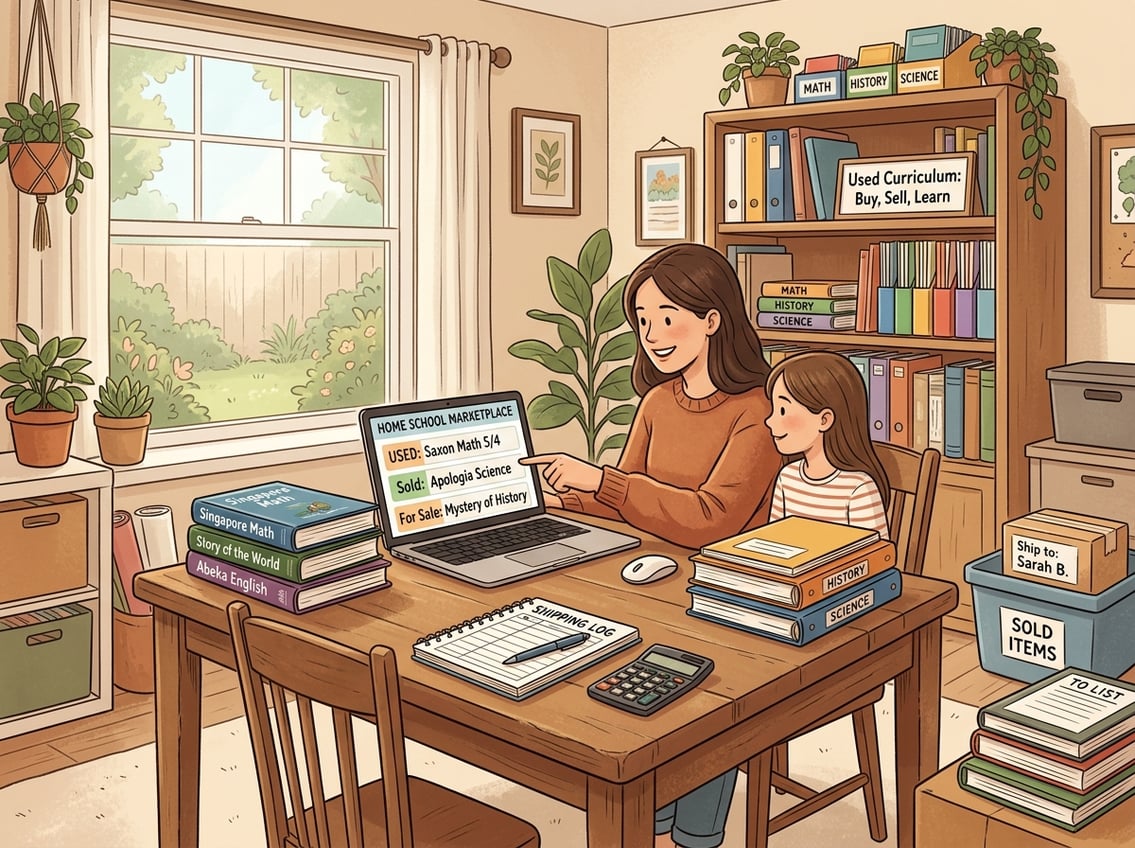
Libraries, free online platforms like Khan Academy, open educational resources, and used curriculum sales are all budget-friendly options. Many families mix free resources with one or two purchased programs for subjects that need more structure.

Buying used books and swapping materials with other homeschool families also keeps costs low.

What are some simple examples or templates I can use to structure my curriculum?

A basic weekly grid listing subjects and daily tasks works well for most families. Many homeschool bloggers offer free printable lesson plan templates that include space for goals, assignments, and notes.

A spreadsheet with subjects, weekly topics, and resources used is another simple option.

How do I make sure my homeschool plan meets my state’s legal requirements?

Each state has different homeschool laws. Some require notification, standardized testing, or portfolio reviews.

Families should check their state’s department of education website or a trusted homeschool legal organization for specific requirements before building their plan. Keeping thorough records of attendance, subjects taught, and materials used helps meet most state guidelines.

How can I track progress and adjust the curriculum if my child is ahead or struggling?

Regular check-ins, such as informal quizzes or portfolio reviews, help parents gauge where a child stands.

If a child is ahead, they can move to more challenging material or explore a topic in greater depth.

If they are struggling, slowing down or trying a different teaching method can help.

Switching to a new resource for that subject may also be beneficial.

Filed Under: Uncategorized

How to Blend Homeschool Styles for a Custom Approach: A Step-by-Step Guide

December 24, 2025 by Valerie Leave a Comment

Blending Homeschool Styles for a Tailored Education

A family learning together at a table with books, a tablet, science experiments, and art supplies in a bright room.

Families often mix homeschooling methods to give their children both structure and freedom. They pull useful ideas from different systems, design lessons that match how their children learn best, and create flexible routines that can change as needs shift.

This approach focuses less on following one philosophy and more on what works in daily life.

Choosing Elements from Homeschooling Methods

Parents often start by listing what they value most in education—structure, creativity, independence, or academics. From there, they explore homeschool methods such as classical, Charlotte Mason, Montessori, or unschooling to see which styles meet their goals.

For example, one family might prefer the discipline and logic of the classical model but add hands-on learning from unit studies to make lessons more interactive. Another might use Charlotte Mason’s short lessons yet include project-based work inspired by Montessori learning.

Practical steps to blend methods:

Step Action
1 Identify your child’s strengths and challenges
2 Match methods that reinforce strengths or fill gaps
3 Choose flexible materials and a manageable curriculum
4 Test and refine your plan over time

Learning about multiple types of homeschooling can help families make smart choices when designing their plan. Exploring resources like 17 Types of Homeschooling Styles and Methods gives parents ideas that can be adjusted to fit real-world needs.

Benefits of Eclectic Homeschooling

Eclectic homeschooling offers balance. It brings together the best parts of different methods without being limited by one structure.

This flexibility lets families shift between structured subjects like math and more creative subjects such as art or writing. Children often stay motivated because learning feels personal and dynamic.

Eclectic approaches can combine textbooks, unit studies, online programs, and outdoor activities all in one week. Parents can easily adapt materials to a child’s learning style—whether visual, auditory, or hands-on.

According to Eclectic Homeschooling: How To Combine Methods For Success, this balance creates an ideal mix of freedom and discipline.

Common Combinations and Approaches

Blending homeschool styles can take many forms, and families often discover patterns that work best for them. Some pair the classical method’s systematic skill building with Charlotte Mason’s nature-based learning.

Others link Montessori independence with delight-directed or unschooling principles to encourage self-led exploration. An eclectic homeschool family might use formal grammar lessons but teach history through creative unit study projects that connect reading, geography, and art.

This approach gives structure across subjects while keeping learning active.

Understanding Learning Styles and Family Needs

A family of parents and children learning together at home using books, experiments, and digital tools in a cozy study area.

Every family brings different routines, goals, and personalities to homeschooling. Recognizing how children learn best and how a family functions day to day helps parents design a practical and flexible homeschool environment that fits real life.

Identifying Your Child’s Learning Style

Children process information in different ways. Some are visual learners who recall details best through reading, charts, and diagrams.

Others may be auditory learners, grasping ideas when lessons are discussed or read aloud. Kinesthetic or hands-on learners often need to move and experiment to stay engaged.

Parents can observe how their child responds to lessons and activities. Simple tests or trial lessons can reveal learning preferences.

For example, understanding learning styles can help a parent shape teaching methods around a child’s strengths, whether that means more listening, reading, or doing.

Ways to identify patterns include:

  • Watching which activities hold attention longest
  • Asking the child how they prefer to learn new ideas
  • Rotating between reading, discussion, and projects to see what works best

Over time, parents notice clear trends that guide curriculum choices and teaching tools.

Assessing Family Values and Preferences

Every household has its own rhythm and priorities. Some families thrive on structure and detailed schedules.

Others prefer a calm, curiosity-driven experience built around conversation and exploration. Parents can consider questions like:

  • Do they value academic rigor or creative freedom?
  • How much time can they spend on planning lessons?
  • Does the family enjoy living books, projects, or technology-based learning?

Exploring options like different homeschool styles helps families see which methods match their values. A family that enjoys outdoor time might include nature study, while those who appreciate discussion may choose literature or history read-alouds.

Documenting these preferences clarifies goals and prevents conflicts later, especially when choosing curriculum or teaching routines.

Balancing Structure and Flexibility

Homeschooling works best when it blends boundaries with freedom. Too much structure can feel confining, but too much freedom can lead to inconsistency.

Families can build structure around short, focused sessions. Short lessons—a hallmark of the Charlotte Mason philosophy—help younger children stay attentive and reduce burnout.

Between lessons, spontaneous projects and hands-on learning encourage deeper exploration. Tools like weekly checklists or rotating subject schedules keep families organized while leaving space for new interests.

The key is adjusting as children’s needs and learning styles shift.

Practical Tools and Resources for Custom Homeschooling

A parent and child learning together in a cozy room filled with books, art supplies, and digital devices, illustrating a personalized homeschooling environment.

Families can blend methods more smoothly when they have practical tools that support different learning needs and ways of teaching. They can mix traditional lessons, creative projects, and digital tools to help children learn at their own pace and with their own strengths.

Adapting Curriculum for Diverse Learners

Each child learns differently, so parents benefit from tools that allow flexible instruction. Programs such as Khan Academy provide free academic lessons with built‑in pacing options, while creative platforms like Canva help children design visual projects that show what they’ve learned.

Families who enjoy hands-on structure can borrow ideas from Montessori or Charlotte Mason methods, such as using short, focused lessons or nature study journals. For students who learn best through discovery, parents may blend techniques from eclectic homeschooling or unschooling, encouraging children to design their own projects.

To stay organized, some parents build a simple table of focus areas:

Method Key Strength Sample Tool or Resource
Montessori Independence, self-paced work Hands-on materials, learning trays
Charlotte Mason Short lessons, nature focus Outdoor journals, living books
Classical Homeschool Logic, structure Timeline notebooks, copywork guides
Unschooling Interest-led learning Child-planned projects

A blended plan helps children move between structure and creativity without losing focus.

Incorporating Online and Community Resources

Online platforms expand what families can do at home. Free digital lessons from Khan Academy, art tutorials on YouTube, and printable planners from Canva make it easier to bring variety into daily learning routines.

Parents can combine these with local programs such as library clubs, science fairs, or co-ops. Many families join virtual groups to share ideas and find encouragement.

Participating in homeschool co-ops and community activities helps children build friendships and practice teamwork. Some use hybrid programs that mix at-home learning with weekly group classes.

Children gain independence when they explore self-paced lessons. They also benefit from collaboration through local or online networks.

Filed Under: Uncategorized

Pros and Cons of Each Homeschool Style: What Parents Should Know

December 24, 2025 by Valerie Leave a Comment

Pros and Cons of Popular Homeschool Styles

Illustration of parents and children learning together in a bright, home setting with books, nature, and a digital device.

Parents often find that homeschool success depends on choosing a method that fits both the student’s learning style and the family’s daily rhythm. Structured models can provide order and measurable progress.

Creative or literature‑based methods offer flexibility and foster curiosity. Each approach has practical benefits and trade‑offs.

Traditional or Structured Homeschooling

This approach mirrors public or private school environments. Families using textbook‑based programs follow graded materials in core subjects and often rely on standardized goals.

It appeals to parents who prefer clear lesson plans and regular testing.

Pros:

  • Straightforward structure makes it easy to track progress and report grades.
  • Curriculum kits from publishers such as BJU Press and Abeka simplify planning.
  • Works well for students preparing for college or standardized exams.

Cons:

  • Can become rigid and time‑intensive for parents.
  • High costs arise from purchasing full curriculum sets each year.
  • Some learners find textbook work repetitive or uninspiring.

Classical Homeschooling Approach

The classical homeschooling model divides learning into three developmental stages known as the trivium: grammar, logic, and rhetoric. In early years, students memorize facts; in middle grades, they analyze; and in high school, they express ideas clearly.

Pros:

  • Emphasizes deep understanding and critical thinking.
  • Uses “Great Books” that expose students to a wide range of ideas.
  • Strong foundation for future study in the liberal arts.

Cons:

  • Intense reading and discussion can overwhelm younger learners.
  • Focused historical sequences may feel disconnected from modern topics.
  • Requires strong parent involvement and planning.

Charlotte Mason Method and Living Books

The Charlotte Mason method encourages a gentle, literature‑rich form of home education. It centers on living books—narrative works that bring subjects to life—and includes nature walks, journaling, and short, focused lessons.

Pros:

  • Builds a love of reading and observation.
  • Affordable because many materials come from libraries.
  • Encourages family learning through shared readings.

Cons:

  • Limited focus on advanced science or math.
  • Demands more preparation for college readiness in later years.
  • Progress tracking can be subjective.

Unit Studies and Thematic Learning

Unit studies connect all subjects—math, history, literature, science—through one central theme. For instance, studying the ocean might include reading marine fiction, calculating distances, and exploring ecosystems.

Pros:

  • Encourages creativity and hands‑on projects.
  • Effective for teaching multiple grade levels together.
  • Can be low‑cost when parents design units at home.

Cons:

  • May leave academic gaps without careful planning.
  • Time demands increase when tailoring lessons for varied ages.
  • Harder to align with state record‑keeping or standardized tests.

Flexible Homeschool Approaches: Unschooling, Eclectic, and Child-Led Options

A home scene showing children learning in different ways with parents nearby, including outdoor exploration, studying with varied materials, and independent creative activities.

Flexible homeschooling lets families adapt education to fit a child’s interests, strengths, and pace. These approaches encourage curiosity and real-world learning instead of focusing only on structured lessons.

Parents guide their children through exploration, critical thinking, and personalized plans that make learning feel more natural.

Unschooling and Child-Led Learning

Unschooling focuses on allowing children to learn from real life rather than formal instruction. Instead of following a textbook, students explore topics that interest them—like cooking, coding, or gardening.

Parents act as guides, helping connect daily experiences to academic subjects. This approach values freedom and curiosity.

It works best for families who trust that children can learn independently when given time and encouragement. The unschooling homeschool style promotes independence and flexibility, but it takes patience since progress may not follow a traditional timeline.

Some parents worry that unschooling might create gaps in knowledge, especially in math or writing. Keeping a balance between freedom and gentle structure helps reduce that risk.

Regular discussions and project-based learning can make skill development more consistent while keeping motivation high.

Eclectic Homeschooling

Eclectic homeschooling blends parts of different educational philosophies into a custom plan. For example, a family might use the Montessori method for hands-on learning while adding online math lessons or literature-based reading units.

It is highly adaptable and grows with the child’s needs.

According to Cambridge Home School Online, eclectic homeschooling is one of the most flexible models because it allows parents to pick teaching methods that work best for each subject. This freedom makes it appealing to families who dislike rigid schedules.

However, mixing methods can take extra planning. Maintaining balance is key—too much variety can make lessons feel scattered.

Using a simple weekly plan or checklist can help manage materials while retaining flexibility.

Supporting Diverse Learning Styles

Every child learns differently. Some prefer reading quietly, while others grasp new ideas by doing or discussing.

Flexible homeschooling allows parents to design lessons based on these learning styles. Families often combine visual, auditory, and kinesthetic activities.

For instance, a child studying geography might read maps, watch short travel videos, and create clay models of mountains. Sites like Homeschool Planning note that customizing homeschool methods supports confidence and motivation.

By watching how a child responds to different activities, parents can adjust lessons in real time. This personal approach helps students develop lifelong learning habits and keeps education both effective and enjoyable.

Community, Socialization, and Support in Your Homeschool Journey

A group of parents and children interacting and learning together in a bright, cozy room filled with books and educational materials.

Parents can strengthen their homeschool journey by finding support systems where both children and adults feel connected and encouraged. They can use local co-ops, online classes, and shared activities to create balance between education and social growth.

Getting Involved in Co-Ops and Groups

Homeschool co-ops help families share teaching roles, organize group lessons, and create regular social experiences for children. These groups may focus on core subjects, creative arts, or practical skills.

Many families value the opportunity to teach collaboratively and access resources that are difficult to provide alone. Co-ops vary in structure.

Some run like small community classes, while others rotate instruction among parents. Families can find or start co-ops through local homeschooling organizations, libraries, or online communities.

Participation gives children regular peer contact and teamwork practice, which supports social and emotional growth.

Parents also gain practical benefits. They exchange ideas, pool materials, and share teaching loads.

Activities like science labs, field trips, and group projects bring variety and make learning more interactive. Families concerned about limited peer interactions can explore how homeschool co-ops help children build friendships and learn cooperation, as described in Effective Homeschool Socialization: Keep Your Kids Social & Connected.

Building Family and Community Connections

Homeschooling naturally strengthens family bonds through shared daily experiences and time spent together. Parents see firsthand how their child learns and grows, allowing for more consistent support and encouragement.

This closeness often leads to strong trust and communication. Outside the home, involvement in the community adds rich opportunities for learning.

Families can join recreation leagues, volunteer at local events, or take part in group classes. Children who interact often with various age groups develop social confidence and adaptability.

Parents can also find affirmation and advice through local meetups or online forums. Resources like the article on The Truth About Homeschooling and Socialization explain that with planning and intention, homeschooling families can build strong, healthy social networks that keep learning connected to real life.

Filed Under: Uncategorized

Real Life Examples: A Peek Into Different Homeschooling Families’ Journeys

December 24, 2025 by Valerie Leave a Comment

Real Life Examples Of Homeschooling Families

Multiple homeschooling families in their homes, with parents and children engaged in various learning activities like reading, science experiments, and homework.

Families use homeschooling to create schedules that meet their learning goals and daily responsibilities. Many balance work, parenting, and education with help from flexible routines, community support, and shared teaching duties.

Homeschooling With Working Parents

Working parents often adapt home education to fit around their jobs. Some use short but focused “mastery hours” for lessons, followed by self-directed activities that children complete independently.

This approach allows families to maintain both careers and learning goals. Remote work has made this easier.

Parents can schedule blocks of work time while their children study. Many take part in homeschool co-ops or meetups where kids learn together, and parents can work nearby.

Families like those described by Modulo show how flexible planning helps manage both full-time jobs and home learning. They rely on teamwork and clear communication to ensure everyone stays on track.

Some parents trade off teaching times, while others include grandparents or tutors for help with specific subjects. This shared responsibility strengthens family bonds and keeps homeschooling consistent.

Homeschooling As A Single Parent

Single parents who homeschool face the challenge of balancing work, parenting, and teaching alone. Many use creative scheduling, breaking lessons into shorter segments that fit around job commitments.

They often join local or online homeschooling communities to share resources and emotional support. These networks offer practical help, such as study groups, carpools, or activity swaps.

Flexibility is key—some lessons happen early in the morning or in the evening when work demands are lighter. Single parents also teach independence by giving children age-appropriate responsibilities.

Kids learn to manage their studies and daily routines with increasing confidence. Over time, this structure helps both parent and child find a sustainable rhythm that fits their lifestyle.

Family-Style Learning With Multiple Siblings

Families with multiple children often blend subjects and activities to make home-schooling more efficient. Shared read-alouds, science experiments, and art projects let siblings learn together at different levels.

Parents tailor assignments by difficulty, so older children can help younger ones while practicing leadership and communication. A typical day might involve group lessons in the morning and individual study in the afternoon.

Many homeschoolers use mastery-based curricula that allow each child to progress at their own pace. Family-style learning encourages teamwork and reduces competition.

Daily interaction supports social development and emotional growth, helping children build patience and empathy while learning from one another.

Benefit Example Activity
Collaborative Learning Family science experiments
Peer Support Older child tutoring younger sibling
Efficient Teaching Shared reading or combined subjects

Involving Grandparents And Extended Family

Extended family members often play a vital role in home education. Grandparents may teach subjects they know well, such as history, gardening, or crafts.

This involvement provides children with diverse perspectives and valuable life lessons. As shown in examples of multi-generational homeschooling from Modulo’s article, grandparents can share teaching duties or assist during work hours.

Many families appreciate the emotional connection this creates, along with the practical support. Involving relatives also strengthens intergenerational relationships.

Children gain respect for different experiences and viewpoints, while grandparents enjoy being active in their growth. For families living close together—or even virtually connected through video calls—this collaboration adds richness to learning and fosters a sense of community within the home.

Homeschooling Styles And Unique Learning Approaches

Multiple families in different home settings engaged in various homeschooling activities like science experiments, art projects, reading, digital learning, and outdoor exploration.

Families often tailor their homeschool styles to match their children’s personalities and interests. Some focus on curiosity-driven exploration, others on themed learning or hands-on experiences.

Many weave together tradition, structure, and flexibility to create a homeschool environment that blends learning with daily life.

Unschooling And Learner-Led Methods

Unschooling emphasizes natural, interest-led learning. Instead of following a set homeschool curriculum, children direct what, when, and how they learn.

Parents act as guides who provide materials, field trips, and conversation starters rather than lectures. Inspired by educator John Holt, this method allows learning to grow from everyday activities like cooking, budgeting, or gardening.

A child fascinated by animals might spend a week reading nature guides, visiting a zoo, or creating a project on habitats. Families who choose unschooling appreciate its flexibility.

It supports curiosity, deep focus, and confidence as children gain knowledge through real-world experiences. More about how unschooling promotes curiosity-based education can be found in this explanation of different homeschooling approaches.

Unit Studies And Thematic Teaching

The Unit Study method connects academic subjects under a shared topic or theme. A study on weather, for example, might include science experiments on clouds, measuring rainfall in math, reading weather-related stories in language arts, and making art inspired by storms.

This approach appeals to families who like cross-subject learning. It’s especially helpful for teaching multiple children together, as parents can tailor assignments by age.

A simple schedule might look like this:

Subject Sample Focus
Science Water cycle experiments
Math Charting rainfall
Reading Weather-themed fiction
Art Painting storm scenes

Parents often pair this method with structured programs such as My Father’s World or Tapestry of Grace, which blend Bible study and classic education elements. More information about thematic teaching can be found through an overview of homeschool styles.

Charlotte Mason, Living Books, And Nature Study

The Charlotte Mason Method centers on character, beauty, and appreciation of the natural world. Instead of dry textbooks, families use living books—well-written stories that inspire thought and moral understanding.

Daily lessons are short and focused. Children engage in copywork for handwriting and attention to detail.

Outdoor time supports nature study, where they record plants, birds, or weather in notebooks. This approach values observation and narration.

When parents read aloud, children retell what they heard to strengthen memory and comprehension. Homeschool curricula like Sonlight often include Mason-inspired reading lists that build lifelong learning habits.

Visit this in-depth discussion on varied homeschooling methods for examples of how the Charlotte Mason philosophy thrives in modern homeschools.

Roadschooling And Worldschooling Adventures

Roadschooling and Worldschooling expand the classroom beyond the home. Families travel locally or abroad, turning experiences into lessons.

Math might happen while budgeting gas expenses. History comes alive at museums or national parks.

Travel gives children firsthand exposure to geography, culture, and languages. These styles rely on experiential learning, where doing replaces memorizing.

Parents often use digital resources or portable curricula to stay organized on the road. Worldschooling often blends formal instruction with spontaneous learning.

A visit to a local market can spark language practice, mapping skills, and cultural insight. Learn more about these travel-based homeschool methods through a guide to different types of homeschooling.

Socialization And Community In Homeschool Life

Several diverse homeschooling families spending time together in a park, with children playing and learning while parents interact nearby.

Homeschooling families often find that learning extends far beyond academics. Children grow socially through interactions with people of different ages, real-world experiences, and supportive community settings that strengthen confidence and communication.

Building Connections And Social Skills

Homeschooled children often develop social skills through daily life rather than structured classrooms. They learn to communicate with adults, younger kids, and peers during errands, volunteer work, and family activities.

In one account, families describe how children interact comfortably with people “from babies to eighty-year-olds,” helping them gain confidence and empathy through mixed-age experiences shared on Compass Classroom’s blog. These everyday social encounters teach polite conversation, respect for different perspectives, and patience.

Parents often notice that children adapt easily in varied settings such as church events, neighborhood gatherings, and extracurricular programs. Such experiences help them practice clear communication and teamwork while learning social awareness naturally.

Socialization Opportunities Within The Homeschooling Community

The homeschooling community offers many organized activities that balance academic learning with friendship and social growth. Local co-ops and support groups create a space where families meet for group lessons, science fairs, art clubs, and sports.

According to Homeschool.com, these shared experiences mirror traditional school socialization but in more flexible, inclusive ways. Children often belong to multiple groups—music classes, volunteer projects, and community service events.

These settings expose them to different personalities and communication styles. Homeschool parents also build social ties among themselves, exchanging ideas and resources that strengthen both learning and friendship networks.

This community support system helps maintain consistent opportunities for students to form lasting, meaningful connections.

Type of Group Main Benefit Example Activity
Co-ops Collaborative learning Group science lab
Clubs Shared interests Art or robotics
Community Service Empathy and teamwork Food drive participation

Freedom From Peer Pressure And Supporting Individuality

Homeschooled students often face less peer pressure than those in traditional classrooms. Parents describe relief in seeing children make choices based on personal interests instead of social conformity.

As explained by families featured on nwef.org, homeschooling environments nurture individuality by allowing children to explore their own pace and passions.

Without constant comparison to classmates, children tend to develop stronger self-confidence. They can pursue hobbies like coding, art, or gardening without worrying about what’s “popular.”

Families also find it easier to manage exposure to digital influences. This gives kids time to focus on real-world interactions.

Filed Under: Uncategorized

How to Reevaluate and Adjust Your Homeschool Style Over Time: A Practical Guide

December 24, 2025 by Valerie Leave a Comment

Why and When to Reevaluate Your Homeschool Style

A parent and child sitting together at a home study area with books and learning materials, focusing on planning and studying.

Families often notice that a learning approach that once worked now feels less effective. Children’s needs, interests, and personalities evolve, and so should their homeschool methods.

Evaluating how things are going helps families stay flexible and keep learning meaningful.

Recognizing Signs Change Is Needed

A child’s frustration, boredom, or lack of motivation often signals that change may be due. When lessons end in tears or daily plans run late every week, something isn’t fitting anymore.

Parents should look for consistent stress or constant battles over schoolwork as early clues. Sometimes, the issue lies in pace or structure.

Some children crave more freedom and projects, while others thrive on schedules. Noticing these preferences helps families decide if they need to shift from textbook-heavy approaches to more hands-on learning or vice versa.

Regular review makes it easier to spot problems before they build up. The Umbrella School notes that adjusting plans early protects a child’s joy in learning.

When kids show curiosity again or seem calmer during lessons, it’s often a sign the new approach fits better.

Reflecting on Growth and Progress

Parents can evaluate homeschool progress by asking clear questions:

  • Is the child meeting academic goals?
  • Are reading and math skills developing steadily?
  • Do they enjoy the subjects they study most days?

Observations matter as much as test results. Growth shows in confidence, curiosity, and independence.

Families might also track non-academic gains like better cooperation or problem-solving during group tasks. Many find it useful to plan brief “check-ins” at natural pauses, such as winter break or the end of a semester.

The blog Sonlight suggests reviewing routines and goals after the holidays when families have time to rest and think clearly.

Timing Your Homeschool Adjustments

Reevaluation works best at predictable transition points, such as midyear or the start of a new term. Major life shifts—like moving, adding a new family member, or changing work hours—may also call for adjustment.

Planning changes around slower periods prevents burnout. As Educating at Home explains, January often provides a natural moment to refresh the schedule after Christmas break.

The pause allows room to reflect on progress, organize materials, and set new goals. Short monthly reviews also keep plans flexible.

A simple checklist can help track whether lessons stay balanced and realistic.

Key Steps for Adjusting Your Homeschool Plan

A parent and child reviewing a homeschool plan together at a desk surrounded by books and learning materials in a cozy study area.

Families often discover that their homeschool plan needs fine-tuning as schedules shift or children grow. By reviewing routines, materials, and student input, parents can make practical improvements that keep learning smooth and enjoyable.

Assessing Your Routine and Schedule

A good place to start is by looking at daily routines. Parents can ask simple questions: Are mornings calm or rushed? Do subjects take longer than expected?

Keeping a short log for one week helps highlight problem areas. Many experienced homeschoolers schedule quarterly reviews to stay organized, as suggested in this review guide.

Setting aside specific times each year allows families to identify what no longer works before frustration builds. It helps to adjust time blocks based on energy levels.

For instance:

Time of Day Best Activities Notes
Morning Math, reading Focus is highest
Afternoon Art, science experiments Creative energy peaks
Evening Read-alouds, review Calm close to the day

Making small tweaks—like shifting a hard subject earlier or shortening lesson periods—can ease stress. Each day can then run more smoothly.

Revisiting Curriculum and Materials

Curriculum changes should come after honest evaluation, not impulse. If a child struggles daily, parents might first review teaching methods or pacing rather than replace everything.

Some experts, including HSLDA’s guidance, emphasize that progress checks prevent unnecessary curriculum hopping. Parents can create a simple checklist to guide this review:

  • Is the material age-appropriate and engaging?
  • Does it align with long-term goals?
  • Have we used it consistently enough to judge results?

If the answers show true misalignment, adjusting or switching may make sense. Sometimes, introducing supplemental materials like hands-on projects or videos strengthens understanding without a full change.

Involving Your Child in the Planning Process

Children often give useful feedback about what works for them. Asking questions like “What parts of school feel easiest?” or “Which subjects frustrate you?” opens the door to collaboration.

According to The Umbrella School’s advice, listening to a child’s perspective helps preserve motivation and reduce tension. Parents can invite children to help set short-term goals, such as finishing a project or mastering a skill before a break.

A visual progress chart or sticker tracker keeps younger students engaged. Offering limited choices—like selecting between two books or deciding when to take a break—builds responsibility while keeping structure.

Involving students increases their investment in learning.

Simplifying for Efficiency

When homeschool life feels heavy, simplification can bring balance. Over time, parents may add too many activities, co-ops, or electives.

Trimming excess tasks allows more focus on core subjects and family time. The article on adjusting homeschool routines as seasons change suggests that even small shifts after breaks can restore stability.

To simplify, parents can:

  • Combine subjects where possible (history with reading, science with writing).
  • Use weekly planning batches instead of daily prep.
  • Store supplies in labeled bins for easy cleanup.

A shorter, well-structured day often leads to better focus and less burnout. Simplifying the homeschool plan means using time and energy wisely so every lesson feels purposeful.

Implementing and Fine-Tuning New Strategies

A parent reviewing notes at a desk while a child engages in a learning activity nearby in a bright, organized room.

Families improve their homeschool plan when they test small changes and collect feedback. A step-by-step process that includes honest evaluation and ongoing flexibility helps parents create a learning routine that fits evolving goals and student needs.

Trial Periods and Evaluation

Starting with a trial period lets families see if new methods or schedules truly help. Short testing windows—such as two to four weeks—allow time to observe progress without making permanent changes too soon.

Parents can track student engagement, attitude, and skill growth in a simple evaluation chart.

Focus Area What to Observe Example Questions
Engagement Attention during lessons Do they stay focused for each subject?
Understanding Skill retention Can they explain what they learned clearly?
Motivation Initiative and mood Do they show interest in daily tasks?

They can collect feedback through weekly check-ins and short reflections. If a math approach or learning schedule isn’t meeting expectations, adjustments should follow right away.

Using structured reviews similar to strategy evaluation processes helps measure results objectively and supports smarter decisions going forward.

Staying Flexible for Continued Success

Flexibility ensures a homeschool plan remains effective as students grow and circumstances shift. Parents should revisit routines at least once each semester and update materials that no longer match learning styles or academic goals.

This mirrors the adaptive process used in revising a strategic plan.

A flexible mindset allows parents to pivot quickly when lessons feel overwhelming or unproductive. They can switch subject order, shorten sessions, or mix in new tools such as educational apps.

Keeping notes on what changes worked builds a record that guides future planning.

Filed Under: Uncategorized

How to Choose the Best Homeschool Curriculum for Your Child’s Learning Style: A Practical Guide for Parents

December 24, 2025 by Valerie Leave a Comment

Identify Your Child’s Learning Style

A parent and child sitting at a table with learning materials, engaged in a homeschooling activity tailored to the child's needs.

Each child learns in unique ways that shape how they absorb and remember new information. Parents can make smarter homeschooling choices when they understand how their child processes material and what types of lessons spark interest and focus.

Understanding Visual, Auditory, Kinesthetic, and Reading/Writing Learners

Students often fall into one or more of four main learning styles: visual, auditory, kinesthetic, and reading/writing.
Visual learners rely on pictures, charts, and color-coded notes to connect ideas.

They understand better when they can see the whole concept mapped out.
Auditory learners learn best through listening.

They grasp information during read-aloud sessions, podcasts, or conversations.
Discussions and lectures help them build understanding.

Kinesthetic learners need movement.
They learn through hands-on projects, models, and experiments.

These learners benefit from activities that let them touch, build, or move while learning.
Reading/writing learners prefer textbooks, written summaries, and note-taking.

They process information effectively through reading comprehension and writing exercises.
A parent can explore short videos, printable guides, and even online tools such as the Homeschooling Styles Quiz to better identify which of these learning categories fits their child.

Recognizing Your Child’s Learning Preferences

Observation helps parents spot patterns in how a child responds to different learning methods. Some clear signs can point to preferences:

  • Visual learners often enjoy art, puzzles, and color-coded planners.
  • Auditory learners may hum, talk through problems, or love music during lessons.
  • Kinesthetic learners move while studying and like building or designing with their hands.
  • Reading/writing learners tend to keep journals and enjoy independent study.

Parents can encourage these traits by experimenting with various materials. Watching how a student reacts to video lessons, read-aloud sessions, or hands-on tasks gives valuable clues.

Sites such as Hip Homeschool Moms describe how identifying these behaviors strengthens teaching effectiveness and student confidence.

How Learning Styles Impact Curriculum Choices

Matching a curriculum to a learner’s style builds motivation and understanding. For a visual learner, programs that include illustrated textbooks or diagram-based math guides may work best.

Auditory learners often respond well to curriculum packages with audio lessons or discussion-based materials.
Hands-on activities and project-based programs suit kinesthetic learners.

Reading/writing learners thrive in text-heavy courses that encourage essays and notetaking.
Parents can combine multiple resources—like literature-based instruction for reading/writing learners and interactive experiments for kinesthetic learners—to create balance.

Homeschool guides such as Ashley Ruedy’s curriculum overview recommend flexible methods that allow mixing and matching approaches. Adjusting for the student’s strengths makes daily lessons more rewarding and often reduces frustration for both the parent and the child.

Match Curriculum Options to Learning Styles and Needs

Families can match homeschool materials to their child’s strengths by focusing on how content is delivered, which subjects need structure, and how trustworthy the curriculum provider is. Small adjustments, such as mixing printed books with online programs, often create the right balance for both learning efficiency and engagement.

Comparing Curriculum Formats: All-in-One, Subject-Specific, and Online Programs

Families choose between several homeschool formats based on time, budget, and teaching preference. All-in-one curriculum options, such as Abeka or Time4Learning, provide complete grade-level plans that simplify scheduling.

They save setup time but sometimes offer less flexibility for different learning speeds.
Subject-specific programs like Saxon Math or Apologia science focus deeply on individual subjects.

These options fit well for learners who excel or struggle in certain areas because parents can customize pace and depth.
Online curriculum and platforms such as Homeschool.com or Khan Academy give interactive lessons, video explanations, and automatic progress tracking.

They appeal to children who enjoy digital learning and self-paced study. Some families combine digital tools with tactile resources or group projects to keep lessons balanced.

Format TypeStrengthsPotential Drawbacks
All-in-OneConvenience, structureLess customization
Subject-SpecificFlexible, detailedMore planning time
Online ProgramsInteractive, self-pacedScreen fatigue, tech issues

Choosing Core Subjects and Supplementary Materials

A strong homeschool plan starts with core subjects—math, language arts, science, and social studies. Using well-known programs like Saxon Math or Apologia provides consistent skill development.

Parents often pair these with free or low-cost materials found through TheHomeSchoolMom’s curriculum guides.
Families can add supplementary materials to fill gaps or encourage creativity.

For example, project-based unit studies allow students of different ages to learn through shared topics such as local history or ecosystems. Used curriculum marketplaces and co-op swaps help reduce costs while expanding resources.

To support various learning styles, parents can combine textbooks for structured learners, hands-on kits for kinesthetic learners, and audio or video lessons for auditory and visual learners. Blending methods creates a balanced and engaging education plan.

How to Evaluate Curriculum Providers and Reviews

Choosing reliable curriculum providers takes research and careful comparison. Parents should explore preview lessons, trial periods, and placement tests before committing.

Checking curriculum reviews at places like The Mom Resource guide helps families see what actually works for similar learners.
They can also test samples through free trials offered by online programs such as Time4Learning or Khan Academy.

Reading peer feedback on forums or co-op groups gives useful insights into workload, clarity of instruction, and customer support.
Cost, return policies, and update frequency also matter.

Some families prefer purchasing used curriculum once they confirm a provider fits their teaching style. Others value ongoing online support and automatic grading tools offered in newer digital systems.

By weighing these details, families find balanced, trustworthy resources that make homeschooling manageable and effective.

Consider Homeschooling Approaches and Family Factors

A parent and child in a cozy room looking at homeschool curriculum books together, surrounded by educational materials and learning tools.

Parents who homeschool often find success when they match their teaching style, home environment, and schedule with a learning approach that fits their child’s needs. Each family’s values, time, and resources influence how they choose materials, lessons, and activities.

Exploring Popular Homeschooling Styles

Families can choose from several homeschooling styles, each with unique strengths. For parents who prefer structure and rich literature, the Charlotte Mason approach uses living books and short, focused lessons rather than textbooks.

Those who value deep study and critical thinking might lean toward classical education, which builds on logic, language, and history.
Parents wanting creative flexibility often use unit studies, which combine subjects around a common theme.

For example, a weather unit could include science experiments, geography, and vocabulary work. Some prefer unschooling or child-led learning, allowing children to guide their studies based on personal interests through projects, field trips, or reading time.

Many families blend these methods, selecting what best supports each child. Articles such as Homeschool Styles: Choose the Right Approach for Your Family explain how parents can mix and adapt different educational philosophies to build a personalized plan that grows with their children.

Balancing Teaching Style, Schedule, and Budget

The practical side of homeschooling often guides curriculum choices. Parents need to assess time, energy, and financial flexibility.

Those who work part-time or manage several children may choose all-in-one programs or online platforms that save planning time. Families with more availability may prefer hands-on projects that require preparation but offer more engagement.

Some parents enjoy interactive activities and crafts, while others prefer a checklist or textbook approach. A short comparison helps clarify:

Parent PreferenceCurriculum TypeExample Benefit
Structured lessonsTextbook or classical educationEasy progress tracking
Creative or flexibleUnit studies or Charlotte MasonStrong engagement through stories
Independent learnersOnline or unschoolingPromotes self-direction

Budget also matters. Many families use used book swaps or free printables.

Guidance from TheHomeSchoolMom’s curriculum guide highlights low-cost and high-value options that match diverse needs.

Connecting With Homeschool Communities and Support

Building a support network can make homeschooling easier and more social.

Many parents join a homeschool co-op, where families share teaching roles for certain subjects or group projects.

These groups often meet weekly and provide social time for children.

Attending a homeschool convention or curriculum fair allows parents to preview materials and speak with vendors.

They can also see sample lessons before buying.

Groups like SmartPath’s family curriculum guide stress the value of local workshops and online sessions that review programs in real time.

Online homeschool forums and social media groups help parents exchange ideas and compare curricula.

These networks can point families toward hidden resources or events that match their goals and learning philosophy.

Filed Under: Uncategorized

  • Page 1
  • Page 2
  • Page 3
  • Interim pages omitted …
  • Page 20
  • Go to Next Page »

Primary Sidebar

Free Photo Lessons for Kids

Photo Lessons for kids

Categories

  • Photography
  • Preschool
  • Reading
  • Uncategorized
A person organizing educational materials and subject folders on a desk to build a homeschool curriculum.

How to Build Your Own Homeschool Curriculum From Scratch

Choose Your Framework Before You Pick Resources Before buying a single textbook or signing up for … [Read More...] about How to Build Your Own Homeschool Curriculum From Scratch

A family learning together at a table with books, a tablet, science experiments, and art supplies in a bright room.

How to Blend Homeschool Styles for a Custom Approach: A Step-by-Step Guide

Blending Homeschool Styles for a Tailored Education Families often mix homeschooling methods to … [Read More...] about How to Blend Homeschool Styles for a Custom Approach: A Step-by-Step Guide

Illustration of parents and children learning together in a bright, home setting with books, nature, and a digital device.

Pros and Cons of Each Homeschool Style: What Parents Should Know

Pros and Cons of Popular Homeschool Styles Parents often find that homeschool success depends on … [Read More...] about Pros and Cons of Each Homeschool Style: What Parents Should Know

Multiple homeschooling families in their homes, with parents and children engaged in various learning activities like reading, science experiments, and homework.

Real Life Examples: A Peek Into Different Homeschooling Families’ Journeys

Real Life Examples Of Homeschooling Families Families use homeschooling to create schedules that … [Read More...] about Real Life Examples: A Peek Into Different Homeschooling Families’ Journeys

A parent and child sitting together at a home study area with books and learning materials, focusing on planning and studying.

How to Reevaluate and Adjust Your Homeschool Style Over Time: A Practical Guide

Why and When to Reevaluate Your Homeschool Style Families often notice that a learning approach … [Read More...] about How to Reevaluate and Adjust Your Homeschool Style Over Time: A Practical Guide

A parent and child sitting at a table with learning materials, engaged in a homeschooling activity tailored to the child

How to Choose the Best Homeschool Curriculum for Your Child’s Learning Style: A Practical Guide for Parents

Identify Your Child’s Learning Style Each child learns in unique ways that shape how they … [Read More...] about How to Choose the Best Homeschool Curriculum for Your Child’s Learning Style: A Practical Guide for Parents

Children learning at home using books, tablets, and science experiments in a bright, organized classroom setting.

Top 5 Homeschool Curriculums for Elementary Students in 2026: Comprehensive Guide

Top 5 Homeschool Curriculums for Elementary in 2026 Families seeking a reliable elementary … [Read More...] about Top 5 Homeschool Curriculums for Elementary Students in 2026: Comprehensive Guide

A split scene showing a student learning online with a laptop and digital tools on one side, and a student studying with books and notebooks in a traditional homeschool setting on the other side.

Comparing Online vs. Traditional Homeschool Curriculums: Pros and Cons Explained

Key Differences Between Online and Traditional Homeschool Curriculums Families exploring … [Read More...] about Comparing Online vs. Traditional Homeschool Curriculums: Pros and Cons Explained

A family of four gathered around a table with educational materials, engaged in learning activities together in a home study area.

How to Customize a Homeschool Curriculum to Fit Your Family’s Needs: A Practical Guide

Identifying Your Family’s Needs and Learning Styles Families who homeschool succeed best when they … [Read More...] about How to Customize a Homeschool Curriculum to Fit Your Family’s Needs: A Practical Guide

A parent and child studying together at a desk surrounded by books and learning materials in a bright, organized homeschool room.

Budget-Friendly Homeschool Curriculums That Don’t Sacrifice Quality: Top Options and Smart Strategies

Best Budget-Friendly Homeschool Curriculum Choices Families looking for affordable homeschool … [Read More...] about Budget-Friendly Homeschool Curriculums That Don’t Sacrifice Quality: Top Options and Smart Strategies