Setting the Foundations for Homeschool Success

Families who begin a new homeschool year benefit from clear direction, consistent routines, and teaching methods that fit their children’s needs. Parents who take the time to map goals, understand learning styles, and reflect on what works build a foundation that supports both growth and confidence.
Clarifying Homeschool Goals
Parents who define their homeschool goals early have an easier time staying focused and avoiding stress. Goals give structure to lessons and help track progress throughout the year.
These goals can include academic targets, skill development, character growth, and family values. A helpful method is writing SMART goals—specific, measurable, achievable, relevant, and time-bound.
This keeps objectives realistic and easy to follow. For instance, a family might plan for each child to read ten chapter books by May or master a set of multiplication facts by mid-year.
Families can also review ideas from Simple Tips for Your Homeschool Curriculum Planning, which encourages setting family-wide and individual learning goals. By doing this, homeschool moms and dads create a plan that gives direction without limiting flexibility.
| Goal Type | Example | Time Frame |
|---|---|---|
| Academic | Finish a history unit on the American Revolution | 6 weeks |
| Skill | Write a five-paragraph essay | 2 months |
| Family | Volunteer together at a local shelter | Twice per semester |
Identifying Learning Styles
Understanding each child’s learning style helps parents teach in ways that make lessons click. Some children learn best by reading and writing, others through hands-on experiences or audio learning.
Observing how kids react to different activities helps parents adapt lessons effectively. Visual learners may enjoy colorful charts, while kinesthetic learners might prefer science experiments or building models.
For auditory learners, discussing books or listening to educational podcasts can make lessons stick. Parents can use observation, quizzes, or journaling to find out what approaches motivate each child.
According to Homeschool Planning Made Easy, recognizing how children absorb information leads to smoother days and more meaningful learning. It also keeps frustration low, especially in a busy household balancing multiple grades.
Choosing Your Homeschool Philosophy
A homeschool philosophy shapes daily routines, curriculum choices, and even the tone of the home. Popular approaches include classical education, Charlotte Mason, unit studies, and unschooling.
Each philosophy offers different strengths, and no one method fits every family. Unschooling, for example, allows students to learn through curiosity and real-life experiences rather than structured lessons.
The Charlotte Mason approach focuses on literature and nature study. Some families mix methods, finding what works best for their homeschool year.
The Homeschool Planning Guide 2025 suggests that parents choose or refine their philosophy before buying curriculum. Doing so helps prevent overspending on materials that don’t align with their daily teaching values, saving both time and money.
| Philosophy | Key Focus | Ideal For |
|---|---|---|
| Classical | Logic and language | Structured learners |
| Charlotte Mason | Living books, nature, art | Creative thinkers |
| Unschooling | Self-directed learning | Independent learners |
Reflecting on Previous Homeschool Experiences
Before setting new plans, many homeschool moms take time to reflect on what worked and what caused frustration in the past. Honest reflection makes it easier to adjust schedule length, subject load, or teaching style.
Looking back might include reviewing last year’s notebooks, evaluation reports, or daily routines. Families can list what brought joy and what became a struggle.
A simple table with “Keep Doing,” “Modify,” and “Stop” categories can make this process fast and visual. The post Homeschool Curriculum Planning: 26 Tips for Newbies emphasizes assessing how the curriculum fits each child’s needs instead of forcing a one-size-fits-all approach.
Organizing Your Curriculum and Schedule
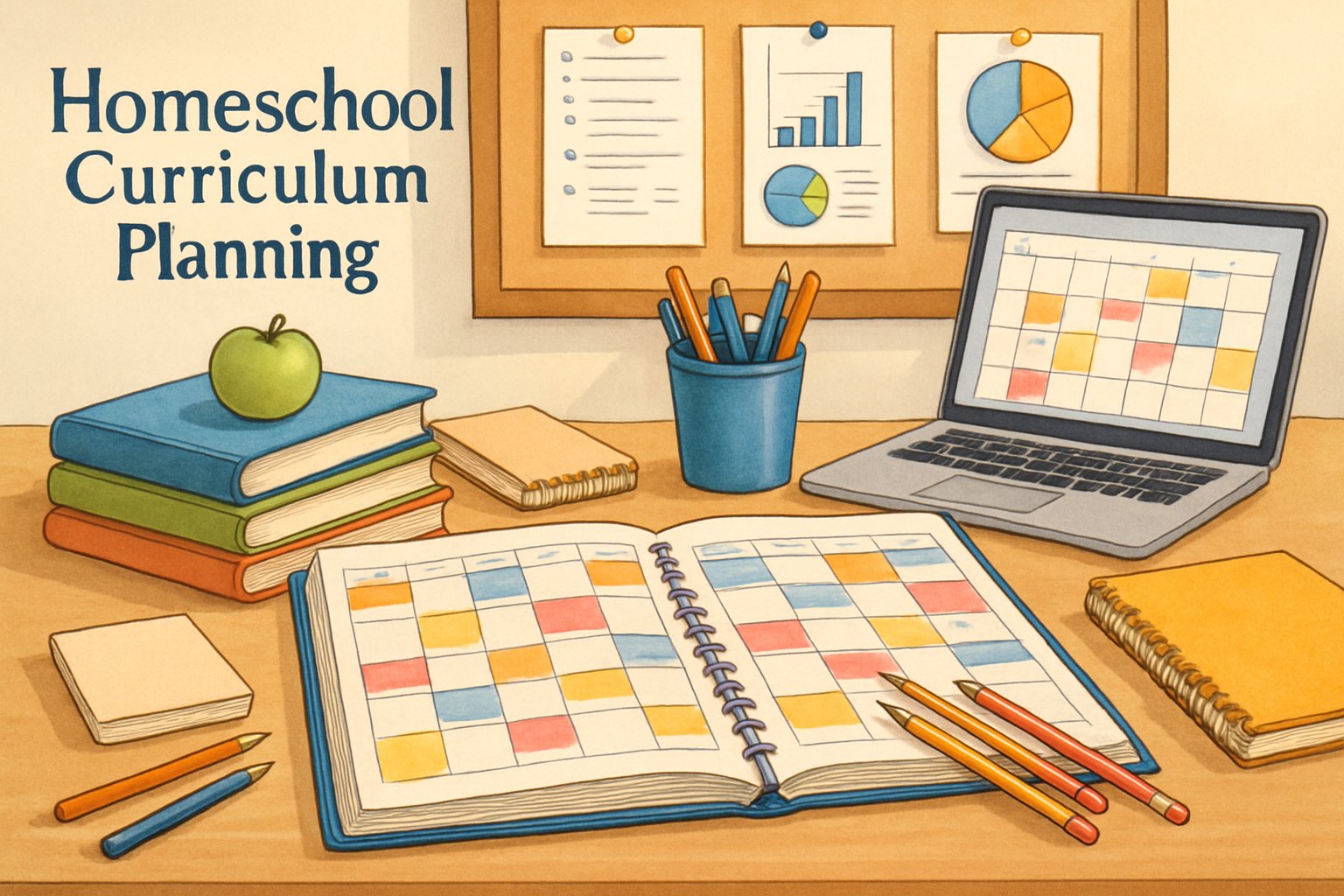
Good homeschool planning helps families stay consistent, manage time wisely, and reduce stress. Clear goals, realistic schedules, and simple record-keeping tools keep learning steady and flexible throughout the year.
Selecting a Homeschool Curriculum
A well-chosen homeschool curriculum gives structure without limiting creativity. Families often start by listing subjects that align with their children’s grade levels and interests.
Some prefer a full program that covers all subjects, while others piece together individual resources for each area. Parents can compare approaches such as Charlotte Mason, Classical, or unit study styles.
For ideas on how to select materials that fit teaching goals and student learning styles, visit The Homeschool Mom’s organization guide. It also helps to review sample lessons before purchasing.
For a science curriculum, hands-on experiments and visuals keep students engaged. Meanwhile, literature-based programs work well for language arts.
Flexibility matters—pacing can adjust to fit daily routines or special projects without losing momentum.
Creating an Effective Homeschool Schedule
An effective homeschool schedule balances predictability with flexibility. Families often divide subjects by time blocks—such as morning for math and language arts, afternoon for history and electives.
Time blocking helps limit distractions and ensures consistent progress. When building a schedule, it’s best to plan subjects that require the most focus earlier in the day.
Parents can use a simple chart or calendar to list daily activities. The Tidy Home Guide suggests starting with short sessions for younger students and gradually increasing study time as focus improves.
Include breaks between lessons. Short movement or snack breaks help maintain energy levels.
This rhythm reduces burnout and keeps learning enjoyable. A flexible schedule also adapts quickly to unexpected events or extended learning opportunities like field trips.
Utilizing a Homeschool Planner
A homeschool planner organizes daily lessons, grades, and activities in one place. Many families enjoy using printable planners, while others rely on digital tools such as Google Sheets or dedicated homeschool planning apps.
Writing out weekly or monthly goals keeps progress visible. Parents can list core tasks, upcoming assessments, and enrichment ideas.
The Treehouse Schoolhouse Blog shows examples of how planners can track each child’s assignments and accomplishments effectively. Some planners include space for reflection.
Notes on what worked or didn’t work make planning easier in the future. Adding color-coded tabs or stickers can make tracking subjects like science, art, or reading less of a chore and more of a creative routine.
Mapping Out Academic Calendars and Breaks
Setting an academic calendar brings order to the homeschool year. Families often begin by marking start and end dates, holidays, and planned breaks.
Using this framework, they can map out 36 weeks of instruction or any schedule that fits their lifestyle. The Ultimate Homeschool Planning Checklist recommends creating term periods or quarters to review progress regularly.
This helps identify whether lessons need reinforcement before moving forward. Planned breaks are essential for rest and reflection.
Week-long pauses after major units or around holidays give both parent and student time to recharge. Unlike rigid school calendars, homeschools can shift weeks as needed—leaving room for travel, seasonal projects, or special interests.
Enriching and Adapting Your Homeschool Year
Families can make their homeschool year more engaging by adding real-world experiences and adjusting lessons to match each child’s needs. Mixing flexible learning methods with family-centered support helps everyone stay motivated and connected.
Integrating Field Trips and Experiential Learning
Field trips turn lessons into hands-on experiences that homeschool students remember. Visiting museums, nature centers, farms, and local businesses helps children connect what they study to everyday life.
Even short trips can reinforce subjects like history, science, or art. Homeschool moms often plan outings around their current units or interests.
For example, a family learning about ecosystems might explore a state park and collect samples for a simple lab project. To make trips more purposeful, parents can create short checklists or reflection journals for students to complete afterward.
Many families use community calendars or homeschool planning ideas to find events that support flexible scheduling. Other parents plan “mini field trips” during the week—like grocery store math lessons or neighborhood mapping walks.
These small experiences encourage curiosity while keeping costs low.
Supporting Multiple Children and Family Needs
Managing several grade levels at once takes planning and creativity. Homeschool moms often use shared subjects like history or science while tailoring reading or math lessons to each child’s level.
Creating a simple weekly rotation chart or color-coded planner can prevent overlap and reduce stress.
| Strategy | Benefit |
|---|---|
| Combine group subjects | Encourages teamwork and saves time |
| Set independent tasks | Builds confidence and responsibility |
| Rotate teaching times | Ensures one-on-one attention |
Families can take cues from curriculum planning advice that suggests scheduling one-on-one sessions each day. Delegating small tasks to older children eases the parent’s workload and strengthens sibling cooperation.
Leave a Reply