Key Differences Between Online and Traditional Homeschool Curriculums
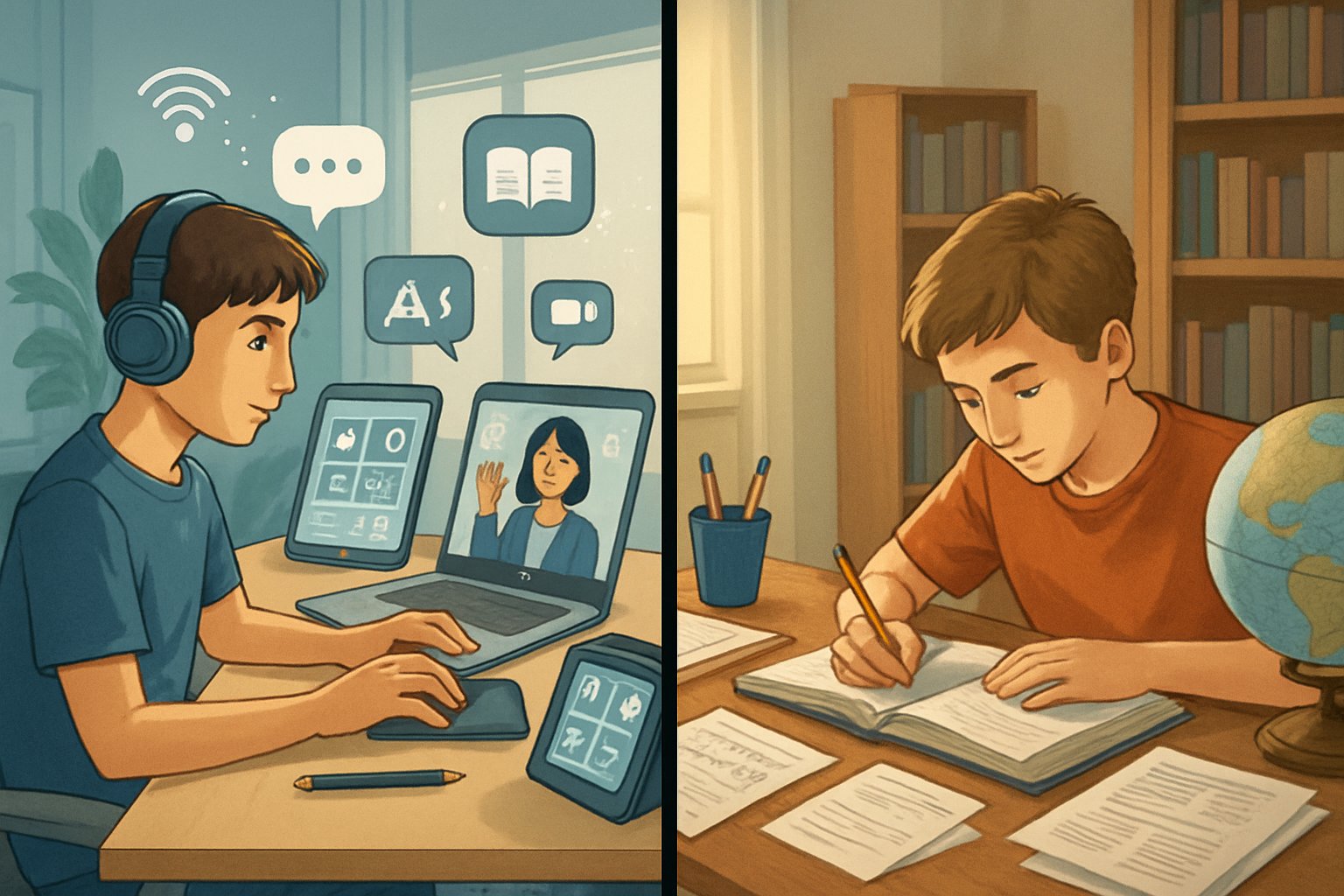
Families exploring home-based education often compare curriculum structure, teaching roles, and learning resources. The biggest contrasts appear in how lessons are delivered, who manages instruction, and how flexible each approach can be.
Technology, teacher involvement, and parental control shape each model in unique ways that affect both student experience and academic results.
Learning Environment and Structure
In traditional homeschooling, parents take full responsibility for instruction and planning. They set the schedule, choose materials, and decide how lessons unfold.
Learning happens in the home setting, often with printed workbooks, textbooks, and project-based activities. This structure gives families total flexibility but also requires strong organization and dedication.
By contrast, online homeschooling uses structured digital learning platforms to deliver lessons led by certified educators. Programs like those described by SchoolAdvice follow regional or national standards and include interactive classes, automated assessments, and online grade tracking.
This model blends independence with accountability, ensuring lessons move forward consistently even when parents have limited teaching time.
| Feature | Traditional Homeschooling | Online Homeschooling |
|---|---|---|
| Lesson Delivery | Parent-led, offline | Teacher-supported, online |
| Curriculum Source | Custom or purchased | Pre-designed by accredited schools |
| Structure | Highly flexible | Moderately structured |
Personalized Learning Versus Standardized Curriculum
Traditional homeschooling allows parents to design a personalized learning plan tailored to a child’s strengths, pace, and interests. Lessons can emphasize hands-on projects, nature studies, or specialized subjects.
Some families use interest-based units or mix resources to suit different learning styles. This freedom appeals to those who value one-on-one instruction and personal growth over standardized testing.
Online learning programs, such as those explained by K12, follow standardized curriculums aligned with educational guidelines. Content often meets state or provincial standards, ensuring academic rigor and easier transitions for students who may later re-enter traditional education.
While this structure limits customization, it provides reliable progress tracking, built-in assessments, and support for college preparation.
Teaching Methods and Educational Resources
Teaching roles differ greatly between these two models. In traditional homeschooling, parents act as both teacher and administrator.
They select educational resources ranging from printed curricula to community classes and library materials. Instruction often includes field trips, family projects, or co-op groups for interactive learning.
Online schooling introduces professional teachers who guide coursework through digital learning systems. Students use recorded lectures, discussion boards, and virtual labs to apply new skills.
Platforms like those outlined by Connections Academy integrate real-time feedback, attendance tracking, and graded assignments.
While traditional homeschooling thrives on family engagement and hands-on activities, online homeschooling depends on structured technology tools that ensure accountability and access to certified instruction.
Each approach serves different family needs depending on time, resources, and comfort with technology.
Social Interaction and Development
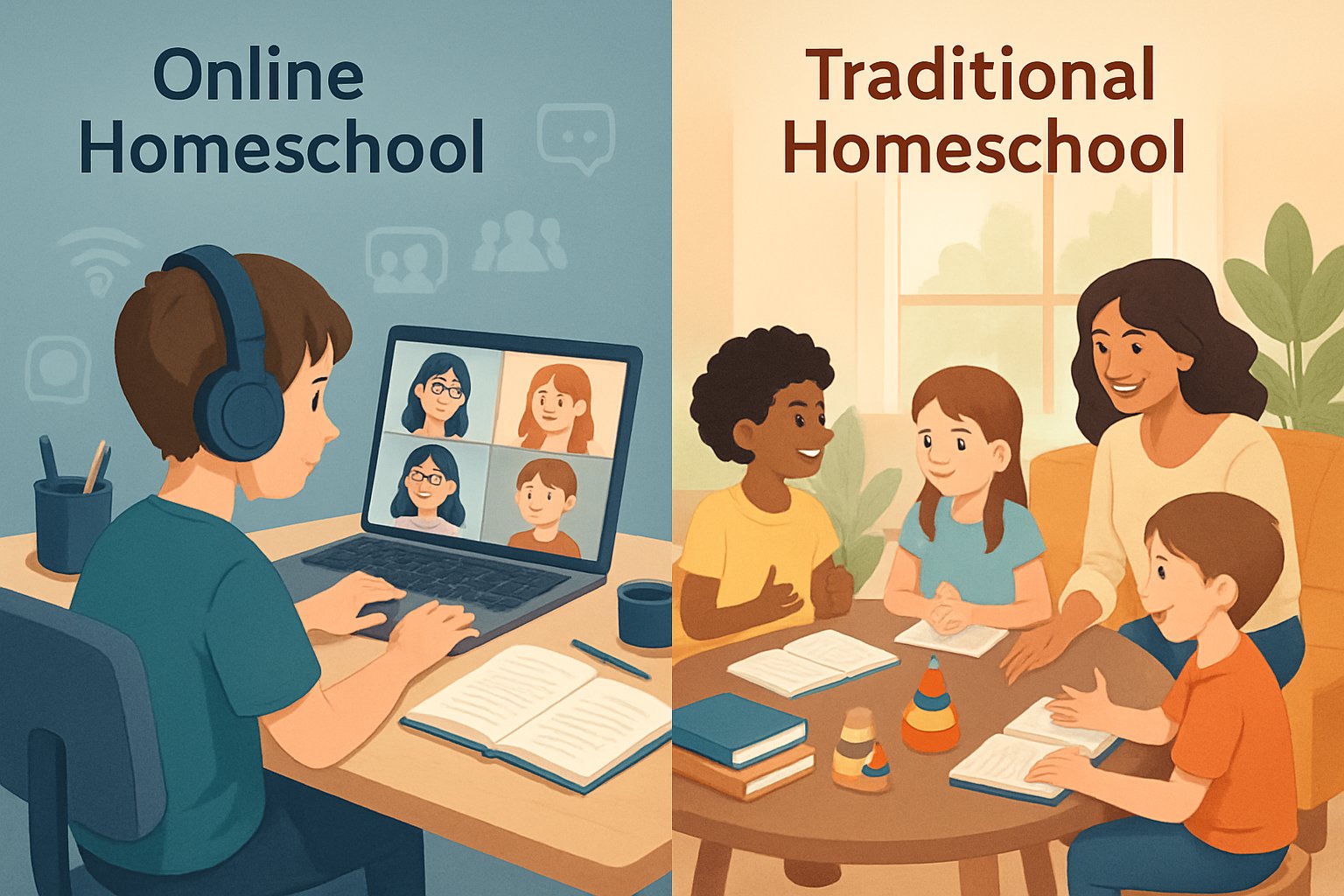
The way children build social skills, form friendships, and learn teamwork depends greatly on their learning environment. Both online and traditional homeschool curriculums influence how students connect with others and participate in activities that shape confidence and empathy.
Opportunities for Peer and Face-to-Face Interaction
Face-to-face interaction plays a key role in social development. In traditional homeschooling, students often meet peers through local co-ops, study groups, or community events.
These settings foster cooperation and communication skills through shared projects and discussions. Online homeschoolers rely on digital platforms for peer interaction, joining virtual classrooms and discussion boards.
Many programs now include video-based group lessons where students can collaborate on assignments and debates, enhancing connection even from home. According to Sparx Services, traditional education provides daily peer contact, while homeschool communities must plan social learning intentionally.
Families can balance both by combining online study with hobby clubs or volunteer groups to support real-world interaction.
Extracurricular Activities and Social Growth
Extracurricular activities help children grow socially beyond academics. Traditional homeschool families often join sports leagues, arts programs, or 4-H clubs to encourage teamwork and leadership.
These group settings also teach patience, communication, and problem-solving. Online students have virtual clubs, competitions, and webinars to connect with others who share their interests.
Some online schools organize hybrid events—field trips or in-person workshops—to mix digital and physical experiences. For example, as noted by Interval Learning, extracurriculars such as sports or arts programs offer vital spaces for social learning that online schooling may need to recreate digitally.
Parents play a major role in ensuring balance. Encouraging participation in neighborhood activities or online forums helps bridge any social gaps created by studying independently.
Impact on Social Skills and Emotional Development
Social skills grow best through consistent and meaningful contact with others. Traditional homeschool students who join group co-ops or local classes often build confidence and emotional awareness through peer feedback.
They learn to handle group dynamics, share responsibilities, and express opinions respectfully. Online homeschoolers may need structure to strengthen emotional development.
Regular video chats, mentorship sessions, or project-based teamwork can help them practice empathy and active listening. Studies like those summarized on K12 Loop highlight that reduced social exposure may limit some interaction skills, but parental support and planned social activities can help children develop healthy relationships and emotional maturity.
Curriculum Delivery and Flexibility
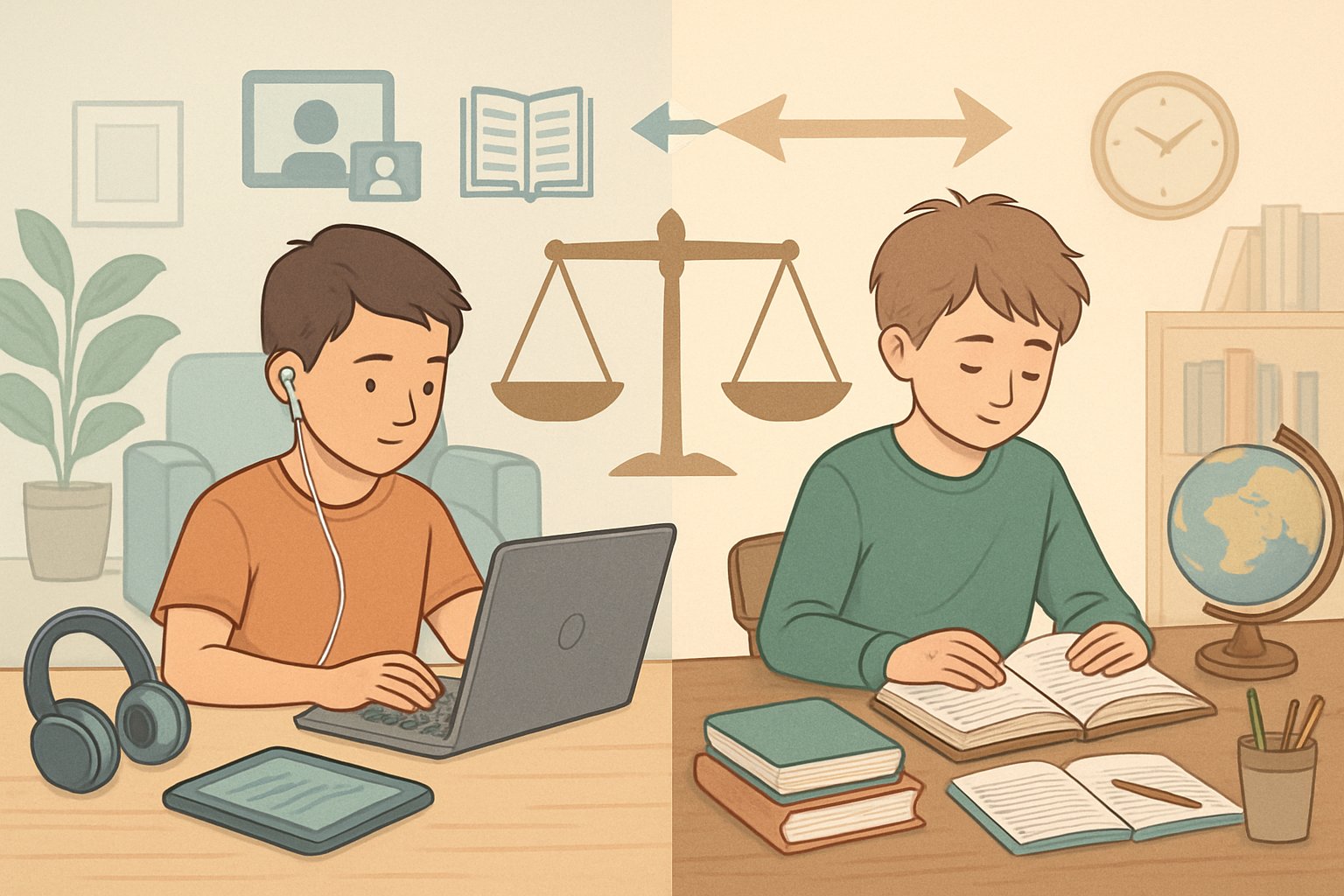
Online homeschooling programs use technology to make lessons more interactive and personal, while traditional homeschooling depends on a structured, parent-led approach with varied materials. The way lessons are delivered affects how students engage, manage time, and access both physical and digital tools for learning.
Interactive and Adaptive Learning Platforms
Online homeschool curriculums often rely on interactive learning platforms that mix videos, quizzes, and simulations to keep students involved. Many use adaptive learning platforms that adjust the difficulty of lessons based on a student’s progress.
This helps students move at their own pace and revisit topics when needed. Some programs use blended learning models, combining live online classes with offline projects.
This format supports both real-time instruction and independent work. For example, JoinPrisma describes online schools where students attend virtual workshops and complete hands-on projects offline.
Traditional homeschooling delivers lessons in a more manual way. Parents or tutors guide instruction using printed books, worksheets, and in-person discussions.
While it may lack algorithm-driven feedback, it allows for more direct, human interaction and flexible pacing.
Flexible Versus Structured Learning Schedules
Online learning often provides flexible learning schedules, giving families the ability to plan school hours around their daily lives. Students may log into classes at set times but can finish independent work anytime, offering freedom for travel, hobbies, or family activities.
Some online programs, like MOOCs (Massive Open Online Courses), let learners complete modules entirely at their own pace. Traditional homeschooling leans toward a structured learning environment, set by the parent.
This usually involves scheduled lessons, fixed routines, and a clear progression through subjects. Structure helps some students develop discipline and time management.
However, others may feel limited by a strict schedule. Finding a balance between structure and flexibility often depends on students’ learning styles and family dynamics.
Access to Physical and Digital Resources
Technology gives online learners quick access to digital resources such as videos, eBooks, and open educational resources (OERs). These materials update easily and often cost less than printed textbooks.
Online platforms also include built-in tools for collaboration. Students can communicate through chats, discussion boards, or group projects.
Homeschooled students using physical materials benefit from hands-on learning, especially in science experiments, art, or practical life skills. Many families combine printed curriculum, library books, and local programs with digital support to create a blended learning experience.
A simple comparison highlights the difference:
| Resource Type | Online Homeschooling | Traditional Homeschooling |
|---|---|---|
| Main Materials | Digital textbooks, OERs, interactive modules | Printed books, worksheets, manipulatives |
| Collaboration | Virtual classes, forums, group chats | In-person co-ops, local study groups |
| Cost & Updates | Often subscription-based, easily updated | One-time purchase, updated manually |
Leave a Reply