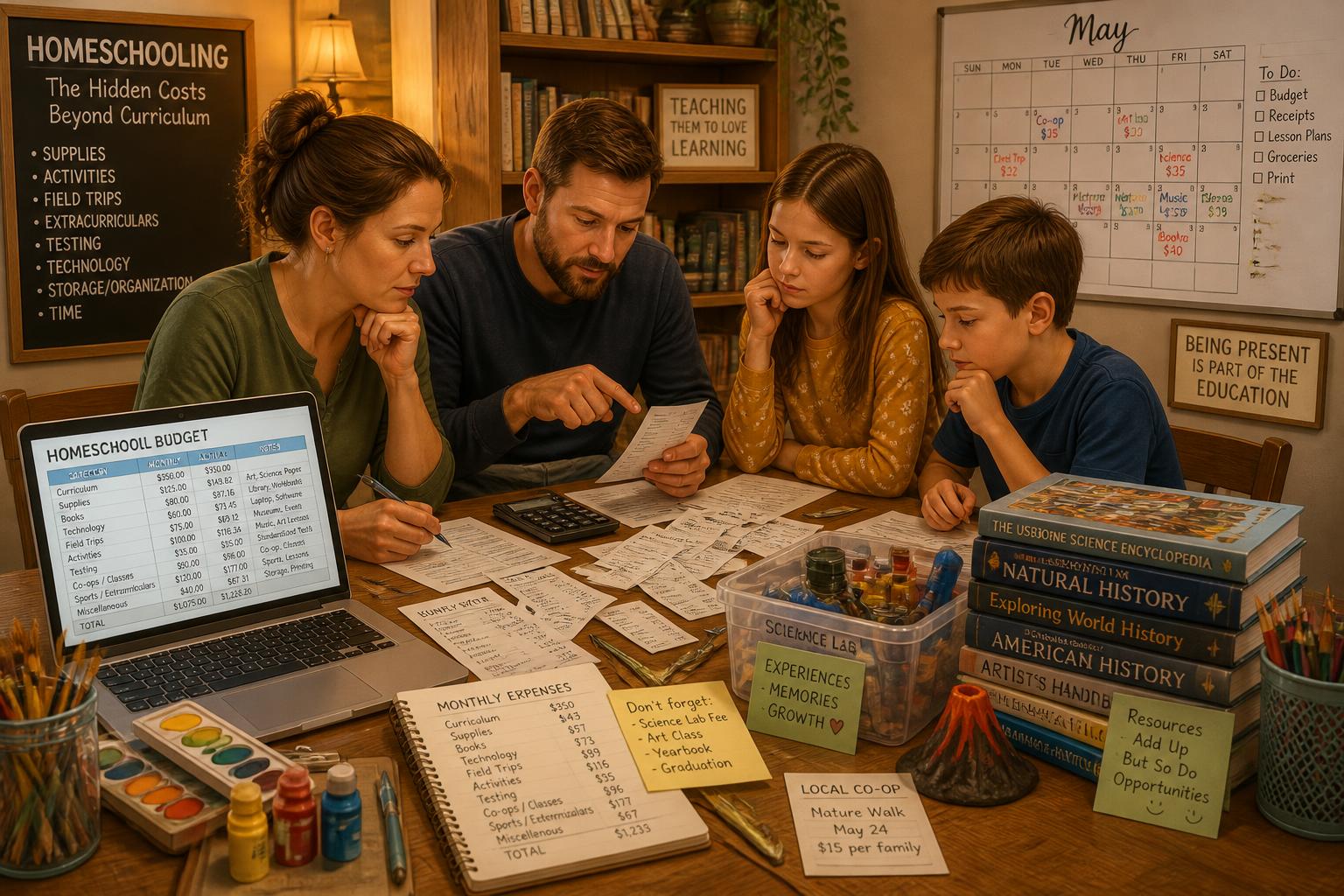
What Families Actually Pay Beyond Curriculum
The sticker price of a homeschool curriculum rarely tells the full story. Between school supplies, online learning subscriptions, standardized tests, field trips, and co-op fees, families often spend hundreds more than they planned.
Knowing where the extra costs hide makes it easier to budget with confidence and avoid mid-year surprises.
The Real Price Gap Between Boxed Programs and Pieced-Together Plans
An all-in-one curriculum bundles textbooks, workbooks, and lesson plans into a single purchase. These boxed programs can run anywhere from $300 to $1,500 per child per year, depending on the publisher and grade level.
The price feels high upfront, but it usually covers most subjects. Pieced-together plans let families pick the best curriculum and resources for each subject.
This approach offers more flexibility, but costs add up fast when parents buy separate programs for math, language arts, science, and history. According to a detailed cost breakdown from TrustedCare, the average cost of homeschooling falls between $700 and $2,800 annually.
Families who mix and match often land at the higher end.
Supplies, Printing, and Materials That Raise the Total
Homeschool supplies go beyond pencils and paper. Art materials, science experiment kits, printer ink, and laminating sheets are recurring expenses that many families underestimate.
Printing costs deserve special attention. Families using PDF-based curriculums can spend $50 to $150 per year on ink and paper alone.
Buying a laser printer can lower per-page costs over time, but it requires an upfront investment.
Technology, Online Tools, and Online Learning Subscriptions
A reliable computer or tablet is essential for most homeschooling families today. Online learning subscriptions like interactive math programs, reading apps, and video-based science courses typically cost $10 to $40 per month each.
Those monthly fees feel small, but three or four subscriptions quickly total $500 or more per year. Families should list every digital tool they use and calculate the annual cost before the school year starts.
Testing, Recordkeeping, and Legal Support Costs
Many states require standardized tests for homeschooled students. Testing fees usually range from $25 to $80 per child per test.
Some states also require portfolio reviews or evaluations by certified teachers, which can cost $50 to $150. Organizations like HSLDA (Home School Legal Defense Association) offer legal support and guidance on state homeschool laws.
Membership runs about $130 per year. While not required, many families find this support valuable for navigating regulations.
Enrichment Expenses Like Field Trips, Co-ops, and Activities
Field trips bring learning to life, but museum entry fees, gas, and parking add up. Homeschool groups and co-ops sometimes charge semester fees of $50 to $300 for group classes, lab time, or organized activities.
Extracurricular activities like sports leagues, music lessons, and community involvement programs are another layer. These can range from free community options to several hundred dollars per season.
A homeschool support group can help families find affordable group activities and share the cost of enrichment experiences.
What Shapes Your Total Homeschool Spending

The cost of homeschooling varies widely because every family’s situation is different. Learning style, grade level, the number of children at home, and whether a family uses free curriculum or paid programs all play a direct role in total homeschooling expenses.
How Learning Style and Individualized Education Affect Purchases
Individualized education is one of homeschooling’s biggest strengths, but tailoring materials to each child’s needs can raise costs. A hands-on learner may need more manipulatives, art supplies, and experiment kits.
An auditory learner might benefit from audiobook subscriptions or music-based programs. Families with children who have different learning styles often end up buying separate curriculum sets for each child rather than reusing the same materials.
This is one of the hidden costs of homeschooling that catches many parents off guard.
Grade Level, Number of Children, and Subject Complexity
Elementary students can often share basic materials, and many budget-friendly curriculum options cover multiple grade levels. High school coursework is another story.
Lab sciences, advanced math, and foreign languages may require specialized textbooks, online courses, or even outside tutors. Each additional child multiplies some costs and reduces others.
Consumable workbooks need to be repurchased, while hardcover textbooks can be passed down. Families with three or more children often save the most by choosing reusable or digital formats.
When Free Curriculum Lowers Costs and When It Adds Work
Platforms like Khan Academy and other free resources can significantly reduce homeschooling costs. Many homeschooling families utilize free resources for core subjects and only pay for materials they cannot find elsewhere.
Free curriculum works best when parents have time to plan, organize, and fill in gaps. When a free option lacks structure or leaves out key topics, the parent spends extra hours piecing things together.
That time has a real value, and for some families, paying $200 for a well-organized program saves more than it costs.
Comparing Homeschooling Costs With Public School and Private School Tuition
Public school is tuition-free, but it is not cost-free. School supplies, clothing, lunches, fundraisers, and activity fees often total $500 to $1,000 per child per year.
Private school tuition averages over $12,000 per year nationally. Homeschooling expenses for most families fall between $700 and $2,800 per child annually.
That places homeschooling well below private school tuition and closer to, or sometimes above, the real out-of-pocket costs of public school. The trade-off is greater control over what, when, and how a child learns.
How to Build a Homeschool Budget That Holds Up
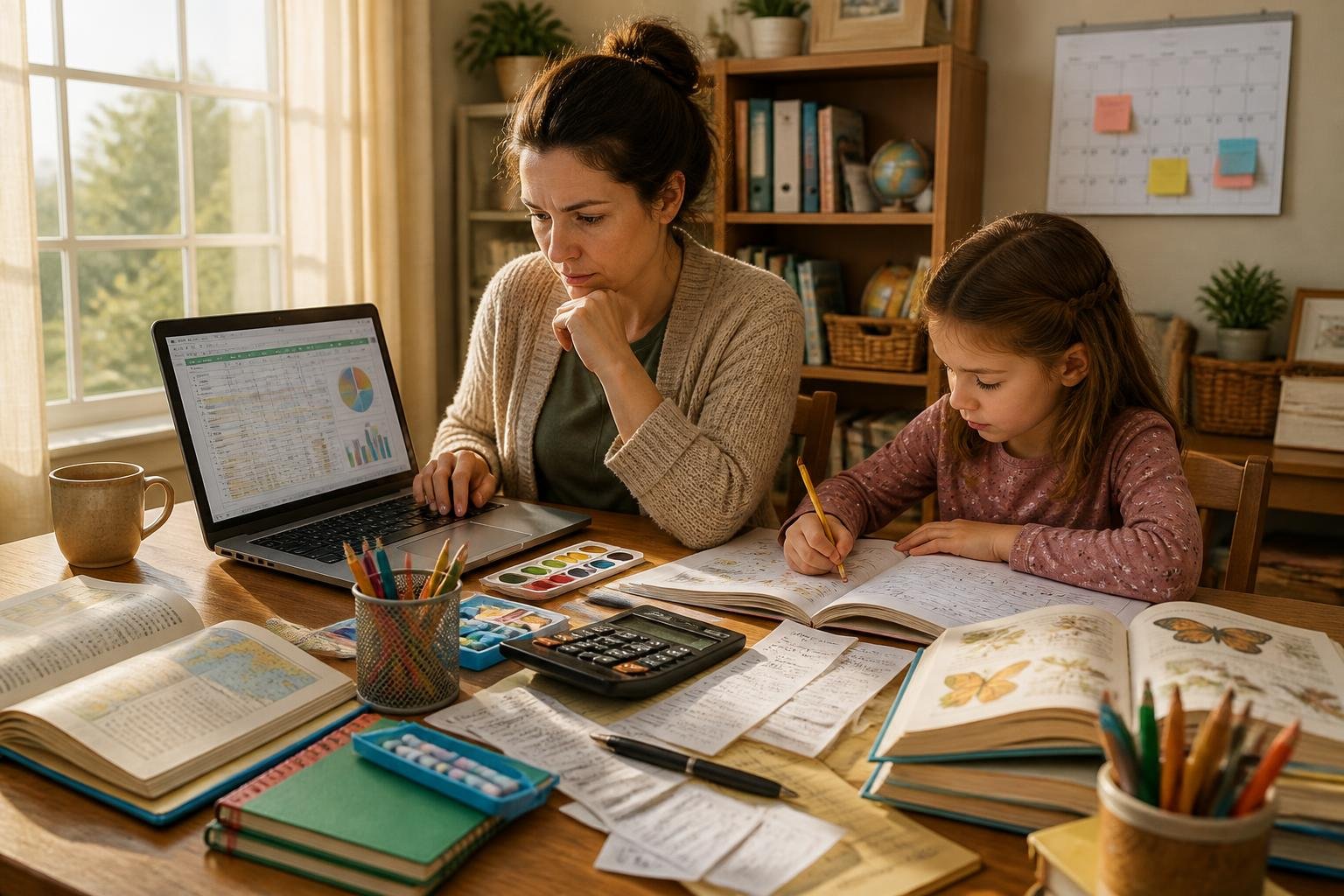
A homeschool budget works best when it reflects real spending patterns, not wishful thinking. Starting with core needs, setting clear limits, mixing paid and free resources, and reviewing midyear keeps families on track financially.
Start With Core Needs Before Buying Extras
Before browsing curriculum sales or signing up for co-ops, families should list what they absolutely need: math, language arts, reading materials, and basic homeschool supplies. Everything else is optional until the core is covered.
It helps to separate “must-haves” from “nice-to-haves.” A new science kit might be exciting, but if the budget is tight, a library book and kitchen-counter experiments can teach the same concepts.
Set Spending Limits for Curriculum, Supplies, and Experiences
Breaking the homeschool budget into categories gives families a clearer picture. A simple framework might look like this:
| Category | Suggested Range (Per Child) |
|---|---|
| Core Curriculum | $200 – $800 |
| School Supplies & Materials | $50 – $200 |
| Online Subscriptions & Tech | $100 – $400 |
| Field Trips & Co-ops | $50 – $300 |
| Testing & Legal Fees | $25 – $200 |
| Extracurriculars | $100 – $500 |
Setting a cap for each category prevents overspending in one area from eating into another. Clever Homeschool offers guidance on finding budget-friendly curriculum options that help families stay within these ranges.
Use Budget-Friendly Mixes of Paid and Free Resources
The most cost-effective approach for many families blends paid programs with free ones. A family might purchase a structured math curriculum, use Khan Academy for science review, borrow literature from the library, and join a local homeschool group for social studies projects.
As noted in a practical guide on homeschooling affordably, families can also save by buying used textbooks, swapping materials with other homeschooling families, and taking advantage of free trial periods before committing to subscriptions.
Review Midyear and Adjust Without Wasting Money
A budget set in August may not fit by January. Kids outgrow materials, interests shift, and some programs just don’t click.
Checking in on spending midyear lets families redirect funds instead of wasting them. If a subscription goes unused, cancel it.
If a curriculum is not working, look into resale groups or trading with another family. Small adjustments midyear prevent bigger financial headaches later.
Frequently Asked Questions
What costs do families often overlook when choosing a homeschool curriculum?
Families frequently forget about printer ink, shipping fees, consumable workbook replacements, and online subscription renewals. Testing fees, co-op dues, and the cost of field trips also catch many families by surprise.
Planning for these homeschool expenses upfront helps avoid budget shortfalls partway through the year.
How can I estimate the total yearly cost of homeschooling beyond the curriculum price?
Start by listing every expected expense: curriculum, supplies, subscriptions, technology, testing, enrichment activities, and co-op fees. According to a comprehensive cost guide, most families spend $700 to $2,800 per child annually when all costs are included.
Adding a 10–15% buffer for unexpected expenses provides extra protection.
Which curriculum formats tend to be the most budget-friendly over time?
Digital and reusable hardcover curriculums cost less over multiple years because they can be shared among siblings. Consumable workbooks and single-use printables need to be repurchased for each child, which raises the long-term cost.
What supplies, subscriptions, and technology add-ons should I plan for?
Plan for basic school supplies, a computer or tablet, internet access, and at least one or two online learning subscriptions. Printer ink, paper, art materials, and science kit refills are recurring costs that belong in every homeschool budget.
How can I reduce homeschooling expenses without sacrificing quality?
Families can utilize free resources like Khan Academy and public library programs for several subjects. Buying used curriculum, joining co-ops that share materials, and exploring state-funded homeschool programs are all practical ways to lower costs while maintaining a strong education.
What’s a realistic monthly budget for homeschooling one child versus multiple children?

For one child, a realistic monthly budget falls between $60 and $230. This depends on curriculum choices and activities.
Adding a second or third child does not double the cost. Families can reuse materials and share subscriptions.
Most multi-child families spend roughly 40–60% more per additional student. The cost increases, but not as much as starting over for each child.
Leave a Reply