How The Two Approaches Differ In Real Lessons
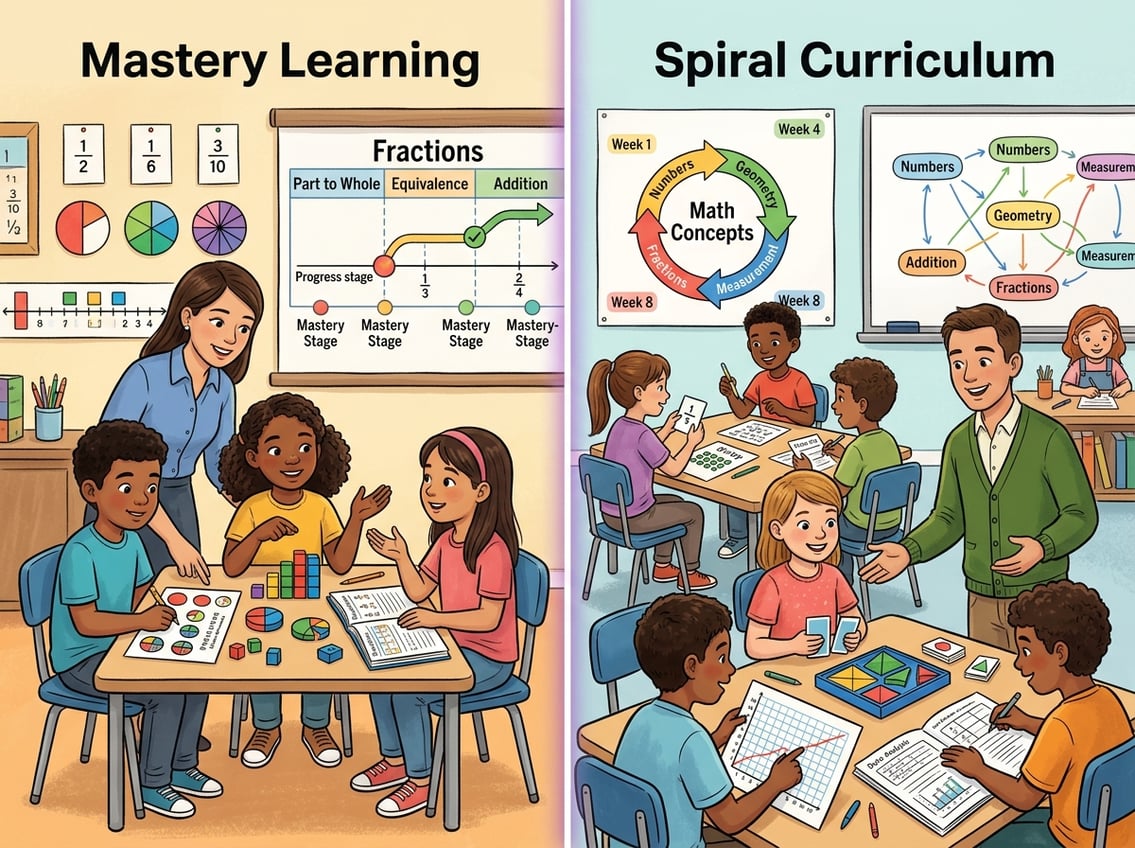
The difference between spiral math and mastery math becomes obvious when you look at what actually happens during a lesson. One style keeps your child focused on a single topic until it clicks, while the other mixes several topics into every assignment to keep older skills fresh.
What Spiral Math Looks Like Day To Day
In a spiral curriculum, your child’s daily worksheet or lesson includes a mix of new and old material. A typical third-grade lesson might introduce basic division, but alongside those problems, your child also sees a few subtraction questions and a quick addition review.
This daily review is the hallmark of the spiral method. Each day cycles back through earlier skills while layering in something new.
The pace moves quickly from topic to topic, so lessons rarely feel repetitive. Your child might spend just a few days on a concept before the curriculum moves on.
That concept reappears later at a slightly harder level. Over weeks and months, this continual review is designed to build long-term retention without drilling any single topic for too long.
What Mastery Math Looks Like Day To Day
A mastery curriculum works differently. Your child stays on one concept, sometimes for several weeks, until they demonstrate solid conceptual understanding.
If the current unit covers multiplication by three, every lesson, worksheet, and word problem centers on that skill. Only after your child shows mastery does the math curriculum advance.
This deeper focus builds strong number sense and confidence in each skill before adding anything new. The tradeoff is that previously learned topics may not appear again for a while.
Why Built-In Review Changes The Experience
Built-in review is the biggest practical difference between these two approaches. The spiral approach weaves continual review into every assignment automatically.
Your child never fully walks away from a skill once it’s introduced. With the mastery approach, review isn’t always built in.
You may need to create your own spiral review sessions or use supplemental practice to keep earlier skills sharp. This extra step matters because kids can forget concepts they haven’t practiced in months.
If your child tends to lose skills over breaks or long gaps, the built-in review of a spiral program can be a game-changer.
Which Type Of Learner Tends To Thrive With Each Style
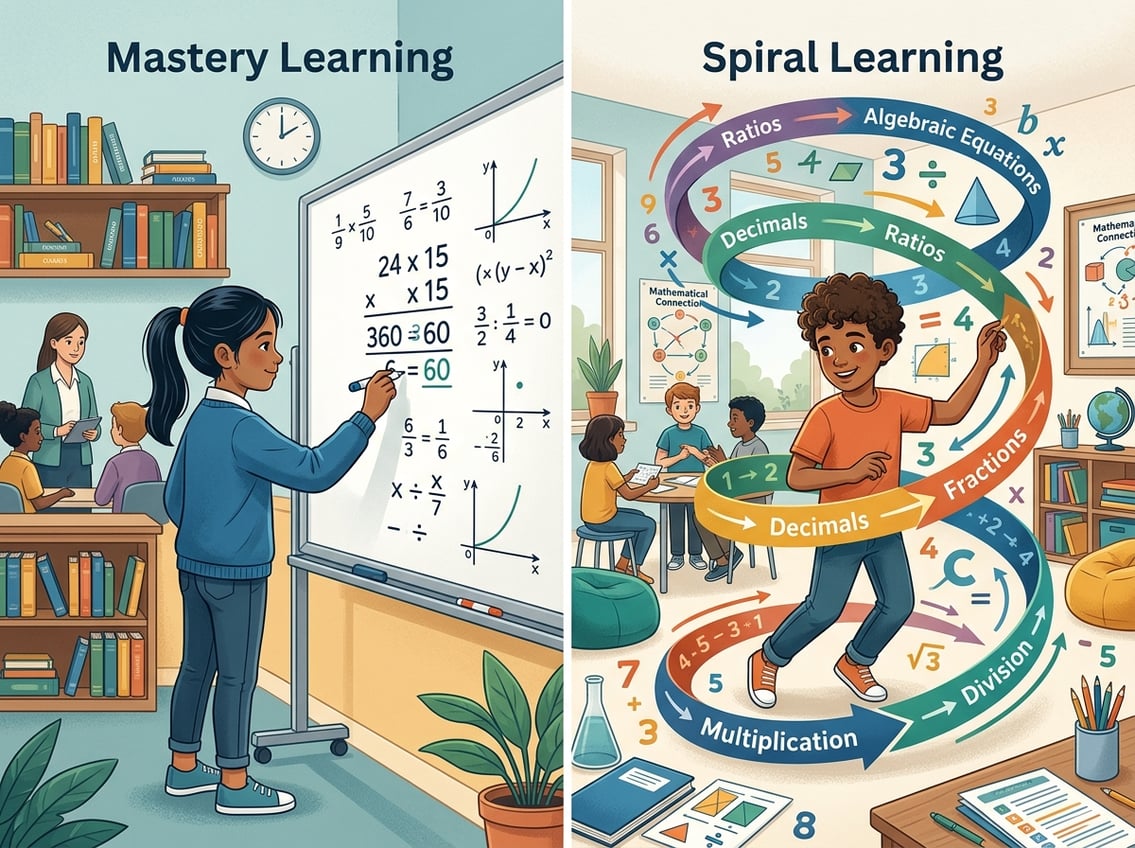
Your child’s personality and learning habits should drive your pick between mastery vs spiral math. Some kids need frequent refreshers to keep skills solid, while others want to dig deep before they feel ready to move on.
Children Who Need Repetition And Frequent Refreshers
Some kids learn a concept on Monday and forget it by Friday. If that sounds familiar, spiral math programs are worth a serious look.
The constant cycling back through old material means your child practices addition, subtraction, and earlier topics even while learning something brand new. This works especially well for younger learners and kids who get restless doing the same type of problem over and over.
The variety in each lesson keeps things interesting. Children with shorter attention spans or those who resist long stretches on a single topic often do better with this approach.
Spiral math programs like Saxon Math and Teaching Textbooks are popular choices for these learners because every assignment includes a mix of new and previously covered skills.
Children Who Prefer Depth Before Moving On
Other children feel anxious moving to a new topic before the current one feels solid. These are the kids who want to understand why a math rule works, not just how to use it.
Mastery math programs give them the time they need. If your child gets frustrated by switching between topics or feels scattered when too many ideas are in play, a mastery curriculum offers welcome focus.
Programs like Singapore Math and Math Mammoth let learners build deep confidence in one area before taking the next step. This approach is also a strong fit for kids who are naturally self-motivated and can handle longer stretches of similar material without losing interest.
Parent Teaching Style And Daily Bandwidth
Your own schedule matters just as much as your child’s personality. A homeschool math curriculum that requires heavy parent involvement every day might not be realistic if you’re juggling multiple children.
Spiral math programs often require less daily prep because the built-in review handles reinforcement for you. Mastery math programs may need you to create extra review activities to avoid skill gaps, especially during transitions between units.
If you want a homeschool curriculum that runs more independently, a self-paced spiral or digital option may fit your bandwidth better. If you enjoy teaching one topic deeply alongside your child, mastery programs can feel deeply rewarding.
Popular Programs Sorted By Teaching Style
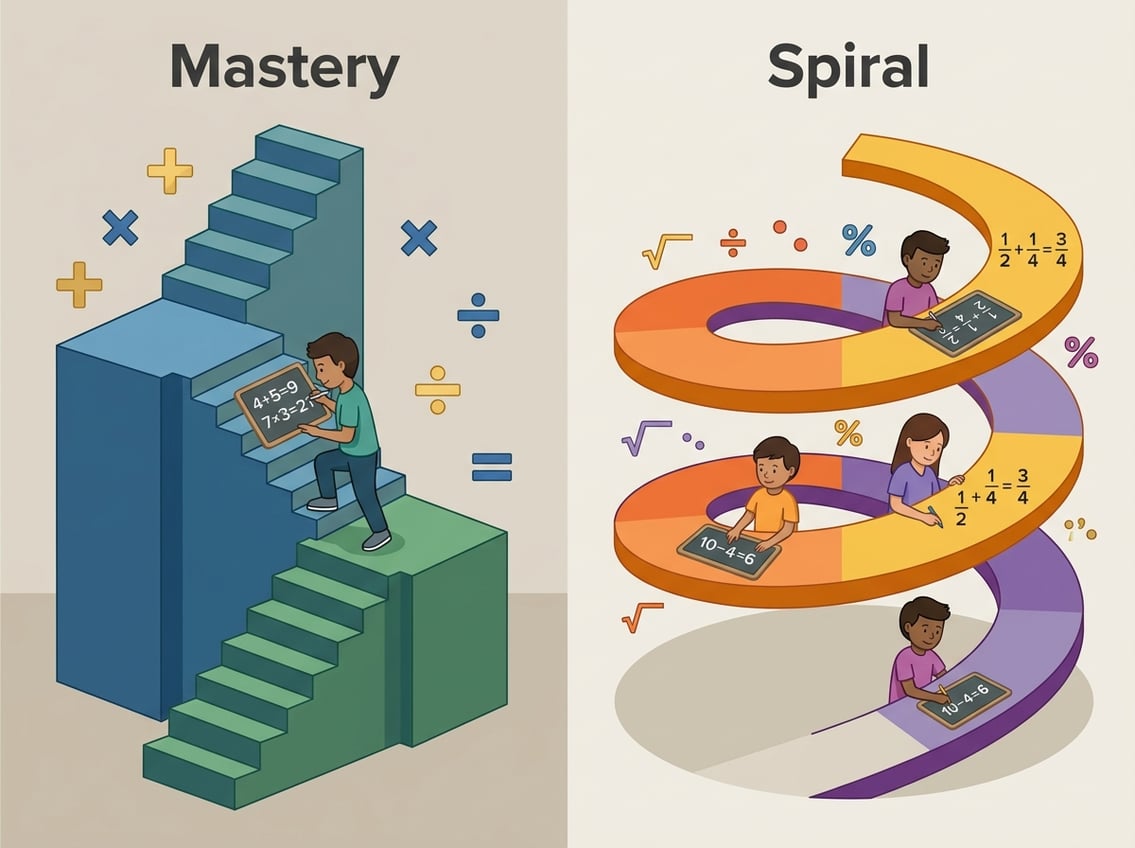
Knowing the theory behind each approach is helpful, but seeing which actual programs fall into each category makes your decision much more practical. Below you’ll find well-known names sorted by style, with a few that blend both methods.
Well-Known Spiral Curriculum Options
These programs introduce topics, move on, and circle back regularly:
| Program | Format | Key Feature |
|---|---|---|
| Saxon Math | Textbook + worksheets | Incremental lessons with continual review in every assignment |
| Horizons Math | Colorful workbooks | Fast-paced spiral with bright, engaging pages for younger learners |
| Abeka Math | Textbook or video | Traditional spiral approach with a Christian perspective |
| Teaching Textbooks | Digital, self-grading | Great for independent learners who want built-in spiral review |
| CTC Math | Online video lessons | Short video instruction with spiral-based interactive practice |
Saxon Math is one of the most widely used spiral programs among homeschool families. Teaching Textbooks has become a favorite for families who want minimal parent involvement since the program grades itself.
Well-Known Mastery Curriculum Options
These programs teach one topic deeply before moving to the next:
| Program | Format | Key Feature |
|---|---|---|
| Singapore Math | Textbook + workbook | Strong focus on visualization and problem-solving strategies |
| Math Mammoth | Printable or digital | Affordable, clear explanations, mastery-focused |
| Math-U-See | Video + manipulatives | Uses physical blocks to build conceptual understanding |
| RightStart Math | Hands-on games + lessons | Interactive approach with math card games and an abacus |
| Beast Academy | Comic-style books + online | Challenging problems designed for advanced learners, grades 2-5 |
Beast Academy, created by Art of Problem Solving, is a standout for kids who love puzzles and creative thinking. Math-U-See pairs well with visual and kinesthetic learners thanks to its manipulative-based lessons.
Programs That Blend Both Approaches
A few programs don’t fit neatly into one category:
- Khan Academy offers mastery-based progression with built-in review exercises, making it a flexible free option.
- The Good and the Beautiful Math teaches in a mastery style but includes periodic review of past concepts.
- Life of Fred uses a story-based approach that weaves multiple topics together in a unique way.
- Nicole the Math Lady provides video instruction designed to supplement Saxon Math, helping families get more from that spiral program.
How To Choose Without Guessing
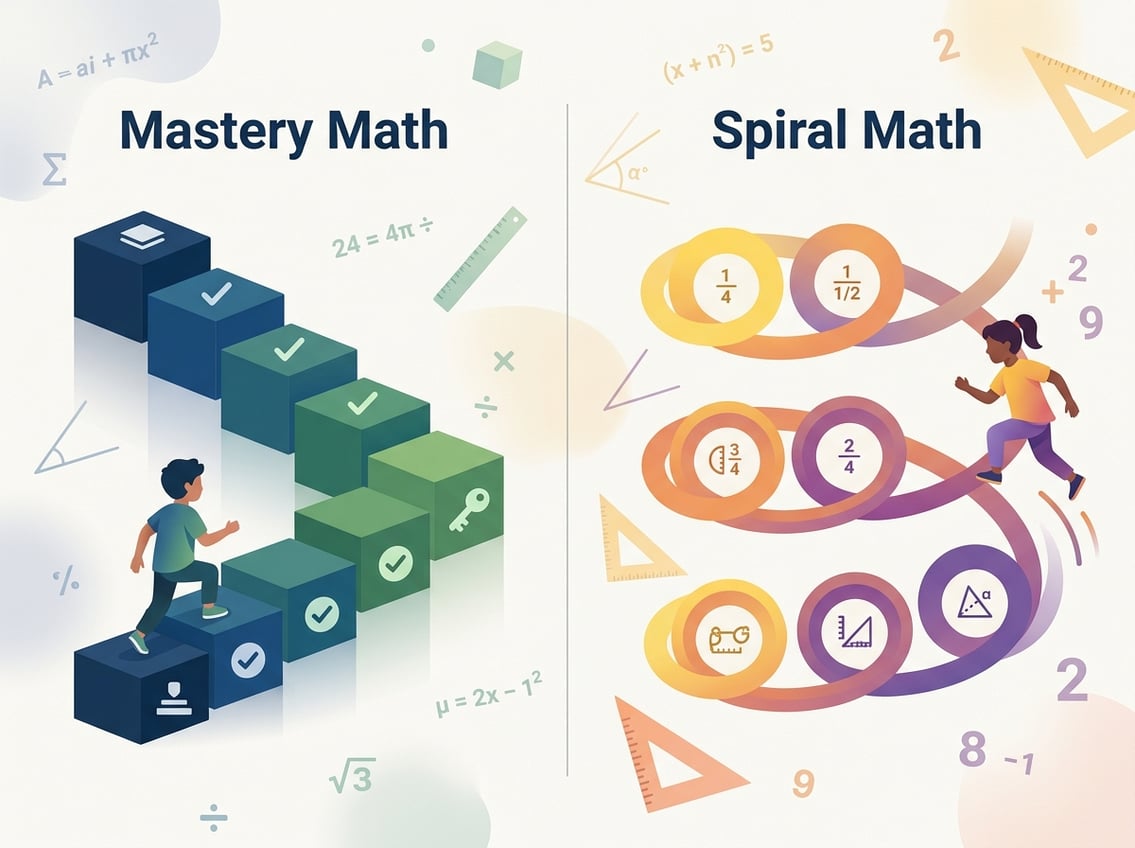
Picking the right math program doesn’t need to feel like a coin flip. A few practical steps can help you make a confident choice and avoid wasting months on a curriculum that isn’t clicking.
Signs Your Current Program Is A Poor Match
Watch for these red flags:
- Your child cries, shuts down, or resists math time more days than not.
- They seem to “get it” during the lesson but bomb review questions a week later.
- Lessons feel painfully slow, and your child complains about doing “the same thing again.”
- You notice growing gaps in foundational skills like basic addition or place value.
A kid who struggles in a mastery program might thrive with the variety of a spiral curriculum, and vice versa.
When A Placement Test Matters
If you’re switching programs mid-year or jumping between a spiral curriculum and a mastery curriculum, a placement test is essential. Most reputable programs offer free placement tests on their websites.
A placement test shows you exactly where your child stands so you aren’t accidentally repeating material they already know or skipping skills they haven’t solidified. As one curriculum planning guide recommends, placing your child accurately from the start prevents frustration and wasted time.
How To Switch Curricula With Fewer Gaps
Switching mid-year feels scary, but families do it successfully all the time. Here’s a simple process:
- Give the placement test for your new program and place your child based on the results, even if it’s a grade level below.
- Overlap for a week or two. Use both programs briefly so your child adjusts to the new format.
- Fill obvious gaps. If the new program assumes a skill your child hasn’t learned, use free resources like Khan Academy to catch up quickly.
- Give it at least six weeks. Any new curriculum feels awkward at first. Resist the urge to switch again too soon.
A curriculum matching matrix, like the ones published by several United States homeschool organizations, can also help you compare programs side by side before committing.
Frequently Asked Questions

What’s the difference between a mastery approach and a spiral approach in math?
A mastery approach teaches one topic at a time and requires your child to fully understand it before moving forward. A spiral approach introduces a topic, moves on to something new, and then circles back to review earlier material repeatedly.
The core difference is how review and progression are structured within daily lessons.
How can I tell whether my child will do better with mastery-style or spiral-style math?
Pay attention to how your child handles variety versus focus. If they get bored doing the same type of problem for days, a spiral program may suit them.
If they feel anxious moving on before a concept feels solid, a mastery program is likely the better fit. A free placement test from your top program choices can also reveal a lot.
Which approach is better for kids who forget concepts quickly and need lots of review?
Spiral math is typically the stronger choice for kids who need lots of review. The built-in daily review ensures that older skills get practiced alongside new ones.
Programs like Saxon Math and Teaching Textbooks are specifically designed with this kind of continual reinforcement.
Which approach works best for kids who want to move faster once they understand a topic?
Mastery programs tend to work well here because your child can demonstrate competency and move ahead without being held back by review of unrelated topics.
Programs like Singapore Math and Math Mammoth let fast learners progress through units at their own pace once they’ve shown they understand the material.
What are some of the best homeschool math curriculum options that use a spiral approach?
Popular spiral math programs include Saxon Math, Horizons Math, Abeka Math, Teaching Textbooks, and CTC Math.
Each one cycles through previously taught concepts regularly, though they differ in format, price, and how much parent involvement they require. Comparing these programs side by side can help you narrow down your choice.
What are some of the best homeschool math curriculum options that use a mastery-based approach?
Top mastery math programs include Singapore Math, Math Mammoth, Math-U-See, RightStart Math, and Beast Academy from Art of Problem Solving.
These programs focus on deep conceptual understanding of one topic at a time.
Leave a Reply