Why a Support Network Matters for Homeschool Families

Homeschooling can feel isolating when families navigate educational challenges alone, but building a supportive community transforms the experience through shared belonging, emotional encouragement, and enriched opportunities for children.
Establishing a Sense of Belonging
Homeschool families often feel different from their neighbors who send children to traditional schools. A support network creates connections with people who understand their daily routines and educational choices.
Finding your tribe happens when families connect with others who share similar values and approaches to education. These relationships help parents feel less alone in their decision to homeschool.
Local homeschool groups provide regular meetups where families can share experiences. Parents discover they’re not the only ones dealing with curriculum struggles or difficult learning days.
Shared experiences create bonds that go beyond casual friendships. When families participate in group activities like park days or field trips, they build lasting relationships based on common goals.
Online communities extend this sense of belonging beyond geographic boundaries. Parents can connect with homeschooling families from different states who face similar challenges and celebrate similar victories.
The feeling of belonging reduces the stress that comes with making unconventional educational choices. Families gain confidence knowing they’re part of a larger community that supports their decisions.
Encouragement and Emotional Support
Homeschooling parents face unique pressures that friends and family members might not understand. A support network provides emotional relief during challenging seasons.
Veteran homeschoolers offer perspective when new families feel overwhelmed by curriculum choices or state requirements. They share practical advice from years of experience navigating similar situations.
Difficult learning days become more manageable when parents can text a friend who understands. Quick encouragement from another homeschooling parent often provides the motivation needed to continue.
Prayer chains and check-ins from supportive community members help families through personal crises. When illness or family emergencies disrupt schooling, other families often step in with meals or childcare assistance.
Parents need validation that their teaching efforts matter. Connecting with other homeschool families provides regular encouragement and celebrates educational milestones together.
The emotional support extends beyond educational concerns to general parenting challenges. Homeschool networks often become close-knit communities where families support each other through all aspects of life.
Benefits for Homeschooling Children
Children in homeschool families need social connections with peers who understand their educational experience. Support networks provide natural opportunities for meaningful friendships.
Group learning activities expose children to different teaching styles and approaches. When families organize science labs or history discussions together, kids benefit from varied perspectives on the same topics.
Homeschooled children often develop strong friendships within their support network because they spend quality time together during educational activities. These relationships tend to be deeper than typical school friendships.
Collaborative projects like drama productions or science fairs give children chances to work together toward common goals. They learn teamwork skills while building confidence in group settings.
Older children in the network often mentor younger ones, creating natural leadership opportunities. This multi-age interaction helps develop social skills and empathy.
Children see their parents building positive relationships with other adults, which models healthy community involvement. They learn the importance of maintaining supportive friendships throughout life.
Finding and Connecting with Homeschool Families
The key to building strong connections lies in exploring multiple avenues where homeschool families naturally gather. Local groups provide face-to-face interaction while online platforms offer broader reach and 24/7 support.
Joining Local Groups and Co-ops
Local homeschool groups serve as the backbone of most families’ support networks. These established communities offer structured meetups, shared learning opportunities, and instant access to experienced parents.
Finding groups starts with simple online searches for “homeschool groups” plus your city name. Facebook often hosts local homeschooling pages where families share events and resources.
Co-ops take collaboration further by organizing shared classes and activities. Parents take turns teaching subjects like art, science, or foreign languages. This arrangement reduces individual teaching loads while exposing children to different teaching styles.
Many groups organize regular activities:
- Weekly park days for socializing
- Monthly field trips with group discounts
- Seasonal celebrations and parties
- Curriculum swaps and book exchanges
Getting involved means attending a few meetings before committing. Most groups welcome newcomers and offer trial periods. Building connections through local homeschool groups creates lasting friendships while providing practical teaching support.
Exploring Online Forums and Social Media
Online platforms connect homeschool families across geographic boundaries. These digital spaces provide instant access to advice, encouragement, and specialized resources at any hour.
Facebook groups offer the largest selection of homeschooling communities. Search for groups focused on your curriculum, teaching style, or children’s grade levels. Popular options include general homeschool support groups and subject-specific communities.
Reddit forums like r/homeschool provide anonymous discussion spaces. Parents ask sensitive questions without judgment and receive honest feedback from experienced families.
Specialized websites host dedicated homeschooling forums:
- Well-Trained Mind forums for classical education
- Homeschool World for general discussions
- Charlotte Mason communities for nature-based learning
Participating actively builds stronger connections than lurking. Share successful activities, ask specific questions, and offer encouragement to struggling parents. Many online friendships develop into real-world meetups and lasting support relationships.
Making Connections at Community Events
Community events create natural meeting opportunities where homeschool families gather around shared interests. These casual settings often lead to deeper friendships than formal group meetings.
Library programs frequently attract homeschooling families during school hours. Story times, science workshops, and maker space activities provide built-in conversation starters with other parents.
Museums and nature centers host special homeschool days with educational programming. These events offer group discounts while connecting families who value hands-on learning experiences.
Local festivals and community celebrations draw diverse groups of families. Homeschoolers often stand out during weekday events, making identification and connection easier.
Sports leagues and activity groups designed for homeschoolers create regular meeting opportunities. Many communities offer homeschool bowling leagues, game days, and seasonal sports teams.
Strike up conversations by complimenting other families’ children or asking about interesting curriculum materials you notice. Most homeschooling parents enjoy sharing their experiences and recommendations.
Using Libraries and Community Centers
Libraries and community centers serve as unofficial headquarters for many homeschooling families. These public spaces offer free resources while fostering natural connections between like-minded families.
Librarians often know which families homeschool and can facilitate introductions. Children’s librarians especially understand homeschool needs and recommend appropriate programs and materials.
Many libraries host specific homeschool programming:
- Daytime story sessions
- STEM workshops and maker activities
- Research skills classes
- Book clubs for different age groups
Community centers frequently rent space to homeschool groups for co-op classes and meetings. Attending these programs introduces families to established local networks.
Some centers offer homeschool-friendly amenities like study rooms, educational materials, and flexible scheduling for group activities.
Building relationships with staff members creates ongoing support for finding connections with other homeschooling families. Regular visits during school hours naturally lead to conversations with other homeschooling parents using the same resources.
Participating in Group Activities and Building Relationships
Group activities create natural opportunities for homeschool families to connect and form meaningful bonds. Regular interaction through organized events helps children develop social skills while parents build their own support networks.
Organizing Playdates and Meetups
Planning regular playdates gives homeschool families structured time to connect. Parents can rotate hosting duties at homes, parks, or community centers.
Start small with 2-3 families to keep things manageable. Choose activities that work for different ages like nature walks, craft time, or simple games.
Popular playdate ideas include:
- Park visits with picnic lunches
- Library story time sessions
- Museum exploration days
- Seasonal activities like pumpkin picking
Set up a group text or messaging app to coordinate schedules. This makes planning easier and helps families stay connected between meetups.
Consider themed playdates around holidays or learning topics. These give structure to gatherings and create shared experiences that strengthen bonds.
Engaging in Group Learning and Projects
Collaborative learning projects bring homeschool families together around shared educational goals. Group classes split costs while giving children peer interaction.
Effective group learning options:
- Science experiment clubs
- Book discussion groups
- Foreign language practice sessions
- History reenactment activities
- Art and craft workshops
Parents can share teaching responsibilities based on their skills and interests. One parent might lead math lessons while another handles science experiments.
Building supportive networks through group activities helps create lasting educational partnerships. Families often discover new teaching methods and resources through these collaborations.
Plan projects that span several weeks or months. This gives relationships time to develop naturally while children work toward common goals.
Fostering Lasting Friendships
Deep friendships take time and consistent interaction to develop. Moving beyond casual meetups requires intentional effort from all families involved.
Create regular traditions that bring the same families together repeatedly. Monthly game nights or seasonal celebrations help deepen connections.
Be open about challenges and successes in your homeschool journey. Honest conversations about struggles create authentic bonds between parents.
Ways to strengthen friendships:
- Share resources and curriculum recommendations
- Offer childcare help during appointments
- Plan family vacation trips together
- Celebrate milestones and achievements
Remember that not every family will become close friends. Focus energy on relationships that feel natural and mutually beneficial.
Building strong community networks requires patience and genuine care for others. The most supportive homeschool communities develop when families prioritize authentic relationships over networking.
Expanding Your Network Through Homeschool Conferences and Events
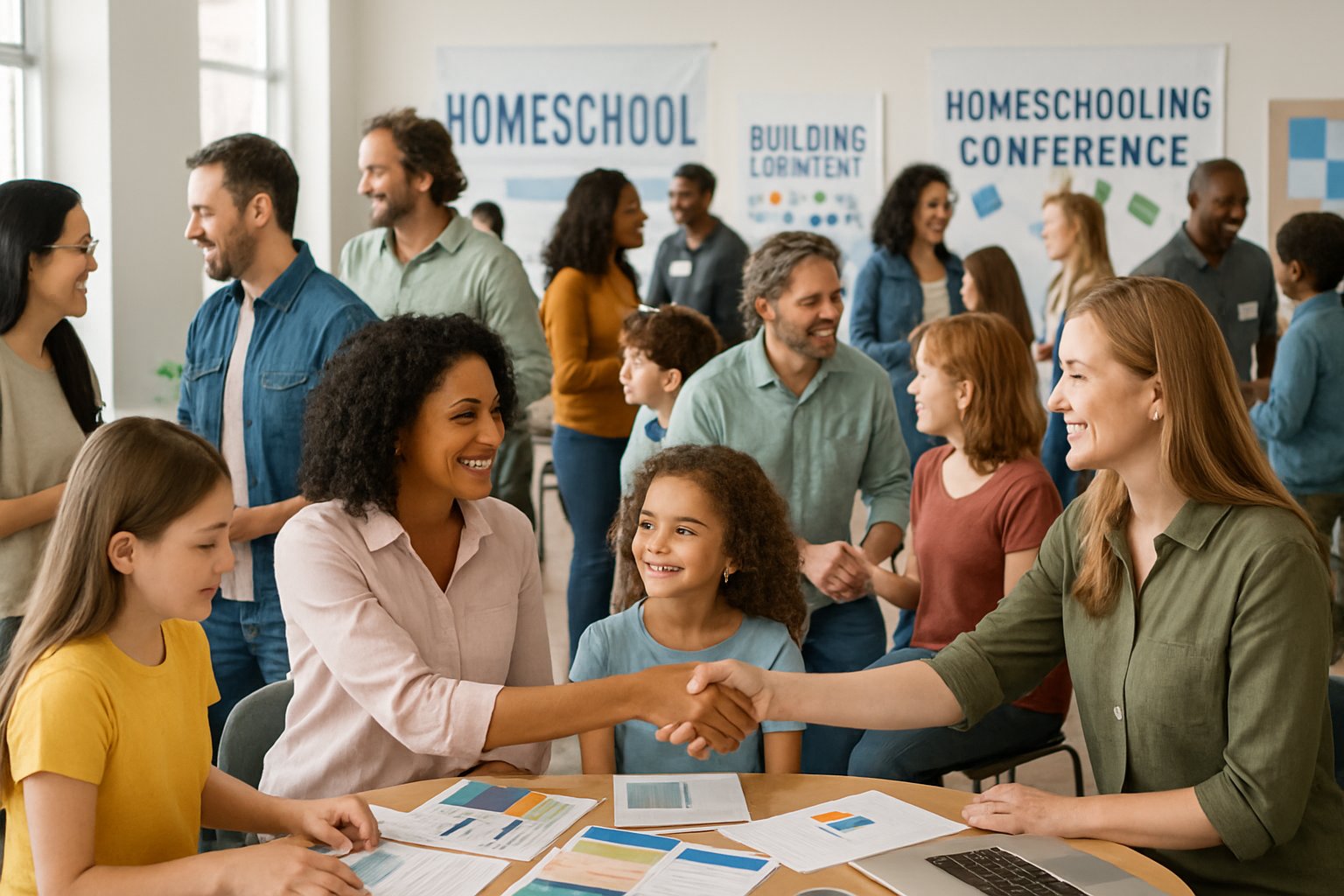
Homeschool conferences offer unmatched opportunities to connect with hundreds of families who share your educational values. These events combine learning opportunities with natural networking moments that can transform your homeschooling experience.
Discovering Homeschool Conferences
Local and regional homeschool conferences happen throughout the year in most areas. Families can find these events through state homeschool associations, local co-ops, and online homeschool groups.
National conferences attract thousands of families and feature renowned speakers, extensive vendor halls, and specialized workshops. Popular events include the Great Homeschool Conventions and regional gatherings hosted by major curriculum publishers.
State-level conferences provide more intimate settings where families can connect with others in their area. These events often cost less and make it easier to find local resources and support groups.
Many conferences offer early bird discounts and family packages that make attendance more affordable. Some provide childcare or teen programs, allowing parents to focus on workshops and networking opportunities.
Religious organizations, secular groups, and specialized learning communities each host their own conferences. This variety helps families find events that match their educational philosophy and family values.
Attending Workshops and Seminars
Conference workshops cover everything from curriculum selection to teaching challenging subjects. Homeschool conferences feature workshops and seminars that focus on specific educational approaches, making it easy to connect with families who share similar teaching methods.
Subject-specific sessions help parents tackle difficult topics like high school math or foreign languages. These workshops naturally attract families dealing with similar challenges, creating instant conversation starters.
Special needs workshops bring together families navigating learning differences. Parents often exchange contact information and form ongoing support relationships after these sessions.
Teaching method seminars focus on approaches like Charlotte Mason, Classical education, or unit studies. Families can identify others who use the same methods and arrange future meetups or resource sharing.
Most conferences provide session handouts and contact lists that help families stay connected after the event ends.
Meeting Like-Minded Families
Conference environments make it easy to start conversations with other families during meals, vendor hall visits, and between sessions. Many families wear name tags that include their children’s ages and homeschool approaches.
Meal times offer natural opportunities to sit with new families and share experiences. Conference organizers often arrange group seating to encourage networking among attendees.
Vendor halls create relaxed settings where families browse curriculum together and discuss their educational choices. Parents often ask for recommendations and share what works for their children.
Children’s programs allow kids to meet peers while parents attend workshops. These connections often lead to pen pal relationships or playdates when families live nearby.
Many conferences host meet-and-greet events specifically designed for networking. These might include regional breakfasts, newcomer orientations, or interest-based gatherings for specific teaching methods or family situations.
Leave a Reply