Real Life Examples Of Homeschooling Families
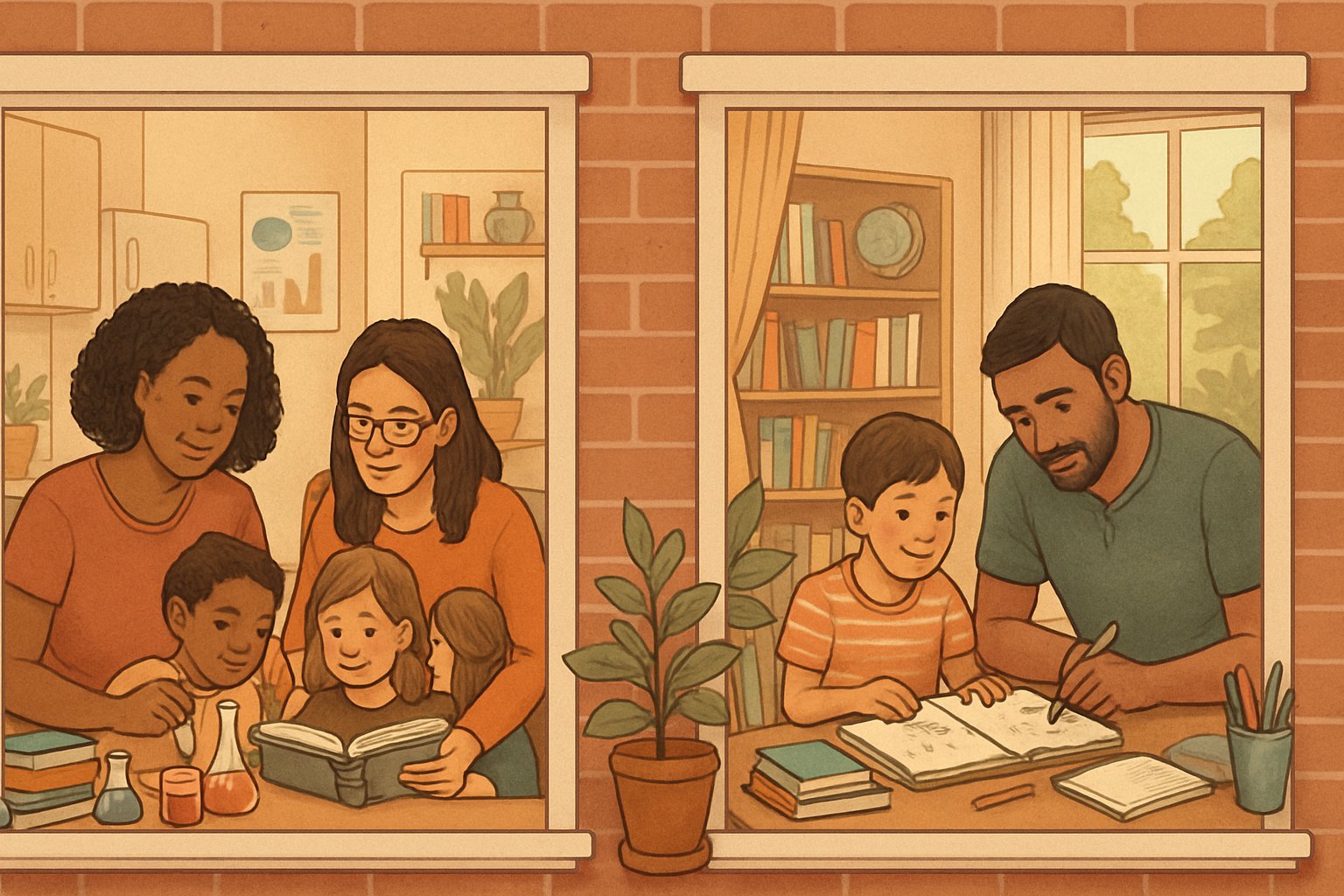
Families use homeschooling to create schedules that meet their learning goals and daily responsibilities. Many balance work, parenting, and education with help from flexible routines, community support, and shared teaching duties.
Homeschooling With Working Parents
Working parents often adapt home education to fit around their jobs. Some use short but focused “mastery hours” for lessons, followed by self-directed activities that children complete independently.
This approach allows families to maintain both careers and learning goals. Remote work has made this easier.
Parents can schedule blocks of work time while their children study. Many take part in homeschool co-ops or meetups where kids learn together, and parents can work nearby.
Families like those described by Modulo show how flexible planning helps manage both full-time jobs and home learning. They rely on teamwork and clear communication to ensure everyone stays on track.
Some parents trade off teaching times, while others include grandparents or tutors for help with specific subjects. This shared responsibility strengthens family bonds and keeps homeschooling consistent.
Homeschooling As A Single Parent
Single parents who homeschool face the challenge of balancing work, parenting, and teaching alone. Many use creative scheduling, breaking lessons into shorter segments that fit around job commitments.
They often join local or online homeschooling communities to share resources and emotional support. These networks offer practical help, such as study groups, carpools, or activity swaps.
Flexibility is key—some lessons happen early in the morning or in the evening when work demands are lighter. Single parents also teach independence by giving children age-appropriate responsibilities.
Kids learn to manage their studies and daily routines with increasing confidence. Over time, this structure helps both parent and child find a sustainable rhythm that fits their lifestyle.
Family-Style Learning With Multiple Siblings
Families with multiple children often blend subjects and activities to make home-schooling more efficient. Shared read-alouds, science experiments, and art projects let siblings learn together at different levels.
Parents tailor assignments by difficulty, so older children can help younger ones while practicing leadership and communication. A typical day might involve group lessons in the morning and individual study in the afternoon.
Many homeschoolers use mastery-based curricula that allow each child to progress at their own pace. Family-style learning encourages teamwork and reduces competition.
Daily interaction supports social development and emotional growth, helping children build patience and empathy while learning from one another.
| Benefit | Example Activity |
|---|---|
| Collaborative Learning | Family science experiments |
| Peer Support | Older child tutoring younger sibling |
| Efficient Teaching | Shared reading or combined subjects |
Involving Grandparents And Extended Family
Extended family members often play a vital role in home education. Grandparents may teach subjects they know well, such as history, gardening, or crafts.
This involvement provides children with diverse perspectives and valuable life lessons. As shown in examples of multi-generational homeschooling from Modulo’s article, grandparents can share teaching duties or assist during work hours.
Many families appreciate the emotional connection this creates, along with the practical support. Involving relatives also strengthens intergenerational relationships.
Children gain respect for different experiences and viewpoints, while grandparents enjoy being active in their growth. For families living close together—or even virtually connected through video calls—this collaboration adds richness to learning and fosters a sense of community within the home.
Homeschooling Styles And Unique Learning Approaches
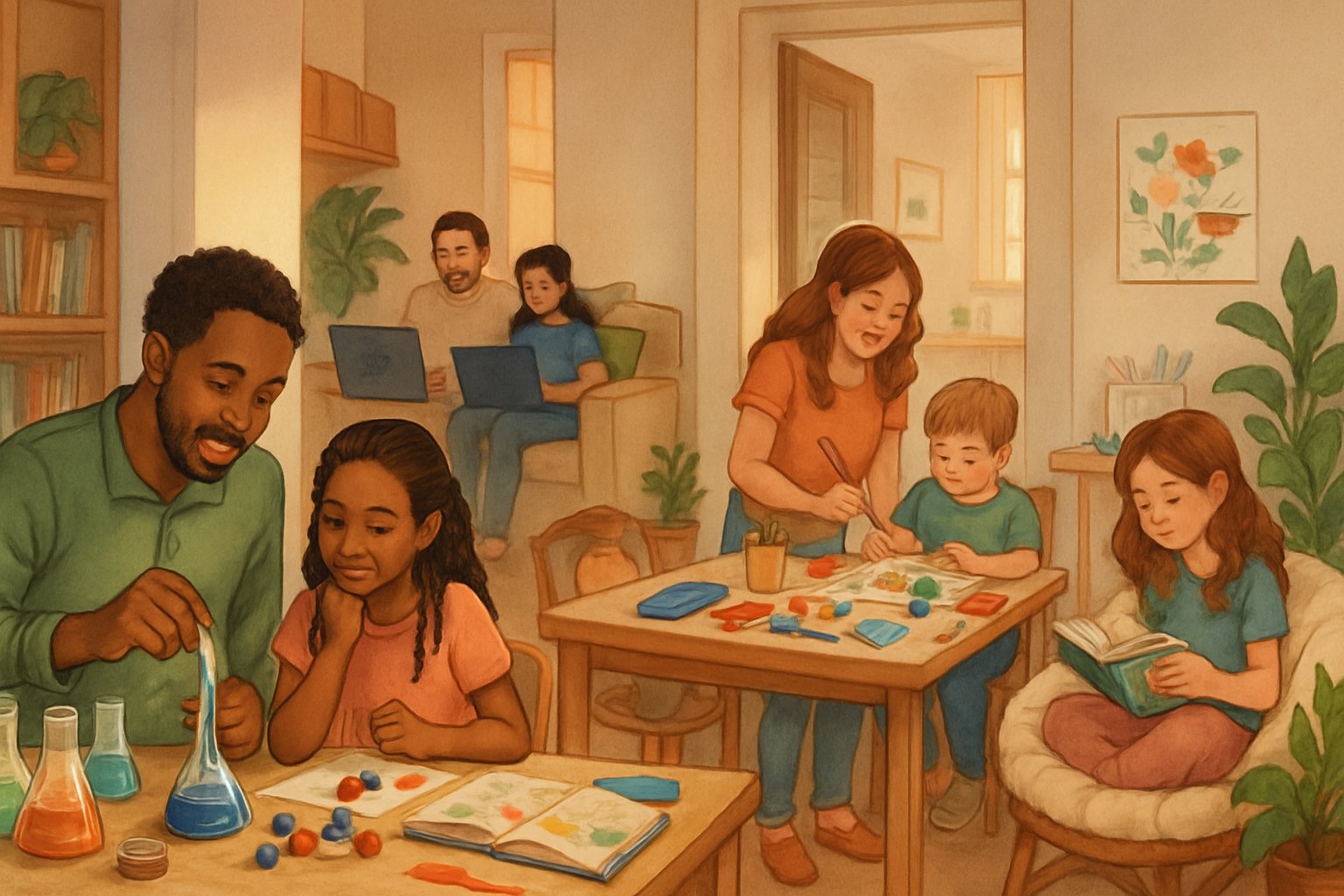
Families often tailor their homeschool styles to match their children’s personalities and interests. Some focus on curiosity-driven exploration, others on themed learning or hands-on experiences.
Many weave together tradition, structure, and flexibility to create a homeschool environment that blends learning with daily life.
Unschooling And Learner-Led Methods
Unschooling emphasizes natural, interest-led learning. Instead of following a set homeschool curriculum, children direct what, when, and how they learn.
Parents act as guides who provide materials, field trips, and conversation starters rather than lectures. Inspired by educator John Holt, this method allows learning to grow from everyday activities like cooking, budgeting, or gardening.
A child fascinated by animals might spend a week reading nature guides, visiting a zoo, or creating a project on habitats. Families who choose unschooling appreciate its flexibility.
It supports curiosity, deep focus, and confidence as children gain knowledge through real-world experiences. More about how unschooling promotes curiosity-based education can be found in this explanation of different homeschooling approaches.
Unit Studies And Thematic Teaching
The Unit Study method connects academic subjects under a shared topic or theme. A study on weather, for example, might include science experiments on clouds, measuring rainfall in math, reading weather-related stories in language arts, and making art inspired by storms.
This approach appeals to families who like cross-subject learning. It’s especially helpful for teaching multiple children together, as parents can tailor assignments by age.
A simple schedule might look like this:
| Subject | Sample Focus |
|---|---|
| Science | Water cycle experiments |
| Math | Charting rainfall |
| Reading | Weather-themed fiction |
| Art | Painting storm scenes |
Parents often pair this method with structured programs such as My Father’s World or Tapestry of Grace, which blend Bible study and classic education elements. More information about thematic teaching can be found through an overview of homeschool styles.
Charlotte Mason, Living Books, And Nature Study
The Charlotte Mason Method centers on character, beauty, and appreciation of the natural world. Instead of dry textbooks, families use living books—well-written stories that inspire thought and moral understanding.
Daily lessons are short and focused. Children engage in copywork for handwriting and attention to detail.
Outdoor time supports nature study, where they record plants, birds, or weather in notebooks. This approach values observation and narration.
When parents read aloud, children retell what they heard to strengthen memory and comprehension. Homeschool curricula like Sonlight often include Mason-inspired reading lists that build lifelong learning habits.
Visit this in-depth discussion on varied homeschooling methods for examples of how the Charlotte Mason philosophy thrives in modern homeschools.
Roadschooling And Worldschooling Adventures
Roadschooling and Worldschooling expand the classroom beyond the home. Families travel locally or abroad, turning experiences into lessons.
Math might happen while budgeting gas expenses. History comes alive at museums or national parks.
Travel gives children firsthand exposure to geography, culture, and languages. These styles rely on experiential learning, where doing replaces memorizing.
Parents often use digital resources or portable curricula to stay organized on the road. Worldschooling often blends formal instruction with spontaneous learning.
A visit to a local market can spark language practice, mapping skills, and cultural insight. Learn more about these travel-based homeschool methods through a guide to different types of homeschooling.
Socialization And Community In Homeschool Life
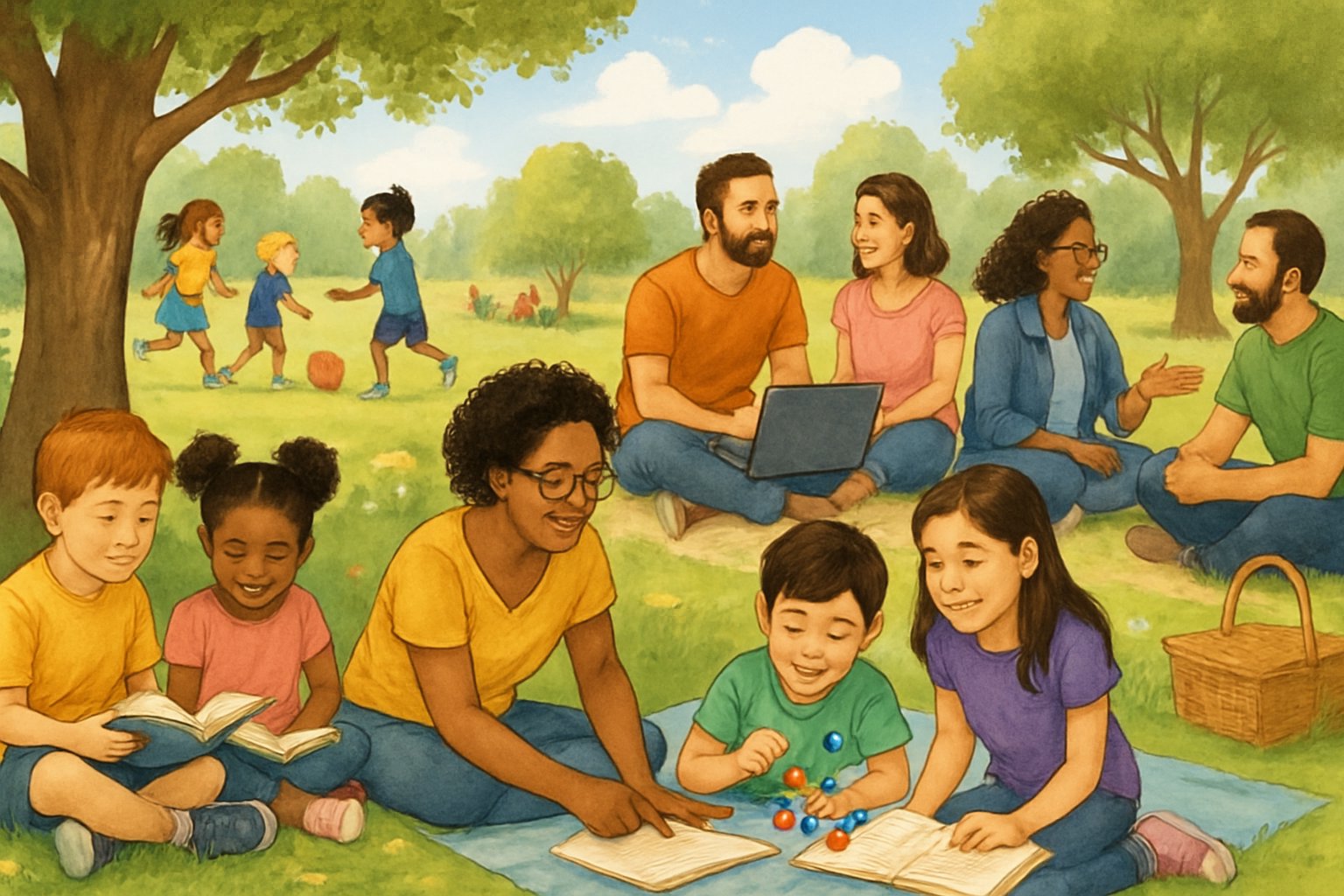
Homeschooling families often find that learning extends far beyond academics. Children grow socially through interactions with people of different ages, real-world experiences, and supportive community settings that strengthen confidence and communication.
Building Connections And Social Skills
Homeschooled children often develop social skills through daily life rather than structured classrooms. They learn to communicate with adults, younger kids, and peers during errands, volunteer work, and family activities.
In one account, families describe how children interact comfortably with people “from babies to eighty-year-olds,” helping them gain confidence and empathy through mixed-age experiences shared on Compass Classroom’s blog. These everyday social encounters teach polite conversation, respect for different perspectives, and patience.
Parents often notice that children adapt easily in varied settings such as church events, neighborhood gatherings, and extracurricular programs. Such experiences help them practice clear communication and teamwork while learning social awareness naturally.
Socialization Opportunities Within The Homeschooling Community
The homeschooling community offers many organized activities that balance academic learning with friendship and social growth. Local co-ops and support groups create a space where families meet for group lessons, science fairs, art clubs, and sports.
According to Homeschool.com, these shared experiences mirror traditional school socialization but in more flexible, inclusive ways. Children often belong to multiple groups—music classes, volunteer projects, and community service events.
These settings expose them to different personalities and communication styles. Homeschool parents also build social ties among themselves, exchanging ideas and resources that strengthen both learning and friendship networks.
This community support system helps maintain consistent opportunities for students to form lasting, meaningful connections.
| Type of Group | Main Benefit | Example Activity |
|---|---|---|
| Co-ops | Collaborative learning | Group science lab |
| Clubs | Shared interests | Art or robotics |
| Community Service | Empathy and teamwork | Food drive participation |
Freedom From Peer Pressure And Supporting Individuality
Homeschooled students often face less peer pressure than those in traditional classrooms. Parents describe relief in seeing children make choices based on personal interests instead of social conformity.
As explained by families featured on nwef.org, homeschooling environments nurture individuality by allowing children to explore their own pace and passions.
Without constant comparison to classmates, children tend to develop stronger self-confidence. They can pursue hobbies like coding, art, or gardening without worrying about what’s “popular.”
Families also find it easier to manage exposure to digital influences. This gives kids time to focus on real-world interactions.
Leave a Reply