Blending Homeschool Styles for a Tailored Education

Families often mix homeschooling methods to give their children both structure and freedom. They pull useful ideas from different systems, design lessons that match how their children learn best, and create flexible routines that can change as needs shift.
This approach focuses less on following one philosophy and more on what works in daily life.
Choosing Elements from Homeschooling Methods
Parents often start by listing what they value most in education—structure, creativity, independence, or academics. From there, they explore homeschool methods such as classical, Charlotte Mason, Montessori, or unschooling to see which styles meet their goals.
For example, one family might prefer the discipline and logic of the classical model but add hands-on learning from unit studies to make lessons more interactive. Another might use Charlotte Mason’s short lessons yet include project-based work inspired by Montessori learning.
Practical steps to blend methods:
| Step | Action |
|---|---|
| 1 | Identify your child’s strengths and challenges |
| 2 | Match methods that reinforce strengths or fill gaps |
| 3 | Choose flexible materials and a manageable curriculum |
| 4 | Test and refine your plan over time |
Learning about multiple types of homeschooling can help families make smart choices when designing their plan. Exploring resources like 17 Types of Homeschooling Styles and Methods gives parents ideas that can be adjusted to fit real-world needs.
Benefits of Eclectic Homeschooling
Eclectic homeschooling offers balance. It brings together the best parts of different methods without being limited by one structure.
This flexibility lets families shift between structured subjects like math and more creative subjects such as art or writing. Children often stay motivated because learning feels personal and dynamic.
Eclectic approaches can combine textbooks, unit studies, online programs, and outdoor activities all in one week. Parents can easily adapt materials to a child’s learning style—whether visual, auditory, or hands-on.
According to Eclectic Homeschooling: How To Combine Methods For Success, this balance creates an ideal mix of freedom and discipline.
Common Combinations and Approaches
Blending homeschool styles can take many forms, and families often discover patterns that work best for them. Some pair the classical method’s systematic skill building with Charlotte Mason’s nature-based learning.
Others link Montessori independence with delight-directed or unschooling principles to encourage self-led exploration. An eclectic homeschool family might use formal grammar lessons but teach history through creative unit study projects that connect reading, geography, and art.
This approach gives structure across subjects while keeping learning active.
Understanding Learning Styles and Family Needs

Every family brings different routines, goals, and personalities to homeschooling. Recognizing how children learn best and how a family functions day to day helps parents design a practical and flexible homeschool environment that fits real life.
Identifying Your Child’s Learning Style
Children process information in different ways. Some are visual learners who recall details best through reading, charts, and diagrams.
Others may be auditory learners, grasping ideas when lessons are discussed or read aloud. Kinesthetic or hands-on learners often need to move and experiment to stay engaged.
Parents can observe how their child responds to lessons and activities. Simple tests or trial lessons can reveal learning preferences.
For example, understanding learning styles can help a parent shape teaching methods around a child’s strengths, whether that means more listening, reading, or doing.
Ways to identify patterns include:
- Watching which activities hold attention longest
- Asking the child how they prefer to learn new ideas
- Rotating between reading, discussion, and projects to see what works best
Over time, parents notice clear trends that guide curriculum choices and teaching tools.
Assessing Family Values and Preferences
Every household has its own rhythm and priorities. Some families thrive on structure and detailed schedules.
Others prefer a calm, curiosity-driven experience built around conversation and exploration. Parents can consider questions like:
- Do they value academic rigor or creative freedom?
- How much time can they spend on planning lessons?
- Does the family enjoy living books, projects, or technology-based learning?
Exploring options like different homeschool styles helps families see which methods match their values. A family that enjoys outdoor time might include nature study, while those who appreciate discussion may choose literature or history read-alouds.
Documenting these preferences clarifies goals and prevents conflicts later, especially when choosing curriculum or teaching routines.
Balancing Structure and Flexibility
Homeschooling works best when it blends boundaries with freedom. Too much structure can feel confining, but too much freedom can lead to inconsistency.
Families can build structure around short, focused sessions. Short lessons—a hallmark of the Charlotte Mason philosophy—help younger children stay attentive and reduce burnout.
Between lessons, spontaneous projects and hands-on learning encourage deeper exploration. Tools like weekly checklists or rotating subject schedules keep families organized while leaving space for new interests.
The key is adjusting as children’s needs and learning styles shift.
Practical Tools and Resources for Custom Homeschooling
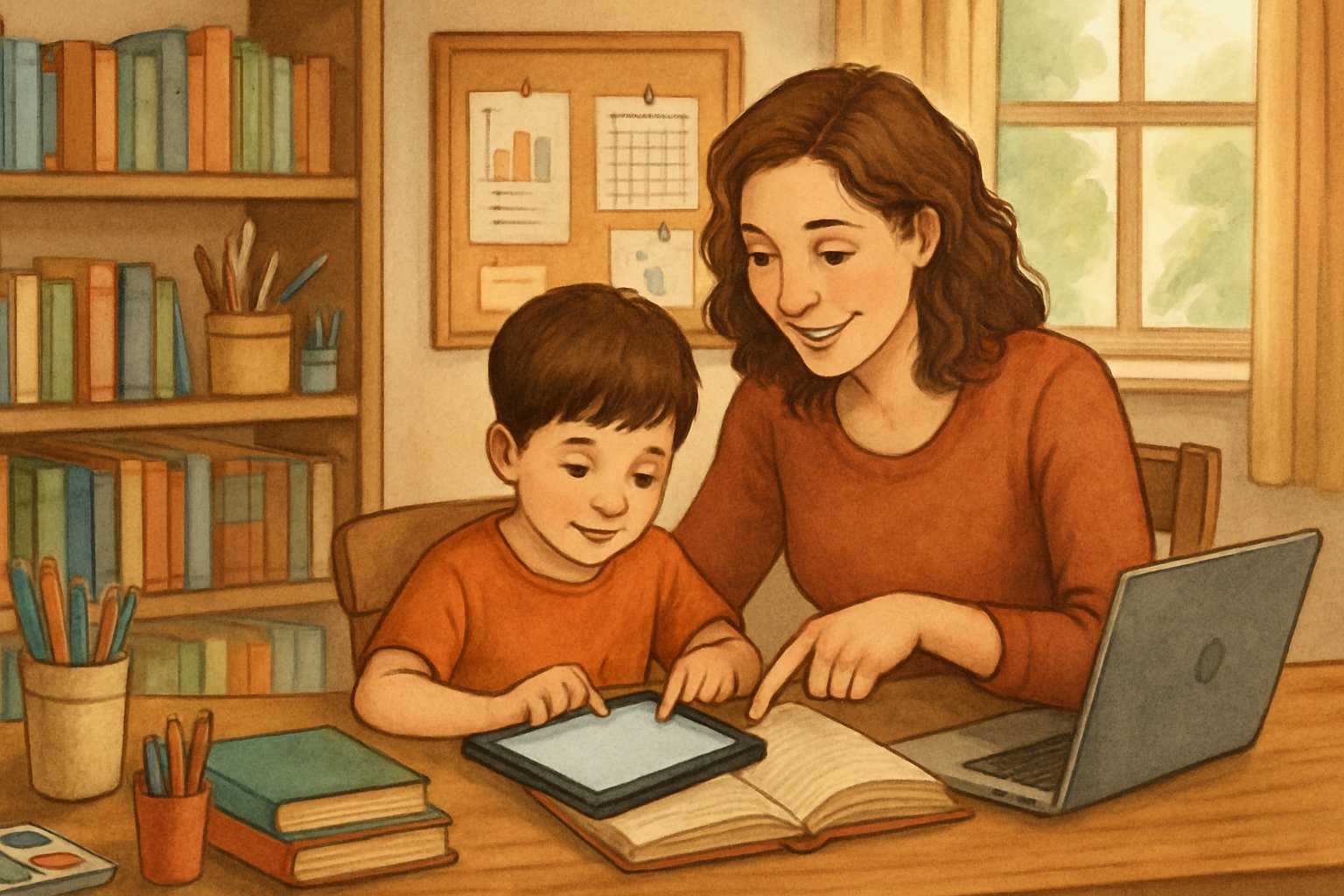
Families can blend methods more smoothly when they have practical tools that support different learning needs and ways of teaching. They can mix traditional lessons, creative projects, and digital tools to help children learn at their own pace and with their own strengths.
Adapting Curriculum for Diverse Learners
Each child learns differently, so parents benefit from tools that allow flexible instruction. Programs such as Khan Academy provide free academic lessons with built‑in pacing options, while creative platforms like Canva help children design visual projects that show what they’ve learned.
Families who enjoy hands-on structure can borrow ideas from Montessori or Charlotte Mason methods, such as using short, focused lessons or nature study journals. For students who learn best through discovery, parents may blend techniques from eclectic homeschooling or unschooling, encouraging children to design their own projects.
To stay organized, some parents build a simple table of focus areas:
| Method | Key Strength | Sample Tool or Resource |
|---|---|---|
| Montessori | Independence, self-paced work | Hands-on materials, learning trays |
| Charlotte Mason | Short lessons, nature focus | Outdoor journals, living books |
| Classical Homeschool | Logic, structure | Timeline notebooks, copywork guides |
| Unschooling | Interest-led learning | Child-planned projects |
A blended plan helps children move between structure and creativity without losing focus.
Incorporating Online and Community Resources
Online platforms expand what families can do at home. Free digital lessons from Khan Academy, art tutorials on YouTube, and printable planners from Canva make it easier to bring variety into daily learning routines.
Parents can combine these with local programs such as library clubs, science fairs, or co-ops. Many families join virtual groups to share ideas and find encouragement.
Participating in homeschool co-ops and community activities helps children build friendships and practice teamwork. Some use hybrid programs that mix at-home learning with weekly group classes.
Children gain independence when they explore self-paced lessons. They also benefit from collaboration through local or online networks.
Leave a Reply