Why and When to Reevaluate Your Homeschool Style

Families often notice that a learning approach that once worked now feels less effective. Children’s needs, interests, and personalities evolve, and so should their homeschool methods.
Evaluating how things are going helps families stay flexible and keep learning meaningful.
Recognizing Signs Change Is Needed
A child’s frustration, boredom, or lack of motivation often signals that change may be due. When lessons end in tears or daily plans run late every week, something isn’t fitting anymore.
Parents should look for consistent stress or constant battles over schoolwork as early clues. Sometimes, the issue lies in pace or structure.
Some children crave more freedom and projects, while others thrive on schedules. Noticing these preferences helps families decide if they need to shift from textbook-heavy approaches to more hands-on learning or vice versa.
Regular review makes it easier to spot problems before they build up. The Umbrella School notes that adjusting plans early protects a child’s joy in learning.
When kids show curiosity again or seem calmer during lessons, it’s often a sign the new approach fits better.
Reflecting on Growth and Progress
Parents can evaluate homeschool progress by asking clear questions:
- Is the child meeting academic goals?
- Are reading and math skills developing steadily?
- Do they enjoy the subjects they study most days?
Observations matter as much as test results. Growth shows in confidence, curiosity, and independence.
Families might also track non-academic gains like better cooperation or problem-solving during group tasks. Many find it useful to plan brief “check-ins” at natural pauses, such as winter break or the end of a semester.
The blog Sonlight suggests reviewing routines and goals after the holidays when families have time to rest and think clearly.
Timing Your Homeschool Adjustments
Reevaluation works best at predictable transition points, such as midyear or the start of a new term. Major life shifts—like moving, adding a new family member, or changing work hours—may also call for adjustment.
Planning changes around slower periods prevents burnout. As Educating at Home explains, January often provides a natural moment to refresh the schedule after Christmas break.
The pause allows room to reflect on progress, organize materials, and set new goals. Short monthly reviews also keep plans flexible.
A simple checklist can help track whether lessons stay balanced and realistic.
Key Steps for Adjusting Your Homeschool Plan
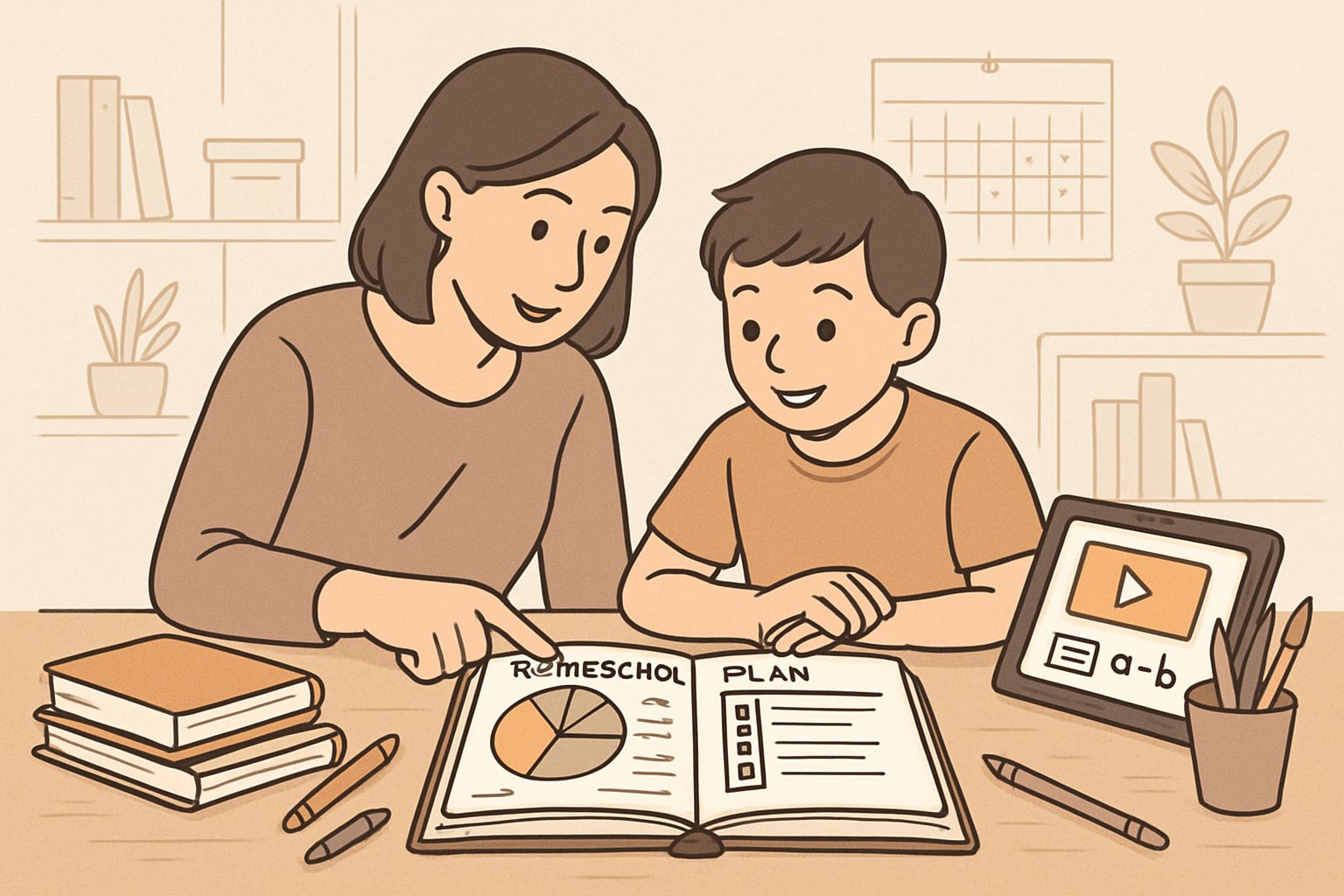
Families often discover that their homeschool plan needs fine-tuning as schedules shift or children grow. By reviewing routines, materials, and student input, parents can make practical improvements that keep learning smooth and enjoyable.
Assessing Your Routine and Schedule
A good place to start is by looking at daily routines. Parents can ask simple questions: Are mornings calm or rushed? Do subjects take longer than expected?
Keeping a short log for one week helps highlight problem areas. Many experienced homeschoolers schedule quarterly reviews to stay organized, as suggested in this review guide.
Setting aside specific times each year allows families to identify what no longer works before frustration builds. It helps to adjust time blocks based on energy levels.
For instance:
| Time of Day | Best Activities | Notes |
|---|---|---|
| Morning | Math, reading | Focus is highest |
| Afternoon | Art, science experiments | Creative energy peaks |
| Evening | Read-alouds, review | Calm close to the day |
Making small tweaks—like shifting a hard subject earlier or shortening lesson periods—can ease stress. Each day can then run more smoothly.
Revisiting Curriculum and Materials
Curriculum changes should come after honest evaluation, not impulse. If a child struggles daily, parents might first review teaching methods or pacing rather than replace everything.
Some experts, including HSLDA’s guidance, emphasize that progress checks prevent unnecessary curriculum hopping. Parents can create a simple checklist to guide this review:
- Is the material age-appropriate and engaging?
- Does it align with long-term goals?
- Have we used it consistently enough to judge results?
If the answers show true misalignment, adjusting or switching may make sense. Sometimes, introducing supplemental materials like hands-on projects or videos strengthens understanding without a full change.
Involving Your Child in the Planning Process
Children often give useful feedback about what works for them. Asking questions like “What parts of school feel easiest?” or “Which subjects frustrate you?” opens the door to collaboration.
According to The Umbrella School’s advice, listening to a child’s perspective helps preserve motivation and reduce tension. Parents can invite children to help set short-term goals, such as finishing a project or mastering a skill before a break.
A visual progress chart or sticker tracker keeps younger students engaged. Offering limited choices—like selecting between two books or deciding when to take a break—builds responsibility while keeping structure.
Involving students increases their investment in learning.
Simplifying for Efficiency
When homeschool life feels heavy, simplification can bring balance. Over time, parents may add too many activities, co-ops, or electives.
Trimming excess tasks allows more focus on core subjects and family time. The article on adjusting homeschool routines as seasons change suggests that even small shifts after breaks can restore stability.
To simplify, parents can:
- Combine subjects where possible (history with reading, science with writing).
- Use weekly planning batches instead of daily prep.
- Store supplies in labeled bins for easy cleanup.
A shorter, well-structured day often leads to better focus and less burnout. Simplifying the homeschool plan means using time and energy wisely so every lesson feels purposeful.
Implementing and Fine-Tuning New Strategies

Families improve their homeschool plan when they test small changes and collect feedback. A step-by-step process that includes honest evaluation and ongoing flexibility helps parents create a learning routine that fits evolving goals and student needs.
Trial Periods and Evaluation
Starting with a trial period lets families see if new methods or schedules truly help. Short testing windows—such as two to four weeks—allow time to observe progress without making permanent changes too soon.
Parents can track student engagement, attitude, and skill growth in a simple evaluation chart.
| Focus Area | What to Observe | Example Questions |
|---|---|---|
| Engagement | Attention during lessons | Do they stay focused for each subject? |
| Understanding | Skill retention | Can they explain what they learned clearly? |
| Motivation | Initiative and mood | Do they show interest in daily tasks? |
They can collect feedback through weekly check-ins and short reflections. If a math approach or learning schedule isn’t meeting expectations, adjustments should follow right away.
Using structured reviews similar to strategy evaluation processes helps measure results objectively and supports smarter decisions going forward.
Staying Flexible for Continued Success
Flexibility ensures a homeschool plan remains effective as students grow and circumstances shift. Parents should revisit routines at least once each semester and update materials that no longer match learning styles or academic goals.
This mirrors the adaptive process used in revising a strategic plan.
A flexible mindset allows parents to pivot quickly when lessons feel overwhelming or unproductive. They can switch subject order, shorten sessions, or mix in new tools such as educational apps.
Keeping notes on what changes worked builds a record that guides future planning.
Leave a Reply