Key Elements of a Blended Approach to Homeschooling
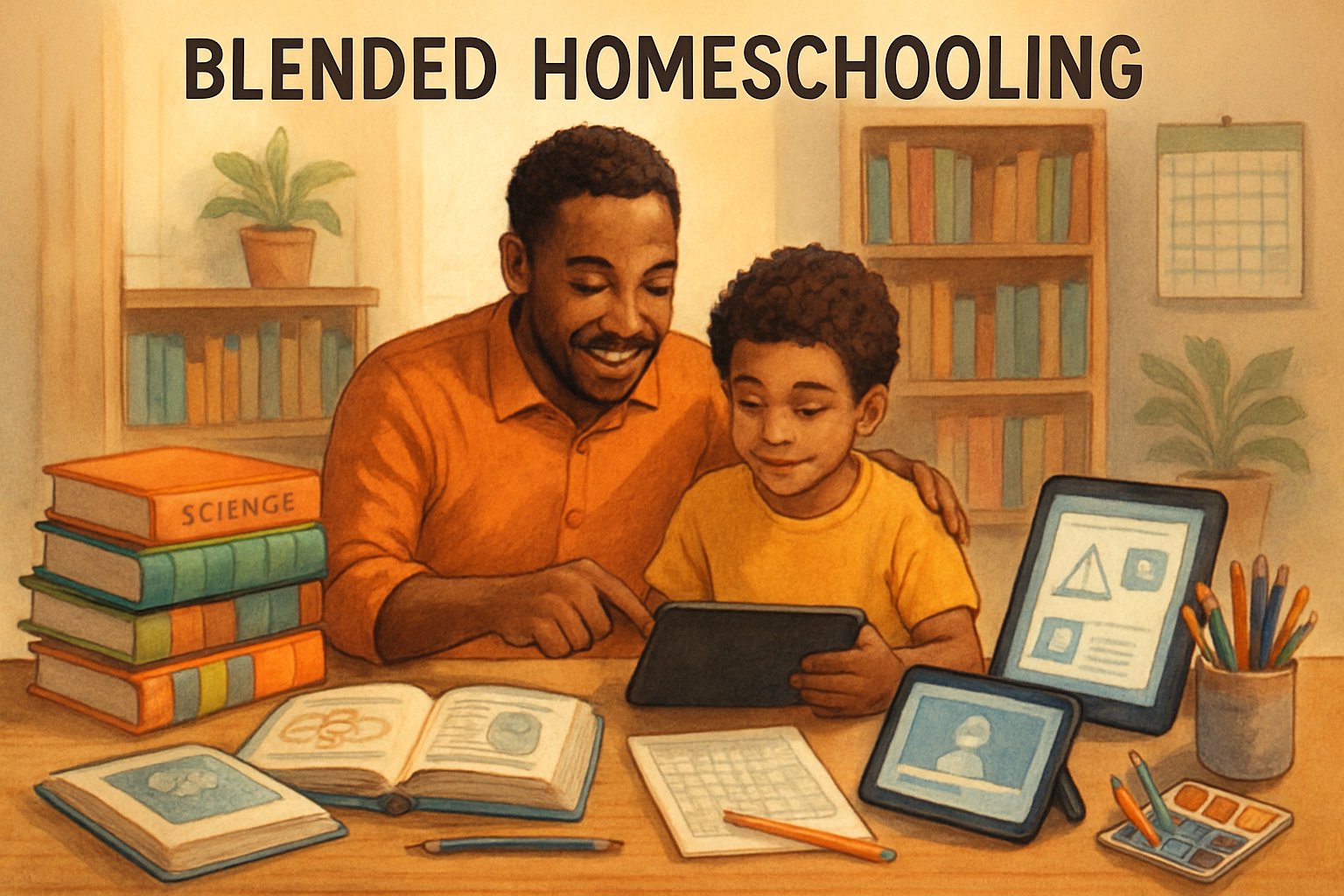
A blended homeschooling method uses both traditional materials and digital learning tools to create a balanced, flexible routine. It draws on multiple curriculums so children can learn through reading, practice, and interactive activities that support diverse learning styles.
Benefits of Mixing Multiple Curriculums
Using more than one curriculum helps parents tailor lessons to a child’s strengths and needs. It also encourages critical thinking, since students compare ideas and explore topics from different perspectives.
For example, a family might pair a literature-based history program with a hands-on science curriculum to reinforce both research and experimentation. Parents who mix curriculums often find it easier to keep learning fresh.
Switching resources when a student loses focus can rebuild motivation without disrupting overall progress. According to Discover K8 Learning, this flexibility lets children move at their own pace while still benefiting from expert guidance through workbooks, videos, and teacher support.
Advantages of Combining Curriculums:
| Benefit | Description |
|---|---|
| Flexibility | Adjust lessons to fit a student’s pace and interests |
| Variety | Avoid monotony with both digital and print materials |
| Personalization | Choose the best resource for each subject |
Blended Learning Models for Homeschool
Blended homeschooling usually combines offline and online experiences. Some families use a rotation model, where children alternate between workbook exercises and online lessons.
Others use an enriched virtual model, completing most work at home but checking in with live teachers through online classes. The How Do I Homeschool site explains that blended learning connects traditional instruction with digital activities for a well-rounded approach.
This structure builds both independence and accountability. Parents act as facilitators but rely on digital platforms for expert input and tracking progress.
Blended models can also include co-op classes, field trips, and small-group discussions. These options create social interaction and support independent learning habits.
By balancing online structure with real-world exploration, students gain both technical and interpersonal skills.
Choosing the Right Combination for Your Family
Choosing the right mix starts with assessing a child’s learning style and family routine. Visual learners might respond best to online lessons and videos, while hands-on learners may need more printed workbooks or science kits.
Parents can test short units from different curriculums to see what fits best before committing long-term. Common Sense Press suggests combining digital learning tools with real-world projects to strengthen understanding.
For example, students may use a math app for practice and then apply those skills in cooking or budgeting activities. Families should also consider cost, screen time balance, and parent involvement.
Keeping lessons short, consistent, and goal-focused helps maintain structure without losing flexibility.
Strategies for Combining Multiple Subjects and Ages
Teaching multiple ages and subjects at once works best when lessons connect across disciplines and adapt to varying skill levels. Using integrated plans, flexible structures, and creative projects helps reduce lesson planning time while encouraging students to think critically and explore concepts in meaningful ways.
Multi-Subject Integration Techniques
Combining subjects helps students see how ideas link together. One practical method is thematic learning, where a single topic stretches across lessons.
For example, a family studying ecosystems can connect science with math by measuring rainfall and with writing by creating observation journals. This approach promotes critical thinking as students draw conclusions from data and express findings clearly.
Project-based learning also supports integration. A renewable energy project can include science (types of energy), history (technological progress), and writing (research reports).
Tools like digital planners make this coordination easier. Resources from The Homeschool Chick recommend flexible scheduling and community-based projects to help learning come alive.
| Subject | Example Activity | Connected Skill |
|---|---|---|
| Math + Science | Track plant growth | Data analysis |
| Social Studies + English | Write journal entries from a historical figure’s view | Perspective taking |
| Art + Geography | Create a map mural | Spatial reasoning |
Blending Curriculums for Different Learning Levels
Families often teach children of differing grades together. Choosing flexible or modular curriculums works well because materials can scale in difficulty.
A younger child may focus on basic facts, while an older one expands on research or analysis. Family-style learning, described by The Homeschool Mom, lets everyone share core content, but assignments differ in depth.
Using a shared theme like “innovation” can connect reading, science experiments, and art projects at varied levels. Grouping lessons this way strengthens understanding without repeating work.
Parents can create tiered tasks, such as having younger children build a model while older students calculate dimensions or research real-world applications. This structure saves time and keeps all ages engaged in cooperative problem-solving.
Customizing Learning Experiences for Engagement
Customization keeps multi-age learning interesting and effective. Students learn best when projects match their interests and challenge them at their current ability.
Parents can use flexible tools like visual organizers, educational apps, or adaptive learning platforms to personalize instruction.
Engagement grows when lessons involve hands-on exploration. For instance, during a tron-inspired science activity, students might design simple circuits or model how electricity flows.
Interactive projects like these spark curiosity and reinforce academic skills.
Feedback plays a large role. Short check-ins allow instructors to adjust the pace and provide targeted support.
Using a mix of quiet reading time, group problem-solving, and creative expression ensures that learners stay motivated. This approach also strengthens critical thinking and independence.
Leave a Reply