More families are rethinking how their children learn, and homeschooling continues to grow as a strong alternative to traditional classrooms. Across the country, students learning at home are showing impressive academic results and stronger engagement in their studies. This article explores why homeschoolers are often outperforming public school students—and how any family can apply these same principles for better learning outcomes.

The following sections look at how homeschooling allows for personalized pacing, flexible schedules, and focused teaching that fits each child’s needs. They also highlight how parental involvement, efficient learning time, and thoughtful curriculum choices can shape stronger academic skills and confidence. Each reason offers practical insight for families seeking a more effective and balanced approach to education.
1) Customized learning pace tailored to each child’s needs
Homeschooling gives families the freedom to match lessons to a child’s learning speed. Instead of keeping up with a class schedule, students can spend more time on subjects that challenge them and move faster through topics they understand well.
This flexible approach helps children stay engaged and confident. Parents can adjust daily plans to fit each child’s strengths and weaknesses, creating a learning rhythm that supports steady growth.
In traditional classrooms, teachers must follow a set pace for large groups. At home, parents can design a personalized learning plan that fits their child’s interests and skills. This makes learning more meaningful and less stressful.
Many families find that this flexibility leads to stronger understanding and better retention. A customized curriculum allows children to explore topics deeply and develop a love for learning that extends beyond textbooks.
2) Flexible schedules that align with natural sleep patterns
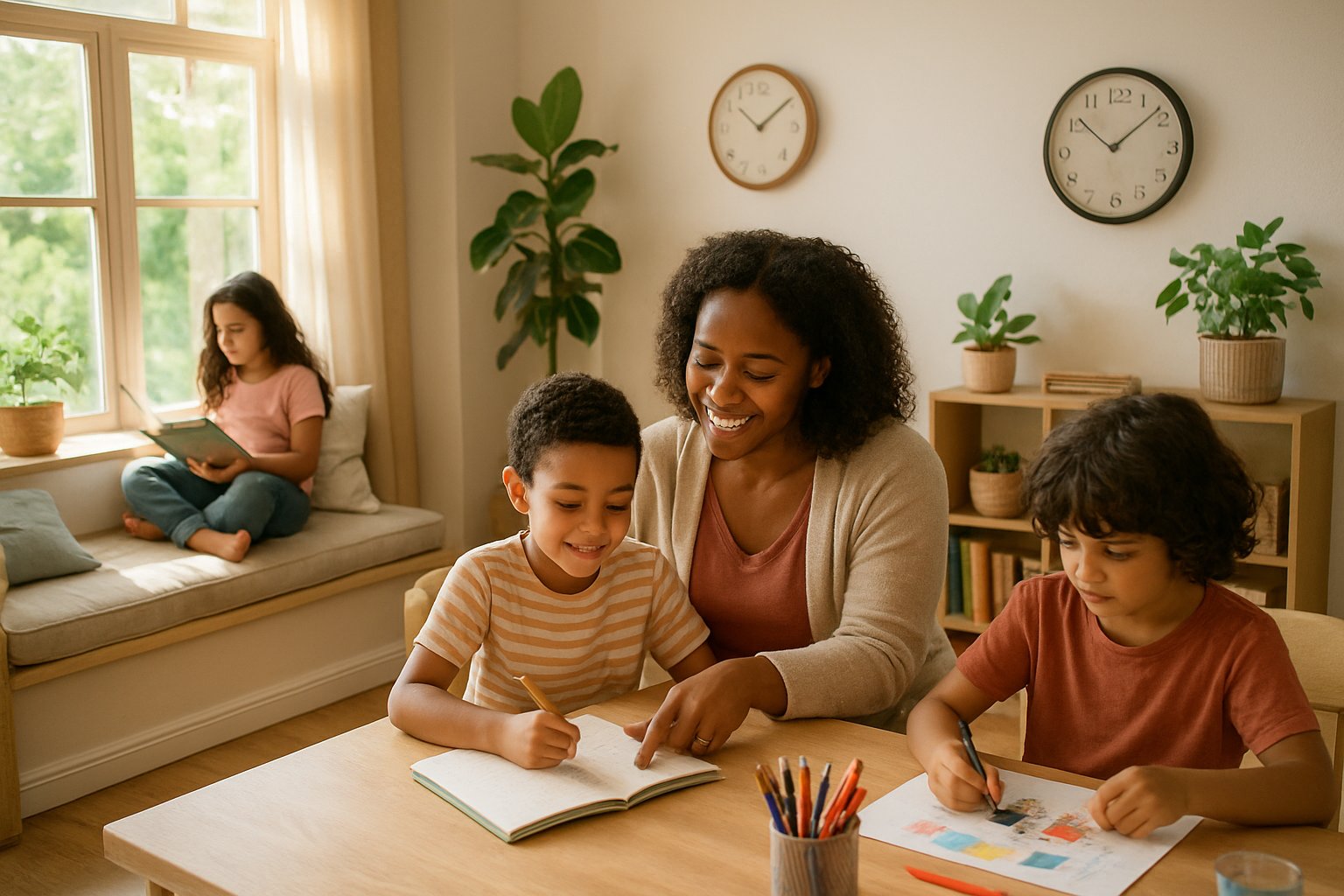
Homeschooling lets families set routines that match their children’s natural sleep cycles. Without early school start times, kids can get the rest they need and start learning when they feel alert and ready. This often leads to better focus and a calmer start to the day.
Studies show that homeschool students often sleep later and longer than their public school peers. They also tend to have healthier sleep habits and improved well-being, according to research on school start times and adolescent sleep.
Families can adjust lessons around their own rhythms. For example, some children learn best in the late morning or afternoon. A flexible homeschool schedule allows parents to plan lessons during these peak times instead of forcing a rigid routine.
This flexibility supports both learning and family life. Parents can plan activities, chores, and rest around when everyone feels most productive. As a result, homeschooling can create a more balanced and less stressful environment for both children and parents.
3) Focused one-on-one teaching time
Homeschooling often gives students more direct attention than they would get in a classroom. In a traditional school, one teacher may work with 20 to 30 students at once. At home, parents can adjust lessons to match a child’s pace and learning style, which helps them understand material more quickly.
This focused time means fewer distractions and more chances to ask questions. Studies show that personalized, focused instruction can lead to better results in less time. Children spend more of their learning hours actively engaged instead of waiting for others to catch up.
Parents can also use short, targeted lessons to keep their child’s attention. According to research on homeschool instruction time, homeschoolers often make equal or greater progress with fewer hours of formal teaching each day.
Focused one-on-one teaching builds confidence. When students see their progress right away, they feel more motivated to keep learning. This steady support helps them develop strong study habits and a lasting interest in learning.
4) Ability to avoid controversial or unwanted curriculum topics

Homeschooling gives families more control over what their children learn. Parents can skip or delay lessons they feel are too political, sensitive, or not age-appropriate. This flexibility helps them focus on subjects that match their values and goals.
In public schools, debates over curriculum often create tension. Issues like standardized testing, history content, or health education can spark disagreements among parents and teachers. Some families choose homeschooling to avoid these curriculum conflicts and create a calmer learning space.
Homeschooling also allows parents to decide when and how to introduce controversial topics. They can discuss them in ways that fit their child’s maturity and beliefs. As one article notes, many families turn to homeschooling to escape curriculum fights and failing schools.
This ability to customize lessons lets children learn without outside pressure. It can also make education feel more personal and less stressful for both students and parents.
5) More efficient use of time with fewer annual classroom hours
Homeschool students often complete lessons in less time because their instruction is more focused. Without large class transitions or long periods spent on classroom management, they can move through material faster and still learn effectively.
Studies show that many homeschoolers spend about 2–3 hours a day on academics and make similar progress to public school students who attend a full school day. Research by HSLDA’s Steven Duvall found that this efficient learning time allows children to cover the same ground with fewer hours.
Homeschoolers also have shorter school years. Some reports note they complete around 144 instructional days compared to 180 for public school students. Despite this difference, they often achieve strong academic outcomes, as shown in a study comparing homeschool and public school instruction.
This efficiency gives families more flexibility for field trips, hobbies, and rest. It also helps students stay engaged because they spend less time sitting through tasks that don’t match their learning pace.
6) Parental involvement boosting motivation and accountability
Homeschooling often allows parents to take an active role in their child’s daily learning. When parents stay involved, students tend to feel more supported and responsible for their progress. Research shows that parental involvement can improve student outcomes by increasing motivation and engagement.
Parents who guide lessons, track assignments, and offer feedback help children stay focused. This consistent attention encourages students to take ownership of their work and develop self-discipline. Studies suggest that family engagement is a key factor in student success.
Homeschooling parents can also adapt lessons to match their child’s interests and pace. This flexibility helps students feel more invested in what they learn. When children see their parents’ commitment, they often mirror that effort and accountability.
Even small actions, like reviewing goals or discussing progress, can make a difference. Parents who stay involved not only boost motivation but also help their children build lifelong learning habits.
7) Curriculum choices that emphasize core academic skills
Homeschool families often focus on building strong foundations in reading, writing, math, science, and social studies. These subjects help students gain the skills they need for higher learning and everyday life.
Many programs highlight mastery-based learning, where students move forward only after fully understanding a topic. This approach allows for steady progress and reduces learning gaps. Families can explore options like mastery-based homeschool curriculum choices that support this method.
Some parents choose structured plans that align with recognized standards, such as adapting parts of Common Core for homeschoolers. Others prefer flexible resources that still cover essential subjects.
A strong homeschool curriculum usually includes core academic subjects to ensure balanced learning. By focusing on these areas, students strengthen problem-solving, communication, and critical thinking skills.
Families can mix traditional textbooks with digital tools to fit their child’s learning style. This flexibility helps keep lessons engaging and effective while still emphasizing academic essentials.
Understanding the Homeschooling Advantage
Homeschooling often allows students to learn at their own pace and focus on subjects that match their interests and abilities. This approach can lead to stronger academic results and higher motivation compared to traditional classrooms.
Flexibility in Learning Environments
Homeschooling gives families control over when, where, and how learning happens. Students can study in quiet home spaces, outdoors, or even while traveling. This flexibility helps them stay focused and reduces distractions common in large classrooms.
Many families appreciate that homeschooling schedules can adapt to a child’s energy levels. For example, a student who learns best in the morning can complete lessons early, leaving afternoons for projects or physical activity.
Research shows that flexibility supports better test performance. Studies from the Journal of School Choice found homeschoolers often score in the 85th to 90th percentile on standardized exams like the SAT and ACT.
Homeschooling also allows more time for real-world learning. Families can integrate museum visits, internships, or volunteer work into the curriculum, giving students experiences that connect lessons to daily life.
| Benefit | Description |
|---|---|
| Flexible schedule | Students learn when they are most alert |
| Custom learning spaces | Study areas fit individual needs |
| Real-world learning | Field trips and projects enhance understanding |
Personalized Curriculum Approaches
Homeschooling parents can tailor lessons to match each child’s strengths, weaknesses, and interests. This personalized curriculum helps students grasp concepts faster and retain information longer.
According to the National Home Education Research Institute, many families choose homeschooling to customize the curriculum and use teaching methods that fit each child’s learning style.
Instead of following a single textbook, homeschoolers often combine materials from different sources—online courses, hands-on activities, and independent reading. This mix keeps learning fresh and engaging.
Parents can also adjust the pace of instruction. If a student struggles with math but excels in reading, lessons can slow down in one subject and move faster in another.
This adaptability often leads to higher confidence and stronger academic outcomes, as students feel supported and challenged at the right level.
Supporting Your Child’s Success at Home
Children learn best when they feel connected, supported, and engaged in meaningful experiences. Parents who focus on strong relationships and practical, hands-on learning often see steady growth in both academics and confidence.
Building a Strong Parent-Child Relationship
A healthy bond between parent and child creates trust and motivation. When children feel valued, they participate more and take pride in their work.
Parents can strengthen this connection through consistent communication, shared goals, and positive feedback. For example, setting aside 10 minutes each day to talk about what went well helps children reflect and feel heard.
A simple table can guide daily habits:
| Habit | Purpose | Example |
|---|---|---|
| Daily check-in | Builds trust | Ask, “What did you enjoy learning today?” |
| Shared planning | Encourages responsibility | Let the child help choose reading topics |
| Praise effort | Boosts motivation | Recognize persistence, not just results |
Studies show that strong family relationships improve emotional well-being and academic outcomes. Parents who stay calm during challenges model resilience and problem-solving, key traits that support lifelong learning.
Incorporating Real-World Learning Experiences
Homeschooling allows families to connect lessons to real life. Parents can use everyday moments—like cooking, gardening, or budgeting—to teach math, science, and life skills.
Field trips to museums, libraries, or local businesses also help children link knowledge to the world around them. According to Understanding the Rise in Homeschooling, hands-on experiences support better emotional and social development.
Families can try these simple ideas:
- Cooking together: Practice fractions and measurements.
- Budgeting for groceries: Apply math to real situations.
- Nature walks: Observe ecosystems and record findings.
These experiences make learning active and memorable, helping children see how education fits into their daily lives.
Leave a Reply