Introducing Time Management and Goal Setting to Kids
Children benefit when they learn how to organize their time and set clear goals. These skills help them balance school, play, chores, and personal growth while also building confidence in their ability to handle responsibilities.
Why Time Management Matters for Children
Time management helps kids understand how to use their day more effectively. When they know how to plan, they can complete schoolwork on time, enjoy free play, and still meet family expectations. This balance reduces stress and creates a sense of control.
Simple habits make a big difference. For example, creating a daily routine or using a visual schedule helps children see what comes next. According to Scholastic’s guide on teaching time management, even preschoolers can learn to follow a schedule with gentle guidance.
As children grow, they can learn to break tasks into smaller steps and prioritize what matters most. These skills prepare them for middle school and beyond, where deadlines and multiple activities demand stronger planning.
The Benefits of Early Goal Setting
Setting goals teaches kids how to focus on what they want to achieve and how to take responsibility for their progress. When children set their own goals, they feel more motivated and proud of their successes.
Research shows that children who practice goal setting build persistence and problem-solving skills. The team at Big Life Journal explains that kids are more likely to stay motivated when they choose goals that matter to them and understand the purpose behind them.
Parents and teachers can encourage kids to write down goals, track progress, and celebrate small wins. Even simple goals, like reading ten minutes daily, help children see the value of steady effort.
Age-Appropriate Approaches
The way kids learn time management and goal setting depends on their age. Younger children may benefit from visual aids like charts, timers, or stickers to track tasks. These tools give them a clear sense of progress.
Elementary-aged kids can start practicing short-term goals, such as finishing homework before dinner. They can also learn to use checklists or planners. The Boys & Girls Clubs of America suggest encouraging kids to plan their day the night before to build consistency.
Older children, such as preteens, can handle more complex goals and longer timelines. They may use calendars, digital reminders, or journals to stay organized. At this stage, they also benefit from breaking larger goals into smaller steps and adjusting plans when obstacles come up.
Building Essential Time Management Skills
Kids learn time management best when they can see what needs to be done, understand how to order tasks, and use simple tools to stay on track. Clear routines, awareness of priorities, and visual aids all give children the structure they need to manage their day with more independence.
Creating Visual Schedules and Routines
Children often respond well to structure they can see. A visual schedule helps them know what comes next without constant reminders. For younger kids, pictures of brushing teeth, packing a backpack, or setting the table can guide them through daily routines.
Parents can post these schedules on the fridge or in a child’s room. For older kids, written lists or checkboxes work better. This approach reduces stress and helps kids feel prepared for transitions.
A simple table can make steps clear:
| Task | When |
|---|---|
| Brush teeth | After breakfast |
| Pack bag | Before leaving for school |
| Homework | After snack |
By following these routines, kids build consistency and learn how to manage tasks on their own.
Teaching Time Awareness and Prioritization
Time can feel abstract to kids, so they need guidance on how long tasks take. Parents can help by asking children to guess how much time an activity will need, then compare it to the actual time. This builds awareness and helps them plan better.
Prioritization is another important piece. Kids should learn the difference between “must-do” and “want-to-do.” For example:
- Must-do: homework, chores, bedtime routine
- Want-to-do: video games, playtime, TV
By teaching them to complete must-dos first, kids gain confidence and avoid last-minute stress. This skill also prepares them for bigger responsibilities later in school and life.
Using Tools Like Timers and Calendars
Practical tools make time management easier. A visual timer shows time passing in a way kids can understand. This helps them stay focused on tasks like homework or cleaning their room. Parents can encourage short work periods followed by short breaks.
Calendars are useful for older children. A weekly planner lets them see assignments, sports, and family activities in one place. According to Harvard Summer School, writing down tasks and setting reminders helps students stay organized and reduces forgotten deadlines.
Digital tools like apps or alarms can also support kids who prefer technology. By practicing with these tools, they learn responsibility and independence in managing their own schedules.
Guiding Kids Through Effective Goal Setting
Teaching kids how to set goals works best when the goals are realistic, clear, and supported with regular check-ins. When children see progress and celebrate small wins, they build confidence and motivation to keep going.
Helping Kids Set Achievable Goals
Kids often get discouraged if their goals are too big or vague. Adults can guide them by breaking down large goals into smaller, manageable steps. For example, instead of “get better at math,” a child might aim to “practice multiplication for 15 minutes each day.”
Using the SMART framework (Specific, Measurable, Achievable, Relevant, Time-bound) helps children focus on what is realistic for their age and abilities. Setting achievable goals also teaches patience and persistence.
Parents and teachers can use simple worksheets or prompts to help kids think through their goals. Activities like identifying strengths and areas for growth, as suggested in goal-setting activities for students, give structure to the process.
When goals feel possible, kids are more likely to stay motivated and follow through.
Making Goals Specific and Measurable
Vague goals make it hard for kids to know if they are making progress. A specific and measurable goal gives them a clear target to work toward. For instance, “read 20 minutes before bed” is easier to track than “read more books.”
Teachers can help by modeling how to write down goals with clear details. Writing down the “what,” “when,” and “how” makes the goal more concrete. Kids also benefit from setting short-term milestones that lead to bigger achievements.
A quick table can help kids visualize their goals:
| Goal | Steps | Timeline | Success Marker |
|---|---|---|---|
| Finish a book | Read 20 minutes daily | 2 weeks | Book completed |
| Improve spelling | Practice 5 words daily | 1 month | Score higher on test |
This approach encourages kids to see progress in real numbers and actions.
Tracking Progress and Celebrating Success
Tracking progress helps kids stay engaged. A simple chart, checklist, or digital app can make tracking fun. For younger kids, stickers or stars on a calendar work well. Older kids may prefer digital tools or journals.
Regular reflection is just as important as the tracking itself. Kids can ask, What’s working? and What needs to change? This builds problem-solving skills and keeps them invested in their goals.
Celebrating success, even small steps, boosts motivation. For example, finishing a week of daily practice could earn extra playtime or a fun family activity. According to tips for parents, recognizing effort as well as results helps children build self-belief and resilience.
By tracking and celebrating, kids learn that progress happens step by step, not all at once.
Encouraging Responsibility and Self-Motivation
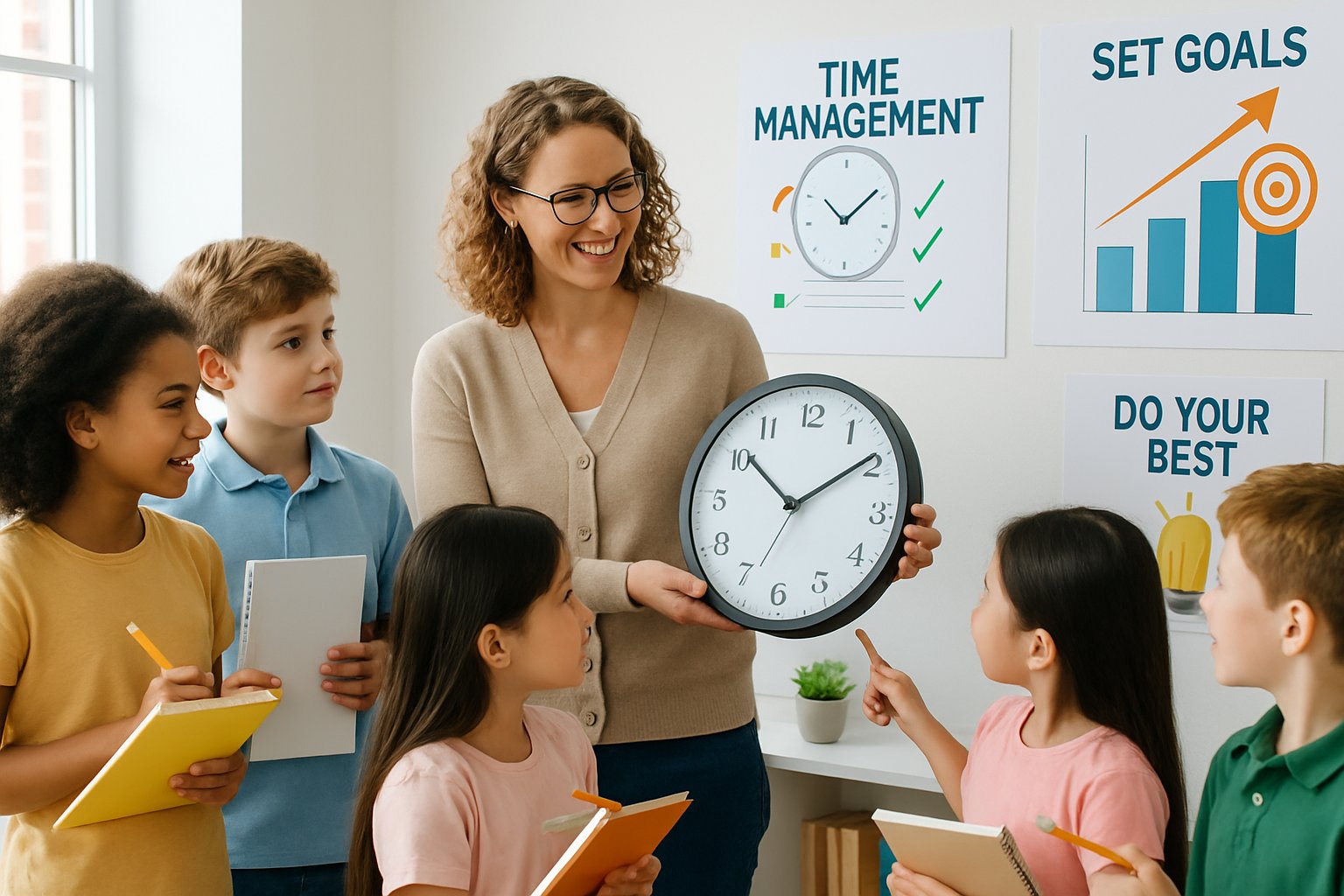
Children learn responsibility when they see clear links between their choices and the outcomes. Self-motivation grows when they feel capable of setting goals, tracking progress, and adjusting their efforts. Both skills help kids manage their time wisely and stay committed to what matters most.
Fostering Ownership of Goals
When kids take ownership of their goals, they feel more invested in reaching them. Instead of parents or teachers setting every target, children should have a voice in choosing what they want to achieve. This builds a sense of control and accountability.
A simple way to do this is by using SMART goals—specific, measurable, achievable, relevant, and time-bound. For example, a child who wants to improve reading might set a goal to finish one book every two weeks. Writing goals down and reviewing them regularly helps reinforce responsibility.
Parents and teachers can also encourage reflection. Asking questions like “What steps worked well?” or “What could you try differently?” guides kids to evaluate their own progress. Tools such as a goal-setting worksheet from PositivePsychology.com can make this process structured and easy to follow.
Building Persistence and Resilience
Persistence means sticking with a task even when it feels hard. Resilience helps kids bounce back when they face setbacks. Both qualities are vital for long-term success in school and personal goals.
Breaking larger goals into smaller steps makes challenges feel less overwhelming. Kids can celebrate small wins, which builds confidence and keeps motivation steady. For example, instead of aiming to “get better at math,” a child might focus on mastering multiplication tables first.
Parents can model resilience by sharing their own experiences of overcoming difficulties. Using positive reinforcement, such as praise for effort rather than just outcomes, also helps. According to the Child Development Institute, setting realistic goals teaches kids persistence while showing them the value of hard work.
A short list of strategies that support resilience:
- Break goals into smaller, doable steps
- Encourage reflection after setbacks
- Praise effort and persistence, not just results
- Provide consistent routines to build discipline
Leave a Reply