10 Everyday Activities That Double as Homeschool Lessons
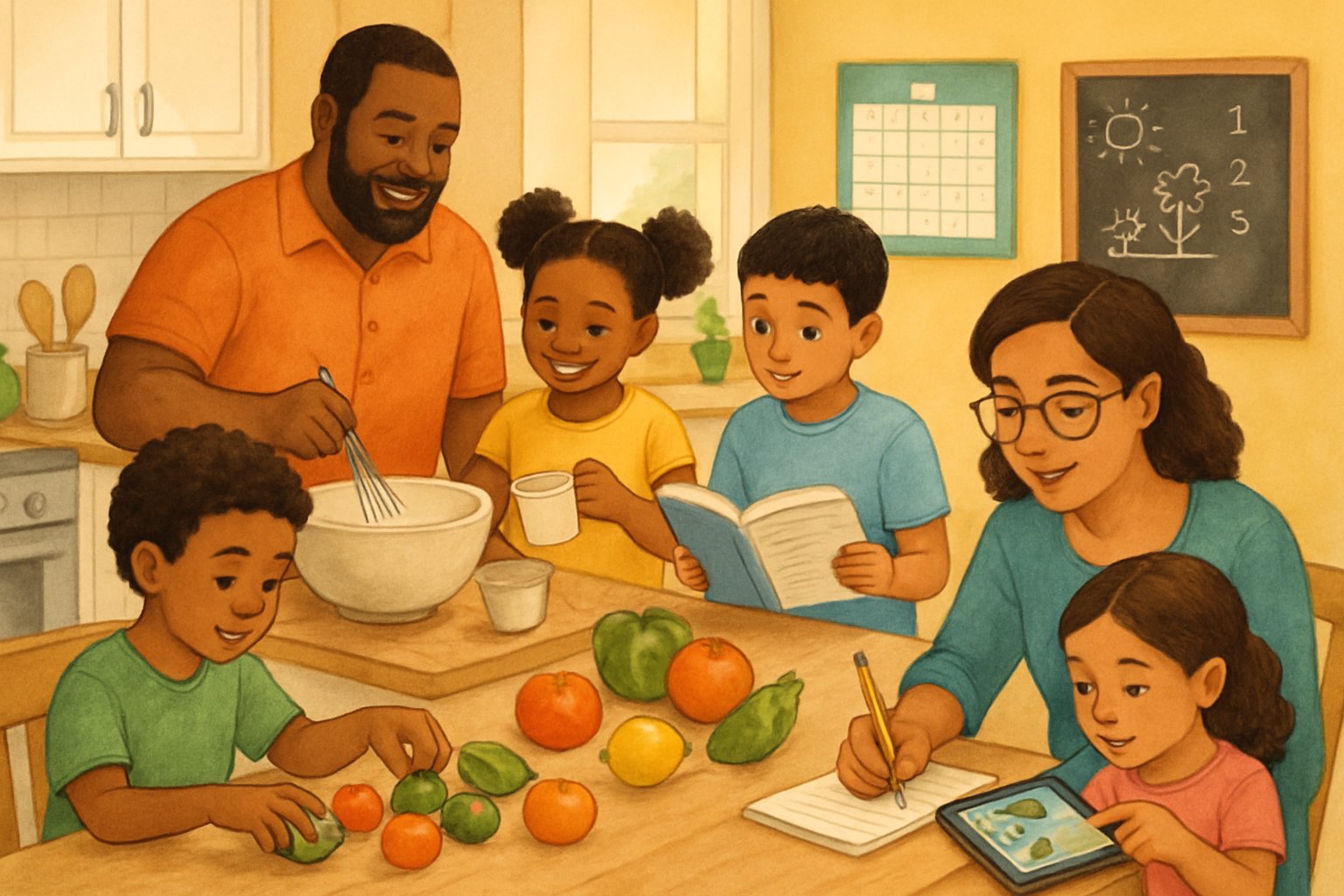
Children learn best when they connect lessons to real life. Simple daily routines—like cooking, cleaning, or managing money—can teach math, science, reading, and problem-solving in natural ways that fit easily into a homeschool day.
Cooking and Kitchen Math
Cooking turns the kitchen into a hands-on classroom. Children practice measuring, estimating, and fractions while following recipes. Doubling or halving a recipe builds real-world math confidence.
Parents can ask kids to convert measurements or compare ingredient weights. This helps them apply math to daily life.
Cooking also introduces basic chemistry, such as how heat changes food. Families can explore why bread rises or butter melts, similar to ideas shared in Everyday Moments That Double as Science Lessons.
A simple chart can help track learning:
| Skill | Example Activity |
|---|---|
| Fractions | Halve a cookie recipe |
| Estimation | Guess ingredient amounts |
| Science | Observe boiling and melting |
Sorting and Organizing Chores
Sorting chores teach classification, organization, and responsibility. Children can group toys by type, match socks, or arrange books by size or color.
These tasks build early math and logic skills. Sorting also helps children notice patterns and relationships, key foundations for problem-solving.
Parents can make it fun by timing how fast items are sorted or by turning it into a color-matching game. This approach encourages independence and order while reinforcing homeschool lessons on categorization and sequencing.
Grocery Shopping for Real-World Math
A trip to the grocery store becomes a math and budgeting lesson. Children can compare prices, estimate totals, and calculate discounts.
They learn to read labels, weigh produce, and decide between brands based on cost per unit. This connects math to everyday decision-making.
Families can use a notepad or calculator to track spending and discuss needs versus wants. These activities mirror practical learning ideas found in Creative Ways to Get Homeschool Hours from Everyday Activities.
It’s also a good time to talk about financial literacy, helping kids understand how budgets work in real life.
Storytelling and Language Development
Storytelling builds strong language skills and encourages creativity. Children can retell favorite stories, create new ones, or act out short scenes.
This practice strengthens vocabulary and sentence structure. It also supports reading comprehension and public speaking.
Parents can record stories or write them down together to build writing confidence. Using prompts or family memories keeps storytelling fun and personal.
These activities make language learning natural and memorable, a key part of effective homeschooling.
Outdoor Nature Exploration
Nature walks and gardening connect children to science and observation. They can study plants, weather, and animal behavior, turning curiosity into learning.
Families might collect leaves, track the temperature, or record bird sightings. These experiences help children understand ecosystems and environmental cycles.
Outdoor exploration also builds mindfulness and appreciation for the natural world. The approach aligns with the hands-on learning ideas described in 10 Everyday Moments That Double as Science Lessons.
Simple tools like notebooks or magnifying glasses make this activity both fun and educational.
Budgeting and Financial Literacy
Budgeting teaches children how to manage money responsibly. They can plan spending for a family outing or track allowance savings.
Using a simple spreadsheet or notebook helps them visualize income and expenses. Parents can explain the difference between fixed and flexible costs.
These lessons build financial literacy and decision-making skills. Children begin to see how math applies to everyday life, a valuable homeschool lesson in responsibility and independence.
Learning Time with Clocks and Schedules
Time management is a core life skill. Teaching children to read analog and digital clocks strengthens number recognition and sequencing.
Creating a daily homeschool schedule helps them understand how time passes and how to plan tasks. Parents can use timers to make transitions smoother.
Children can also estimate how long chores or lessons take, comparing guesses to real results. This builds awareness of time and improves organization.
Laundry and Sorting Activities
Laundry offers a natural way to teach sorting, counting, and responsibility. Children can group clothes by color, fabric type, or family member.
They can also learn about temperature settings, fabric care, and how detergents work—practical science in action.
Parents might ask questions like “Why do we use warm water for towels?” or “What happens if we mix colors?” These conversations turn chores into meaningful homeschool lessons.
This mirrors the hands-on learning approach described in Everyday Moments That Double as Science Lessons.
Role-Playing and Decision-Making
Role-playing helps children practice social and reasoning skills. They can act out real-life situations, such as visiting a store or solving a disagreement.
These activities build empathy and communication. They also teach problem-solving and decision-making in a safe environment.
Parents can guide discussions about choices and consequences. This approach strengthens both emotional intelligence and language development—important parts of homeschooling that go beyond textbooks.
Bedtime Storytelling for Language Skills
Bedtime stories provide a calm time for reading, listening, and imagination. Parents and children can take turns reading aloud or predicting what happens next.
This habit supports literacy, comprehension, and memory. It also strengthens emotional bonds and creates a positive end to the homeschool day.
Encouraging children to retell the story or describe characters helps build confidence in language use. Storytime becomes both relaxing and educational, reinforcing the joy of learning through daily life.
Building Critical Life Skills Through Daily Routines
Daily routines give children real chances to practice responsibility, make choices, and think through problems. Simple activities like chores, planning, and reflection help them strengthen problem-solving, critical thinking, and emotional intelligence in natural ways.
Problem-Solving with Household Tasks
Everyday chores teach children how to analyze problems and find workable solutions. When a child helps cook dinner or fix a small household issue, they learn to plan steps, test ideas, and adjust when things don’t go as expected.
Parents can guide this process by asking questions such as, “What should we do first?” or “How could we make this easier next time?” These prompts encourage logical thinking and independence.
Assigning age-appropriate tasks—like sorting laundry or organizing a shelf—builds both confidence and responsibility. According to Learning Life Skills at Home, household routines help children develop self-reliance and problem-solving habits that carry into school and friendships.
| Task Type | Skill Developed | Example |
|---|---|---|
| Cooking | Sequencing and planning | Following a recipe |
| Cleaning | Organization | Deciding what to keep or donate |
| Repairs | Resourcefulness | Finding tools and steps to fix a toy |
Fostering Critical Thinking in Everyday Decisions
Critical thinking grows when children face daily choices and reflect on outcomes. They might compare prices while shopping, decide how to spend free time, or plan the best route for a walk.
Adults can model this by talking through their reasoning aloud: “I chose this because it saves time and money.” This shows how to weigh pros and cons before acting.
Encouraging kids to explain their choices builds self-awareness and decision-making skills. As noted by Essential Strategies for Developing Critical Thinking in Everyday Life, regular reflection helps children evaluate information more carefully and make thoughtful judgments.
Organizing to Strengthen Executive Function
Organization supports strong executive function—the ability to plan, focus, and complete tasks. Setting up visual schedules, checklists, or color-coded bins helps children manage time and stay on track.
Breaking big tasks into smaller steps prevents frustration and teaches persistence. For instance, cleaning a bedroom can be divided into sorting clothes, making the bed, and arranging toys.
Parents can review progress together and celebrate small wins. The article 15 Ways to Improve Daily Living Skills in 2025 highlights how structured routines and digital tools can improve organization and self-management in daily life.
Growing Emotional Intelligence at Home
Emotional intelligence develops when families talk openly about feelings and reactions. During mealtime or bedtime, parents can ask, “What made you happy today?” or “What was hard for you?”
These short conversations teach empathy and emotional awareness. Children learn to recognize their own emotions and understand others’ perspectives.
Helping with family responsibilities, volunteering, or caring for pets also builds compassion. The guide Tips for Building Strong Life Skills in Kids Through Everyday Activities explains that daily routines can nurture empathy, resilience, and social understanding—key parts of emotional intelligence.
Leave a Reply