Core Differences Between Unschooling and Structured Curriculum
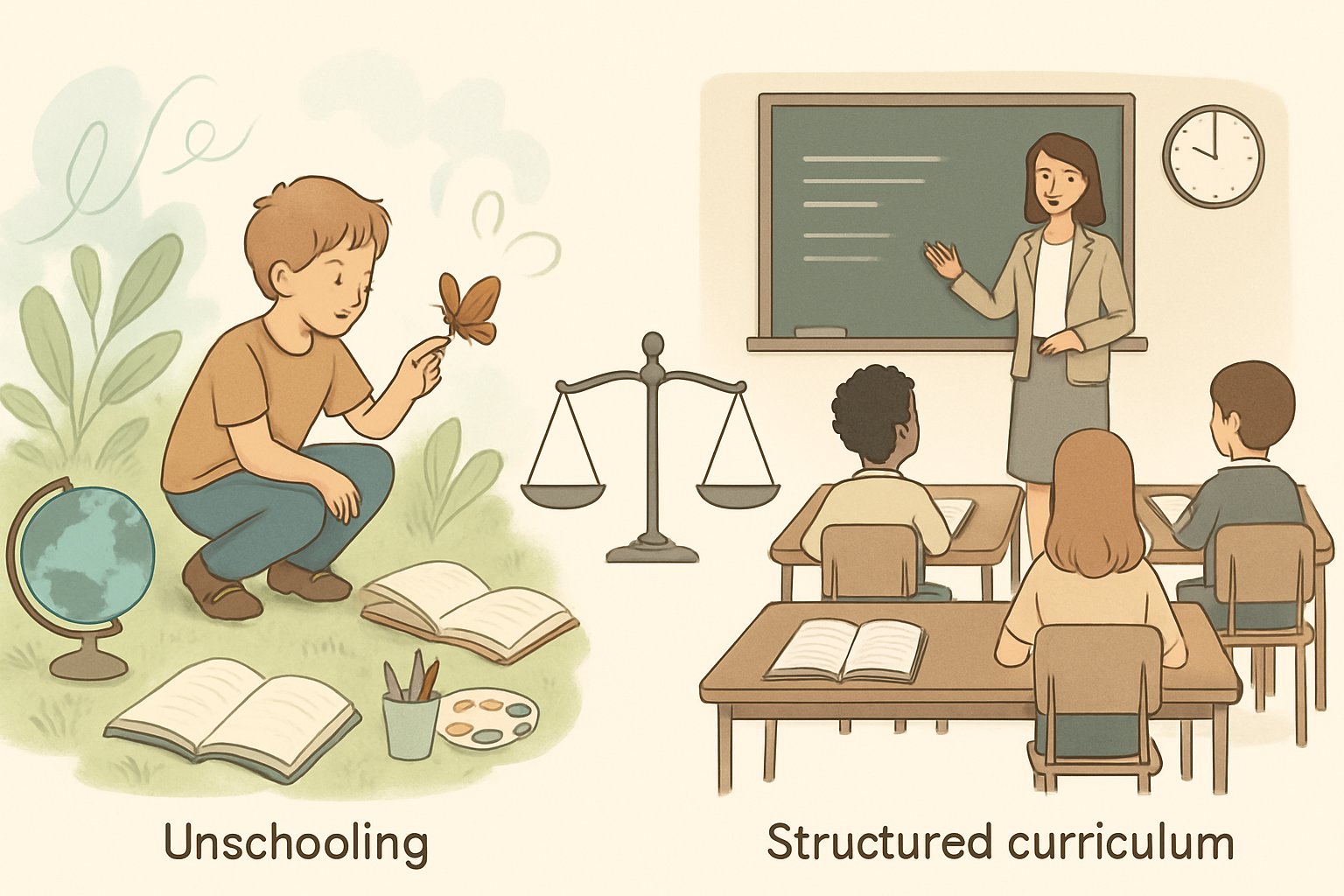
Unschooling and structured homeschooling share the goal of personalized education but take opposite paths in how they guide learning. One relies on natural curiosity and self-directed learning, while the other uses planned lessons and measurable progress to shape a child’s education.
Role of the Parent in Each Approach
Parents take very different roles in these methods. In unschooling, they act as facilitators who create rich environments and connect children with resources that feed their interests.
Instead of teaching set lessons, they answer questions, offer materials, and help plan projects that support child-led learning. In contrast, a structured curriculum requires parents to function more as instructors.
They design or follow a formal study plan, track progress, and ensure that academic goals align with grade-level standards. A parent teaching through a structured homeschooling program might use textbooks, daily schedules, and tests to guide their child through each subject.
The difference shows in time management, too. Structured teaching often involves 4–6 hours of direct instruction, while unschooling relies on more flexible, spontaneous engagement.
This variation affects family routines, record keeping, and how learning outcomes are evaluated.
How Self-Directed Learning Differs From Structured Lessons
Self-directed learning gives students full ownership of what and how they learn. Children explore real-life experiences, pursue hobbies, and learn academic skills as needed within their interests.
An unschooled child might study physics through building a skateboard ramp or learn writing by creating a blog about animals. In structured lessons, schedules and academic goals guide learning.
Subjects like math, language arts, and science appear in planned blocks, often measured by exams or projects. Programs such as traditional schooling in secondary education focus on standardized milestones that track progress.
The core distinction lies in motivation—self-directed learners act from curiosity, while structured learners follow teacher or parent guidance.
Typical Learning Environments for Both Methods
The learning environment shapes each method’s daily rhythm. Unschooling turns homes and communities into classrooms.
Museums, libraries, and outdoor spaces often serve as key resources. Activities like cooking, gardening, and volunteering become part of everyday education, as seen in examples from homeschool vs. unschooling comparisons.
A structured curriculum creates a more formal setting that mirrors traditional classrooms. Desks, schedules, and designated study materials help children stay organized.
Parents may set up subject-specific areas for reading, math, or science experiments.
| Feature | Unschooling | Structured Curriculum |
|---|---|---|
| Setting | Flexible, often outside home | Dedicated indoor study area |
| Materials | Everyday objects, online content | Textbooks, worksheets |
| Schedule | Adapted to curiosity | Fixed daily plan |
Each environment reflects its teaching philosophy—freedom and exploration versus structure and planning.
Balancing Freedom and Structure in Homeschooling

Families often adjust their teaching style to provide both flexibility and consistency. The most effective approaches combine core academic goals with adaptable learning experiences that respond to each child’s interests and pace.
Blending Traditional and Eclectic Homeschooling Methods
Many families find that eclectic homeschooling offers the best of both worlds. They draw from structured programs like classical education for core subjects such as math and grammar but mix in creative and hands-on studies for other areas.
Some parents follow a partial schedule using textbooks for core skills while letting children explore topics more freely during the afternoons. This allows flexibility without losing direction.
A sample balance could look like:
| Time | Focus Area | Method |
|---|---|---|
| Morning | Math, Language Arts | Structured lessons |
| Afternoon | Science, Art | Interest-based exploration |
Resources like Paths of Learning’s comparison of unschooling and structured methods explain how families can adjust plans without abandoning academic goals.
Incorporating Interest-Led and Project-Based Learning
Interest-led learning motivates students by letting them direct part of their education. They might dive into astronomy, woodworking, or computer coding, applying reading and math skills along the way.
Parents act as guides, helping them connect curiosity with useful knowledge. Project-based learning supports this by turning ideas into long-term tasks.
Building a garden, writing a family cookbook, or designing a small business plan can all count as structured yet creative projects. According to SelfDesign’s ideas on balancing freedom and structure, this balance fosters both self-motivation and accountability.
Small groups or family teams often work best on these projects, encouraging collaboration and critical thinking. The results give children confidence and a deeper grasp of real-world skills.
Progress Tracking Without Over-Scheduling
Tracking learning progress doesn’t have to mean rigid testing. Many homeschoolers use portfolios, learning journals, or rubrics to capture growth without constant deadlines.
Parents may list finished projects, reading logs, or skill checklists. This serves as documentation while keeping the focus on progress rather than perfection.
Some families use digital tools that track milestones over time. Balanced monitoring helps ensure accountability while avoiding burnout.
As noted in Balancing Structure and Flexibility in Homeschooling Classes, gentle routines paired with observation make assessment both simple and meaningful.
Practical Considerations for Your Family
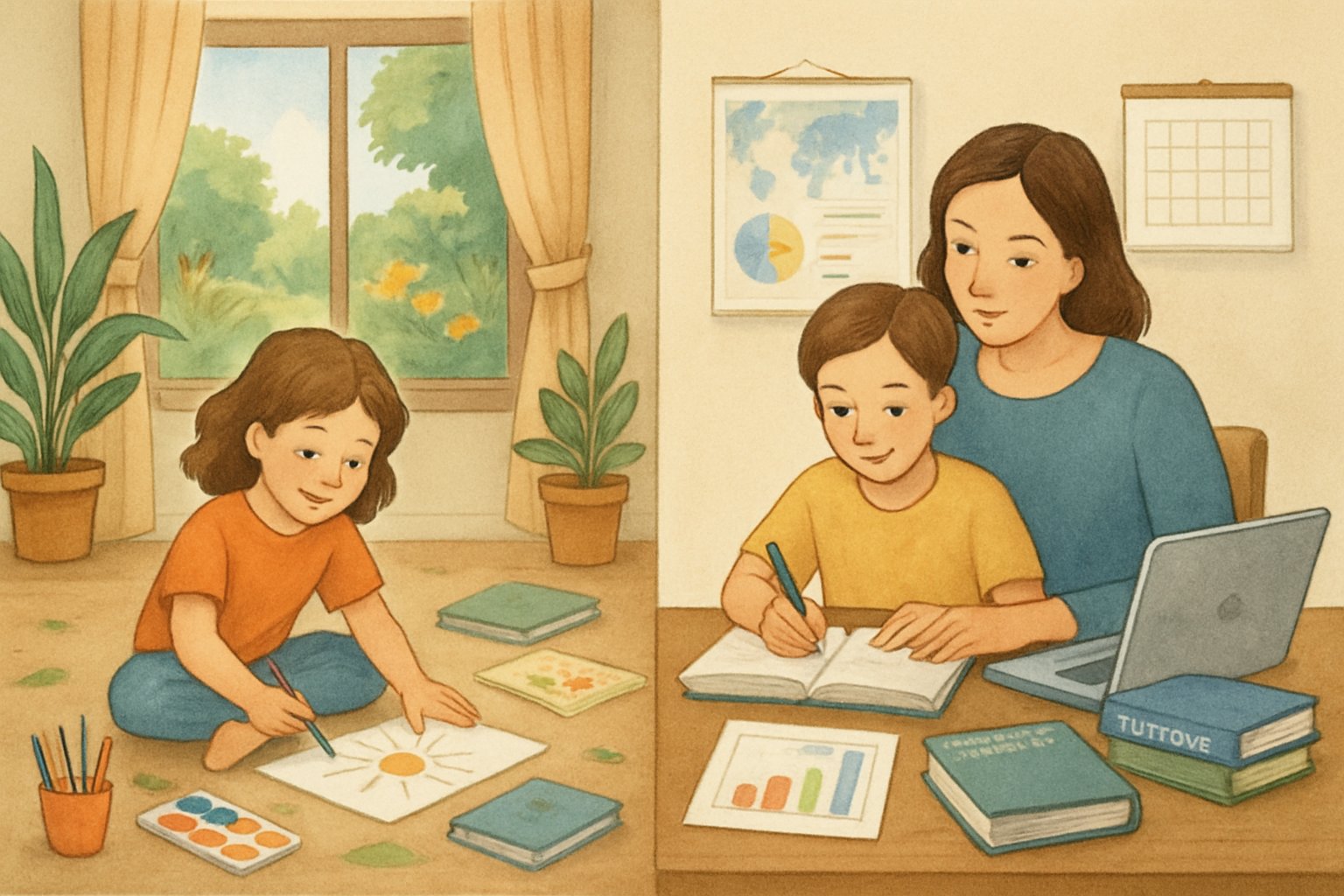
Families making choices about alternative education face several key factors. They must match their child’s learning style with the right teaching approach, understand local homeschooling laws, and create spaces that encourage curiosity and self-motivation.
Adapting to Your Child’s Learning Style
Every child processes information differently. Some learn best through hands-on projects, while others thrive through reading or listening.
Parents can track patterns in how their child responds to various tasks. For example, a visual learner may enjoy educational videos or charts, while a kinesthetic learner benefits from building models or conducting experiments.
Creating a customized routine that blends structured and flexible activities helps maintain balance. Families using either unschooling or structured homeschooling can choose from different homeschooling methods that fit their needs.
Keeping a journal of progress and preferences can guide future adjustments.
To make it easier, consider using a simple table to organize approaches:
| Learning Style | Helpful Activities | Tools to Try |
|---|---|---|
| Visual | Diagrams, videos, charts | Flashcards, visual planners |
| Auditory | Discussions, podcasts | Audiobooks, recorded lessons |
| Kinesthetic | Projects, experiments | Science kits, art materials |
Navigating Homeschooling Laws and Community Involvement
Before starting, parents must review homeschooling laws in their state or region. Requirements for recordkeeping, testing, and reporting vary widely.
Some areas expect a formal notice of intent, while others offer more flexibility. Websites like Learn Wise Daily provide helpful guides for understanding regulations and paperwork.
Many families find value in joining local co-ops or online homeschooling programs. These communities often share lesson plans, host study groups, and organize field trips.
Engaging with others keeps learning social and provides support for both parents and children. Community involvement also builds accountability.
When families collaborate, children experience teamwork and diverse perspectives. This exchange helps balance independence with real-world interaction.
Supporting Self-Motivation and Lifelong Learning
A strong education goes beyond academics. Supporting self-motivation helps children develop curiosity and persistence.
Parents can act as facilitators rather than authoritative teachers, as noted in The Parenting Pro’s discussion of unschooling essentials.
Using goal-setting exercises encourages responsibility. Short daily goals and long-term projects give structure without limiting freedom.
For example, setting weekly reading targets or tracking progress on a hobby allows children to experience measurable success.
To nurture lifelong learning, families can:
- Provide access to libraries and online learning platforms.
- Celebrate effort instead of only results.
- Encourage reflection through journals or discussions.
Leave a Reply