Key Principles of STEM Education in Homeschooling
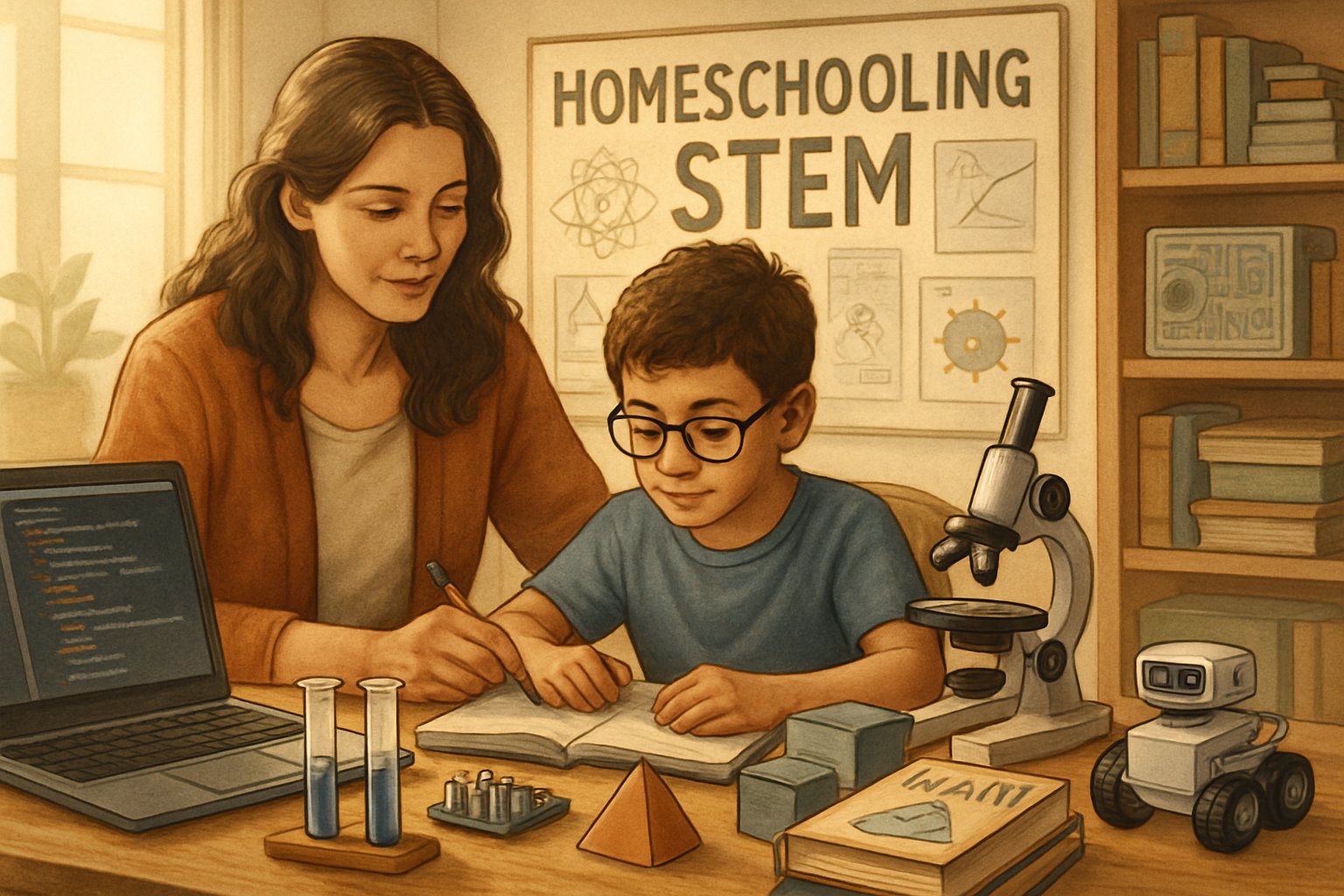
Strong STEM education in homeschooling builds lifelong skills in problem-solving, creativity, and analytical thinking. It helps students connect science, technology, engineering, and math to real-world situations they encounter every day.
Benefits of STEM Learning for Homeschooled Students
Homeschool STEM programs offer flexibility to match a child’s pace and interests. Parents can personalize lessons to fit strengths and curiosity, encouraging deeper learning.
This individual approach allows students to spend more time on challenging ideas instead of rushing through a standard schedule. STEM education also supports hands-on, project-based experiences.
Simple experiments, model building, or digital design activities help reinforce abstract concepts. Students see how mathematics relates to coding or how engineering connects to environmental science.
By focusing on practical learning, homeschoolers build confidence and independence. They also strengthen transferable STEM skills such as data analysis, teamwork, and logical reasoning—qualities that prepare them for modern careers and future study.
Many programs, such as those discussed in Homeschool STEM – Embracing STEM Education in Homeschool, highlight how flexible learning supports both skill growth and curiosity.
Fostering Critical Thinking and Problem-Solving Skills
A strong STEM curriculum encourages students to ask questions, form hypotheses, and test their own ideas. STEM learning relies on practice and observation rather than memorization.
This helps develop critical thinking and practical problem-solving skills that apply beyond academics. In homeschooling, parents can guide their children through open-ended challenges.
For example, students can test how different materials affect bridge strength or explore basic coding to automate a small task. This kind of work promotes analysis, creativity, and persistence in facing unexpected results.
According to The Power of STEM Education in Homeschooling, inquiry-based activities make children active participants in their education. They learn to reason through problems independently while also seeing mistakes as useful parts of the learning process.
Starting STEM Early: Age-Appropriate Approaches
Introducing STEM education early helps children view science and math as natural parts of everyday life. For younger learners, simple experiments such as mixing baking soda and vinegar or building towers with blocks lay the groundwork for problem-solving.
Early lessons should focus on play, observation, and discovery instead of complex formulas. As children grow, projects can become more structured.
Middle school students might design a solar oven or use basic robotics kits, leading into high school courses that emphasize analysis and data-driven inquiry. Parents can combine subjects across the homeschool curriculum—for example, using math in art projects or linking technology to geography lessons.
Resources such as Incorporating STEM Activities into Your Homeschool Routine suggest that students gain long-term benefits when early experiences connect fun with learning. This gradual exposure builds confidence, preparing learners for advanced topics later in their homeschool STEM journey.
Practical Ways to Integrate STEM into Your Homeschool Curriculum
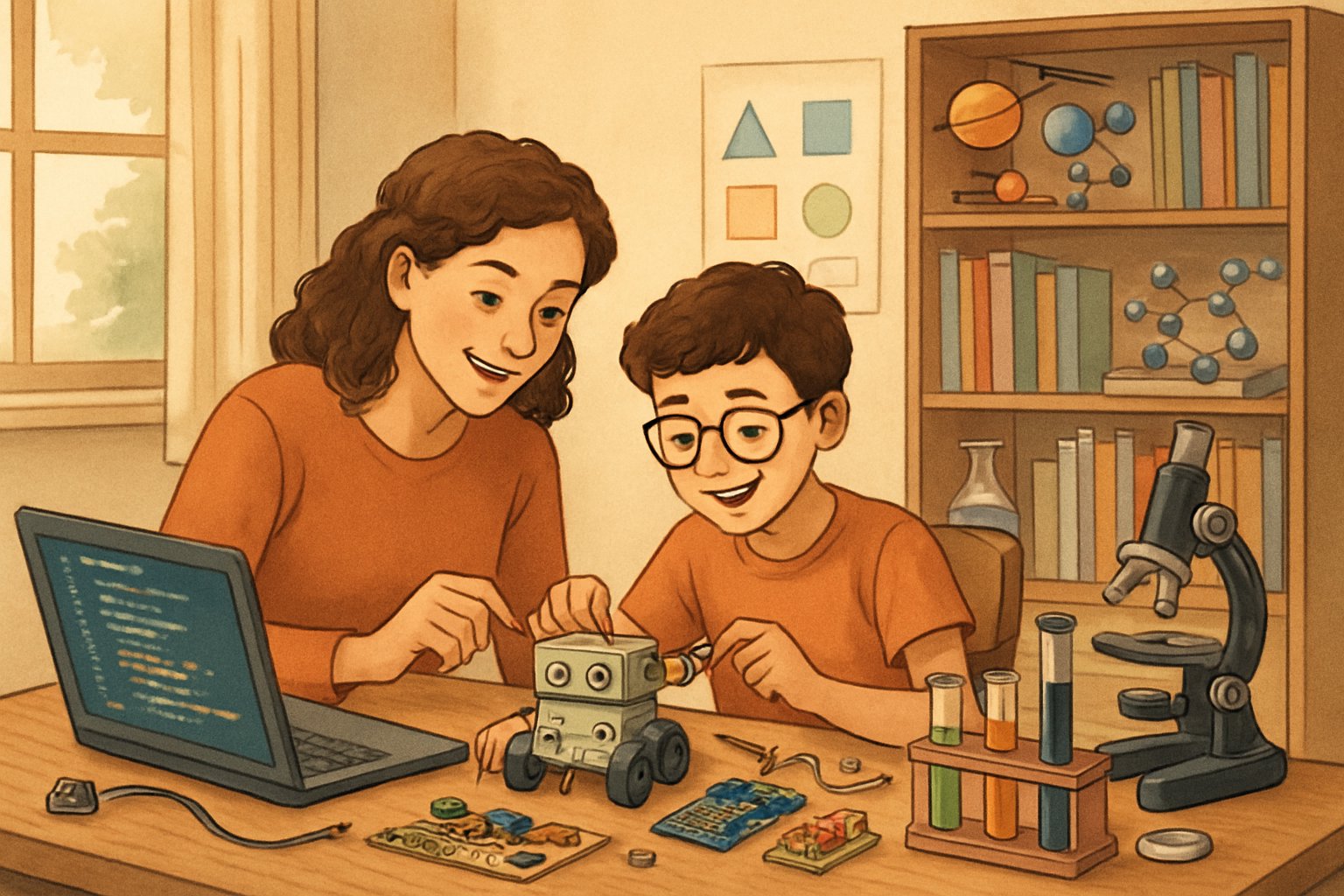
Families can make STEM learning a natural part of everyday life by combining creative hands-on projects, real experiments, and digital tools that spark curiosity. With a few simple adjustments, parents can develop lessons that build problem-solving, confidence, and curiosity without requiring advanced science backgrounds.
Hands-On STEM Activities and Projects
Hands-on learning engages children by letting them create, test, and explore concepts directly. Projects like designing paper bridges, building LEGO machines, or assembling small electronics kits teach engineering and measurement skills through play.
Children see how ideas move from sketches to working models. Parents can set up a tinkering area using affordable materials such as cardboard, rubber bands, tape, and craft sticks.
These spaces help children explore how structures hold weight or how circuits complete a loop. Families can also include weekly STEM challenges like an egg drop test or a “build the tallest tower” contest.
Planning short projects keeps lessons manageable. According to Clever Homeschool, consistent hands-on time helps kids retain concepts and build critical thinking.
Rotating activities between science, math, and engineering creates variety that keeps learning fresh.
Popular project ideas include:
| Topic | Example Project | Key Skill |
|---|---|---|
| Engineering | Build a cardboard bridge | Structural design |
| Science | Create a vinegar volcano | Observation |
| Technology | Assemble a light circuit | Problem-solving |
Incorporating Science Experiments and Engineering Challenges
Science experiments give children a clear view of cause and effect. Kitchen chemistry, such as combining baking soda and vinegar, makes chemical reactions visible.
Nature walks and weather journals teach observation and recording skills. Engineering challenges push exploration further.
Building paper airplanes, balloon rockets, or mini catapults lets kids test, adjust, and redesign. The process encourages persistence and curiosity.
Projects that fail at first often teach more than those that work right away. Parents can rotate experiments by subject to cover multiple STEM areas.
Pitsco suggests setting aside a few short sessions weekly to keep experiments fun without overwhelming schedules. Keeping safety gear—like goggles and gloves—on hand helps children learn responsible lab habits early.
Leveraging Online Curriculum, Apps, and Virtual Resources
Digital resources make STEM subjects easier to teach at home. Sites like Dropkick Math offer structured lessons that blend math, coding, and critical thinking.
Other online programs let children explore simulations that demonstrate complex ideas such as electricity, motion, or sound waves. Educational apps like Khan Academy Kids, Prodigy Math, and beginner-friendly coding platforms introduce skills step-by-step.
Children can practice problem sets or complete short missions that reward progress. Parents can track learning through built-in progress reports.
Virtual field trips and coding challenges connect homeschoolers to broader STEM communities. Robotics kits, coding games, and programs modeled on real-life innovation—like Tron-style logic puzzles—keep learners engaged.
Leave a Reply