Can A Monthly Kit Count As Real Curriculum?
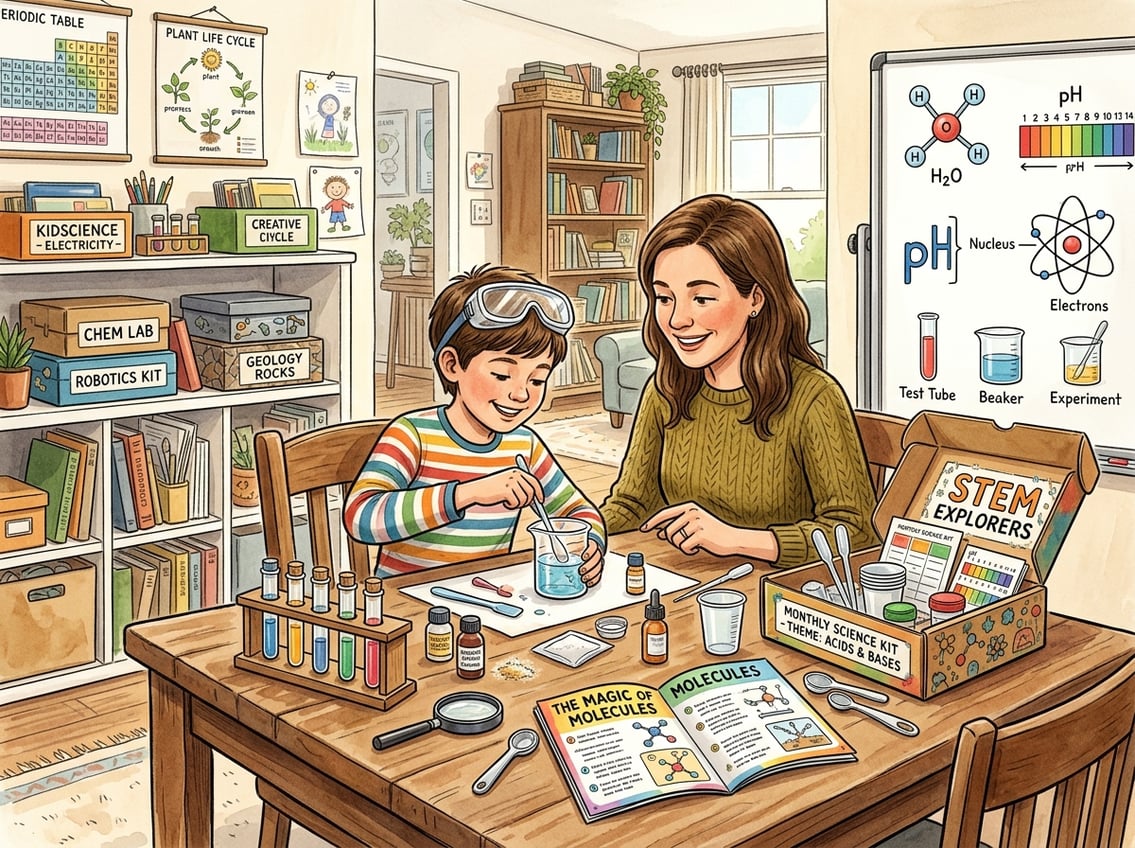
The honest answer is: it depends entirely on what arrives in the box and how you use it. Some homeschool subscription boxes deliver thoughtfully sequenced lessons with real academic depth.
Others are glorified craft projects wrapped in pretty packaging. Knowing the difference saves you money and keeps your child’s education on track.
What A Box Must Include To Function As A Core Subject Tool
For a monthly subscription box to serve as your homeschool curriculum for a subject, you need more than a fun unboxing moment. At minimum, look for these elements:
- A detailed activity booklet with explicit learning objectives, not just step-by-step craft instructions.
- Skill progression from month to month, where concepts build on previous kits.
- Reading material or reference content that teaches why, not just how.
- Some form of assessment, review questions, or narration prompts.
- Alignment with recognized standards or scope-and-sequence documents.
A true curriculum guides you through a subject systematically over the course of a year. If the box skips randomly from volcanoes to magnetism to weather with no connecting thread, it is enrichment, not curriculum.
Where Kits Fall Short Compared With A Full Homeschool Curriculum
Most educational subscription boxes shine at hands-on learning but stumble in a few predictable areas.
Writing and composition rarely show up. You will almost never find essay prompts, journaling exercises, or grammar practice tucked into a science kit.
Math reinforcement is similarly thin outside of dedicated math subscriptions. Pacing is another concern.
A monthly delivery means roughly one lesson every four weeks. A full homeschool curriculum typically covers a subject three to five days per week.
That gap is enormous. You cannot realistically teach biology with twelve shipments spread across a year and expect grade-level mastery.
Finally, most subscription boxes for homeschoolers lack formal assessments. Without quizzes, portfolio prompts, or rubrics, tracking progress falls entirely on you.
When A Homeschool Subscription Box Works Better As A Supplement
As noted by the Home Educators Association of Virginia, subscription boxes can spark interest in a difficult subject or add hands-on activities to a favorite topic. This is where they truly excel.
A subscription box for kids works beautifully when you already have a core curriculum and want to layer in tactile, memorable experiences. Think of it this way: your math textbook teaches fractions, and a cooking kit lets your child measure half-cups of flour.
Your history spine covers ancient Rome, and a themed crate arrives with a Roman mosaic project. In supplemental mode, the pressure on the box drops.
It does not need perfect sequencing or weekly pacing. It just needs to be engaging, accurate, and connected to what you are already teaching.
Best Boxes By Subject And Teaching Goal
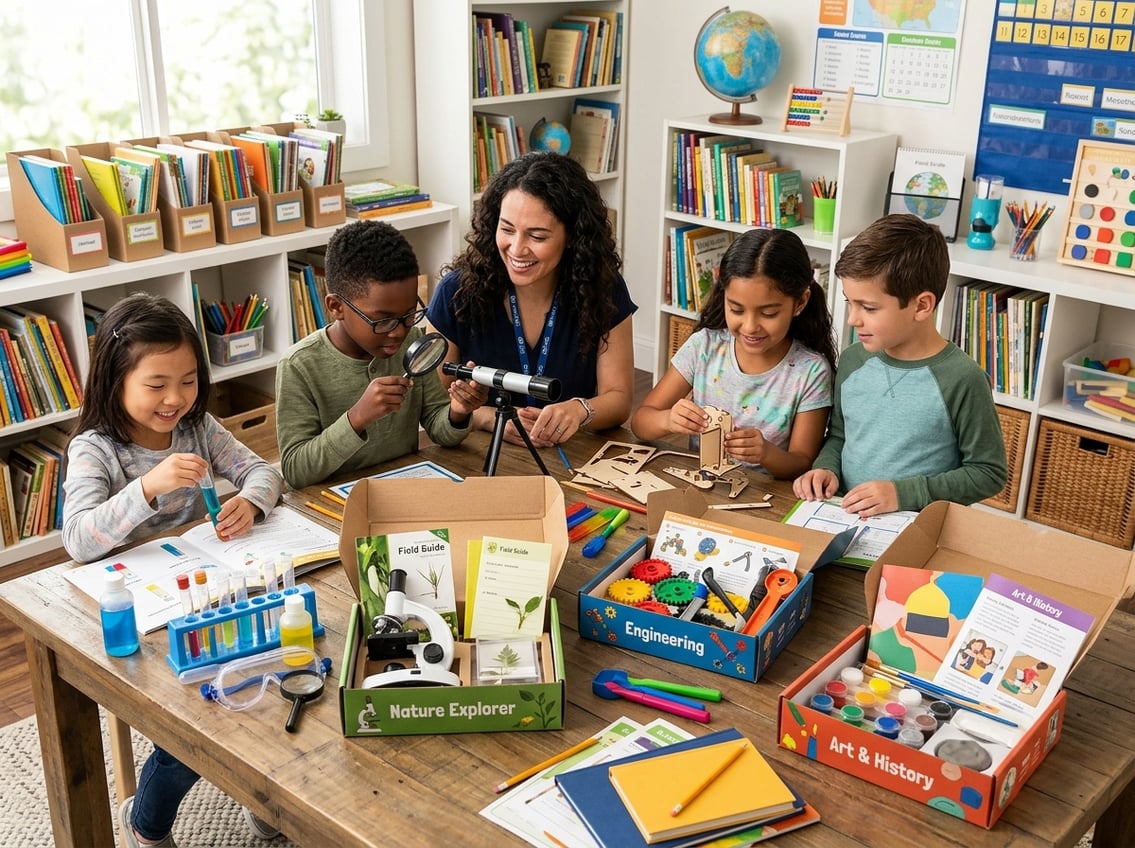
Choosing the right box starts with knowing your teaching goal: are you filling a gap in your curriculum, feeding a passion, or replacing a textbook entirely? The boxes below are organized by subject so you can match each one to a specific need in your homeschool.
Science And STEM Boxes For Sequential Learning
If you want structured, progressive science content, two names stand out.
KiwiCo offers age-tiered crates that cover real STEM concepts. Tinker Crate targets ages 9-14 with engineering challenges, while Eureka Crate introduces older teens to real-world design skills.
Kiwi Crate serves the 5-8 range with simpler experiments. Each crate includes an instruction booklet with the science behind the project, which makes it easier to extend the lesson.
MEL Science takes a different approach with monthly hands-on kits paired with a digital app, virtual reality lessons, and augmented reality experiences. Their chemistry and physics lines are especially strong for middle schoolers.
The app walks your child through each experiment with interactive instructions, which reduces your teaching load. MEL Science has been recognized by the American Chemical Society, adding credibility to its content.
For younger learners, Green Kid Crafts blends STEM with eco-friendly themes. Each box focuses on a single science topic like oceanography or botany and includes multiple activities around that theme.
The key question with any STEM subscription box is whether concepts build across months. KiwiCo and MEL Science both offer enough depth to anchor a science elective, though you will still want a textbook or living-book spine for comprehensive coverage.
Geography And Culture Boxes For Unit Studies
Geography is one of the subjects where subscription boxes genuinely rival traditional curriculum, because hands-on cultural exploration is hard to replicate with a textbook.
Little Passports sends monthly packages focused on a different country or U.S. state, complete with activity sheets, souvenirs, and letters from fictional pen pals. The World Edition works well for ages 6-10 and pairs naturally with unit studies.
Atlas Crate from KiwiCo covers similar ground for slightly older kids with deeper STEM-geography crossover projects. Universal Yums ships snacks from a different country each month alongside a detailed booklet about that nation’s culture, geography, and food traditions.
It is not a standalone geography curriculum, but it is one of the most memorable supplements you can add to a world cultures unit. Eat2Explore takes the cooking-meets-geography angle further with recipes, spice packets, and cultural education materials from a featured country.
If your child learns best through taste and touch, this is a standout. Letters From Afar offers a unique pen-pal style experience that brings global perspectives into your mailbox.
For families using a Charlotte Mason or literature-based approach, these geography and culture boxes are a natural fit.
Art, Writing, And Reading Boxes For Creative Subjects
Creative subjects are where subscription boxes feel the most natural, since art and writing already thrive on project-based learning.
We Craft Box delivers themed art projects with all supplies included. Each box contains enough materials for two kids, which is a nice bonus for families with siblings.
The projects are open-ended enough to encourage creativity rather than paint-by-number obedience. The Writer’s Box is a rarer find: a subscription specifically designed to teach creative writing through prompts, tools, and guided exercises.
If your child resists writing, this box reframes the subject as something fun rather than something assigned. For reading, Bookroo curates age-appropriate books monthly.
Their picture book and chapter book clubs are well-loved by homeschooling families who want fresh titles without spending hours researching. OwlCrate Jr targets middle-grade readers with a themed book plus activities and collectibles tied to the story.
These boxes will not replace a formal language arts curriculum, but they keep creativity alive between grammar lessons and spelling tests.
Cooking And Life Skills Boxes With Cross-Curricular Value
Cooking is stealth education. Measuring ingredients teaches fractions.
Following a recipe builds reading comprehension. Timing a dish introduces basic time management.
Raddish Kids is the most popular cooking subscription box for kids, and for good reason. Each kit includes illustrated recipe guides, a culinary tool, a creative kitchen project, and table-talk conversation starters.
The recipes are kid-friendly but genuinely teach technique. You can easily tie a Raddish kit to a geography, science, or math lesson.
Cooking boxes have a unique advantage: every project ends with something your child can eat. That built-in reward loop keeps motivation high, even for reluctant learners.
Early Learning Boxes For Preschool And Kindergarten
For your youngest learners, play-based learning is the curriculum.
Lovevery sends stage-based play kits designed by child development experts. Each box targets specific developmental milestones with high-quality, open-ended toys and a detailed play guide for parents.
It is one of the few subscriptions that genuinely qualifies as a developmental curriculum for babies through age 4. The Preschool Box is more academic, focusing on letters, numbers, colors, and shapes through crafts and worksheets.
It bridges the gap between play and formal learning for kids aged 3-5. Little Dreamers Club offers imaginative craft-based projects for preschoolers that build fine motor skills and creativity.
The projects are simple enough for small hands but engaging enough to hold attention. For the preschool and kindergarten set, subscription boxes make some of the strongest curriculum replacements because early childhood education already centers on exploration, sensory play, and hands-on discovery.
How To Judge Quality Before You Subscribe

Not every monthly subscription box that claims to be educational actually teaches anything meaningful. Before you hand over your credit card, you need a simple framework for separating the genuinely useful boxes from the ones that just look good on Instagram.
Age Fit, Skill Progression, And Independence Level
Check whether the box targets a specific age range or a broad one. A box labeled “ages 5-12” is a red flag, because a kindergartener and a seventh grader have almost nothing in common academically.
The best boxes narrow that window to two or three grade levels. Ask yourself: can your child complete the activity independently, or will you need to sit beside them the entire time?
Neither answer is wrong, but you need to know in advance. Play-based learning boxes for younger kids rightly assume adult involvement.
Boxes for ages 10 and up should allow increasing independence. Look for evidence that skills build over time.
Does the company publish a scope and sequence? Do months connect to each other?
If every box is a standalone experience with no thread linking them, the learning will feel scattered.
Prep Time, Reusability, And Supply Burden
Some boxes arrive ready to open and use. Others require you to gather extra supplies, pre-cut materials, or read through a lengthy activity booklet before your child can start.
Ask these practical questions before subscribing:
- How many minutes of parent prep does each box require?
- Are the finished projects reusable, displayable, or immediately trash-bound?
- Does the box include all needed supplies, or will you need glue guns, batteries, or pantry staples?
A box that costs $30 per month but also requires $15 in extra supplies is really a $45 commitment. Factor that into your budget.
Academic Depth Versus Entertainment Value
The hardest distinction to make is whether a box teaches or merely entertains. Both have value, but you should know which one you are paying for.
Hands-on learning should involve your child thinking, not just following directions. Look for boxes that include why explanations, discussion questions, or extension activities.
A volcano kit that only says “pour vinegar into baking soda” is entertainment. A volcano kit that explains chemical reactions, asks your child to predict outcomes, and suggests variables to test is education.
Read reviews from other homeschooling families, not just general consumer reviews. Homeschool parents evaluate boxes differently, asking whether the content justified a full lesson block.
Sites like STEM Education Guide offer in-depth reviews specifically from a homeschool perspective, which is far more useful than a generic star rating.
How To Build A Balanced Homeschool Around Kits
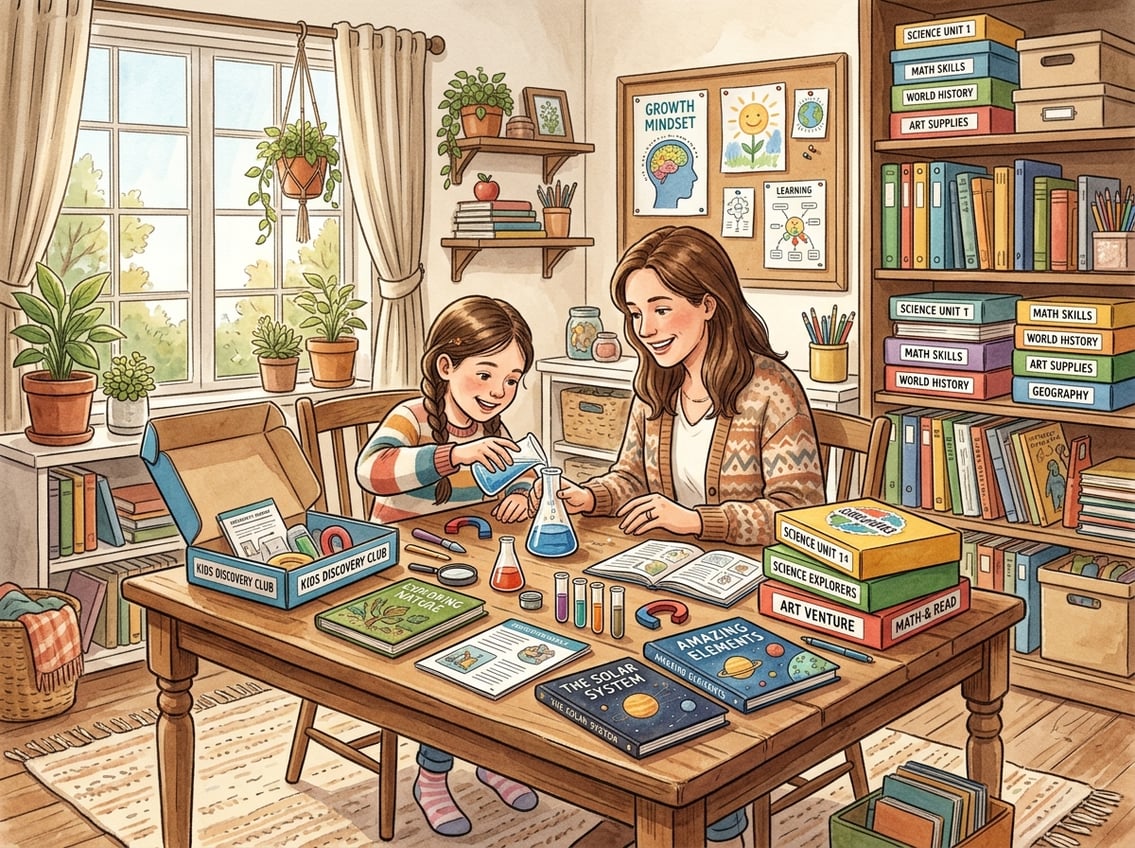
The real magic happens when you stop treating subscription boxes as isolated treats and start weaving them into a deliberate educational plan. With a little structure, a few well-chosen boxes can carry significant weight in your homeschool curriculum without creating chaos or draining your budget.
Using One Box As The Spine For A Single Subject
Pick one subject where you want a subscription box to do the heavy lifting. Science and geography are the two best candidates because hands-on exploration is central to both.
For example, you could use KiwiCo’s Tinker Crate as your primary science curriculum for a 10-year-old. Each month, the crate introduces an engineering or physics concept.
Your job is to extend that single project into a full month of learning by adding library books, documentaries, a written summary, and a simple quiz you create yourself. You are not asking the box to be a complete curriculum.
You are using it as a spine and building the rest of the subject around it. One box, one subject, with intentional extension activities on the days between deliveries.
Pairing Boxes With Books, Writing, And Offline Practice
A subscription box gives you the hands-on component. You fill in the gaps with what boxes almost never include: reading, writing, and repetition.
Here is a simple weekly rhythm that works:
| Day | Activity |
|---|---|
| Monday | Unbox and complete the kit project |
| Tuesday | Read a related library book or Bookroo selection |
| Wednesday | Write a short summary, draw a diagram, or complete a narration |
| Thursday | Watch a related documentary or do an extension experiment |
| Friday | Discuss what was learned; add to a portfolio or notebook |
Pairing an OwlCrate Jr book with a We Craft Box art project creates a surprisingly cohesive literature-and-art block. Adding a Raddish Kids cooking session to a Little Passports geography kit turns a single country study into a multi-sensory experience.
The key is intentional pairing. Random boxes create random learning.
Matched boxes create meaningful cross-curricular connections.
Creating A Sustainable Rotation Without Overspending
Subscription fatigue is real. Three boxes per month sounds manageable until you realize that is $75-$120 every month, plus the time to actually use everything before the next shipment arrives.
A smarter approach: subscribe to two boxes maximum at any given time, and rotate seasonally. For instance, run a Bitsbox coding subscription in the fall, swap to Little Passports in the winter, and switch to a science box in the spring.
Your child gets variety across the year without the pressure of multiple boxes stacking up on your counter. Also consider these budget-friendly strategies:
- Pay annually when possible; most educational subscription boxes offer 10-20% discounts for yearly plans.
- Share a subscription with another homeschool family and split costs.
- Use play-based learning boxes for younger kids during summer months only, saving structured curriculum for the school year.
Two thoughtfully chosen boxes, paired with free library resources and your own creativity, can accomplish more than five boxes used haphazardly.
Frequently Asked Questions
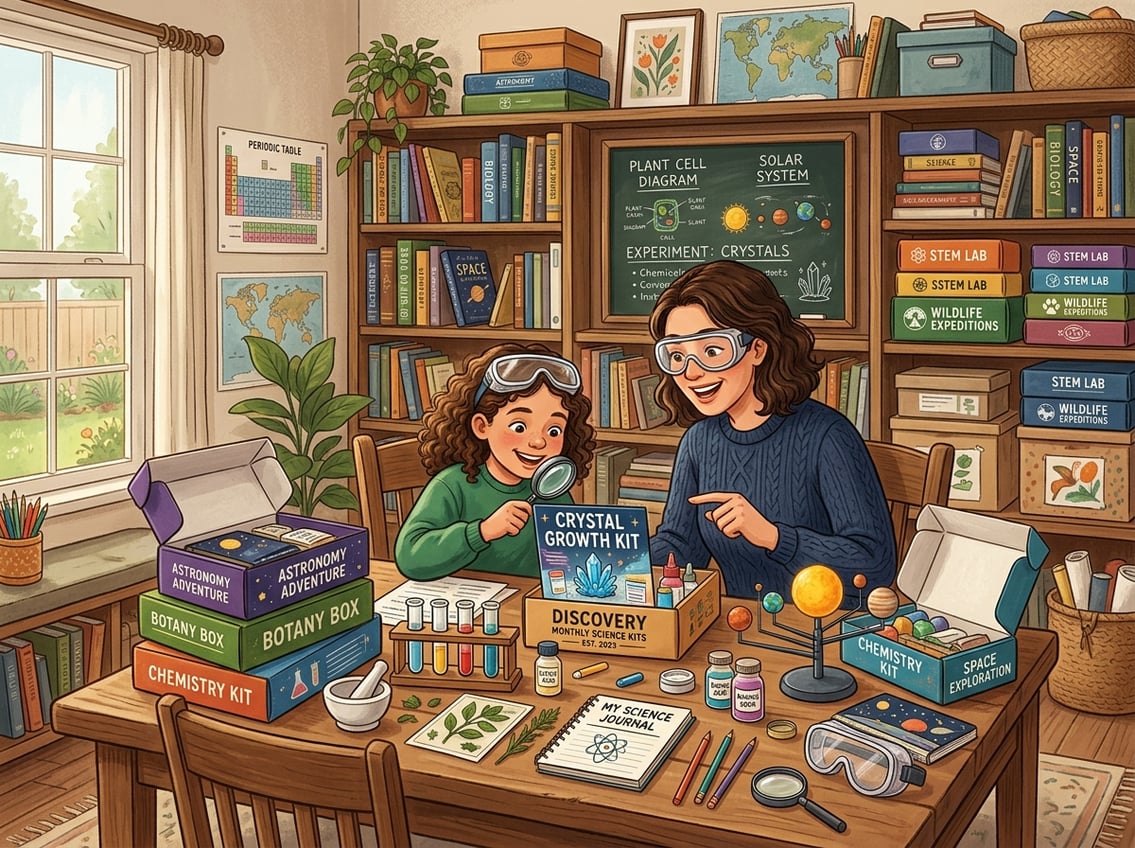
Can monthly educational kits cover a full homeschool curriculum, or do they work best as a supplement?
Most monthly kits work best as a supplement rather than a standalone homeschool curriculum. They typically cover one subject area with one activity per month, which is not enough pacing for full-year mastery.
You will get the most value by using them alongside a core curriculum for reading, writing, and math.
How do I know if a subscription box aligns with my child’s grade level and learning style?
Look for boxes that target a narrow age range, ideally within two to three years of your child’s age. Read reviews from other homeschooling families to see whether the content challenged kids or felt too easy.
Many companies like KiwiCo offer age-specific crate lines so you can match the difficulty level more precisely.
What subjects do these kits typically teach well (science, history, art), and where are the gaps?
Science, geography, art, and cooking are the strongest subjects for subscription box learning because they are naturally hands-on. The biggest gaps are in math, grammar, formal writing, and any subject that requires daily practice and repetition.
You will need separate resources for those areas.
How much parent prep and teaching time should I expect each month with these boxes?
Plan for 15-30 minutes of prep time per box to review the activity booklet and organize materials. The actual activity usually takes 30-60 minutes with your child.
Younger kids (ages 3-7) will need you nearby the entire time, while kids 10 and older can often work through boxes with minimal supervision.
Are the activities truly hands-on and reusable, or do they feel like one-and-done crafts?
It varies widely by brand. STEM-focused boxes from companies like MEL Science and KiwiCo tend to produce functional projects your child can revisit, test, and modify.
Pure craft boxes are more likely to produce a single finished product with limited replay value. Prioritize boxes that encourage experimentation over decoration.
What should I look for to judge quality: materials, lesson plans, standards alignment, and assessments?
Start with the lesson plan or activity booklet. Does it explain the why behind the activity, or just the steps?
Check whether the company mentions any standards alignment. High-quality materials that feel sturdy signal a company that invests in the learning experience.
Formal assessments are rare in subscription boxes. Plan to create your own simple quizzes, narrations, or portfolio entries to track progress.
Leave a Reply