Preparing for the Transition

Families moving from public school to homeschool face a few key steps before they can begin. They need to know the legal rules, follow the right withdrawal process, and keep important school records for future use.
Understanding State Homeschool Laws
Every state has its own homeschooling laws, and parents must follow them carefully. Some states require notice to the local school district, while others need detailed education plans or regular assessments.
Parents should check their state’s Department of Education website for official requirements. Many also find it helpful to connect with local homeschool associations, which often provide guides, sample forms, and updates on any law changes.
A few states are very flexible, but others are strict about curriculum and testing. For example, some require yearly standardized tests, while others only ask for progress reports. Keeping a calendar of deadlines helps families stay compliant and avoid stress.
When parents understand the rules early, they can start homeschooling without interruptions or legal issues.
Withdrawing from Public School
The withdrawal process is important because it makes the shift from public school to homeschool official. In most places, parents need to submit a written notice to the school or district office.
This letter usually includes the child’s name, grade, and the parent’s intent to homeschool. Some districts provide sample forms, while others accept a simple signed statement. A polite and professional tone helps keep communication smooth, as suggested by this guide on switching mid-year.
Parents should ask for written confirmation that the withdrawal was received. This prevents future confusion about truancy or enrollment status.
If the transition happens mid-year, families may also want to explain their timeline so the school understands when homeschooling begins.
Gathering Academic Records
Academic records play a big role in planning lessons and showing progress later. Parents should request copies of report cards, test scores, and any special education plans. These documents help them understand where their child stands academically.
Keeping a folder with these records makes it easier to choose the right curriculum. For example, if a student struggled in math, parents can focus on review before moving forward.
Records are also useful if the child returns to public or private school in the future. Schools may ask for transcripts or proof of completed work before placing a student in the correct grade.
Some families also keep samples of past assignments as extra evidence of progress. This habit can save time if a district or future school asks for more detailed information.
Creating a Supportive Homeschool Environment
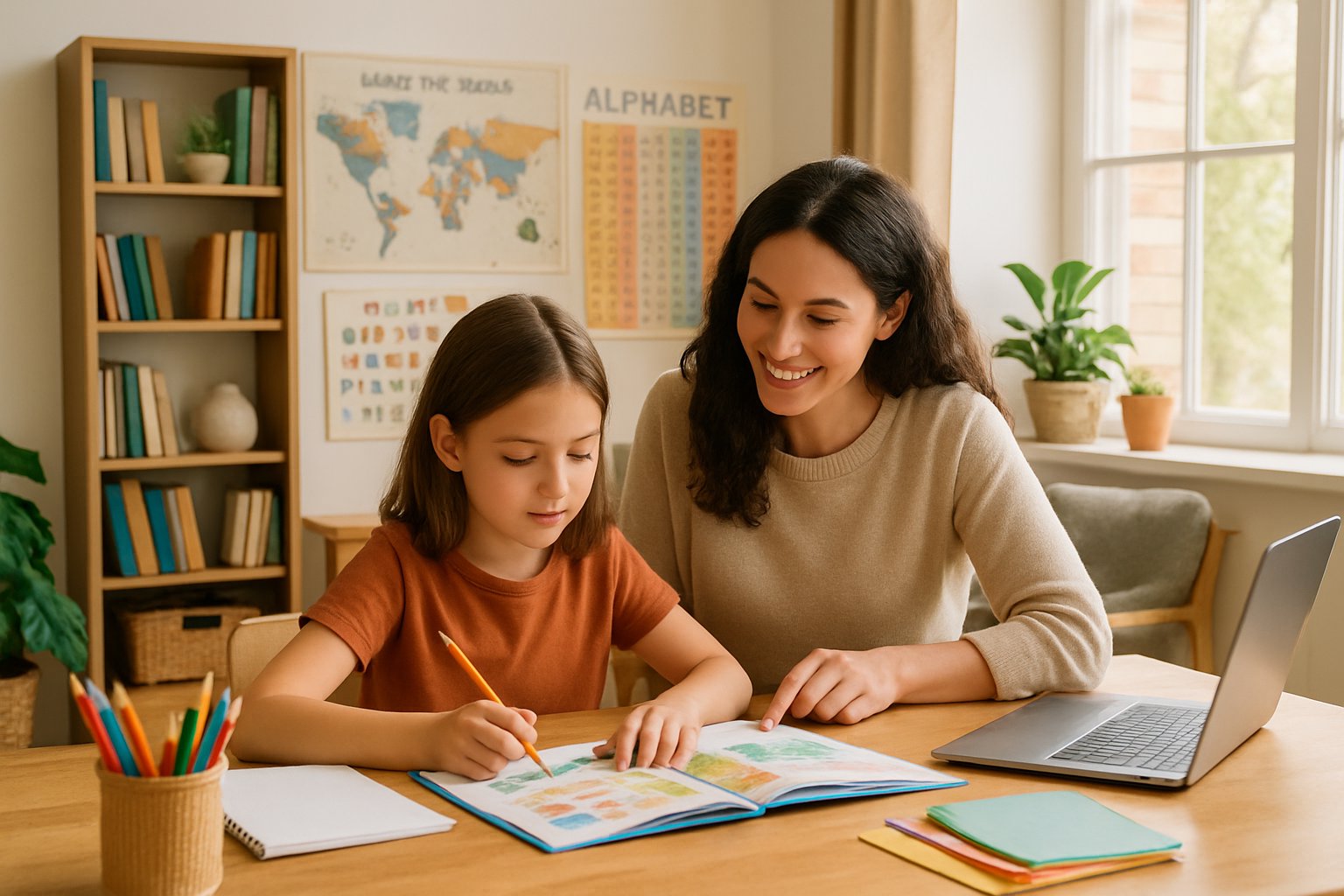
A strong homeschool environment helps children stay focused, reduces stress, and keeps learning consistent. Families can make homeschooling smoother by preparing a dedicated space, following a flexible routine, and choosing curriculum that matches their child’s needs.
Setting Up a Homeschool Space
A well-organized homeschool space makes learning easier. Families often use a spare room, dining table, or even a quiet corner. The key is to keep supplies in one place so children know where to find books, pencils, and other materials.
Storage bins, shelves, or rolling carts help keep the area neat. Good lighting is also important, whether natural sunlight or a desk lamp. A comfortable chair and table at the right height prevent distractions caused by discomfort.
Some families add a small whiteboard or corkboard for schedules and reminders. Others include a basket of books for independent reading. The goal is not to copy a public school classroom but to create a space that feels calm and practical for daily homeschooling.
Developing a Daily Routine
A daily routine gives children structure while still allowing flexibility. Many families start with core subjects like math and reading in the morning when focus is highest. Afternoons can include science projects, history, or creative activities.
Short breaks between lessons help children recharge. A routine might also include outdoor time, chores, and free reading. Writing the schedule on a board or planner helps everyone know what to expect each day.
Unlike public school, homeschooling does not need to run seven hours straight. Most families find that two to four hours of focused work is enough, especially for younger children. A consistent rhythm builds good habits and reduces stress for both parents and kids.
Selecting Homeschool Curriculum
Choosing curriculum is one of the biggest steps in homeschooling. Parents can pick from textbooks, online programs, or hands-on unit studies. Some prefer structured plans, while others use flexible guides that allow more freedom.
It helps to consider a child’s learning style. Visual learners may do well with videos and charts, while hands-on learners may prefer experiments or projects. Families should also think about their teaching style and time available.
Many parents ease into homeschooling by starting with a few subjects and adding more as they go, as suggested in transition tips. Adjusting the curriculum over time is normal. What matters most is finding resources that keep the child engaged and progressing.
Adjusting Academically and Emotionally

Students moving from public school to homeschool often need time to settle into a new pace of learning. They may also face challenges with gaps in knowledge or shifting expectations about what school looks like at home.
Allowing Time to Adapt
Children who leave public school usually benefit from a break before starting formal lessons. This pause, sometimes called “deschooling,” gives them space to relax, reset, and adjust to a new routine. Families often use this time to explore hobbies, read for fun, or take field trips.
Parents should not feel pressured to jump into a full schedule right away. Homeschooling is flexible, and easing in prevents burnout. Many families find that a few weeks of unstructured learning helps children regain curiosity and motivation.
It’s also important to recognize emotional needs. Some students may feel relief, while others may miss classmates or familiar routines. Parents can support this adjustment by encouraging open conversations and maintaining social connections.
Catching Up or Filling Learning Gaps
When shifting from public school to homeschool, some children may have areas where they need extra support. Families can identify these gaps through informal assessments, conversations, or by observing how a child handles new material.
Instead of rushing, parents can focus on building a strong foundation. For example:
- Math: Review basic operations before moving to advanced concepts.
- Reading: Strengthen comprehension with short passages and discussions.
- Writing: Practice clear sentences before tackling essays.
Homeschooling allows parents to move at the child’s pace. They can spend more time on difficult subjects and skip unnecessary repetition. Resources like online programs, local tutors, or hands-on activities can also help target weak areas.
This approach ensures that children not only catch up but also gain confidence in their abilities.
Managing Expectations
Families sometimes expect homeschooling to look like public school, but the structure is often very different. A homeschool day usually takes less time because one-on-one instruction is more efficient. Trying to copy a seven-hour school schedule can lead to frustration.
Parents should set realistic goals. Instead of focusing on how much work gets done, they can measure progress by understanding and growth. Flexibility is a strength of homeschooling, so plans can be adjusted when needed.
It also helps to remember that every child learns differently. What works for one student may not work for another. By staying patient and open to change, families create a more positive and effective learning environment.
For more ideas on easing this change, families can explore 12 tips to ease the transition from public school to homeschool.
Building Community and Social Connections
Children leaving public school often miss the daily contact with classmates. Families can support this change by creating new social outlets through homeschool groups and structured activities in the community. These opportunities help kids build friendships and stay connected outside the home.
Joining Homeschool Groups
Homeschool groups give families a way to meet others who share similar routines and challenges. Many groups organize weekly meetups, field trips, and co-op classes where parents share teaching roles. These gatherings help children find peers while parents exchange advice and resources.
Some groups focus on academics, offering classes in science, math, or writing. Others emphasize social time, such as park days or holiday parties. Families can choose based on their needs and comfort level.
Local and online directories often list homeschool groups by region. Parents can also ask at libraries, community centers, or through state homeschooling associations. Joining a group provides both academic support and a sense of belonging, which makes the transition easier for children.
For example, planning playdates with both old and new friends helps kids maintain connections while forming new ones in the homeschool community. Resources like this how-to guide on switching from public school to homeschool highlight the value of balancing familiar and new relationships.
Participating in Extracurricular Activities
Extracurricular activities give children a chance to socialize outside of lessons. Sports teams, art classes, youth groups, and music programs all provide structured ways to interact with peers. These activities also build skills that extend beyond academics.
Families can look into local recreation centers, YMCA programs, or city sports leagues. Many communities welcome homeschool students into after-school programs, even if they are not enrolled in public school.
Extracurriculars also allow children to pursue personal interests. A child who enjoys theater might join a local drama club, while another might sign up for coding workshops. These activities help kids explore passions while staying socially active.
Taking part in community events and programs ensures homeschooling does not feel isolating. Parents who plan regular outings and activities give their children steady opportunities to connect and grow with others.
Leave a Reply