Pros and Cons of Popular Homeschool Styles
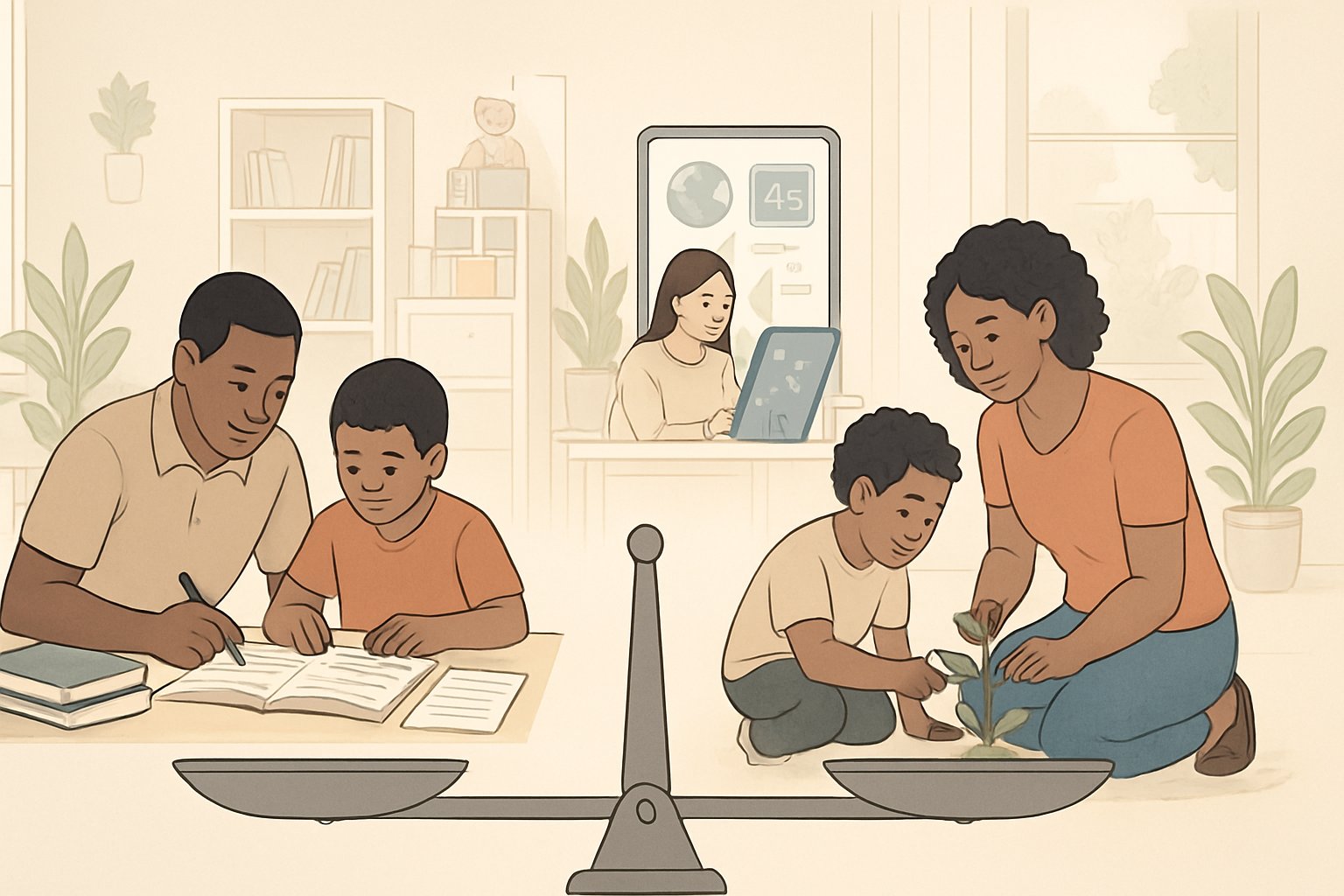
Parents often find that homeschool success depends on choosing a method that fits both the student’s learning style and the family’s daily rhythm. Structured models can provide order and measurable progress.
Creative or literature‑based methods offer flexibility and foster curiosity. Each approach has practical benefits and trade‑offs.
Traditional or Structured Homeschooling
This approach mirrors public or private school environments. Families using textbook‑based programs follow graded materials in core subjects and often rely on standardized goals.
It appeals to parents who prefer clear lesson plans and regular testing.
Pros:
- Straightforward structure makes it easy to track progress and report grades.
- Curriculum kits from publishers such as BJU Press and Abeka simplify planning.
- Works well for students preparing for college or standardized exams.
Cons:
- Can become rigid and time‑intensive for parents.
- High costs arise from purchasing full curriculum sets each year.
- Some learners find textbook work repetitive or uninspiring.
Classical Homeschooling Approach
The classical homeschooling model divides learning into three developmental stages known as the trivium: grammar, logic, and rhetoric. In early years, students memorize facts; in middle grades, they analyze; and in high school, they express ideas clearly.
Pros:
- Emphasizes deep understanding and critical thinking.
- Uses “Great Books” that expose students to a wide range of ideas.
- Strong foundation for future study in the liberal arts.
Cons:
- Intense reading and discussion can overwhelm younger learners.
- Focused historical sequences may feel disconnected from modern topics.
- Requires strong parent involvement and planning.
Charlotte Mason Method and Living Books
The Charlotte Mason method encourages a gentle, literature‑rich form of home education. It centers on living books—narrative works that bring subjects to life—and includes nature walks, journaling, and short, focused lessons.
Pros:
- Builds a love of reading and observation.
- Affordable because many materials come from libraries.
- Encourages family learning through shared readings.
Cons:
- Limited focus on advanced science or math.
- Demands more preparation for college readiness in later years.
- Progress tracking can be subjective.
Unit Studies and Thematic Learning
Unit studies connect all subjects—math, history, literature, science—through one central theme. For instance, studying the ocean might include reading marine fiction, calculating distances, and exploring ecosystems.
Pros:
- Encourages creativity and hands‑on projects.
- Effective for teaching multiple grade levels together.
- Can be low‑cost when parents design units at home.
Cons:
- May leave academic gaps without careful planning.
- Time demands increase when tailoring lessons for varied ages.
- Harder to align with state record‑keeping or standardized tests.
Flexible Homeschool Approaches: Unschooling, Eclectic, and Child-Led Options
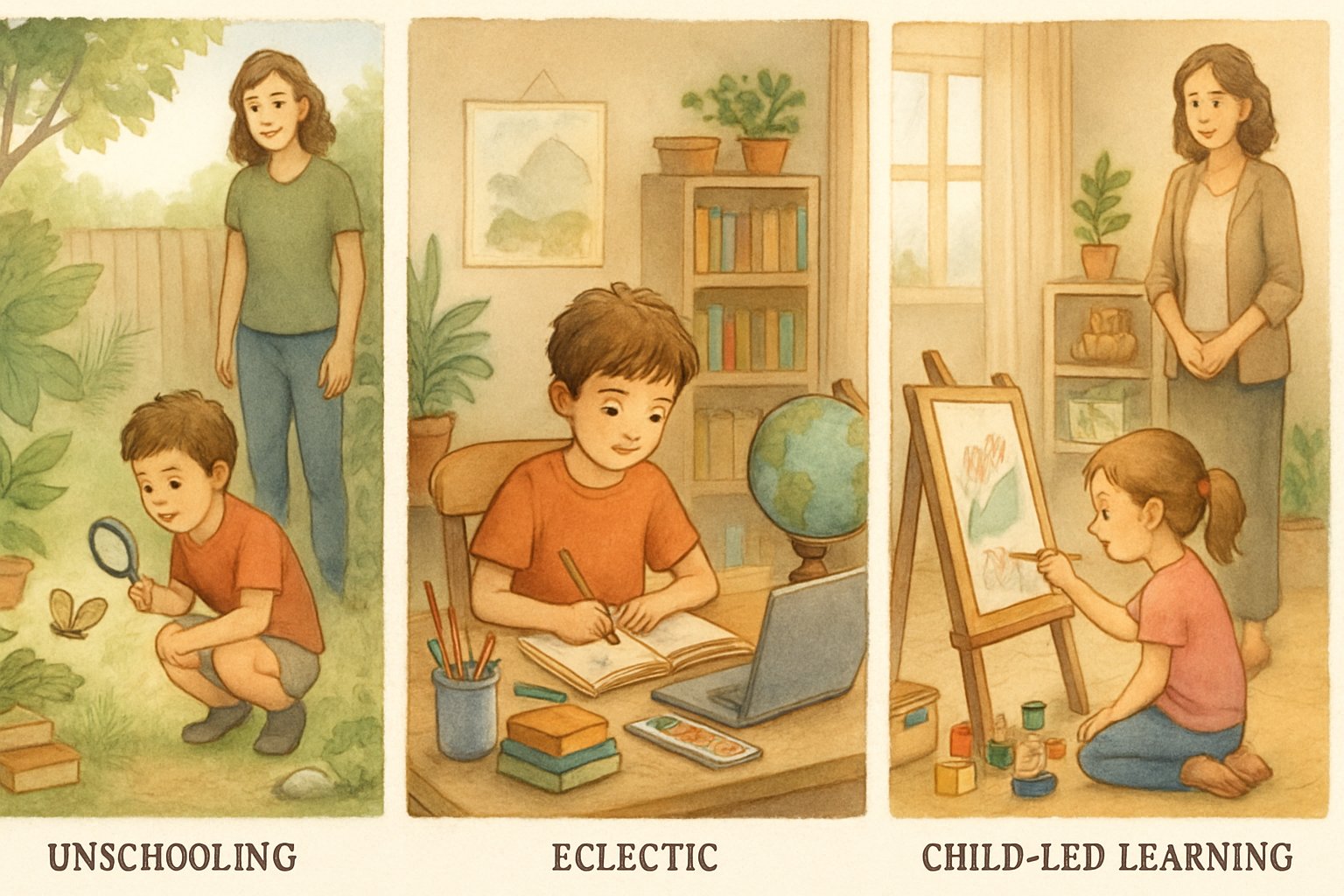
Flexible homeschooling lets families adapt education to fit a child’s interests, strengths, and pace. These approaches encourage curiosity and real-world learning instead of focusing only on structured lessons.
Parents guide their children through exploration, critical thinking, and personalized plans that make learning feel more natural.
Unschooling and Child-Led Learning
Unschooling focuses on allowing children to learn from real life rather than formal instruction. Instead of following a textbook, students explore topics that interest them—like cooking, coding, or gardening.
Parents act as guides, helping connect daily experiences to academic subjects. This approach values freedom and curiosity.
It works best for families who trust that children can learn independently when given time and encouragement. The unschooling homeschool style promotes independence and flexibility, but it takes patience since progress may not follow a traditional timeline.
Some parents worry that unschooling might create gaps in knowledge, especially in math or writing. Keeping a balance between freedom and gentle structure helps reduce that risk.
Regular discussions and project-based learning can make skill development more consistent while keeping motivation high.
Eclectic Homeschooling
Eclectic homeschooling blends parts of different educational philosophies into a custom plan. For example, a family might use the Montessori method for hands-on learning while adding online math lessons or literature-based reading units.
It is highly adaptable and grows with the child’s needs.
According to Cambridge Home School Online, eclectic homeschooling is one of the most flexible models because it allows parents to pick teaching methods that work best for each subject. This freedom makes it appealing to families who dislike rigid schedules.
However, mixing methods can take extra planning. Maintaining balance is key—too much variety can make lessons feel scattered.
Using a simple weekly plan or checklist can help manage materials while retaining flexibility.
Supporting Diverse Learning Styles
Every child learns differently. Some prefer reading quietly, while others grasp new ideas by doing or discussing.
Flexible homeschooling allows parents to design lessons based on these learning styles. Families often combine visual, auditory, and kinesthetic activities.
For instance, a child studying geography might read maps, watch short travel videos, and create clay models of mountains. Sites like Homeschool Planning note that customizing homeschool methods supports confidence and motivation.
By watching how a child responds to different activities, parents can adjust lessons in real time. This personal approach helps students develop lifelong learning habits and keeps education both effective and enjoyable.
Community, Socialization, and Support in Your Homeschool Journey

Parents can strengthen their homeschool journey by finding support systems where both children and adults feel connected and encouraged. They can use local co-ops, online classes, and shared activities to create balance between education and social growth.
Getting Involved in Co-Ops and Groups
Homeschool co-ops help families share teaching roles, organize group lessons, and create regular social experiences for children. These groups may focus on core subjects, creative arts, or practical skills.
Many families value the opportunity to teach collaboratively and access resources that are difficult to provide alone. Co-ops vary in structure.
Some run like small community classes, while others rotate instruction among parents. Families can find or start co-ops through local homeschooling organizations, libraries, or online communities.
Participation gives children regular peer contact and teamwork practice, which supports social and emotional growth.
Parents also gain practical benefits. They exchange ideas, pool materials, and share teaching loads.
Activities like science labs, field trips, and group projects bring variety and make learning more interactive. Families concerned about limited peer interactions can explore how homeschool co-ops help children build friendships and learn cooperation, as described in Effective Homeschool Socialization: Keep Your Kids Social & Connected.
Building Family and Community Connections
Homeschooling naturally strengthens family bonds through shared daily experiences and time spent together. Parents see firsthand how their child learns and grows, allowing for more consistent support and encouragement.
This closeness often leads to strong trust and communication. Outside the home, involvement in the community adds rich opportunities for learning.
Families can join recreation leagues, volunteer at local events, or take part in group classes. Children who interact often with various age groups develop social confidence and adaptability.
Parents can also find affirmation and advice through local meetups or online forums. Resources like the article on The Truth About Homeschooling and Socialization explain that with planning and intention, homeschooling families can build strong, healthy social networks that keep learning connected to real life.
Leave a Reply