What To Focus On First At Home
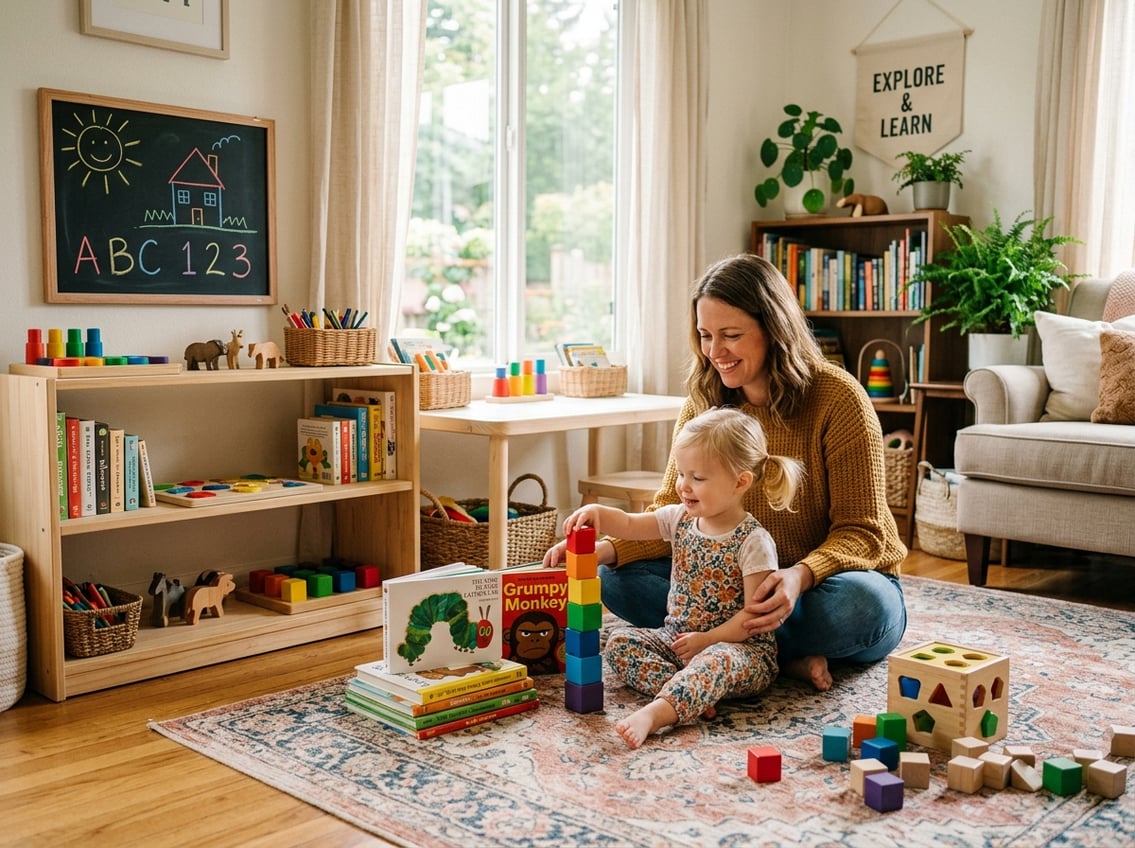
Homeschooling toddlers works best when you lean into how young children naturally explore. Prioritize a handful of core skills, and let go of the idea that every minute needs to be “productive.”
How Toddlers Learn Best Through Play And Daily Life
Your toddler is already learning all the time. Every trip to the grocery store, every tower of blocks, every puddle stomp is a lesson in disguise.
The most effective approach to homeschooling a toddler is recognizing that play is the main vehicle for learning, not worksheets or flashcards. Sensory play is one of your most powerful tools.
Filling a bin with rice, beans, or kinetic sand and adding scoops, cups, and small toys gives your child practice with fine motor skills, cause and effect, and even early math concepts like measuring and pouring. Pair sensory activities with conversation and you naturally build vocabulary, too.
Daily life tasks are equally valuable. Sorting laundry introduces colors and categories.
Cooking together covers counting, measuring, and following directions. A toddler homeschool doesn’t need to look like a classroom.
It should look like your life, just a bit more intentional.
Core Skills Worth Prioritizing In The Early Years
You don’t need to cover every subject. During preschool at home, a few key areas matter most:
- Early literacy: Reading aloud daily, singing the alphabet, pointing out letters on signs and packaging
- Number sense: Counting objects during play, recognizing small quantities, simple sorting
- Fine motor development: Drawing, tearing paper, using playdough, stringing beads
- Social and emotional skills: Sharing, naming feelings, taking turns, following simple directions
- Gross motor skills: Jumping, climbing, balancing, throwing
A solid homeschool preschool approach focuses on these foundations. Academic milestones are better suited for older children.
Setting Realistic Expectations For Attention Span And Pacing
A two-year-old can focus on a single activity for about two to five minutes. A three-year-old might manage five to ten.
This is normal and healthy. Structured learning time for your toddler can be as short as 15 minutes per day.
The rest of the learning happens through exploration, stories, and everyday moments. Some topics will click instantly, while others might fascinate your child for weeks.
Follow their lead. Flexibility is one of the greatest gifts of this season.
Building A Simple Learning Rhythm
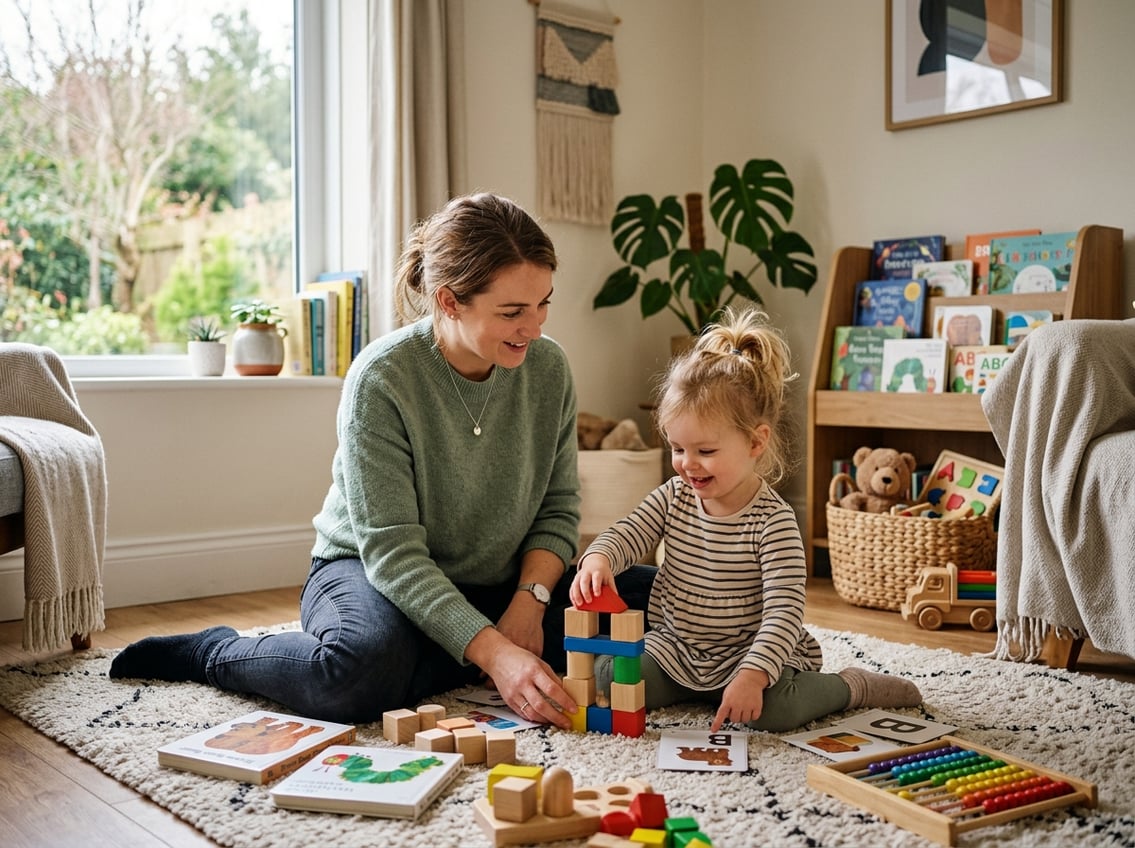
A toddler homeschool curriculum doesn’t need rigid time blocks. It needs a gentle rhythm that flows with your family’s natural energy.
Mix purposeful activities with plenty of free play. This balance supports both learning and creativity.
Creating A Flexible Day Without A Rigid Schedule
Forget the color-coded, hour-by-hour schedule you might see on social media. Your toddler doesn’t need that, and neither do you.
What works is a repeatable daily flow built around the rhythms already present in your day. Think of your routine in loose blocks rather than strict times:
- Morning block: Breakfast, a short learning activity, free play
- Midday block: Outside time, sensory play, lunch
- Afternoon block: Storytime, quiet play, rest or nap
Some days you’ll hit every block. Other days, your child might be teething or cranky, and you’ll skip the structured activity entirely.
That’s perfectly fine. A good homeschool organization strategy for this age means having materials ready so you can grab something quickly when the moment is right.
Planning Play-Based Activities For Literacy, Math, And Motor Skills
You can cover a surprising amount of ground with simple, low-prep activities. For early literacy, try matching magnetic letters on the fridge or singing letter sound songs.
Tracing sandpaper letters with fingers offers tactile experiences that stick better than paper drills at this age. For math, counting bears are a favorite.
Your child can sort them by color, line them up to practice one-to-one counting, or use them in pretend play. Stacking cups, puzzles, and even setting the table also reinforce number concepts naturally.
Motor skills show up everywhere. Tearing paper, squeezing glue bottles, and scooping rice all strengthen the small muscles your child needs for writing later.
Using Themes And Letter-Based Learning Without Overdoing It
A letter of the week curriculum gives your days a natural focus without requiring hours of prep. Each week, you pick a letter and weave it loosely into your activities.
For the letter B, you might read books about bears, make a sensory bin with blue items, bake banana bread, and practice tracing the letter in sand. The key word is loosely.
Letter of the week activities are a framework, not a mandate. If your child wants to spend three days on the letter B and then loses interest, move on.
If they want to stay on it for two weeks, that’s fine too. Themed learning works the same way.
A “Farm” week might include animal counting, barn-themed crafts, and farm animal picture books. Keep it playful, keep it short, and resist the urge to turn every preschool curriculum theme into a major production.
Choosing Curriculum And Materials That Fit
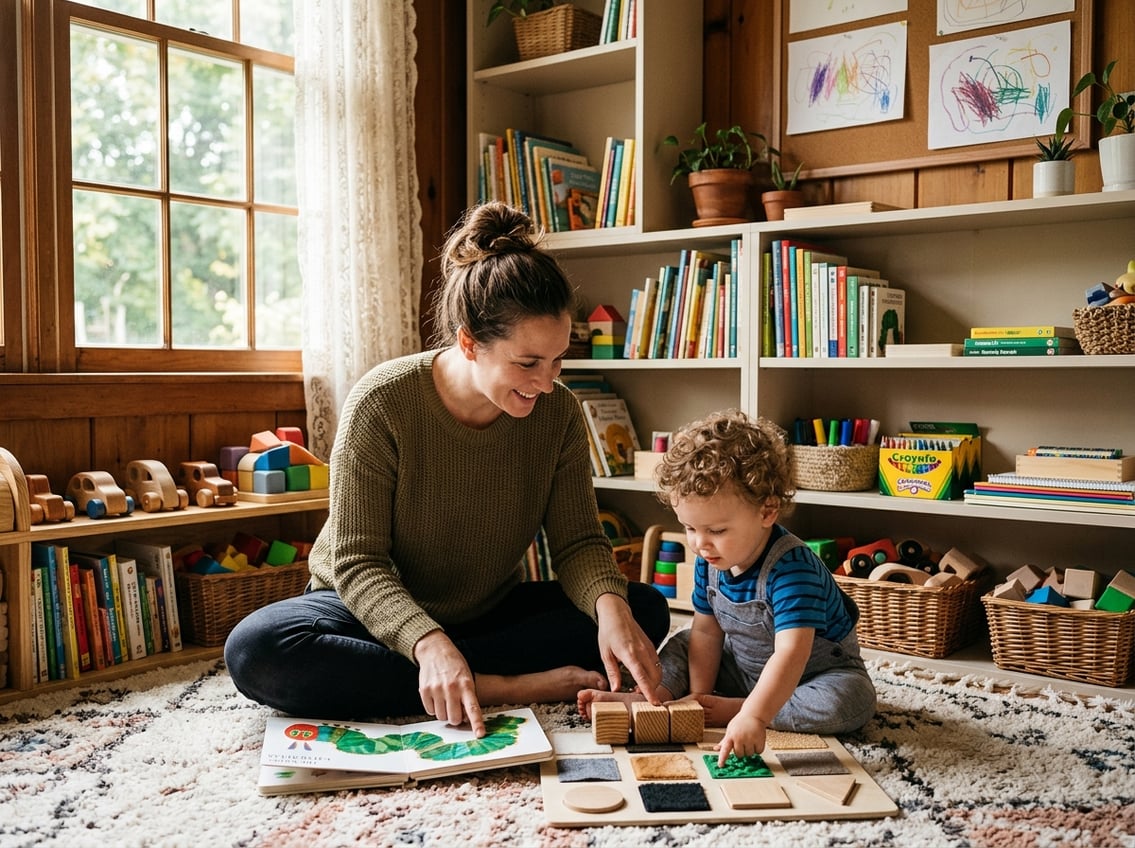
Finding the best toddler homeschool curriculum means matching your family’s style and your child’s interests. Consider your available prep time rather than chasing the most popular program.
When To Use A Full Program Versus Your Own Lesson Plan
A full preschool curriculum makes sense if you prefer an open-and-go approach. Programs like Experience Early Learning ship monthly kits with everything you need to launch 80 learning experiences, which removes the planning burden entirely.
This is ideal if you’re short on time or new to homeschooling. Building your own plan works better if your child has strong interests you want to follow, or if you enjoy curating activities yourself.
Many parents combine both: a simple core program for literacy and math, plus DIY unit studies for science and seasonal topics. Start with one approach.
You can always adjust after a month or two once you see what fits.
What Makes The Best Toddler Homeschool Curriculum
The best toddler homeschool curriculum shares a few key traits:
- Play-based and hands-on rather than worksheet-heavy
- Low daily time commitment (15 to 30 minutes of structured activity)
- Developmentally appropriate pacing that doesn’t push academics too early
- Flexibility to skip, repeat, or rearrange lessons
According to reviews of top-rated preschool curriculum options, the programs families love most are the ones that feel natural and enjoyable for both parent and child. If a curriculum stresses you out or makes your toddler cry, it’s the wrong fit.
A Montessori-inspired approach is another popular route. It emphasizes child-led discovery and real-world activities like pouring, sweeping, and food preparation.
Low-Prep Supplies That Support Consistent Learning
You don’t need an entire classroom worth of materials. A small, well-chosen collection goes a long way:
- Counting bears or math manipulatives for sorting, counting, and patterning
- Sandpaper letters for tactile letter recognition
- Washable markers, crayons, and paints for art and fine motor practice
- A sensory bin base (rice, dried beans, or kinetic sand) with rotating small items
- Wooden puzzles featuring letters, numbers, and shapes
- A basic printer for occasional worksheets or coloring pages
- A small rotating library of picture books tied to your weekly theme
Store everything in a single rolling cart or basket. When supplies are easy to grab and put away, you’re far more likely to use them consistently.
Frequently Asked Questions
When should I start homeschooling my toddler?
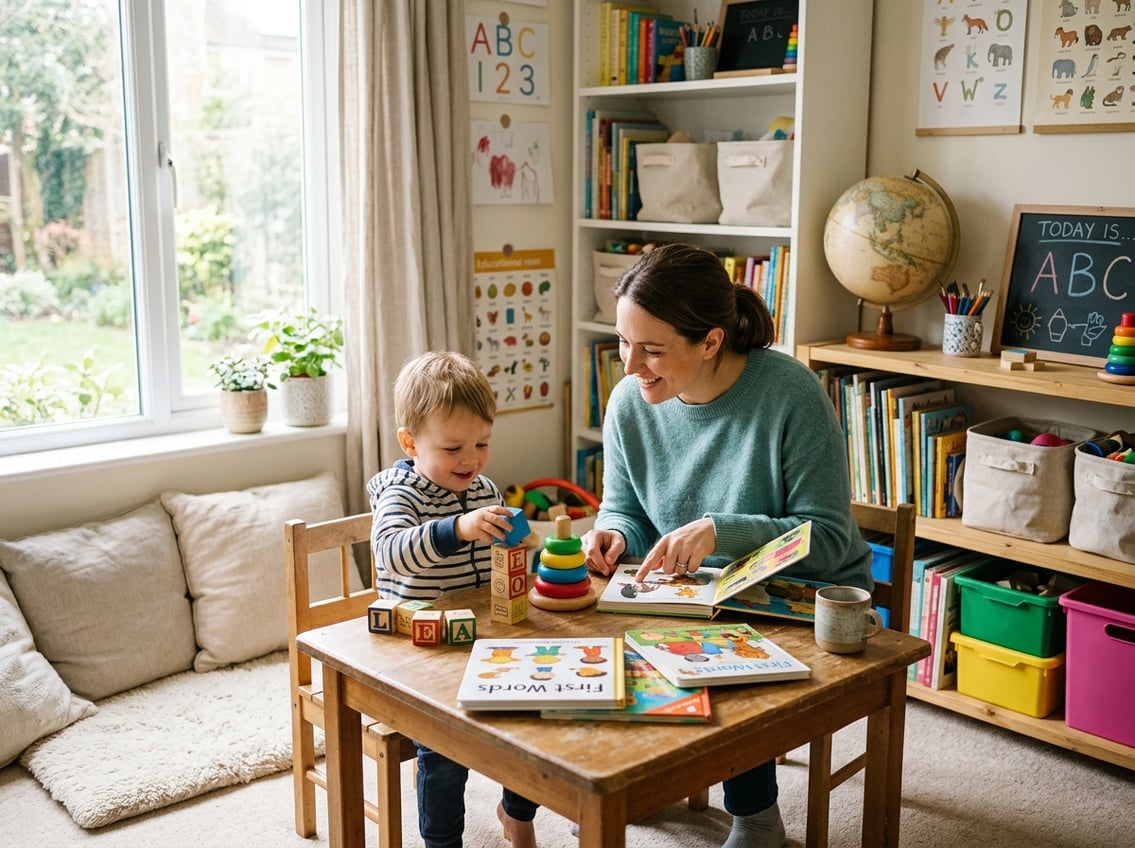
There’s no single right age, but many families begin introducing simple, intentional activities around 18 months to 2 years old. At this stage, “homeschooling” looks like reading together, singing songs, and exploring sensory materials.
If your child shows curiosity and enjoys engaging with you, they’re ready for gentle learning at home.
What does a simple daily homeschool routine look like for a 2- or 3-year-old?
A typical day might include a short 10-to-15-minute structured activity like a craft or letter game, followed by free play, outdoor time, a story, and everyday tasks like cooking or cleaning together. Building your day around natural rhythms and letting go of the pressure to do it all makes the biggest difference.
Do toddlers need a formal curriculum, or is play-based learning enough?
Play-based learning is absolutely enough for toddlers. Formal curricula are optional and should only be used if they make your life easier, not harder.
The early years are about building curiosity, creativity, and confidence, and play naturally develops these qualities alongside early literacy and math skills.
Where can I find free printable learning activities or PDFs suitable for a 2-year-old?
Several websites offer free play-based curriculum resources divided by age, including monthly themes and hands-on activity ideas. Your local library’s website and educational blogs are also great places to find free printable tracing sheets, coloring pages, and simple matching games designed for toddlers.
What basic supplies and materials are most useful for toddler learning at home?
Keep it simple. Washable art supplies, counting bears, wooden puzzles, a sensory bin with a scoopable base, playdough, and a rotating stack of picture books cover most of your needs.
A basic printer for occasional printables is helpful but not required. You likely already own many of the materials that make great learning tools.
How long should learning activities last to match a toddler’s attention span?

Most toddlers can focus on a single activity for about two to ten minutes, depending on age and interest.
Plan activities that are short and easy to wrap up.
If your child stays engaged longer, let them continue.
If they walk away after three minutes, that’s completely normal and still counts as a successful learning moment.
Leave a Reply