Preparing for Homeschooling on the Move
Success with homeschooling during travel starts with choosing an educational approach that fits your family’s needs and understanding the legal requirements for different locations. Families must also set clear learning goals that balance structured education with travel experiences.
Choosing the Right Homeschooling Approach
Different homeschooling methods work better for traveling families than others. Online homeschool programs offer flexibility since they only need internet access to function.
Digital-First Options:
- Online curriculum platforms
- Educational apps and games
- Video-based lessons
- Virtual tutoring sessions
Traditional textbook approaches can work but add weight and bulk to luggage. Many families find success with a hybrid approach that combines digital resources with a few essential workbooks.
Worldschooling approaches use travel destinations as part of the curriculum. This method turns museums, historical sites, and cultural experiences into classroom lessons.
Unschooling relies on natural learning opportunities during travel. This approach works well for families who want maximum flexibility in their daily schedules.
Parents should consider their child’s learning style and their own teaching comfort level. Some children need more structure while others thrive with flexible, experience-based learning.
Setting Educational Goals for Your Trip
Clear educational goals help families stay focused on learning while managing travel logistics. Parents should identify core subjects that must continue during the trip versus areas where they can be more flexible.
Essential Subject Areas:
- Math skills – These build on each other and are hard to catch up on later
- Reading comprehension – Can be maintained through travel journals and local books
- Writing practice – Travel experiences provide excellent writing topics
Families can set location-specific learning goals too. A trip to Rome might focus on ancient history while a beach destination could emphasize marine biology.
Some families slim down their homeschooling schedule during travel transitions. This approach frees up time for travel activities while maintaining basic skill practice.
Parents should write down weekly learning targets rather than rigid daily schedules. This flexibility helps when travel days don’t go as planned.
Age-appropriate expectations matter too. Younger children can learn through play and exploration while older students might need more structured academic time.
Researching Local Curriculum Requirements
Different states and countries have varying homeschool laws that traveling families must follow. Some locations require specific subjects or testing while others have minimal oversight.
Key Legal Considerations:
- Home state reporting requirements
- Destination state temporary residency rules
- International homeschool recognition
- Required standardized testing schedules
Families should research these requirements months before traveling. Many states allow temporary travel without changing residency status for homeschool purposes.
Some destinations offer educational opportunities that can fulfill curriculum requirements. Museums often provide structured programs that count toward science or history credits.
Parents should keep detailed records of educational activities during travel. Photos, ticket stubs, and travel journals can serve as documentation for curriculum compliance.
International travel may require additional paperwork proving children are receiving appropriate education. Some countries ask for homeschool documentation at border crossings.
Consulting with other traveling homeschool families can provide practical insights about specific destinations and their requirements.
Organizing Your Homeschooling Routine While Traveling
A well-organized routine helps families maintain consistent learning while exploring new places. The key is building flexibility into daily schedules and finding creative ways to blend education with travel experiences.
Creating a Flexible Daily Schedule
Successful homeschooling families use scheduling software and planning tools to stay organized on the road. Digital tools like Google Calendar, Trello, or simple spreadsheets work well for tracking lessons and activities.
Parents should create a basic framework rather than rigid hourly schedules. A typical day might include core subjects in the morning, exploration time midday, and quiet learning in the afternoon.
Sample Daily Framework:
- Morning (2-3 hours): Math, reading, writing
- Midday (3-4 hours): Sightseeing, hands-on activities
- Afternoon (1-2 hours): Journaling, independent reading
Travel days require different approaches. Long car rides become perfect opportunities for audiobooks, educational podcasts, or geography games using road maps.
Time zone changes and unexpected delays happen frequently. Smart families build buffer time into their schedules and prepare backup activities for these situations.
Balancing Schoolwork with Travel Activities
The best homeschooling families turn destinations into learning opportunities rather than treating travel and school as separate activities. This approach makes both more enjoyable and educational.
Location-based learning works exceptionally well. Families visiting national parks can study geology and wildlife. Those exploring historical cities can dive into local history and culture.
Ways to Blend Learning and Travel:
- Museum visits for science and history lessons
- Cooking local foods for cultural studies
- Nature hikes for biology and physical education
- Language practice with locals
Parents should involve children in trip planning as part of their education. Kids can research destinations, calculate distances, manage budgets, and create itineraries.
The key is setting realistic expectations. Not every day needs intensive academic work. Some days focus more on experiences, while others emphasize traditional subjects.
Incorporating Downtime Learning
Smart homeschooling families recognize that rest and buffer time prevent burnout and actually improve learning outcomes. Quiet time helps children process new experiences and information.
Downtime doesn’t mean stopping education completely. Low-energy learning activities work well during rest periods or lazy travel days.
Quiet Learning Activities:
- Travel journaling about daily experiences
- Sketching local architecture or nature
- Reading books related to destinations
- Educational documentaries about visited places
Audio learning proves especially valuable during downtime. Podcasts, audiobooks, and language learning apps require minimal setup and work in various environments.
Parents should recognize that some of the best learning happens naturally during unstructured time. Children often ask thoughtful questions or make connections between experiences when they have space to think and reflect.
Maximizing Learning Opportunities Through Family Travel
Family travel creates natural learning moments that traditional classrooms cannot offer. Parents can turn destinations into living textbooks while building essential life skills through real-world experiences.
Using Field Trips and Local Experiences
Every destination becomes a massive outdoor classroom when families approach travel with an educational mindset. Museums, historical sites, and cultural landmarks offer hands-on learning that textbooks simply cannot match.
Local markets provide lessons in math, economics, and cultural studies. Children can practice counting money, learn about different currencies, and observe how people from other cultures live and work.
Turning family travel into learning opportunities allows families to explore subjects like history and geography through direct experience. Walking through ancient ruins teaches history more effectively than reading about them.
National parks offer science lessons in geology, biology, and environmental studies. Children can observe ecosystems firsthand and learn about conservation efforts in action.
Popular Educational Destinations:
- Science museums for hands-on experiments
- Historical sites for living history lessons
- Nature centers for environmental education
- Art galleries for creative inspiration
Integrating Life Skills and Cultural Insights
Travel naturally teaches children important life skills they need as adults. Navigation, budgeting, and problem-solving become daily activities during family trips.
Children learn to read maps, understand directions, and navigate airports or train stations. These skills build confidence and independence in young learners.
Cultural immersion happens automatically when families visit new places. Children observe different languages, foods, customs, and ways of life without formal instruction.
Money management becomes practical when children help plan budgets for meals, souvenirs, or activities. They learn the value of money and how to make spending choices.
Key Life Skills Developed:
- Communication: Talking to locals and asking for directions
- Adaptation: Adjusting to new environments and schedules
- Independence: Making decisions and solving problems
- Cultural awareness: Understanding and respecting differences
Time management skills develop as families coordinate schedules, catch flights, and balance activities with rest periods.
Leveraging Reading and Educational Resources
Audio books and soundtracks keep learning going during long car rides or flights. Families can listen to stories related to their destination before arriving.
Digital resources make homeschooling portable and flexible. Educational apps work without internet connections, making them perfect for remote locations or long journeys.
Libraries offer books about destinations before trips begin. Children can research places they will visit and build excitement for upcoming adventures.
Recommended Travel Resources:
- Kindle loaded with destination-related books
- Educational podcasts about local history
- Language learning apps for international travel
- Geography games and apps
Notebooking pages related to trips help children document experiences and reflect on learning. They can draw pictures, write observations, and record new facts discovered during travel.
Travel journals encourage daily writing practice. Children can describe new foods, interesting people they meet, or exciting places they visit.
Staying Connected and Supported on the Road
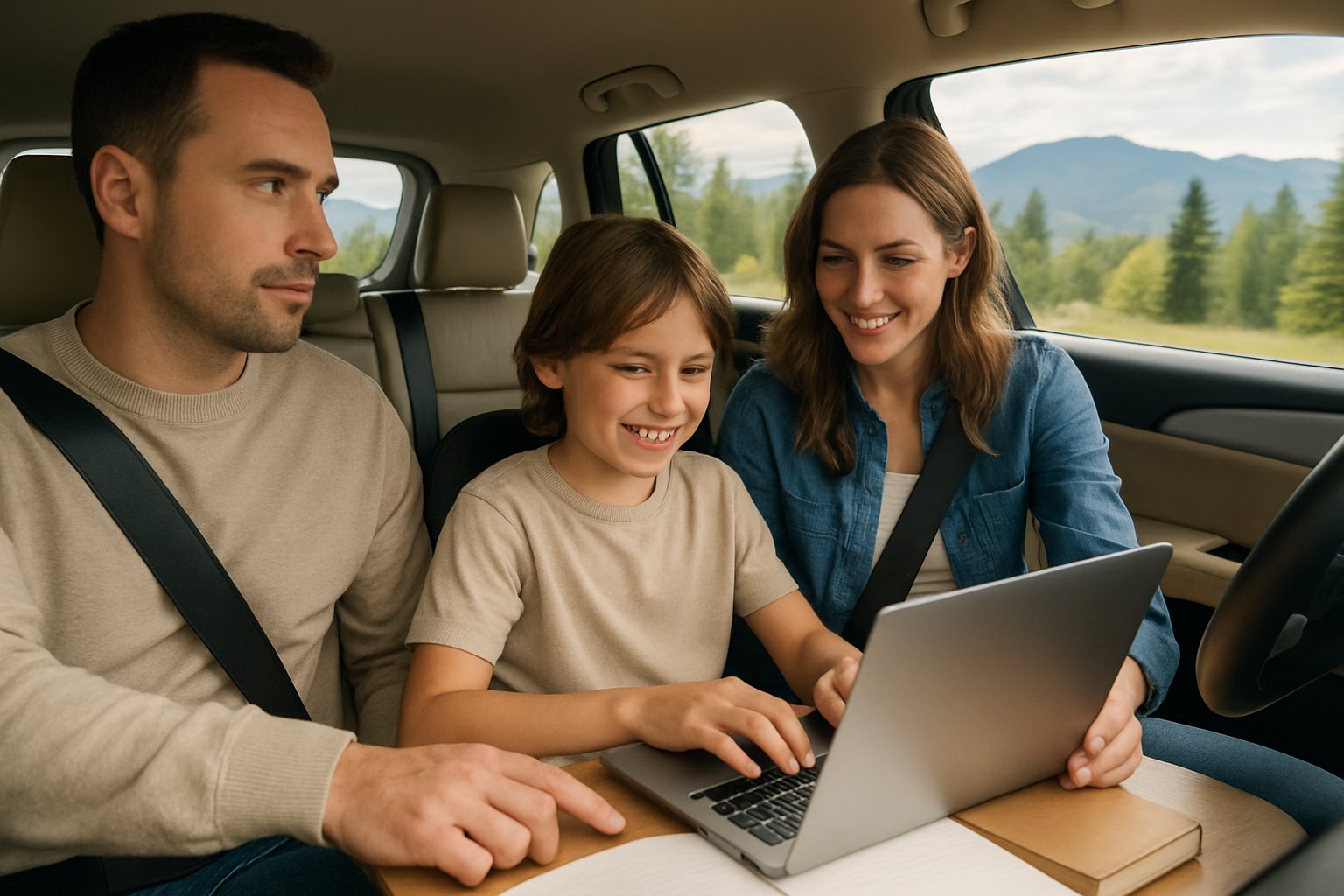
Building connections with other homeschooling families and maintaining communication with educators helps traveling families create a strong support network. Online communities and regular contact with teachers provide resources, encouragement, and social opportunities for both parents and children.
Joining Homeschooling Communities
Online homeschooling groups offer valuable support for families on the road. Facebook groups connect traveling parents with others who understand the unique challenges of educating children while moving.
These communities share practical tips about curriculum choices and travel logistics. Members often recommend educational apps and online resources that work well without internet access.
Parents can ask questions about state requirements and get advice from experienced road schooling families. Many groups focus specifically on RV families or international travelers.
Local connections matter too. Some areas have homeschooling hubs where visiting families can join planned activities. These meetups give children chances to socialize with peers.
Parents should research groups before joining long trips. Active communities with regular posts provide better ongoing support than inactive ones.
Communicating with Educators and Peers
Regular contact with teachers helps children stay engaged with their learning. Video calls allow face-to-face interaction even from remote locations.
Parents can schedule weekly check-ins with online instructors or tutors. These meetings help track progress and adjust learning plans as needed.
Technology makes communication easier:
- Email for sending assignments and updates
- Video calls for real-time discussions
- Messaging apps for quick questions
- Shared documents for collaborative projects
Children need peer interaction beyond family members. Online classes through platforms create opportunities for real-time engagement with other students.
Parents should set up reliable internet access before traveling. Mobile hotspots and campground WiFi help maintain consistent communication with educational support networks.
Leave a Reply