Integrating Mindfulness Practices into the Homeschool Routine
Building mindfulness into daily homeschool activities creates natural pauses for calm and focus throughout the learning day. Simple breathing exercises between subjects and mindful transitions help children develop better attention spans while reducing stress.
Creating Mindful Moments Throughout the Day
Parents can weave short mindfulness practices into their homeschool schedule without disrupting learning flow. A simple two-minute breathing exercise before starting math helps children settle their minds and prepare for focused work.
Mindful breathing exercises and gratitude journaling can be scheduled at specific times each day. Many families find success with morning mindfulness to start the day calmly.
Daily Mindful Moments Schedule:
- Morning: 3-minute breathing exercise before lessons
- Mid-day: Mindful eating during lunch
- Afternoon: 2-minute body scan before challenging subjects
- Evening: Gratitude reflection time
These practices help create a calm learning environment where children feel more centered. Short, consistent moments work better than long sessions that might feel overwhelming for younger learners.
Mindful Transitions Between Lessons
Switching between subjects can create stress and distraction for homeschool children. Mindful transition activities help students close one learning chapter and open their minds to the next subject.
A simple transition routine might include three deep breaths and a moment to notice how their body feels. This practice helps children let go of any frustration from the previous lesson.
Quick Transition Activities:
- Ring a small bell and take five deep breaths
- Do gentle neck and shoulder stretches
- Name three things they can hear in the room
- Take a mindful walk around the house
These brief pauses prevent the rushed feeling that often builds throughout the homeschool day. Children learn to recognize when they need a moment to reset their attention span.
Simple Mindfulness Activities for Children
Age-appropriate mindfulness activities keep children engaged while building their focus skills. Guided imagery, body scans, and mindful listening exercises work well for different learning styles and ages.
Younger children enjoy animal breathing exercises where they breathe like a sleeping bear or panting puppy. Older kids might prefer guided visualizations or mindful drawing activities.
Easy Activities by Age:
| Ages 5-8 | Ages 9-12 | Ages 13+ |
|---|---|---|
| Animal breathing | Body scan meditation | Mindful journaling |
| Mindful coloring | Gratitude lists | Walking meditation |
| Listen for sounds | Breathing counting | Progressive muscle relaxation |
Children can practice these activities independently once they learn the basics. This builds their confidence in managing their own emotions and stress levels during challenging homeschooling moments.
Mental Health Benefits of Mindfulness in Homeschooling
Mindfulness practices create powerful changes in how homeschooled children handle stress, manage their emotions, and build inner strength. These techniques help reduce anxiety while teaching kids to understand their feelings better and bounce back from challenges.
Reducing Stress and Anxiety
Mindfulness practices help reduce stress in homeschooled children by teaching them to focus on the present moment. When kids learn breathing exercises and simple meditation, they develop tools to calm their minds during tough times.
Daily stress triggers often include:
- Hard math problems
- Reading challenges
- Test anxiety
- Schedule changes
Deep breathing exercises work quickly to lower stress hormones. Children can use these techniques during lessons when they feel overwhelmed.
Studies show that students who practice mindfulness display improved focus and decreased mind-wandering. This helps reduce the anxiety that comes from feeling scattered or unfocused.
Simple techniques that work well include:
- Five-minute morning breathing
- Body scan exercises
- Mindful walking breaks
Parents often notice their children become calmer and less reactive to daily stressors. The reduced anxiety helps kids approach learning with more confidence and openness.
Improving Emotional Awareness and Regulation
Mindfulness teaches children to notice their emotions without being controlled by them. This skill helps homeschooled kids understand what they feel and why they feel it.
Key emotional skills include:
- Naming feelings accurately
- Understanding emotional triggers
- Choosing helpful responses
- Managing strong emotions
When children practice mindful awareness, they learn to pause between feeling an emotion and reacting to it. This pause gives them time to choose better responses instead of having emotional outbursts.
Emotional regulation improves when kids understand that feelings come and go like waves. They learn that being angry or sad is normal, but they don’t have to act on every feeling.
Daily practice examples:
- Emotion check-ins during lessons
- Mindful journaling about feelings
- Discussion of emotional experiences
- Role-playing calm responses
Children who develop these skills handle frustration during learning better. They can work through difficult subjects without giving up or having meltdowns.
Fostering Resilience and Mental Strength
Mindfulness practices promote mental clarity and resilience by teaching children that they can handle challenges. Kids learn that difficult feelings and situations are temporary.
Building blocks of resilience:
- Self-compassion during mistakes
- Growth mindset about learning
- Confidence in personal abilities
- Healthy coping strategies
Mental strength grows when children practice sitting with uncomfortable feelings instead of avoiding them. They discover they can survive disappointment, frustration, and even failure.
Mindful awareness helps kids see their thoughts as separate from who they are. When they think “I’m bad at math,” they learn to notice this as just a thought, not a fact about themselves.
Strength-building activities:
- Mindful reflection on daily wins
- Gratitude practices
- Problem-solving meditation
- Celebrating effort over results
Children develop inner confidence that helps protect against depression and anxiety. They learn to trust their ability to work through problems and bounce back from setbacks.
Essential Mindfulness Techniques for Homeschool Families
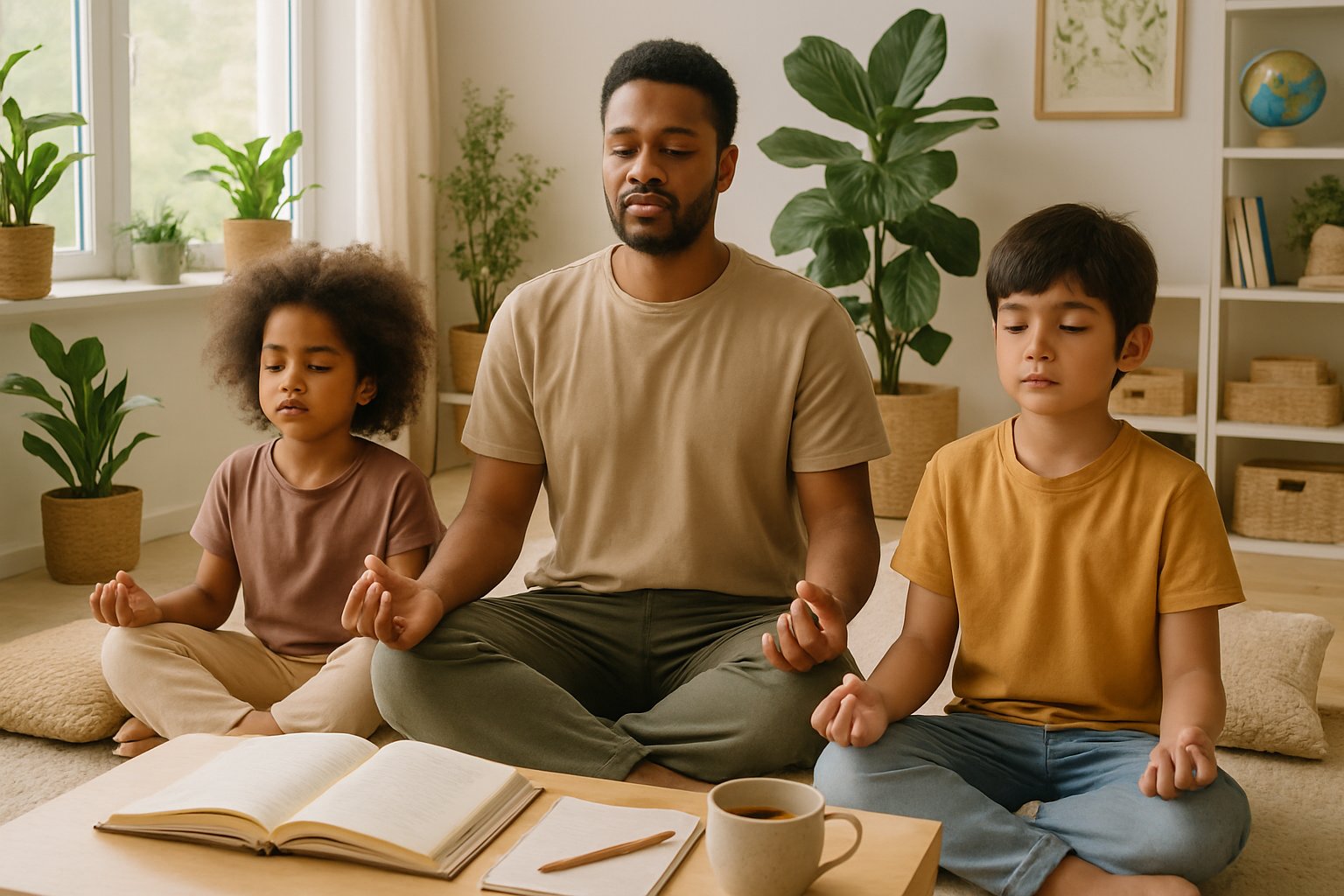
These core mindfulness practices help homeschool families build emotional strength and focus. Simple breathing exercises, body awareness activities, and creative projects can transform daily learning routines.
Breathing Exercises for Emotional Control
Deep breathing techniques give children powerful tools for managing big emotions during challenging lessons. Simple breathing exercises can reduce stress and improve concentration for both parents and kids.
The 4-7-8 technique works well for older children. They breathe in for 4 counts, hold for 7, and exhale for 8. This pattern naturally calms the nervous system.
Balloon breathing helps younger kids understand deep breathing. Children imagine inflating a balloon in their belly as they breathe in slowly. They then let the air out gently as the balloon deflates.
Square breathing creates a visual pattern kids can follow. They breathe in for 4 counts, hold for 4, breathe out for 4, and pause for 4. Drawing a square with their finger while breathing makes this technique more engaging.
Parents can model these techniques during stressful moments. When math problems become frustrating or writing feels overwhelming, a quick breathing break resets everyone’s emotional state.
Body Scans for Self-Awareness
Body scan exercises teach children to notice physical sensations and emotions in their bodies. This practice builds self-awareness that helps kids better manage their emotions.
Start with a simple 5-minute scan during quiet time. Children lie down and focus attention on different body parts, starting with their toes. They notice if areas feel tense, relaxed, warm, or cool without trying to change anything.
Progressive muscle relaxation combines body awareness with tension release. Kids tense muscle groups for 5 seconds, then relax them completely. This helps them recognize the difference between stress and calm in their bodies.
Emotion mapping connects feelings to physical sensations. Children draw body outlines and color where they feel different emotions. Anger might be red in their chest, while worry could be yellow butterflies in their stomach.
Regular body scans help kids identify early signs of overwhelm or fatigue. They learn when to take breaks before meltdowns happen.
Mindful Arts and Crafts Activities
Creative activities naturally engage mindful attention while producing something beautiful. Art projects give restless learners a focused outlet for their energy and emotions.
Mindful coloring requires children to focus completely on staying within lines and choosing colors. This simple activity calms busy minds and improves concentration skills. Complex mandala patterns work best for older children.
Clay work engages multiple senses as kids squeeze, roll, and shape materials. The tactile experience keeps attention anchored in the present moment. Children can create worry stones they squeeze during stressful times.
Nature art projects combine outdoor time with creative expression. Kids collect leaves, stones, and flowers to make collages or sculptures. Mindful activities can be practiced during any daily routine, including art time.
Gratitude journals with artistic elements help children process positive emotions. They draw pictures of things they appreciate and write simple descriptions. This practice builds optimism and emotional resilience.
These creative mindfulness techniques work especially well for kinesthetic learners who need movement and hands-on activities to focus.
Movement and Physical Wellness in Mindful Homeschooling
Physical activity combined with mindfulness creates powerful benefits for children’s mental health and attention span. Yoga practices help develop body awareness while outdoor learning connects students with nature’s calming effects.
Incorporating Yoga and Movement
Yoga offers homeschool families an ideal way to blend physical wellness with mindfulness practice. Children who practice yoga show improved attention span and better emotional regulation throughout their school day.
Simple yoga poses can be woven into daily lessons. A child might hold tree pose while reciting multiplication tables. They could practice deep breathing before starting a challenging math problem.
Basic Yoga Poses for Learning:
- Mountain pose – builds focus before lessons
- Child’s pose – calms anxiety during breaks
- Warrior pose – energizes tired students
- Cat-cow stretch – releases tension from sitting
Mindful movement activities help reduce stress and boost physical health when integrated into lesson plans. Parents can start with just five minutes of stretching or breathing exercises.
Movement breaks every 30-45 minutes keep children engaged. A quick yoga flow between subjects helps reset their mental state. This approach supports both physical wellness and academic focus.
Research shows that higher levels of mindfulness lead to increased physical activity participation. Regular yoga practice builds this mindful awareness in children.
The Role of Nature in Mindful Learning
Outdoor learning environments naturally support mindfulness and mental health. Fresh air and natural settings help children feel calmer and more focused during lessons.
Nature walks can become science lessons about plants and animals. Math problems work well when counting leaves or measuring tree heights. Reading under a tree creates peaceful learning moments.
Outdoor Mindfulness Activities:
- Silent nature observation for 5-10 minutes
- Barefoot walking on grass or sand
- Cloud watching and deep breathing
- Collecting natural objects for art projects
Gardens provide hands-on learning opportunities. Children develop patience and responsibility while caring for plants. The act of gardening itself becomes a mindful practice.
Weather permitting, families can move entire lessons outside. A blanket under a tree makes an excellent classroom. The natural environment reduces stress and improves attention span.
Even urban families can find small green spaces. Parks, backyards, or balcony gardens all work. The key is regular exposure to natural elements during learning time.
Building a Supportive and Values-Driven Learning Environment
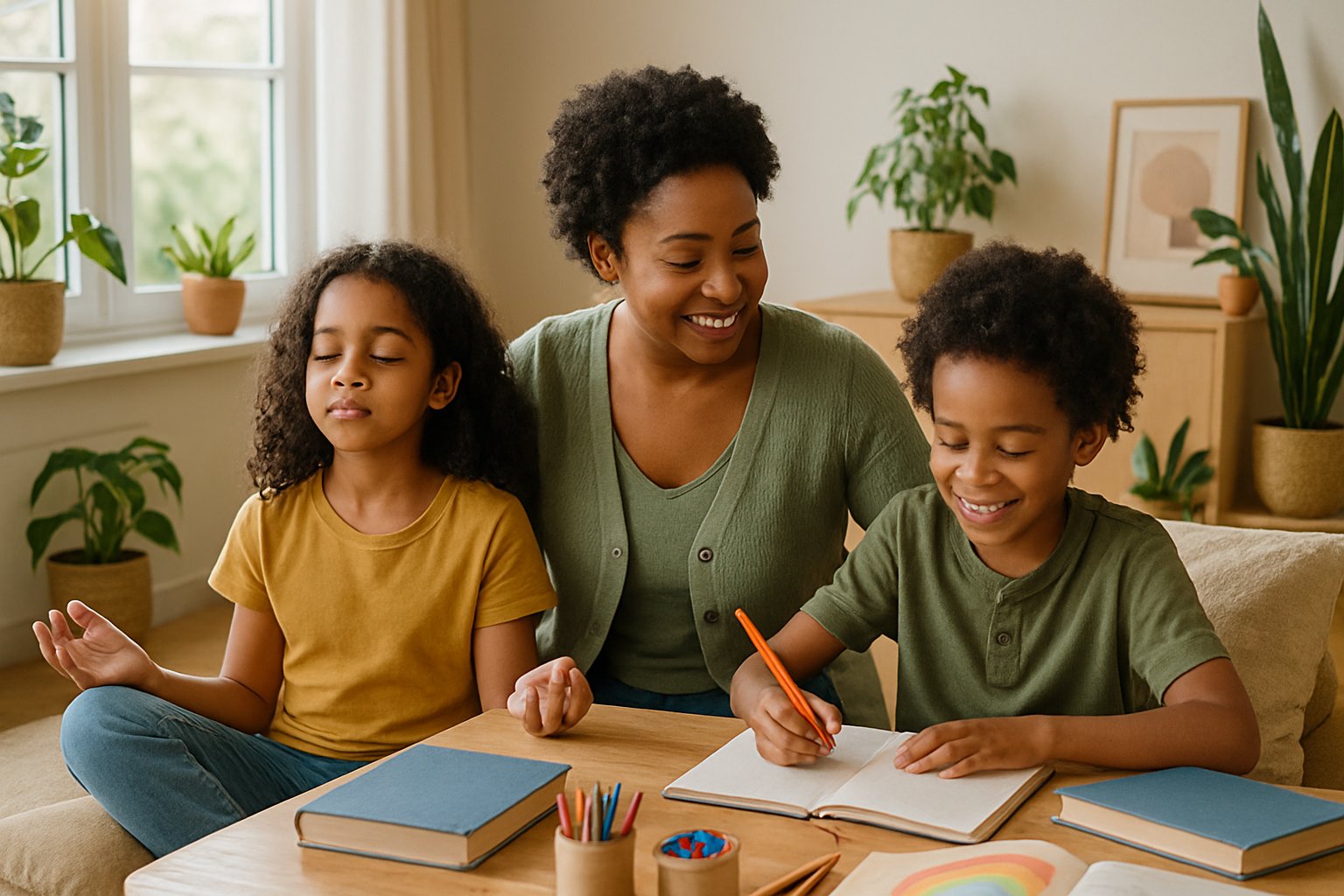
Creating a positive homeschool atmosphere requires consistent daily routines, open family communication, and clear commitment to shared values. These elements work together to help children feel secure and motivated to learn.
Establishing Routine and Structure
Daily routines give homeschool families a strong foundation. Children learn best when they know what to expect each day.
Morning routines should include the same activities at the same time. This might be breakfast at 8 AM, followed by 10 minutes of mindful breathing. Then families can start their first lesson.
Structure doesn’t mean rigid schedules. Flexible routines work better for most families. Parents can plan core subjects for mornings when kids focus best. Afternoons can be for hands-on activities or outdoor time.
Weekly planning helps families stay on track. Parents should set aside time each Sunday to review the coming week. They can adjust plans based on what worked well and what didn’t.
Clear expectations help children feel secure. When kids know the daily flow, they can focus on learning instead of wondering what comes next. This reduces stress for both parents and children.
Cultivating Open Communication and Support Networks
Building resilient classrooms starts with honest conversations between parents and children. Homeschool families need safe spaces where everyone can share their feelings.
Parents should schedule regular check-ins with each child. These conversations help identify problems early. Children feel heard when parents listen without judgment.
Daily connection time strengthens family bonds. This might be:
- Morning coffee while kids eat breakfast
- Walking together after lunch
- Evening reflection before bedtime
Support networks extend beyond the immediate family. Homeschool co-ops provide social interaction for both kids and parents. Online communities offer advice and encouragement during challenging times.
Parents need support too. Connecting with other homeschool families helps reduce isolation. These relationships provide practical tips and emotional support when families face difficulties.
Encouraging Acceptance and Commitment to Values
Creating inclusive learning environments through values helps children develop strong character. Families should identify their core values together.
Family values discussions happen naturally during daily activities. Parents can ask questions like “What matters most to our family?” Children learn by seeing parents live these values every day.
ACT principles help children accept their feelings while staying committed to what matters. When children feel frustrated with learning, parents can guide them back to their values. This might mean remembering why education is important to the family.
Value-based decisions become easier with practice. Children learn to ask themselves if their choices match family values. This builds internal motivation rather than relying only on external rewards.
Parents model acceptance by staying calm during difficult moments. When children see parents handle stress mindfully, they learn healthy coping skills. This creates a learning environment where mistakes become opportunities for growth.
Leave a Reply