Essential Concepts for Custom Blend Ladders

Creating custom blend ladders requires understanding how letter sounds connect to reading skills. Students must learn to hear, see, and combine consonants and vowels accurately to form words. Strong phonemic awareness and clear knowledge of graphemes help them move from simple sound patterns to more complex blends with confidence.
Understanding Blend Ladders and Their Purpose
Blend ladders are structured tools that help students practice combining sounds step by step. They show how letters and sounds build into words through a visual and hands-on format. Students climb each “rung” by adding or changing one sound at a time.
Teachers use blend ladders to strengthen decoding and spelling skills. Each ladder begins with a familiar word, then adds blends like bl, cr, or st. This gradual change helps students focus on new sound patterns without feeling overwhelmed.
According to Clever Homeschool, this method supports struggling readers by reducing cognitive load and providing clear visual progression. The ladders can be printed, built with magnetic letters, or used digitally to match any reading level.
Key Phonics Skills: Consonants, Vowels, and Graphemes
Phonics connects written letters to spoken sounds. Students must recognize how consonants, vowels, and graphemes work together to form words. A grapheme is the written symbol that represents one or more sounds, such as sh or th.
Blend ladders focus on consonant blends like fl, gr, and st. Each sound remains distinct, unlike digraphs that create new sounds. Teachers often begin with L-blends and R-blends, since they are easier to pronounce and identify before moving to more complex S-blends.
| Blend Type | Examples | Difficulty Level |
|---|---|---|
| L-blends | bl, cl, fl | Easier |
| R-blends | br, dr, gr | Moderate |
| S-blends | sp, st, sk | Harder |
Students benefit when lessons use repetition and visual cues. Color-coding blends and vowels helps them see patterns and remember sound relationships.
Phonemic Awareness and Letter Sound Blending
Phonemic awareness is the ability to hear and manipulate individual sounds in words. It forms the foundation for blending and decoding. Without this skill, students may struggle to connect letters to their sounds.
Teachers can build phonemic awareness through oral games, tapping sounds, and Elkonin boxes. These activities train students to notice each sound before blending them together.
Blend ladders reinforce this skill by letting students move from single sounds to full words. As noted by Exceed in Learning, this approach strengthens both phonemic awareness and phonics by linking what students hear with what they see on the page.
Hands-on practice, such as sliding fingers up the ladder or using letter tiles, helps students connect motion, sound, and sight into one clear learning process.
Step-by-Step Process to Design and Use Blend Ladders

Creating custom blend ladders helps students connect letter sounds, build decoding skills, and strengthen reading fluency. The process involves selecting consonants and vowels carefully, organizing them into clear templates, and using hands-on tools that support visual and kinesthetic learning.
Choosing the Right Consonants and Vowels
Teachers start by selecting consonants and vowels that match students’ reading levels. Early learners often begin with simple L-blends like bl, cl, and fl, which are easier to pronounce. More advanced readers can move to R-blends and S-blends such as br, cr, sp, and st.
Each blend should include vowels that students already recognize. For example, pairing bl with a, e, i, o, and u produces bla, ble, bli, blo, and blu. This helps students see how vowel changes affect word pronunciation.
Teachers can use a quick reference table to organize blends:
| Blend Type | Example Blends | Example Words |
|---|---|---|
| L-blends | bl, cl, fl | blue, clap, flag |
| R-blends | br, cr, dr | brown, crab, drop |
| S-blends | sp, st, sm | spot, star, small |
Selecting appropriate blends ensures students practice sounds they can master without frustration.
Building and Arranging Blend Ladder Templates
A blend ladder works best when it shows a clear visual sequence from simple to complex. Teachers can design ladders vertically or horizontally using paper, whiteboards, or digital slides. Each “rung” adds one new sound or letter combination.
For instance, a ladder might begin with at, then move to bat, brat, and strap. This step-by-step structure supports gradual learning and reinforces phonemic awareness.
Teachers can create reusable templates by printing or laminating ladders. Laminated blend ladders allow students to write, erase, and reuse during group or independent practice. Printable templates, such as those from Clever Homeschool, give visual support and structure for consistent practice.
To keep practice organized, teachers can color-code blends and vowels. Using one color for consonants and another for vowels helps students visually separate sound parts.
Incorporating Short Vowel Sounds and CVC Words
Short vowel sounds form the foundation of early reading. Teachers should start with CVC words (consonant-vowel-consonant) like cat, lip, and pot before adding blends. Once students can read these confidently, they can move to clap, flip, or spot.
This approach builds from familiar word patterns. Students recognize most of the word and focus only on the new blend. For example, turning lap into clap adds one consonant sound but keeps the rest of the word the same.
Teachers can use short vowel ladders that isolate each vowel:
| Vowel | Example Ladder |
|---|---|
| a | at → bat → brat |
| e | ed → bed → bred |
| i | it → fit → flit |
| o | op → top → stop |
| u | up → cup |
This clear sequence helps students hear how blends change the sound structure while keeping vowel sounds consistent.
Using Blend Cards, Laminated Ladders, and Interactive Tools
Hands-on materials make blend ladders more engaging and effective. Blend cards let students rearrange consonants and vowels to form new combinations. They can physically move cards to explore patterns and build confidence in decoding.
Laminated blend ladders are useful for repeated practice. Students can write with dry-erase markers, erase mistakes, and try again without wasting paper. Teachers can also post large phonics ladders on classroom walls for group activities.
Digital and interactive tools, such as online phonics games or drag-and-drop letter apps, add variety. Websites like Exceed in Learning suggest using sound ladders that adjust difficulty as students progress.
Combining visual, auditory, and tactile methods helps every learner. Students can trace letters, say sounds aloud, and use finger motions to “climb” the ladder as they blend sounds into complete words.
Differentiation and Advanced Techniques
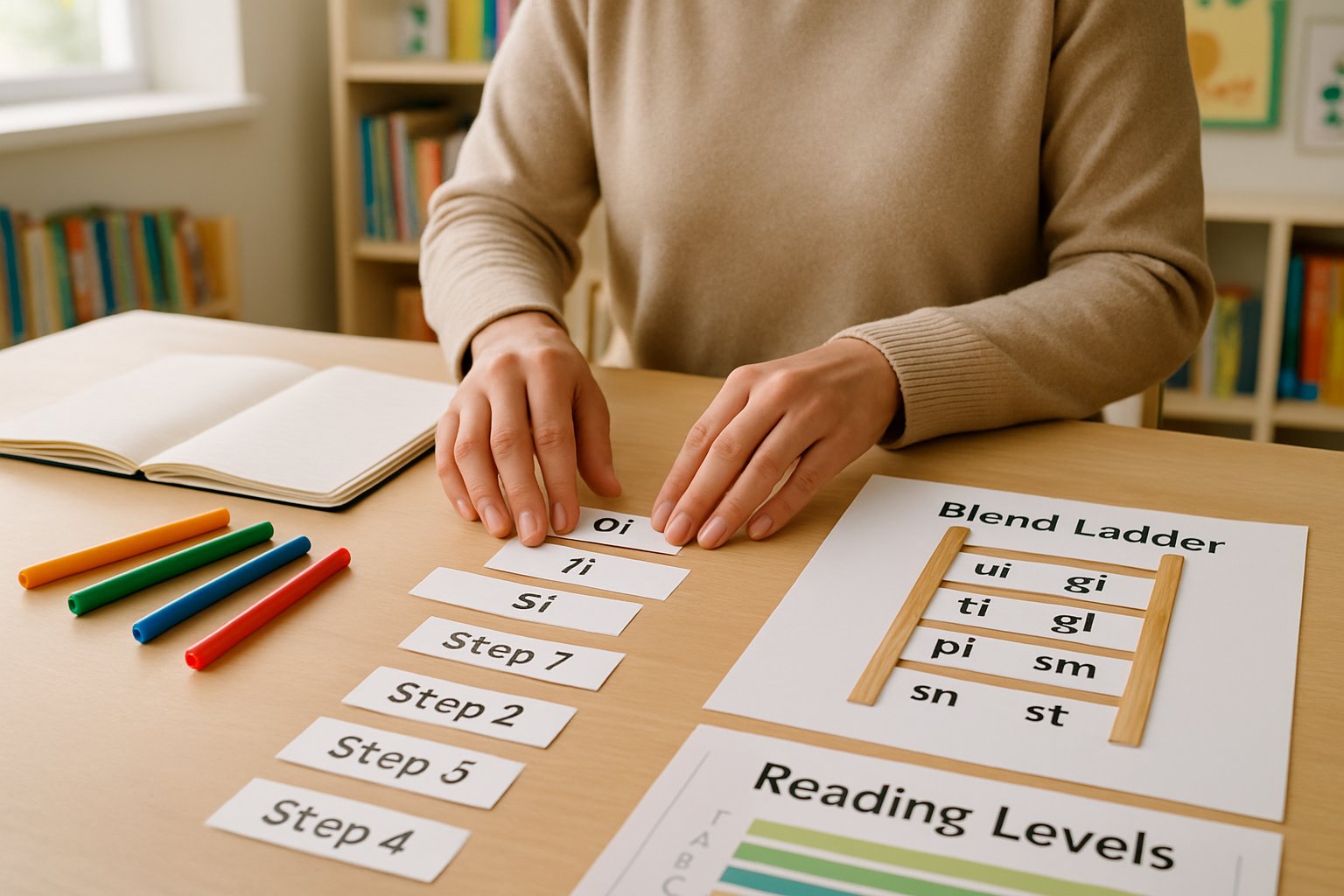
Teachers can tailor custom blend ladders to match each student’s reading readiness and skill level. By adjusting blends, digraphs, and ending sounds, they can create targeted activities that build decoding skills and strengthen word recognition through focused word work.
Adapting Ladders for Various Reading Levels
Differentiated instruction helps meet the needs of diverse learners. Educators can adjust the difficulty of blend ladders by changing the type of blends, word length, or support materials.
For early readers, ladders might include simple l blends like bl, cl, or fl paired with short-vowel words (e.g., blip, flag). More advanced readers can work with multi-syllable words or irregular vowel sounds.
A helpful strategy is to use tiered assignments, where all students practice blending but at different complexity levels. For example, one group may build words with basic consonant blends, while another decodes longer words with controlled vowels. Teachers can find examples of tiered reading strategies in differentiated instruction for reading.
Regular check-ins and progress notes allow teachers to adjust ladders as students grow more confident. This ensures each learner works at a level that challenges but does not overwhelm them.
Integrating L Blends, Digraphs, and Ending Sounds
Effective ladders combine a range of phonics elements. L blends like cl, pl, and sl help students connect consonant clusters smoothly. Digraphs such as sh, ch, and th teach them that two letters can make one sound.
Adding ending sounds like -nd, -st, or -mp reinforces complete word decoding. Teachers can organize these elements in a simple chart for guided practice:
| Focus | Example Words | Skill Targeted |
|---|---|---|
| L blends | clap, plum, slip | Beginning blend recognition |
| Digraphs | ship, chat, thin | Two-letter sound awareness |
| Ending sounds | hand, mist, jump | Word closure and fluency |
Using flexible grouping, as explained in differentiated learning strategies, allows students to rotate through stations that emphasize each sound type. This keeps lessons active and engaging.
Creative Word Work and Practice Activities
Word work builds fluency by giving students hands-on ways to apply blending skills. Teachers can use choice boards or learning contracts to let students pick from several practice tasks.
Some may sort words by blend type, while others build word ladders using letter tiles. Digital tools like online whiteboards or phonics apps can make practice more interactive.
To deepen learning, students can record themselves reading blend ladders aloud or create mini word books featuring l blends and digraphs. These activities reinforce both phonemic awareness and spelling patterns.
Teachers who use flexible and creative word work approaches, like those described in 9 effective differentiation strategies for special needs students, can help all learners gain confidence with vowel and consonant blends through consistent, meaningful practice.
Leave a Reply