How Faith-Based Curriculums Shape Homeschooling
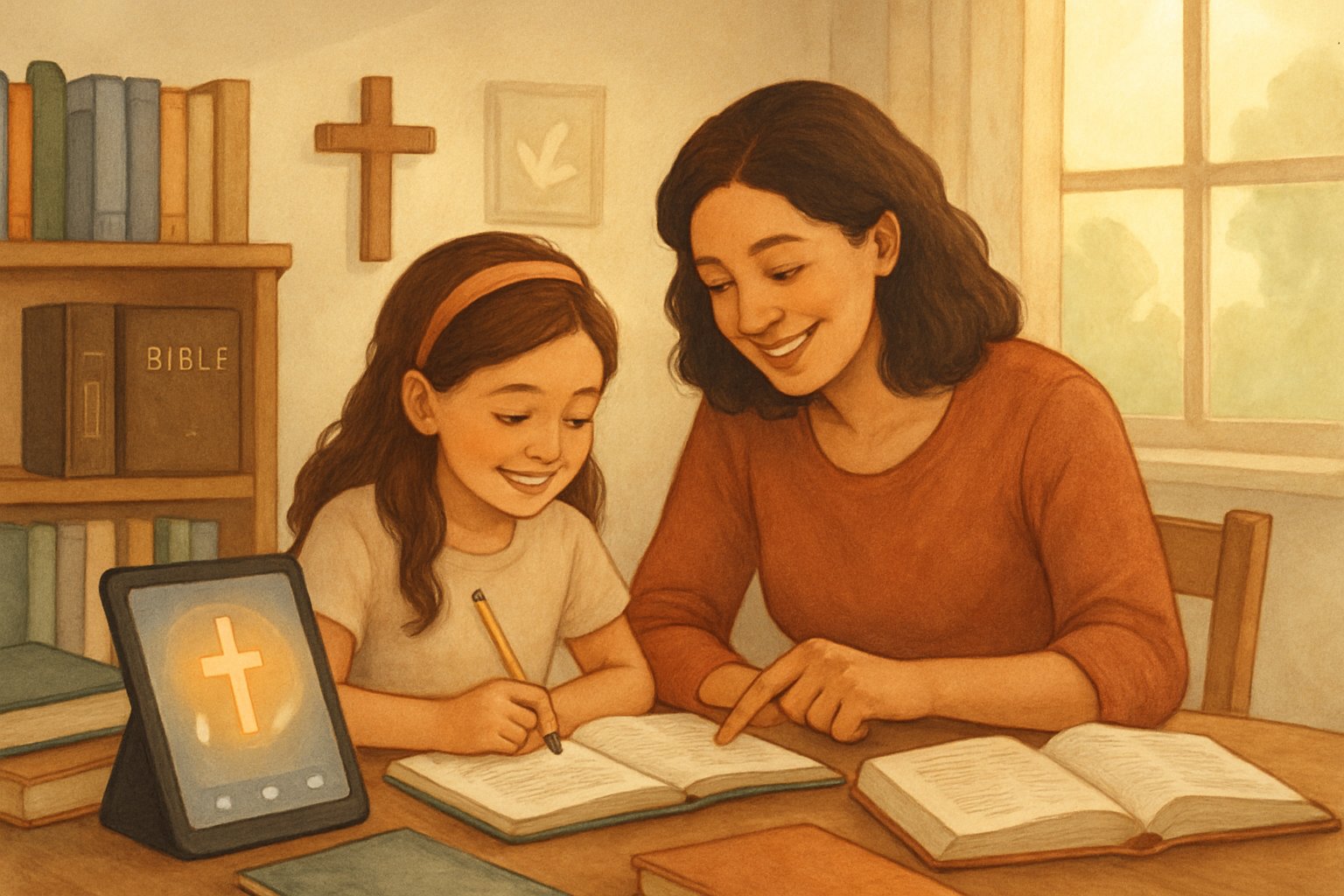
Faith-based homeschooling uses Scripture and Christian values to make lessons meaningful in daily life. It connects academic goals with spiritual direction, promoting both strong academics and a foundation of faith and character.
Integrating Biblical Principles Across Subjects
In many homes, families weave biblical principles into every subject rather than teaching them in isolation. Science lessons may explore creation through a biblical lens, while history discusses how faith influenced past leaders and events.
Programs like Apologia’s Christian-based homeschool curriculum show how science and Scripture can work side by side. Lessons include experiments and critical thinking rooted in a biblical worldview.
This helps students see learning as more than memorizing facts—it becomes a way to know and honor God. Parents often find that using materials such as those listed in the Faith-Based Homeschooling Curriculum Buyer’s Guide for 2025 makes it easier to teach consistent values across all subjects.
Subjects like math and language arts are framed to show order, design, and purpose. This encourages children to think critically while staying grounded in their faith.
| Subject | Biblical Connection Example |
|---|---|
| Science | Exploring God’s design in creation |
| History | Studying faith’s role in societal change |
| Literature | Analyzing themes of redemption and integrity |
| Math | Demonstrating order and logic as part of divine design |
Promoting Spiritual Growth and Christian Faith
Faith-based homeschooling supports spiritual growth by linking academic study with personal faith. Students read Scripture, pray, and reflect daily, which keeps learning rooted in trust and gratitude.
The home becomes a place where worship and study happen naturally. Materials like the Catholic Heritage Curricula blend spiritual reflection with academic lessons.
Parents guide children through discussions that connect beliefs with real-world choices. Combined with family devotionals, this helps children see their learning as service to God and others.
Families also use tools such as memory verses, worship songs, or faith-based projects to strengthen understanding. According to Clever Homeschool’s guide on incorporating faith into homeschooling, using Scripture across multiple subjects reinforces a consistent message.
This helps students develop lasting devotion and a strong sense of purpose.
Fostering Character Development and Moral Compass
A faith-based curriculum aims to nurture character and shape a child’s moral compass. Lessons encourage honesty, kindness, respect, and perseverance, showing how these virtues apply in everyday decisions.
Teachers—often parents—model these values through interactions and shared study. Faith-centered programs like Cross Seven’s musical memory work use engaging methods such as songs and activities to instill biblical truths.
By repeating Scripture and moral lessons through music and movement, children internalize values in a joyful, lasting way. Character training often includes discussions about forgiveness, humility, and service to others.
Students learn that living their faith means more than knowing Bible stories—it means acting with integrity and compassion. Such lessons prepare them not only for academic success but also for making responsible, moral choices as they grow.
Practical Approaches to Implementing Faith-Based Education

Families who choose faith-centered homeschooling focus on shaping both intellect and character. They use structured learning plans, spiritual habits, and active projects that connect lessons to daily life and beliefs.
Choosing the Right Homeschool Curriculum
Selecting the right homeschool curriculum sets the foundation for effective Christian homeschooling. Families often look for programs that teach academic subjects while emphasizing biblical values.
Options like classical, unit-based, or online curriculums allow flexibility to match each child’s learning style. Using a faith-based curriculum that naturally integrates Scripture ensures students view every subject through a moral lens.
For example, the B. Franklin Press guide on homeschooling notes that faith-based materials can align subjects such as science or literature with biblical themes. Parents can compare programs through checklists that highlight these factors:
| Category | Evaluation Focus |
|---|---|
| Academic Quality | Alignment with grade-level standards |
| Biblical Integration | Depth of Scripture inclusion |
| Learning Style Fit | Visual, auditory, or kinesthetic options |
| Flexibility | Ease of adapting pace and content |
Taking time to evaluate these areas helps families choose materials that foster both cognitive growth and spiritual depth.
Incorporating Bible Study, Prayer, and Family Discussions
Daily rhythms in Christian homeschooling often include Bible study, prayer, and open family discussions. Setting aside time each morning for short devotionals or Bible lessons encourages reflection and connection.
This shared habit helps children see Scripture as a guide, not just a subject. Families may use structured guides from trusted faith education resources like Christian Country’s curriculum strategies, which outline how to integrate spiritual learning across subjects.
Parents can lead conversations about honesty, compassion, or perseverance drawn from biblical narratives. Prayer can accompany lessons, mealtimes, and transitions.
Family discussions allow students to voice questions and relate teachings to personal experiences. Over time, these practices strengthen communication, shape values, and remind learners that faith applies to every part of life.
Using Hands-On Projects and Daily Faith Practices
Faith-based homeschooling thrives when students engage their minds and hearts through hands-on projects. Creative activities help children apply biblical ideas in tangible ways.
For instance, a nature study about creation reinforces lessons of stewardship, while service projects model compassion and generosity. Resources like Camp Tekoa’s guide to integrating Scripture in homeschool lessons suggest using art, journaling, or science experiments that connect to faith-based themes.
This approach helps students explore the world while anchoring their observations in biblical truth. Parents can include simple daily faith practices such as gratitude journals, family service days, or music devotion times.
These interactive experiences make faith real and relatable. They help children form lasting habits of reflection, discipline, and kindness both inside and outside the home.
Popular Faith-Based Homeschool Curriculum Options
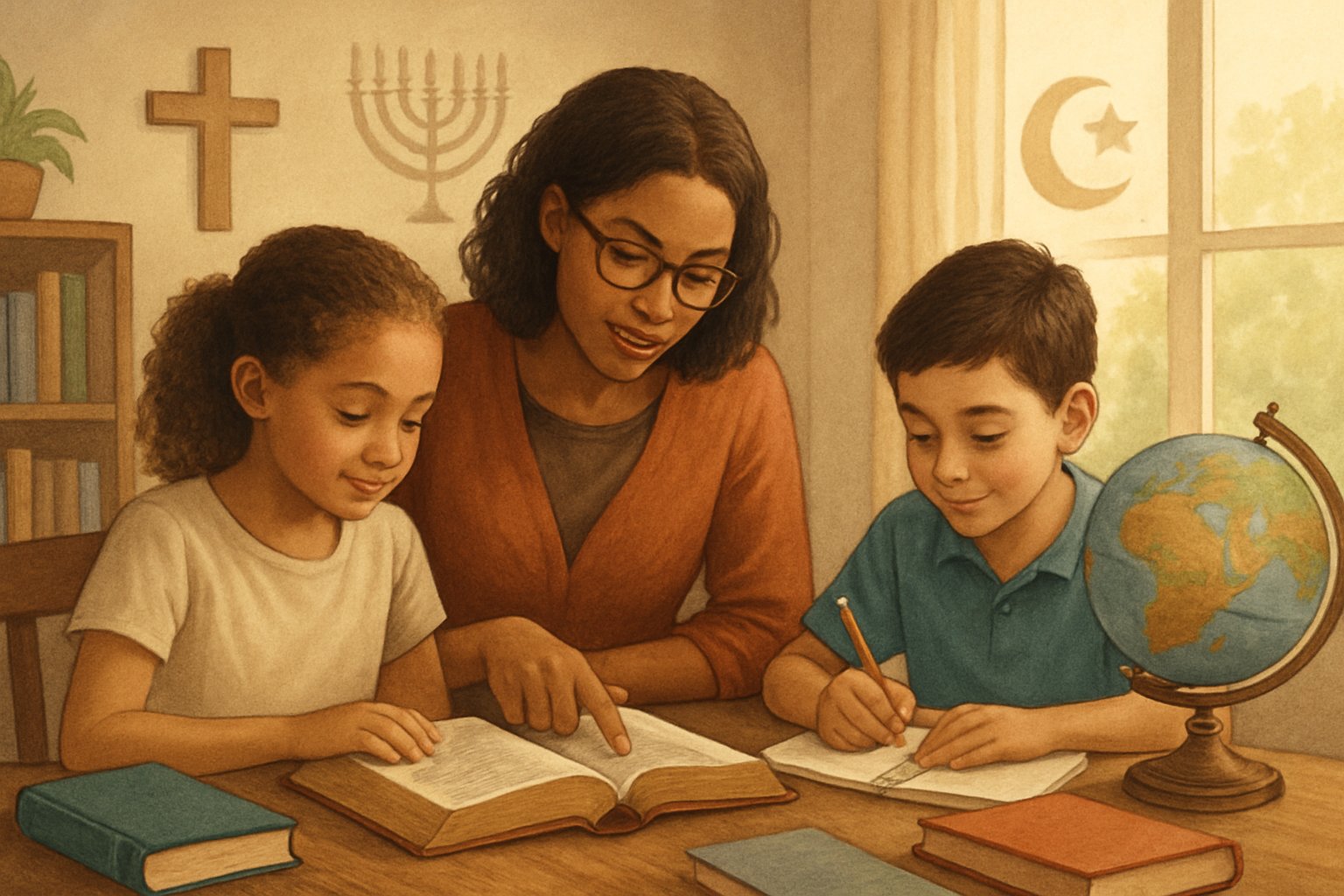
Families choosing Christian-based homeschooling often look for programs that blend academic quality with strong biblical teaching. Several well-established curriculums, including those centered on Scripture, classical literature, and hands-on learning, continue to serve as trusted tools for parents who want to teach faith alongside core subjects.
Overview of Sonlight, Abeka, My Father’s World, and ACE
Sonlight uses a literature-rich approach that encourages critical thinking and empathy through stories grounded in Christian values. Each subject integrates Bible reading with books covering history, geography, and science.
This Sonlight curriculum appeals to families who enjoy reading together and discussing moral lessons drawn from real-world examples. Abeka focuses on structured, teacher-led lessons rooted in conservative Christian principles.
Subjects feature phonics-based reading, arithmetic drills, and strong grammar instruction. Abeka’s polished textbooks and video options make it a common choice for parents seeking a classroom-style homeschool experience.
My Father’s World combines classical education, unit studies, and a biblical worldview. Lessons often connect Scripture with history, art, and world cultures.
Activities encourage families to explore faith through projects, missionary stories, and hands-on learning. Accelerated Christian Education (ACE) provides self-paced workbooks called PACE units.
These materials guide students independently while reinforcing Christian character training. Tests and progress tracking help measure both academic and spiritual development.
Integrating Faith with Science, History, and Literature
Faith-based curriculums aim to connect spiritual truth with academic subjects. In science, programs like Apologia and Answers in Genesis teach biology, chemistry, and astronomy through a Creationist perspective.
These programs show how faith and inquiry can coexist.
In history, materials from My Father’s World and Diana Waring’s History Revealed series highlight God’s work through past civilizations. Students examine historical figures who shaped the church.
They also draw lessons from moral decisions made in real events.
For literature, Sonlight and Abeka emphasize reading stories that build integrity and compassion. Classic works are paired with Bible themes.
Students are encouraged to compare human struggles in fiction with biblical truth.
Leave a Reply