• Skip to primary navigation
  • Skip to main content
  • Skip to primary sidebar

Clever Homeschool

Fun courses based on your child's interests!

  • Home
  • Free Photo Lessons for Kids
  • “Get That Shot!” photo tags

Valerie

Budget-Friendly Homeschooling: Quality Education Without Breaking the Bank

July 17, 2025 by Valerie Leave a Comment

Getting Started With Budget-Friendly Homeschooling

Starting budget-friendly homeschooling begins with setting clear educational goals that match your child’s needs and your family’s finances.

Creating a realistic budget helps families avoid overspending while ensuring quality education through cost-effective approaches.

Setting Realistic Educational Goals

Parents should start by identifying what their child needs to learn at each grade level.

This includes basic subjects like reading, writing, math, science, and social studies.

Academic priorities help families focus their spending on what matters most.

A child struggling with reading might need more resources for language arts than science materials.

Consider your child’s learning style when setting goals.

Some children learn better with hands-on activities, while others prefer books or online lessons.

Write down specific goals for each subject.

For example:

  • Master multiplication tables by December
  • Read 20 chapter books this year
  • Complete a science fair project each semester

Long-term planning saves money by avoiding impulse purchases.

Families can spread costs over months instead of buying everything at once.

Track progress regularly to see if goals are realistic.

Adjust expectations if needed to reduce stress and avoid wasting money on unnecessary materials.

Determining Your Homeschooling Budget

Most families can start homeschooling on a budget with $200-500 per child per year.

This covers basic curriculum and supplies.

Essential expenses include:

  • Curriculum materials ($100-300)
  • Basic school supplies ($50-100)
  • Educational activities ($50-150)

Optional expenses might include:

  • Online programs
  • Field trips
  • Art supplies
  • Sports equipment

Create a monthly budget to spread costs throughout the year.

Many families save money by purchasing supplies during back-to-school sales or using secondhand materials.

Free resources can replace expensive programs.

Libraries, online videos, and printable worksheets provide quality education at no cost.

Track spending to stay within budget.

Use a simple notebook or phone app to record purchases and compare them to your planned budget.

Choosing a Cost-Effective Homeschooling Approach

All-in-one programs provide complete curriculum packages for multiple subjects.

These often cost less than buying separate materials for each subject.

Unit studies combine multiple subjects around one topic.

Families can use library books and free online resources to create engaging lessons about dinosaurs, space, or history.

Online learning offers affordable options like Khan Academy, which provides free math and science lessons.

Many programs cost less than traditional textbooks.

Eclectic approach lets families mix free and paid resources.

Parents might use free math programs while purchasing a reading curriculum their child enjoys.

Consider your teaching comfort level when choosing an approach.

Budget-conscious families often succeed with simple methods that don’t require expensive training or materials.

Co-op learning with other homeschool families reduces costs.

Parents can share teaching duties and split expenses for supplies and activities.

Start with one approach and adjust as needed.

Many families discover what works best through trial and error without spending large amounts of money.

Leveraging Free and Low-Cost Resources

Families can access thousands of high-quality educational materials without spending money through online platforms, libraries, and digital tools.

These resources provide comprehensive learning experiences across all subjects and grade levels.

Free Online Learning Platforms

Khan Academy stands out as one of the most comprehensive free educational resources available.

The platform offers complete courses in math, science, history, and economics for all grade levels.

Students can work at their own pace through video lessons and practice exercises.

Parents can track progress and identify areas where children need extra help.

Coursera for Campus provides free access to university-level courses for high school students.

Many courses offer certificates upon completion.

edX partners with top universities to offer free courses in advanced subjects.

These work well for gifted students or those interested in specific topics.

MIT OpenCourseWare gives families access to actual course materials from Massachusetts Institute of Technology.

The content works best for high school students pursuing STEM subjects.

Utilizing the Local Library

Libraries offer much more than books for homeschooling families.

Most provide free access to educational databases, e-books, and online learning platforms.

Digital Resources include services like Hoopla and OverDrive for audiobooks and educational videos.

Many libraries also offer free access to language learning programs and research databases.

Physical Materials such as educational kits, manipulatives, and DVD collections support hands-on learning.

Some libraries loan microscopes, telescopes, and other scientific equipment.

Programs and Events like story time, STEM workshops, and book clubs provide social learning opportunities.

Many libraries host special homeschool programs during regular school hours.

Parents should ask librarians about homeschool-specific services.

Many libraries offer expanded borrowing privileges or special collections for homeschooling families.

Educational Apps and Digital Tools

Duolingo makes foreign language learning engaging through gamification.

The app covers over 30 languages and adapts to each student’s learning pace.

Photomath helps students understand math concepts by showing step-by-step solutions.

The app works well for algebra, geometry, and calculus problems.

Scratch teaches programming concepts through visual coding blocks.

Children can create games, animations, and interactive stories while learning computer science fundamentals.

Google Earth transforms geography lessons into virtual field trips.

Students can explore historical sites, natural wonders, and different cultures around the world.

Quizlet helps with memorization through flashcards and games.

The platform includes pre-made study sets for most subjects and textbooks.

Finding Free Educational Content

YouTube Education channels offer high-quality video lessons across all subjects.

Channels like Crash Course, TED-Ed, and National Geographic Kids provide engaging content.

Government websites such as NASA, the Smithsonian, and the National Park Service offer free curriculum materials and virtual tours.

University websites frequently publish free educational resources and lesson plans.

Stanford, Harvard, and other schools share materials designed for K-12 students.

Open Educational Resources (OER) platforms like OER Commons provide textbooks, lesson plans, and activities that teachers have shared freely.

Parents should bookmark reliable sources and organize materials by subject.

Creating a digital library of free educational content saves time when planning lessons.

Building a Cost-Effective Curriculum

Smart homeschooling families can build quality curricula by finding discounted used materials, crafting personalized lesson plans with household items, and strategically combining free online platforms to cover all subject areas.

Sourcing Used Curriculum Materials

Parents can find excellent budget-friendly homeschooling materials at thrift stores, garage sales, and online marketplaces.

Many families discover complete curriculum sets for 70-80% less than retail prices.

Best places to find used materials:

  • Local homeschool co-ops and swap meets
  • Facebook Marketplace and Craigslist
  • Thrift stores like Goodwill and Salvation Army
  • Library book sales

Families should check for missing pages or outdated information before purchasing.

Math and grammar workbooks hold up well over time, while science texts may need updates.

Price comparison:

Material Type New Price Used Price Savings
Math Workbook $45 $8-12 75%
Reading Set $120 $25-35 70%
Science Kit $80 $15-20 80%

Parents often find the best deals during back-to-school season when families donate unused materials.

Creating DIY Lesson Plans

Families can create engaging lessons using everyday household items and free printables.

This approach allows parents to customize education to their child’s interests and learning style.

Simple DIY lesson ideas:

  • Math: Use beans or buttons for counting and fractions
  • Science: Kitchen experiments with baking soda and vinegar
  • Geography: Create maps using cardboard and markers
  • History: Timeline activities with construction paper

Parents can find free printable worksheets on websites like Teachers Pay Teachers and K5Learning.

These resources help supplement homemade lessons with structured activities.

Basic supply list:

  • Notebooks and pencils ($5-8)
  • Construction paper ($3-5)
  • Markers and crayons ($4-6)
  • Glue sticks and scissors ($3-4)

Parents save money by repurposing materials like cereal boxes for flashcards and using old magazines for collages.

Combining Multiple Free Resources

Successful affordable education comes from mixing various free online platforms to create a complete learning experience.

Parents can blend video lessons, interactive games, and digital books for comprehensive coverage.

Top free resource combinations:

  • Khan Academy for math instruction
  • Libby for reading materials through local libraries
  • Mystery Science for hands-on science lessons
  • National Geographic Kids for social studies content

Parents create weekly schedules that rotate between different platforms to keep children engaged.

They might use Khan Academy for morning math, followed by Libby reading time, then Mystery Science experiments.

Sample daily schedule:

  • 9:00 AM: Khan Academy math (30 minutes)
  • 9:30 AM: Libby reading (45 minutes)
  • 10:30 AM: Mystery Science video (20 minutes)
  • 11:00 AM: National Geographic article (15 minutes)

Libraries often provide free access to premium educational platforms, making this strategy even more powerful for budget-conscious families.

Community Support and Homeschool Co-Ops

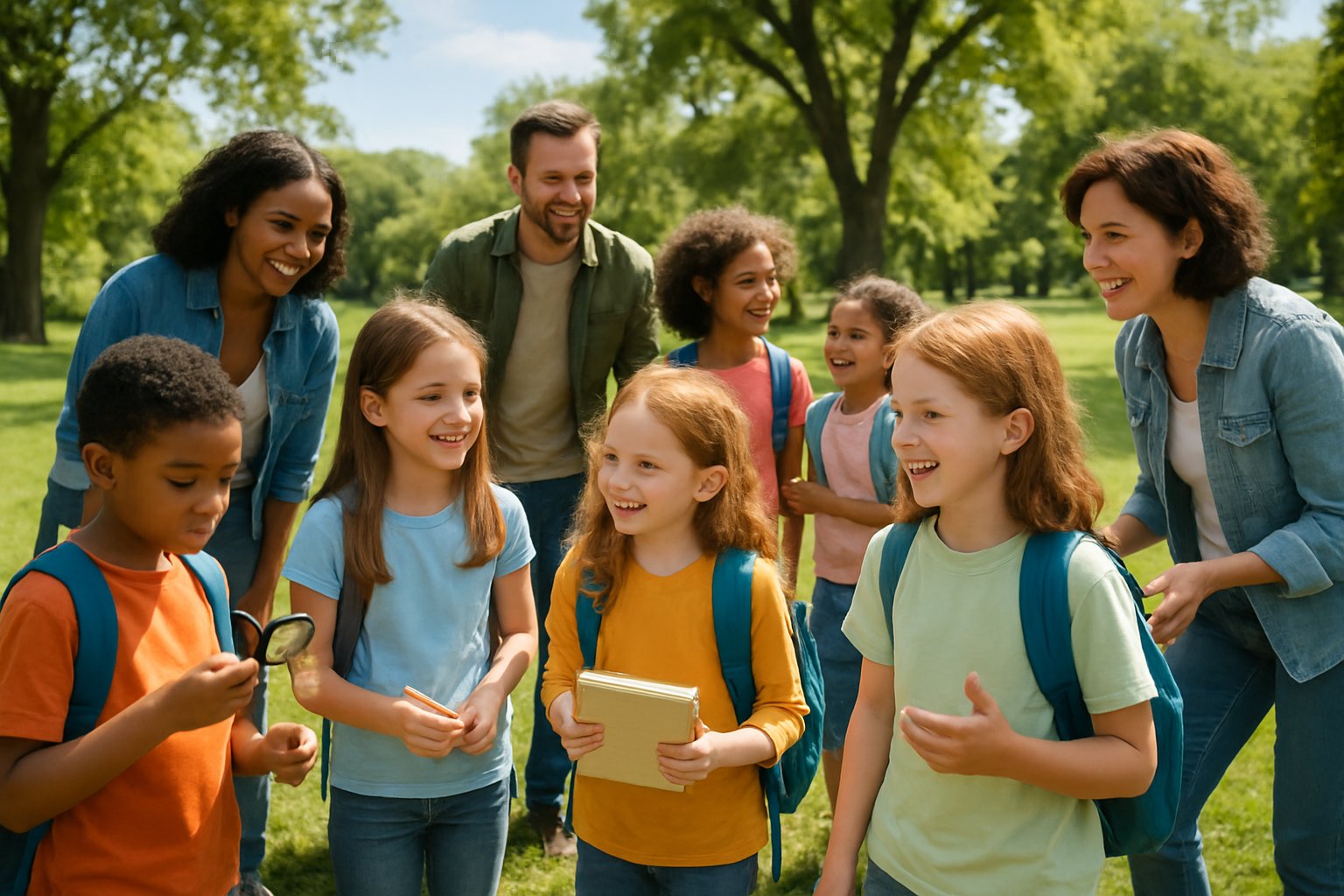
Families and children working together in a bright community room, engaged in homeschooling activities with books, laptops, and educational materials.

Working with other families can cut costs while building meaningful connections.

Homeschool co-ops provide collaborative environments where parents share teaching duties and expenses, while community programs offer free or low-cost educational opportunities.

Joining a Homeschooling Co-Op

A homeschool co-op brings families together to share teaching responsibilities and resources.

Parents take turns leading classes based on their skills and interests.

By joining a co-op, families can pool resources to afford better quality materials and enjoy community support.

One parent might teach science while another leads art projects.

Common co-op activities include:

  • Weekly subject classes
  • Group field trips
  • Science experiments
  • Art and music lessons
  • Sports activities

Co-ops typically meet once or twice per week.

Families split costs for supplies, materials, and sometimes facility rental fees.

Each family contributes based on their abilities.

Some parents prefer teaching while others help with planning or administrative tasks.

The shared workload makes homeschooling less overwhelming.

Children benefit from different teaching styles and social interaction with peers.

Sharing Resources With Other Families

Families can save money by sharing educational materials with neighbors and friends.

Textbooks, curriculum sets, and educational games work well for sharing arrangements.

Popular items for sharing:

  • Curriculum packages – Pass between families after completion
  • Educational games – Rotate monthly among group members
  • Science equipment – Share microscopes, scales, and lab supplies
  • Art supplies – Buy in bulk and divide costs
  • Sports equipment – Pool resources for group activities

Creating a simple lending library works well for many families.

Parents can organize book swaps or material exchanges through social media groups.

Some families form buying clubs to purchase expensive items together.

They might split the cost of a chemistry set or quality art supplies.

Digital resources like online courses can often be shared among multiple children.

Many programs allow family licenses that cover several students.

Participating in Community Programs

Libraries offer free educational programs throughout the year. Many host science clubs, reading programs, and educational workshops for homeschoolers.

Free community resources include:

  • Library story times and book clubs
  • Museum family days and free admission hours
  • Park district nature programs
  • Community center classes
  • Local business educational tours

Recreation centers frequently provide low-cost classes in sports, arts, and crafts. These programs give children social opportunities while teaching new skills.

Many communities have homeschool support groups that organize activities. These groups provide venues for sharing best practices and emotional support during the homeschooling journey.

Local businesses sometimes offer educational tours or workshops. Fire stations, newspapers, and farms often welcome homeschool groups for free visits.

Community colleges may allow homeschoolers to audit classes or participate in special programs. Some offer dual enrollment opportunities for older students at reduced rates.

Maximizing Everyday Learning Opportunities
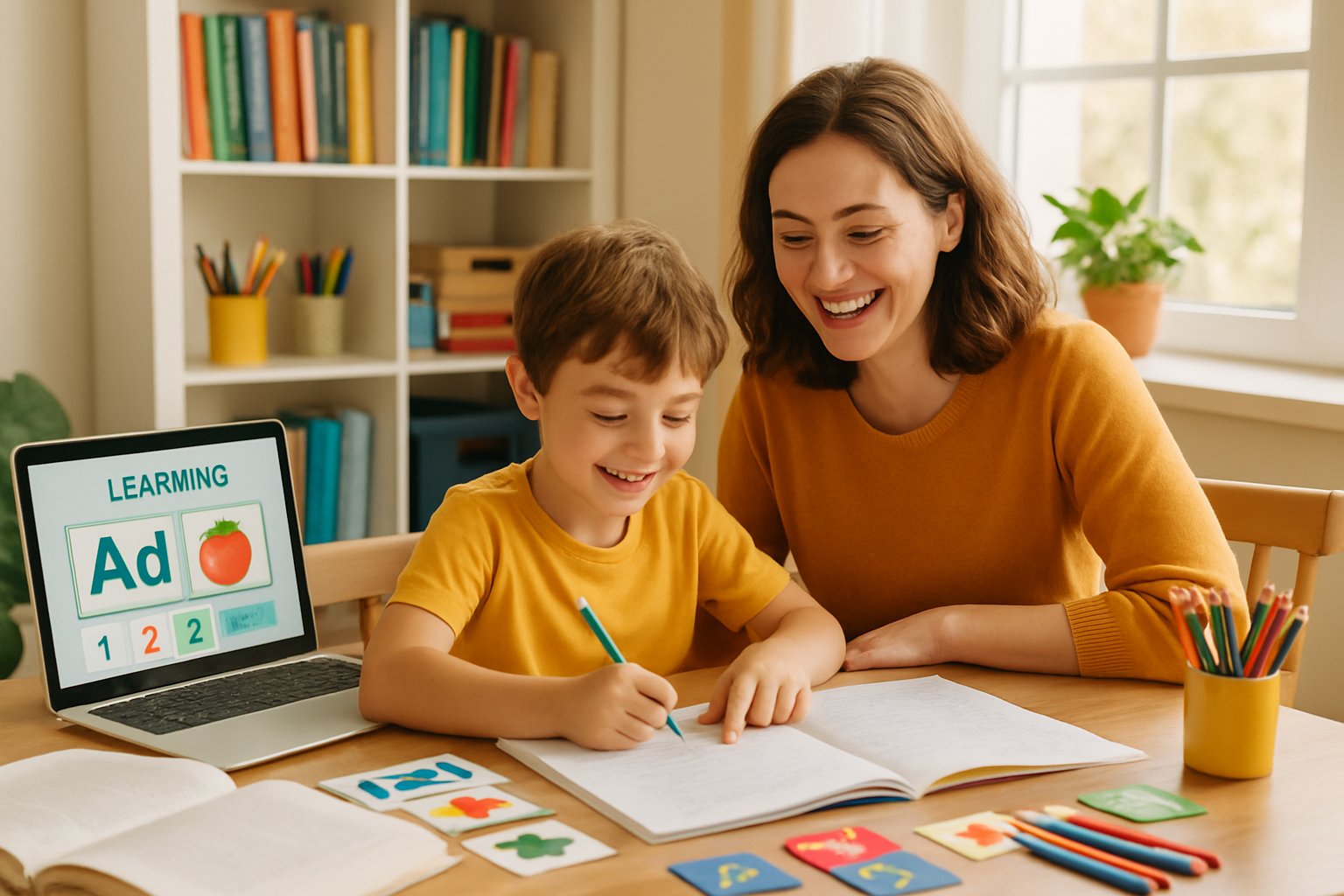
A parent and child studying together at a table with books and a laptop in a bright room filled with educational materials.

Families can transform routine activities into rich educational experiences without spending extra money. Everyday learning opportunities help parents create engaging lessons using what they already have at home and in their community.

Making Daily Activities Educational

Cooking provides perfect math and science lessons for children. They can practice fractions by measuring ingredients and observe chemical reactions when baking bread or making cookies.

Grocery shopping teaches budgeting skills and comparison shopping. Kids can calculate unit prices, estimate totals, and learn about nutrition by reading food labels.

Household chores become learning opportunities:

  • Sorting laundry teaches patterns and colors
  • Gardening covers biology and weather cycles
  • Cleaning involves measurement and time management
  • Organizing teaches categorization skills

Reading together during bedtime builds vocabulary and comprehension. Parents can ask questions about characters and plot to develop critical thinking skills.

Even car rides offer educational moments. Children can practice geography by reading maps, count objects they see, or discuss the science behind how cars work.

Incorporating Hands-On Learning

Science experiments using kitchen items make learning exciting and memorable. Baking soda volcanoes, growing crystals with salt water, and testing which materials float teach scientific concepts.

Art projects using recycled materials develop creativity while teaching about environmental responsibility. Empty containers become sculpture supplies, and old magazines provide collage materials.

Simple hands-on activities include:

  • Building with blocks or cardboard boxes
  • Creating nature collections during walks
  • Making music with homemade instruments
  • Growing plants from seeds or cuttings

Exploring Local Field Trips and Discounts

Many museums offer free admission days or homeschool discounts that make educational outings affordable. Libraries often provide free passes to local attractions.

Parks and nature centers offer free educational programs about local wildlife and ecosystems. Children can learn about habitats, animal behavior, and conservation efforts.

Free or low-cost field trip ideas:

  • Fire stations and police departments
  • Local farms during harvest season
  • Historical sites and monuments
  • Beaches for geology and marine biology lessons

Community centers frequently host free workshops and classes for children. These might include art classes, nature programs, or cultural celebrations that enrich learning.

Managing Your Homeschool Budget

A parent and child working together at a desk with educational materials and a laptop in a bright home study area.

Smart budget management helps families track spending and make informed decisions about educational priorities. Families can stretch their resources further by focusing on essential purchases and finding creative ways to reduce supply costs.

Tracking Homeschool Expenses

Families benefit from keeping detailed records of all homeschool-related purchases throughout the year. This includes curriculum materials, supplies, field trips, and educational activities.

A simple spreadsheet or notebook works well for tracking expenses. Parents can create categories like:

  • Curriculum and books
  • Art and craft supplies
  • Science materials
  • Field trips and activities
  • Technology and software

Monthly expense reviews help families identify spending patterns. They can see which areas consume the most budget and adjust future purchases accordingly.

Many families set aside a specific amount each month for homeschool expenses. This prevents overspending and helps them plan for larger purchases like annual curriculum sets.

Digital banking apps often allow parents to create separate savings accounts for homeschool expenses. This makes it easier to track progress toward educational goals.

Prioritizing Quality Over Quantity

Successful budget-friendly homeschooling focuses on purchasing fewer, higher-quality materials rather than many cheap items. Parents should invest in durable books and supplies that last multiple years.

Core subjects like math, reading, and science deserve the biggest portion of the budget. These foundational skills require reliable, comprehensive materials that support long-term learning.

Families can evaluate purchases by asking key questions:

  • Will this item be used regularly?
  • Can it serve multiple children or grade levels?
  • Does it align with learning goals?

Quality manipulatives, reference books, and educational games often provide better value than worksheets or disposable materials. These items can be reused year after year.

Parents should research curriculum reviews and ask other homeschool families for recommendations before making expensive purchases.

Creative Ways to Save on Supplies

Families practicing homeschooling on a budget can significantly reduce costs through smart shopping strategies. Back-to-school sales offer excellent opportunities to stock up on basic supplies at reduced prices.

Dollar stores provide affordable options for:

  • Notebooks and folders
  • Basic art supplies
  • Storage containers
  • Flashcards and learning games

Thrift stores and garage sales often have educational books, puzzles, and games at fraction of retail prices. Parents can find quality materials that other families have outgrown.

Bulk buying works well for frequently used items like printer paper, pencils, and crayons. Families can split large quantities with other homeschool families to reduce individual costs.

DIY alternatives help stretch budgets further. Parents can create flashcards, laminate worksheets for reuse, and make simple science experiment kits from household items.

Library sales and book fairs provide excellent opportunities to build home libraries affordably. Many libraries sell donated books for very low prices.

Balancing Work, Life, and Homeschooling

Managing homeschooling while working requires careful planning and smart strategies that don’t strain the budget. Parents can create effective schedules, use time-saving methods, and teach children to learn independently.

Setting a Homeschooling Schedule

Creating a structured schedule helps families balance work commitments with affordable education at home. Parents should plan educational activities during breaks or weekends to maximize their available time.

Morning routines work well for many families. Children can start learning activities early while parents prepare for work calls or meetings.

Flexible time blocks allow parents to teach during lunch breaks or between work tasks. This approach costs nothing but requires good time management.

Parents should consider their work schedule when planning lessons. Those with evening availability might teach after traditional work hours.

Weekend preparation helps the week run smoothly. Parents can gather library books, print worksheets, and set up learning materials ahead of time.

Time-Saving Strategies for Busy Families

Busy families need efficient methods to provide quality homeschooling without spending extra money. Proper planning and organization make it possible to accommodate both work and homeschooling.

Batch similar activities together to save preparation time. Parents can teach multiple subjects that use the same materials during one session.

Use waiting time effectively. Children can practice reading or math facts during car rides or appointments.

Combine children for certain subjects when possible. Teaching history or science to multiple kids at once saves time and money.

Prepare materials in advance during free moments. Parents can set up tomorrow’s activities while dinner cooks or during other downtime.

Encouraging Self-Directed Learning

Teaching children to learn independently reduces the need for constant supervision while keeping homeschooling costs low. This skill becomes more valuable as children grow older.

Start with simple tasks that children can complete alone. Reading time, educational games, or practice worksheets work well for beginners.

Create learning stations around the house with different activities. Children can rotate between stations while parents handle work duties.

Use educational apps and websites that guide children through lessons. Many free options provide structured learning without parent involvement.

Teach children to use library resources and reference materials. This skill helps them find answers independently and supports affordable education goals.

Set clear expectations about when children should work quietly. Parents can maximize their free time by establishing these boundaries early.

Frequently Asked Questions

Parents often wonder about practical ways to cut costs while maintaining educational quality. Common concerns include finding free curriculum options, accessing affordable books, and teaching core subjects without expensive materials.

What are the top ways to save money on homeschooling materials?

Families can significantly reduce expenses by shopping at secondhand bookstores and online marketplaces like eBay and Facebook Marketplace. Bulk purchasing during sales helps parents stock up on essential supplies like paper, pencils, and art materials at lower prices.

Discount stores offer affordable teaching materials and educational games that complement any curriculum. Parents should watch for special sales and clearance events to maximize their savings.

Creating DIY learning materials using household items saves money while encouraging creativity. Empty water bottles, egg cartons, and cardboard tubes work perfectly for science experiments and craft projects.

Where can one find affordable or free homeschool curricula?

Free online platforms like Khan Academy, Coursera, and educational YouTube channels provide complete lessons across multiple subjects. These resources are accessible from anywhere with an internet connection.

Open Educational Resources (OER) platforms such as OpenStax and CK-12 offer high-quality textbooks and materials at no cost. These resources are created by experts and educators, ensuring reliable content quality.

Many states provide free online curriculum options through their education departments. Parents can also find free unit studies and lesson plans through homeschooling blogs and educational websites.

Can you recommend some budget-friendly resources for homeschool books?

Public libraries serve as excellent sources for borrowing books and educational materials on a regular basis. Many libraries also offer digital resources, audiobooks, and educational programs specifically for homeschoolers.

Used curriculum sales and homeschool co-op groups often have book swaps where families exchange materials. Online communities and local homeschool groups frequently organize these cost-saving events.

Digital libraries and e-book platforms provide access to thousands of titles at fraction of the cost of physical books. Many classic literature works are available free through Project Gutenberg and similar sites.

How can parents access quality education when homeschooling on a tight budget?

Educational apps offer interactive activities, quizzes, and games for various subjects at low or no cost. These digital tools cover everything from math and science to language arts and history.

Parents can turn everyday activities into learning opportunities without additional expenses. Cooking teaches math and science concepts, while nature walks provide hands-on biology and environmental science lessons.

Community resources like museums, parks, and local businesses often offer free educational programs and field trip opportunities. Many locations provide special discounts or free admission days for homeschooling families.

Are there any organizations that offer financial aid or support to homeschooling families?

Some homeschool support organizations provide scholarship programs and financial assistance for curriculum purchases. Local homeschool co-ops may offer reduced-cost classes and group buying opportunities.

Religious organizations and community groups sometimes sponsor homeschooling families or provide educational grants. These programs vary by location and typically require applications with specific criteria.

State homeschool associations often maintain lists of available financial resources and support programs. Parents should contact their local associations for information about region-specific assistance options.

What are some effective yet inexpensive homeschooling methods for teaching the core subjects?

Unit studies allow families to explore multiple subjects through single topics. This reduces the need for separate curriculum purchases.

This approach integrates math, science, history, and language arts naturally and affordably.

Living books method uses real literature instead of textbooks. Families can borrow these books from libraries or purchase them used.

This approach makes subjects more engaging while keeping costs low.

Online learning platforms often provide comprehensive coverage of core subjects at reasonable subscription rates. Many platforms offer multiple grade levels and subjects within single packages, maximizing value for families with multiple children.


Filed Under: Uncategorized

How to Track Progress and Assess Your Child’s Learning at Home: Effective Tools and Strategies

July 9, 2025 by Valerie Leave a Comment

Setting Clear Learning Goals at Home

Effective home learning starts with well-defined goals that connect to school standards and break down into manageable steps.

Parents need specific targets and measurable checkpoints to track their child’s progress meaningfully.

Aligning Home Learning With Academic Standards

Parents should start by reviewing their child’s grade-level academic standards for core subjects like math, reading, and writing.

These standards show what skills children need to master by the end of each school year.

Most states publish these standards online for free.

Parents can find them by searching for their state’s education department website.

The standards break down learning into specific skills and concepts.

For children with special needs, parents should focus on their child’s IEP goals first.

These goals are already designed to meet the child’s specific learning needs.

Working with your child’s team of professionals helps create more effective goals and plans.

Parents can create a simple checklist of skills their child needs to learn.

They should pick 3-5 main goals to focus on each month.

This keeps learning focused and prevents feeling overwhelmed.

Creating Measurable Milestones

Good learning goals need clear ways to measure progress.

Parents should make goals specific, realistic, and measurable to keep their child’s learning on track.

Instead of saying “improve reading,” parents can set goals like “read 20 minutes daily” or “finish two chapter books this month.”

These goals are easy to track and celebrate.

Weekly milestones work well for most families.

Parents can check if their child completed math lessons, finished writing assignments, or practiced spelling words.

Daily goals work better for habits like reading time.

Parents should write down these milestones in a simple chart or notebook.

They can mark off completed goals with checkmarks or stickers.

This visual tracking helps children see their progress and stay motivated.

Setting SMART goals helps students become active participants in their learning.

Children feel more motivated when they can see clear evidence of their progress.

Selecting Progress Tracking Methods

Parents can choose from several effective methods to monitor their child’s learning at home.

Each approach offers unique benefits for documenting growth and identifying areas that need attention.

Using Checklists and Rubrics

Checklists provide a simple way for parents to track specific skills their child has mastered.

They work well for subjects like math where skills build on each other.

Parents can create checklists for reading milestones, math facts, or writing skills.

Each item gets checked off when the child shows they understand it.

Sample Reading Checklist:

  • Knows letter sounds
  • Reads simple words
  • Understands basic sentences
  • Reads short stories

Rubrics help parents measure the quality of their child’s work.

They show different levels of skill from beginner to advanced.

A writing rubric might rate grammar, ideas, and organization on a scale of 1-4.

This helps parents see exactly where their child needs help.

Standardized assessments often use similar rating systems.

Parents can use rubrics to prepare their child for these tests.

Maintaining Learning Journals and Portfolios

Learning journals let parents track their child’s daily progress in writing.

The child writes about what they learned each day.

Parents can ask simple questions like “What was hard today?” or “What did you enjoy learning?”

These entries show how the child thinks about learning.

Journal Benefits:

  • Shows writing improvement over time
  • Reveals learning challenges
  • Builds reflection skills
  • Creates learning memories

Portfolios collect samples of the child’s work throughout the year.

Parents should save examples from different subjects and dates.

A good portfolio includes early work, middle work, and recent work.

This shows clear progress over time.

Digital apps and software can help organize portfolios electronically.

Parents can take photos of artwork and assignments.

Utilizing Reading Logs and Booklists

Reading logs track how much and how often a child reads.

Parents can record the book title, pages read, and reading time.

Simple logs work best for younger children.

Older children can write short summaries of what they read.

Reading Log Elements:

  • Book title and author
  • Start and finish dates
  • Number of pages
  • Child’s rating (1-5 stars)
  • Brief notes about the story

Booklists help parents choose appropriate books for their child’s reading level.

They can track which types of books their child enjoys most.

Parents should include different types of books like fiction, non-fiction, and poetry.

This helps develop well-rounded reading skills.

Tracking methods can show reading patterns over time.

Parents might notice their child reads more on weekends or prefers certain topics.

Many schools provide reading level guidelines.

Parents can use these to select books that challenge but don’t frustrate their child.

Observing and Documenting Daily Learning

Parents can track their child’s growth by watching daily activities and writing down what they see.

Simple methods like keeping notes, making videos, and listening to children explain their learning help create a clear picture of progress.

Recording Observations Effectively

Parents should observe and document each child’s development as part of their daily routine.

This process helps them understand what their child knows and what they need to work on next.

Quick Note-Taking Methods:

  • Keep a small notebook nearby during activities
  • Use sticky notes to jot down key moments
  • Write brief observations on a phone or tablet
  • Record the date and activity for each note

The most useful observations focus on specific behaviors.

Instead of writing “did well in math,” parents should note “solved three addition problems without help” or “counted to 20 correctly.”

Becoming a skilled observer takes time and practice.

Parents don’t need to write everything down.

They should focus on moments that show learning or growth.

Simple checklists work well for tracking skills.

Parents can make lists of goals and check them off as their child masters each one.

Leveraging Video Diaries

Video recordings capture learning moments that written notes might miss.

Parents can record their child working on projects, reading aloud, or explaining their thinking during activities.

Short 2-3 minute videos work best.

Longer recordings become hard to review later.

Parents should focus on capturing key moments rather than entire lessons.

Best Times to Record:

  • When a child solves a difficult problem
  • During creative play or building activities
  • While explaining their artwork or projects
  • Reading a favorite book aloud

Videos help parents see patterns in their child’s learning over time.

They can compare recordings from different months to track progress and growth.

Parents should store videos in organized folders by subject or date.

This makes it easier to find specific examples later when reviewing progress.

Capturing Learning Through Narration

Narration helps assess a child’s understanding of what they’ve learned.

Parents can ask their child to tell them about a book they read or explain how they solved a problem.

This method works well after reading time or completing activities.

Children naturally want to share what they’ve discovered or created.

Simple Narration Questions:

  • “Tell me about the story we just read”
  • “How did you figure out that answer?”
  • “What was your favorite part and why?”
  • “What would you do differently next time?”

Parents should listen without interrupting.

They can write down key points the child makes or interesting connections they notice.

Documentation of narrations can be simple.

A brief written record of the discussion shows what the child understood and remembered.

Regular narration sessions help children practice explaining their thoughts.

This skill becomes more important as they grow older and tackle harder subjects.

Assessing Through Projects and Assignments

A parent and child working together on a school project at a table with learning materials and a laptop in a bright home study area.

Projects offer a powerful way to measure how well children understand and apply what they learn.

They let parents see skills like problem-solving, creativity, and critical thinking in action.

Designing Meaningful Projects

Good projects connect to real life and match the child’s interests.

A history project might include making a poster about ancient Rome or writing a diary entry from a soldier’s view.

Start with clear goals.

Parents should know what skills they want to measure before the project begins.

Writing skills, research abilities, and creativity are common targets.

Match projects to learning styles.

Some children learn better by building models.

Others prefer writing reports or creating art pieces.

Set realistic timelines.

Project work assesses students’ skills in collaboration, problem-solving, decision-making, and communication.

Breaking big projects into smaller steps helps children stay on track.

Provide choices when possible.

Let children pick their own topics within the subject area.

This keeps them more engaged and motivated.

Evaluating Project-Based Learning Outcomes

Use rubrics to grade fairly.

A rubric breaks down the project into parts like content, creativity, and presentation.

Parents can rate each part separately.

Look at the process, not just the final product.

Notice how the child researches, plans, and solves problems along the way.

These skills matter as much as the end result.

Document the learning journey.

Take photos of work in progress.

Save rough drafts and notes.

This shows growth over time.

Ask children to explain their work.

When they talk about their projects, parents can see how deeply they understand the topic.

This also builds communication skills.

Compare projects over time.

Keep examples from different months to track improvement in quality and complexity.

Implementing Formal and Standardized Assessments

A parent and child working together at a table with educational materials and a laptop showing progress charts in a well-lit home study area.

Formal evaluations provide structured ways to measure a child’s academic progress using specific tools and methods.

Standardized tests offer comparison data against age-appropriate benchmarks to identify learning strengths and areas needing support.

Conducting Formal Evaluations at Home

Parents can implement formal assessment examples by creating structured testing environments that mirror classroom conditions.

These evaluations require specific materials, time limits, and scoring procedures.

Setting Up Assessment Conditions:

  • Choose a quiet, distraction-free room
  • Ensure proper lighting and comfortable seating
  • Remove electronic devices and toys
  • Schedule assessments during the child’s peak energy hours

Parents should establish clear expectations before beginning any formal evaluation.

They need to explain the purpose and importance of the assessment to their child in age-appropriate language.

Types of Formal Home Assessments:

  • Academic skill tests – Math computation, reading comprehension, spelling
  • Portfolio reviews – Collection of work samples over time
  • Performance-based tasks – Science experiments, writing assignments
  • Timed assessments – Speed and accuracy measurements

Documentation plays a crucial role in formal evaluations.

Parents should record scores, observations, and any factors that might affect performance such as illness or fatigue.

Incorporating Standardized Testing

Standardized tests are designed with norm groups to compare a child’s performance against peers of the same age or grade level.

These assessments follow strict administration procedures and scoring guidelines.

Parents can access standardized testing through several channels.

Many educational publishers offer home versions of popular assessments for purchase.

Common Standardized Tests for Home Use:

  • Achievement tests – Measure knowledge in specific subjects
  • Aptitude tests – Assess general cognitive abilities
  • Diagnostic assessments – Identify specific learning challenges
  • Benchmark screeners – Track progress over time

The timing of standardized testing matters significantly.

Parents should administer these assessments when their child feels well-rested and alert.

Administration Guidelines:

  • Follow exact time limits provided in test manuals
  • Read instructions verbatim without additional explanations
  • Avoid giving hints or feedback during testing
  • Record start and stop times accurately

Results from standardized tests require careful interpretation.

Parents should focus on patterns rather than single scores when making educational decisions about their child’s learning needs.

Monitoring IEP Goals and Supporting Special Education Needs

A parent and child sitting at a table working together with educational materials in a bright home setting.

Students with special education needs require careful tracking of their IEP goals and modified assessment approaches. Parents play a key role in monitoring progress at home and working with teachers to ensure their child receives appropriate support.

Tracking IEP Goals Progress

Monitoring IEP goals and progress helps parents stay informed about their child’s development. Parents should receive regular updates from teachers about how their child is meeting specific goals.

Key tracking methods include:

  • Daily behavior charts
  • Weekly skill assessments
  • Monthly progress reports
  • Data collection sheets

Parents can create simple tracking systems at home. They might use a notebook to record when their child practices reading or completes math problems.

This helps show patterns over time. IEP goal tracking made easy becomes more manageable with consistent routines.

Parents should focus on one or two goals at a time rather than trying to track everything. Communication with teachers is essential.

Parents should ask questions about their child’s progress during meetings. They can request specific examples of how goals are being measured at school.

Adapting Assessments for Special Education

Students with special education needs often require modified assessments. Parents can use similar adaptations when checking their child’s learning at home.

Common assessment adaptations include:

  • Extended time for tasks
  • Simplified instructions
  • Visual supports and pictures
  • Hands-on activities instead of written tests

Special education progress monitoring works best when parents understand their child’s learning style. Some children learn better through movement, while others need quiet spaces.

Parents should focus on their child’s individual progress rather than comparing to other children. Small improvements matter and should be celebrated.

Formal evaluations happen at school, but parents can do informal checks at home. They might ask their child to explain what they learned or show a new skill.

This helps identify areas that need more practice. Working with the IEP team helps parents understand which assessment methods work best for their child.

Organizing, Storing, and Reviewing Progress Records

Keeping track of your child’s learning progress requires a simple system that works for your family. The key is creating an organized way to store work samples and using that information to guide future learning decisions.

Organizing Documentation Efficiently

Parents need a clear system to manage their child’s work samples and progress records. Basic homeschool records should include attendance, subjects taught, and samples of work from different points in the year.

Physical Storage Options:

  • Three-ring binders with dividers for each subject
  • Accordion folders organized by month or subject
  • File boxes with folders for each child and year
  • Storage totes for less formal organization

Digital Storage Methods:

  • Take photos of completed work and store in folders
  • Use online photo storage organized by date
  • Create simple spreadsheets to track activities
  • Scan important documents for backup copies

The most important thing is picking one method and sticking with it. Many parents find success keeping work samples from the beginning, middle, and end of each learning period.

Date each piece of work before storing it. This makes it easy to see progress over time.

Keep only the most meaningful examples rather than every single worksheet.

Reviewing Progress for Instructional Planning

Regular review of stored records helps parents make smart decisions about their child’s learning path. Look through collected work samples every few weeks to spot patterns and growth areas.

What to Look For:

  • Skills that have improved since earlier samples
  • Areas where the child still struggles
  • Topics that need more practice or review
  • Signs the child is ready for harder material

Compare current work to samples from previous months. This shows real progress that might not be obvious day-to-day.

Look for improvements in handwriting, problem-solving, or understanding of concepts. Use these insights to adjust your teaching approach.

If math samples show confusion with a concept, spend more time on that skill. If reading samples show growth, consider introducing more challenging books.

Set aside time monthly to review records with your child. This helps them see their own progress and feel proud of their growth.

Frequently Asked Questions

Parents often have specific questions about measuring their child’s academic growth and finding the right assessment tools. These common concerns range from choosing effective evaluation methods to locating affordable testing resources for different grade levels.

What are some effective methods to measure my child’s academic progress at home?

Parents can use multiple approaches to track their child’s learning progress effectively. Weekly quizzes and tests help monitor understanding in core subjects like math and reading.

Portfolio creation works well for documenting growth over time. Parents can collect their child’s essays, projects, and assignments to show development throughout the year.

Regular conversations about what the child is learning provide insight into their understanding. Parents can ask their child to explain concepts or complete short writing assignments about topics they studied.

Self-assessment activities help children reflect on their own learning. Kids can review their work and discuss what they found easy or challenging.

How can I use standardized tests to evaluate my child’s learning level?

Standardized testing is a great way to check how a student is doing compared to other students. Many standardized tests show a child’s knowledge level and areas where they need improvement.

Parents can give these tests at the end of each school year or every few years. The results help identify if their child is performing at grade level in different subjects.

Some states require homeschooled children to take standardized tests annually. Parents should check their local homeschool laws to understand testing requirements.

The scores provide objective data that parents can use to adjust their teaching methods. Low scores in specific areas show where extra practice is needed.

What are the best online resources for practice tests in reading and math for kids?

Khan Academy offers free practice exercises and assessments for multiple grade levels. Children can take quizzes to check their progress and get immediate feedback on their answers.

IXL provides comprehensive practice tests in reading and math with detailed progress tracking. The platform adapts to each child’s skill level and identifies areas needing work.

Time4Learning includes built-in assessments within their curriculum lessons. Parents can see detailed reports showing their child’s strengths and weaknesses.

Many state education departments offer free online practice tests. These tests match the standards used in public schools for each grade level.

Can I perform an accurate end-of-year assessment for my homeschooler, and how?

Parents can create comprehensive end-of-year evaluations using multiple assessment methods. Structured assessments may include online quizzes, end-of-unit tests, homework assignments, standardized tests, or portfolios.

A complete assessment should test all subjects studied during the year. Parents can use curriculum-based tests or create their own exams covering key concepts.

Portfolio reviews work well for subjects like writing and art. Parents can collect work samples from throughout the year to show progress and growth.

Some families hire educational consultants or tutors to conduct independent assessments. This provides an outside perspective on the child’s academic level.

What tools can I use to track my child’s learning milestones through the school year?

Digital gradebooks help parents record test scores and assignment grades throughout the year. Many homeschool curriculum companies provide online tracking systems with their programs.

Learning management systems like Google Classroom allow parents to organize assignments and monitor completion. These platforms store all work in one accessible location.

Progress charts and graphs help visualize improvement over time. Parents can track reading levels, math skills, or other measurable goals using simple spreadsheets.

Some curriculum companies offer additional resources to help parents track their homeschool student’s progress. These pre-made materials save time compared to creating custom tracking systems.

Where can I find free or affordable learning assessments for different grade levels?

State education websites often provide free practice tests and assessment tools. These resources align with grade-level standards and cover core subjects.

Public libraries frequently offer access to educational testing databases. Many libraries provide free computer access and printing for assessment materials.

Homeschool co-ops and support groups sometimes share assessment resources among families. Parents can split costs for commercial testing materials or curriculum assessments.

Educational websites like Education.com and Scholastic offer free worksheets and mini-assessments. These resources help parents check understanding of specific skills and concepts.

Filed Under: Uncategorized

The Benefits of Unschooling: Letting Kids Lead Their Learning for Growth and Joy

July 9, 2025 by Valerie Leave a Comment

What Is Unschooling?

Unschooling is a form of child-led education that allows children to learn through their natural curiosity and interests rather than following a set curriculum. Parents act as guides who support their children’s learning journey while letting them choose what, when, and how they want to learn.

Child-Led Learning Explained

Child-led learning puts children in control of their education. They decide what subjects interest them and how they want to explore those topics.

Unlike traditional schooling, children become active participants in their education rather than passive recipients of information. A child might spend weeks studying dinosaurs because they find them fascinating, then switch to learning about cooking because they want to help in the kitchen.

This approach respects children’s natural learning rhythms. Some kids might read at age 4, while others start at 8 or 9.

There’s no pressure to meet specific milestones at certain ages. Children learn to make decisions about their education.

They develop independence and self-trust as they set their own goals and evaluate their progress. Learning happens through real-life experiences rather than textbooks.

A trip to the grocery store can teach math, reading, and nutrition all at once.

Self-Directed Education Principles

Self-directed education is built on the belief that children are naturally curious learners. This method gives children freedom to explore subjects at their own pace, guided by their own interests.

There are no fixed school hours, lesson plans, or grade levels. Children follow their natural rhythms and interests without external pressure.

Learning emerges naturally through curiosity rather than forced instruction. Children dive deep into topics that fascinate them, leading to better understanding and retention.

The approach removes traditional academic pressure. There are no tests, grades, or homework assignments.

Children learn because they want to, not because they have to. Intrinsic motivation drives the learning process.

When children pursue their passions freely, they often learn more deeply than in traditional settings.

Role of Parents as Facilitators

Parents in unschooling families don’t act as traditional teachers. Instead, they serve as facilitators who support their children’s learning journey.

Parents observe their child’s interests and provide resources to help them explore. They might suggest books, documentaries, or field trips related to what their child is studying.

The parent’s job is to create a rich learning environment. This includes access to libraries, museums, online resources, and community programs.

Parents connect children with mentors and experts in different fields. If a child loves astronomy, parents might arrange visits to planetariums or introduce them to local astronomers.

Parents guide without controlling the learning process. They answer questions, provide encouragement, and help children find resources they need.

Active involvement is required from parents. They need to be present, observant, and ready to support their children’s changing interests and needs.

How Unschooling Empowers Children

Children who learn through unschooling develop strong decision-making abilities and personal confidence as they take control of their educational journey. This approach helps kids build independence by allowing them to choose what, when, and how they learn.

Building Independence and Confidence

Unschooling creates an environment where children naturally develop independence. Kids make their own choices about learning topics and activities without waiting for adult approval.

Unschooled children generally exhibit higher levels of well-being compared to their traditionally-schooled peers. They gain confidence by pursuing subjects they find interesting.

Key independence builders include:

  • Choosing daily learning activities

  • Setting personal goals

  • Managing their own time

  • Solving problems without constant guidance

When children experience success in areas they care about, they develop stronger self-belief. Unschooled children develop higher levels of self-confidence as they witness their own progress.

This confidence grows because kids see real results from their efforts. They learn to trust their abilities and judgment.

Fostering Decision-Making Skills

Children in unschooling families practice making decisions every day. They choose which subjects to explore and how to spend their learning time.

Unschooling encourages children to be independent thinkers and decision-makers. Kids take ownership of their education and set their own goals.

Daily decision-making opportunities:

  • Selecting books to read

  • Choosing learning methods

  • Deciding when to take breaks

  • Picking projects to complete

These choices help children develop critical thinking skills. They learn to weigh options and consider consequences.

Unschooled children also learn to adapt their decisions as they grow. They become comfortable changing direction when something isn’t working.

This flexibility prepares them for adult life where decision-making is constant. They develop the skills to evaluate choices and make informed decisions.

Intrinsic Motivation and the Joy of Learning

Children naturally want to explore and discover when they follow their interests. This inner drive creates deep engagement that leads to meaningful learning experiences.

The Power of Curiosity

Curiosity acts as the engine that drives unschooled children forward. When kids can explore what fascinates them, they develop a lifelong love of reading and literature that continues into adulthood.

Traditional schools often struggle with motivation because students have little control over their learning. Students with little or no agency in how they learn quickly become disengaged.

Unschooling works differently. Children choose what to study based on their genuine interests.

This freedom allows them to dive deep into subjects that excite them. Key benefits of curiosity-driven learning:

  • Children ask more questions

  • They remember information better

  • Learning feels natural and fun

  • Kids develop critical thinking skills

When a child wants to learn about dinosaurs, they might read books, watch documentaries, visit museums, and even try digging in the backyard. This multi-faceted approach creates rich learning experiences that stick.

Engagement Through Passion Projects

Passion projects allow children to pursue their interests without time limits or artificial boundaries. A child fascinated by cooking might spend weeks perfecting a recipe, learning math through measurements and science through chemical reactions.

Intrinsic motivation improves when students have control over their learning. They persist longer at challenging tasks and process information more deeply.

These projects often connect multiple subjects naturally. A child building a treehouse learns:

  • Math through measurements and angles

  • Science through understanding weight and balance

  • Planning through design and organization

  • Problem-solving through trial and error

The unschooling movement emphasizes letting children lead their learning. This approach respects children’s natural learning rhythms and interests.

Research shows that unschoolers hold on to their intrinsic motivation better than traditionally schooled children. They maintain their love of learning throughout their lives.

Nurturing Critical Thinking and Creativity

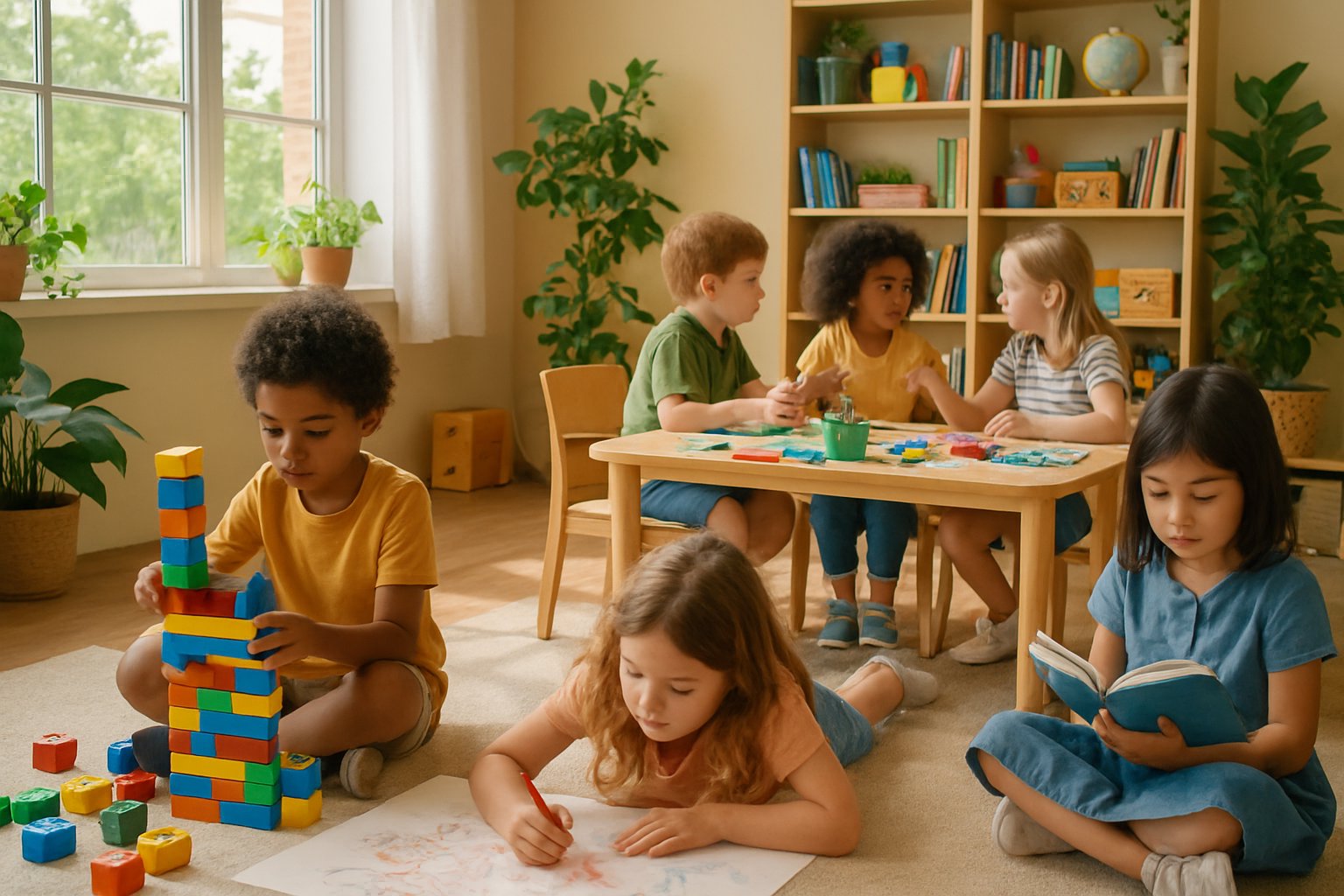
Children engaged in various creative and learning activities in a bright, welcoming room filled with books, toys, and natural light.

Unschooling creates an environment where children naturally develop strong analytical skills through hands-on problem-solving experiences. Critical thinking and creativity flourish when kids have the freedom to explore subjects deeply and approach challenges from multiple angles.

Encouraging Problem-Solving

Children in unschooling environments encounter real-world problems that require creative solutions. They might figure out how to build a treehouse, plan a family budget, or troubleshoot a science experiment gone wrong.

These experiences teach kids to break down complex problems into smaller parts. They learn to ask questions, gather information, and test different approaches until they find what works.

Daily Problem-Solving Opportunities:

  • Cooking meals and adjusting recipes

  • Planning trips and calculating distances

  • Fixing broken toys or household items

  • Organizing spaces and systems

Research shows that unschooling fosters enhanced critical thinking skills through hands-on exploration. When children tackle challenges they care about, they develop stronger analytical abilities than through traditional worksheets.

The freedom to fail and try again builds resilience. Kids learn that making mistakes is part of the learning process, not something to avoid.

Supporting Imaginative Exploration

Unschooled children have time and space to pursue creative interests without rigid schedules or predetermined outcomes. They might spend hours creating elaborate stories, building with blocks, or inventing new games.

This unstructured time allows their minds to wander and make unexpected connections. A child studying butterflies might create a dance that mimics their movement or write poetry about metamorphosis.

Creative Expression Methods:

  • Artistic projects like drawing, painting, or sculpture

  • Musical exploration through instruments or composition

  • Storytelling through writing, drama, or filmmaking

  • Building and designing with various materials

Unschooling nurtures creativity by removing artificial barriers between subjects. Kids naturally blend science with art, history with music, and math with storytelling.

Parents can support this process by providing materials and encouragement. They avoid rushing children toward specific outcomes and instead celebrate the exploration process itself.

Developing Resourcefulness

Unschooled children learn to find information and solve problems independently. They develop strong research skills by pursuing topics that genuinely interest them.

When a child wants to learn about dinosaurs, they might visit museums, read books, watch documentaries, and interview paleontologists. This multi-source approach builds critical evaluation skills.

Resourcefulness Skills Include:

  • Finding reliable information sources

  • Comparing different perspectives

  • Asking thoughtful questions

  • Adapting when plans change

Projects allow children to test ideas and explore topics hands-on. They learn to use whatever tools and materials are available to achieve their goals.

This resourcefulness extends beyond academic subjects. Children learn to navigate social situations, solve interpersonal conflicts, and adapt to unexpected changes in their environment.

They become comfortable with uncertainty and develop confidence in their ability to figure things out. This self-reliance serves them well throughout their lives.

Personalized Learning in Real Life

Children engaged in different learning activities at home with an adult observing nearby.

Children in unschooling families learn through cooking, gardening, and community activities rather than textbooks and worksheets. This approach allows each child to dive deep into subjects that match their natural interests and learning style.

Learning Through Everyday Experiences

Unschooling transforms daily life into learning opportunities. Children discover math while measuring ingredients for cookies or calculating change at the store.

They explore science by watching plants grow in the garden or observing weather patterns. Real-world experiences serve as the classroom in unschooling families.

Kids learn history through documentaries, museum visits, or conversations with grandparents. They develop writing skills by keeping journals, writing letters, or creating stories.

A child interested in animals might visit farms, read books about wildlife, or volunteer at animal shelters. No formal curriculum is needed when learning flows from genuine curiosity.

These experiences teach practical skills that traditional schools often miss. Children learn to manage money, cook healthy meals, and solve real problems.

They see how knowledge connects to their daily lives.

Adapting to Individual Interests

Each child’s learning path looks different in unschooling. One child might spend months studying dinosaurs while another focuses on music or art.

Parents support these interests by providing resources and opportunities. Personalized learning journeys allow children to delve deeply into subjects that resonate with them.

A child passionate about space might visit planetariums, build model rockets, or connect with astronomers online. This deep focus builds expertise and confidence.

The flexible nature of unschooling means learning can happen anywhere and anytime. If a child shows interest in plants during a nature walk, that becomes a botany lesson.

Learning follows the child’s natural rhythm rather than a rigid schedule. Parents act as facilitators rather than teachers.

They notice their child’s interests and help find resources, mentors, or experiences to support that learning. This creates a partnership where children feel empowered to direct their education.

Unschooling Versus Homeschooling

Two children learning independently at home, one doing a science experiment and the other reading, with a supportive adult nearby in a bright room.

Both approaches allow families to educate children at home, but they differ greatly in how much structure parents use and how much control kids have over their learning.

Comparing Flexibility and Structure

Traditional homeschooling uses more structure than unschooling. Parents pick curriculum, set schedules, and follow grade-level goals.

They might use textbooks, online programs, or planned lessons. Structured homeschooling often aligns with public school standards.

Parents act as teachers and guide their children through specific subjects each day. Unschooling removes formal curriculum completely.

Children explore what interests them most without fixed lesson plans or grades.

Key structural differences:

  • Homeschooling: Uses curriculum, schedules, and grade levels
  • Unschooling: No fixed plans, child-led exploration
  • Assessment: Homeschooling may use tests; unschooling relies on natural observation

Many families blend both methods. They might start with structure and move toward more freedom as children grow.

Key Differences in Approach

The key difference is the level of structure and control over the child’s education. Homeschooling parents choose what children learn and when they learn it.

Unschooling parents become facilitators instead of teachers. They help kids dive into interests and curiosities at whatever depth the child wants to go.

Parent roles differ significantly:

Homeschooling Unschooling
Teacher and guide Facilitator and supporter
Plans lessons Provides resources
Sets learning goals Follows child’s interests

Unschooling allows for interest-led learning that motivates children to follow their passions. Kids learn through real-life experiences rather than formal lessons.

This approach helps children develop independence and learn how to learn on their own.

Holistic Development and Life Skills

Unschooling values all aspects of a child’s development including emotional and social growth. Children develop these skills through real-world experiences rather than textbook lessons.

Promoting Emotional Intelligence

Unschooled children develop emotional intelligence through daily interactions and self-directed activities. They learn to recognize their feelings when they choose what to study each day.

Parents who use unschooling create space for children to process emotions naturally. Kids might feel frustrated when learning something difficult, then work through those feelings at their own pace.

Key emotional skills unschooled children develop:

  • Self-awareness through independent choices
  • Self-regulation during challenging tasks
  • Empathy through mixed-age interactions
  • Motivation from pursuing personal interests

Children practice emotional skills during real situations. They might negotiate with siblings, handle disappointment when projects don’t work, or feel proud when mastering new skills.

The flexible schedule allows children to take breaks when overwhelmed. They learn to listen to their emotional needs instead of pushing through required lessons.

Fostering Social Skills

Unschooling’s approach to life skills is holistic and integrated into daily living. Children practice social skills through community activities, family interactions, and peer relationships.

Unschooled children often interact with people of different ages. They might volunteer at nursing homes, participate in community theater, or join mixed-age learning groups.

Social opportunities for unschooled children:

  • Community volunteering
  • Sports teams and clubs
  • Art classes and workshops
  • Religious or cultural groups
  • Neighborhood activities

These children learn communication skills through real conversations. They practice conflict resolution with siblings and friends during daily activities.

Many unschooled children develop strong social confidence. They learn to talk with adults, ask questions in stores, and participate in community events without fear.

The natural social learning happens during field trips, co-op classes, and family outings. Children see how social skills work in real-world settings.

Frequently Asked Questions

Parents considering unschooling often have questions about how it compares to traditional education and whether it can meet their child’s needs. Common concerns include socialization opportunities, educational requirements, and long-term outcomes for children who learn through this approach.

How does unschooling differ from traditional schooling?

Traditional schooling follows a set curriculum with predetermined subjects and schedules. Students move through grades based on age and complete assignments chosen by teachers.

Unschooling emphasizes child-led learning where children pursue their interests freely. They learn through real-life experiences, exploration, and play rather than following a fixed curriculum.

In traditional schools, learning happens in specific time blocks with bells marking transitions. Unschooled children learn naturally throughout the day without artificial time limits.

Teachers direct learning in traditional settings through lesson plans and testing. In unschooling, children direct their own education while parents provide support and resources.

Can unschooling meet all the educational requirements for a child’s development?

Unschooling allows learning to happen organically through life experiences and natural curiosity. Children often cover traditional subjects without formal instruction.

Math skills develop through cooking, shopping, and managing money. Reading emerges from pursuing interests like comics, instructions, or research topics.

Science learning happens through experiments, nature observation, and asking questions about how things work. History comes alive through documentaries, museums, and family stories.

Legal requirements vary by state or country. Many unschooling families meet these through documentation of learning activities and experiences.

What strategies do parents use to facilitate unschooling?

Parents create rich environments filled with books, art supplies, and learning materials. They expose children to new experiences and opportunities regularly.

Unschooling parents help define and bring children into contact with their cultural environment. This includes museums, libraries, community events, and field trips.

Many parents act as learning partners who research topics together with their children. They help find resources, experts, or classes when children show interest.

Some families use a hands-off approach, responding only when children ask for help. Others provide more guidance while still following their child’s lead.

How do unschooled children socialize and interact with peers?

Unschooled children interact with people of all ages in their community regularly. They meet others through activities, clubs, and daily errands with parents.

Many families join unschooling groups or homeschool co-ops for social activities. Children participate in sports teams, art classes, and community organizations.

Research shows unschooled children often have social advantages because they interact with diverse age groups. They develop confidence talking to adults and younger children.

Without the pressure of grade-level peer groups, children form friendships based on shared interests. They learn social skills through real-world interactions rather than classroom settings.

What are the long-term outcomes for children who have been unschooled?

Studies show unschooled children often experience extraordinary success as they enter academia and careers. They maintain curiosity and love for learning throughout their lives.

Many unschooled children successfully transition to college when they choose to attend. They often bring strong self-direction skills and passion for their chosen subjects.

Former unschoolers frequently become entrepreneurs, artists, and professionals in various fields. They tend to maintain close family relationships and continue learning throughout adulthood.

The self-directed learning skills developed through unschooling serve them well in careers that require independent thinking. They often show creativity and problem-solving abilities.

How can unschooling accommodate different learning styles and abilities?

Unschooling naturally accommodates all learning styles because children choose how they want to learn.

Visual learners might use art and diagrams while kinesthetic learners prefer hands-on activities.

Children with learning differences can learn at their own pace without pressure to keep up with grade-level expectations.

They focus on their strengths.

Some children learn better in the morning while others prefer evening study.

Unschooling allows families to work with natural rhythms and energy levels.

Children with special needs can receive individualized attention and pursue interests that motivate them.

Parents can adapt learning approaches to match their child’s specific abilities and challenges.

Filed Under: Uncategorized

Homeschooling Multiple Children: Strategies for Success at Home

July 9, 2025 by Valerie Leave a Comment

Essential Organization for Homeschooling Multiple Children

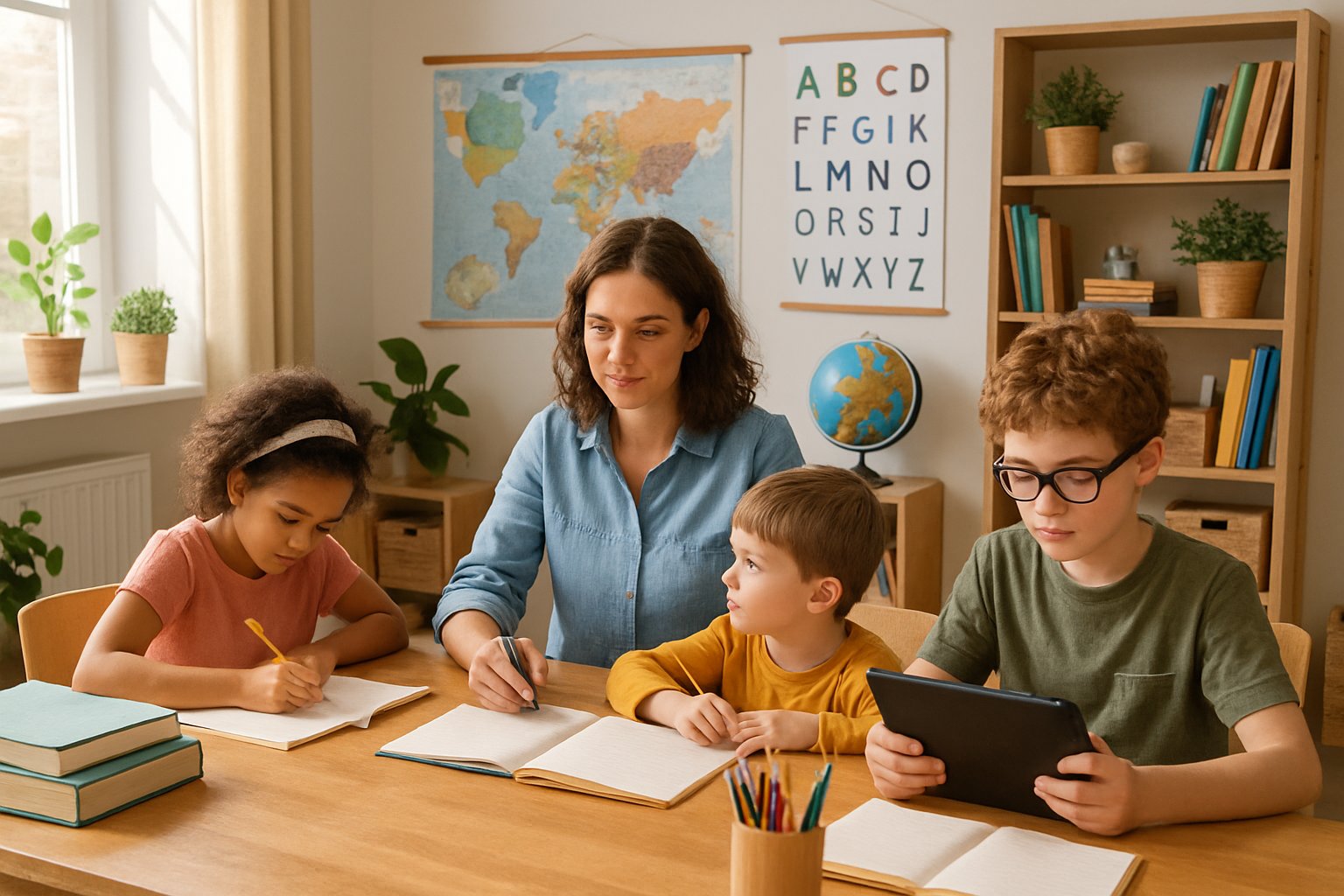
A parent teaching multiple children at a table in a bright, organized homeschooling room with books, educational materials, and natural light.

Good organization helps parents manage different schedules, track each child’s work, and plan lessons that work for everyone. The right tools and systems make teaching multiple kids much easier.

Daily Schedules That Work for Your Family

Creating clear daily schedules helps parents give each child the right amount of attention. A good schedule shows when each child will learn different subjects and when they will take breaks.

Parents should start by listing each child’s subjects and how long each lesson takes. Math might need 30 minutes while reading could take 45 minutes.

This helps plan the day better. Block scheduling works well for many families.

This means grouping similar subjects together. All kids might do math from 9:00 to 10:00, then switch to reading from 10:15 to 11:15.

Some families like staggered schedules instead. The oldest child starts math at 9:00, the middle child at 9:30, and the youngest at 10:00.

This lets parents help each child one-on-one.

Sample Daily Schedule:

  • 8:00 AM – Breakfast and morning routine
  • 9:00 AM – Math (all children)
  • 10:00 AM – Reading (independent work)
  • 11:00 AM – Science or history (group learning)
  • 12:00 PM – Lunch break
  • 1:00 PM – Art or music (together)
  • 2:00 PM – Free play or quiet time

Parents should build in buffer time between subjects. Kids need a few minutes to switch activities and get ready for the next lesson.

Effective Lesson Planning Tools

Multi-level curriculum and good organization help parents teach different ages at the same time. The right tools make planning lessons much faster.

Digital planning tools save time and keep everything in one place. Many parents use apps like Homeschool Planet or Simple Homeschool to track lessons for each child.

Physical planners work well too. A large wall calendar can show the whole family’s schedule.

Each child gets their own color for easy tracking. Lesson plan templates help parents stay organized.

These should include:

  • Subject and date
  • Learning goals
  • Materials needed
  • Activity description
  • Time needed

Parents can plan similar subjects together when possible. All kids might learn about the same historical period but at different levels.

The youngest might color pictures while older kids write reports. Prep bins make daily teaching smoother.

Parents can set up containers with all materials needed for each subject. This saves time looking for supplies during lessons.

Unit studies work great for multiple kids. Everyone learns about space or dinosaurs but does age-appropriate activities.

Tracking Progress and Assignments

Good tracking systems help parents see how each child is doing and what work still needs to be done. This prevents assignments from getting lost or forgotten.

Assignment tracking sheets work well for each child. These can be simple lists showing what work is due and when it was completed.

Parents can check off finished tasks. Progress charts help kids see their own growth.

Simple graphs showing reading levels or math skills motivate children to keep working hard. Digital tracking tools like Google Sheets or Excel make it easy to see all children’s progress at once.

Parents can sort by subject or child to find information quickly. Weekly review meetings help families stay on track.

Parents can sit with each child to talk about what went well and what needs work. This takes just 10-15 minutes per child.

Portfolio systems collect each child’s best work over time. This might include writing samples, art projects, or photos of science experiments.

Portfolios show real learning progress. Grade books help parents who want formal records.

These can be simple notebooks or computer programs that calculate grades automatically. Some parents use learning logs where kids write about what they studied each day.

This helps children think about their own learning and gives parents insight into their progress.

Creating Productive Learning Spaces at Home

A home learning space with multiple children studying at desks and a parent assisting one child.

A well-designed learning space helps children focus better and makes homeschooling multiple kids much easier. Parents can create different areas for group work, individual study, and quiet activities to meet each child’s needs.

Designing Group and Individual Study Areas

Parents should create dedicated learning spaces that work for both group lessons and solo work. A large table or cleared dining room works well for family activities like reading aloud or science experiments.

Individual study spots need less space but more privacy. A small desk in a bedroom corner or a quiet hallway nook can work perfectly.

Each child should have their own chair and workspace that fits their height.

Group Area Essentials:

  • Large table or cleared surface
  • Comfortable seating for all children
  • Good lighting from windows or lamps
  • Easy access to shared supplies

Individual Area Needs:

  • Proper desk height for each child
  • Personal storage for books and supplies
  • Minimal distractions
  • Comfortable chair

Parents can use folding screens or bookcases to separate spaces in the same room. This helps children focus while keeping everyone nearby for supervision.

Setting Up Subject-Specific Stations

Subject stations help organize materials and keep lessons running smoothly. Parents can set up different areas for math, reading, art, and science activities.

A math station might include calculators, manipulatives, and worksheets in labeled bins. The reading corner could have comfortable pillows, good lighting, and easy access to books at different levels.

Math Station Setup:

  • Calculator and basic supplies
  • Counting blocks or other manipulatives
  • Worksheets sorted by grade level
  • Pencils and erasers

Reading Station Items:

  • Soft seating like bean bags or cushions
  • Bookshelf with age-appropriate books
  • Good reading lamp
  • Quiet location away from noise

Art and science stations need more supplies but follow the same idea. Clear storage bins and labels help children find what they need independently.

Maintaining Quiet Zones for Focus

Quiet zones are essential when homeschooling multiple children of different ages. These spaces help older kids concentrate on harder work while younger ones do louder activities.

Parents should select quiet areas away from high-traffic parts of the home. A spare bedroom, basement corner, or even a large closet can become a peaceful study spot.

Quiet Zone Features:

  • Away from kitchen and living areas
  • Minimal visual distractions
  • Comfortable temperature
  • No electronic distractions

Sound control makes a big difference in these spaces. Soft rugs, curtains, or even foam panels can reduce noise.

Headphones also help children focus on audio lessons without disturbing others. Parents can establish simple rules like “no talking in the quiet zone” or “raise your hand for help.”

This teaches children to respect others’ need for concentration while still getting support when needed.

Balancing Different Learning Styles and Needs

Every child processes information differently, and recognizing these unique patterns helps parents create lessons that work for each student. Success comes from matching teaching methods to how each child learns best and combining different approaches in daily instruction.

Identifying Each Child’s Learning Style

Parents need to watch how their children naturally approach new information. Some kids learn best by seeing pictures and reading.

Others need to hear explanations and discussions. Visual learners prefer charts, diagrams, and written instructions.

They often doodle while listening or organize notes with colors and highlights. Auditory learners like to talk through problems and hear information spoken aloud.

They remember better when they can discuss topics or listen to recordings. Kinesthetic learners need to move and touch things to understand.

They learn math better with blocks and science through experiments. Parents can identify each child’s unique approach through assessments and observations.

Simple tests and watching daily habits reveal these patterns quickly.

Common signs by learning style:

Visual Auditory Kinesthetic
Likes reading Enjoys discussions Fidgets while sitting
Uses charts Talks to self Learns by doing
Draws pictures Remembers songs Needs movement breaks

Tailoring Lessons to Individual Strengths

Smart parents adjust their teaching methods to match each child’s strengths. This means using different materials and activities for the same topic.

For a science lesson about plants, visual learners get detailed diagrams and books with pictures. Auditory learners listen to podcasts or discuss plant growth with parents.

Kinesthetic learners plant actual seeds and track growth with hands-on measurements. All three children learn the same facts but through different methods.

Customizing lesson plans with diverse teaching methods like visual aids and hands-on activities helps each child succeed.

Parents don’t need completely different curricula.

Math example adaptations:

  • Visual: Use number charts and written steps
  • Auditory: Count aloud and explain reasoning
  • Kinesthetic: Use manipulatives and finger counting

The key is having multiple ways to teach the same concept. This approach saves time while meeting everyone’s needs.

Blending Multiple Teaching Modalities

Successful homeschool families mix different teaching methods throughout each day. This keeps all children engaged and helps them learn through their weaker areas too.

A history lesson might start with reading a chapter together (visual). Then children discuss what they learned (auditory).

Finally, they build a model or act out scenes (kinesthetic). Balancing diverse learning styles requires parents to juggle multiple approaches.

But this variety keeps lessons interesting for everyone.

Daily schedule example:

  • Morning: Individual reading time (visual focus)
  • Mid-morning: Group discussion (auditory focus)
  • Afternoon: Hands-on projects (kinesthetic focus)

Parents should change activities every 15-20 minutes for younger children. Older kids can handle longer periods but still need variety.

This mixed approach prevents boredom and helps all children strengthen their learning skills. It also makes teaching more dynamic and fun for parents.

Managing Independent Work and Teacher-Led Instruction

A parent teaching one child while two other children work independently at a table in a bright homeschooling room.

The key to successful multi-child homeschooling lies in balancing teacher-led lessons with independent activities that keep children engaged while parents work individually with other students. This approach helps children develop self-reliance while ensuring each child receives focused attention.

Scheduling Time for Independent Work

Parents should create clear daily schedules that outline specific times for learning activities and independent work periods. This structure helps children know when they need to work alone and when they’ll receive direct instruction.

Morning Schedule Example:

  • 8:00-8:30: Child A receives math instruction, Child B completes practice worksheets
  • 8:30-9:00: Child B receives math instruction, Child A works on independent reading
  • 9:00-9:30: Both children complete science experiments together

Independent work should match each child’s ability level and attention span. Younger children might work independently for 15-20 minutes, while older children can handle 30-45 minutes of solo activities.

Parents can use timers to help children stay focused during independent work periods. Visual schedules with pictures or simple words help younger children understand what activities they should complete without asking for help.

Encouraging Responsibility and Self-Reliance

Teaching children to work independently requires building their confidence and problem-solving skills gradually. Parents should start with simple tasks that children can complete successfully on their own.

Independent Work Activities by Age:

  • Ages 4-6: Coloring pages, simple puzzles, audio books with picture books
  • Ages 7-9: Reading assignments, math worksheets, educational computer games
  • Ages 10+: Research projects, essay writing, online courses

Children need clear instructions and examples before starting independent work. Parents should demonstrate how to complete tasks and provide written or visual guides that children can reference.

Setting up a quiet workspace with all necessary supplies helps children focus during independent time. Each child should have their own basket or bin with pencils, paper, and other materials they might need.

Alternating Teacher Attention Across Ages

The strategy of alternating challenging and independent work allows parents to provide focused instruction to one child while others work independently on reinforcing activities.

Parents should plan which subjects require direct instruction and which can be completed independently. Math and reading often need more teacher guidance, while art, handwriting, and review activities work well as independent tasks.

Rotation Strategy:

  1. Teach new concept to Child A (15 minutes)
  2. Give Child A practice work, teach Child B (15 minutes)
  3. Give Child B practice work, teach Child C (15 minutes)
  4. Check in with all children and provide help as needed

Older children can help younger siblings with simple tasks during independent time. This peer teaching builds leadership skills and gives parents more flexibility in managing multiple children.

Parents should keep a timer and notebook to track how much individual attention each child receives daily. This helps ensure no child gets overlooked during busy homeschool days.

Utilizing Group and Peer Learning Opportunities

Group learning helps homeschooling families teach multiple children at once while building teamwork skills. Children can learn from each other through shared subjects, mentoring relationships, and fun activities that bring everyone together.

Teaching Subjects Together

Many subjects work well when taught to multiple children at the same time. History and science lessons can engage kids of different ages since they focus on stories and hands-on activities.

Parents can have children study certain subjects together, like history or science. This approach saves time and creates shared learning experiences.

Best subjects for group learning:

  • History and social studies
  • Science experiments
  • Art and music
  • Physical education
  • Geography

Families can adjust the difficulty level for each child within the same lesson. Younger children might draw pictures about the topic while older ones write detailed reports.

Story-based learning works especially well for mixed ages. Everyone can listen to the same historical account or science concept, then respond at their own level.

Siblings as Mentors and Helpers

Older children can become excellent teachers for their younger siblings. This arrangement helps both the mentor and the student learn better.

Parents can pair up siblings working on similar concepts to teach each other. The older child reviews their knowledge while the younger one gets patient, one-on-one help.

Benefits of sibling mentoring:

  • Builds confidence in older children
  • Provides extra practice for concepts
  • Creates stronger family bonds
  • Gives parents time with other children

The teaching process helps older children understand topics more deeply. When they explain math problems or reading concepts, they strengthen their own skills.

Younger children often feel more comfortable asking questions of their siblings. This reduces stress and makes learning more enjoyable for everyone.

Incorporating Collaborative Activities

Group projects and games make learning fun while teaching important teamwork skills. These activities work well for homeschooling multiple children together.

Parents can facilitate group review games or debates to make learning interactive and engaging.

Effective collaborative activities:

  • Science experiments with different roles
  • History timeline projects
  • Math games and competitions
  • Reading comprehension discussions
  • Creative writing partnerships

Family debates about historical events or current topics help children practice speaking skills. Each child can argue from different perspectives based on their age and understanding.

Creative projects like family newspapers or science fair displays let each child contribute their strengths. This builds confidence and shows how different skills work together.

Adapting Curriculum and Resources for Multiple Ages

Successful homeschooling multiple children requires flexible curriculum choices that can be adjusted for different learning levels and paces. Parents need to balance individual needs with practical resource management across age groups.

Selecting Multi-Level Curriculum

Multi-level curriculum allows parents to teach the same subject to children of different ages simultaneously. This approach saves time and creates natural learning opportunities between siblings.

Unit study programs work well for teaching history, science, and literature together. Parents can assign different activities based on each child’s reading level and comprehension ability.

Living books provide another excellent option for multiple ages. Younger children can listen while older ones read independently from the same book series.

Some subjects require separate grade-level materials. Math typically needs individual curriculum for each child since concepts build sequentially.

Popular multi-level options include:

  • Charlotte Mason approach
  • Unit studies
  • Literature-based programs
  • Hands-on science curricula

Parents should look for programs that offer different activity levels or discussion questions for various ages. This flexibility helps accommodate everyone’s learning needs without requiring completely separate lesson plans.

Adjusting to Individual Paces and Interests

Each child learns at their own speed and shows interest in different topics. Adapting curriculum to pace and level helps ensure every child stays engaged and challenged appropriately.

Flexible pacing allows faster learners to move ahead while giving struggling students extra time. Parents can modify assignments by changing the number of problems or adjusting complexity levels.

Interest-led learning keeps children motivated. If one child loves dinosaurs, parents can incorporate paleontology into science lessons while others focus on different topics.

Modification strategies include:

  • Reducing assignment length for younger children
  • Adding extension activities for advanced learners
  • Changing question types from multiple choice to essay
  • Providing different book options on the same topic

Parents should regularly assess each child’s progress and adjust accordingly. What works for one child may not work for another, even within the same family.

Using Online and Community Resources

Online platforms and community resources provide valuable support for homeschooling multiple children. These tools offer individualized instruction while freeing up parent time for other children.

Educational websites provide interactive lessons and practice activities. Children can work independently while parents focus on teaching other subjects or helping siblings.

Local homeschool groups offer co-op classes where children learn with peers their own age. This arrangement works especially well for subjects like foreign languages or advanced sciences.

Library programs often include story time for younger children and research resources for older students. Many libraries also offer homeschool activity days and educational workshops.

Khan Academy provides free video lessons across multiple subjects and grade levels. Children can progress at their own pace while parents track their progress online.

Community resources like museums, nature centers, and historical sites offer field trip opportunities that engage multiple ages simultaneously. These experiences provide hands-on learning that complements traditional curriculum materials.

Tips for Handling Distractions and Maintaining Flexibility

Successful homeschooling requires parents to build extra time into their schedules and create systems that work when unexpected interruptions happen. The key is planning for flexibility while keeping younger children engaged during older siblings’ lessons.

Building Buffer Time Into Your Day

Smart homeschooling parents add extra time between subjects and activities. This prevents the day from falling apart when one lesson runs long or a child needs extra help.

Morning buffer time works well for families who start school early. Parents can build in 15-30 minutes before the first lesson begins.

Between-subject breaks give children time to transition. A 10-minute break between math and reading helps kids reset their focus.

Parents should also plan for makeup time at the end of each day. If a lesson gets skipped due to distractions, this time slot allows families to catch up without stress.

Weekly catch-up sessions help when entire days get disrupted. Friday afternoons work well for reviewing missed material or finishing incomplete assignments.

Managing Younger Children During Lessons

Younger children often create the biggest distractions during homeschooling. Parents need specific strategies to keep little ones busy while teaching older siblings.

Quiet boxes filled with special toys only come out during lesson time. These might include coloring books, puzzles, or small manipulatives that don’t make noise.

Educational videos can occupy toddlers for 20-30 minutes. Parents should choose content that matches their family’s values and educational goals.

Creating separate study zones for each child helps minimize interruptions. Even small spaces can work if they’re clearly defined.

Nap time coordination allows parents to focus on older children’s harder subjects. Planning math or reading during a toddler’s nap reduces interruptions significantly.

Restructuring Routines When Needed

Homeschooling families must be ready to change their routines when they stop working. Flexibility and creativity help parents adapt to new challenges.

Seasonal adjustments might mean switching to outdoor learning in spring or doing more indoor activities in winter. Weather changes often require schedule modifications.

Growth-based changes happen when children outgrow their current routine. A child who used to need constant supervision might be ready for more independent work.

Parents should evaluate routines monthly to see what’s working and what isn’t. Quick adjustments prevent small problems from becoming big ones.

Emergency backup plans help when regular routines completely fail. Having a list of simple activities or educational games saves stressful days.

Frequently Asked Questions

Parents often need specific guidance on scheduling different grade levels effectively and creating learning environments that work for multiple children. Many families also seek curriculum recommendations and organizational systems that streamline their homeschool experience.

What are effective scheduling strategies for teaching children in different grade levels?

Block scheduling works well for families with multiple grade levels. Parents can group similar subjects together so all children work on math or science at the same time.

Time blocking creates predictable routines without rigid schedules. Each child gets 15-20 minute slots for direct instruction while others work independently.

A rotation system helps parents provide individual attention to each child. Visual timers show children when their turn approaches for one-on-one instruction.

Loop scheduling allows families to cycle through subjects without strict time constraints. If a child needs extra time on a concept, the family simply picks up where they left off the next day.

How can you create a homeschool environment that promotes learning for multiple children?

Learning stations throughout the home help children transition between subjects smoothly. The kitchen island becomes a math station with manipulatives stored nearby.

A cozy corner with good lighting serves as the reading area. Quiet zones give older children space for focused work without distractions.

A bedroom desk, dining room corner, or converted closet provides the concentration needed for independent assignments. Clear rules help siblings respect these spaces during work time.

Portable supply caddies keep materials organized and accessible. Children can grab what they need without interrupting others or searching for supplies.

Labeling containers with words and pictures helps non-readers find materials independently. Multiple workspaces prevent bottlenecks when several children need different activities.

Some families set up folding tables that can be moved as needed. Others use lap desks or clipboard systems for flexibility.

What family-style homeschool curricula are available that cater to various ages?

Unit studies like Story of the World present the same historical periods with age-appropriate activities. Kindergarteners color maps while fifth graders write research reports.

Living books curricula allow families to read aloud together then assign different follow-up activities. Younger children listen and absorb while older students complete more complex assignments.

Charlotte Mason and Ambleside Online follow this approach. Trail Guide to Learning offers multi-level science and geography studies.

Each unit includes activities for different age ranges using the same core materials. Families can adapt assignments based on each child’s abilities.

Five in a Row uses picture books as springboards for learning across subjects. Parents read the same book multiple times during a week, exploring different concepts each day.

Activities can be modified for various skill levels.

Can you recommend a complete homeschool curriculum that works well for families with multiple children?

Sonlight provides literature-based curriculum packages that include books for multiple grade levels. Their instructor guides offer suggestions for adapting activities for different ages.

The read-aloud component works well for family learning time. My Father’s World combines Bible, history, and science into thematic units.

Their curriculum includes books and activities for kindergarten through high school. Families can use the same materials across multiple grade levels.

Beautiful Feet Books offers unit studies that span several grade levels simultaneously. Their guides include book lists and activities for different ages studying the same time period.

This approach minimizes preparation time for parents. Tapestry of Grace provides four-year history cycles with activities for four different levels.

Families study the same historical period together while completing age-appropriate assignments. The curriculum includes detailed planning guides for parents.

How does the workbox system enhance homeschool organization for several kids?

The workbox system uses numbered containers filled with daily assignments for each child. Children work through boxes independently, checking off completed tasks.

Each child gets their own set of workboxes with age-appropriate activities. Parents can prepare materials in advance and rotate through different types of assignments.

The visual system helps children see their progress throughout the day. Children know exactly what they need to complete and can work at their own pace.

This independence frees parents to focus on children who need direct instruction. The system works well for review activities, independent practice, and creative projects.

Parents can include manipulatives, worksheets, craft supplies, or educational games. Children enjoy the surprise element of discovering new activities.

What daily habits contribute to a successful homeschooling experience for a bigger family?

Morning routines help children start their day independently. Each child gathers supplies, reviews their schedule, and begins with familiar review work.

This reduces the morning chaos that often occurs in larger families.

Weekly family learning reviews create opportunities to assess progress and make adjustments. Parents spend 5-7 minutes with each child discussing accomplishments and challenges.

Consistent bedtime routines ensure children get adequate rest for learning. Well-rested children focus better and require less behavioral management.

Parents can use evening time to prepare materials for the next day.

Meal planning and batch cooking free up time for educational activities. Many families involve children in cooking as a practical life skill.

Simple meals during busy learning days reduce stress for everyone.

Regular breaks prevent burnout for both parents and children. Short movement breaks, outdoor time, or free play help children refocus.

Parents also benefit from stepping away from instruction periodically.

Filed Under: Uncategorized

Using Nature and Outdoor Learning in Your Homeschool: Practical Ideas and Benefits

July 9, 2025 by Valerie Leave a Comment

Why Nature and Outdoor Learning Matter in Homeschooling

Nature-based learning transforms how children develop physically, emotionally, and intellectually. It fosters deeper environmental connections and unleashes natural curiosity.

These experiences create lasting educational benefits. The impact extends far beyond traditional classroom walls.

Core Benefits for Children

Outdoor learning approaches provide multiple advantages that support children’s overall development. Physical health improves through regular outdoor activity and fresh air exposure.

Mental health benefits include reduced stress levels and improved focus. Research shows that outdoor activities reduce cortisol levels by up to 50% while enhancing concentration abilities.

Children develop stronger problem-solving skills when they encounter real-world challenges in natural settings. They learn to adapt to changing weather conditions and navigate outdoor obstacles.

Key developmental areas include:

  • Enhanced observation skills
  • Improved physical coordination
  • Better emotional regulation
  • Stronger immune system function

Nature schooling encourages curiosity and exploration, leading to deeper learning experiences. Children who learn outdoors often show better academic performance across multiple subjects.

The sensory-rich environment of outdoor education engages all five senses. This multi-sensory approach helps children retain information more effectively than traditional indoor methods.

Building Connection and Responsibility

Outdoor education and nature-based learning help children develop strong environmental stewardship values. They learn to care for living things through direct interaction with plants and animals.

Children gain understanding of natural cycles and ecosystems. This knowledge creates lasting respect for the environment and motivates responsible behavior.

Responsibility develops through:

  • Caring for outdoor learning spaces
  • Observing wildlife without disturbing habitats
  • Learning sustainable practices
  • Understanding human impact on nature

Immersing children in nature fosters deep appreciation for environmental preservation. They become more conscious of their daily choices and their effects on the natural world.

Group outdoor activities teach cooperation and teamwork skills. Children learn to work together to solve problems and complete nature-based projects.

Nurturing Curiosity and Creativity

Nature-based learning activities spark natural curiosity by providing endless opportunities for discovery. Children ask questions about everything they encounter outdoors.

The unpredictable nature of outdoor environments encourages flexible thinking. Children learn to adapt their plans based on weather, seasons, and available materials.

Creativity flourishes through:

  • Building with natural materials
  • Creating art from found objects
  • Inventing games using outdoor spaces
  • Storytelling inspired by nature

Nature schooling inspires creative play and artistic expression, encouraging imagination development. Children use sticks, stones, and leaves to create original masterpieces.

Outdoor learning removes artificial boundaries found in traditional classrooms. Children explore topics that interest them most, following their natural learning instincts.

The changing seasons provide fresh learning opportunities throughout the year. Each season brings new discoveries and creative possibilities for homeschooling families.

Getting Started With Nature-Based Homeschooling

Starting a nature-based homeschool requires basic outdoor supplies and a flexible schedule that works with natural rhythms. The ability to follow your child’s natural curiosity is also key.

These three elements create the foundation for successful outdoor learning.

Gathering Outdoor Learning Essentials

Parents need simple tools to make outdoor learning effective. Nature journals serve as the most important supply for recording observations and discoveries.

Children can draw plants, write about weather patterns, and document seasonal changes in these journals. Sketchbooks work well for detailed drawings of insects, leaves, and birds.

They help children slow down and really look at what they find outside. Art supplies like colored pencils, watercolors, and charcoal add depth to nature studies.

A basic outdoor kit should include:

  • Magnifying glasses for examining small details
  • Collection containers for temporary specimen study
  • Field guides for local plants and animals
  • Measuring tape for size comparisons
  • Small trowel for soil exploration

Comfortable outdoor clothing matters more than expensive gear. Layers work best since weather changes throughout the day.

Sturdy shoes protect feet on different terrains. Many families start with items they already own.

A simple notebook becomes a nature journal. Kitchen containers work for collecting leaves and rocks.

The key is beginning with what you have available.

Creating a Flexible Homeschool Schedule for Nature Study

Nature-based learning works best with a flexible homeschool schedule that adapts to weather and seasons. Traditional rigid schedules often conflict with natural learning opportunities.

Morning outdoor time takes advantage of cooler temperatures and active wildlife. Many families spend 1-2 hours outside before moving to indoor subjects.

This pattern works well in most climates. Seasonal scheduling means adjusting activities based on what nature offers.

Spring focuses on plant growth and baby animals. Summer brings insect studies and water exploration.

Fall offers seed collection and migration observation. Weather becomes part of the curriculum rather than an obstacle.

Rainy days provide opportunities to study water cycles and observe how animals respond to storms. Snow days become lessons about adaptation and survival.

Block scheduling allows for longer nature exploration. Instead of short daily sessions, some families dedicate full mornings or entire days to outdoor learning.

This approach supports deeper investigation of topics. The homeschool schedule should include time for processing outdoor experiences.

Children need opportunities to write, draw, and discuss their discoveries after outdoor exploration.

Adapting to Your Child’s Interests

Successful nature-based homeschooling follows each child’s natural curiosity. A child fascinated by insects needs different activities than one drawn to geology or astronomy.

Observation skills help parents identify their child’s interests. Does the child always stop to examine flowers? Do they collect rocks on every walk?

These behaviors guide curriculum choices. Nature-based curriculum should expand on what already captures attention.

A child interested in birds might start with backyard species identification, then move to migration patterns and habitat needs. This approach builds knowledge naturally.

Interest-led projects work better than forced topics. If a child discovers a butterfly chrysalis, the curriculum can shift to focus on metamorphosis and life cycles.

This flexibility keeps learning exciting and relevant. Parents can introduce new topics by connecting them to existing interests.

A child who loves digging in dirt might develop interest in earthworms, soil composition, or plant root systems. Documentation in journals helps track developing interests over time.

Parents can review entries to see patterns and plan future activities. This information guides curriculum decisions and supply purchases.

Some children prefer hands-on activities while others enjoy quiet observation. The approach should match each child’s learning style and personality rather than forcing one method for all students.

Incorporating Outdoor Lessons Into Academic Subjects

A parent and two children learning outdoors in a park with trees and a pond, examining leaves and taking notes on a picnic blanket.

Taking classroom learning outside opens up endless possibilities for hands-on exploration across all subjects. Students can conduct real science experiments in nature, create art with natural materials, and solve math problems using outdoor environments.

Outdoor Science Lessons and Experiments

Nature provides the perfect laboratory for hands-on science experiments that bring abstract concepts to life. Students can analyze soil composition, study weather patterns, and observe plant growth cycles in real time.

Weather and Climate Studies

  • Track temperature changes throughout the day
  • Measure rainfall and create weather charts
  • Study cloud formations and wind patterns
  • Build simple weather instruments

Biology and Ecosystems

Students can explore local habitats to understand food chains and biodiversity. They observe insects, identify plants, and track animal behavior in their natural settings.

Physics in Action

Outdoor environments offer countless opportunities for physics lessons. Students can test gravity with different objects, explore sound waves in open spaces, and study light reflection using water and mirrors.

Chemistry Experiments

  • Test pH levels in soil and water samples
  • Observe chemical reactions in nature
  • Study decomposition processes in compost bins
  • Examine crystal formation in natural settings

Literature and Art Inspired by Nature

Nature-based learning transforms creative subjects by providing endless inspiration from the natural world. Students develop stronger observation skills while creating meaningful connections between art and their environment.

Nature Journaling

Students can document their outdoor experiences through writing and sketching. They describe seasonal changes, record wildlife sightings, and reflect on their discoveries.

Natural Art Projects

  • Create sculptures using rocks, sticks, and leaves
  • Make natural dyes from flowers and berries
  • Design nature collages and pressed flower art
  • Build fairy houses and outdoor installations

Literature Connections

Reading poetry and stories outdoors enhances comprehension and engagement. Students can act out scenes from nature-themed books or write their own stories inspired by outdoor adventures.

Creative Writing Prompts

  • Write from the perspective of a tree or animal
  • Create adventure stories set in local environments
  • Compose haikus about seasonal changes
  • Develop nature-themed short stories

Nature-Integrated Math and History Activities

Outdoor learning activities provide concrete examples for abstract math concepts while bringing history lessons to life through exploration and discovery.

Mathematical Concepts in Nature

Students can practice geometry by measuring tree heights and calculating areas of garden plots. They use natural objects for counting, sorting, and pattern recognition activities.

Practical Math Applications

  • Calculate distances on nature walks
  • Measure garden bed dimensions for planting
  • Track growth rates of plants and vegetables
  • Create graphs showing seasonal temperature changes

Historical Connections

Students can explore local historical sites and landmarks during outdoor lessons. They learn about indigenous peoples, early settlers, and how communities developed around natural resources.

Timeline Activities

  • Study tree rings to understand age and growth
  • Explore geological formations and rock layers
  • Visit historical buildings and discuss architecture
  • Create timelines of local community development

Geography Skills

Students use compasses and maps during outdoor explorations. They learn about topography, natural boundaries, and how geography influenced historical events in their region.

Making the Most of Outdoor Activities and Play

Successful outdoor learning combines structured exploration with free play to create rich educational experiences. Parents can maximize these opportunities through guided nature walks, unstructured play time, and community involvement.

Guided Nature Walk Adventures

Structured nature walks help children develop observation skills while exploring their environment. Parents can create focused learning experiences by choosing specific themes or goals for each walk.

Seasonal exploration works well for guided walks. Spring walks might focus on new plant growth and animal activity.

Summer adventures can explore insects and flowering plants. Fall walks showcase changing leaves and seed collection.

Themed walks keep children engaged and focused. A “texture walk” encourages kids to feel different bark, leaves, and rocks.

A “sound walk” has them listening for birds, wind, and water. Color-themed walks help younger children practice identification skills.

Parents should bring simple tools to enhance the experience. A magnifying glass reveals tiny details in leaves and insects.

Field guides help identify plants and animals. A collection bag holds interesting finds for later study.

Documentation makes walks more educational. Children can sketch what they see in nature journals.

They might take photos of interesting discoveries. Recording observations helps them remember and learn from each adventure.

Outdoor learning activities work best when parents follow their children’s interests and curiosity during these guided experiences.

Unstructured Outdoor Play for Deeper Learning

Free play in natural settings allows children to explore at their own pace and follow their interests. This type of outdoor play develops creativity and problem-solving skills that structured activities cannot provide.

Natural materials become learning tools during unstructured play. Sticks transform into measuring tools or building materials.

Rocks become counting objects or art supplies. Water and mud offer science experiments and sensory play.

Children often create their own games and challenges during free outdoor time. They might build fairy houses from twigs and leaves.

They could create obstacle courses using fallen logs and rocks. These activities develop physical skills and imagination.

Risk assessment skills develop naturally during unstructured play. Children learn to test branch strength before climbing.

They evaluate slopes before running down hills. These experiences build confidence and judgment.

Parents should step back and let children lead their own exploration. Minimal intervention allows kids to discover solutions to problems they encounter.

This builds independence and critical thinking skills. Outdoor play provides dynamic learning environments that enhance development in ways indoor classrooms cannot match.

Engaging in Group or Community Activities

Community involvement expands outdoor learning beyond the family unit. Group activities expose children to different perspectives and create shared learning experiences with peers.

Local nature groups offer structured programs for families. Many communities have bird watching clubs, hiking groups, or gardening societies.

These organizations provide expert knowledge and regular outdoor activities. Park programs often include ranger-led walks and educational demonstrations.

State and national parks frequently offer junior ranger programs. These activities teach conservation while providing fun outdoor experiences.

Homeschool cooperatives can organize outdoor learning days together. Families might plan group nature walks or outdoor science experiments.

Shared activities reduce planning burden while creating social connections. Service projects combine outdoor learning with community involvement.

Children might participate in park cleanups or trail maintenance. They could help with community gardens or habitat restoration projects.

Planning considerations help group activities succeed. Parents should communicate clearly about meeting times and locations.

They need to consider different age groups and ability levels when planning activities.

Exploring Nature Studies and Field Journaling

A parent and child sitting outdoors in a grassy area surrounded by trees and plants, observing nature and writing in a notebook.

Nature studies become more meaningful when children document their discoveries through journals and creative techniques. Setting up proper recording systems and using hands-on methods like leaf rubbings helps students connect with the natural world while building observation skills.

Setting Up Nature Journals and Sketchbooks

A good nature journal serves as the foundation for outdoor learning adventures. Children need a sturdy notebook that can handle outdoor conditions and different art materials.

Essential supplies include:

  • Hardcover journal with thick paper
  • Pencils and colored pencils
  • Ruler for measuring specimens
  • Glue stick for attaching samples

The journal should have blank pages rather than lined ones. This gives kids space to draw, write, and paste items they find.

A pocket-sized journal works well for younger children who might struggle with larger books. Parents can help children organize their journals by adding dividers for different seasons or topics.

Some families create nature journaling activities that combine creativity with outdoor exploration. Children should date each entry and include the weather conditions.

This helps them notice patterns over time. They can also add maps showing where they found different plants or animals.

The journal becomes a personal record of their outdoor adventures. Each page tells a story about what they discovered that day.

Using Leaf Rubbings and Other Creative Techniques

Leaf rubbings offer a simple way to capture nature’s details in journals. Children place a leaf under paper and rub a crayon or pencil over it to reveal the leaf’s texture and shape.

Popular creative techniques include:

  • Bark rubbings – Place paper against tree bark and rub with crayon
  • Pressed flowers – Dry flowers between heavy books then glue in journal
  • Seed collections – Tape different seeds to pages with labels
  • Feather drawings – Trace around feathers found during walks

These hands-on methods help children notice small details they might miss otherwise. The texture of bark or the veins in a leaf become more obvious when they create rubbings.

Parents can show children how to make spore prints from mushrooms. They place the mushroom cap on paper overnight and wake up to find a beautiful pattern.

Weather tracking adds another creative element. Children can draw cloud shapes or create rain charts.

They might press flowers from different months to show seasonal changes. These techniques work well for children who learn better through touch and movement.

The activities keep their hands busy while their minds focus on nature.

Sample Outdoor Documentation Projects

Month-long projects give children focused goals for their nature studies. These projects help them develop observation skills while creating something meaningful.

Seasonal documentation projects:

  • Tree study – Document one tree through all four seasons
  • Bird watching log – Track different birds that visit the yard
  • Weather patterns – Record daily weather for one month
  • Garden growth – Document how plants grow from seeds

A tree study project works well for beginners. Children visit the same tree weekly and document changes in leaves, bark, and wildlife.

They might find squirrels building nests or notice when buds appear. Bird watching projects teach children patience and attention to detail.

They learn to identify common birds and track feeding patterns. Some families set up outdoor learning activities in their backyard to attract different species.

Insect studies fascinate many children. They can document the life cycle of butterflies or track ant behavior.

These projects connect to science lessons about animal behavior and life cycles. Each project should last several weeks to show real changes over time.

Children learn that nature moves slowly and requires patient observation.

Connecting with Ecosystems and Biodiversity

Children and a teacher exploring a forest ecosystem, observing plants and insects during an outdoor homeschool lesson.

Homeschoolers can explore the intricate web of life in their local environment through hands-on ecosystem investigations and wildlife observation activities. These experiences help students understand how different species interact within their habitats and contribute to the overall health of natural communities.

Investigating Local Ecosystems

Students can begin their ecosystem exploration by identifying different habitat types in their immediate area. Parks, wetlands, forests, and even backyard gardens contain unique communities of plants and animals that depend on each other for survival.

Ecosystem Mapping Activities

  • Create simple habitat maps showing different zones like forest edges, stream banks, or meadow areas
  • Document which species live in each habitat type
  • Track seasonal changes in ecosystem boundaries

Nature-based programs for homeschoolers offer structured approaches to ecosystem study. Students can use field guides and identification apps to catalog the living and non-living components they discover.

Food Web Investigations
Students can trace energy flow through their local ecosystem by observing predator-prey relationships. They might watch birds catching insects or notice how decomposers break down fallen leaves.

This hands-on approach helps them understand complex ecological connections. Students learn that removing one species can affect the entire community.

Observing Wildlife and Plants

Wildlife observation teaches students to recognize behavioral patterns and habitat preferences of local species. They can set up observation stations near bird feeders, flowering plants, or water sources to track regular visitors.

Essential Observation Tools

  • Binoculars for distant wildlife viewing
  • Magnifying glasses for examining plant details
  • Field notebooks for recording discoveries
  • Digital cameras for documentation

Immersive nature field trips transform ordinary walks into scientific expeditions. Students learn to identify species by their physical characteristics, sounds, and behaviors.

Plant Study Techniques
Students can examine leaf shapes, flower structures, and growth patterns to understand plant adaptations. They might collect fallen leaves to create classification systems or study how plants compete for sunlight and water.

Seasonal observations reveal how wildlife and plants adapt to changing conditions. Students can track migration patterns, flowering times, and animal breeding behaviors throughout the year.

Understanding Biodiversity Through Practical Activities

Biodiversity activities help students appreciate the variety of life forms in their local environment. They can conduct species counts in different habitats to compare diversity levels between locations.

Species Inventory Projects
Students can create comprehensive lists of all the plants, animals, and insects they find in a specific area. They might discover that wetland areas support more species than parking lots or that native plant gardens attract more wildlife than non-native landscaping.

Habitat Comparison Studies

  • Compare species diversity between natural and developed areas
  • Measure differences in plant and animal abundance
  • Document how human activities affect local biodiversity

Biodiversity education activities encourage students to connect with nature through exploration and documentation. Students learn that healthy ecosystems support many different species working together.

Conservation Action Projects
Students can participate in habitat restoration by removing invasive plants or creating pollinator gardens. These projects demonstrate how individual actions can support local biodiversity and ecosystem health.

Resources for a Successful Outdoor Homeschool Experience

Parents can find quality lesson plans, materials, and support networks specifically designed for outdoor learning. These resources help families create structured nature-based education without starting from scratch.

Finding Nature-Based Lesson Plans

Many websites offer ready-made lesson plans that combine outdoor activities with academic subjects. Nature-based programs help homeschoolers connect with the natural world while meeting educational requirements through activities like wilderness survival and plant identification.

Parents can search for seasonal lesson plans that match their local climate and environment. Spring plans might focus on plant growth and weather patterns.

Winter activities could include animal tracking and weather observation. Popular lesson plan categories include:

  • Science experiments using natural materials
  • Math activities with rocks, leaves, and sticks
  • History lessons about local wildlife and ecosystems
  • Art projects inspired by nature

Many plans come with supply lists and step-by-step instructions. This makes it easy for parents to prepare activities ahead of time.

Recommended Outdoor Education Materials

Basic supplies help families get started with outdoor learning right away. Outdoor learning tools range from simple exploration essentials to advanced scientific equipment for homeschooling parents.

Essential materials include:

  • Magnifying glasses for close-up nature study
  • Field guides for local plants and animals
  • Notebooks for recording observations
  • Measuring tools for math activities
  • Collection containers for specimens

Parents should start with basic items and add more specialized tools over time. Weather-appropriate clothing and comfortable shoes are just as important as educational supplies.

Free Programs and Support Networks

Many organizations offer free outdoor education resources for homeschooling families. Local nature centers often provide educational programs and guided activities at no cost.

Free resources include:

  • Nature center workshops and classes
  • Online communities for outdoor homeschoolers
  • Library programs focused on environmental education
  • Park service educational materials

Outdoor learning integration provides practical steps and free resources for exploring nature-based education. Parents can connect with other families through social media groups and local homeschool networks.

State parks often have educational programs during different seasons. These programs let children learn from experts while parents gather ideas for future activities.

Frequently Asked Questions

Parents often wonder about specific activities for science learning outdoors and how to structure nature study in their curriculum. They also ask about social opportunities, helpful resources, scheduling recommendations, and seasonal adaptations for year-round outdoor education.

What activities can I include in outdoor homeschooling to enhance science learning?

Parents can incorporate outdoor science experiments like studying plant growth and observing insect behavior. These hands-on activities bring science concepts to life in ways textbooks cannot match.

Students can measure tree heights and study weather patterns. They can collect soil samples and test pH levels in different locations.

Rock and mineral identification activities help children learn geology concepts. Pond studies allow them to observe aquatic ecosystems and water quality.

Gardening projects teach plant life cycles and soil health. Children can track seed germination and plant growth over time.

How can I incorporate nature study into my homeschooling curriculum?

Nature journaling allows students to record observations, sketches, and reflections during outdoor adventures. They can document seasonal changes and wildlife behavior patterns.

Regular nature walks in local parks and trails provide observation opportunities. Children can identify plants and animals while collecting natural treasures like leaves and rocks.

Birdwatching activities help students learn about different species and their habitats. They can keep birding journals and track migration patterns.

Seasonal nature studies connect learning to natural cycles. Students can observe how plants and animals change throughout the year.

Are there any outdoor group activities that can support social skills in homeschooled children?

Nature scavenger hunts work well for groups of children. They can work together to find specific items and complete nature-themed tasks.

Conservation projects like litter clean-ups and tree planting bring families together. These activities teach environmental stewardship while building community connections.

Group nature walks allow children to share discoveries with peers. They can practice communication skills while exploring outdoor spaces together.

Outdoor cooking activities help children work as a team. They can gather ingredients from nature and prepare meals using campfire or solar cooking methods.

What resources are available for homeschooling parents to facilitate outdoor education?

Parents can find nature-themed book lists that include picture books, fiction, and non-fiction reference materials. These resources support indoor and outdoor learning activities.

Field guides help families identify local plants, animals, and geological features. Regional nature centers often provide educational programs and materials.

Online resources offer curriculum ideas and activity suggestions. Many websites provide free printables and lesson plans for outdoor education.

Local libraries often have nature study resources and field guides. Parks and recreation departments may offer guided nature programs for families.

How often should I schedule outdoor learning sessions for effective homeschooling?

Daily outdoor time benefits children’s focus and reduces stress.

Research shows that time spent in nature increases focus and fosters active, engaged learners.

Weekly nature walks provide consistent exposure to seasonal changes.

Children can observe how their local environment transforms over time.

Monthly field trips to different locations expand learning opportunities.

These visits can include state parks, nature centers, and wildlife refuges.

Seasonal projects allow for deeper study of specific topics.

Children can focus on different aspects of nature throughout the year.

What are some ways to adapt outdoor learning for different seasons and weather conditions?

Winter activities can include animal tracking in snow. Children can observe how animals adapt to cold weather conditions.

Spring offers opportunities to study plant growth and animal behavior. Students can track flowering times and bird migration patterns.

Summer provides ideal conditions for camping experiences and extended outdoor projects. Children can study insects and water ecosystems.

Night sky observations are also popular in summer.

Fall activities include leaf identification and tree studies. Students can observe seasonal changes and animal preparation for winter.

Rainy day alternatives include covered pavilions. Children can work on nature journals and study collected specimens.

Filed Under: Uncategorized

How to Socialize Your Homeschooled Child: Activities and Groups That Build Community

July 9, 2025 by Valerie Leave a Comment

Understanding the Importance of Socialization for Homeschooled Children

Socialization helps homeschooled children develop essential communication skills and learn to interact with others in various settings. Many homeschooled kids engage in innovative ways to foster meaningful relationships beyond traditional classroom environments.

Social Skills and Communication Development

Homeschooled children need to learn communication, collaboration, and conflict resolution skills just like their traditionally schooled peers. These abilities help them navigate different social situations throughout their lives.

Key Communication Skills Include:

  • Active listening
  • Expressing thoughts clearly
  • Reading body language
  • Taking turns in conversations

Social development happens when children practice these skills in real-world settings. They learn to work with others, share ideas, and solve problems together.

Homeschooling provides unique opportunities for mixed-age interactions. Children can engage with various age groups instead of being limited to same-age peers in traditional classrooms.

Common Myths and Misconceptions

Many people worry that homeschooled children lack social skills. This concern often comes from misunderstanding how socialization works outside of traditional schools.

Common Myths:

  • Homeschooled children are isolated
  • They cannot work in groups
  • They struggle with social interactions
  • They lack friends

Homeschooled children can be well socialized in terms of learning to navigate social situations. The key is that parents must actively provide opportunities for social interaction.

Whether or not homeschooled children will be social depends largely on their parents. Parents have the responsibility to create socialization opportunities outside the home.

Benefits of Diverse Social Interactions

Instead of being confined to classrooms with only peers, homeschooled kids engage with various age groups and settings. This exposure helps them develop better social skills.

Benefits of Varied Social Experiences:

  • Learning from older children and adults
  • Developing empathy and understanding
  • Building confidence in different situations
  • Practicing social skills in real-world contexts

Children who interact with diverse groups learn to adapt their communication style. They become more comfortable talking to people of all ages and backgrounds.

Community activities provide natural settings for social learning. Children can practice social skills while pursuing their interests and hobbies.

Building Social Opportunities Through Homeschool Groups and Co-ops

Homeschool groups and co-ops create structured environments where children can build friendships while learning together. These communities offer regular meetups, shared educational experiences, and support networks that benefit both students and parents.

Finding and Joining Local Homeschool Groups

Parents can discover homeschool support groups and co-ops through online searches and social media platforms. Many groups now use Facebook to connect families in their area.

Popular places to find groups:

  • Local libraries and community centers
  • Churches and religious organizations
  • Homeschooling websites and forums
  • Word-of-mouth recommendations from other families

Some groups focus on specific ages or subjects. Others welcome all homeschoolers in the community.

Parents should visit different groups to find the best fit for their family’s needs and values. Most groups charge small membership fees to cover activity costs.

They typically meet weekly or monthly depending on their structure and purpose.

Benefits of Participating in Homeschool Co-ops

Homeschooling co-ops allow older and younger children to benefit from socialization opportunities while parents share teaching responsibilities. Children interact with peers regularly in structured settings.

Key advantages include:

  • Shared teaching load – Parents teach subjects they know well
  • Cost savings – Families split expenses for materials and activities
  • Diverse perspectives – Children learn from different teaching styles
  • Social skills – Regular interaction with same peer group
  • Parent connections – Adults build supportive friendships

Co-ops often organize field trips and group service projects that individual families might not attempt alone. These experiences create lasting memories and friendships.

Children develop communication skills by working with different adults and peers. They learn to follow instructions from teachers other than their parents.

Collaborative Learning Experiences

Homeschool small groups and co-ops create opportunities for children to work together on projects and assignments. Students learn teamwork skills while exploring subjects in depth.

Popular collaborative activities:

  • Science experiments and labs
  • Book clubs and literature discussions
  • Art projects and creative workshops
  • Drama productions and performances
  • History reenactments and presentations

Group learning helps children see different approaches to problem-solving. They discover new interests through exposure to various subjects and teaching methods.

Children practice important social skills like taking turns, sharing materials, and respecting different opinions. These experiences prepare them for future group work in college or careers.

Many co-ops organize nature groups and outdoor learning experiences that combine education with physical activity. Students build confidence while exploring the world around them.

Engaging in Playdates and Informal Social Activities

A group of children playing and interacting together outdoors in a park while adults watch nearby.

Playdates and casual outdoor gatherings provide natural opportunities for homeschooled children to build friendships. These informal interactions help children develop communication abilities and form meaningful connections with peers outside structured environments.

Organizing Successful Playdates

Planning effective playdates requires thoughtful preparation to ensure positive social experiences. Parents should start by connecting with other homeschooling families or neighborhood children of similar ages.

Setting Clear Expectations

Before the playdate begins, parents should discuss basic rules and expectations with their child. This includes sharing toys, taking turns, and using polite language.

Clear guidelines help children feel more confident during social interactions.

Choosing Age-Appropriate Activities

Arts and crafts, simple games, or group storytelling activities work well for keeping children engaged while building social skills. These activities encourage cooperation and communication naturally.

Managing Playdate Duration

Shorter playdates of 1-2 hours work best for younger children. Older kids can handle longer sessions of 3-4 hours.

This prevents overstimulation and ensures the experience remains positive for everyone involved.

Creating a Comfortable Environment

Parents should prepare their home by removing special toys that might cause conflicts. Having snacks ready and designated play areas helps the playdate run smoothly.

Park Meetups and Outdoor Gatherings

Outdoor social activities offer excellent opportunities for homeschooled children to interact with diverse groups of peers. Parks provide natural settings where children can engage in both structured and unstructured play.

Benefits of Park Playdates

Parks offer open spaces where children can run, play games, and explore together. The outdoor environment reduces stress and allows for more natural social interactions than indoor settings.

Organizing Group Activities

Parents can coordinate simple group games like tag, hide-and-seek, or scavenger hunts. These activities encourage teamwork and help shy children participate more easily in social situations.

Regular Meetup Schedules

Establishing weekly or monthly park meetups creates consistency for children. Regular playdates allow for informal social interactions, fostering friendships and social skills.

Safety Considerations

Parents should establish clear boundaries about staying within designated areas. Having multiple adults present ensures proper supervision while allowing children freedom to explore and socialize independently.

Weather Alternatives

Having backup indoor locations ready helps maintain social connections when outdoor plans fall through. Community centers, libraries, or rotating between family homes work well as alternatives.

Exploring Clubs, Enrichment Classes, and Extracurriculars

Creative activities like art and music programs offer hands-on learning while building social connections. Academic clubs provide focused learning environments where kids can explore specific interests with peers who share similar passions.

Art, Music, and Performance Groups

Local community centers and libraries often host art classes where homeschooled children can work with different materials and techniques. These enrichment activities help kids develop creativity while meeting other young artists.

Theater groups welcome homeschooled students for plays and musicals. Kids learn acting skills, stage presence, and teamwork through rehearsals and performances.

Community art studios offer pottery, painting, and sculpture classes. Many studios have age-specific programs that match different skill levels.

Youth choirs accept singers from all educational backgrounds. Children learn music theory, vocal techniques, and performance skills while building friendships through shared rehearsals.

Parents can find these opportunities through:

  • Local arts councils
  • Community recreation centers
  • Religious organizations
  • Homeschool support groups

Book Clubs, Chess, and Special Interest Groups

Chess clubs meet at libraries, community centers, and game stores. Kids learn strategy while competing in tournaments and casual games with other players.

Book clubs for different age groups gather at bookstores and libraries. Children discuss stories, share opinions, and develop reading comprehension skills.

STEM clubs focus on science, technology, engineering, and math activities. These groups often include robotics teams, coding classes, and science experiment workshops.

4-H clubs offer project-based learning in areas like agriculture, cooking, and animal care. Members work toward goals while developing leadership skills.

Scouting programs provide outdoor activities, community service, and skill-building experiences. Both Boy Scouts and Girl Scouts welcome homeschooled children.

Special interest groups might focus on topics like photography, gardening, or model building. These smaller groups allow for deeper exploration of specific hobbies.

Band, Orchestra, and Dance Classes

Community bands and orchestras often have youth sections that welcome homeschooled musicians. Students learn ensemble playing while developing individual instrument skills.

Many towns have youth symphonies that hold auditions for different skill levels. These groups perform concerts and participate in festivals throughout the year.

Dance studios offer classes in ballet, jazz, hip-hop, and contemporary styles. Students can participate in recitals and competitions while building physical fitness and artistic expression.

Marching bands associated with community organizations provide performance opportunities during parades and sporting events. Kids learn discipline, teamwork, and musical skills.

Private music teachers often organize student recitals and group classes. These events help homeschooled children perform for audiences and meet other music students.

Dance companies for young performers offer more intensive training. Students work toward performances while developing advanced technical skills and stage presence.

Parents should contact local music stores, dance studios, and performing arts centers to learn about available programs and audition requirements.

Participating in Sports and Team-Based Activities

A group of children playing soccer together outdoors, smiling and working as a team on a grassy field.

Sports offer homeschooled children chances to build friendships while learning valuable life skills. Community leagues and team activities help kids develop teamwork abilities and personal resilience through shared goals and challenges.

Recreational Leagues and Community Sports

Local recreation departments offer many sports programs perfect for homeschooled kids. Soccer, basketball, baseball, and swimming teams welcome children from all educational backgrounds.

Team sports and physical activities provide natural settings for kids to interact with peers who share similar interests. These programs typically run for several weeks or months, giving children time to form lasting friendships.

Many communities also offer martial arts classes, dance programs, and gymnastics. These activities teach discipline while helping kids connect with others their age.

Popular community sports options include:

  • Soccer leagues (ages 4-18)
  • Little League baseball
  • Basketball teams
  • Swimming clubs
  • Track and field programs
  • Tennis lessons

Parents should contact their local parks and recreation department to find age-appropriate programs. Many offer scholarships or sliding scale fees for families who need financial assistance.

Developing Teamwork and Collaboration

Sports naturally teach children how to work together toward common goals. Kids learn to communicate effectively, share responsibilities, and support teammates during both victories and defeats.

Participating in sports activities and teams builds self-esteem while helping students develop collaboration skills. Children discover how individual efforts contribute to group success.

Team sports also build resilience when kids face challenges. They learn to bounce back from losses, handle criticism from coaches, and push through difficult practices.

Key teamwork skills kids develop:

  • Communication – Calling plays and encouraging teammates
  • Leadership – Taking charge during games and practices
  • Problem-solving – Adapting strategies when things go wrong
  • Empathy – Supporting struggling teammates

Regular practice schedules help homeschooled children develop time management skills. They learn to balance sports commitments with their academic work and family responsibilities.

Enriching Socialization Through Field Trips and Community Involvement

A group of children and adults enjoying an outdoor educational field trip in a park, engaging in activities and socializing together.

Field trips offer structured learning environments where homeschooled children can interact with peers while exploring new places. Community service projects help kids develop empathy and teamwork skills through meaningful work alongside other families.

Coordinating Educational Field Trips

Educational field trips provide excellent opportunities for homeschooled children to learn together in real-world settings. Parents can organize group visits to science centers, historical sites, or nature preserves where kids naturally interact while exploring.

Homeschool groups and co-ops frequently coordinate these outings, making planning easier for families. These organized trips allow children to experience hands-on learning while building friendships with peers who share similar interests.

Popular field trip destinations include:

  • Science museums with interactive exhibits
  • Historical landmarks for living history lessons
  • Nature centers for outdoor exploration
  • Art galleries with youth programs
  • Working farms for agricultural education

Parents should connect with local homeschooling networks to find established field trip groups. Many communities have Facebook groups where families share upcoming educational outings and coordinate transportation.

Volunteering and Community Service Projects

Community service projects teach homeschooled children valuable social skills while helping others. Volunteering activities allow kids to work alongside peers toward common goals, building teamwork and communication abilities.

Families can participate in age-appropriate volunteer opportunities such as:

  • Food bank sorting and packing
  • Animal shelter assistance
  • Community garden maintenance
  • Library reading programs
  • Environmental cleanup projects

These activities help children develop empathy and understand their role in the community. Working together on meaningful projects creates natural bonding opportunities between homeschooled kids from different families.

Many organizations welcome youth volunteers and provide structured programs designed for children. Parents should research local nonprofits that offer family-friendly volunteer opportunities requiring minimal long-term commitment.

Museum Visits and Local Events

Museums and community events provide rich social environments where homeschooled children can learn and interact simultaneously. Many museums offer special programs designed specifically for homeschooling families during weekday hours.

Children’s museums, science centers, and art museums frequently host workshops and classes that encourage group participation. These structured activities help kids practice social skills while exploring new subjects together.

Local events that support socialization include:

  • Community festivals and fairs
  • Library story times and craft sessions
  • Parks and recreation programs
  • Cultural celebrations and performances
  • Seasonal activities like farmer’s markets

Parents should check community calendars and museum websites for homeschool-specific programming. Many institutions offer discounted group rates for homeschooling families, making regular visits more affordable.

These venues provide natural conversation starters and shared experiences that help children form friendships based on common interests and discoveries.

Leveraging Online and Community Resources for Connection

Modern technology and local communities offer powerful tools for homeschooled children to build meaningful relationships. Parents can tap into digital platforms and neighborhood resources to create rich social experiences that complement home education.

Online Homeschool Groups and Social Media

Online homeschool schools provide structured environments where students interact through virtual classrooms and discussion forums. These platforms connect children with peers from diverse backgrounds worldwide.

Many online schools organize virtual clubs and group projects. Students collaborate on assignments and participate in digital events together.

Social media platforms create informal spaces for homeschool families to connect. Parents join groups where they share resources and coordinate activities.

Popular Online Platforms:

  • Virtual homeschool communities
  • Educational forums for students
  • Parent networking groups
  • Subject-specific study groups

Children develop digital communication skills while forming friendships. They learn to express ideas clearly in written form and practice online etiquette.

Finding Local Workshops and Events

Community centers, libraries, and museums regularly host workshops designed for homeschooled children. These hands-on activities bring together kids with similar interests.

Local businesses often offer specialized classes. Art studios provide painting workshops, while science centers host experiment sessions.

Common Workshop Types:

  • STEM activities at science museums
  • Arts and crafts at community centers
  • Cooking classes at culinary schools
  • Nature programs at parks

Parents can contact homeschool coordinators at these venues. Many organizations create special programs specifically for homeschool groups.

Participating in extracurricular activities helps children explore talents while building social connections. Regular attendance at workshops creates consistent peer interactions.

Utilizing Facebook and Other Platforms

Facebook groups serve as central hubs for homeschool communities. Parents find local meetups, share event announcements, and coordinate field trips through these networks.

Facebook Group Benefits:

  • Real-time event updates
  • Photo sharing from activities
  • Resource recommendations
  • Emergency contact networks

Many areas have multiple Facebook groups for different interests. Some focus on specific subjects like science or history, while others organize sports teams.

Homeschool support groups use Facebook to coordinate park dates and field trips. Parents can search for local groups by typing their city name plus “homeschool” in the search bar.

Other platforms like Discord and WhatsApp help families stay connected between events. These tools make organizing last-minute activities much easier.

Parents should verify group legitimacy before joining. Active, well-moderated groups typically have clear rules and regular posts from multiple members.

Involving Your Child in Religious and Community Organizations

Religious organizations and community groups offer structured environments where homeschooled children can build lasting friendships and develop important life skills. These organizations provide regular meeting times and shared activities that help children connect with peers who have similar values and interests.

Church Activities and Youth Groups

Churches and religious organizations create excellent opportunities for homeschooled children to socialize with their peers. Youth groups, Sunday school classes, and children’s choir programs provide regular weekly activities where kids can build friendships.

Many churches offer special programs throughout the year. Summer Bible school gives children a chance to participate in crafts, games, and learning activities with other kids their age.

Youth mission trips help teenagers work together on service projects while building strong bonds. Religious organizations often have age-specific groups that meet regularly.

Elementary children might join Sunday school classes or children’s choir. Teenagers can participate in youth group activities like game nights, service projects, and discussion groups.

Even families who are not religious can benefit from these programs. Many churches welcome children from all backgrounds to participate in their youth activities and community events.

Community Clubs like 4-H and Scouts

Community organizations like 4-H, Boy Scouts, and Girl Scouts provide structured activities that help children develop skills while making friends. These clubs offer hands-on learning experiences that complement homeschool education.

4-H programs focus on practical skills like animal care, gardening, cooking, and public speaking. Children work on projects throughout the year and present them at local fairs and competitions.

Scouting organizations offer outdoor adventures, community service projects, and skill-building activities. Boys and girls can earn badges by learning new skills and completing challenges.

Regular troop meetings provide consistent social interaction with the same group of peers. These organizations often have local chapters that meet weekly or monthly.

Children participate in group activities, work on individual projects, and attend special events like camps and competitions. The structured environment helps shy children feel more comfortable while providing leadership opportunities for outgoing kids.

Preparing Homeschooled Students for Lifelong Social Success

Building social skills during homeschooling creates a foundation for success in college and adult life. Students need specific preparation for academic environments and must develop the confidence to navigate new social situations independently.

Transitioning to Colleges and Higher Education

Homeschooled students face unique challenges when entering college environments. They need to adapt to classroom discussions, group projects, and dormitory living.

Practice classroom dynamics by joining local homeschool co-ops where students experience structured learning with peers. These settings mirror college classroom interactions.

Students should learn to:

  • Participate in group discussions
  • Work on team assignments
  • Follow classroom schedules
  • Interact with authority figures

Develop academic social skills through debate clubs, book clubs, or study groups. These activities teach students how to share ideas respectfully and handle disagreements constructively.

Visit college campuses regularly to familiarize students with academic environments. Many colleges offer dual enrollment programs that provide real classroom experience before full-time enrollment.

Fostering Independence and Confidence

Independence grows through gradual exposure to challenging social situations. Students need opportunities to make decisions and handle social problems without immediate parental guidance.

Encourage solo activities like volunteering at local organizations or joining youth groups. These experiences build resilience when students face social challenges independently.

Students should practice:

  • Introducing themselves to new people
  • Asking for help when needed
  • Resolving conflicts respectfully
  • Making plans with friends

Build resilience by allowing students to experience minor social setbacks. When friendships end or group dynamics change, students learn to adapt and form new connections.

Develop communication skills through community activities like public speaking clubs or theater groups. These experiences prepare students for job interviews and workplace interactions.

Regular practice in diverse social settings helps students develop the confidence needed for adult relationships and professional success.

Frequently Asked Questions

Parents often wonder about finding the right balance between academic learning and social growth for their homeschooled children. Many also seek guidance on locating community groups and measuring their child’s social progress.

What are effective ways to ensure social development in homeschooled children?

Homeschool support groups, co-ops, field trip groups, and park dates offer great opportunities for children to interact with peers. These activities help kids develop communication skills and build friendships.

Parents can encourage their children to join clubs, sports teams, or church groups. Scouting organizations and 4-H clubs provide structured environments where children learn teamwork and leadership skills.

Regular playdates with neighborhood children create casual social interactions. These informal meetings help kids practice everyday social skills in relaxed settings.

Where can I find local homeschool social groups or co-ops?

Many homeschool groups now maintain Facebook pages where parents can connect with local families. Parents can search for homeschool groups in their city or county on social media platforms.

Local libraries often host homeschool events or have bulletin boards with group information. Community centers and religious organizations frequently sponsor homeschool activities too.

Online directories and homeschool websites list regional groups and co-ops. Parents can contact their state homeschool association for recommendations about active groups in their area.

How can I balance my child’s academic and social learning while homeschooling?

Parents can schedule specific days for group activities while maintaining academic focus on other days. This ensures children receive both educational instruction and social interaction.

Homeschool co-ops combine learning with socialization by offering group classes where children study together. These programs let kids learn subjects like science or history while working with peers.

Field trips with other homeschool families provide educational experiences in social settings. Museums, historical sites, and nature centers offer learning opportunities that work well for groups.

What kind of extracurricular activities are recommended for homeschooled students?

Sports teams, music lessons, martial arts, and theater groups bring homeschooled and traditionally schooled children together. These activities let kids explore interests while building friendships.

Art classes, dance lessons, and drama clubs help children express creativity in group settings. Many community centers offer these programs specifically for school-age children.

Volunteer opportunities teach empathy while providing social interaction. Children can help at animal shelters, food banks, or community gardens alongside other young volunteers.

How can parents measure the social progress of their homeschooled child?

Parents can observe how their child interacts during group activities and playdates. They should look for signs of confidence, cooperation, and ability to resolve conflicts with peers.

Communication skills improve when children can start conversations and listen to others effectively. Parents can notice if their child asks questions and shows interest in what others are saying.

Friendship development indicates healthy social growth. Children who maintain friendships and invite others to activities demonstrate strong social skills.

Are there specific social skills activities tailored for homeschoolers?

Homeschool groups organize activities like science fairs, art classes, and sports events designed specifically for homeschooled children. These events create comfortable environments where kids can practice social skills.

Role-playing games help children practice different social situations at home. Parents can create scenarios about meeting new people or handling disagreements with friends.

Group projects within homeschool co-ops teach collaboration and compromise. Children learn to share ideas, delegate tasks, and work toward common goals with their peers.

Filed Under: Uncategorized

  • « Go to Previous Page
  • Page 1
  • Interim pages omitted …
  • Page 21
  • Page 22
  • Page 23
  • Page 24
  • Page 25
  • Go to Next Page »

Primary Sidebar

Free Photo Lessons for Kids

Photo Lessons for kids

Categories

  • Photography
  • Preschool
  • Reading
  • Uncategorized
A child and parent working together on a science experiment at home using materials from a subscription box in a bright, organized study area.

Subscription Boxes As Curriculum: What Actually Works

Can A Monthly Kit Count As Real Curriculum? The honest answer is: it depends entirely on what … [Read More...] about Subscription Boxes As Curriculum: What Actually Works

A parent and child reviewing homeschool books together in a cozy study area with shelves of used educational materials and a tablet showing an online marketplace.

How To Buy And Sell Used Homeschool Curriculum On A Budget

Choose Materials With Savings In Mind The curriculum you pick determines how much you can save when … [Read More...] about How To Buy And Sell Used Homeschool Curriculum On A Budget

An illustration showing two classrooms side by side: one where students focus deeply on one math topic with a teacher's guidance, and another where students work on multiple math topics repeatedly in a spiral pattern.

Mastery Vs. Spiral Math: Choosing The Right Fit

How The Two Approaches Differ In Real Lessons The difference between spiral math and mastery math … [Read More...] about Mastery Vs. Spiral Math: Choosing The Right Fit

Students taking tests in a classroom while a teacher observes and takes notes, with visual symbols of timing and decision-making around them.

Curriculum Placement Tests: When and How to Use Them Well

What Placement Tests Tell You and When to Use Them Placement tests and standardized tests serve … [Read More...] about Curriculum Placement Tests: When and How to Use Them Well

A teacher reviewing a detailed curriculum planner spread out on a desk with educational tools around.

Scope and Sequence Explained: A Practical Planning Guide For Curriculum Planning

What Scope and Sequence Means in Real Curriculum Planning A scope and sequence is one of the most … [Read More...] about Scope and Sequence Explained: A Practical Planning Guide For Curriculum Planning

A family sitting at a kitchen table surrounded by homeschooling supplies, receipts, and a laptop, discussing and planning their homeschooling budget.

The Hidden Costs of Homeschool Curriculums and Smart Budgeting

What Families Actually Pay Beyond Curriculum The sticker price of a homeschool curriculum rarely … [Read More...] about The Hidden Costs of Homeschool Curriculums and Smart Budgeting

A parent and child working together at a table with books and a laptop in a bright room, with a bulletin board displaying charts and papers in the background.

How To Align Your Homeschool Curriculum With State Standards

What "Aligned To Standards" Actually Means At Home Standards alignment in homeschooling is not … [Read More...] about How To Align Your Homeschool Curriculum With State Standards

A parent and child working together on a homeschool lesson using a tablet with AI assistance in a bright study area.

Using AI To Enhance Your Homeschool Curriculum With ChatGPT

Build Customized Lessons With ChatGPT First ChatGPT can help you build a homeschool curriculum that … [Read More...] about Using AI To Enhance Your Homeschool Curriculum With ChatGPT

A group of children and adults of different ages working together around a table with educational materials in a bright learning space.

Family-Style Curriculums For Teaching Multiple Ages At Once

What Makes A Curriculum Work Across Multiple Ages A strong family-style homeschool curriculum saves … [Read More...] about Family-Style Curriculums For Teaching Multiple Ages At Once

A group of young people using digital devices surrounded by symbols of coding and computer science in a modern learning environment.

Coding And Computer Science: Best Curriculums Reviewed

How To Choose The Right Learning Path First Your child's age, current skill level, and long-term … [Read More...] about Coding And Computer Science: Best Curriculums Reviewed