• Skip to primary navigation
  • Skip to main content
  • Skip to primary sidebar

Clever Homeschool

Fun courses based on your child's interests!

  • Home
  • Free Photo Lessons for Kids
  • “Get That Shot!” photo tags

Valerie

Incorporating Foreign Language Learning at Home: Practical Strategies for Families

July 17, 2025 by Valerie Leave a Comment

Understanding the Value of Home-Based Language Learning

Children who learn languages at home develop stronger cognitive abilities and perform better in school. Research shows that maintaining children’s cultural and linguistic heritages leads to stronger identity development and long-term academic success.

Benefits of Early Language Acquisition

Young children have a natural ability to learn multiple languages easily. Their brains are flexible and can handle different language systems without getting confused.

Research has shown that young children are adept at learning multiple languages. This happens because their minds work differently than adults when processing new sounds and words.

Key advantages of early language learning include:

  • Better pronunciation and accent development
  • Faster grammar understanding
  • Natural code-switching between languages
  • Enhanced memory skills

Children who start learning languages early often become more fluent than those who begin later. They pick up natural speech patterns and cultural expressions that older learners find difficult to master.

The brain’s language centers are most active during childhood. This makes it easier for children to store and recall vocabulary from different languages without mixing them up.

Multilingual Learners and Academic Success

Students who speak multiple languages often perform better in school subjects. One of the key predictors of an emergent bilingual or multilingual learner’s future academic success is the quality of their experiences with their home language.

Multilingual learners develop stronger problem-solving skills. They learn to think in different ways and switch between different thinking patterns.

Academic benefits include:

  • Higher test scores in reading and math
  • Better critical thinking abilities
  • Improved focus and attention
  • Enhanced creativity in assignments

These students also show better understanding of complex concepts. They can compare ideas across different languages and cultures, which helps them grasp difficult topics more easily.

Research shows that being fluent in more than one language contributes to academic success. This happens because multilingual students use different parts of their brains when learning new information.

Supporting Cultural Identity Through Home Languages

Home languages help children stay connected to their families and cultural backgrounds. When children speak their family’s language, they can communicate better with relatives and understand their heritage.

Supporting home language builds an important foundation for learning English and for all learning. This connection strengthens family bonds and cultural pride.

Children who maintain their home languages feel more confident about their identity. They understand where they come from and feel proud of their background.

Cultural benefits include:

  • Stronger family relationships
  • Better understanding of traditions
  • Increased self-confidence
  • Deeper cultural knowledge

Many families worry about children losing their home language skills. However, keeping these languages alive actually helps children succeed in English-speaking environments.

Families should not feel that they need to forego teaching their children their home languages. Both languages can grow together and support each other in a child’s development.

Creating a Language-Rich Home Environment

Turning your home into a space where language learning happens naturally requires strategic planning and consistent effort. The key lies in weaving the target language into everyday moments, establishing clear practice schedules, and transforming routine household tasks into learning opportunities.

Integrating Language Into Daily Routines

The most effective way to create a language-rich environment is by incorporating the target language into existing daily habits. Parents can start each morning with greetings in the new language and end each day with bedtime phrases.

Morning routines offer natural opportunities for language practice. Families can use target language phrases during breakfast, such as asking for juice or describing the weather. These moments feel less like formal lessons and more like normal conversation.

Meal times provide consistent practice opportunities three times daily. Parents can teach food names, table manners, and basic conversation starters in the target language. Children learn to associate eating with language practice naturally.

Bedtime routines work well for language learning because children are relaxed and receptive. Reading stories, singing lullabies, or discussing the day in the target language helps reinforce vocabulary before sleep.

The key is consistency rather than perfection. Even families who don’t speak the target language fluently can learn basic phrases together and practice them during these routine moments.

Building a Language-Learning Schedule

Structured practice time ensures that learning a new language becomes a priority rather than an afterthought. Families need clear schedules that work with their existing commitments and energy levels.

Weekly planning helps families allocate specific time slots for language practice. A simple schedule might include 15 minutes after breakfast, 20 minutes before dinner, and 10 minutes before bedtime. Short, frequent sessions work better than long, infrequent ones.

Age-appropriate timing matters significantly for success. Younger children focus better in the morning, while older children might prefer afternoon or evening sessions. Parents should observe when their children are most alert and engaged.

Time of Day Activity Type Duration Best Age Group
Morning Vocabulary games 10-15 minutes Ages 3-8
Afternoon Reading practice 15-20 minutes Ages 6-12
Evening Conversation 10-15 minutes All ages

Flexibility within structure allows families to adapt when life gets busy. Having backup 5-minute activities ready helps maintain momentum even during hectic days.

Leveraging Household Activities for Practice

Regular household tasks provide authentic contexts for language practice that feel natural and purposeful. These activities tap into children’s funds of knowledge about their home environment while building vocabulary.

Cooking together offers rich language learning opportunities. Children can learn ingredient names, cooking verbs, and measurement terms while helping prepare meals. The hands-on nature makes vocabulary stick better than memorizing word lists.

Cleaning activities teach action verbs and household object names. Children can practice phrases like “sweep the floor” or “fold the laundry” while actually doing these tasks. The physical movement helps reinforce memory.

Labeling household items creates a language-rich home where children encounter vocabulary constantly. Parents can place labels on furniture, appliances, and common objects in the target language.

Shopping preparation turns grocery lists into language lessons. Families can write shopping lists in the target language, practice asking for items, and discuss prices or quantities. This preparation makes real shopping trips more educational.

Garden work provides seasonal vocabulary and nature-related terms. Children learn plant names, gardening tools, and weather descriptions while working outdoors. These activities connect language learning with physical activity and fresh air.

Engaging Strategies for Foreign Language Learning at Home

Families can transform language learning into an exciting adventure through games, stories, and technology. These methods make learning a new language feel natural and fun rather than like homework.

Play-Based and Interactive Learning Methods

Play-based learning activities make language learning enjoyable for children. Games help kids learn new words without feeling pressured or bored.

Parents can use simple word games like “I Spy” in the target language. Children guess objects around the house using their new vocabulary words.

Memory matching games work well for building vocabulary. Families can create cards with pictures on one side and foreign words on the other. Kids flip cards to find matching pairs.

Role-playing games let children practice conversations. They can pretend to order food at a restaurant or shop at a market. This helps them use language learning skills in real situations.

Interactive activities to try:

  • Charades with action words
  • Scavenger hunts with foreign language clues
  • Board games translated into the target language
  • Cooking games using recipe vocabulary

Storytelling and Reading in the Target Language

Reading stories together builds language skills naturally. Storytelling develops imagination, vocabulary, and speaking skills while families spend quality time together.

Parents can start with simple picture books. Children follow along as adults read aloud. This helps them connect sounds with written words.

Encouraging children to tell their own stories boosts confidence. They can describe their day or make up adventures using new vocabulary words.

Families should discuss stories after reading. Ask questions like “What happened first?” or “How did the character feel?” This improves understanding and thinking skills.

Reading activities that work:

  • Take turns reading sentences
  • Act out story scenes
  • Draw pictures of favorite characters
  • Create new endings for familiar tales

Incorporating Music, Media, and Technology

Music makes language learning memorable and fun. Songs help children remember pronunciation and rhythm patterns naturally.

Language learning apps provide interactive practice opportunities. These games teach vocabulary and grammar through entertaining activities.

Educational videos expose children to native speakers. They hear correct pronunciation and learn about culture at the same time.

Families can watch movies with subtitles in the target language. Start with familiar films so children can follow the story while learning new words.

Technology tools to use:

  • Kid-friendly language apps
  • Online singing games
  • Educational YouTube channels
  • Interactive pronunciation tools

Music playlists in the target language can play during meals or car rides. Children pick up words and phrases without formal studying.

Honoring and Leveraging Family Languages

A family of diverse backgrounds learning foreign languages together at home using books, flashcards, and a tablet in a bright living room.

Family languages serve as powerful tools for learning and identity development. Parents can strengthen these home languages while building bridges to new language acquisition through purposeful activities that engage everyone in the household.

Maintaining and Nurturing Home Languages

Home languages form the foundation of a child’s identity and cognitive development. Supporting families’ home languages creates stronger learning communities where children feel valued and connected to their cultural roots.

Parents can establish consistent language routines during specific times of day. Morning conversations, bedtime stories, and meal preparation offer natural opportunities for meaningful language use.

Reading books in the home language provides rich vocabulary exposure. Parents should point to illustrations and use simple phrases children can understand rather than just reading text.

Music and songs make language learning memorable and fun. Families can create playlists of children’s songs or even make up melodies for daily phrases.

When children resist using their home language, parents can pick their battles wisely. Offering small incentives or finding community groups with other speakers helps maintain motivation.

Connecting Home Languages With New Language Learning

Multilingual learners benefit when they can use their complete linguistic abilities. Parents can help children see connections between their home language and new languages they’re learning.

Vocabulary bridges work well for building connections. Parents can teach children how similar words exist across languages or how concepts translate between different language systems.

Translation activities let children practice both languages simultaneously. They can translate favorite songs, simple stories, or family recipes from one language to another.

Cultural storytelling in the home language provides context for new language learning. Children understand that each language carries unique cultural knowledge and perspectives.

Parents should encourage children to share what they learn in school using their home language. This practice strengthens both languages and helps children process new information more deeply.

Involving the Whole Family in Multilingual Activities

Family engagement through two-way communication creates stronger language learning environments. Everyone in the household can participate in activities that celebrate multiple languages.

Language nights where families dedicate specific evenings to different languages work well. Monday might be Spanish night while Wednesday focuses on English practice.

Cooking traditional family recipes together provides natural conversation opportunities. Children learn food vocabulary while connecting with their cultural heritage.

Community connections strengthen home language use. Families can attend cultural events, join language learning groups, or participate in community celebrations where their home language is spoken.

Siblings can support each other through language games and activities. Older children can read to younger ones or help with language homework in both languages.

Creating a family language calendar helps everyone stay committed to multilingual goals. Families can mark special days for specific languages or plan activities that celebrate their linguistic diversity.

Frequently Asked Questions

A family at home learning a foreign language together using books, flashcards, and a tablet in a bright, cozy room.

Learning a foreign language at home brings up many common questions about methods, tools, and maintaining progress. These answers cover practical strategies from creating immersive environments to finding conversation partners online.

What are some effective strategies for immersing yourself in a new language without leaving home?

Language learners can create immersion by surrounding themselves with their target language throughout the day. They should change their phone, computer, and social media settings to the new language.

Watching movies and TV shows with subtitles in the target language helps build listening skills. Starting with familiar content makes this process easier since learners already know the story.

Reading news websites, blogs, and books in the foreign language exposes learners to different writing styles. They can start with simple articles and gradually move to more complex texts.

Language immersion at home can lead to strong fluency levels with consistent practice and the right resources. This approach works especially well for developing listening, reading, and speaking skills.

Playing music in the target language during daily activities helps with pronunciation and rhythm. Learners absorb natural speech patterns without active studying.

How can technology be leveraged to facilitate language learning in a home environment?

Language learning apps provide structured lessons that fit into busy schedules. Popular options include Duolingo, Babbel, and Rosetta Stone for different learning styles.

Video calling platforms like Zoom and Skype connect learners with native speakers worldwide. These tools make conversation practice possible from any location.

YouTube offers free language lessons, pronunciation guides, and cultural content. Learners can find channels that match their skill level and interests.

Digital flashcard apps like Anki help with vocabulary memorization through spaced repetition. This method helps move words from short-term to long-term memory.

Translation apps assist with quick word lookups during reading or conversation practice. However, learners should avoid relying on them too heavily.

What are practical tips to stay motivated when learning a foreign language on your own?

Setting small daily goals keeps learners moving forward without feeling overwhelmed. Completing 15-20 minutes of study each day builds a sustainable habit.

Tracking progress through apps or journals shows improvement over time. Seeing concrete results helps maintain enthusiasm during difficult periods.

Finding content about personal interests in the target language makes studying more enjoyable. Sports fans can read sports news, while cooking enthusiasts can watch recipe videos.

Joining online communities of fellow language learners provides support and accountability. Social media groups and forums offer encouragement and tips.

Celebrating small victories like understanding a song or having a brief conversation builds confidence. These moments remind learners why they started their journey.

Can you suggest some everyday activities that can help with practicing a new language at home?

Cooking while following recipes in the target language combines practical skills with vocabulary learning. Food-related words stick easily because they connect to real experiences.

Narrating daily activities out loud helps with speaking practice. Learners can describe what they see, feel, or plan to do throughout the day.

Writing shopping lists, to-do lists, or diary entries in the foreign language builds writing skills. These activities use vocabulary that learners encounter regularly.

Playing word games and puzzles in the target language makes learning feel less like work. Crosswords, word searches, and mobile games provide entertainment while building skills.

Labeling household items with sticky notes creates constant vocabulary reminders. Seeing words for common objects reinforces memory through daily exposure.

How important is it to set specific goals in home-based foreign language education, and how should one go about it?

Specific goals provide direction and help learners measure their progress effectively. Vague goals like “get better at Spanish” are harder to achieve than concrete targets.

SMART goals work well for language learning: Specific, Measurable, Achievable, Relevant, and Time-bound. An example might be “learn 50 new cooking vocabulary words in two weeks.”

Short-term goals should focus on weekly or monthly targets. These might include finishing a lesson unit, watching three foreign films, or having five practice conversations.

Long-term goals can target major milestones like passing a language test or traveling to a country. These bigger objectives help maintain motivation during challenging periods.

Writing goals down and reviewing them regularly keeps learners accountable. They should adjust goals as needed based on their progress and changing circumstances.

What role does interaction with native speakers play in home language learning, and how can one find such opportunities?

Native speakers help learners understand natural speech patterns, slang, and cultural context. They provide feedback on pronunciation and grammar that apps cannot offer.

Language exchange websites like HelloTalk and Tandem connect learners with native speakers worldwide. These platforms match people who want to learn each other’s languages.

Online tutoring services like iTalki and Preply offer professional instruction from native speakers. Students can choose teachers based on their schedule, budget, and learning style.

Social media groups and forums attract native speakers who enjoy helping language learners. Facebook groups and Reddit communities often have generous volunteers.

Virtual language cafes and conversation clubs meet regularly online. These groups provide structured speaking practice in a supportive environment.

Gaming platforms and hobby forums let learners interact naturally with native speakers. Shared interests make conversations flow more easily than formal practice sessions.
Filed Under: Uncategorized

Creating a Dedicated Homeschool Space: Tips for an Inspiring Setup

July 17, 2025 by Valerie Leave a Comment

Designing Your Dedicated Homeschool Space

The right location, proper lighting, and smart layout choices can transform any area into an effective learning environment. Even small homes can accommodate flexible homeschool spaces that adapt to different subjects and activities.

Choosing the Right Location and Layout

The best homeschool room locations offer privacy and minimal foot traffic. Areas away from the main living spaces help children focus better on their studies.

Parents should avoid placing the study area near the kitchen or family room where distractions are common. A spare bedroom, basement, or quiet corner works well for most families.

The layout should include distinct zones for different activities. A reading corner with comfortable seating encourages independent study time. A craft table provides space for hands-on projects and art activities.

Storage solutions keep materials organized and accessible. Built-in shelves, rolling carts, and labeled bins help maintain order in the dedicated learning space.

Families can organize their homeschool room by categorizing materials and creating designated areas for different subjects. This approach makes lessons flow more smoothly throughout the day.

Maximizing Natural Light and Reducing Distractions

Natural light improves focus and creates a pleasant learning environment. Windows should be positioned to avoid glare on computer screens and reading materials.

Desk placement matters for proper lighting. The best spot is perpendicular to windows so light comes from the side rather than directly behind or in front of the workspace.

When natural light is limited, LED desk lamps provide bright, even illumination. Cool white bulbs work best for reading and detailed work.

Noise control helps maintain concentration during lessons. Soft furnishings like rugs and curtains absorb sound from other parts of the house.

Visual distractions should be minimized in the immediate work area. Educational posters and charts can inspire learning when placed thoughtfully around the room.

Flexible Homeschool Spaces for Small Homes

Small homes require creative solutions for homeschool spaces. Families can create learning spaces in their family room using portable furniture and storage options.

Rolling carts serve multiple purposes in compact areas. They hold supplies during lessons and tuck away when not in use.

Fold-down desks mounted to walls save floor space. These work well in hallways, bedrooms, or any available wall space.

Multi-functional furniture maximizes small areas. Storage ottomans provide seating and hide school supplies. A dining table can serve as both eating space and homework station.

Vertical storage solutions make the most of limited square footage. Wall-mounted shelves and hanging organizers keep materials within reach without cluttering the floor.

Essential Furniture and Storage Solutions

The right furniture and storage systems form the foundation of any effective homeschool space. Smart choices in desks, seating, and organizational tools can transform even the smallest area into a productive learning environment.

Selecting Desks and Comfortable Seating

The desk serves as the central hub of any study area. Parents should choose a desk that fits their available space while accommodating multiple children if needed.

Height-adjustable desks work well for growing children. These desks can be modified as kids get taller over the years.

For families with limited space, wall-mounted drop-leaf desks fold flat against the wall when not in use. This solution maximizes floor space in small rooms.

Comfortable seating prevents fatigue during long study sessions. Ergonomic chairs with proper back support help children maintain good posture while learning.

Storage ottomans serve double duty as seating and storage. Kids can sit on them during reading time and store books or supplies inside.

Rolling chairs allow children to move between different work areas easily. The mobility helps create a more flexible learning environment.

Incorporating Multi-Functional Furniture

Multi-functional furniture becomes essential when space is limited. Each piece should serve at least two purposes to maximize efficiency.

Storage benches provide seating while hiding curriculum materials underneath. These work especially well in reading corners or meeting areas.

Convertible desks and tables adapt to different activities throughout the day. Folding tables can expand for art projects and contract for individual work.

Nesting tables separate for multiple children or combine for group activities. This flexibility makes them perfect for families with varying needs.

Ottoman cubes stack when not needed and provide both seating and storage. They work well for creating temporary seating arrangements during lessons.

Organizing with Shelving, Bins, and Rolling Carts

Shelving systems keep materials organized and accessible. Adjustable shelves accommodate different sized books and supplies as curriculum needs change.

Clear bins allow quick visual identification of contents. Children can find what they need without opening multiple containers.

Rolling carts create mobile storage stations. Parents can stock them with subject-specific supplies and move them where needed.

Three-tier carts work well for organizing by subject or child. Each level can hold different types of materials for easy access.

Library carts hold current curriculum books and can move between rooms. This mobility helps families who use multiple spaces for learning.

Document boxes store completed work and portfolios. Clear labeling helps track each child’s progress over time.

Wall Storage and Space-Saving Ideas

Wall storage maximizes vertical space when floor area is limited. This approach keeps materials organized while preserving room for activities.

Pegboard systems offer customizable storage for tools and supplies. Hooks and containers can be rearranged as needs change.

Over-door organizers utilize often-overlooked space. They work well for frequently used supplies like pencils, erasers, and small manipulatives.

Floating shelves provide clean storage without bulky brackets. These work particularly well for displaying books and educational materials.

Wall-mounted shelving systems with tracks allow for reconfiguration as materials change. This flexibility adapts to different grade levels and subjects.

Corner shelving units make use of typically wasted wall space. These areas often work well for reference materials and less frequently used items.

Creating Inspiring Learning Zones

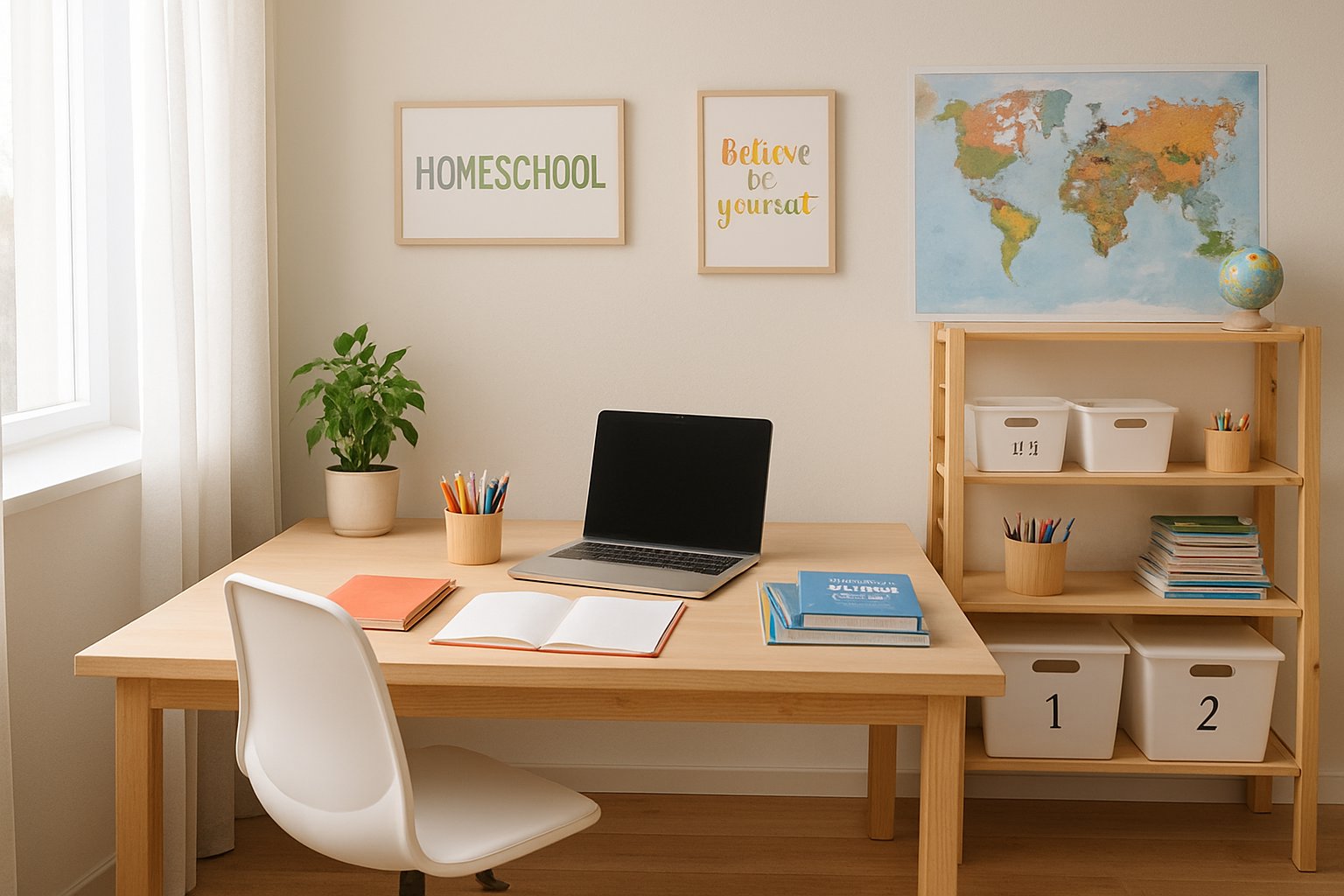
A bright and tidy homeschool study area with a desk, chair, school supplies, shelves with storage bins, and a window letting in natural light.

Different activities require different environments, and dividing your homeschool room into distinct zones helps children focus better on specific tasks. Each zone should be designed with comfort, functionality, and the child’s learning style in mind.

Setting Up a Cozy Reading Nook

A reading nook creates a special place where children can escape into books and develop a love for reading. Choose a quiet corner away from distractions and high-traffic areas.

Essential Elements:

  • Comfortable seating like bean bags, floor cushions, or a small armchair
  • Good lighting with a table lamp or floor lamp
  • Low bookshelf within arm’s reach
  • Soft blanket or throw pillows

The seating should be low to the ground so children feel cozy and secure. Add a small basket for the child’s current reads and favorite books.

Consider placing the reading nook near a window for natural light during the day. Warm lighting helps create a calm atmosphere for evening reading sessions.

Storage Solutions:

  • Wall-mounted book ledges for easy access
  • Rolling cart for library books
  • Small side table for drinks and snacks

Keep the space clutter-free but inviting. A few personal touches like stuffed animals or a special reading lamp make the space feel uniquely theirs.

Designing a Quiet Study Corner

A quiet study corner provides a distraction-free zone for focused work like writing, math, and test-taking. This area should feel calm and organized.

Position the desk to face away from busy areas of the room. Choose a spot with minimal foot traffic and visual distractions.

Key Components:

  • Properly sized desk and ergonomic chair
  • Task lighting with adjustable desk lamp
  • Organization tools like pencil holders and paper trays
  • Clock for time management

The desk surface should remain clear except for current work materials. Use drawer organizers or desktop caddies to keep supplies tidy.

Wall space above the desk works well for a bulletin board or whiteboard. Keep decorations minimal to maintain focus.

Organization Tips:

  • Label storage containers clearly
  • Use a desktop file organizer for papers
  • Keep a small trash can nearby
  • Store reference materials on a nearby shelf

The chair height should allow feet to rest flat on the floor with arms at desk level. Good posture prevents fatigue during longer study sessions.

Hands-On Activity and Art Areas

Active learning requires space to spread out materials and get messy. This zone should be practical and easy to clean while encouraging creativity.

A large table or counter provides ample workspace for science experiments, art projects, and building activities. Choose surfaces that wipe clean easily.

Essential Features:

  • Waterproof or washable table surface
  • Good ventilation for art supplies
  • Easy access to water for cleanup
  • Storage for supplies and work-in-progress

Keep frequently used materials like scissors, glue, and markers in portable caddies. Children can grab what they need and return items easily.

Wall-mounted pegboards and organizers keep tools visible and accessible. Hang baskets for different supply categories.

Storage Solutions:

  • Clear bins for easy identification
  • Vertical storage for paper and cardboard
  • Drying rack for wet artwork
  • Apron hooks for protective clothing

Floor protection like a washable rug or plastic mat makes cleanup faster. Good lighting prevents eye strain during detailed work.

Consider the child’s height when placing supplies. Lower shelves should hold everyday items while higher shelves store less frequently used materials.

Decor and Personalization for Motivation

The right decorations can transform any learning space into an inspiring environment. Visual elements like educational displays, interactive writing surfaces, and student achievement showcases create a classroom atmosphere that keeps children engaged and motivated to learn.

Decorating with Educational Posters and Motivational Quotes

Educational posters serve as constant learning reminders throughout the school day. They help reinforce important concepts like the alphabet, multiplication tables, world maps, and science charts. Children can glance at these visual aids during breaks or when they need quick reference materials.

Inspirational quotes boost children’s confidence and create a positive learning atmosphere. Simple phrases like “You can do hard things” or “Mistakes help us learn” remind students that learning takes practice. Parents can rotate quotes monthly to keep the messages fresh and relevant.

Popular Educational Poster Ideas:

  • Alphabet and number charts
  • World maps and solar system diagrams
  • Grammar rules and math formulas
  • Historical timelines
  • Science process charts

Color-coordinated posters create visual harmony in the room. Parents can choose a consistent color scheme that matches their overall room design while still providing educational value.

Utilizing Whiteboards and Chalkboard Walls

A whiteboard provides an interactive surface for daily lessons, practice problems, and creative activities. Children can work through math problems, practice spelling words, or draw diagrams to explain their thinking. The erasable surface encourages experimentation without fear of making permanent mistakes.

Chalkboard walls offer even more creative possibilities for learning and play. Parents can paint an entire wall with chalkboard paint, creating a large canvas for educational activities. Children can practice writing, solve problems, or create art during free time.

Whiteboard and Chalkboard Uses:

  • Daily lesson notes
  • Practice problems
  • Creative drawing
  • Goal tracking
  • Schedule displays

Both surfaces work well for different learning styles. Visual learners benefit from seeing concepts written out, while kinesthetic learners enjoy the physical act of writing and erasing.

Showcasing Achievements and Student Work

Displaying student work builds confidence and shows children that their efforts matter. Parents can create dedicated spaces for artwork, completed assignments, and special projects. This recognition motivates children to put effort into their work.

Art gallery walls using fabric and molding provide an organized way to showcase achievements. Parents can easily change displayed items by clipping new work to the fabric surface. This system keeps the display fresh and current.

Achievement Display Ideas:

  • Cork boards for rotating displays
  • Wire grids with clips
  • Picture ledges for 3D projects
  • Certificate frames
  • Progress charts

Creating zones for different types of work helps organize the displays. Parents might designate areas for art, writing samples, math work, and special certificates or awards.

Regular rotation keeps displays interesting and ensures all children’s work gets featured. Parents can photograph displayed work before rotating to create digital portfolios of their children’s progress throughout the year.

Organization, Routine, and Homeschool Hours

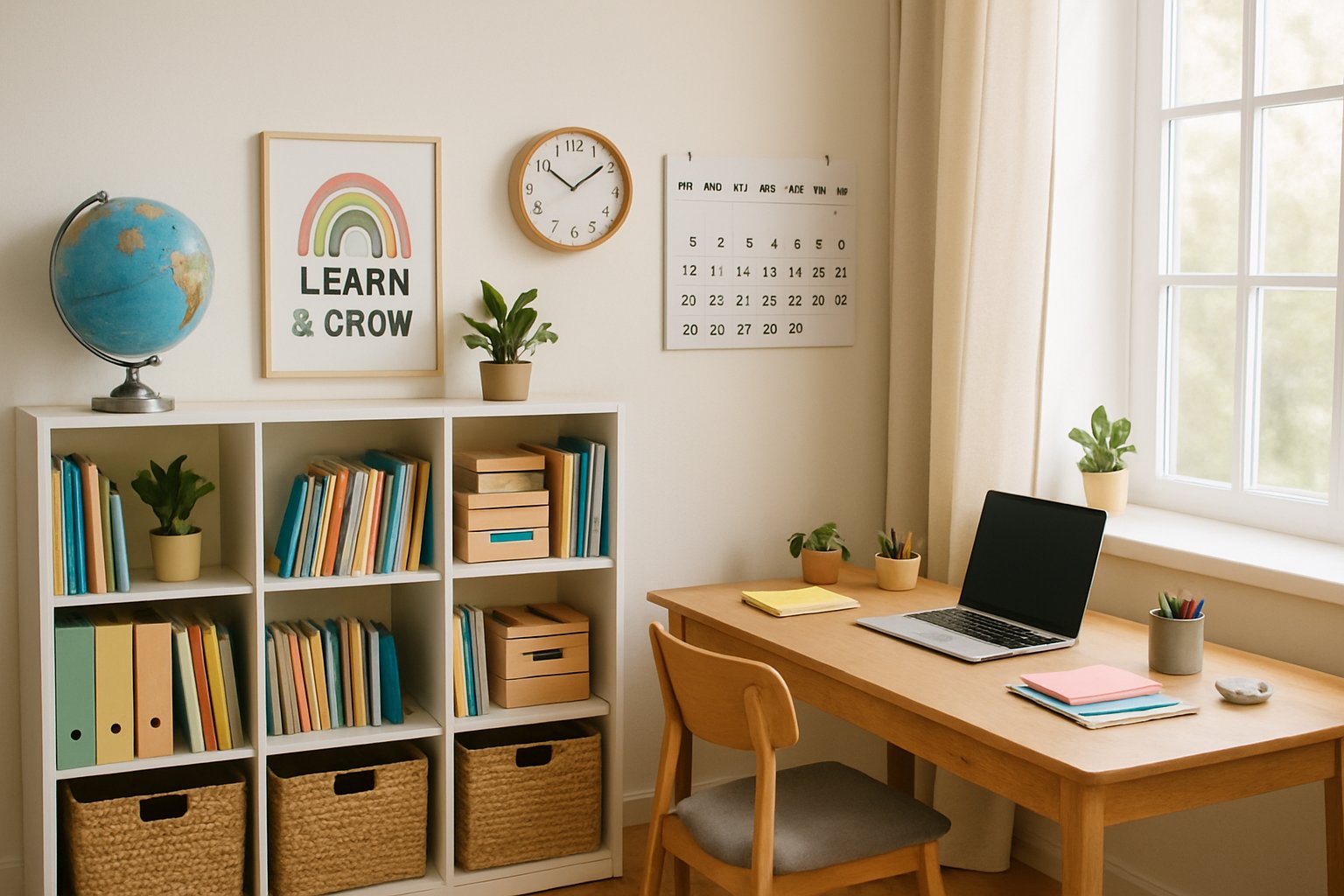
A well-organized homeschool room with a desk, bookshelves, educational materials, and natural light from a window.

Establishing a daily routine and organizing educational resources creates a peaceful learning environment that helps children focus better. Smart storage solutions and regular decluttering keep the homeschool space functional and stress-free.

Establishing a Daily Homeschool Routine

A consistent daily routine helps children know what to expect and reduces stress for parents. Most families find success with a structured schedule that includes dedicated homeschool hours for different subjects.

Morning routines work well for many families. Children often focus better in the morning when their minds are fresh. Starting with breakfast, then moving to core subjects like math and reading creates a strong foundation.

Creating a dedicated schedule helps families stay on track throughout the day. Parents can plan specific times for each subject and include breaks between lessons.

Sample daily schedule:

  • 8:00 AM – Breakfast and morning routine
  • 9:00 AM – Math lessons
  • 10:00 AM – Reading time
  • 11:00 AM – Science or social studies
  • 12:00 PM – Lunch break
  • 1:00 PM – Creative time or projects

Flexibility within the routine allows families to adjust when needed. Some days might require longer breaks or different subject orders. The key is maintaining consistent homeschool hours while adapting to each child’s needs.

Efficient Storage for Educational Resources

Smart storage keeps educational resources organized and easy to find. Rolling cart organizers work well because they can move between different learning areas as needed.

Categorizing supplies makes everything easier to locate. Parents can group similar items together in labeled bins or containers. Art supplies stay in one area while math materials have their own space.

Storage solutions that work:

  • Clear plastic bins for easy viewing
  • Label makers for quick identification
  • Drawer organizers for small items
  • Bookshelves for textbooks and workbooks
  • File folders for paperwork

Pegboard organization transforms wall space into functional storage. Parents can hang baskets, hooks, and shelves to keep frequently used items within reach.

Rotating seasonal materials prevents storage areas from becoming overcrowded. Summer science kits can be stored away during winter months. Holiday-themed books and activities only need to be accessible during specific times of year.

Digital organization matters too. Parents can create folders on their computers for lesson plans, educational websites, and online resources. This keeps important information organized and easy to access.

Maintaining a Clutter-Free Environment

Getting rid of clutter is essential for creating a productive homeschool space. Too much stuff makes it hard for children to focus and learn effectively.

Daily cleanup routines prevent clutter from building up. Children can help put away materials after each subject. This teaches responsibility while keeping the space tidy.

The one-in-one-out rule helps control the amount of educational resources in the space. When new books or supplies arrive, parents can donate or store older items that are no longer needed.

Quick decluttering checklist:

  • Remove broken or damaged items
  • Donate books that are too easy or difficult
  • Discard dried-up art supplies
  • File completed worksheets
  • Clear surfaces of unnecessary items

Weekly organization time helps maintain order in the homeschool space. Parents can spend 15-20 minutes each week sorting through papers, organizing supplies, and preparing for the following week.

Color-coded systems make it easier for children to maintain organization independently. Each child can have their own color for folders, bins, and supplies. This reduces confusion and helps everyone stay organized.

Regular evaluation of educational resources helps identify what works and what doesn’t. Parents can remove materials that aren’t being used and make room for new learning tools that better fit their children’s needs.

Frequently Asked Questions

A well-organized homeschool room with a desk, chair, bookshelves, plants, and natural light from a window.

Parents often wonder how to maximize small spaces, save money on supplies, and create functional learning areas without major renovations. These common concerns about homeschool setup have practical solutions that work for most families.

How can I set up an effective homeschool space in a small room?

A small room can work perfectly for homeschooling with smart planning. Parents should focus on vertical storage using wall-mounted shelves and hanging organizers.

Folding desks that mount to the wall save floor space when not in use. Multi-level storage carts can hold supplies for different subjects and roll away easily.

Corner spaces work well for reading nooks with floor cushions and a small bookshelf. Parents can use under-bed storage boxes to keep seasonal materials organized.

A pegboard on the wall keeps frequently used items within reach without taking up desk space. Small rooms benefit from light colors and good lighting to feel more open.

What are budget-friendly ideas for organizing a homeschool environment?

Cardboard boxes covered with contact paper make excellent storage bins for different subjects. Parents can use shoe boxes to create desk organizers for pencils and supplies.

Mason jars work well for storing art supplies like crayons, markers, and paintbrushes. Plastic containers from the dollar store can hold manipulatives and small learning materials.

Repurposing kitchen items like muffin tins for sorting activities saves money. Parents can create label makers using a simple printer and clear tape.

Thrift stores often have bookshelves, desks, and storage containers at low prices. Multifunctional spaces like dining rooms can serve double duty without extra furniture costs.

Could you suggest some DIY solutions for creating a homeschool workplace?

Parents can build simple floating shelves using brackets and wood boards from hardware stores. A large piece of plywood on top of two filing cabinets creates an affordable desk.

PVC pipes can be turned into storage systems for art supplies and rolls of paper. Corkboards made from wine corks glued together provide unique bulletin board space.

Old ladders can become bookshelves when placed horizontally between two supports. Parents can create mobile storage carts using plastic drawers and wheels from craft stores.

Fabric-covered cardboard creates soft bulletin boards for displaying work. Simple wooden crates stacked and secured make excellent cubby storage systems.

How do I integrate a functional homeschool area into my living room?

A rolling cart with supplies can move easily when the family needs the living room for other activities. Parents should choose furniture that serves multiple purposes like storage ottomans.

Designated baskets for each child’s materials keep everything organized but portable. A small bookshelf can separate the learning area from the main living space.

Lap desks work well for children who need to spread out on the floor or couch. Parents can use a room divider screen to create a semi-private study space.

Wall-mounted fold-down tables provide workspace that disappears when not needed. Storage solutions should blend with the room’s existing decor.

What are some homeschool organization hacks that can help keep things tidy?

Color-coding supplies by subject helps children find materials quickly and put them away correctly. Parents should establish a 10-minute cleanup routine at the end of each school day.

Individual supply caddies for each child prevent arguments and lost materials. Magnetic containers stick to filing cabinets and hold small items like paper clips.

A three-bin system for “to do,” “in progress,” and “completed” work keeps papers organized. Parents can use timer-based cleanup games to make tidying fun.

Weekly supply checks ensure materials get restocked before running out. Labeling systems with pictures help younger children maintain organization independently.

Can you provide tips for using IKEA furniture to design a homeschool room?

The IKEA IVAR shelving system works well because parents can adjust shelf heights as children grow. TROFAST storage units with bins keep supplies sorted by subject or child.

FLISAT children’s tables have removable tops that reveal storage compartments underneath. The RÃ…SKOG utility cart moves easily between different learning areas.

ALGOT wall storage systems maximize vertical space without taking up floor room. Parents can use SKÃ…DIS pegboards to create customized tool storage for art supplies.

HEMNES bookcases provide sturdy storage for heavy textbooks and binders. The MICKE desk series offers compact workstations that fit in small spaces well.

Filed Under: Uncategorized

Benefits of Multisensory Learning in Homeschooling: Engaging Every Learner

July 17, 2025 by Valerie Leave a Comment

What Is Multisensory Learning?

Multisensory learning engages multiple senses simultaneously to help children process and retain information more effectively. This approach combines visual, auditory, tactile, and kinesthetic elements to create richer learning experiences that accommodate different learning styles.

Definition and Core Principles

Multisensory learning is a teaching approach that integrates visual, auditory, tactile, and kinesthetic stimuli into educational activities. Instead of relying on just one sense, this method activates multiple areas of the brain at once.

The core principle centers on how the brain processes information. When children use several senses together, they create stronger neural connections. This makes learning more memorable and effective.

Key principles include:

  • Engagement of multiple senses during each lesson
  • Simultaneous activation of different brain regions
  • Reinforcement through various channels of input
  • Accommodation of diverse learning preferences

The approach recognizes that children absorb information differently. Some learn better through seeing, others through hearing, and many through touching or moving.

Types of Sensory Experiences Used in Learning

Multisensory learning utilizes four main sensory modalities to enhance educational experiences:

Sensory Type Learning Activities Examples
Visual (Sight) Charts, diagrams, colors Mind maps, flashcards, videos
Auditory (Sound) Music, rhythm, discussions Songs, rhymes, read-alouds
Tactile (Touch) Textures, materials, manipulation Sandpaper letters, clay modeling
Kinesthetic (Movement) Physical activities, gestures Acting out stories, hand motions

Visual experiences help children see information through images and text. Bright colors and organized layouts make concepts clearer.

Auditory elements include sounds, music, and verbal instructions. Children might learn math facts through songs or practice spelling with rhymes.

Tactile experiences let children feel different textures and materials. They might trace letters in sand or use textured cards for reading.

Kinesthetic activities involve whole-body movement. Children can act out historical events or use hand gestures for math operations.

Differences Between Multisensory and Single-Sense Approaches

Traditional single-sense learning typically relies on visual input like reading textbooks or auditory input like listening to lectures. Students remain passive recipients of information.

Multisensory approaches make learning more dynamic and engaging by involving students actively. Children interact with materials rather than just observing them.

Single-sense learning characteristics:

  • Uses one primary sense
  • Limited engagement methods
  • Less memory retention
  • Fewer learning style accommodations

Multi-sensory learning benefits:

  • Combines multiple senses
  • Increases active participation
  • Strengthens memory formation
  • Supports diverse learners

The difference shows up in retention rates. Children remember information better when they see, hear, touch, and move during lessons.

Single-sense methods work for some children but leave others struggling. Multisensory instruction benefits all learners, not just those with learning differences.

Key Benefits of Multisensory Learning in Homeschooling

Multisensory learning transforms how children absorb and retain information by engaging multiple senses simultaneously. This approach creates deeper neural connections, accommodates different learning preferences, and keeps students actively involved in their education.

Improved Memory Retention

Children remember information better when multiple senses are involved in the learning process. The brain creates stronger pathways when visual, auditory, and tactile experiences work together.

When a child traces letters while saying them aloud, they use touch, sight, and hearing at once. This creates multiple ways to access the same information later.

Enhanced memory retention happens because the brain encodes information through various channels. Students can recall facts through different sensory pathways if one method fails.

Memory Benefits Include:

  • Stronger recall ability
  • Multiple retrieval paths
  • Longer information retention
  • Better test performance

Parents notice their children remembering lessons weeks or months later. The sensory connections make learning stick in ways that traditional methods cannot match.

Higher Engagement and Motivation

Multisensory activities keep children actively involved in their lessons. Students become participants rather than passive listeners when they touch, move, and interact with materials.

A science lesson about plants becomes exciting when children can smell flowers, feel bark texture, and observe growth patterns. This hands-on approach makes learning feel like play.

Increased engagement happens because children use their natural curiosity. They want to explore and discover through their senses.

Engagement Factors:

  • Active participation
  • Reduced boredom
  • Natural curiosity satisfaction
  • Fun learning experiences

Children ask more questions and show greater interest in topics. They look forward to lessons that involve movement, touch, and creative activities.

Enhanced Comprehension of Concepts

Complex ideas become easier to understand when children experience them through multiple senses. Abstract concepts transform into concrete experiences that make sense.

Math becomes clearer when children use counting blocks, draw problems, and talk through solutions. Science concepts stick when students conduct experiments and observe results firsthand.

Improved understanding occurs because children connect new information to familiar sensory experiences. They build bridges between what they know and what they are learning.

Comprehension Improvements:

  • Better grasp of difficult topics
  • Concrete understanding of abstract ideas
  • Stronger foundational knowledge
  • Improved problem-solving skills

Students who struggle with traditional teaching methods often excel with multisensory approaches. They finally understand concepts that seemed impossible before.

Support for Diverse Learning Styles

Every child learns differently, and multisensory methods accommodate various preferences. Visual learners benefit from diagrams and colors, while kinesthetic learners need movement and touch.

Catering to different learning styles ensures no child gets left behind. Parents can adapt lessons to match their child’s strengths while building weaker areas.

Learning Style Support:

  • Visual learners: Charts, diagrams, colors
  • Auditory learners: Songs, discussions, verbal instruction
  • Kinesthetic learners: Movement, hands-on activities
  • Tactile learners: Textures, manipulatives, building

Multisensory instruction benefits all learners, not just those with specific needs. Children discover new ways to process information and develop stronger overall learning skills.

Parents can observe which senses their child prefers and emphasize those while gradually introducing others. This personalized approach builds confidence and success.

Creating a Multisensory Homeschooling Environment

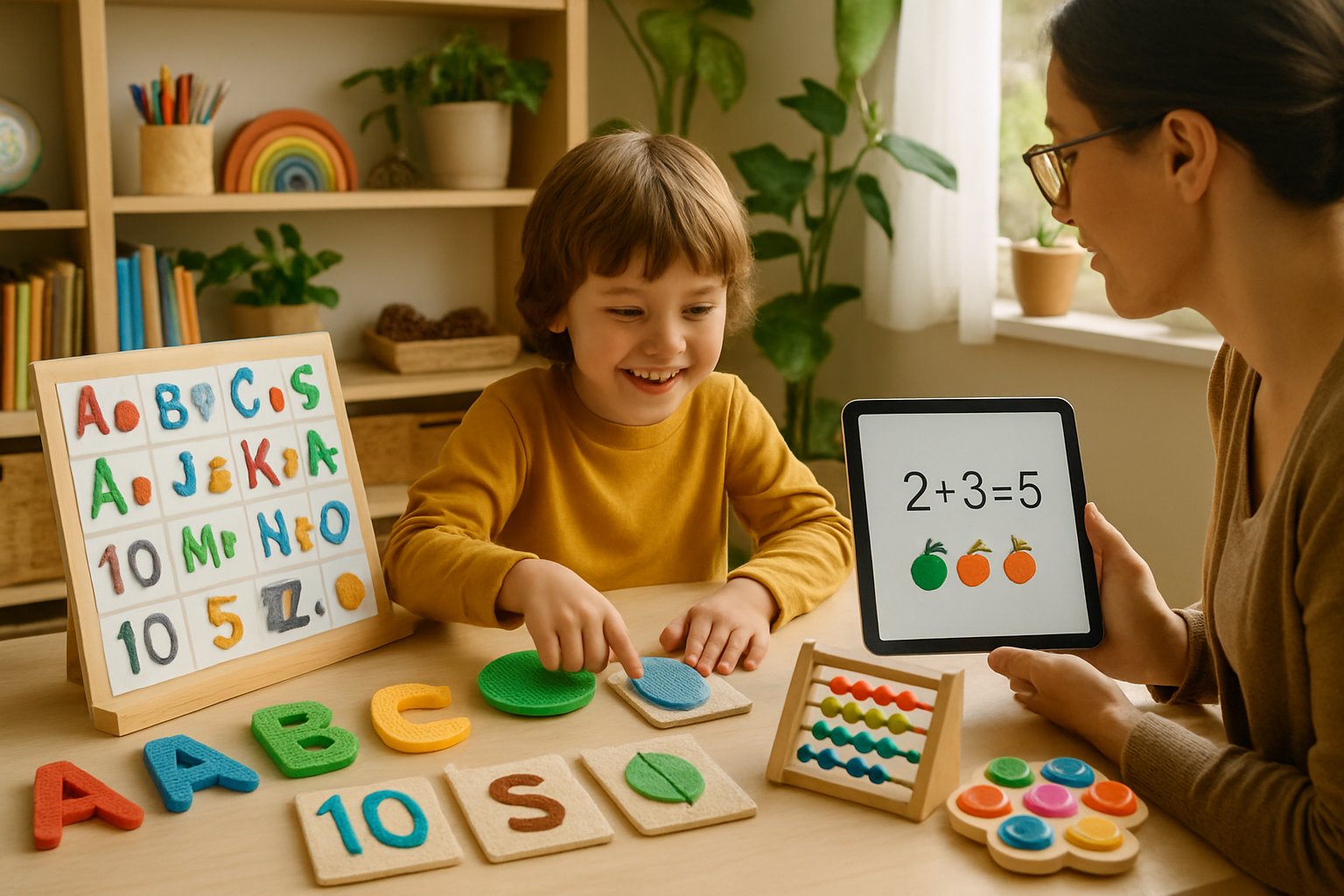
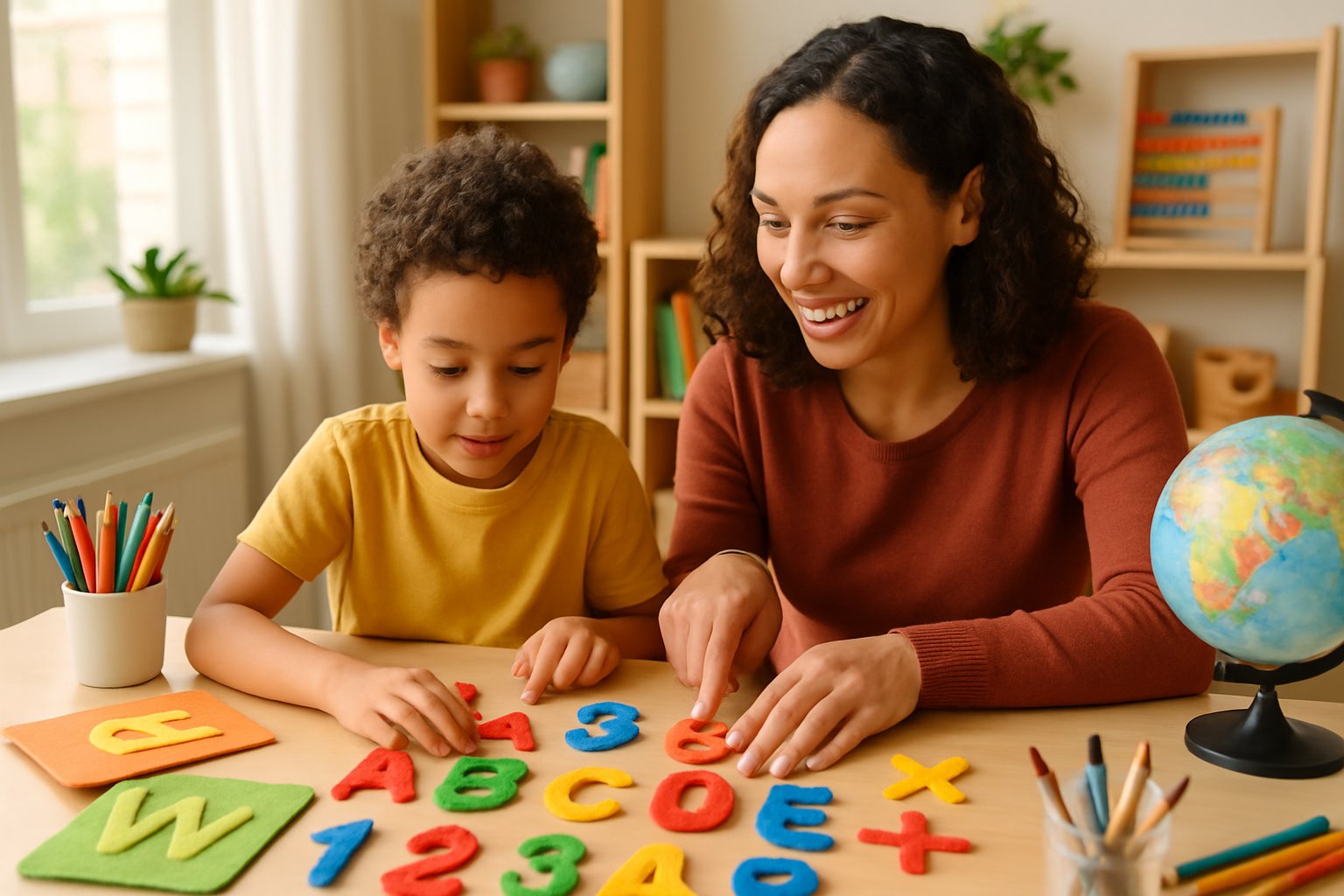
A child and an adult engaged in a homeschooling activity with colorful tactile learning materials on a table in a bright room.

Setting up the right physical space and daily structure makes multisensory learning more effective. The key is designing areas that engage different senses while keeping materials organized and distractions minimal.

Designing a Sensory-Rich Learning Space

A well-planned learning space should include different zones for various activities. Create a reading corner with soft textures like cushions and blankets. Add a hands-on work area with easy-to-clean surfaces for messy projects.

Include sensory tools in each zone. Place tactile materials like sandpaper letters, textured fabrics, and manipulatives within easy reach. Add visual elements such as colorful charts, maps, and student artwork on the walls.

Consider lighting and sound carefully. Natural light works best, but adjustable lamps help during different activities. Keep noise levels manageable with soft background music or white noise machines when needed.

Storage should be both functional and accessible. Use clear bins and labels so children can find materials independently. Creating a multisensory learning environment helps children learn through play and experience.

Structuring the Daily Routine for Maximum Impact

Plan lessons that rotate between different senses throughout the day. Start with movement activities to wake up the body and brain. Follow with visual learning, then tactile activities, and include auditory elements.

Build in regular brain breaks every 20-30 minutes. These might include jumping jacks, stretching, or simple yoga poses. Movement helps reset attention and prepares children for the next learning segment.

Schedule demanding subjects when energy levels are highest. Most children focus best in the morning, so tackle challenging concepts then. Save more relaxed, creative activities for later in the day.

Include time for both structured lessons and free exploration. Multisensory homeschooling approaches work well when parents adapt lessons to their child’s strengths and create engaging experiences.

Reducing Distractions and Organizing Materials

Keep workspaces clean and clutter-free. Too many visual elements can overwhelm children and make focusing difficult. Store materials in closed containers when not in use.

Create designated spaces for different subjects. Math materials stay in one area, while art supplies have their own zone. This organization helps children transition between activities more smoothly.

Use timers and visual schedules to help children understand routines. Post simple charts showing the day’s activities with pictures and words. This reduces anxiety and helps children prepare for transitions.

Minimize electronic distractions during focused learning time. Put away phones, tablets, and other devices unless they’re part of the lesson. Organizing materials effectively helps parents adapt lessons to their child’s strengths and create memorable learning experiences.

Effective Multisensory Techniques and Activities

Successful homeschooling depends on using teaching methods that engage multiple senses at once. The most effective approaches combine physical movement, hands-on materials, and technology to create rich learning experiences.

Hands-On Learning Methods

Hands-on learning transforms abstract concepts into concrete experiences children can touch and manipulate. This approach works especially well for subjects like math and science where students need to understand complex ideas.

Parents can use everyday items to create powerful learning tools. Building blocks help children learn fractions by physically dividing wholes into parts. Play dough makes letter formation easier for young writers to master.

Science experiments provide excellent hands-on activities that engage multiple senses. Growing plants teaches biology while children observe, measure, and record changes over time.

Art projects connect learning across subjects. Students can create historical timelines with drawings, make maps from clay, or build models of molecules using marshmallows and toothpicks.

Cooking activities teach math skills through measuring ingredients and following step-by-step instructions. Children learn fractions while doubling recipes or converting measurements.

Kinesthetic Activities for Active Learners

A kinesthetic learner needs to move their body to process information effectively. These students learn best when lessons include physical movement and activity.

Movement-based spelling activities help children remember difficult words. Students can jump while spelling aloud, write letters in sand, or form letters with their whole body.

Math becomes more engaging when children use their bodies to solve problems. They can act out word problems, use hopscotch to practice skip counting, or create human number lines.

History lessons come alive through role-playing activities. Students can dress up as historical figures, recreate important events, or build models of ancient civilizations.

Kinesthetic learning works well for teaching foreign languages. Children can act out vocabulary words, play movement games, or create dances that match new phrases.

Physical activity breaks between lessons help all students focus better. Simple stretching, yoga poses, or dancing can reset attention spans.

Incorporating Technology and Audio-Visual Tools

Technology adds visual and auditory elements that enhance traditional learning methods. Educational apps, videos, and interactive programs create engaging experiences for digital-native children.

Educational videos help explain complex topics through animation and visual storytelling. Students can watch historical documentaries, science experiments, or math concept explanations.

Interactive software allows children to manipulate objects on screen while learning. They can drag puzzle pieces, build virtual structures, or conduct digital experiments safely.

Audio tools support different learning styles and needs. Audiobooks help struggling readers access grade-level content. Background music can improve focus during independent work time.

Visual aids and interactive activities help teach subjects that benefit from seeing processes in action. Geography becomes clearer with interactive maps and virtual field trips.

Recording devices let children create their own educational content. They can make podcasts about their research, record themselves reading stories, or create video presentations about their projects.

Digital art programs combine creativity with technology skills. Students can design book covers, create infographics, or make animated stories that demonstrate their learning.

Promoting Inclusive Learning Through Multisensory Approaches

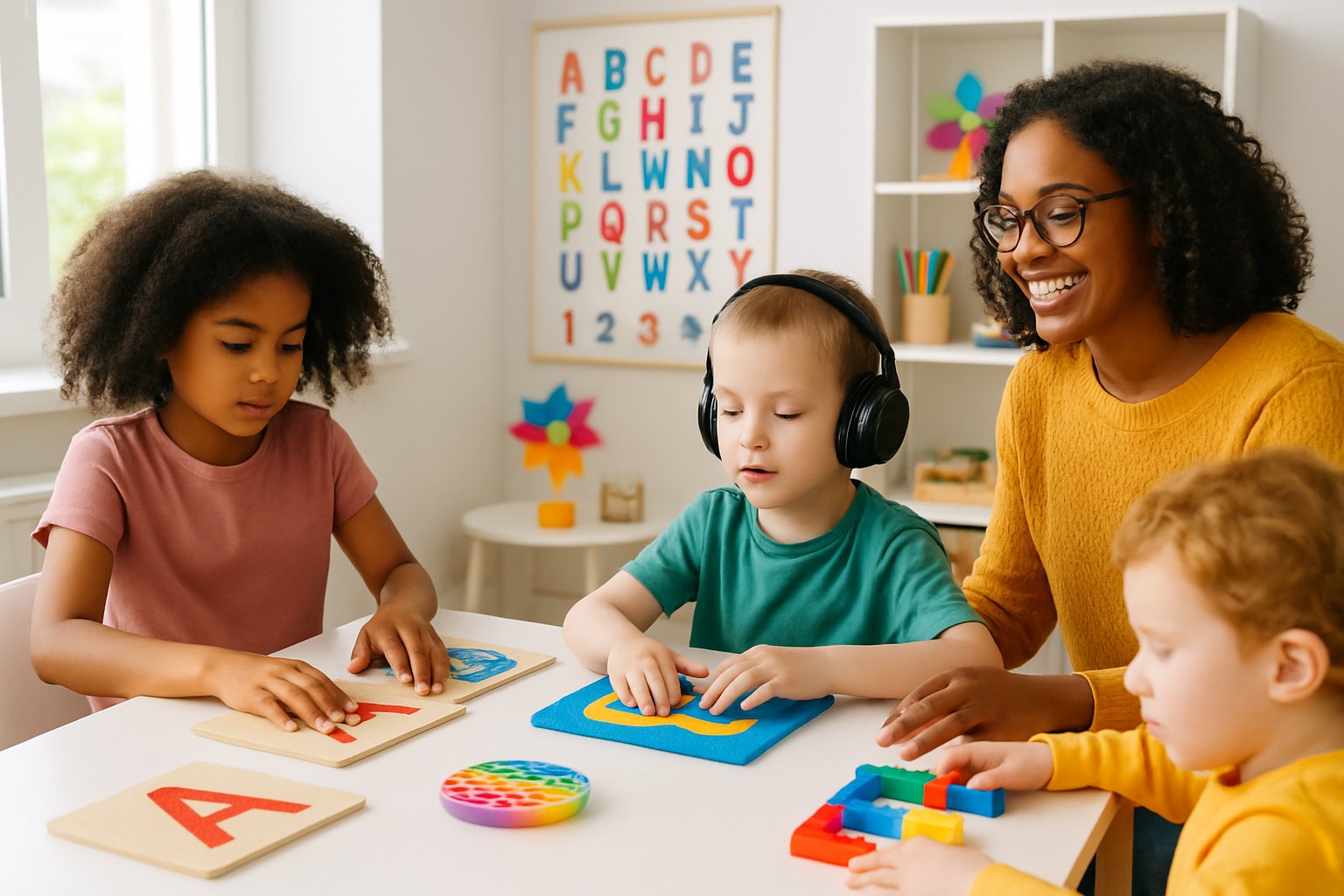
Children of diverse backgrounds engaged in hands-on learning activities with an adult in a bright homeschooling setting.

Multisensory learning methods create opportunities for all children to succeed by engaging different learning styles simultaneously. These approaches particularly benefit kinesthetic and visual learners while providing essential support for students with learning differences.

Addressing the Needs of Kinesthetic and Visual Learners

Kinesthetic learners thrive when they can move and touch during lessons. They need hands-on activities to understand concepts fully.

Movement-Based Learning Activities:

  • Building math problems with blocks or manipulatives
  • Acting out historical events or story scenes
  • Creating science experiments with physical materials
  • Using gesture and body movement to remember facts

Visual learners process information best through images, colors, and spatial organization. They benefit from seeing concepts presented in graphic formats.

Visual Learning Strategies:

  • Mind maps and graphic organizers for complex topics
  • Colorful charts and diagrams for science concepts
  • Timeline visuals for history lessons
  • Art projects that connect to academic subjects

Multisensory learning approaches integrate visual, auditory, kinesthetic, and tactile sensory modalities into teaching methods. This creates a dynamic learning environment that meets individual needs.

Parents can combine these approaches during lessons. For example, a child might read about plants while touching different leaf textures and drawing the parts of a flower.

Supporting Learners With Unique Educational Challenges

Children with learning differences often struggle in traditional educational settings. Multisensory learning is a popular approach to teaching for those with learning differences such as ADHD, dyslexia, or other learning disabilities.

Benefits for Special Needs Learners:

  • Reduces reliance on single learning channels
  • Provides multiple ways to access information
  • Increases engagement and attention span
  • Builds confidence through varied success opportunities

Multi-sensory teaching caters to students with different learning abilities and disabilities, creating a more inclusive and supportive learning environment.

Children with ADHD benefit from movement breaks and tactile activities. Those with dyslexia can use letter tiles and textured materials to learn reading skills.

Practical Adaptations:

  • Use larger fonts and high-contrast colors for visual processing issues
  • Provide fidget tools during listening activities
  • Break lessons into shorter segments with movement breaks
  • Offer choices in how children demonstrate their learning

These methods ensure every child can participate meaningfully in their education.

Frequently Asked Questions

A parent and child engaged in a hands-on learning activity with colorful educational materials in a bright homeschooling room.

Multisensory learning creates stronger memory pathways by engaging multiple senses simultaneously, making it especially effective for children with learning differences like dyslexia. Simple activities like textured letter tracing and cooking measurements can transform any home into a rich learning environment that supports cognitive growth.

How can multisensory learning enhance a child’s retention and recall abilities?

Multisensory learning significantly enhances recall and retrieval abilities by creating multiple pathways to the same information. When children use sight, sound, and touch together, they build stronger memory connections in their brains.

Each sense creates its own memory trace. A child learning spelling by writing letters in sand while saying them aloud has three different ways to remember that word later.

The brain can access information through any of these pathways. If one memory route gets blocked, the child can still retrieve the information through another sense.

This approach works especially well for complex subjects. Math facts become easier to remember when children count with manipulatives, see visual patterns, and hear rhythmic chants.

In what ways does multisensory learning support children with dyslexia?

Children with dyslexia often struggle with traditional reading methods that rely heavily on sight. Multisensory approaches give them alternative ways to process letters and sounds.

Tracing letters while saying their sounds helps dyslexic children connect visual symbols with their meanings. This technique strengthens the neural pathways that traditional reading methods might not reach.

Many dyslexic learners are strong in areas like spatial reasoning or hands-on learning. Multisensory methods tap into these strengths while building reading skills.

The simultaneous use of multiple senses helps compensate for weaker processing areas. When one sense provides unclear information, other senses can fill in the gaps.

What activities can parents incorporate to create a multisensory learning environment at home?

Parents can use everyday activities like cooking, gardening, or crafting to involve all of their child’s senses. These natural learning opportunities require no special materials or training.

Cooking teaches math through measuring, science through chemical reactions, and reading through following recipes. Children see, smell, taste, and touch their learning.

Writing letters in different textures like salt, sand, or finger paint engages touch while building literacy skills. The tactile experience helps cement letter formation in memory.

Creating sensory bins with themed materials supports various subjects. A dinosaur bin with fossils, books, and play dough combines history, science, and creative expression.

Nature walks provide rich sensory experiences for any subject. Children can collect leaves for math sorting, observe weather patterns for science, or write poetry about their discoveries.

How does integrating multisensory methods benefit a homeschooled child’s overall cognitive development?

Multisensory learning enhances problem-solving skills by teaching children to approach challenges from multiple angles. This flexibility in thinking serves them well beyond academic subjects.

The approach strengthens neural connections across different brain regions. When children use multiple senses together, they build more robust thinking patterns.

Executive function skills improve through multisensory activities. Children learn to plan, organize, and monitor their learning when they engage with materials in complex ways.

Creativity flourishes when children have multiple ways to express their understanding. They might draw their ideas, act them out, or build models to show what they know.

Can multisensory learning techniques improve a child’s reading and writing skills, and if so, how?

Multisensory techniques directly address the multiple skills needed for reading success. Children must connect visual symbols, sounds, and meanings simultaneously.

Letter formation improves when children trace letters in sand or air while saying their sounds. This engages muscle memory alongside visual and auditory processing.

Phonics instruction becomes more effective with tactile elements. Children can feel vibrations in their throat for voiced sounds or use hand gestures for different letter combinations.

Writing skills develop through varied sensory experiences. Children might spell words with magnetic letters, type on keyboards, or form letters with clay before writing on paper.

Reading comprehension grows when children act out stories or create visual representations of what they read. These activities help them connect abstract text to concrete experiences.

What role does multisensory learning play in the development of motor skills for homeschooled children?

Multisensory activities naturally include movement and manipulation that build both fine and gross motor skills. Children strengthen their muscles while learning academic content.

Fine motor skills develop through activities like cutting, pasting, and manipulating small objects during learning games. These movements prepare children for writing and other detailed tasks.

Gross motor skills improve through learning activities that involve whole-body movement. Children might jump while skip-counting or act out historical events.

Hand-eye coordination strengthens through multisensory activities like building with blocks or threading beads for math patterns. These skills transfer to writing and other academic tasks.

The connection between movement and learning helps children who need to move to concentrate. Physical activity can actually improve focus and attention for many learners.

Filed Under: Uncategorized

How to Choose the Right Homeschool Curriculum for Your Child: A Practical Guide

July 17, 2025 by Valerie Leave a Comment

Identify Your Child’s Learning Style

Understanding how your child processes information best will guide you toward the most effective curriculum choices. Each child has unique learning preferences that affect how they absorb and retain new concepts.

Visual, Auditory, and Kinesthetic Learners

Learning styles fall into three main categories that shape how children understand new information. Visual learners benefit from diagrams and charts, while auditory learners excel with lectures and discussions.

Visual learners thrive when they can see information presented clearly. They prefer colorful charts, diagrams, videos, and written instructions. These children often take detailed notes and create visual organizers to help them study.

Auditory learners learn best through listening and speaking. They enjoy discussions, audiobooks, music, and verbal explanations. These students often read aloud to themselves and benefit from talking through problems.

Kinesthetic learners need hands-on activities and movement to understand concepts. They prefer experiments, building projects, and physical manipulation of materials. These children often fidget when sitting still for long periods.

Recognizing Your Child’s Learning Preferences

Observing your child’s natural behaviors reveals their preferred learning style. Watch how they approach new tasks and what methods help them remember information best.

Notice if your child draws pictures while explaining ideas or creates colorful study materials. Visual learners often organize their workspace carefully and prefer clean, uncluttered environments.

Listen for children who talk themselves through problems or ask many questions during lessons. Auditory learners frequently hum, sing, or make sound effects while working.

Watch for children who use their hands while talking or prefer to move around during lessons. Kinesthetic learners often tap pencils, bounce their legs, or need frequent breaks to stay focused.

Learning style quizzes can help identify preferences, but observation provides the most accurate picture of how your child learns.

Learning Styles and Curriculum Fit

Matching curriculum format to your child’s learning style improves engagement and comprehension. Understanding learning styles helps narrow down curriculum options for better educational outcomes.

Choose textbooks with plenty of diagrams, maps, and illustrations for visual learners. Online programs with interactive graphics and video lessons also work well for these students.

Select curricula that include audio components, discussion guides, and read-aloud materials for auditory learners. Programs with parent-child interaction and verbal instruction suit these children perfectly.

Pick hands-on curricula with experiments, crafts, and manipulatives for kinesthetic learners. Unit studies that combine multiple subjects through projects often appeal to these active students.

Remember that many children show traits from multiple learning styles. A flexible curriculum that incorporates visual, auditory, and kinesthetic elements can accommodate mixed learning preferences effectively.

Understand Your Homeschooling Approach

A parent and child working together at a study table with books and a laptop in a bright home learning space.

Different homeschooling methods work better for different families, and parents need to match their teaching style with their child’s learning needs. Many families find success by combining multiple approaches rather than sticking to just one method.

Homeschooling Methods Explained

Several popular homeschool methods offer different ways to structure learning. The traditional approach uses textbooks and structured lessons similar to public schools.

Charlotte Mason focuses on living books, nature study, and short lessons. Children read quality literature instead of dry textbooks.

Classical education follows three stages: grammar, logic, and rhetoric. Students learn facts first, then how to think about them, and finally how to express ideas.

Unit studies combine multiple subjects around one topic. A study of ancient Egypt might include history, geography, art, and math all together.

Unschooling lets children learn naturally through their interests. Parents provide resources but children choose what and when to study.

The Montessori method uses hands-on materials and child-led activities. Children work at their own pace in a prepared environment.

Choosing a Teaching Style

Parents should consider their own strengths when picking a teaching style. Some parents love planning detailed lessons while others prefer flexibility.

Structured teachers like clear schedules and step-by-step guides. They often choose complete curriculum packages with teacher manuals.

Relaxed teachers prefer loose schedules and informal learning. They might use unit studies or literature-based approaches.

Hands-on teachers enjoy crafts, experiments, and activities. They often choose curricula with lots of projects and manipulatives.

Consider your child’s personality too. Some children need structure while others thrive with freedom. A shy child might do better with gentle approaches like Charlotte Mason.

Think about your family’s daily routine. Working parents might need more independent curricula while stay-at-home parents can use hands-on methods.

Blending Methods: The Eclectic Approach

The eclectic approach combines different homeschooling methods to fit each child’s needs. Most homeschooling families use this flexible style.

Parents might use traditional math textbooks while choosing living books for history. They could add unit studies for science and unschooling for art.

This approach lets families change methods as children grow. A young child might need hands-on activities while an older child prefers independent reading.

Benefits of blending methods:

  • Matches different learning styles
  • Keeps learning fresh and interesting
  • Adapts to family changes
  • Uses the best parts of each method

Start with one main method and add pieces from others. A family might follow Charlotte Mason but add some traditional workbooks for math practice.

Educational philosophies can guide these choices. Parents should think about their goals before mixing different approaches.

Define Educational Goals and Curriculum Standards

A parent and child working together at a table with books and a tablet in a bright home study area.

Parents need to establish clear educational goals and understand curriculum standards before selecting materials. This involves creating a family vision for learning, understanding state requirements for core subjects, and aligning curriculum choices with specific academic objectives.

Setting Your Family’s Educational Vision

Creating a family educational vision starts with identifying what parents want their children to achieve. Some families prioritize strong academic performance in traditional subjects. Others focus on developing creativity and critical thinking skills.

Parents should consider their values when setting educational goals. Religious families might want faith-based learning materials. Families who value environmental awareness may seek curricula that emphasize sustainability and nature studies.

The vision should include both short-term and long-term objectives. Short-term goals might focus on mastering grade-level math skills. Long-term goals could include preparing for college or developing specific career interests.

Parents benefit from writing down their educational vision. This document becomes a reference point when choosing homeschool curriculum options. It helps families stay focused on what matters most to them.

Reviewing Core Subjects and State Requirements

Most states require homeschooled children to study specific core subjects. These typically include math, English language arts, science, and social studies. Some states also mandate health education and physical education.

Parents should research their state’s homeschooling laws before choosing materials. Requirements vary significantly between states. Some states have strict curriculum standards while others offer more flexibility.

Common Core Subject Requirements:

  • Mathematics: Arithmetic, algebra, geometry
  • English Language Arts: Reading, writing, grammar, literature
  • Science: Biology, chemistry, physics, earth science
  • Social Studies: History, geography, civics, economics

Many states require specific grade levels for certain subjects. For example, some states mandate that high school students complete four years of English and three years of math.

Understanding state regulations helps parents ensure their curriculum meets legal requirements. This prevents potential issues with compliance and record-keeping.

Tailoring Curriculum to Academic Objectives

Once parents understand requirements and family goals, they can match curriculum to specific academic objectives. A child preparing for advanced mathematics might need a rigorous algebra program. A student interested in writing may benefit from literature-rich curricula.

Parents should consider their child’s current skill level when setting objectives. Some children work above grade level in certain subjects. Others need additional support in specific areas.

Academic objectives should be measurable and realistic. Instead of “improve reading skills,” parents might set “read 20 chapter books this year” or “increase reading comprehension scores by 15%.”

Different curriculum approaches serve different academic objectives. Traditional textbook programs work well for systematic skill building. Unit studies help children make connections between subjects.

Parents can adjust objectives throughout the school year. If a child masters material quickly, they can accelerate the pace. If concepts prove challenging, they can spend more time on fundamentals.

Explore Homeschool Curriculum Options

Parents have many curriculum choices available, from traditional textbooks to online programs and free resources. Understanding the different types, comparing providers, and reading reviews helps families make informed decisions.

Types of Homeschool Curriculum

Traditional curriculum follows a structured approach with textbooks and workbooks. Students complete lessons in order and take regular tests. This method works well for families who want clear daily plans.

Unit studies combine multiple subjects around one topic. A study about dinosaurs might include science, history, and art lessons. Children learn connections between subjects naturally.

Online curriculum provides interactive lessons through computers or tablets. Students watch videos, complete digital activities, and take online quizzes. Many programs track progress automatically.

Living books curriculum uses real stories and quality literature instead of textbooks. Children read biographies, historical fiction, and nature books to learn subjects.

Charlotte Mason method emphasizes short lessons, nature study, and good books. Students keep journals and spend time outdoors as part of learning.

Comparing Curriculum Providers

Secular providers focus on academic content without religious elements. They offer math, science, and language arts programs for all grade levels.

Religious providers include faith-based content in their materials. Christian curricula often connect Bible stories to history and science lessons.

Complete programs provide all subjects in one package. Families receive everything needed for the school year including teacher guides and student materials.

Individual subject providers specialize in one area like math or science. Parents can mix different companies to create custom learning plans.

Popular curriculum providers include Time4Learning, Abeka, and Saxon Math. Each company has different teaching styles and price points.

Free and Online Resources

Khan Academy offers free math, science, and other subjects for all ages. Students watch short videos and practice skills with immediate feedback.

Homeschool.com provides free worksheets, lesson plans, and educational games. Parents can download materials for multiple grade levels and subjects.

Library resources include books, audiobooks, and educational DVDs. Many libraries offer homeschool programs and group activities.

YouTube channels teach everything from foreign languages to art techniques. Parents should preview content to ensure it matches their values and standards.

Government websites provide free curriculum materials. The Smithsonian and NASA offer lesson plans and virtual field trips.

Evaluating Curriculum Reviews

Parent reviews share real experiences using different programs. They discuss what worked well and what challenges families faced during the school year.

Curriculum reviews from homeschool websites provide detailed breakdowns of content and teaching methods. Professional reviewers test materials with actual students.

Sample lessons let families try programs before buying. Most companies offer free trials or money-back guarantees for new customers.

Homeschool conventions allow parents to see materials in person. Vendors demonstrate programs and answer questions about their curriculum.

Online forums connect families using similar programs. Parents share tips, ask questions, and get support from experienced homeschoolers.

Make the Final Curriculum Choice

After researching options and understanding your child’s needs, it’s time to make your final curriculum decision by conducting a thorough search, setting a realistic budget, testing materials before committing, and planning enriching activities beyond textbooks.

Conducting a Curriculum Search

Parents should start their curriculum search by creating a list of must-have features for their child’s learning needs. This includes grade level, subject areas, learning style compatibility, and any special requirements.

Research Methods:

  • Read reviews from other homeschooling families
  • Join online homeschool forums and Facebook groups
  • Attend homeschool conventions and curriculum fairs
  • Ask for recommendations from local homeschool co-ops

Many families find success using curriculum selection guides that help narrow down options based on specific criteria. These tools save time and prevent overwhelm during the decision process.

Key Questions to Ask:

  • Does this curriculum match my child’s learning style?
  • Will it meet state requirements?
  • How much parent involvement is needed?
  • Are there good support resources available?

Parents should also consider the publisher’s reputation and how long they’ve been in business. Established companies often provide better customer support and regular updates to their materials.

Budgeting and Affordability

Setting a realistic budget helps families avoid overspending while still getting quality educational materials. Most homeschooling families spend between $300-$1,500 per child annually on curriculum.

Budget-Friendly Options:

  • Used curriculum from other families
  • Digital downloads and online programs
  • Library resources and free materials
  • Curriculum rental services

Parents can save money by purchasing core subjects first and adding electives later. Many families start with math, language arts, and science before expanding to other subjects.

Cost Comparison Strategy:

Option Average Cost Pros Cons
New Complete Curriculum $500-$1,200 Everything included Expensive upfront
Used Materials $150-$400 Significant savings May be outdated
Online Programs $200-$800 Interactive features Requires internet

Some budget-conscious families combine free resources with a few purchased materials to create an affordable yet effective education plan.

Testing Samples and Adapting Your Curriculum

Smart parents test curriculum samples before making expensive purchases. Most publishers offer free sample lessons or trial periods that let families evaluate materials risk-free.

Sample Testing Process:

  1. Download free samples from 2-3 publishers
  2. Try lessons with your child for one week
  3. Observe their engagement and understanding
  4. Note any frustration or confusion
  5. Compare how well each program fits

Children’s reactions during sample lessons provide valuable insights into what will work long-term. Parents should watch for signs of excitement, boredom, or difficulty with the material.

Adaptation Strategies:

  • Modify lessons to match your child’s pace
  • Add extra practice for challenging concepts
  • Skip material your child already knows
  • Supplement with additional resources as needed

Successful homeschooling families understand that no curriculum is perfect out of the box. They’re willing to make adjustments and changes to better serve their child’s unique needs and interests.

Incorporating Field Trips and Hands-On Learning

Field trips and hands-on activities make learning more engaging and memorable for children. These experiences should complement the chosen curriculum and bring textbook lessons to life.

Popular Field Trip Ideas:

  • Museums and science centers
  • Historical sites and landmarks
  • Nature centers and parks
  • Local businesses and farms
  • Theater performances and concerts

Parents can plan field trips that align with current lessons. For example, visiting a pioneer village while studying American history or exploring a nature preserve during a science unit about ecosystems.

Hands-On Learning Activities:

  • Science experiments and demonstrations
  • Art projects related to history lessons
  • Cooking to teach math and cultural studies
  • Building projects for engineering concepts
  • Gardening to learn about plant life cycles

Many homeschooling families organize group field trips with other families to reduce costs and increase social interaction. These shared experiences create lasting memories while reinforcing educational concepts.

Planning Tips:

  • Schedule field trips during less crowded weekdays
  • Contact venues about homeschool group discounts
  • Prepare children with background information beforehand
  • Follow up with related activities or discussions at home

The combination of quality curriculum and enriching experiences creates a well-rounded education that goes beyond traditional classroom learning.

Frequently Asked Questions

A family gathered around a table with educational materials, helping a child choose learning resources in a home setting.

Parents often have specific questions about curriculum selection, from evaluating quality to finding free resources. These common concerns cover age-appropriate choices, learning style alignment, and practical steps for getting started with homeschooling.

What factors should I consider when selecting a homeschool curriculum for different age groups?

Elementary-aged children need hands-on activities and visual learning tools. Their curriculum should include short lessons that match their attention spans.

Middle school students benefit from more structured content that builds critical thinking skills. They can handle longer lessons and more independent work.

High school students require college-prep materials and specialized courses. Parents should look for curricula that offer advanced subjects and standardized test preparation.

Learning styles play a crucial role in curriculum selection for all ages. Visual learners need pictures and videos, while hands-on learners do better with experiments and activities.

How can I evaluate the quality and effectiveness of a homeschool curriculum before purchasing?

Parents should read sample lessons and review the scope and sequence. This shows how topics build on each other throughout the year.

Teacher guides reveal how much support the curriculum provides. Some programs offer detailed instructions while others expect parents to create their own lessons.

Student samples help parents see the actual workbook pages and activities. This gives a clear picture of what children will be doing daily.

Free trial periods allow families to test the curriculum before buying. Many companies offer 30-day money-back guarantees.

What are some recommended resources to find the best free homeschooling materials?

Khan Academy offers free video lessons for math and science subjects. The platform covers elementary through high school levels.

Library websites provide access to educational databases and online courses. Many libraries offer free access to learning platforms that normally cost money.

Government websites like NASA and the Smithsonian have free educational resources. These sites offer lesson plans and activities for various subjects.

YouTube channels created by teachers provide free instructional videos. Parents should preview content to ensure it matches their educational goals.

Can you suggest strategies for choosing a homeschool curriculum that aligns with my child’s learning style?

Visual learners need pictures and videos to understand new concepts. They benefit from colorful textbooks and educational software.

Auditory learners do best with recorded lessons and discussion-based learning. They need curricula that include audio components and verbal explanations.

Kinesthetic learners require hands-on activities and movement. They need programs with experiments, crafts, and physical activities.

Reading and writing learners excel with text-based materials. They prefer traditional textbooks and written assignments over multimedia content.

Where can I find reviews and comparisons of top homeschool curriculums, including secular and religious options?

Homeschool review websites feature detailed curriculum comparisons. These sites include ratings from actual homeschool families who have used the programs.

Facebook groups dedicated to homeschooling share real experiences with different curricula. Parents can ask specific questions and get honest feedback.

Homeschool conventions allow families to see curriculum samples in person. Vendors demonstrate their programs and answer questions directly.

Educational blogs by experienced homeschoolers provide detailed reviews of both secular and religious options. These reviews often include pros and cons of each program.

What is the process for getting started with homeschooling once we’ve chosen a curriculum?

Parents must first check their state’s homeschool laws and requirements. Some states require notification while others need detailed record-keeping.

Setting up a dedicated learning space helps create structure. This doesn’t need to be a separate room but should be organized and distraction-free.

Creating a daily schedule helps families stay on track. The schedule should include breaks and time for different subjects.

Keeping records of attendance and completed work is important for legal compliance. Many states require annual assessments or portfolio reviews.

Filed Under: Uncategorized

Field Trips and Experiential Learning Ideas for Homeschoolers: Inspiring Places to Learn Beyond the Classroom

July 17, 2025 by Valerie Leave a Comment

Best Field Trip Destinations for Homeschoolers

A group of children and their teacher exploring a botanical garden, examining plants and taking notes during an outdoor educational field trip.

Homeschoolers can explore a wide variety of educational destinations that offer hands-on learning experiences. From interactive science museums and wildlife encounters to peaceful nature centers and working farms, these destinations provide real-world learning opportunities that bring textbook concepts to life.

Museums for History and Science

Art museums and science centers offer some of the most engaging educational experiences for homeschoolers. These destinations provide interactive exhibits that make learning memorable and fun.

Science museums feature hands-on experiments and demonstrations. Children can explore physics through interactive displays, learn about the human body through anatomical models, and discover chemistry through safe experiments. Many science centers offer special programs designed specifically for homeschooling families.

Art museums help students understand different cultures and historical periods. They can see famous paintings up close, learn about various art techniques, and participate in guided tours. Many museums provide educational worksheets and activities for children.

Popular museum features include:

  • Interactive science experiments
  • Historical artifacts and displays
  • Art workshops and classes
  • Educational programs for families
  • Self-guided tour options

Most museums offer group discounts for homeschooling families. Some provide special homeschool days with reduced admission fees and extended hours.

Zoos, Aquariums, and Animal Encounters

Zoos and aquariums provide excellent opportunities to study biology, animal behavior, and conservation. These destinations offer up-close encounters with animals from around the world.

Aquariums showcase marine life and underwater ecosystems. Students can observe fish behavior, learn about ocean conservation, and understand aquatic food chains. Many aquariums feature touch tanks where children can safely interact with sea creatures.

Animal shelters offer a different type of learning experience. Children learn about animal care, responsibility, and community service. They can volunteer to help with daily tasks and understand the importance of animal welfare.

Fish hatcheries demonstrate aquaculture and conservation efforts. Students observe the fish breeding process, learn about water quality, and understand how humans help maintain fish populations in rivers and lakes.

Animal encounter benefits:

  • Observe natural behaviors
  • Learn about different habitats
  • Understand conservation efforts
  • Develop empathy for animals
  • Practice scientific observation skills

Exploring Parks and Nature Centers

National parks and state parks provide outdoor classrooms for environmental education. These destinations offer hiking trails, wildlife viewing, and geological learning opportunities.

Nature centers feature native plants and animals in their natural habitats. Children can participate in guided nature walks, bird watching activities, and seasonal programs. Many centers offer junior naturalist programs designed for homeschooling families.

Botanical gardens showcase plant diversity and gardening techniques. Students learn about plant life cycles, photosynthesis, and the relationship between plants and their environment. These gardens often feature themed sections like desert plants, tropical environments, or native species.

Nature learning activities include:

  • Wildlife identification
  • Plant and tree studies
  • Geology and rock formation
  • Weather and climate observation
  • Environmental conservation projects

State parks often provide educational programs about local history and ecology. Rangers lead guided tours and offer hands-on activities that connect children with the natural world.

Local Farms and Community Gardens

Local farms offer authentic agricultural experiences that teach children about food production and rural life. Students can see how crops grow, learn about animal husbandry, and understand the farm-to-table process.

Community gardens provide hands-on gardening experience in urban settings. Children learn to plant seeds, tend to growing plants, and harvest vegetables. These gardens often welcome volunteer families and provide tools and guidance for beginning gardeners.

Farm visits teach practical skills like milking cows, collecting eggs, and feeding animals. Many farms offer seasonal activities like apple picking in fall or strawberry harvesting in summer. These experiences help children understand where their food comes from.

Farm learning opportunities:

  • Animal care and feeding
  • Crop planting and harvesting
  • Agricultural equipment operation
  • Weather’s impact on farming
  • Sustainable farming practices

Community gardens often host educational workshops on composting, organic gardening, and plant nutrition. Families can participate in ongoing projects and develop long-term relationships with local gardeners.

Creative Experiential Learning Activities

These unique learning adventures challenge students to think critically while exploring real-world environments. From factory production lines to artistic performances, these activities combine education with hands-on discovery.

Hands-On Factory and Facility Tours

Manufacturing plants offer students incredible insights into how everyday products come to life. Business and industry tours connect academic learning to real-world applications while sparking conversations about future careers.

Local food processing facilities demonstrate chemistry concepts through ingredient mixing and preservation methods. Students observe quality control testing and learn about safety protocols.

Water treatment facilities showcase environmental science in action. Students see how contaminated water becomes clean through filtration systems and chemical processes.

They learn about pH testing, bacteria removal, and the water cycle’s practical applications. These guided tours often include hands-on activities like water quality testing.

Blacksmith shops provide unique glimpses into traditional metalworking techniques. Students watch red-hot iron transform into useful tools while learning about heat transfer and material properties.

Many facilities welcome homeschool groups for scheduled demonstrations. Students can ask questions about the craft and sometimes try simple hammering techniques under supervision.

Art Galleries and Open Mic Experiences

Art galleries expose students to diverse artistic styles and cultural perspectives. They develop critical thinking skills by analyzing paintings, sculptures, and mixed media installations.

Many galleries offer interactive workshops where students create their own artwork. These sessions teach color theory, composition, and various artistic techniques using professional materials.

Open mic nights at coffee shops and community centers provide performance opportunities for confident students. They practice public speaking skills while sharing poetry, music, or short stories.

Music field trips to recording studios show students how professional artists create songs. They learn about sound engineering, mixing boards, and the technical aspects of music production.

Students can observe recording sessions and ask questions about music careers. Some studios offer hands-on experiences with basic recording equipment.

Escape Rooms and Problem-Solving Adventures

Escape rooms challenge students to solve puzzles using logic, teamwork, and creative thinking. These activities develop critical reasoning skills while providing exciting entertainment.

Educational escape rooms often incorporate specific subjects like history or science. Students might solve Civil War-themed puzzles or work through chemistry equations to unlock clues.

Problem-solving adventures at science museums feature interactive exhibits that require collaboration. Students work together to build structures, solve engineering challenges, or complete physics experiments.

These activities teach perseverance and analytical thinking. Students learn to break complex problems into smaller, manageable parts while developing communication skills with teammates.

Seasonal and Cultural Events

Children and parents participating in a colorful outdoor cultural festival with hands-on learning activities in a sunny park.

Holiday celebrations and festivals provide rich learning opportunities that connect families to their community and diverse traditions. These events create lasting memories while teaching children about different cultures, history, and seasonal changes.

Festivals and Cultural Celebrations

Cultural festivals and parades offer immersive experiences that bring textbook lessons to life. Children can taste authentic foods, watch traditional dances, and interact with people from different backgrounds.

Local ethnic festivals teach geography, history, and social studies naturally. A Greek festival might include learning about ancient mythology while tasting baklava. Chinese New Year celebrations can spark lessons about lunar calendars and Asian traditions.

Music festivals provide opportunities to study different instruments, rhythms, and cultural expressions. Folk festivals often feature storytelling, traditional crafts, and historical demonstrations that engage multiple senses.

Popular Cultural Events:

  • Heritage festivals (Irish, German, Italian)
  • Religious celebrations (Diwali, Hanukkah, Ramadan events)
  • Native American powwows
  • International food festivals
  • Art and craft fairs

These events help children develop cultural awareness and appreciation for diversity. They also provide natural conversation starters about world geography, immigration, and human traditions.

Unique Holiday Experiences

Seasonal celebrations extend beyond traditional holidays to include harvest festivals, winter solstice events, and spring celebrations. These experiences teach children about natural cycles and agricultural traditions.

A christmas tree farm visit combines botany lessons with family traditions. Children learn about evergreen trees, farming practices, and seasonal business cycles while selecting their family tree.

Pumpkin patches and corn mazes teach about autumn harvests and plant life cycles. Apple orchards provide lessons about fruit production, nutrition, and seasonal eating habits.

Seasonal Learning Opportunities:

  • Spring: Maple syrup farms, flower festivals
  • Summer: County fairs, outdoor concerts
  • Fall: Harvest festivals, historical reenactments
  • Winter: Ice festivals, holiday light displays

These experiences connect children to natural rhythms and agricultural heritage. They also provide hands-on learning about weather, seasons, and food production.

Family Bonding Through Shared Events

Attending events together creates shared memories and strengthens family relationships. These experiences provide natural opportunities for discussion and learning outside the home environment.

Family bonding occurs naturally when families explore new places and try new activities together. Children often feel more confident trying new foods or activities when surrounded by supportive family members.

Volunteer opportunities at community events teach service and civic responsibility. Families can help at food banks, community gardens, or local festivals while learning about their community’s needs.

Bonding Activities:

  • Participating in charity walks or runs
  • Attending local theater productions
  • Visiting seasonal markets together
  • Joining community cleanup events

These shared experiences create talking points that last long after the event ends. Children often remember these special outings more vividly than regular school lessons.

Science and Technology Field Trip Ideas

A group of children and their instructor exploring science and technology outdoors with hands-on tools like microscopes and robotics kits.

Science and technology field trips bring learning to life through hands-on exploration and real-world observation. These experiences range from stargazing adventures to interactive lab work and wildlife conservation visits.

Planetariums, Observatories, and Stargazing

Planetariums offer immersive dome experiences that transport students into space. These facilities feature shows about constellations, planets, and space exploration. Many planetariums have interactive exhibits where kids can touch meteorites or learn about rocket science.

Observatories provide access to powerful telescopes and real astronomical research. Students can observe planets, stars, and galaxies during both day and night visits. Many observatories offer special programs for homeschoolers.

Stargazing events connect families with local astronomy clubs. These gatherings teach students how to identify constellations and use telescopes. Dark sky locations away from city lights provide the best viewing experiences.

Planning tips:

  • Check weather conditions before visiting
  • Bring red flashlights to preserve night vision
  • Schedule visits during new moon phases for darker skies
  • Ask about special celestial events like meteor showers

Hands-On Science at Centers and Labs

Science museums provide interactive exhibits that make abstract concepts tangible. Students can conduct experiments, explore physics principles, and engage with technology displays. Many centers offer workshops and demonstrations.

University labs sometimes welcome student groups for behind-the-scenes tours. These visits show real scientists at work and demonstrate advanced equipment. Students learn about current research projects and career paths.

Hospital labs and medical centers offer insights into healthcare technology. Students can see how X-rays work, learn about medical equipment, and understand diagnostic procedures. Some facilities have simulation labs for hands-on learning.

Community colleges often have well-equipped science labs available for field trips. Chemistry, biology, and physics labs provide access to equipment not available at home. Instructors can demonstrate experiments safely.

Wildlife Rehabilitation and Environmental Sites

Wildlife rehabilitation centers show conservation in action. Students observe injured animals being cared for and learn about habitat protection. These centers demonstrate how humans impact wildlife and what can be done to help.

Nature preserves and environmental research stations offer ecosystem studies. Students can participate in water quality testing, bird counting, and plant identification. Many sites have ongoing research projects that welcome student participation.

Aquariums and marine research facilities focus on aquatic ecosystems. Students learn about ocean conservation, marine biology, and water cycle processes. Touch tanks and feeding demonstrations provide interactive experiences.

Environmental monitoring stations teach students about air and water quality measurement. These facilities show how scientists track pollution and climate changes. Students can participate in data collection activities.

Social & Physical Activities for Homeschool Groups

Physical activities like ice skating and archery provide excellent opportunities for homeschoolers to develop social skills while staying active. These group experiences help children build confidence and create lasting friendships through shared adventures.

Ice Skating and Archery Outings

Ice skating rinks often offer special group rates for homeschool families. Many facilities provide skating lessons for beginners and open skate times for more experienced children.

Ice skating rink visits combine physical exercise with social interaction. Children learn balance and coordination while building friendships with other homeschoolers.

Benefits of ice skating trips:

  • Develops balance and core strength
  • Builds confidence through skill mastery
  • Creates natural social opportunities
  • Provides year-round indoor activity

Archery range visits teach focus and patience. Many ranges offer youth programs with certified instructors who emphasize safety and proper technique.

Archery helps children develop hand-eye coordination and mental focus. The sport requires concentration and steady breathing, which can help anxious children learn self-regulation skills.

Most archery facilities provide equipment and basic instruction for beginners. Group sessions allow children to cheer each other on and celebrate improvements together.

Organizing Homeschool Group Experiences

Start by connecting with local homeschool co-ops or online community groups. Many areas have established networks that regularly organize group activities and field trips.

Steps to organize group outings:

  1. Survey families for interest and availability
  2. Contact venues for group pricing
  3. Set clear meeting times and locations
  4. Collect payments in advance
  5. Create emergency contact lists

Homeschool group experiences work best when one or two parents take the lead. Assign specific roles like transportation coordinator or activity leader to share responsibilities.

Consider creating a rotating schedule where different families plan monthly activities. This prevents burnout and brings fresh ideas to the group.

Safety should always be the top priority. Ensure all activities have proper supervision and that parents understand any risks involved.

Building Real-Life Learning Skills

Physical activities teach children important life skills beyond just movement. Team sports and group activities develop communication, cooperation, and leadership abilities.

Real-life learning happens naturally during physical activities. Children learn to follow rules, handle disappointment, and support teammates.

Key skills developed through group activities:

  • Problem-solving: Working together to overcome challenges
  • Communication: Expressing needs and listening to others
  • Resilience: Bouncing back from mistakes or failures
  • Empathy: Understanding and supporting friends

Group physical activities also teach time management and responsibility. Children learn to arrive on time, bring necessary equipment, and follow through on commitments.

These experiences help homeschooled children develop the social confidence they need for future academic and career success. The skills learned during fun activities transfer to many other areas of life.

Frequently Asked Questions

Homeschooling families often have questions about finding affordable field trip options and connecting with local groups. They also want to know how these experiences can enhance their curriculum and provide meaningful cultural learning opportunities.

What are some free field trip options for homeschoolers?

Many libraries offer free programs, workshops, and tours that provide excellent learning experiences. Children can explore different sections, learn about research methods, and participate in special events.

Fire stations and police departments often welcome homeschool groups for educational visits. Kids can see equipment up close, learn about community safety, and ask questions about these important jobs.

Local parks and nature centers provide free outdoor learning opportunities. Families can explore hiking trails, observe wildlife, and participate in seasonal programs about plants and animals.

Museums frequently offer free admission days or reduced-price community programs. Some historical sites and government buildings also provide free tours during certain hours.

Grocery stores, post offices, and banks sometimes allow small groups to visit and learn about their operations. These everyday places can teach children about money, mail systems, and food distribution.

How can I find local homeschool field trip groups?

Facebook groups for homeschoolers in specific cities or regions often organize group field trips. Parents can search for their area plus “homeschool” to find active local communities.

Local homeschool co-ops and support groups frequently plan field trips together. These organizations often have established relationships with venues and can get group discounts.

Community centers and libraries sometimes host homeschool meetups where families can connect and plan activities together. Bulletin boards at these locations may have information about upcoming group trips.

Homeschool conventions and curriculum fairs provide opportunities to meet other families and learn about organized field trip programs. Many vendors at these events offer group learning experiences.

Online platforms like Meetup.com and local parenting forums often have homeschool groups that organize educational outings. These digital communities can help families find others with similar interests.

What creative home school field trip ideas can keep my kids engaged in learning?

Behind-the-scenes tours of local businesses like bakeries, newspapers, or radio stations give children real-world glimpses into different careers. They can see how products are made and services are provided.

Creative field trip ideas for homeschoolers include visits to working farms, veterinary clinics, and art studios. These hands-on experiences let kids interact with professionals and see work in action.

Seasonal activities like visiting Christmas tree farms, pumpkin patches, or maple syrup operations connect learning to natural cycles. Children can understand how food and products come from nature to their homes.

Geocaching adventures turn outdoor exploration into treasure hunts using GPS technology. Kids learn navigation skills while discovering hidden locations and solving clues.

Living history museums and historical reenactments bring the past to life through costumes, demonstrations, and interactive activities. Children can experience history rather than just read about it.

How do field trips complement homeschool curriculum by enhancing student learning?

Field trips make abstract concepts from textbooks become real and concrete. When children visit a planetarium after studying astronomy, they can see star formations and planetary movements in action.

Field trips can reinvigorate learning by providing hands-on experiences that engage multiple senses. Students remember information better when they can touch, see, and interact with subjects.

These experiences help children make connections between different subjects. A trip to a historical site might combine history, geography, architecture, and social studies in one visit.

Field trips expose students to career possibilities they might not consider otherwise. Meeting professionals in different fields can spark interest in new subjects or future job paths.

The flexibility of homeschooling allows families to take longer or more frequent trips than traditional schools. This freedom means deeper exploration and more meaningful learning experiences.

What are some effective ways to incorporate experiential learning into our homeschooling routine?

Weekly nature walks can become regular science lessons where children observe weather patterns, plant growth, and animal behavior. They can keep journals to track changes over time.

Cooking projects teach math through measuring, chemistry through mixing ingredients, and cultural studies through exploring foods from different countries. These lessons happen naturally in the kitchen.

Gardening provides ongoing lessons in biology, weather, responsibility, and patience. Children can plant seeds, care for plants, and observe the complete growing cycle.

Community service projects teach empathy, social responsibility, and practical skills. Volunteering at food banks, animal shelters, or senior centers provides real-world learning opportunities.

Science experiments using household items make learning interactive and memorable. Building volcanoes, creating slime, or growing crystals brings textbook concepts to life.

Can you recommend any field trip opportunities for homeschoolers with a focus on cultural education?

Cultural centers and ethnic museums offer immersive experiences about different traditions, foods, and customs. Many provide hands-on activities like traditional crafts or cooking demonstrations.

International festivals and cultural celebrations in local communities expose children to music, dance, food, and art from around the world. These events often include educational booths and performances.

Houses of worship from different faiths sometimes offer educational tours that teach about various religious practices and beliefs. These visits promote understanding and respect for diversity.

Art museums with collections from different cultures provide visual learning about history, traditions, and artistic expression. Many offer special programs designed for children and families.

Language immersion experiences at cultural centers or international schools help children practice foreign languages in authentic settings. Some communities have sister city programs that offer cultural exchange opportunities.

Historic immigrant neighborhoods and cultural districts in cities often have walking tours, authentic restaurants, and specialty shops that teach about different cultural contributions to American society.

Filed Under: Uncategorized

Incorporating Arts and Music into Your Homeschool Curriculum: Essential Ideas and Practical Resources

July 17, 2025 by Valerie Leave a Comment

Why Include Arts and Music in Your Homeschool Curriculum

Arts and music provide essential benefits that extend far beyond creative expression, supporting brain development, emotional growth, and cultural understanding. These subjects enhance learning across all areas while building important life skills.

Benefits for Cognitive and Emotional Development

Research shows that incorporating art and music into your homeschool curriculum strengthens memory and enhances mathematical skills. When children learn instruments, they develop discipline and improve auditory processing abilities.

Fine motor skills improve through drawing, painting, and sculpting activities. These activities help children develop hand-eye coordination and precision that benefits handwriting and other tasks.

Music education supports language development in multiple ways. Singing and rhythm games enhance pronunciation and vocabulary skills. Children who study music often show improved reading comprehension.

Art activities help children process emotions in healthy ways. Drawing or painting allows them to express feelings they might struggle to put into words. This emotional outlet reduces stress and builds resilience.

Problem-solving abilities grow through creative challenges. When children mix colors, create compositions, or learn new songs, they practice critical thinking skills that transfer to other subjects.

Fostering Creativity and Self-Expression

Fine arts give children freedom to explore their unique perspectives and ideas. Unlike subjects with right or wrong answers, art and music encourage personal interpretation and individual style.

Creative activities build confidence as children see their ideas come to life. Each completed project shows them they can create something meaningful and beautiful.

Self-expression develops through various artistic mediums. Some children connect with visual arts like painting or sculpture. Others find their voice through singing, playing instruments, or composing music.

Art and music provide safe spaces for experimentation. Children can try new techniques, make mistakes, and learn from them without fear of failure. This mindset helps them approach challenges in other subjects with confidence.

Regular creative practice teaches children to trust their instincts and make independent decisions. These skills serve them well throughout their education and beyond.

Building Cultural Awareness and Communication Skills

Art appreciation exposes children to diverse cultures and historical periods. Studying famous artists and their works opens conversations about different societies and their values.

Music from various cultures helps children understand global perspectives. They learn about different instruments, rhythms, and musical traditions from around the world.

Communication skills develop as children discuss their artwork and musical experiences. They learn to describe their creative choices and interpret others’ work thoughtfully.

Collaborative art projects teach teamwork and compromise. When families work together on creative activities, children practice sharing ideas and respecting different viewpoints.

Exposure to various art forms builds appreciation for beauty and craftsmanship. Children develop aesthetic awareness that enriches their understanding of the world around them.

Designing a Balanced Homeschool Art and Music Plan

Creating a well-rounded approach requires thoughtful scheduling that fits your family’s rhythm, combining structured learning with creative freedom, and connecting with others who share similar interests. The right balance helps children develop both technical skills and artistic expression while building lasting memories together.

Scheduling Arts and Music into Your Routine

Families often struggle with finding time for fine arts amid core subjects. The key is treating art and music as essential parts of education rather than optional extras.

Daily Integration Options:

  • 15-20 minutes of music listening during breakfast
  • Art projects during afternoon quiet time
  • Music practice before or after dinner
  • Drawing while listening to audiobooks

Some families prefer block scheduling for their homeschool art and music curriculum. This might mean dedicating Wednesdays to art projects or Friday afternoons to music appreciation.

Weekly Schedule Example:

  • Monday: Music theory lesson (30 minutes)
  • Wednesday: Art history and hands-on project (60 minutes)
  • Friday: Family music time and art sharing (45 minutes)

Flexibility matters more than perfect consistency. Busy weeks might focus on music appreciation through background listening. Calmer periods can include longer art projects that span several days.

Blending Structured Lessons with Open-Ended Exploration

A balanced homeschool curriculum includes both guided instruction and creative freedom. Children need technical skills alongside opportunities for personal expression.

Structured Learning Elements:

  • Art technique lessons (color mixing, perspective, shading)
  • Music theory basics (rhythm, notes, scales)
  • Artist and composer studies
  • Specific skill-building exercises

Open-Ended Activities:

  • Free drawing or painting time
  • Musical improvisation sessions
  • Creative interpretation of famous artworks
  • Making up songs or stories through art

Artistic pursuits work best when children can apply learned skills to their own ideas. After learning about watercolor techniques, they might paint their favorite outdoor scene. Following a composer study, they could create their own simple melody.

The 70-30 rule works well for many families. Spend 70% of time on structured lessons and 30% on free exploration. This ensures skill development while preserving creative joy.

Incorporating Family Collaboration and Community Connections

Fine arts become more meaningful when shared with others. Family participation and community connections enrich the learning experience significantly.

Family Collaboration Ideas:

  • Parents learning alongside children during art lessons
  • Family members each contributing to large art projects
  • Creating family songbooks or art galleries
  • Attending concerts and museums together

Community Connection Opportunities:

  • Local homeschool co-op art classes
  • Community theater participation
  • Art museum field trips with other families
  • Music recitals and art shows

Many families find that music appreciation grows stronger through shared experiences. Children remember the symphony they attended with friends more than isolated lessons at home.

Building Connections:

  • Join local homeschool fine arts groups
  • Participate in community art fairs
  • Organize art supply swaps with other families
  • Create neighborhood music or art clubs

These connections often lead to lasting friendships and continued artistic growth beyond the homeschool years.

Exploring Homeschool Art Curriculum Options

Art education offers families structured programs, creative project ideas, and helpful resources to build strong artistic foundations. Parents can choose from complete curriculum packages, focus on hands-on activities, or use supplemental books and materials.

Choosing a Comprehensive Art Curriculum

Full art curriculum programs provide step-by-step lessons that guide students through different techniques and art history. These programs work well for parents who want structured learning without planning every lesson themselves.

Artistic Pursuits stands out as a popular choice among homeschool families. This program offers lessons based on age and skill level. Students learn about famous artists while practicing drawing and painting techniques.

Meet the Masters combines art appreciation with hands-on projects. Children study master artists and create their own artwork using similar methods. This approach helps kids understand art history while developing their skills.

See the Light Art Curriculum provides faith-based video lessons. These combine art instruction with Biblical themes. Parents who want Christian content often choose this option.

Home Art Studio offers video-based lessons for different grade levels. Each lesson includes supply lists and clear instructions. The program covers drawing, painting, and mixed media projects.

Hands-On Projects and Creative Approaches

Project-based learning lets children explore art through direct experience. This method works well for kids who learn better by doing rather than just watching or reading.

Art appreciation activities help students understand different time periods and cultures. Families can take virtual museum tours or study specific artists. These activities connect art to history and geography lessons.

Draw Write Now books combine drawing with writing practice. Children learn to draw simple pictures while improving their handwriting. This approach works well for younger students who need both art and language practice.

Mixed media projects let kids experiment with different materials. They might combine painting, collage, and drawing in one artwork. This freedom helps develop creativity and problem-solving skills.

Seasonal art projects connect to holidays and weather changes. Children might create fall leaf collages or winter snow paintings. These projects make art feel relevant to their daily lives.

Recommended Art Resources and Books

Art resource books provide project ideas and teaching tips for parents. These books often cost less than full curriculum programs but still offer quality instruction.

Usborne Art Books feature colorful pictures and simple instructions. These books cover many different art techniques and styles. Children can follow along at their own pace.

Drawing With Children by Mona Brooks teaches a specific method for art instruction. The book shows parents how to guide children through drawing exercises. This approach builds confidence and skill gradually.

Ed Emberley Drawing Books use simple shapes to create complex drawings. Children learn that they can draw anything by breaking it down into basic parts. These books build confidence in reluctant artists.

Discovering Great Artists introduces children to famous painters and sculptors. The book includes hands-on projects inspired by each artist’s style. Students learn art history while creating their own masterpieces.

Making Music a Meaningful Part of Homeschooling

A parent and child in a bright room learning to play guitar together surrounded by books, art supplies, and musical instruments.

Building a strong music foundation requires choosing the right curriculum for your family’s needs and developing your child’s listening skills. Hands-on instrument exploration helps children discover their musical interests and talents.

Selecting a Music Curriculum That Fits Your Family

Parents need to match their music curriculum to their family’s learning style and musical goals. Some families prefer structured programs with clear lessons and progression. Others work better with flexible approaches that let children explore at their own pace.

Curriculum Types to Consider:

  • Online programs – Interactive lessons with video instruction
  • Traditional method books – Step-by-step printed materials
  • Unit studies – Music integrated with history and culture
  • Hybrid approaches – Combining multiple methods

Popular online options include Hoffman Academy for piano instruction, which offers free and paid lessons designed for beginners. Many families find success with programs that include both theory and practical playing time.

Budget plays a big role in curriculum choice. Free resources like YouTube tutorials and library books can supplement paid programs. Some families start with free options and upgrade to paid curricula as their children show interest.

The key is finding materials that match your child’s age and attention span. Younger children need shorter lessons with more hands-on activities. Older students can handle longer sessions with more complex concepts.

Developing Music Appreciation and Listening Skills

Music appreciation helps children understand different musical styles and historical periods. This foundation makes learning instruments easier and more enjoyable.

Start with music your children already know and like. Then gradually introduce new genres and time periods. Classical music, jazz, folk songs, and world music all offer valuable learning opportunities.

Effective Listening Activities:

  • Play “guess the instrument” games
  • Listen to the same song in different styles
  • Learn about composers and their historical periods
  • Attend live performances when possible

Make listening active rather than passive. Ask children to identify instruments they hear or describe how the music makes them feel. This builds critical thinking skills alongside musical knowledge.

Create a family music journal where children can write or draw about songs they hear. This helps them process what they learn and remember new information better.

Instrument Exploration and Practical Tips

Exploring new instruments gives children hands-on experience with making music. Start with simple, affordable instruments before investing in expensive equipment.

Beginner-Friendly Instruments:

  • Recorder – Inexpensive and teaches basic music reading
  • Ukulele – Easy to hold and only four strings
  • Keyboard – Digital options don’t require tuning
  • Percussion instruments – Drums, shakers, and bells

Many music stores offer instrument rentals, which lets families try different options without buying. This works especially well for larger instruments like violins or guitars.

Set up a designated music space in your home where instruments can stay out and ready to use. Easy access encourages regular practice and exploration.

Consider homeschool co-op music education if other families in your area are interested. Group lessons cost less than private instruction and provide social interaction for children.

Remember that not every child will become a professional musician. The goal is building appreciation and basic skills that last a lifetime.

Affordable and Creative Approaches to Arts and Music at Home

A family in a bright room doing arts and music activities together, including painting and playing guitar.

Creative families can build rich arts education without breaking the bank by using everyday materials, free online resources, and local community offerings. Smart shopping strategies and library programs make quality fine arts instruction accessible to any homeschool budget.

Thrifty Art Supplies and DIY Ideas

Dollar stores offer excellent art supplies like paintbrushes, construction paper, and crayons at fraction of regular prices. Many homeschool families stock up on basic supplies during back-to-school sales when prices drop significantly.

Kitchen items become art tools with creative thinking. Empty yogurt containers work as paint palettes. Old magazines provide collage materials. Cardboard boxes transform into canvases or sculpture bases.

DIY Paint Recipes:

  • Mix flour, salt, and water for finger paints
  • Create watercolors using food coloring and corn syrup
  • Make chalk paint with cornstarch and water

Nature provides free art materials year-round. Leaves, rocks, and sticks become stamps, brushes, and sculpture pieces. Flower petals create natural dyes for fabric projects.

Art resource books like the Ed Emberley Drawing Books teach techniques using simple materials. These books show children how to create complex drawings with basic shapes and lines.

Accessing Free and Low-Cost Music Resources

YouTube offers thousands of free music lessons for every instrument and skill level. Piano tutorials, guitar lessons, and music theory videos provide structured learning without monthly fees.

Free piano instruction through programs like Hoffman Academy gives children professional-quality lessons. These platforms often include games and activities that make learning fun.

Free Music Resources:

  • Classics for Kids podcasts and activities
  • Classical Kids CD collection from libraries
  • Online music theory games and apps
  • Community college music classes (often low-cost)

Music appreciation requires no instruments or expensive equipment. Families can explore different composers, time periods, and musical styles using free streaming services and library resources.

Music curriculum programs like SQUILT focus on listening skills rather than performance. These programs teach children to recognize instruments, musical patterns, and compositional techniques through guided listening exercises.

Utilizing Libraries and Community Programs

Public libraries house extensive collections of art books, music CDs, and educational DVDs. Many libraries offer free programs like art classes, music story times, and instrument lending programs.

Library Art Resources:

  • Art history books and artist biographies
  • How-to books for specific techniques
  • Cultural art books from around the world
  • Digital art programs on library computers

Community centers often host affordable art and music classes for children. These programs allow kids to try different mediums and instruments before families invest in supplies or equipment.

Museums frequently offer free admission days and educational programs. Children can see original artwork and participate in hands-on activities that complement their homeschool curriculum.

Local music stores sometimes provide free group lessons or instrument trials. High school and college music students often offer affordable private lessons as they build teaching experience.

Senior centers welcome young performers for recitals and art shows. These intergenerational programs give children performance experience while serving their communities.

Frequently Asked Questions

Children and a teacher in a homeschool classroom engaged in painting and playing musical instruments surrounded by art supplies and educational materials.

Parents often wonder about curriculum selection, daily scheduling, and finding quality resources for arts education at home. They also seek guidance on balancing creative subjects with core academics while ensuring age-appropriate activities for different grade levels.

How do I choose the best art curriculum for my homeschooling needs?

Parents should consider their child’s age, skill level, and learning style when selecting an art curriculum. Young children benefit from programs that focus on exploration and creativity rather than technical skills.

Families can choose between structured curricula with step-by-step lessons or flexible programs that allow for independent exploration. Some parents prefer all-in-one programs while others mix different resources.

Budget plays a role in curriculum selection. Many excellent options exist at various price points, from free online resources to comprehensive paid programs.

The family’s educational philosophy matters too. Charlotte Mason families might prefer nature-based art studies, while classical homeschoolers may focus on art history and famous masters.

Parents should look for curricula that include both art creation and art appreciation. This gives children a well-rounded understanding of visual arts.

What are some effective strategies for integrating music into my daily homeschool schedule?

Music lessons that are only 15 minutes long make it easy for families to incorporate music education into their daily routine. Short lessons prevent overwhelm and maintain children’s attention.

Morning time works well for many families to include music together. They can listen to classical pieces, learn about composers, or practice instruments as a group activity.

Background music during other subjects can enhance learning. Classical music during art time or folk songs during history lessons create natural connections between subjects.

Families can use music as transitions between subjects. Singing multiplication tables or historical timeline songs makes learning memorable and fun.

Music appreciation courses can be used with multiple children at the same time, making scheduling easier for busy families. This approach saves time while building family culture around music.

Can you suggest resources for teaching fine arts within a homeschool environment?

Online platforms offer comprehensive fine arts education for homeschoolers. Music in Our Homeschool provides courses from preschool through high school with lifetime access and self-paced learning.

KinderBach serves as a beginning music theory and keyboard course for preschoolers ages two to seven. This program introduces young children to music concepts through play and exploration.

YouTube channels and educational websites provide free art and music lessons. These resources work well for families on tight budgets or those wanting to supplement other curricula.

Local community centers often offer art classes for homeschoolers. These provide social interaction and access to materials that might be expensive to purchase individually.

Library programs frequently include art and music activities. Many libraries host special events, workshops, and have extensive collections of art books and music recordings.

Museum virtual tours and online collections expose children to masterpieces from around the world. These resources bring world-class art education directly into the home.

What are the benefits of incorporating visual arts into a homeschool education?

Visual arts develop fine motor skills and hand-eye coordination in young children. These skills transfer to writing, typing, and other academic tasks requiring precision.

Art education enhances creativity and problem-solving abilities. Children learn to think outside the box and approach challenges from multiple angles.

Arts education can be woven into any homeschool style, whether textbook-based, classical, or unschooling approaches. This flexibility makes it accessible to all families.

Visual arts provide emotional outlets for children. Drawing, painting, and sculpting help kids express feelings they might not have words for yet.

Art appreciation builds cultural literacy and critical thinking skills. Children learn to analyze, interpret, and discuss visual works from different time periods and cultures.

How can I balance a comprehensive fine arts curriculum with other academic subjects in homeschooling?

Integration works better than isolation for many families. They can study Renaissance art during history lessons or create illustrations for science experiments.

Parents don’t need musical backgrounds to teach music courses to their children. Many programs are designed for families to learn together, reducing the teaching burden on parents.

Flexible scheduling allows families to adjust fine arts time based on their needs. Some families do art daily while others prefer longer sessions twice weekly.

Music and art serve as full curricula rather than just supplements, especially when families view them as essential parts of a well-rounded education.

Unit studies naturally incorporate arts with other subjects. A study of ancient Egypt might include creating Egyptian art, learning about their music, and exploring architectural achievements.

What are some age-appropriate fine arts activities for high school students in a homeschool setting?

High school music courses can fulfill fine arts credit requirements for graduation. These include music theory, music history, and beginning instrument courses.

Music history courses cover different time periods from the Middle Ages through the 20th century. Students learn about composers, musical styles, and cultural contexts.

Portfolio development becomes important for high school students interested in art careers. They can create collections of their best work across different mediums and styles.

Art history courses expose teenagers to major artistic movements and their cultural significance. Students analyze famous works and understand how art reflects historical periods.

Charlotte Mason inspired fine arts courses combine art, poetry study, and music for a comprehensive high school program. This approach integrates multiple artistic disciplines.

Drama and theater studies develop communication skills and confidence. High schoolers can participate in local theater groups or create their own performances at home.

Filed Under: Uncategorized

  • « Go to Previous Page
  • Page 1
  • Interim pages omitted …
  • Page 19
  • Page 20
  • Page 21
  • Page 22
  • Page 23
  • Interim pages omitted …
  • Page 25
  • Go to Next Page »

Primary Sidebar

Free Photo Lessons for Kids

Photo Lessons for kids

Categories

  • Photography
  • Preschool
  • Reading
  • Uncategorized
A child and parent working together on a science experiment at home using materials from a subscription box in a bright, organized study area.

Subscription Boxes As Curriculum: What Actually Works

Can A Monthly Kit Count As Real Curriculum? The honest answer is: it depends entirely on what … [Read More...] about Subscription Boxes As Curriculum: What Actually Works

A parent and child reviewing homeschool books together in a cozy study area with shelves of used educational materials and a tablet showing an online marketplace.

How To Buy And Sell Used Homeschool Curriculum On A Budget

Choose Materials With Savings In Mind The curriculum you pick determines how much you can save when … [Read More...] about How To Buy And Sell Used Homeschool Curriculum On A Budget

An illustration showing two classrooms side by side: one where students focus deeply on one math topic with a teacher's guidance, and another where students work on multiple math topics repeatedly in a spiral pattern.

Mastery Vs. Spiral Math: Choosing The Right Fit

How The Two Approaches Differ In Real Lessons The difference between spiral math and mastery math … [Read More...] about Mastery Vs. Spiral Math: Choosing The Right Fit

Students taking tests in a classroom while a teacher observes and takes notes, with visual symbols of timing and decision-making around them.

Curriculum Placement Tests: When and How to Use Them Well

What Placement Tests Tell You and When to Use Them Placement tests and standardized tests serve … [Read More...] about Curriculum Placement Tests: When and How to Use Them Well

A teacher reviewing a detailed curriculum planner spread out on a desk with educational tools around.

Scope and Sequence Explained: A Practical Planning Guide For Curriculum Planning

What Scope and Sequence Means in Real Curriculum Planning A scope and sequence is one of the most … [Read More...] about Scope and Sequence Explained: A Practical Planning Guide For Curriculum Planning

A family sitting at a kitchen table surrounded by homeschooling supplies, receipts, and a laptop, discussing and planning their homeschooling budget.

The Hidden Costs of Homeschool Curriculums and Smart Budgeting

What Families Actually Pay Beyond Curriculum The sticker price of a homeschool curriculum rarely … [Read More...] about The Hidden Costs of Homeschool Curriculums and Smart Budgeting

A parent and child working together at a table with books and a laptop in a bright room, with a bulletin board displaying charts and papers in the background.

How To Align Your Homeschool Curriculum With State Standards

What "Aligned To Standards" Actually Means At Home Standards alignment in homeschooling is not … [Read More...] about How To Align Your Homeschool Curriculum With State Standards

A parent and child working together on a homeschool lesson using a tablet with AI assistance in a bright study area.

Using AI To Enhance Your Homeschool Curriculum With ChatGPT

Build Customized Lessons With ChatGPT First ChatGPT can help you build a homeschool curriculum that … [Read More...] about Using AI To Enhance Your Homeschool Curriculum With ChatGPT

A group of children and adults of different ages working together around a table with educational materials in a bright learning space.

Family-Style Curriculums For Teaching Multiple Ages At Once

What Makes A Curriculum Work Across Multiple Ages A strong family-style homeschool curriculum saves … [Read More...] about Family-Style Curriculums For Teaching Multiple Ages At Once

A group of young people using digital devices surrounded by symbols of coding and computer science in a modern learning environment.

Coding And Computer Science: Best Curriculums Reviewed

How To Choose The Right Learning Path First Your child's age, current skill level, and long-term … [Read More...] about Coding And Computer Science: Best Curriculums Reviewed