• Skip to primary navigation
  • Skip to main content
  • Skip to primary sidebar

Clever Homeschool

Fun courses based on your child's interests!

  • Home
  • Free Photo Lessons for Kids
  • “Get That Shot!” photo tags

Valerie

Using Blend Ladders to Support Struggling Readers: Proven Strategies and Classroom Activities

September 10, 2025 by Valerie Leave a Comment

Understanding Blend Ladders and Their Role in Reading Success

Blend ladders are structured phonics tools that help students practice letter-sound relationships through systematic word building exercises. These tools specifically support struggling readers by breaking down the reading process into manageable steps that build confidence and phonemic awareness skills.

What Are Blend Ladders?

Blend ladders are teaching tools that help students practice reading by changing one letter at a time in a word sequence. Teachers also call them Letter Ladders, Sound Ladders, or Blend Ladders.

The basic structure works like this:

  • Start with a simple three-letter word like “cat”
  • Change one letter to make “bat”
  • Change another letter to make “bet”
  • Continue building new words step by step

Students can work with CVC words (consonant-vowel-consonant) that use short vowel sounds. For example, a teacher might focus on words ending in “n” like “san,” “sen,” “sin,” and “son.”

The two main goals when using blend ladders are to teach short vowel sounds and show that vowels are the most important part of words. Students always start by saying the vowel sounds first.

Key Benefits for Struggling Readers

Blend ladders give struggling readers several important advantages. They break reading into small, manageable steps instead of overwhelming students with whole words.

Building Confidence
Each successful word change gives students a small win. This helps them feel good about reading instead of frustrated.

Reducing Memory Load
Students only focus on one letter change at a time. They don’t have to remember long, complicated words all at once.

Practice with Phonics Rules
Students learn to follow phonics patterns, even with nonsense words. This shows they understand the rules, not just memorized words.

Flexibility for Different Levels
Teachers can make blend ladders easier or harder based on what each student needs. Beginners might work with simple CVC words while advanced students tackle longer patterns.

How Blend Ladders Build Phonemic Awareness

Phonemic awareness means understanding that words are made up of individual sounds. Students turn to their phonemic awareness skills to chunk words up and blend each sound together.

Sound Recognition
Students learn to identify each sound in a word. They practice hearing the difference between /b/ and /p/ when changing “bat” to “pat.”

Sound Manipulation
Blend ladders teach students to add, remove, or change sounds in words. This skill helps them decode new words they haven’t seen before.

Blending Practice
Students practice putting sounds together smoothly. They learn to blend /c/ + /a/ + /t/ into “cat” without pausing between each sound.

Letter-Sound Connections
The visual ladder format helps students see how changing letters changes sounds. This strengthens the connection between what they see and what they hear.

Effective Techniques for Using Blend Ladders with Struggling Readers

Teachers can maximize blend ladder success by embedding them into structured phonics instruction and following proven teaching sequences. The most effective approach involves starting with simple CVC words, using systematic progression through blends, and incorporating nonsense words to build pure decoding skills.

Integrating Blend Ladders into Phonics Instruction

Blend ladders work best when teachers weave them into daily phonics lessons rather than using them as standalone activities. Teachers should introduce blend ladders after students have mastered basic letter-sound relationships and can identify individual phonemes.

The ideal timing comes when beginning readers can recognize consonant and vowel sounds but struggle to blend them smoothly. Teachers can use continuous blending techniques to help students connect sounds without pausing between phonemes.

Integration Schedule:

  • Week 1-2: Review letter sounds
  • Week 3: Introduce simple CVC blend ladders
  • Week 4-6: Practice with consonant blends
  • Week 7+: Add complex blending patterns

Teachers should dedicate 10-15 minutes per lesson to blend ladder practice. This focused time allows students to build fluency without overwhelming their working memory.

Step-by-Step Guide for Teaching with Blend Ladders

Effective blend ladder instruction follows a predictable sequence that builds confidence. Teachers start by modeling the process before gradually releasing responsibility to students.

Step 1: Model the Process
Teachers demonstrate how to change one sound at a time. They point to each letter while saying the sound, then blend the complete word.

Step 2: Guided Practice
Students work alongside the teacher to complete ladder rungs. The teacher provides immediate feedback and support when students struggle.

Step 3: Independent Practice
Students complete ladder rungs on their own. Teachers observe and note which sound patterns cause difficulty.

Teachers should use multisensory approaches during each step. Students can trace letters while saying sounds or use manipulatives to build words physically.

The key is moving slowly through each rung. Students need time to process how changing one letter affects the entire word sound.

Choosing the Right CVC Words and Blends

Word selection makes the difference between frustration and success. Teachers should start with CVC words that use continuous sounds like /m/, /s/, and /l/ rather than stop sounds like /p/ or /t/.

Beginner Word Ladder Sequence:

  1. sat → mat → man → can
  2. run → sun → fun → fin
  3. big → bag → bat → cat

Teachers should avoid words with tricky spelling patterns or silent letters during initial instruction. The goal is pure phonetic decoding practice.

Selection Criteria:

  • Use high-frequency consonants and vowels
  • Include words students know orally
  • Avoid proper nouns or unusual vocabulary
  • Progress from easier to harder sound combinations

Each ladder should contain 4-6 words maximum. Longer ladders overwhelm struggling readers and reduce success rates. Teachers can create multiple short ladders rather than one long sequence.

Using Nonsense Words to Strengthen Decoding

Nonsense words eliminate guessing and force students to rely on their decoding skills. When students encounter “zat” or “pim,” they cannot rely on sight word knowledge or context clues.

Teachers should introduce nonsense words after students show confidence with real CVC words. The transition helps identify students who are truly decoding versus those who are memorizing word patterns.

Nonsense Word Ladder Examples:

  • zap → zip → zim → zom
  • bef → bif → buf → bof
  • lut → lot → lat → lit

Students often resist nonsense words initially. Teachers can make them more engaging by creating silly stories or characters around the made-up words.

Research shows that students who master nonsense word decoding transfer those skills more effectively to unfamiliar real words. This builds the foundation for reading longer, more complex texts independently.

Teachers should mix nonsense and real words within the same ladder. This combination keeps students alert while building both decoding skills and vocabulary knowledge.

Maximizing Reading Fluency and Spelling Through Blend Ladder Activities

Blend ladder activities create powerful connections between reading fluency and spelling skills by giving students repeated practice with letter sounds and word patterns. These structured exercises help struggling readers build automaticity while strengthening their ability to encode and decode words.

Boosting Reading Fluency with Repeated Practice

Blend ladder activities help students master letter-sound correspondences through systematic practice. Students work through sequences of words that change by one or two letters at each step.

This repeated exposure builds automaticity. When children practice the same sound patterns over and over, they read faster and with less effort.

Key fluency benefits include:

  • Faster word recognition
  • Smoother reading pace
  • Better comprehension
  • Less mental energy spent on decoding

Students need lots of opportunities to practice reading blends to build accuracy. The ladder format provides this practice in an engaging way.

Teachers can track progress by timing how quickly students complete each ladder. Faster completion times show improved fluency skills.

Linking Blend Ladders to Spelling Skills

Building a blend ladder helps students develop spelling skills by connecting sounds to letters. Students see how changing one letter creates a new word.

This visual connection strengthens encoding abilities. Children learn that spelling follows predictable patterns rather than random rules.

Spelling improvements include:

  • Better letter sequence memory
  • Stronger sound-symbol connections
  • Improved word structure understanding
  • More accurate written work

Students must think about letter order when completing ladders. This mental process transfers directly to spelling tasks.

Teachers can extend learning by having students write the words they create. This adds a motor component that reinforces memory.
Filed Under: Uncategorized

Creative Ways to Make Blend Ladder Practice Hands-On and Engaging: Strategies for Blending Success

September 10, 2025 by Valerie Leave a Comment

Essential Strategies for Hands-On Blend Ladder Practice

Young children and a teacher working together on hands-on phonics activities using educational materials in a bright classroom.

Successful blend ladder practice requires specific tools and methods that engage multiple senses and make abstract concepts concrete. These strategies focus on physical manipulation, visual organization, and creative word-building activities.

Multi-Sensory Tools and Letter Tiles for Building Blends

Letter tiles provide the foundation for effective hands-on blending practice. Students can physically move and arrange these tiles to create different consonant blends.

Teachers can use magnetic letters on whiteboards or plastic tiles on desks. Students slide the tiles together while saying each sound aloud. This connects the physical movement with the auditory experience.

Recommended letter tile activities:

  • Building bl, cl, fl, gl, pl, and sl combinations
  • Creating tr, dr, br, cr, fr, and gr blends
  • Forming st, sp, sc, sk, and sm patterns

Hands-on elements added to blend activities make learning more engaging and effective. Students can also practice blending sounds using puppets or small toys.

Textured letters add another sensory layer. Students trace sandpaper letters while saying the sounds. This helps cement the connection between visual, tactile, and auditory learning.

Blending Sound Boxes and Object-Based Activities

Sound boxes break down blending into manageable parts. Students place one sound in each box, then blend them together smoothly.

Teachers draw three boxes on paper or use physical containers. Students move objects like buttons or coins into each box while saying the corresponding sound.

For the word “flag,” students place one object in the first box while saying “fl.” They put another object in the second box for the “a” sound. The final object goes in the third box for the “g” sound.

Sound box progression:

  1. Say each sound separately
  2. Blend the first two sounds together
  3. Add the final sound to complete the word

Activities using toy cars or small objects help students practice L-blend and R-blend combinations. Students place toys on flashcards showing bl, cl, fl, and other blends.

Incorporating Word Chains and Word Ladders Creatively

Word chains help students see patterns between similar words. Students change one letter at a time to create new words with the same blend.

Starting with “stop,” students might create: stop → step → stem → stem. Each change maintains the consonant blend while introducing new sounds.

The two main goals when using blend ladders focus on teaching short vowel sounds and showing that vowels are important parts of words. Students should always start by saying the vowel sounds first.

Teachers can create physical ladders using poster board. Students climb up and down by reading each word aloud. This adds movement to the learning process.

Creative word ladder variations:

  • Seasonal themes: Use words related to holidays or weather
  • Story connections: Build ladders using words from favorite books
  • Student names: Create ladders starting with classmates’ names

Word chains work especially well with common blends like st, tr, and bl. Students can build long chains showing multiple word families.

Games, Centers, and Engaging Activities for Blend Mastery

Board games with blend cards create competitive learning environments that motivate students to practice decoding skills. Movement-based activities help kinesthetic learners master phonics skills through physical engagement.

Phonics Board Games and Blend Ladders

Simple Board Game Setup
Teachers can create blend board games using cardboard and dice. Students roll dice and move game pieces to spaces with different blends.

Each space requires players to say a word with that specific blend. For example, landing on “st” means saying “stop” or “star.”

Bingo with Blends
Bingo games using blend cards work well for whole class activities. Teachers call out blends while students mark pictures or words on their cards.

The first student to complete a line wins. This game reinforces reading skills through repetitive practice.

Spinner Games
Blend spinner activities let students spin to land on different consonant blends. They must quickly say words that start with their chosen blend.

Teachers can add time limits to increase difficulty. This builds automatic recognition of phonics patterns.

Interactive Literacy Centers and Group Challenges

Hands-On Center Rotations
Literacy centers with hands-on activities keep students engaged during independent work time. Centers can include puzzles, clip cards, and building activities.

Students rotate through different stations every 15-20 minutes. Each center focuses on specific blend patterns like L-blends or R-blends.

Digital Learning Stations
Digital blend activities provide interactive practice with immediate feedback. Students use tablets or computers to complete blend games and quizzes.

These tools track student progress automatically. Teachers can see which students need extra help with specific blends.

Collaborative Challenges
Small groups work together on blend relay races. Teams compete to match pictures with correct blend cards as quickly as possible.

This builds decoding skills through peer support. Students help each other learn difficult blend patterns.

Movement Activities and Kinesthetic Blending

Robot Talk Practice
Robot talk activities have students pretend to be robots while saying blend words. They separate each sound before blending them together.

For “clap,” students say “c-l-ap” then blend to form the complete word. This builds phonemic awareness through physical movement.

Blend Relay Races
Students run to piles of blend cards and grab the correct one for displayed pictures. If they see a tree, they must find the “tr” blend card.

These activities combine physical exercise with reading practice. Movement helps students remember blend patterns better.

Seasonal Sorting Games
Leaf sorting activities have students sort leaves with blends onto matching trees. This connects science of reading principles with seasonal themes.

Students can sort by L-blends, R-blends, or S-blends. The tactile experience helps reinforce learning through multiple senses.

Creative Extensions to Deepen Blending and Digraph Skills

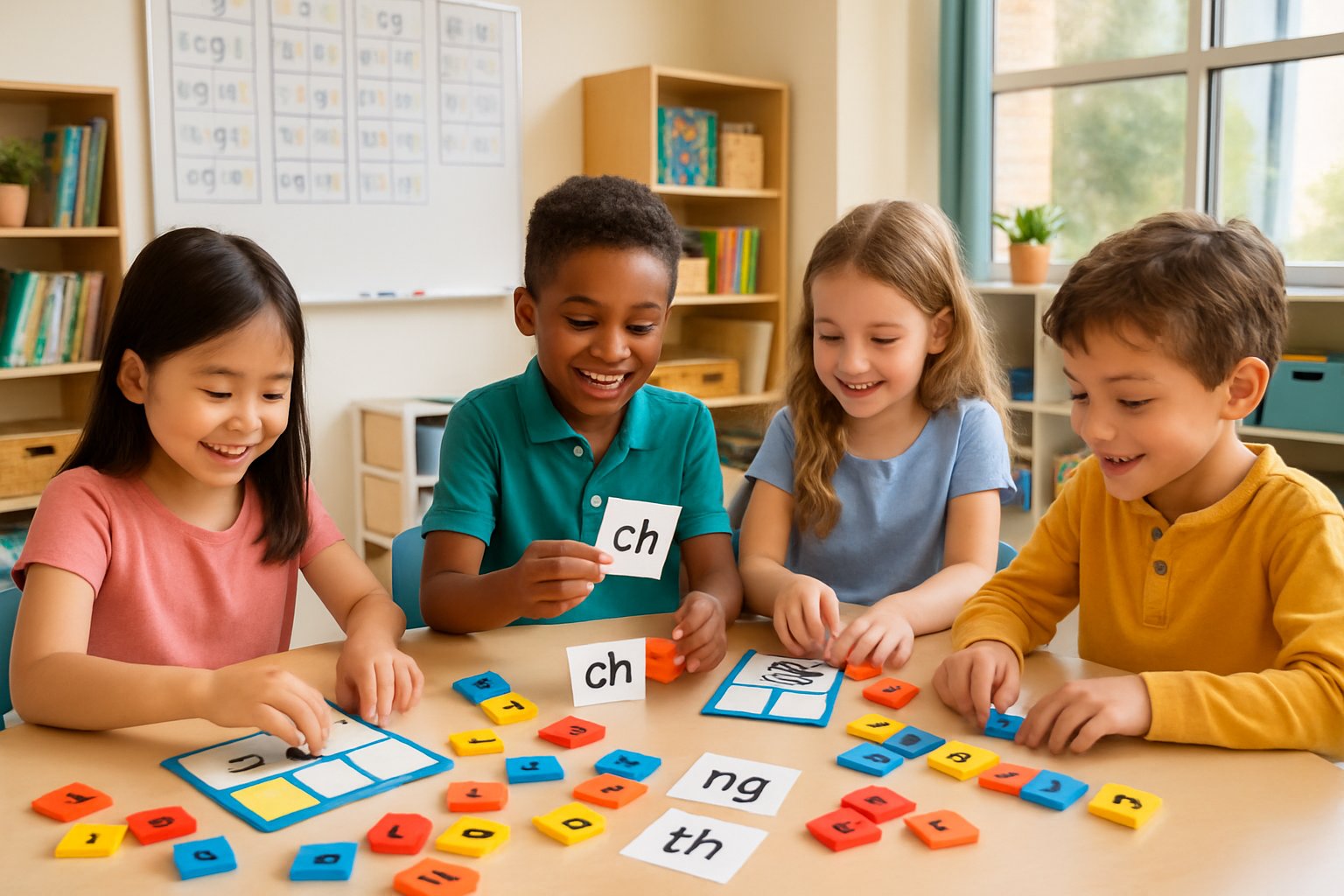
Young children working together with colorful educational materials to practice blending sounds in a bright classroom.

Building stronger phonics foundations requires moving beyond basic blends into more complex word structures. Teachers can combine CVC patterns with blend practice while introducing digraphs through tactile activities that reinforce sound-letter connections.

Integrating CVC and CVCC Words in Blend Routines

Students benefit from connecting familiar CVC words to new blend patterns. This approach builds confidence while expanding their decoding skills.

Teachers can start with known CVC words like “cat” and “hat.” Then they add beginning blends to create “flat” and “chat.” This progression helps students see patterns clearly.

Word Building Progressions:

  • CVC: cat → CCVC: scat
  • CVC: lip → CCVC: clip
  • CVC: top → CCVC: stop

Physical manipulatives make this practice engaging. Students can use letter tiles to transform words step by step. They slide blend tiles in front of CVC words they already know.

CVCC words add ending blends to familiar patterns. Students practice “hand,” “camp,” and “milk” to build fluency. These hands-on blending activities help students master complex sounds through creative games.

Teachers can create word ladders that move from simple to complex. Students climb each step by adding or changing blend sounds.

Exploring Digraphs Alongside Blends with Hands-On Practice

Digraphs require different teaching strategies than blends because two letters make one sound. Students need engaging digraph activities to understand this concept fully.

Movement games work well for digraph practice. Students can freeze when they hear digraph sounds or hop to different stations labeled with “sh,” “ch,” and “th.”

Digraph vs. Blend Practice:

  • Digraphs: ship, chat, thin (two letters, one sound)
  • Blends: slip, flat, trim (hear both letter sounds)

Sorting activities help students distinguish between blends and digraphs. They can use picture cards or word cards in different containers. This visual separation clarifies the concepts.

Students enjoy mystery bag games with digraph objects. They feel items like shells, brushes, or toy whales. Then they identify the digraph sound in each object’s name.

Interactive notebooks let students collect digraph words and pictures. They can create personal reference books with examples they find meaningful.

Filed Under: Uncategorized

How to Track Progress When Teaching with Blend Ladders: A Practical Guide

September 10, 2025 by Valerie Leave a Comment

Key Steps for Tracking Progress with Blend Ladders

Teachers and students in a classroom interacting with a colorful chart illustrating steps of reading progress.

Effective documentation that makes learning visible requires teachers to establish clear goals and use systematic methods to track student advancement. Teachers need specific steps to measure how well students master vowel sounds and blending skills throughout their learning journey.

Setting Clear Learning Outcomes

Teachers should define specific learning outcomes before starting blend ladder instruction. These outcomes help measure student progress and guide lesson plans effectively.

The primary learning outcomes focus on two main areas. Students must learn short vowel sounds and understand that vowels are the most important part of words.

Short-term outcomes include:

  • Identifying each vowel sound correctly
  • Saying vowel sounds before consonant sounds
  • Recognizing vowel patterns in simple words

Long-term outcomes involve:

  • Blending consonant-vowel combinations smoothly
  • Reading CVC words independently
  • Applying vowel knowledge to new words

Teachers can track these outcomes by creating simple checklists. Each checklist should include the five vowel sounds and blending skills. This helps teachers see which students need extra help and which ones are ready to move forward.

Selecting and Customizing Blend Ladders

Teachers need to choose the right blend ladders for their students’ skill levels. Different students may need different starting points in their education journey.

Start with single consonant blend ladders like B, M, or T. These letters work well because students can easily see and hear the differences between vowel sounds.

Teachers can customize blend ladders by:

  • Focusing on one vowel at a time for struggling students
  • Adding consonant endings for advanced learners
  • Using dry erase markers on laminated ladders for flexibility

Laminated blend ladders with dry erase markers let teachers add letters to create CVC words. This helps students move from simple blending to reading complete words.

Teachers should prepare multiple versions of each ladder. Some students might need larger text or different color coding to help them focus on the vowels first.

Assessing Mastery of Short Vowel Sounds

Regular assessment helps teachers know when students have mastered each vowel sound. Teachers need simple ways to check student understanding during lessons.

Use daily vowel sound checks with individual students. Point to each vowel on the blend ladder and ask the student to say the sound. Record which sounds the student gets right and wrong.

Assessment methods include:

  • Quick verbal checks during lessons
  • Simple recording sheets with vowel sound grids
  • Audio recordings of student responses

Students should demonstrate mastery by saying vowel sounds correctly three days in a row. Using a pencil or pointer to guide students’ eyes helps teachers see if students can identify vowels independently.

Track progress using a simple chart with student names and the five vowel sounds. Mark each sound as the student masters it. This visual record helps teachers plan future lesson plans and identify students who need extra practice.

Monitoring Progress Through Word Blending Activities

Teachers need to track how well students blend sounds together to form words. This skill builds on vowel sound mastery and leads to reading CVC words.

Start by having students blend consonant-vowel combinations. Use left-to-right pointer movements to help students connect the sounds smoothly. Record how many blends each student can read correctly.

Blending progression includes:

  • Consonant + vowel (ba, be, bi, bo, bu)
  • Adding final consonants for CVC words
  • Reading word families with the same blend

Create simple data sheets to track blending progress. List common blends and mark when students can read them without help. Progress monitoring data helps teachers know when students are ready for more challenging activities.

Students who master blending can move to reading complete CVC words like “bag,” “big,” and “bug.” Track how many CVC words each student can read independently each week.

Personalising and Adapting Progress Tracking

A group of educators collaborating around a digital touchscreen displaying colorful progress charts and ladder visuals in a bright classroom.

Each student learns differently and needs unique approaches to track their growth. Teachers can create custom learning paths and use visual tools to help all students succeed with blend ladders.

Understanding Different Learning Styles

Students process information in different ways. Some learn best by seeing pictures and charts. Others need to hear instructions or move around while learning.

Teachers should watch how each student works best. Tracking student progress helps identify these patterns over time.

Common learning styles include:

  • Visual learners who need pictures and diagrams
  • Auditory learners who learn through listening
  • Kinesthetic learners who need hands-on activities

When using blend ladders, teachers can adjust how they present information. Visual students might need color-coded steps. Auditory students could benefit from verbal explanations of each level.

The key is flexibility. Teachers should try different methods and see what works for each child.

Creating Personalised Learning Pathways

Personalised learning means giving each student their own path through the blend ladder. Not every student needs to move at the same speed or use the same activities.

Teachers can create different versions of the same lesson. One student might need extra practice on basic skills. Another might be ready for harder challenges.

Steps for creating custom pathways:

  • Assess where each student starts
  • Set individual goals based on their needs
  • Choose activities that match their interests
  • Adjust the pace for each learner

Setting realistic goals and expectations helps students stay motivated. When goals feel too hard, students give up. When goals are too easy, students get bored.

Teachers should check progress often and change plans when needed. This keeps learning fresh and exciting for everyone.

Supporting Visual Learners with Blend Ladders

Visual learners need to see information to understand it. Blend ladders work well for these students because they show clear steps up to mastery.

Teachers can make blend ladders more visual by adding colors, pictures, and charts. Each level could have its own color. Students can see exactly where they are and where they need to go next.

Visual tools that help:

  • Progress charts with pictures
  • Color-coded skill levels
  • Step-by-step diagrams
  • Photo examples of completed work

Many students feel proud when they can see their progress. A visual blend ladder acts like a map that shows the journey from beginner to expert.

Teachers can also use graphs and charts to show growth over time. When students see their improvement, they want to keep working harder.

Effective Tools and Methods to Monitor Pupil Progress

A teacher observing students working on tablets in a bright classroom with charts and digital devices showing progress tracking tools.

Digital assessments and tracking systems help teachers gather real-time data about student learning. These tools make it easier to share progress information with parents and other educators.

Using Online Quizzes and Digital Assessments

Online quizzes provide instant feedback about student understanding. Teachers can create short quizzes after each lesson to check if students grasped key concepts.

Digital assessment tools automatically grade responses and highlight areas where students struggle. This saves teachers time while giving them clear data about class performance.

Regular monitoring through various assessment methods helps identify learning patterns quickly. Teachers can spot which students need extra help before they fall too far behind.

Popular digital assessment features include:

  • Automatic scoring and grade tracking
  • Question banks for different skill levels
  • Progress reports for individual students
  • Real-time results during class

Short daily quizzes work better than long weekly tests. Students get more chances to show what they know without feeling overwhelmed.

Incorporating Pupil Progress Tracking Systems

Pupil progress tracking systems store detailed records about each student’s learning journey. These systems track specific skills rather than just overall grades.

Effective pupil progress tracking focuses on individual learning objectives. Teachers can see exactly which skills each student has mastered and which need more work.

Modern tracking systems let teachers record progress quickly during lessons. They can mark off completed objectives with just a few clicks on their tablet or computer.

Key tracking system benefits:

  • Skill-based tracking shows exactly what students can do
  • Historical data reveals learning trends over time
  • Gap analysis identifies missing skills across the class
  • Planning support suggests next steps for each student

The best systems work on phones and tablets. Teachers can update progress anywhere in the classroom without disruption.

Sharing Progress Across Stakeholders

Progress sharing keeps everyone informed about student learning. Parents, teaching assistants, and school leaders all need different types of information.

Tracking pupil progress effectively means sharing the right details with the right people. Parents need simple updates about their child’s strengths and next steps.

Teachers can send weekly progress summaries home through apps or email. These updates help parents understand what their child is learning and how to help at home.

Different stakeholders need different information:

Stakeholder Information Needed Format
Parents Child’s progress and next steps Simple summaries
Teaching assistants Students needing extra support Skill checklists
School leaders Class trends and intervention needs Data reports

School leaders use progress data to plan professional development and allocate resources. They can see which classes need additional support or materials.

Regular progress sharing builds trust between home and school. Parents feel more confident helping their children when they understand the learning goals.

Filed Under: Uncategorized

Blending Sounds to Reading Words: The Power of Blend Ladders in Early Literacy

September 10, 2025 by Valerie Leave a Comment

Understanding Blend Ladders and Their Role in Phonics

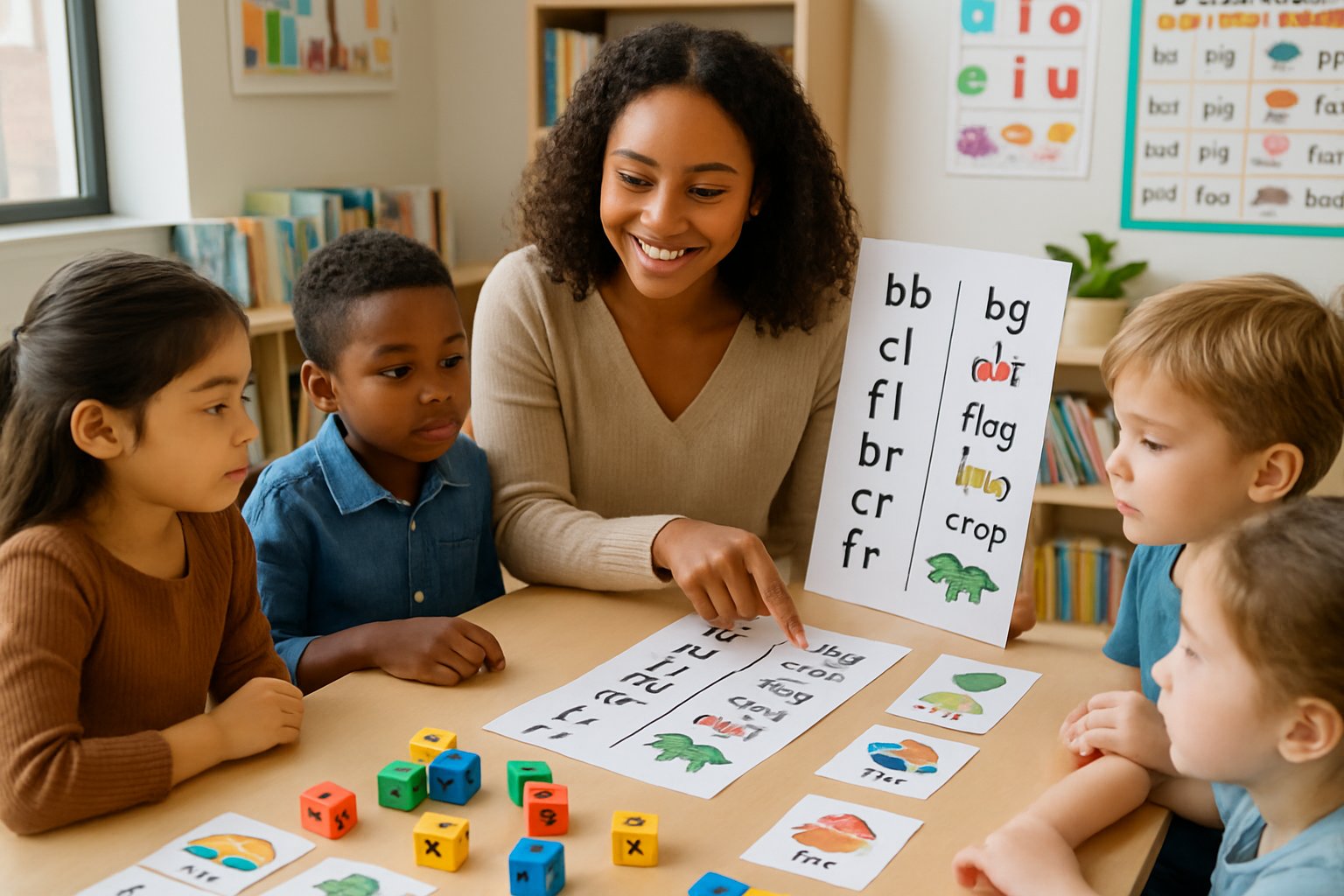
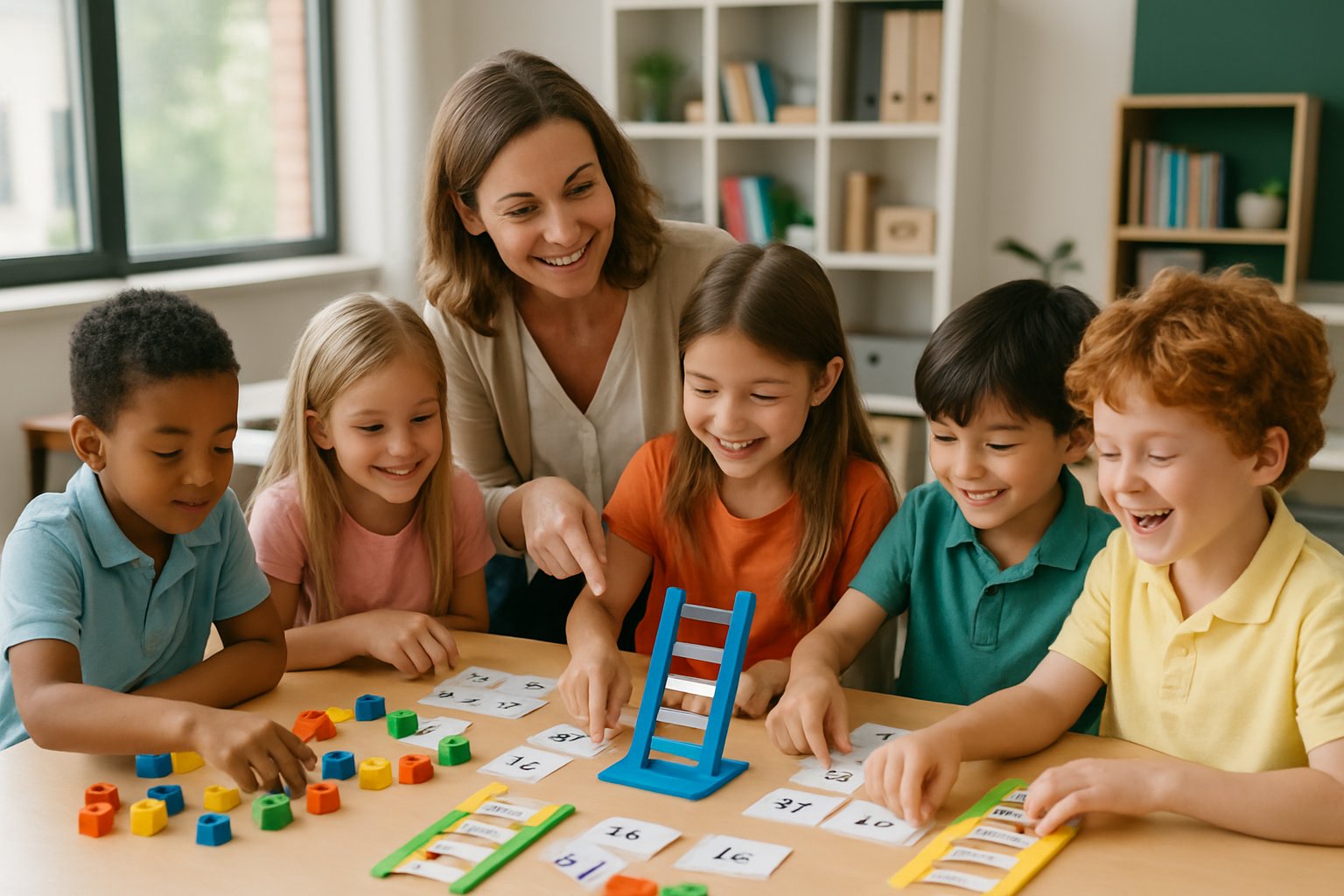
A teacher and young children sitting around a table in a classroom, using colorful educational materials to learn phonics and blend sounds to read words.

Blend ladders are structured phonics activities that help children practice combining individual letter sounds to form complete words. These tools build essential phonemic awareness skills by teaching students to recognize graphemes and blend phonemes together systematically.

What Are Blend Ladders?

Blend ladders are step-by-step reading activities that help children practice phonics skills. They work by having students change one letter at a time to create new words.

Teachers often call them Letter Ladders, Sound Ladders, or Blend Ladders. Each name points to the same basic idea.

The ladder format makes learning fun and easy to follow. Students start with one simple word and climb up the ladder by changing letters.

Basic Ladder Structure:

  • Start with a simple CVC word (like “cat”)
  • Change one letter to make a new word (like “bat”)
  • Keep changing letters to create more words
  • Each step builds on the previous word

Blend ladders can be adapted to suit any learning level. Beginning readers often start with short vowel sounds and simple consonants.

Advanced students can work with longer words or more complex sound patterns. The teacher decides which letters to focus on based on what the child needs to learn.

Key Concepts: Blending and Phonemic Awareness

Blending is the skill of putting individual sounds together to make words. When children see the letters “c-a-t,” they must blend the sounds /c/ + /a/ + /t/ to read “cat.”

Phonemic awareness is closely tied with phonics and learning how to read. Students need both skills to become good readers.

Phonemic Awareness Skills Include:

  • Blending – putting sounds together
  • Segmenting – breaking words into separate sounds
  • Isolating – picking out individual sounds in words
  • Manipulating – changing sounds to make new words

Students turn to their phonemic awareness skills to chunk words up and blend each sound together. This process happens every time they read a new word.

Blend ladders give children lots of practice with these skills. Each time they change a letter and read the new word, they practice blending sounds.

The ladder format helps students see patterns in words. They learn that small changes in letters create different sounds and meanings.

Letter Sounds and Graphemes in Blend Ladders

Graphemes are the written symbols that represent sounds in our language. In English, graphemes can be single letters like “m” or letter combinations like “ch.”

Phonics is the way we use symbols to represent sounds. Students must learn which graphemes match which phonemes (sounds).

Some graphemes are simple and represent one sound. The letter “m” makes the /m/ sound in words like “map.”

Common Grapheme Patterns:

  • Single letters: b, d, f, m, t
  • Double letters: ll, ss, ff
  • Letter combinations: ch, sh, th, ck

Other graphemes are more complex. Double letters like “ll” in “bell” still represent just one sound.

Blend ladders help students practice these letter-sound relationships. When they change one letter in a word, they see how different graphemes create different sounds.

Students may be working on the letter “S” and can create CVC words with different vowels. For example, they might practice “san,” “sen,” “sin,” and “son.”

This practice helps children learn that the same letter can work with many different vowels. They start to see patterns that make reading easier.

Effective Blending Strategies for Reading Words

Successful blending requires specific techniques that help children combine individual sounds into complete words. These methods include practicing with spoken sounds first, building words sound by sound, and using simple three-letter combinations to strengthen decoding skills.

Oral Blending and Segmenting Techniques

Oral blending starts before children see written letters. Teachers say individual sounds like “/c/ /a/ /t/” and ask students to put them together to make “cat.”

This practice helps kids understand how sounds work together. It builds the foundation they need for reading real words later.

Segmenting works the opposite way. Teachers say a complete word like “dog” and ask children to break it apart into “/d/ /o/ /g/.”

These activities strengthen phonemic awareness. Children learn that words are made of separate sounds that can be taken apart and put back together.

Simple games make oral practice fun. Teachers might use sound boxes where children move a token for each sound they hear. This helps them count and identify individual phonemes.

Daily practice with oral blending and segmenting prepares students for written word work. Most children need several weeks of spoken sound practice before they tackle letters on paper.

The Successive Blending Approach

Successive blending builds words sound by sound from left to right. Children don’t say each sound separately and then guess the word at the end.

Instead, they combine sounds as they go. For the word “map,” they would say “/m/” then “/ma/” then “/map/.”

This method reduces memory load. Children don’t have to remember a string of separate sounds while trying to blend them together.

The blend as you read strategy works better than segmented decoding. Research shows that continuous blending helps children decode words more successfully than pause-and-blend methods.

Teachers can cover the end of a word with their finger. They reveal one letter at a time as children build the sounds together.

This approach mirrors how skilled readers actually decode unfamiliar words. They don’t segment every sound but blend chunks as they read through the word.

Using CVC Words and Nonsense Words for Practice

CVC words (consonant-vowel-consonant) like “cat,” “dog,” and “sun” provide the best starting point for blending practice. These words follow simple patterns that children can decode easily.

Short vowel sounds in CVC words are predictable. Children can apply blending skills without worrying about complex spelling rules or silent letters.

Teachers should start with words that have continuous sounds like “man” or “sun.” These sounds can be stretched out, making blending easier than words with stop sounds.

Nonsense words like “zap” or “tef” are equally important for practice. These made-up combinations test whether children truly understand blending principles.

Real words might be memorized or guessed from context. Nonsense words ensure that students are actually using their decoding skills rather than relying on memory.

Practice should include both familiar and unfamiliar sound combinations. This helps children become flexible decoders who can tackle any new word they encounter.

Supporting Learning to Read with Word Chains

Word chains help children practice blending while building phonemic awareness. Teachers start with one CVC word and change a single sound to create a new word.

For example, “cat” becomes “bat,” then “bit,” then “sit.” Children must blend each new word as sounds are added, removed, or changed.

This activity shows how small sound changes create completely different words. It reinforces the connection between individual phonemes and word meaning.

Word chains can focus on specific patterns. Teachers might work on beginning sounds, ending sounds, or vowel changes depending on what children need to practice.

The activity works well with letter tiles or magnetic letters. Children can physically manipulate the letters while saying the sounds and blending the new words.

Progressive difficulty keeps children challenged. Start with simple consonant changes, then move to vowel substitutions, and finally try more complex sound manipulations.

Filed Under: Uncategorized

The Role of Parents as Teachers: Finding Your Style for Student Success

July 17, 2025 by Valerie Leave a Comment

Understanding the Unique Role of Parents as Teachers

Parents naturally fill both parenting and teaching roles, but these functions have distinct differences that shape a child’s development. Parents serve as their child’s first teachers and create the foundation for lifelong learning through everyday interactions and guidance.

Differences Between Parenting and Teaching Roles

Parenting Role:

  • Provides emotional support and unconditional love
  • Focuses on character development and values
  • Operates 24/7 in all life situations
  • Emphasizes safety, care, and nurturing

Teaching Role:

  • Delivers structured knowledge and skills
  • Follows specific curriculum and goals
  • Works within set hours and environments
  • Measures progress through assessments

Parents blend these roles naturally. They teach through daily activities like cooking, reading bedtime stories, and solving problems together.

Traditional teachers focus on academic subjects. Parents teach life skills, social behavior, and emotional regulation.

Research shows that parents and teachers serve as complementary educational role models. Each provides different learning opportunities that support student learning.

The parent-teacher role creates deeper connections. Parents know their child’s personality, interests, and learning style better than anyone else.

Why Parents Are Natural Educators

Children learn constantly from birth. Parents become teachers simply by interacting with their children every day.

Natural Teaching Moments:

  • Explaining how things work
  • Answering endless questions
  • Modeling behavior and values
  • Solving problems together

Parents gain confidence in their teaching abilities when they receive proper support and information. This confidence directly impacts their child’s educational experience.

Parents teach through love and patience. They repeat lessons as many times as needed without judgment.

Every family activity becomes a learning opportunity. Grocery shopping teaches math, cooking teaches science, and family discussions teach communication skills.

Parents influence their child’s personality and skills development through their daily interactions and guidance.

The Impact of Parental Involvement

Active parental involvement creates powerful results for academic success. Children with engaged parents perform better in school and show improved behavior.

Key Benefits:

  • Higher test scores and grades
  • Better school attendance
  • Improved social skills
  • Stronger self-confidence

Parent involvement creates a powerful connection that makes all the difference for children, parents, and educators working together.

Students feel more supported when parents stay involved. This support system helps them take risks and try new things.

Parents who actively participate in their child’s education send a clear message. They show that learning matters and education has value.

The partnership between parents and teachers strengthens the entire educational experience. Both groups work toward the same goal of helping children succeed.

Regular communication between home and school creates consistency. Children benefit when the same values and expectations exist in both environments.

Finding and Shaping Your Personal Teaching Style at Home

Parents need to understand their own values and strengths before they can create effective learning experiences for their children. This process involves honest self-reflection and willingness to adapt methods based on what works best for each family.

Reflecting on Your Parenting and Education Values

Parents should start by examining what they believe about learning and child development. These core beliefs will guide every educational decision they make at home.

Some parents value structure and clear expectations. Others prefer flexibility and child-led exploration. Neither approach is wrong, but knowing which feels right helps shape teaching methods.

Parents can ask themselves key questions:

  • Do they learn best through hands-on activities or reading?
  • Do they prefer quiet study time or group discussions?
  • Are they comfortable with technology or do they prefer traditional methods?

The way parents were taught as children often influences their approach. Some want to recreate positive experiences from their own education. Others may want to do things differently.

Understanding parenting styles and their impact on learning helps parents recognize patterns in their teaching approach. Research shows that authoritative parenting, which balances support with expectations, often leads to better student learning outcomes.

Identifying Strengths and Areas for Growth

Every parent brings unique skills to their role as teacher. Some excel at explaining math concepts. Others are great at encouraging creativity or building confidence.

Parents should list their natural strengths:

  • Subject knowledge: What topics do they know well?
  • Communication style: Are they patient explainers or energetic motivators?
  • Personality traits: Are they organized planners or spontaneous problem-solvers?

Recognizing weaknesses is equally important. A parent who struggles with math can find resources, ask for help, or use different teaching methods that work better for them.

Finding your teaching style that reflects your personality involves honest self-assessment. Parents might discover they’re more effective with certain subjects or age groups.

Areas for growth might include:

  • Learning new teaching methods
  • Developing patience for repetitive practice
  • Finding creative ways to explain difficult concepts
  • Building confidence in unfamiliar subjects

Adapting Methods to Your Family’s Needs

No single teaching approach works for every family. Parents must consider their children’s learning styles, family schedule, and available resources when shaping their educational experience.

Some children need visual aids and hands-on activities. Others learn better through listening or reading. Parents should observe how their children respond to different methods and adjust accordingly.

Family dynamics also matter. Introverted parents might prefer quieter activities, while extroverted parents enjoy interactive lesson plans. The key is matching teaching methods to both parent and child preferences.

Practical adaptation strategies:

Family Situation Teaching Approach
Busy schedules Short, focused lessons
Multiple children Group activities and peer teaching
Limited resources Creative use of household items
Different learning styles Varied teaching methods

Parents should experiment with different approaches and keep what works. Finding a teaching style that fits can boost confidence and reduce stress for both parent and child.

The goal is creating positive learning experiences that help children grow academically and personally. This requires ongoing adjustment as children develop and family needs change.

Building Strong Parent-Teacher Partnerships

Strong partnerships between parents and teachers create a foundation for children’s success through open communication, shared goals, and mutual respect. These relationships work best when both parties understand their roles and collaborate effectively.

Establishing Effective Communication with Educators

Regular communication forms the backbone of any successful parent-teacher relationship. Parents should reach out early in the school year to introduce themselves and share important information about their child.

Best Communication Methods:

  • Email for non-urgent questions
  • Phone calls for immediate concerns
  • Scheduled conferences for detailed discussions
  • Written notes for quick updates

Parents can foster open communication by being proactive rather than reactive. They should share insights about their child’s learning style, interests, and challenges at home.

Teachers appreciate when parents respond promptly to requests and follow through on commitments. This builds trust and shows respect for the educator’s time.

Communication Tips:

  • Be specific about concerns
  • Ask what you can do to help
  • Listen actively to teacher feedback
  • Keep conversations focused on the child

Fostering Collaboration for Student Achievement

Successful collaboration happens when parents and teachers work toward shared goals for the child’s academic success. This requires understanding each other’s perspectives and finding common ground.

Parents should ask teachers about specific ways to support learning at home. This might include helping with homework, reading together, or practicing skills the child is developing at school.

Setting shared goals creates a unified approach to the child’s education. Parents and teachers can discuss both short-term objectives and long-term aspirations.

Collaboration Strategies:

  • Attend parent-teacher conferences prepared with questions
  • Volunteer for classroom activities when possible
  • Share observations about the child’s progress at home
  • Support school policies and procedures

Regular check-ins help maintain momentum and address any challenges quickly. Both parties should celebrate the child’s achievements together, reinforcing positive progress.

Respecting Different Teaching Approaches

Every teacher brings unique methods and experiences to the classroom. Parents benefit from understanding and respecting these different approaches, even when they differ from their own preferences.

Teachers use various instructional strategies based on their training and the needs of their students. What works for one child may not work for another, and educators make these decisions based on professional expertise.

Parents should ask questions about teaching methods to better understand the rationale behind classroom decisions. This shows respect for the teacher’s professional judgment while staying informed about their child’s education.

Ways to Show Respect:

  • Avoid comparing teachers to previous educators
  • Trust the teacher’s classroom management decisions
  • Support consistent expectations between home and school
  • Address concerns privately before involving administrators

When parents disagree with certain approaches, they should discuss their concerns directly with the teacher first. Most issues can be resolved through open communication and collaboration rather than confrontation.

Enhancing Student Learning and Academic Success at Home

A parent and child studying together at a table in a bright home setting with books and learning materials.

Parents can transform everyday moments into powerful learning opportunities while building routines that support their child’s academic growth. The key lies in creating structured approaches to daily education, maintaining consistent motivation, and recognizing achievements along the way.

Supporting Daily Educational Experiences

Daily life offers countless chances to reinforce what children learn at school. Parents can turn routine activities into educational moments that strengthen core skills.

Kitchen Learning Opportunities
Cooking together teaches math through measuring ingredients and following recipes. Children practice reading skills by reviewing instructions and learn science concepts through observing chemical reactions.

Household Math Applications
Shopping trips become lessons in budgeting and addition. Sorting laundry introduces patterns and counting. Even setting the table reinforces multiplication as children calculate place settings for different numbers of guests.

Reading Integration
Creating a positive learning environment at home includes making books accessible throughout the house. Parents can read together during car rides, before bedtime, or while waiting for appointments.

Technology Balance
Educational apps and websites supplement traditional learning. Parents should choose programs that align with school curriculum while limiting screen time to maintain healthy habits.

Encouraging Consistency and Motivation

Establishing consistent routines helps children develop discipline and time management skills. Regular schedules reduce stress and create predictable learning patterns.

Homework Routine Elements

  • Set specific times for homework each day
  • Provide a quiet, well-lit workspace
  • Remove distractions like phones or television
  • Include short breaks to maintain focus

Motivation Strategies
Parents can foster a growth mindset by praising effort over results. Phrases like “You worked really hard on that problem” encourage persistence through challenges.

Interest-Based Learning
Connecting schoolwork to children’s personal interests increases engagement. A child fascinated by dinosaurs might practice math through paleontology problems or improve writing by creating dinosaur stories.

Goal Setting
Breaking large assignments into smaller tasks makes them less overwhelming. Parents can help children create weekly checklists and celebrate completing each step.

Tracking Progress and Celebrating Growth

Regular monitoring helps parents identify areas where children excel and where they need additional support. This creates opportunities for targeted assistance and recognition.

Progress Tracking Methods

Method Purpose Frequency
Homework review Check understanding Daily
Teacher communication School performance updates Weekly
Skills assessment Identify growth areas Monthly

Celebration Ideas
Recognizing achievements motivates continued effort. Parents can create reward systems that acknowledge both academic milestones and improved study habits.

Communication with Teachers
Active involvement in a child’s education includes regular contact with teachers. This partnership ensures consistent support between home and school environments.

Documentation Benefits
Keeping records of completed work and test scores helps parents understand learning patterns. This information guides decisions about when to provide extra help or seek additional resources.

Frequently Asked Questions

A mother and father sitting with their young child at a table, engaging in a learning activity together in a cozy home setting.

Parents often wonder how to balance teaching roles with traditional parenting duties. Common concerns include adapting classroom techniques for home use, managing discipline while maintaining learning environments, and finding programs that support their educational goals.

How can parents effectively adapt teacher roles at home?

Parents can create structured learning environments by setting regular homework times and designated study spaces. They should establish clear expectations about learning goals and provide consistent feedback on their child’s progress.

Breaking down complex tasks into smaller steps helps children understand difficult concepts. Parents can use visual aids, hands-on activities, and real-world examples to make learning more engaging at home.

Communication plays a key role in successful home teaching. Parents should ask open-ended questions that encourage critical thinking rather than simple yes or no responses.

What are the essential elements of a Parents as Teachers program?

A strong Parents as Teachers program includes regular home visits from trained educators who provide guidance on child development. These programs focus on building parenting skills and supporting early childhood learning.

Parent education sessions cover topics like age-appropriate activities, developmental milestones, and effective communication strategies. Group meetings allow parents to share experiences and learn from each other.

Resource networks connect families with community services and support systems. Programs also include developmental screenings to identify potential learning challenges early.

In what ways can parents balance discipline and learning as educational figures?

Parents need to separate teaching moments from disciplinary actions to maintain positive learning environments. When children make mistakes during learning activities, parents should focus on correction rather than punishment.

Setting clear boundaries between learning time and behavior management helps children understand expectations. Parents can use natural consequences related to learning rather than unrelated punishments.

Positive reinforcement works better than negative consequences for academic motivation. Parents should celebrate learning achievements while addressing behavioral issues separately.

How do parental teaching styles impact a child’s learning and development?

Research shows that parenting styles directly influence how children approach learning and develop academic skills. Parents who use supportive and responsive teaching methods tend to raise more confident learners.

Children with parents who explain concepts clearly and provide reasoning develop better critical thinking skills. These children also show improved problem-solving abilities and academic performance.

Overly controlling teaching styles may create dependent learners who struggle with independent thinking. Children need guidance balanced with opportunities to explore and make discoveries on their own.

What resources are available to parents looking to get more involved in their child’s education?

Schools often provide parent education workshops and volunteer opportunities that help parents understand curriculum goals. Many districts offer family engagement programs that teach parents how to support learning at home.

Online resources include educational websites, learning apps, and virtual tutoring programs. Public libraries provide free access to educational materials and often host family learning events.

Community organizations frequently offer parenting classes and support groups. Local colleges may provide continuing education courses specifically designed for parents who want to improve their teaching skills.

What strategies can parents use to foster values and character development in their children?

Parents can model the values they want to teach by demonstrating honesty, kindness, and responsibility in daily interactions. Children learn more from observing behavior than from listening to lectures about values.

Creating opportunities for children to practice empathy and compassion helps build strong character. Parents can involve children in community service projects or encourage them to help neighbors and friends.

Discussing moral dilemmas and ethical questions during everyday situations helps children develop decision-making skills. Parents should encourage children to think about how their actions affect others and consider different perspectives.

Filed Under: Uncategorized

How to Use Literature and Storytelling in Your Homeschool: Unlock Engaged Learning

July 17, 2025 by Valerie Leave a Comment

Choosing Quality Literature for Homeschool

The foundation of successful literature-based homeschool education lies in selecting books that captivate young minds while delivering educational value. Parents need to balance timeless classics with modern stories, explore various genres, and build comprehensive reading lists that grow with their children.

Classic vs. Contemporary Books

Classic literature offers students access to foundational works that have shaped culture and language for generations. These books provide rich vocabulary, complex themes, and historical perspectives that contemporary education often overlooks.

Benefits of Classic Literature:

  • Exposure to sophisticated language patterns
  • Understanding of historical contexts
  • Connection to cultural heritage
  • Development of critical thinking skills

Contemporary books connect with modern readers through relatable characters and current themes. They often address today’s social issues and use language patterns familiar to young readers.

Modern literature helps bridge the gap between classic works and student interests. Many contemporary authors write with the same literary merit as classical writers but use accessible language and current settings.

The ideal approach combines both classic and contemporary selections. This balance ensures students appreciate literary heritage while staying engaged with relevant, modern storytelling.

Diverse Genres and Formats

Quality literature encompasses multiple genres that serve different educational purposes and appeal to various learning styles. Fiction develops empathy and imagination through character-driven narratives.

Essential Genre Categories:

  • Historical fiction – Brings past events to life
  • Biography – Teaches through real-life examples
  • Poetry – Develops language appreciation
  • Science fiction – Explores possibilities and ethics
  • Mystery – Builds logical thinking skills

Non-fiction books provide factual information while developing research and analytical skills. They work particularly well for students who prefer concrete information over imaginative stories.

Different formats serve unique purposes in homeschool education. Picture books aren’t just for young children – they can introduce complex topics to older students through visual storytelling.

Chapter books and novels allow for deeper character development and plot complexity. Graphic novels combine visual and textual elements, making them excellent for reluctant readers or visual learners.

Creating a Thoughtful Book List

A well-planned book list considers the child’s reading level, interests, and educational goals. Parents should choose books that are exciting, age-appropriate, and challenging enough to stimulate interest.

Book Selection Criteria:

  • Age-appropriate content and themes
  • Proper reading difficulty level
  • Educational value across subjects
  • Cultural and historical significance
  • Student interest and engagement potential

Grade-level considerations help ensure books match developmental stages. Younger students benefit from shorter books with clear plots, while older students can handle complex themes and longer narratives.

Subject integration makes literature selection more purposeful. Historical novels can support history lessons, while science-themed books reinforce scientific concepts through storytelling.

Building variety prevents reading fatigue and exposes students to different writing styles. A good book list includes authors from various backgrounds, time periods, and cultural perspectives.

Regular evaluation and adjustment keep book lists current and effective. Parents should monitor student responses and be willing to modify selections based on learning outcomes and engagement levels.

Integrating Storytelling Into Homeschool Subjects

Storytelling transforms abstract concepts into memorable experiences across all subjects. Students connect with historical events through personal narratives, grasp scientific principles through story-based examples, and explore cultural traditions through literature.

Making History Memorable with Stories

Historical fiction brings the past to life in ways textbooks cannot match. Students remember Napoleon’s defeat better when they read about a soldier’s experience at Waterloo than when they memorize dates and battle statistics.

Using narrative in homeschool history helps children understand the human side of major events. They see how ordinary people lived during the Great Depression or what daily life was like in ancient Rome.

Effective history storytelling methods include:

  • Reading biographical novels about historical figures
  • Acting out famous speeches or events
  • Creating family timelines with personal stories
  • Using historical fiction picture books for younger students

Parents can find stories from multiple perspectives about the same event. This helps children understand that history has many viewpoints and interpretations.

Using Literature for Science and Math

Stories make complex scientific concepts easier to understand. A book about a character solving problems with fractions teaches math skills through context rather than isolated exercises.

Storytelling activities enhance learning by connecting abstract ideas to real situations. Students learn about gravity through stories of astronauts in space or understand ecosystems through tales of forest animals.

Science and math storytelling ideas:

  • Adventure stories featuring characters who use scientific methods
  • Books about famous scientists and their discoveries
  • Math word problems embedded in continuing narratives
  • Nature stories that explain biological processes

Mystery stories work especially well for teaching logical thinking and problem-solving skills. Students follow clues and use evidence to reach conclusions, just like real scientists do.

Infusing Art and Culture Through Narratives

Literature exposes students to diverse cultures and artistic traditions from around the world. Stories from different countries teach geography, customs, and values simultaneously.

Literature-based learning approaches naturally incorporate art, music, and cultural studies. Students might read Japanese folktales, then create origami or learn about traditional Japanese music.

Cultural storytelling activities include:

  • Folk tales from various countries
  • Stories about famous artists and their work
  • Music-based narratives from different cultures
  • Myths and legends that explain cultural beliefs

Students can create their own cultural projects after reading stories. They might cook foods mentioned in books, learn traditional dances, or create artwork inspired by the settings they read about.

Building Reading Comprehension Through Literature

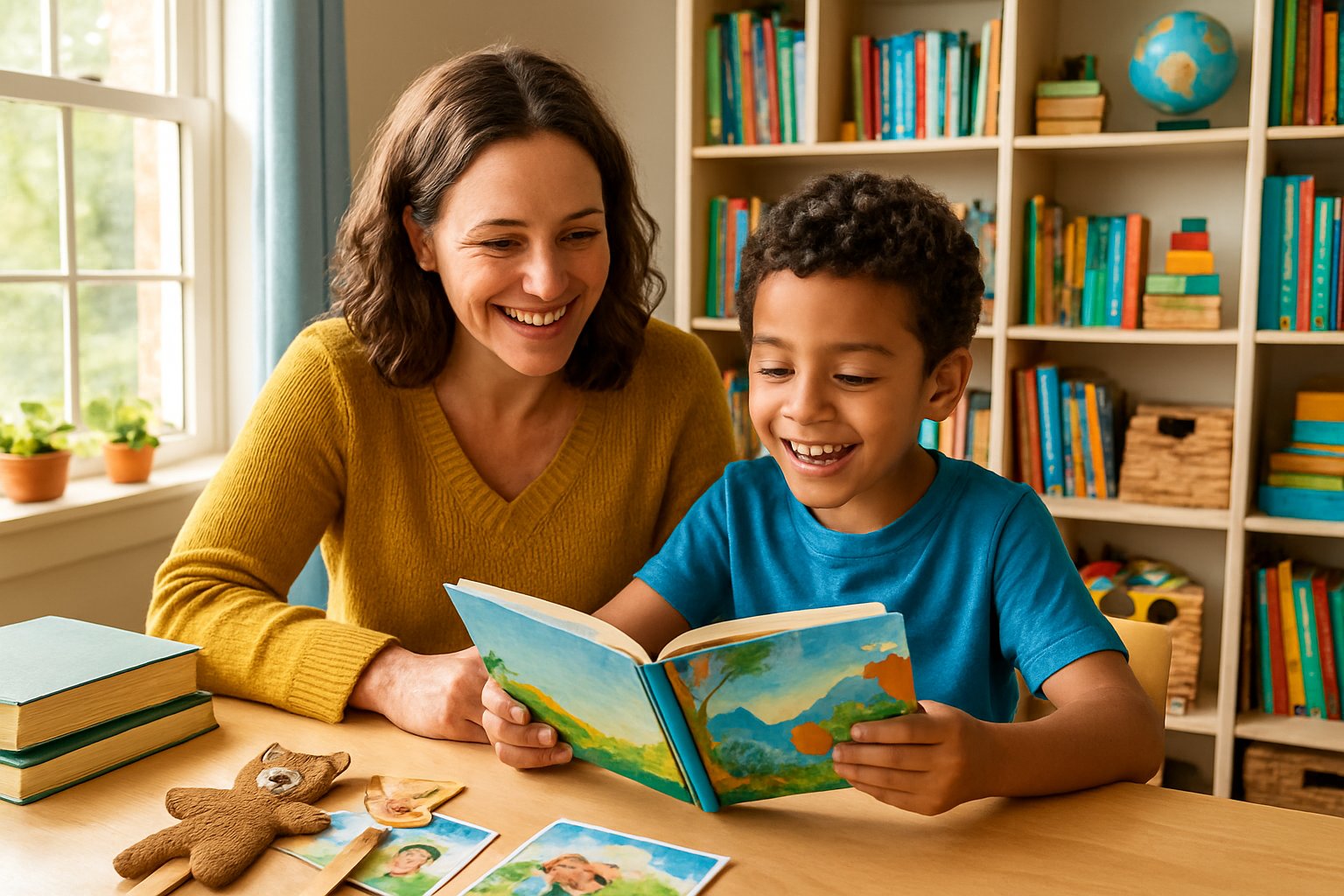
A parent and child reading a book together in a cozy homeschool room filled with books and learning materials.

Literature provides a natural way to strengthen reading comprehension skills through engaging stories and meaningful discussions. Students develop deeper understanding when they analyze characters, explore story structure, and make connections between fictional events and their own experiences.

Developing Critical Thinking with Discussion

Literature based homeschool encourages critical thinking through thoughtful conversations about books. Parents can ask open-ended questions that help children analyze characters, plot, and themes.

Effective Discussion Questions:

  • How did the main character change throughout the story?
  • What motivated the character’s actions?
  • What lessons can be learned from this story?

Students learn to form their own opinions when they discuss books regularly. They practice explaining their thoughts and listening to different viewpoints.

Reading comprehension improves when children think deeply about what they read. They start asking their own questions about the story and characters.

Discussion Activities:

  • Character analysis: Compare characters from different books
  • Theme exploration: Identify recurring themes across stories
  • Plot prediction: Guess what happens next and explain why

Narrative Structure Awareness

Understanding how stories are built helps students follow plots more easily. Children learn to recognize beginning, middle, and end patterns in narratives.

Students can identify story elements like setting, conflict, and resolution. This knowledge helps them understand any book they read.

Key Story Elements:

  • Setting: Where and when the story takes place
  • Characters: Who the story is about
  • Problem: The main conflict or challenge
  • Solution: How the problem gets resolved

Parents can create simple story maps with their children. These visual tools show how different parts of a story connect.

Students start noticing patterns in different books. They see how authors use similar structures to tell different stories.

Connecting Stories to Real Life

Reading comprehension strengthens when students relate fictional events to their own experiences. Children understand stories better when they see connections to their world.

Parents can help students find similarities between book characters and real people. They might discuss how a character’s challenges match problems their child has faced.

Connection Activities:

  • Compare historical fiction to actual historical events
  • Discuss how character traits appear in real people
  • Explore how story lessons apply to daily life

Students remember stories longer when they make personal connections. The emotional bonds they form with characters make reading more meaningful.

Literature based learning builds stronger comprehension skills through these real-world connections. Children see reading as relevant to their lives instead of just an academic exercise.

Nurturing Writing Skills with Storytelling

Storytelling becomes a powerful bridge between reading and writing, helping children develop strong narrative abilities through structured practice and creative expression. Young writers learn essential skills by studying story elements in literature and practicing their own creative storytelling techniques.

Teaching Narrative Writing

Teaching narrative writing to homeschoolers starts with understanding story structure. Children need to learn the basic elements that make stories work.

Story Structure Basics:

  • Beginning (characters and setting)
  • Middle (conflict or problem)
  • End (resolution)

Parents can begin with simple three-part stories. Children write one sentence for each part. This helps them understand how stories flow from start to finish.

Character development comes next. Students practice creating characters with specific traits, wants, and problems. They can fill out character sheets or draw their characters before writing.

Narrative writing skills grow through regular practice. Daily journaling helps children get comfortable putting thoughts on paper. They can write about real experiences or make up stories.

Show, don’t tell becomes important as skills develop. Instead of writing “The dog was big,” children learn to write “The dog’s head reached my shoulder when he stood up.”

Modeling Good Writing from Books

Books serve as the best teachers for young writers. When children read quality literature, they absorb good writing patterns without realizing it.

Parents can point out effective writing techniques during read-aloud time. They might say, “Listen to how the author describes this character” or “Notice how the author builds suspense here.”

What to Notice in Books:

  • Interesting sentence beginnings
  • Descriptive words that paint pictures
  • Dialogue that sounds real
  • How authors transition between scenes

Children can keep a notebook of favorite sentences from books they read. They copy sentences that sound good to them. This helps them internalize good writing patterns.

Literature brings stories to life and shows children different writing styles. Some authors use short, punchy sentences. Others write longer, flowing descriptions.

Students can try copying the style of their favorite authors. They might write a paragraph like their favorite mystery writer or describe a scene like their favorite fantasy author.

Creative Storytelling Exercises

Creative storytelling exercises make writing fun and remove the pressure of perfect grammar. These activities help children explore their imagination while building writing skills.

Fun Writing Prompts:

  • Write a story from your pet’s point of view
  • Describe a day when gravity stopped working
  • Create a story using only dialogue
  • Write about a magical object in your house

Story games work well for reluctant writers. Family members can take turns adding sentences to a group story. One person starts, and everyone adds a line.

Picture prompts spark creativity. Children look at interesting photos and write stories about what they see. They can describe what happened before or after the picture was taken.

Storytelling develops empathy as children write from different perspectives. They might write the same event from two different characters’ viewpoints.

Timed writing exercises help children write without overthinking. They set a timer for 10 minutes and write continuously about a topic. This builds writing fluency and confidence.

Frequently Asked Questions

A parent and child reading a storybook together in a cozy homeschool room filled with books and learning materials.

Parents often wonder about practical ways to weave stories into math lessons, science experiments, and history studies. They also need guidance on measuring their child’s progress and building community connections through shared reading experiences.

What are creative ways to integrate literature into daily homeschool activities?

Parents can use picture books to teach math concepts like counting and patterns. Stories about historical figures make history lessons more engaging and memorable.

Science experiments become more interesting when paired with books about inventors or nature. Reading about Marie Curie before a chemistry lesson helps children connect with the material.

Literature works well during art time too. Children can illustrate scenes from their favorite books or create characters from stories they’ve read.

Daily journaling encourages kids to write their own stories. They can practice narrative writing by creating adventures for book characters they love.

How can I create a literature-based unit study for my homeschooler?

Parents should start by picking a theme or time period that interests their child. They can then choose 3-5 books that connect to this topic.

A Civil War unit might include historical fiction, biographies, and picture books about the era. Each book can lead to different activities and discussions.

Parents can add hands-on projects like cooking period foods or making crafts from the time period. Writing assignments can ask children to imagine life during that era.

Field trips to museums or historical sites make the books come alive. Children see real artifacts and places mentioned in their reading.

What strategies support using storytelling to enhance learning in a homeschool setting?

Reading aloud daily helps children hear proper pronunciation and expression. Parents should use different voices for characters to make stories more engaging.

Storytelling serves as a learning tool across all subjects. Children can retell historical events as stories or explain science concepts through narratives.

Encouraging children to create their own stories builds confidence. They can write about family trips, pets, or imaginary adventures.

Parents can use story prompts to spark creativity. Simple questions like “What if dinosaurs lived today?” can lead to exciting tales.

Can you suggest tips for organizing a homeschool book study group?

Parents should start with 4-6 families to keep discussions manageable. They need to choose age-appropriate books that all children can enjoy.

Meeting every two weeks gives families time to read without feeling rushed. Parents can rotate hosting duties to share the workload.

Simple discussion questions work better than complex analysis for younger children. Activities like drawing favorite scenes or acting out parts keep kids engaged.

Parents should prepare backup activities in case discussions end early. Simple crafts or games related to the book work well.

What are the benefits of using a Christian literature curriculum in a homeschool environment?

Christian literature helps families discuss faith and values naturally. Stories with biblical themes reinforce lessons taught at home and church.

These curricula often include character studies that teach virtues like courage and kindness. Children learn moral lessons through engaging stories rather than lectures.

Many Christian literature programs connect Bible stories to other subjects. They might pair the story of Noah with science lessons about animals or weather.

Parents find these programs align with their family’s beliefs. They don’t have to worry about content that conflicts with their values.

How can I assess my child’s comprehension and engagement during our literature and storytelling homeschool sessions?

Parents can ask simple questions about characters and plot after reading. They should listen for details that show their child understood the story.

Drawing pictures of favorite scenes shows comprehension in a fun way. Children who can illustrate key events clearly understand what happened.

Having children retell stories in their own words reveals their understanding. Parents can note if they include main events and characters correctly.

Watching for enthusiasm during story time indicates engagement. Children who ask questions or make predictions are actively involved in the learning process.

Filed Under: Uncategorized

  • « Go to Previous Page
  • Page 1
  • Interim pages omitted …
  • Page 18
  • Page 19
  • Page 20
  • Page 21
  • Page 22
  • Interim pages omitted …
  • Page 25
  • Go to Next Page »

Primary Sidebar

Free Photo Lessons for Kids

Photo Lessons for kids

Categories

  • Photography
  • Preschool
  • Reading
  • Uncategorized
A child and parent working together on a science experiment at home using materials from a subscription box in a bright, organized study area.

Subscription Boxes As Curriculum: What Actually Works

Can A Monthly Kit Count As Real Curriculum? The honest answer is: it depends entirely on what … [Read More...] about Subscription Boxes As Curriculum: What Actually Works

A parent and child reviewing homeschool books together in a cozy study area with shelves of used educational materials and a tablet showing an online marketplace.

How To Buy And Sell Used Homeschool Curriculum On A Budget

Choose Materials With Savings In Mind The curriculum you pick determines how much you can save when … [Read More...] about How To Buy And Sell Used Homeschool Curriculum On A Budget

An illustration showing two classrooms side by side: one where students focus deeply on one math topic with a teacher's guidance, and another where students work on multiple math topics repeatedly in a spiral pattern.

Mastery Vs. Spiral Math: Choosing The Right Fit

How The Two Approaches Differ In Real Lessons The difference between spiral math and mastery math … [Read More...] about Mastery Vs. Spiral Math: Choosing The Right Fit

Students taking tests in a classroom while a teacher observes and takes notes, with visual symbols of timing and decision-making around them.

Curriculum Placement Tests: When and How to Use Them Well

What Placement Tests Tell You and When to Use Them Placement tests and standardized tests serve … [Read More...] about Curriculum Placement Tests: When and How to Use Them Well

A teacher reviewing a detailed curriculum planner spread out on a desk with educational tools around.

Scope and Sequence Explained: A Practical Planning Guide For Curriculum Planning

What Scope and Sequence Means in Real Curriculum Planning A scope and sequence is one of the most … [Read More...] about Scope and Sequence Explained: A Practical Planning Guide For Curriculum Planning

A family sitting at a kitchen table surrounded by homeschooling supplies, receipts, and a laptop, discussing and planning their homeschooling budget.

The Hidden Costs of Homeschool Curriculums and Smart Budgeting

What Families Actually Pay Beyond Curriculum The sticker price of a homeschool curriculum rarely … [Read More...] about The Hidden Costs of Homeschool Curriculums and Smart Budgeting

A parent and child working together at a table with books and a laptop in a bright room, with a bulletin board displaying charts and papers in the background.

How To Align Your Homeschool Curriculum With State Standards

What "Aligned To Standards" Actually Means At Home Standards alignment in homeschooling is not … [Read More...] about How To Align Your Homeschool Curriculum With State Standards

A parent and child working together on a homeschool lesson using a tablet with AI assistance in a bright study area.

Using AI To Enhance Your Homeschool Curriculum With ChatGPT

Build Customized Lessons With ChatGPT First ChatGPT can help you build a homeschool curriculum that … [Read More...] about Using AI To Enhance Your Homeschool Curriculum With ChatGPT

A group of children and adults of different ages working together around a table with educational materials in a bright learning space.

Family-Style Curriculums For Teaching Multiple Ages At Once

What Makes A Curriculum Work Across Multiple Ages A strong family-style homeschool curriculum saves … [Read More...] about Family-Style Curriculums For Teaching Multiple Ages At Once

A group of young people using digital devices surrounded by symbols of coding and computer science in a modern learning environment.

Coding And Computer Science: Best Curriculums Reviewed

How To Choose The Right Learning Path First Your child's age, current skill level, and long-term … [Read More...] about Coding And Computer Science: Best Curriculums Reviewed