DIY Blend Ladders Basics
DIY blend ladders help children connect letters and sounds in a hands-on way. They use simple materials to make phonics practice fun, visual, and easy to follow at home or in the classroom.
What Are Blend Ladders?
Blend ladders are visual tools that show how consonants and vowels combine to make sounds. Each “rung” on the ladder pairs one consonant with a vowel, like ba, be, bi, bo, and bu.
Children move down the ladder, saying each sound out loud. This helps them hear how letters blend together. The method strengthens their understanding of phonics and letter sounds.
According to Clever Homeschool, blend ladders help kids see patterns in words and build confidence with reading. They are often used for preschool through first grade learners who are mastering short vowel sounds and simple blends.
Teachers and parents may also call them phonics ladders or sound ladders. These tools make reading practice more interactive and less intimidating for early readers.
Key Materials Needed
Creating a blend ladder takes only a few supplies. Most families already have what they need at home.
Basic materials include:
- Cardstock or poster board
- Markers or crayons
- Scissors
- Tape or glue
- Optional: laminator for durability
Parents can write letters directly on the board or attach lacing letters for a tactile experience. Using movable letters helps children physically connect sounds by sliding or “climbing” them up and down the ladder.
For reusable ladders, laminating the sheet allows writing and erasing blends with a dry erase marker. This makes it easy to switch between consonants like b, c, or t while keeping the same vowels.
Keeping materials simple encourages frequent practice without extra cost or setup.
Types of Blend Ladders
There are several ways to design blend ladders depending on a child’s reading level.
Common types include:
- Consonant-Vowel (CV) Ladders – focus on one consonant with all five vowels.
- Vowel-Consonant (VC) Ladders – reverse the order to build ending sounds.
- Consonant-Vowel-Consonant (CVC) Ladders – add a final consonant to form real words.
Printable versions like those from 3 Dinosaurs offer ready-to-use templates. Teachers can also make digital ladders for tablets or whiteboards.
Each type supports different reading goals. CV ladders help beginners, while CVC ladders transition students into reading whole words. Mixing formats keeps practice interesting and builds stronger phonics skills.
Setting Up Your First Ladder
Start with one consonant and the five short vowels: a, e, i, o, u. Write them in a column beside the consonant to form a ladder shape. Example:
| Consonant | Vowel | Blend |
|---|---|---|
| b | a | ba |
| b | e | be |
| b | i | bi |
| b | o | bo |
| b | u | bu |
Have the child point to each rung and say the blend aloud. Encourage them to repeat the sounds until they can say them smoothly.
Once comfortable, add an ending letter to create words like bat, bet, or bit. Keeping sessions short—about 5 to 10 minutes—helps maintain focus and builds confidence step by step.
Hands-On Activities for Reading Success
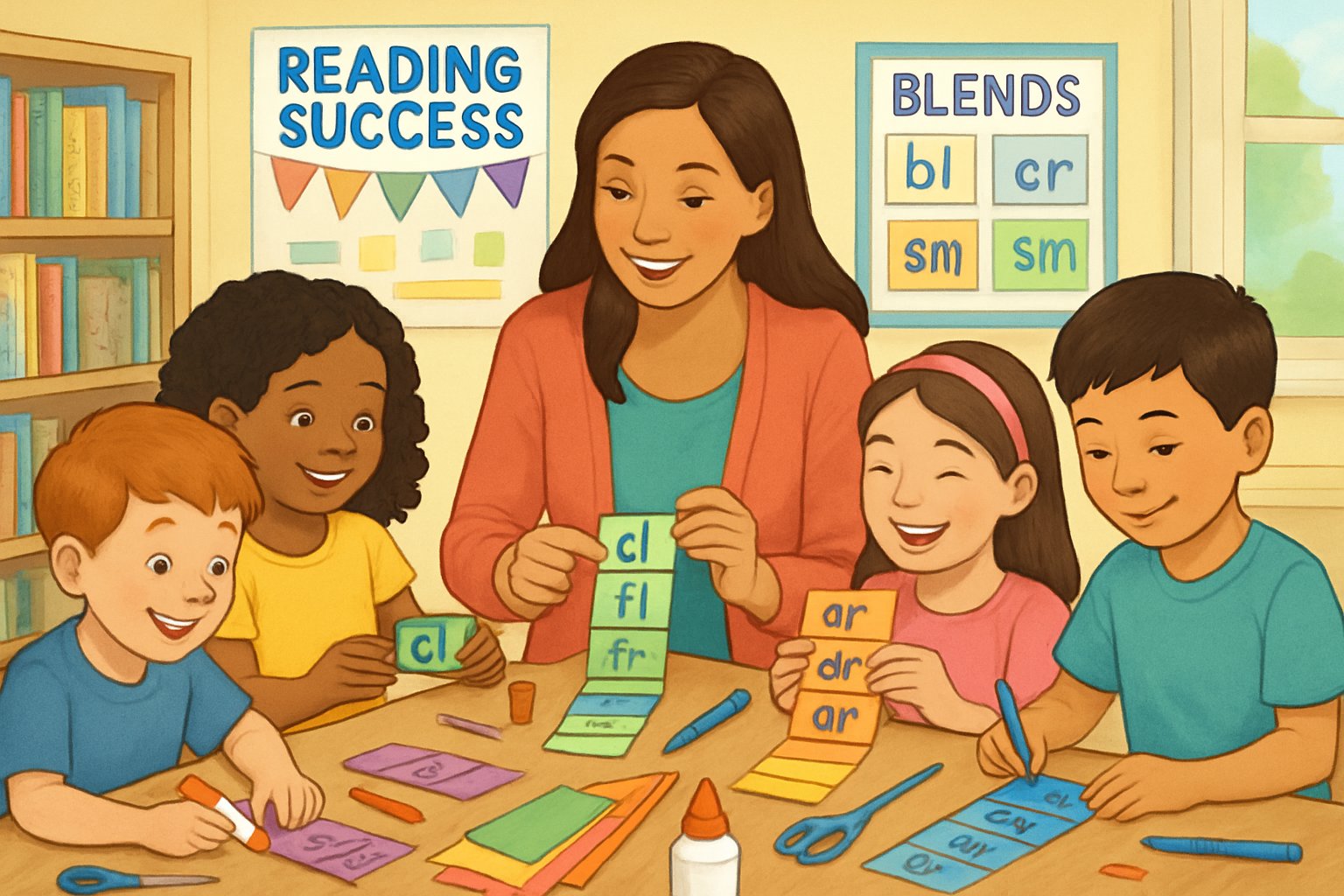
Children learn to read best when they can move, touch, and hear sounds as they practice. Using simple tools like blend ladders, games, and word-building challenges helps them connect letters with sounds and strengthen phonemic awareness through repetition and play.
Building and Using Blend Ladders
Blend ladders turn phonics practice into a hands-on experience. Students use letter tiles, cards, or magnetic letters to build and change words one step at a time. This helps them see how a single letter change can create a new word.
Teachers can make ladders from paper or dry-erase boards. Each rung shows a new word formed by changing one sound, such as cat → bat → bit → sit. Beginning readers start with CVC words and move to CVCC words as they gain confidence.
Practicing consonant blends like bl, st, or gr helps children hear and pronounce blend sounds clearly. Interactive blend ladder activities make blending concrete by letting students physically move letters as they read aloud. This supports both decoding and fluency.
Phonics Games and Centers
Games and literacy centers keep reading practice active and fun. Teachers can set up small stations where students match pictures to blend words, sort cards by short vowel sounds, or build words with letter tiles.
A simple board game using ladders and slides can reinforce consonant blends. Players move up when they read a word correctly and slide down when they miss one. This playful approach motivates learners while reinforcing accuracy.
Centers can follow themes like animals or seasons. In a farm-themed center, children might read and sort words such as grass, barn, and plant. Activities like these, described in hands-on blend ladder games, give repeated exposure to the same letter patterns in different contexts.
Creative Word Chains and Ladders
Word chains help students experiment with sound changes. They begin with one word and change one letter at a time to form a new one. For example:
| Step | Word |
|---|---|
| 1 | slip |
| 2 | slap |
| 3 | snap |
| 4 | trap |
This type of activity builds phonemic awareness and spelling knowledge. Children can create their own chains or solve classmates’ puzzles.
Teachers can guide practice by giving blend sound clues like “starts with br” or “ends with nd.” Word ladders like these, shown in creative word ladder challenges, strengthen decoding and help beginning readers recognize patterns across words.
Leave a Reply