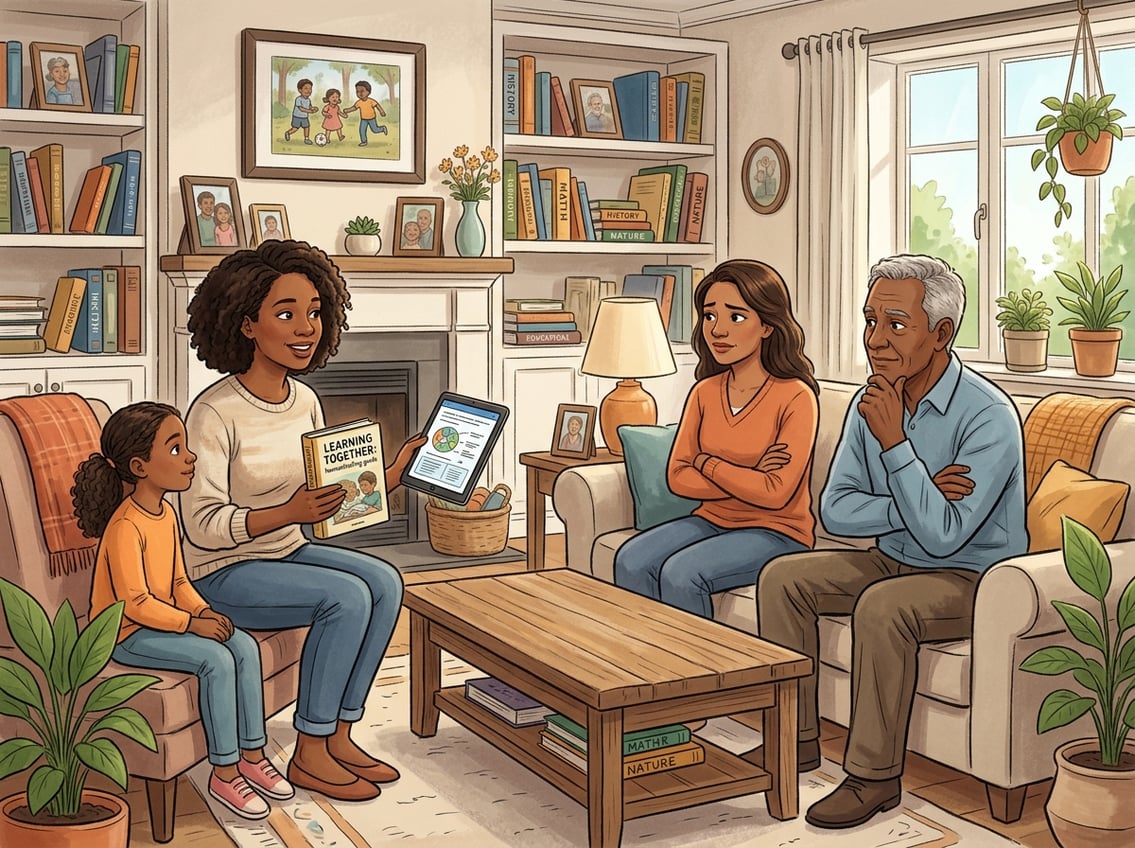
Start With Their Actual Concerns
Relatives who question your homeschooling choice usually aren’t trying to be hurtful. Their concerns almost always come back to three things: academics, socialization, and whether your kids will be ready for adulthood.
Why Relatives Usually Worry About Academics, Socialization, And The Future
Most of your family members grew up in traditional schools. That’s their frame of reference for what “real” education looks like.
When they picture homeschooling, they might imagine your kids sitting at the kitchen table all day with no teacher, no peers, and no clear path to college. The three biggest fears tend to sound like this:
- “Will they fall behind other kids their age?”
- “How will they learn to get along with people?”
- “What about college and getting a job?”
These worries come from love, not hostility. Your relatives want your children to succeed.
They just can’t picture how home education gets them there because it looks so different from what they experienced.
How To Respond With Empathy Instead Of Defensiveness
Your first instinct might be to fire back with facts or shut the conversation down. Neither approach works well.
Instead, try starting with empathy by acknowledging their concern before you explain your reasoning. A simple phrase like, “I completely get why you’d wonder about that,” goes a long way.
It tells your relative they’ve been heard. Once they feel heard, they become far more open to what you say next.
Avoid phrases like “you don’t understand” or “that’s not how it works.” These put people on the defensive.
As a homeschool parent, your goal is a calm conversation, not a debate.
Simple Language That Explains Customized Education And Home Education Clearly
Skip the jargon. Words like “pedagogy” or “deschooling” will confuse relatives who aren’t part of the homeschool community.
Instead, use language anyone can relate to. Try something like this: “We tailor lessons to how each child actually learns best. If one needs more time on math, we slow down. If another is ahead in reading, we keep going. It’s a customized education built around them.”
You can also compare it to something familiar. Ask your relatives, “When you learned to cook or fix something around the house, did you sit in a classroom, or did you just start doing it?”
That comparison helps homeschoolers explain their approach in a way that clicks. Setting boundaries is important too.
If the conversation starts going in circles, it’s okay to say, “I’m happy to answer questions, but I hope we can respect each other’s choices.”
Back Up Your Choice With Proof They Can Understand
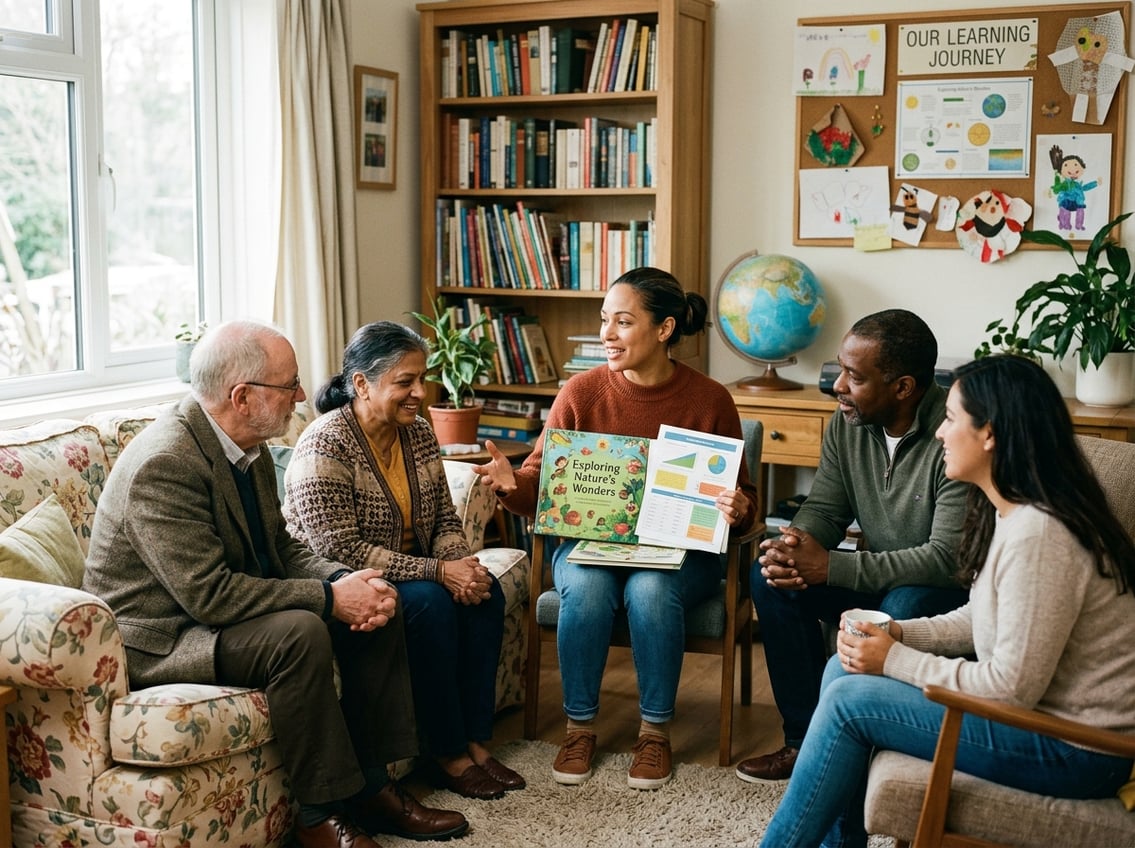
Facts carry weight with skeptics, especially when the data comes from credible researchers and well-known studies. Knowing the right numbers and real-world examples lets you respond calmly instead of scrambling for an answer.
What Research Says About Standardized Tests, Social Skills, And Outcomes
Homeschooled children consistently perform well on standardized tests. According to the National Home Education Research Institute, 50% of peer-reviewed studies show adults who were home educated succeed and perform statistically significantly better than those who attended institutional schools.
That includes both academic achievement and long-term life outcomes. On the socialization front, research shows that homeschooled kids often participate more in community activities than their traditionally schooled peers.
This leads to strong social skills because they interact with people of all ages, not just kids born the same year. Studies also point to higher college GPAs among homeschool graduates compared to students from conventional schools.
Sharing these kinds of results gives your relatives something concrete to consider.
How To Reference The National Home Education Research Institute And Dr. Brian Ray
When your relatives want to see proof, point them to Dr. Brian Ray, the founder of the National Home Education Research Institute (NHERI). He has spent decades conducting education research specifically on homeschooling outcomes.
His work is widely cited because it draws from large sample sizes and peer-reviewed methods. You don’t need to recite study titles at the dinner table.
Simply say, “There’s a researcher named Dr. Brian Ray who has studied thousands of homeschool families for over 30 years. His findings consistently show strong academic and social outcomes.”
This gives your claim a name and a face, which makes it more believable than a vague reference to “studies.”
Real-World Examples That Show Learning Beyond A Classroom
Abstract data is good. Real-world examples are better.
Talk about the things your kids actually do. A field trip to a local nature center teaches biology.
Building a birdhouse covers measurement and problem-solving. Cooking dinner together is hands-on learning in fractions and chemistry.
You can also capture learning activities with photos or short journal entries. Tools like Homeschool Moment help you document progress with educational captions, making it easy to show relatives what a homeschool moment looks like in practice.
Mention creativity and adaptability too. When your child spends a week deep in a project about volcanoes or coding a simple game, they’re building skills no worksheet can match.
These examples turn abstract learning activities into something your family can see and appreciate.
Show What Daily Learning And Long-Term Success Look Like
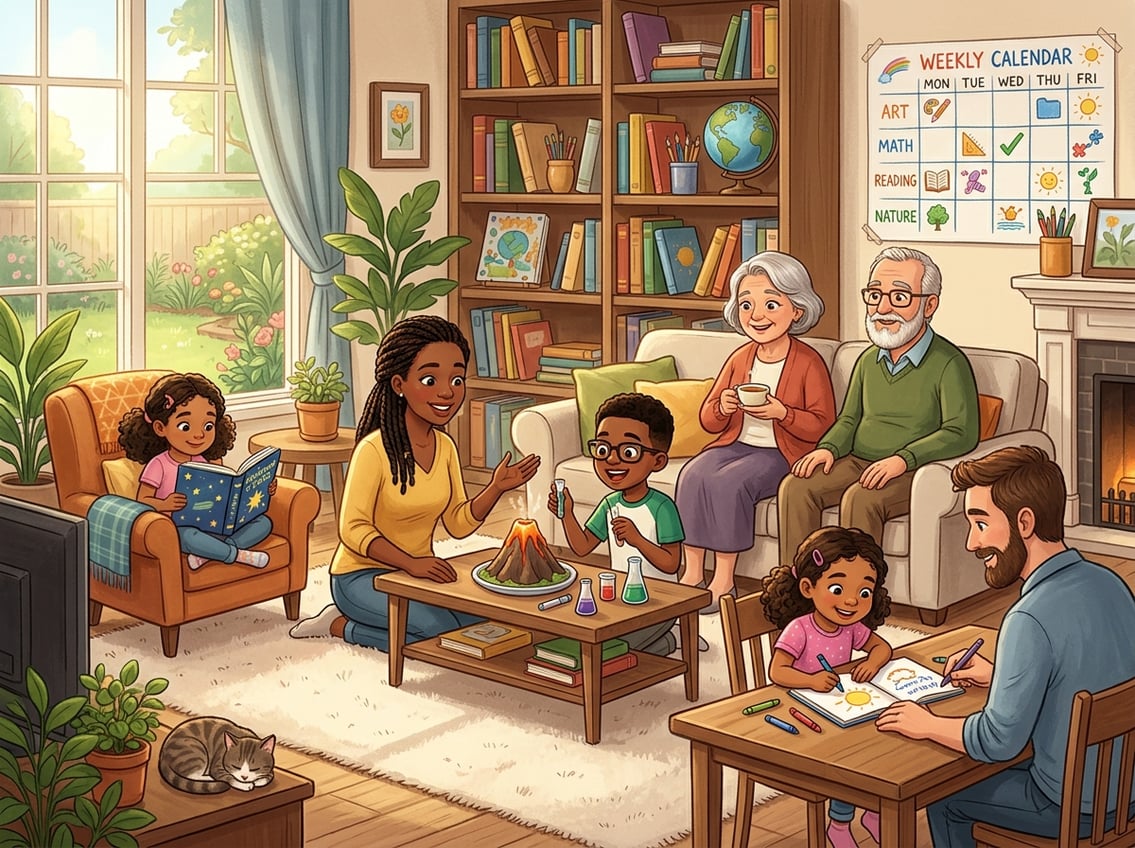
Your relatives may still wonder what a typical homeschool week looks like and whether it leads to real results. Showing them the variety of learning options available to your family can shift the conversation from doubt to curiosity.
Examples Of Co-Op Classes, Dual Enrollment, And Community-Based Learning
Homeschooling doesn’t mean your kids learn in isolation. Co-op classes bring homeschool families together so kids can take group courses in subjects like science labs, foreign languages, or art.
These settings build teamwork and give your children peer interaction on a regular schedule. Dual enrollment is another powerful option.
Many states allow high school-age homeschoolers to take college courses at local community colleges. Your teen earns college credit while still learning at home for other subjects.
This is a strong talking point for relatives worried about college readiness. Community-based learning rounds things out.
Think volunteer work, apprenticeships, museum programs, and local sports leagues. When your relatives see how many structured opportunities exist outside a school building, their picture of homeschooling starts to change.
How Unschooling And Self-Directed Learning Still Build Strong Foundations
If your family leans toward unschooling or self-directed learning, you may face extra skepticism. Resources like Unschooling Mom2Mom and Stark Raving Dad offer research-backed perspectives that can help you explain this approach.
Self-directed learners choose what to study based on their curiosity. That doesn’t mean “no learning.” It means the child drives the process.
A kid who loves dinosaurs might spend months reading, drawing, and visiting natural history museums. Along the way, they pick up reading comprehension, research skills, and scientific thinking.
Unschooling families often find that their children develop strong motivation and adaptability because they’ve been trusted to follow their interests. These traits serve them well in college and careers.
Frequently Asked Questions
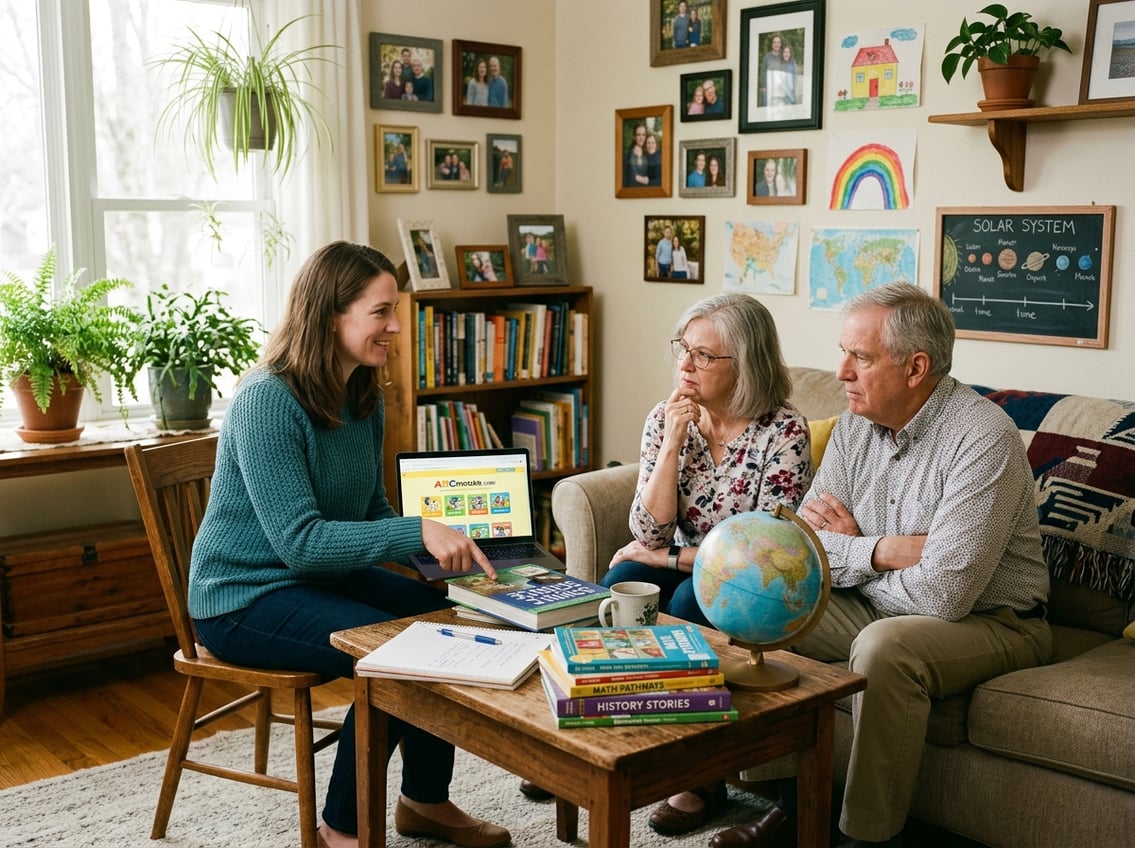
How do I explain my reasons for homeschooling without sounding defensive?
Start by reflecting on your core belief about why you chose this path. Keep your answer short and grounded in your child’s needs, such as, “We wanted an education that fits how our child actually learns.”
A calm, brief explanation feels confident rather than defensive.
What’s the best way to respond when relatives worry about socialization?
Acknowledge their concern first, then share specifics. Mention co-op classes, sports leagues, community groups, and volunteer activities your children participate in.
Homeschooled kids often interact with a wider range of ages than children in traditional school settings.
How can I reassure family members about academic standards and learning progress?
Point to research from organizations like NHERI, which shows homeschoolers perform as well or better academically than peers in traditional schools. You can also share standardized test scores, portfolios, or examples of your child’s recent projects to make progress visible.
What should I say if relatives think homeschooling is isolating or overly restrictive?
Describe the variety of social and educational activities your family takes part in each week. Field trips, group classes, playdates, and community events all show that your children have a full, active life.
Isolation is a common myth that doesn’t match most homeschool families’ reality.
How do I set boundaries when family members keep criticizing our schooling choice?
A firm but kind statement works best. Try saying, “We appreciate that you care, and we’ve put a lot of thought into this decision. I’m happy to answer questions, but I’d like us to move past debating it.”
According to experienced homeschool families, setting clear limits protects your peace while keeping the relationship intact.
How can I address political or media narratives about homeschooling that relatives bring up?

Stay focused on your family’s specific experience rather than getting pulled into broad debates.
Share what your daily routine looks like and the results your children are achieving.
Peer-reviewed academic research on modern homeschooling can also counter misleading stereotypes with credible data.
Leave a Reply