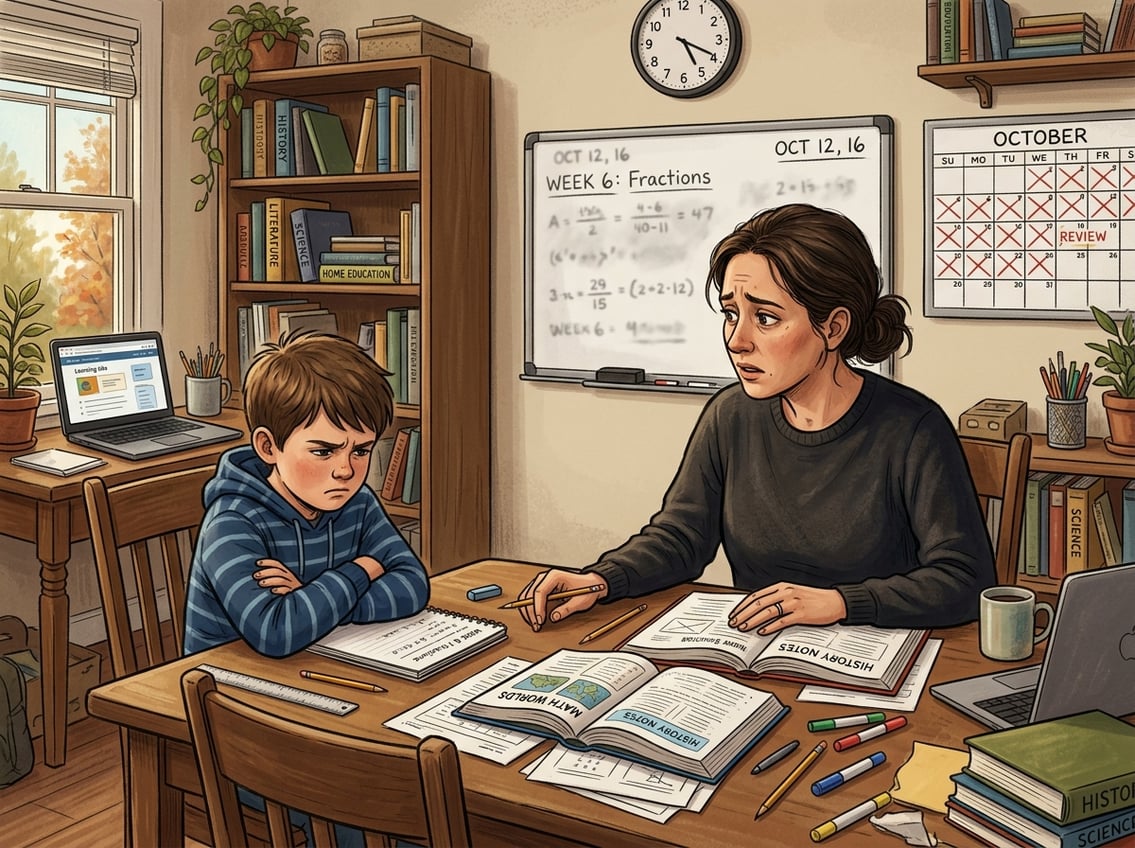
Warning Signs You Should Not Ignore
Homeschooling struggles come in many forms. The most serious ones tend to build gradually over weeks and months.
Recognizing the difference between a rough patch and a genuine breakdown can save your family a lot of unnecessary stress.
Academic Progress Has Stalled
One of the clearest signs that homeschooling is off track is when your child stops making forward progress. You might notice they are stuck on the same math concepts for months or their reading level hasn’t improved.
If your child consistently scores lower on assessments or struggles with material well below grade level, that is not just a bad week. It could point to a curriculum mismatch, a learning gap, or a need for professional evaluation.
According to the Coalition for Responsible Home Education, some states offer verification tools to help parents confirm their children are on track. This can be a useful checkpoint.
Track your child’s progress in writing, even informally. When you can look back over a full quarter and see little movement, you have data telling you something needs to change.
Daily Resistance Is Becoming the Norm
Every child pushes back on schoolwork sometimes. That is normal.
What is not normal is when every single lesson turns into a battle, tears, or total shutdown. If your child hides materials, refuses to sit down, or melts down at the mention of school most days, this pattern signals more than laziness.
As noted by HSLDA, homeschooling shouldn’t be hard every day, and when it is, something needs to shift. Persistent resistance often means your child feels overwhelmed, bored, or disconnected from the learning process.
Pay attention to when the resistance spikes. Is it a specific subject or a certain time of day?
Parent Burnout Is Affecting Consistency
You are the engine of your homeschool. When you are running on empty, everything breaks down.
Skipping lessons regularly, winging it without a plan, or dreading mornings are all signs of homeschool burnout. Burnout does not mean you are a bad parent or teacher.
It means your current setup is unsustainable. Maybe you are trying to do too much, lack breaks, or have no outside support.
The problem is that inconsistency caused by burnout directly impacts your child’s learning. Weeks of missed lessons add up fast.
Be honest about how many days in the last month you actually completed your planned lessons. If the number is low, burnout, not your child, may be the real issue.
Your Relationship With Your Child Is Suffering
This is the warning sign that carries the most weight. When homeschooling starts damaging the parent-child bond, you have crossed a line that demands attention.
If you find that most of your interactions with your child revolve around conflict over schoolwork, resentment can build on both sides. Your child may start avoiding you.
You may feel anger or frustration that spills into non-school hours. Your relationship with your child will outlast any curriculum or school year.
If homeschooling is eroding trust and closeness, that alone is reason enough to make a significant change.
What Is Actually Causing the Breakdown
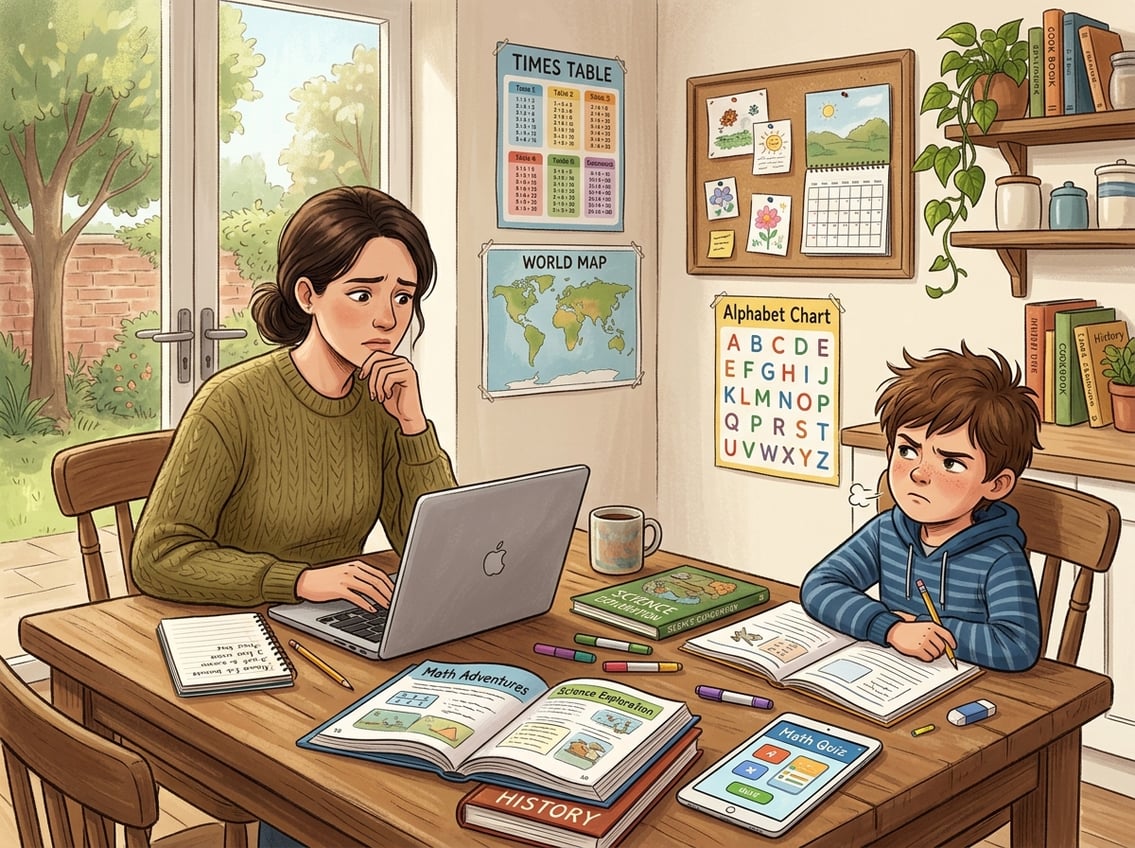
Before you decide that homeschooling itself is the problem, it is worth looking deeper at what is actually going wrong. Often the root cause is something specific and fixable, not the entire concept of learning at home.
A Poor Curriculum or Teaching Fit
Not every curriculum works for every child. A program that worked beautifully for your oldest might be a terrible match for your youngest.
If your child seems bright and capable in everyday life but shuts down during lessons, the materials or your teaching style may be the mismatch. As HSLDA points out, it is completely fine to change curriculum mid-stride.
A hands-on learner stuck with a textbook-heavy program will struggle, and that is not a failure on anyone’s part. It is simply a bad fit.
Try switching one subject at a time so you can pinpoint what helps.
Schedule and Structure Are Working Against You
Some families thrive with a strict 8 a.m. start and a detailed daily plan. Others do better with a loose rhythm and afternoon lessons.
If your schedule feels like it is constantly fighting your family’s natural energy, that friction will show up as resistance, missed lessons, and frustration. Ask yourself whether your homeschool day is built around how your family actually functions or around how you think school should look.
A child who is not a morning person will not suddenly become one because you printed a schedule. As noted by The Simplified Homeschool, it is worth asking whether the schedule itself, not the schooling, is what feels broken.
Outside Stress Is Being Mistaken for a School Problem
Your homeschool is an easy target when life gets hard. Marital stress, financial pressure, a new baby, a family health crisis, or even seasonal mood changes can all make homeschooling feel impossible, even when the school itself is fine.
Take an honest look at what has changed recently in your life beyond academics. If the timing of your homeschool struggles lines up with a major life event or an ongoing stressor, the solution may have nothing to do with curriculum or teaching methods.
As one HSLDA guide explains, homeschooling is a convenient thing to blame when the real issues are elsewhere. Seek support for the actual problem first.
Your Child May Need More Specialized Support
Sometimes the struggles you are seeing point to something a parent alone cannot address. Learning disabilities like dyslexia, ADHD, processing disorders, or giftedness that needs different pacing can all look like “homeschooling isn’t working” on the surface.
If your child works hard but still falls behind, avoids reading or writing consistently, or seems to forget skills they recently learned, consider getting a professional evaluation. The American Psychological Association recommends that parents factor in their child’s individual learning needs and developmental stage when making education decisions.
Getting answers is not giving up. It is getting your child what they need to succeed.
What to Change Before Making a Final Decision
Quitting homeschooling entirely may feel like the only option. Several meaningful changes could turn things around before you make that call.
Small, strategic shifts often produce surprisingly big results.
Try Small Targeted Adjustments First
Resist the urge to overhaul everything at once. Instead, identify the one or two areas causing the most pain and focus there.
If mornings are a disaster, try starting after lunch. If one subject triggers daily meltdowns, swap the curriculum for just that subject.
If your child is bored, add hands-on projects or let them choose the order of their assignments. According to Our Daily Mess, tackling common challenges with specific, practical steps often leads to a turnaround without drastic measures.
Give each change at least two to three weeks before judging whether it works. Quick pivots without enough time to adjust create more chaos, not less.
Bring In Outside Help Through Co-Ops or Hiring a Tutor
You do not have to teach every subject yourself. Joining a homeschool co-op gives your child a classroom experience with other kids and a different teacher’s perspective.
Hiring a tutor for a subject where you or your child consistently struggle can relieve enormous pressure. Even one day a week at a co-op can give you breathing room and give your child social interaction and fresh instruction.
If cost is a concern, many communities have affordable group classes, and some experienced homeschool parents offer tutoring at lower rates. The important thing is recognizing that bringing in outside help is not a sign of failure.
It is a smart use of resources.
Consider Hybrid, Online, or Traditional School Options
Homeschooling does not have to be all or nothing. Hybrid programs let your child attend a physical school two or three days a week while learning at home the rest.
Online schools provide structured curriculum with teacher support while keeping your child home. Traditional public or private school is always an option.
As Parenting Mentor suggests, exploring attendance options and alternative programs through your local district can reveal flexible solutions you did not know existed. Talk to your child about what they want too.
Their input matters.
Decide Based on the Next Season, Not One Bad Week
A terrible week, or even a terrible month, is not enough information to make a life-changing decision. Stress, illness, holidays, and growth spurts can all throw your homeschool off temporarily.
Make your decision based on consistent patterns over a full season, not based on your worst moments. If you have made targeted adjustments, brought in help, and explored alternatives, and things still are not improving after several months, that is a clear and fair signal to move on.
If things start to shift for the better, give the new approach time to take root.
Frequently Asked Questions
What are the warning signs that my child is falling behind academically at home?
Look for stalled progress in core subjects like reading, writing, and math over a period of weeks or months. If your child cannot retain material they previously understood, consistently scores below grade level on assessments, or avoids academic tasks entirely, these are signs that the current approach is not working.
Tracking progress with simple records each month can help you spot trends early.
How can I tell if homeschooling is harming my child’s social development or mental health?
Watch for increased withdrawal, sadness, anxiety about learning, or a loss of interest in activities they used to enjoy. If your child rarely interacts with peers or expresses loneliness frequently, their social needs may not be met.
The APA recommends considering social-emotional factors alongside academics when evaluating your child’s educational setting.
What should I do if daily lessons are consistently ending in conflict or burnout?
First, take a break and assess whether the conflict is tied to a specific subject, time of day, or workload level. Then make one small change at a time, such as adjusting your schedule or switching a difficult curriculum.
If burnout is the main driver, building in regular breaks for yourself is just as important as adjusting your child’s workload.
How do I know whether the curriculum or my teaching approach is the real problem?

Ask yourself whether your child struggles across all subjects or just one.
If the difficulty is isolated to a single subject, the curriculum for that subject is likely the issue.
If your child resists everything regardless of the topic, your teaching style, schedule, or the overall structure may need to change.
Experimenting with a different format, like video lessons or hands-on activities, can help you narrow it down.
Can a child fail homeschool, and what indicators suggest we’re at risk?
A child cannot “fail” homeschool in the traditional sense since there is no report card from a school.
Real failure looks like significant learning gaps, missed milestones, and a child who is not progressing toward grade-level skills.
If your child is multiple grade levels behind in key subjects and the gap is growing rather than shrinking, you need to take action by changing your approach or seeking professional help.
When is it time to consider switching to public school, private school, or a hybrid program?

It is time to seriously explore other options when you have made multiple adjustments over several months and still see no improvement in your child’s academic progress or emotional well-being.
As The Home Writer notes, choosing what is best for your child and family right now does not mean you have failed.
It means you are prioritizing your child’s needs above a particular method of schooling.
Leave a Reply