Top 10 Science Experiments to Spark Curiosity
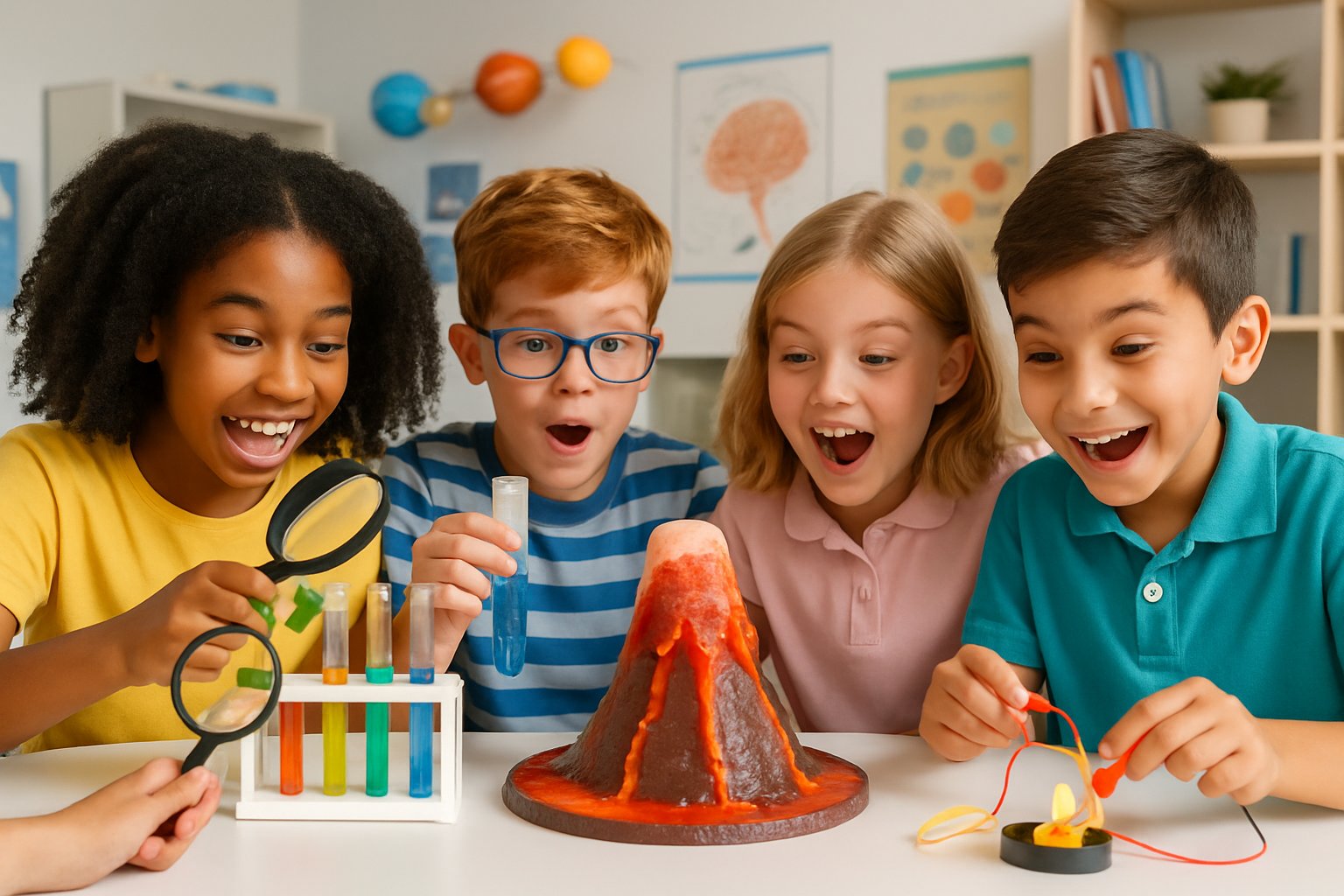
Kids learn best when they can see, touch, and test ideas for themselves. Simple hands-on projects using household materials help them understand scientific concepts like chemical reactions, density, and energy transfer in a fun and memorable way.
Magic Milk Experiment
The Magic Milk Experiment uses milk, food coloring, and dish soap to show how surface tension works. When soap touches the milk’s surface, it breaks the bonds between fat molecules, causing the colors to swirl.
This simple setup needs only a shallow dish, whole milk, a few drops of food coloring, and a cotton swab dipped in dish soap. The result is a colorful motion that feels almost alive.
Kids see how molecules interact and learn that soap doesn’t just clean—it changes how liquids behave. This experiment is quick, safe, and perfect for younger learners.
Baking Soda Volcano
The Baking Soda Volcano is a classic and exciting way to demonstrate a chemical reaction. Mixing baking soda and vinegar produces carbon dioxide gas, which creates bubbling “lava.”
To make it, children can shape a volcano from clay or dough around a small container. Adding a few drops of red food coloring makes the eruption look realistic.
This project introduces the idea of acids and bases reacting. It’s a favorite among parents and teachers for its simplicity and visual impact. For step-by-step guidance, see this DIY volcano guide.
Elephant Toothpaste
The Elephant Toothpaste experiment shows how fast oxygen gas can form when hydrogen peroxide breaks down. Adding yeast or potassium iodide as a catalyst speeds up the reaction, making foam shoot out like giant toothpaste.
Children can mix hydrogen peroxide, dish soap, and food coloring in a tall bottle. When they add the catalyst, bubbles fill the container.
This reaction teaches about catalysts and exothermic processes. It’s important to use safety goggles and adult supervision since the reaction releases heat.
Invisible Ink
The Invisible Ink activity lets kids write hidden messages that appear with heat or chemical change. Lemon juice is a common “ink” because it oxidizes when warmed, turning brown and revealing the message.
Students can use a cotton swab to write on paper, then hold it near a light bulb or iron to reveal the words.
This simple experiment introduces acids and oxidation. It’s a fun way to connect science with history, as invisible ink was once used for secret communication. See how it’s explained in this list of home science experiments.
Dancing Raisins
The Dancing Raisins experiment demonstrates buoyancy and gas bubbles in action. When raisins are placed in carbonated water, bubbles attach to their rough surfaces, lifting them upward. Once the bubbles pop, the raisins sink again.
This simple setup needs only a glass, soda water, and a few raisins.
Children can observe how gas changes density and movement in liquids. It’s a gentle introduction to physics concepts like buoyancy and gas behavior, using everyday materials.
Balloon Rocket
The Balloon Rocket shows how air pressure and thrust create motion. By releasing air from a balloon attached to a straw on a string, kids can see Newton’s Third Law—every action has an equal and opposite reaction—in action.
To set it up, thread a straw onto a long string tied between two points. Tape an inflated balloon to the straw and let it go.
This experiment helps learners understand propulsion and force. It’s a simple way to connect science with real-world examples like rockets and airplanes.
Walking Water Experiment
The Walking Water Experiment uses paper towels and colored water to show capillary action. Water “walks” from one cup to another through the paper towel, mixing colors along the way.
Children will need three cups, water, food coloring, and paper towels. After a few hours, the colors blend in the middle cup, forming new shades.
This experiment helps kids see how plants absorb water through their stems. It’s a hands-on way to explore a key process in biology. More details are available in this guide to fun science experiments.
DIY Lava Lamp
The DIY Lava Lamp combines oil, water, and a fizzing tablet to create colorful bubbles that float and sink. It demonstrates liquid density and gas release.
To make one, fill a clear bottle with water and oil, add food coloring, then drop in an effervescent tablet. The bubbles rise and fall as gas escapes.
This experiment helps children visualize how different liquids interact. It’s safe, quick, and visually appealing. You can find a similar example in this family-friendly science activity list.
Water Cycle in a Bag
The Water Cycle in a Bag shows evaporation, condensation, and precipitation in a simple way. Kids can draw a sun and clouds on a plastic bag, fill it with a bit of water, and tape it to a sunny window.
Over time, droplets form and fall inside the bag, mimicking rain.
This activity helps children understand how water moves through the environment. It’s a great visual tool for teaching weather and the natural cycle of water.
Solar Oven S’mores
The Solar Oven S’mores project uses sunlight to melt chocolate and marshmallows, showing how solar energy can cook food. A pizza box lined with aluminum foil acts as a reflector, trapping heat inside.
Kids can measure how long it takes for the s’mores to melt, learning about heat transfer and renewable energy.
This experiment connects science to everyday life and encourages discussions about sustainable energy. It’s both educational and delicious, making it a favorite for outdoor learning.
Fun Science Activities and Variations for Every Age
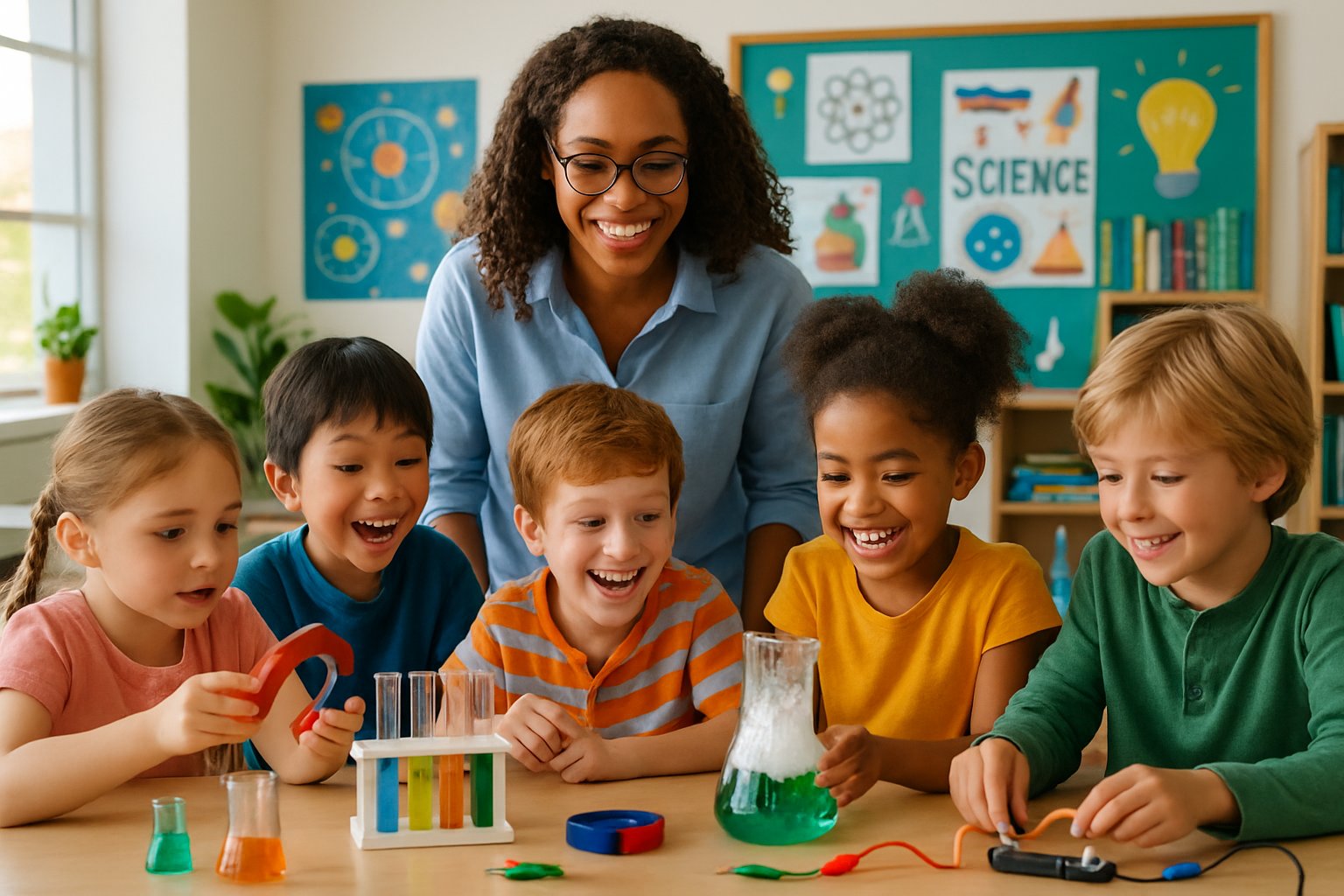
Kids learn best when they can see, touch, and test ideas for themselves. These hands-on experiments use everyday materials to teach real science in a fun, simple way that works well at home, in classrooms, or during homeschooling activities.
Giant Bubbles
Making giant bubbles helps children explore surface tension and air pressure. They can mix a bubble solution using water, dish soap, and a little glycerin or corn syrup. The glycerin slows evaporation, making stronger bubbles that last longer.
To create the wand, kids can use two straws and a loop of cotton string. When dipped into the solution and pulled through the air, the film stretches into huge shimmering shapes.
A quick tip is to let the solution rest overnight before use. This allows the ingredients to mix well and improves bubble size. For more bubble science ideas, visit Science Fun for Everyone.
| Ingredient | Purpose |
|---|---|
| Dish soap | Forms the bubble film |
| Water | Dilutes the soap |
| Glycerin or corn syrup | Strengthens the film |
Homemade Bouncy Balls
Homemade bouncy balls teach kids about polymers and chemical reactions. Mixing glue, cornstarch, and borax solution forms a stretchy material that solidifies into a ball when rolled.
Children can experiment with different glue types or ratios to see how the texture and bounce change. Clear glue creates a glassy look, while white glue makes an opaque ball.
Rolling the mixture quickly while it’s still sticky helps it form a smooth sphere. Once dry, it bounces just like a store-bought ball. Step-by-step guides for similar activities appear on Science Sparks.
Safety note: Adult supervision is important when handling borax.
Egg in a Bottle
In the egg in a bottle experiment, kids learn about air pressure in a clear, visual way. A peeled boiled egg sits on the mouth of a glass bottle. When a small piece of burning paper is dropped inside, the flame heats the air and causes it to expand.
As the flame goes out, the air cools and contracts, pulling the egg into the bottle. The egg’s movement shows that air takes up space and exerts pressure.
To remove the egg, blowing air into the bottle increases pressure again, pushing it out. This simple demonstration works great for homeschooling lessons about gases and pressure changes.
Egg Drop Challenge
The egg drop challenge encourages creativity and problem-solving. Kids design a container that protects a raw egg from breaking when dropped from a height.
They can use materials like straws, paper, tape, or cotton balls to absorb impact. Testing different designs helps them understand gravity, force, and cushioning.
A fun variation is to compare results between groups or use different drop heights. For extra exploration, kids can record results and discuss why certain designs worked better. Find other hands-on physics ideas at Little Bins for Little Hands.
Encouraging children to adjust, test, and retest their designs helps them think like real scientists.
Exploring Science Concepts Through Play
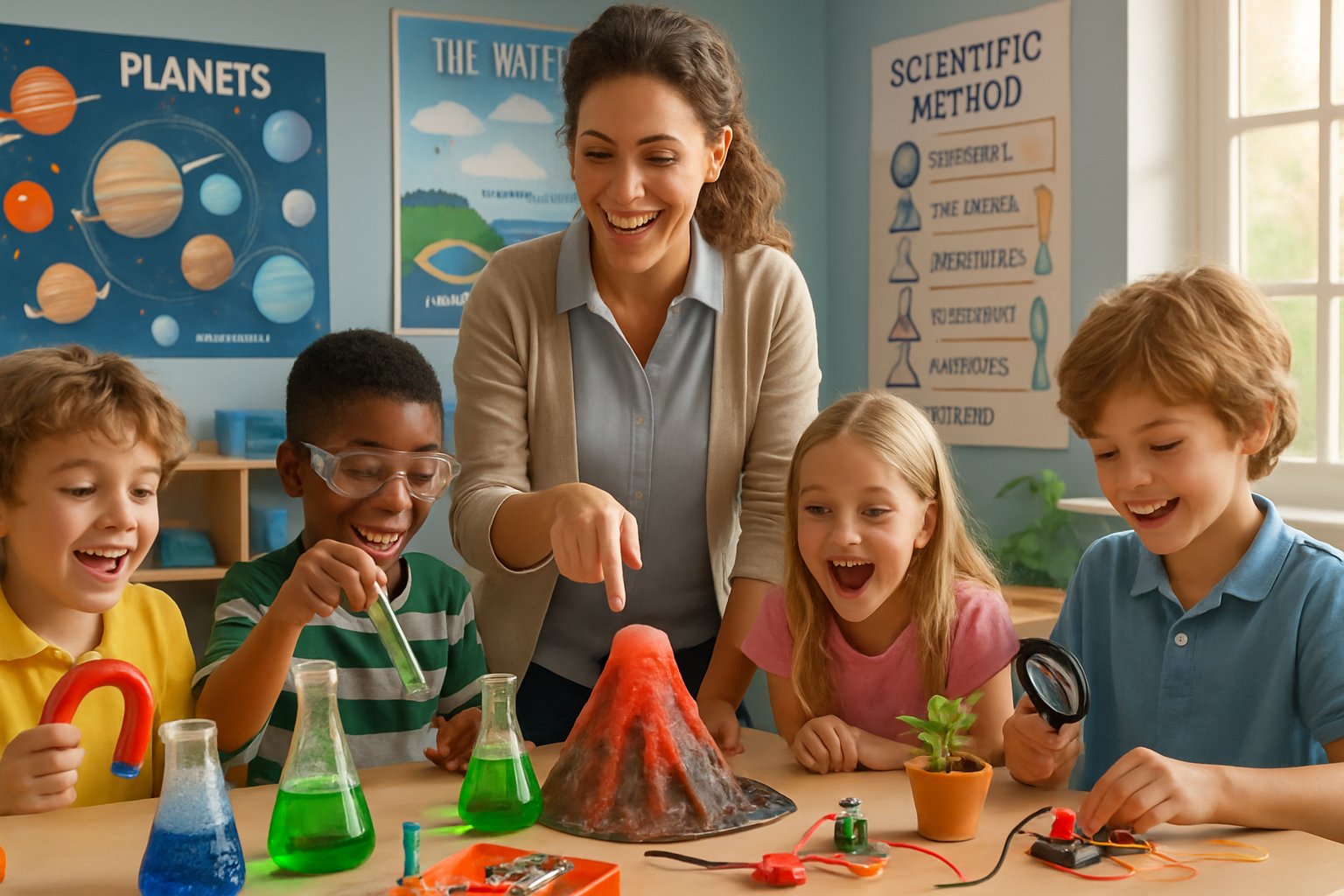
Children learn best when they can see and touch what they study. Simple experiments with water, paper, and balloons help them understand real science ideas like movement, attraction, and how liquids travel through materials.
Capillary Action
Capillary action shows how water moves upward through tiny spaces in materials. It helps explain how plants pull water from their roots to their leaves. Kids can see this in action with a few cups of water, paper towels, and food coloring.
To try it, they can fill three cups with water—two with colored water and one empty. Place paper towels between the cups so they dip into the liquids. Over time, the colors travel through the towels and mix in the middle cup.
This activity helps children notice how water molecules stick to each other and to the towel fibers. It’s a fun way to explore natural processes like how trees and flowers stay hydrated. The project is similar to those described in nature-based science play activities, which emphasize observation and discovery.
Static Electricity with a Balloon
Static electricity happens when objects gain or lose electrons. A balloon rubbed on hair or fabric becomes charged and can attract light objects. Kids can explore this with a balloon, small paper pieces, and a clean surface.
After rubbing the balloon on their hair, they can hold it near the paper bits and watch them jump up. The balloon’s charge pulls on the neutral paper, showing how invisible forces act between objects.
They can also test what happens when they rub the balloon on different materials like wool or cotton. This teaches that some materials hold charges better than others. Activities like these are featured in easy science experiments for kids, which use common items to explain physical science.
Static Electricity Butterfly
The static electricity butterfly adds creativity to the same concept. Kids can make a paper butterfly with tissue paper wings and a cardstock body taped to a table. When they rub a balloon on their hair and bring it close, the wings lift and flutter.
This happens because the charged balloon attracts the lightweight tissue paper. The wings rise toward the balloon without touching it, showing how electric forces work through air.
Children can test how far the balloon must be to move the wings or how long the charge lasts. This experiment combines art and science, turning a simple idea into a playful learning moment similar to projects found in hands-on science activities.
Leave a Reply