Choose Materials With Savings In Mind
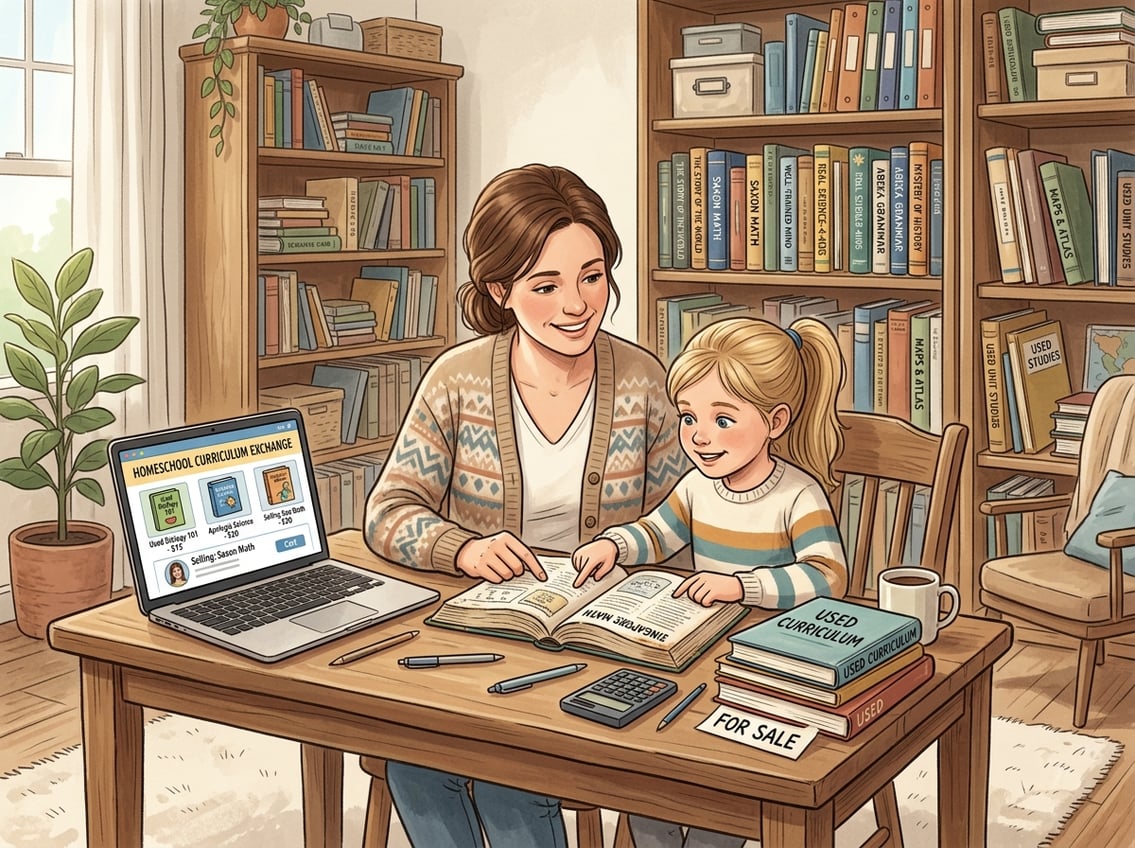
The curriculum you pick determines how much you can save when buying used and how much you can recoup when selling later. Choosing the right homeschool curriculum from the start keeps your costs low all year long.
Start With Your Child’s Learning Style
Before you spend a dime, figure out how your child learns best. A hands-on learner will struggle with a text-heavy program, and you will end up buying something else mid-year.
That doubles your cost instead of cutting it. Spend a week or two observing.
Does your child absorb information through listening, reading, drawing, or building? Match the curriculum style to those strengths.
A child who loves stories may thrive with a literature-based approach. A child who needs structure may do better with a workbook-driven program.
Skipping this step is the most expensive mistake new homeschooling families make. As many experienced families have noted, buying a full multi-subject set before testing the approach often leads to wasted money and frustration.
Compare Reusable And Consumable Programs
Not all curriculum holds its resale value equally. Reusable programs, where the student works on separate paper, can be passed down to younger siblings or sold at a strong price.
Think of titles like The Ordinary Parent’s Guide to Teaching Reading or non-consumable math texts. Consumable programs, like Spelling Plus workbooks or fill-in-the-blank sheets, lose most of their value the moment your child writes in them.
They typically sell at only 10 to 20 percent of retail, if they sell at all.
Here is a quick comparison:
| Feature | Reusable Programs | Consumable Programs |
|---|---|---|
| Resale value | 50–70% of retail | 10–20% of retail |
| Sibling reuse | Yes | No |
| Upfront cost | Sometimes higher | Often lower |
| Examples | Instructor guides, hardcover texts | Workbooks, spelling notebooks |
When choosing curriculum, lean toward reusable formats whenever possible. If a program requires consumable workbooks, check whether the publisher sells those separately so you can still buy the core materials used.
Check Editions, Completeness, And Teacher Guides
Editions matter more than most buyers realize, especially in math and science. Programs from publishers like Saxon Math release updated editions, and the teacher guides from one edition may not align with student texts from another.
Always confirm the exact edition number before purchasing. Completeness is equally important.
Programs used in Classical Conversations communities or structured co-ops often include multiple components: a student book, a teacher guide, an answer key, and sometimes a separate test booklet. Missing even one piece can make the set unusable.
Ask every seller to list exactly what is included and what is not. A listing that says “all but workbooks” means you still need to buy those new.
Factor that cost in before you decide the deal is worth it.
Test Before You Commit
Many publishers offer free sample lessons or trial periods on their websites. Download a chapter.
Print a few pages. Sit down with your child and work through them together.
If you are considering a pricier program, attend a local homeschool conference or curriculum fair where you can flip through the actual books. Talking to families who have used the program gives you information that no product listing can match.
Starting with one or two subjects and evaluating before committing to a full-year package is the safest way to protect your budget.
Best Places To Find Used Curriculum Deals

Used homeschool curriculum typically costs 40 to 70 percent less than retail. The best deals come from knowing exactly where to look and when to shop.
Local networks, online marketplaces, consignment sales, and free digital resources each serve a different purpose in stocking a reading library and filling out your subjects.
Shop Local Through Parent Networks
Your local homeschool groups are the single best place to start. Facebook groups with names like “[your state] homeschool buy sell trade” connect you directly with families in your area.
You can arrange local pickup, which eliminates shipping costs on heavy boxed sets. Build relationships with families whose children are a grade or two ahead of yours.
They become reliable repeat sellers, and you often get first access to curriculum before it hits a public listing. Many homeschool co-ops also run seasonal curriculum swap events in church halls and community centers, where you can browse tables of materials and negotiate prices on the spot.
Search Online Marketplaces Efficiently
When shopping online, search by publisher and edition rather than by subject. Typing “math curriculum” returns thousands of results.
Typing “Saxon Math 5/4 third edition” returns exactly what you need. The top platforms to check:
- Homeschool Classifieds at homeschoolclassifieds.com is the oldest dedicated marketplace, organized by publisher and subject with no listing fees.
- Facebook Marketplace works well for local deals where you can preview materials in person.
- eBay is your best bet for out-of-print editions or hard-to-find curriculum sets that are no longer actively sold by publishers.
Bookmark your searches and check back every few days. New listings appear constantly, and the best-priced sets sell fast.
Browse In Person Before You Buy
Homeschool conferences and consignment sales let you physically flip through workbooks, check for writing or highlighting, and confirm completeness before handing over any money. Consignment events like Bright Ideas Homeschool Consignment give you a curated selection of pre-screened materials at set prices.
Regional curriculum fairs run by state homeschool networks typically happen in late spring. Vendor halls feature both new and used materials side by side, making it easy to compare prices in real time.
Bring a list of what you need and the retail prices so you can spot a genuine deal quickly.
Know When Free Or Digital Options Make Sense
Sometimes the smartest budget move is skipping used curriculum altogether. Public domain literature, free online courses, and open-source programs cover many subjects at zero cost.
For stocking a reading library, your local public library and free e-book platforms save on homeschool curriculum costs more than any sale can. Digital subscriptions also make sense for subjects that update frequently, like science and current events, where older used editions may contain outdated information.
Weigh the convenience and accuracy of a digital option against the savings of buying a used physical copy.
Inspect Listings And Avoid Costly Mistakes

A great price on used curriculum means nothing if the materials show up incomplete, heavily marked, or incompatible with what you need. A few minutes of careful checking before you pay will save you hours of frustration and unexpected replacement costs.
What To Ask A Seller Before Paying
Never assume a listing includes everything. Ask these questions directly:
- What exact edition and printing year is this?
- Is every component included? (student text, teacher guide, answer key, test booklet, supplemental materials)
- Are any pages written in, highlighted, or torn?
- Can you send photos of the table of contents, a sample interior page, and the spine?
Good sellers appreciate specific questions because they lead to smooth transactions. Vague listings with no photos are a red flag.
If a seller cannot confirm the edition or describe the condition clearly, move on.
How To Spot Missing Pieces And Outdated Content
Homeschool curriculum packages often contain multiple parts, and sellers sometimes lose track of what they have. Literature-based programs like Sonlight include specific book lists that must accompany the instructor guide.
A guide without the book collection leaves you sourcing dozens of individual titles. For any program with an online component, ask whether access codes have already been redeemed.
Most publishers tie digital access to a single account, and a used code is worthless to you. Check the publisher’s website to confirm whether online access transfers with a used copy.
Outdated content is most common in science and history programs. A 2012 science text may contain information that has been revised or corrected since publication.
Math and grammar programs tend to age better.
When Shipping, Rentals, Or New Copies Are Better Deals
Shipping heavy curriculum sets can cost $10 to $20 or more, especially for complete boxed programs that weigh 8 to 12 pounds. Always factor shipping into the total price before comparing it to a new copy.
Sometimes a rental program or a group-discounted new copy beats the used price. Homeschool Buyers Co-op negotiates bulk discounts on new curriculum that can bring the cost close to used prices, with the guarantee of completeness and current editions.
Buy new when the used savings are less than 20 percent and the program includes digital access codes. In those cases, the small savings are not worth the risk of missing or expired components.
Sell Last Year’s Materials For The Best Return
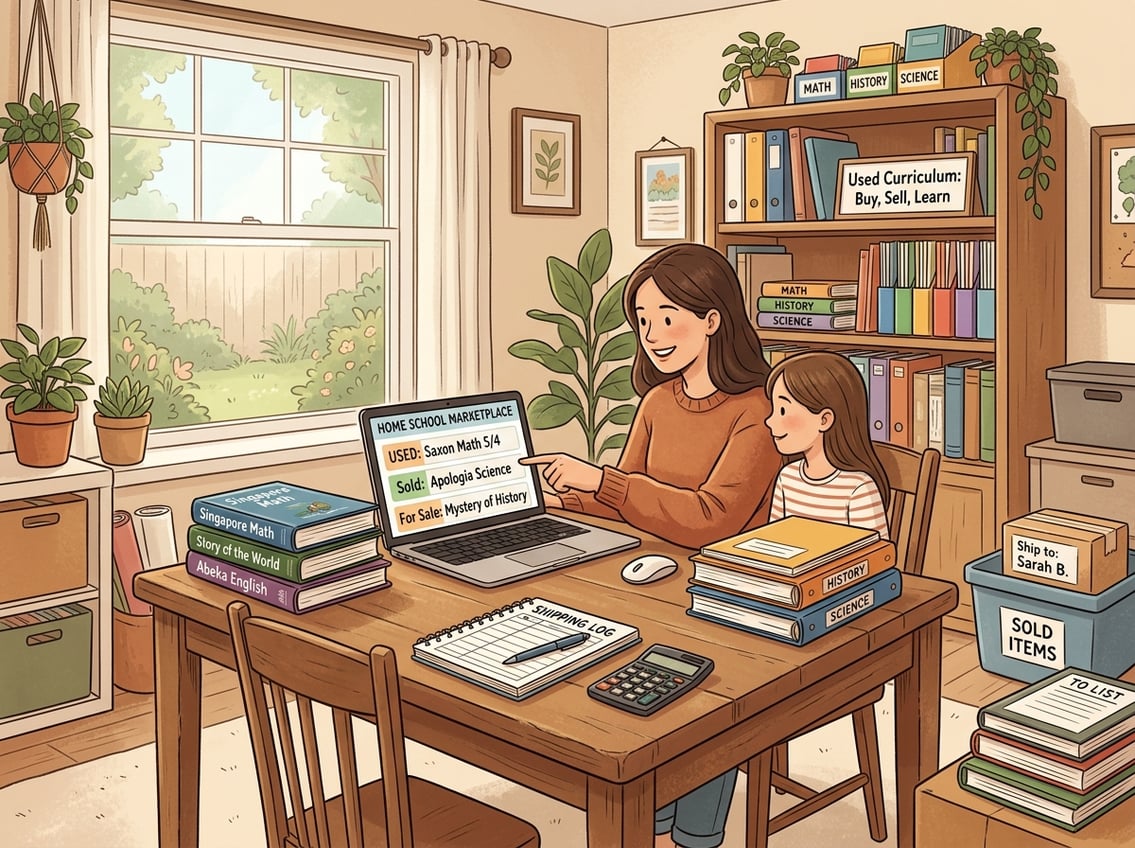
Selling your used curriculum is just as important as buying it wisely. With the right approach, you can recoup a meaningful portion of your spending and keep your homeschool budget healthy year after year.
Clean, Sort, And Price Items Realistically
Start by pulling everything off your shelves and sorting it into three piles: sell, keep for a younger sibling, and recycle. Erase any pencil marks in workbooks.
Remove sticky notes and bookmarks. Wipe down covers with a damp cloth.
Price your materials at 50 to 60 percent of the current retail price for standard items in good condition. Complete sets with teacher guides and answer keys can command 65 to 70 percent of retail.
Heavily written-in consumable workbooks should be priced at 10 to 20 percent, or bundled as freebies with larger purchases to sweeten the deal. Check current listings on Homeschool Classifieds and eBay to see what similar items are actually selling for.
Pricing too high means your materials sit unsold through the buying season.
Write Listings That Help Materials Sell Faster
A strong listing includes five things:
- The exact title, edition number, and publishing year
- A complete list of what is included (and what is not)
- The condition, noting any marks, highlighting, or wear
- Clear, well-lit photos of the cover, spine, and a sample interior page
- Your price, plus whether shipping is included or local pickup only
Detailed listings reduce back-and-forth questions and build buyer confidence. Vague descriptions like “good condition, barely used” do not sell as fast as specific ones.
Use The Right Channel For Each Type Of Item
Different platforms work better for different types of materials:
| Item Type | Best Selling Channel |
|---|---|
| Complete boxed sets | Local homeschool groups (avoids shipping) |
| Individual textbooks | Homeschool Classifieds or eBay |
| Out-of-print or rare editions | eBay (widest buyer pool) |
| Partial sets or consumables | Local curriculum swap events |
| Bundles by grade level | Facebook Marketplace |
Selling on eBay works especially well for niche or hard-to-find items where buyers are willing to pay shipping for something they cannot locate locally.
Time Your Sales Around The Homeschool Calendar
Timing makes a huge difference in how fast your materials sell and the price you get. The heaviest buying activity happens from March through June, as families plan for the upcoming year.
A second wave hits in August when families who changed their approach mid-summer need new materials quickly. List your items in late March or early April for the best combination of selection-hungry buyers and strong prices.
Waiting until September means competing with everyone else who procrastinated. Buyers at that point expect steeper discounts.
If you attend a local curriculum sale or co-op swap event, bring your priced items ready to go with clear labels. Cash sales at in-person events are fast, simple, and free of platform fees.
Frequently Asked Questions
Where are the best places to buy used homeschool curriculum at a good price?
Local Facebook homeschool groups, Homeschool Classifieds, and eBay are the three most reliable options. Local groups let you arrange free pickup, while eBay is best for out-of-print or hard-to-find editions.
In-person curriculum fairs and consignment sales also offer excellent deals, especially in spring.
How can I tell if a used homeschool curriculum is complete and in usable condition before buying?
Ask the seller for a detailed list of every included component and request photos of the cover, spine, table of contents, and a sample interior page. Cross-reference the component list against the publisher’s website to confirm nothing is missing.
If the seller cannot provide this information, treat that as a warning sign.
What should I check for to avoid outdated editions or missing online access codes when buying used materials?
Always confirm the exact edition number and printing year before purchasing. For any curriculum with a digital component, ask whether online access codes have already been redeemed.
Most publishers only allow one activation per code. Science and history texts are most likely to contain outdated content, so compare the publication date against current editions.
How do I decide whether buying used curriculum is worth it compared to buying new?
Buying used is worth it when you save at least 20 percent off retail and the set is complete with all teacher guides and answer keys. If the savings are minimal or the program relies on single-use online access codes, buying new or through a group discount program like Homeschool Buyers Co-op often makes more sense.
What are the best ways to price and list my homeschool curriculum so it sells quickly at the end of the year?
Price standard items at 50 to 60 percent of current retail, and complete sets in great condition at up to 65 to 70 percent. Include the edition number, a full list of included items, honest condition notes, and clear photos.
List your materials in late March or April to catch the peak buying season before summer.
How can I safely handle payment, shipping, and local pickup when buying or selling used homeschool materials?
For local pickup, meet in a public place like a library or coffee shop. Accept cash or a digital payment app.
For shipped items, use tracked shipping with a delivery confirmation. Factor the weight of heavy sets into your pricing.
Platforms like eBay offer built-in buyer and seller protections that add a layer of security for both parties.
Leave a Reply