• Skip to primary navigation
  • Skip to main content
  • Skip to primary sidebar

Clever Homeschool

Fun courses based on your child's interests!

  • Home
  • Free Photo Lessons for Kids
  • “Get That Shot!” photo tags

Valerie

Homeschool Morning Routines That Set the Tone for the Day: Practical Steps for a Smooth Start

September 25, 2025 by Valerie Leave a Comment

Why Homeschool Morning Routines Matter
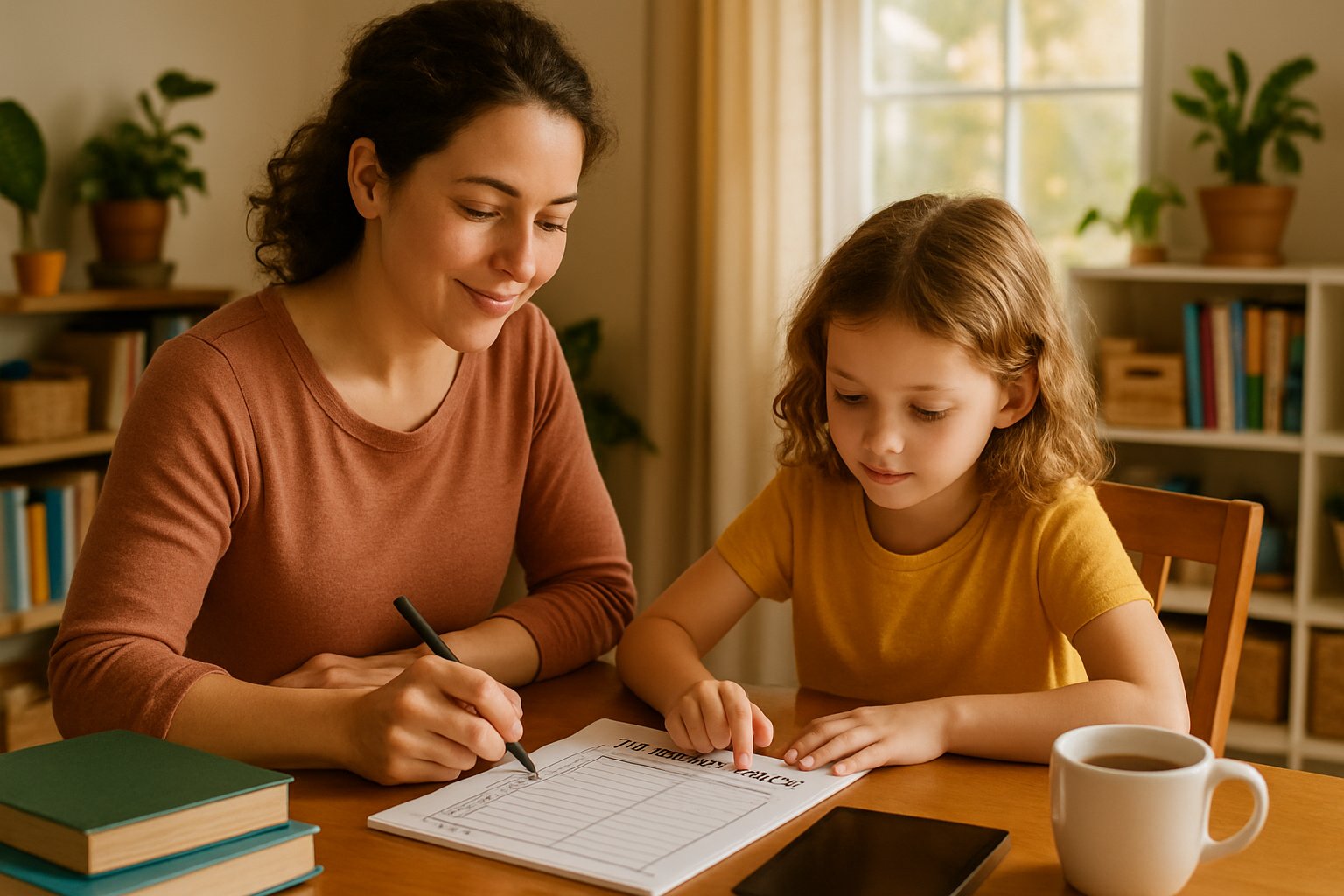
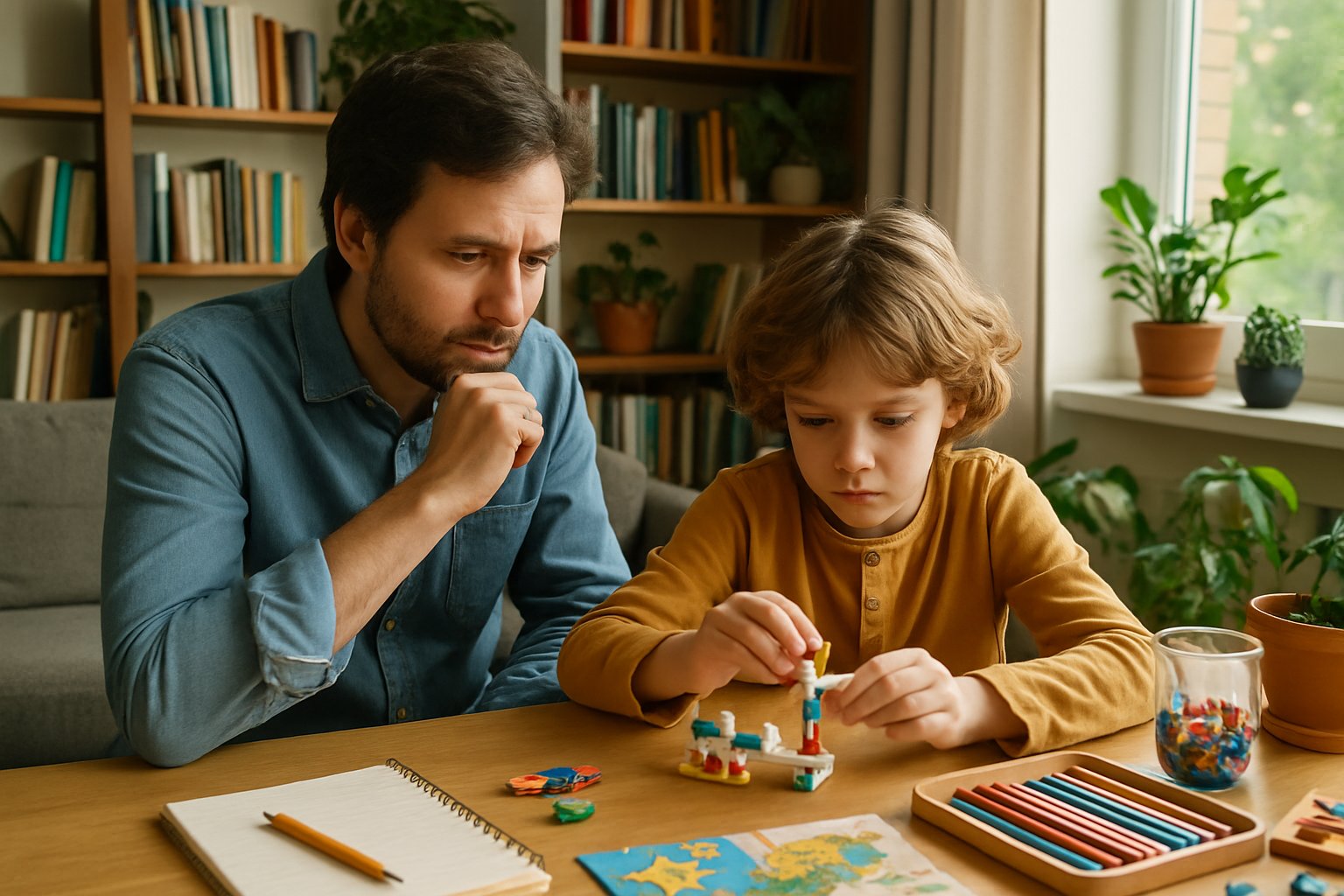
A parent and child sitting at a table in a bright home, working together on a morning routine with books and a tablet nearby.

A steady morning routine helps children ease into learning, reduces stress for parents, and creates a predictable flow that supports focus. Families who establish clear habits often notice smoother transitions, better attention, and a calmer start to the school day.

Impact on the School Day

The way a homeschool day begins often shapes how the rest of it unfolds. When children start with a consistent routine, they know what to expect and can move into lessons with less resistance.

Simple steps like brushing teeth, eating breakfast, and gathering materials help set a rhythm. A structured start also prevents wasted time searching for books or supplies.

Some families use a shared activity, such as Morning Time, to bring everyone together before diving into individual subjects. This practice builds connection and signals the official start of the school day.

By starting with order and predictability, students often stay more focused and finish their work more efficiently.

Benefits for Homeschooling Families

A morning routine does more than start the school day smoothly. It also supports the whole family’s well-being. Parents who plan ahead often feel less rushed and more prepared to guide lessons.

Children benefit from the sense of security that comes with daily habits. They know what comes next, which lowers stress and improves cooperation.

Families can also include enjoyable parts in their routine, such as read-alouds, music, or short walks. These shared moments add joy and strengthen family bonds.

According to Simple Homeschool, routines that mix structure with flexibility help families stay consistent while still leaving room for personal needs. This balance makes homeschooling more sustainable over time.

Common Challenges and Solutions

Even with the best plans, mornings can become chaotic. Kids may resist getting started, or parents may feel pulled in many directions.

One common challenge is late starts. A solution is preparing the night before by setting out clothes, materials, and breakfast items. This reduces stress in the morning.

Another issue is distractions. Limiting screen time before lessons and setting clear expectations can help children focus.

Families who struggle with consistency may find success by starting small. For example, adding one new habit at a time makes the routine easier to maintain.

Resources like Pam Barnhill’s step-by-step guide show how to build a peaceful routine that grows with the family’s needs.

Key Elements of an Effective Homeschool Morning Routine
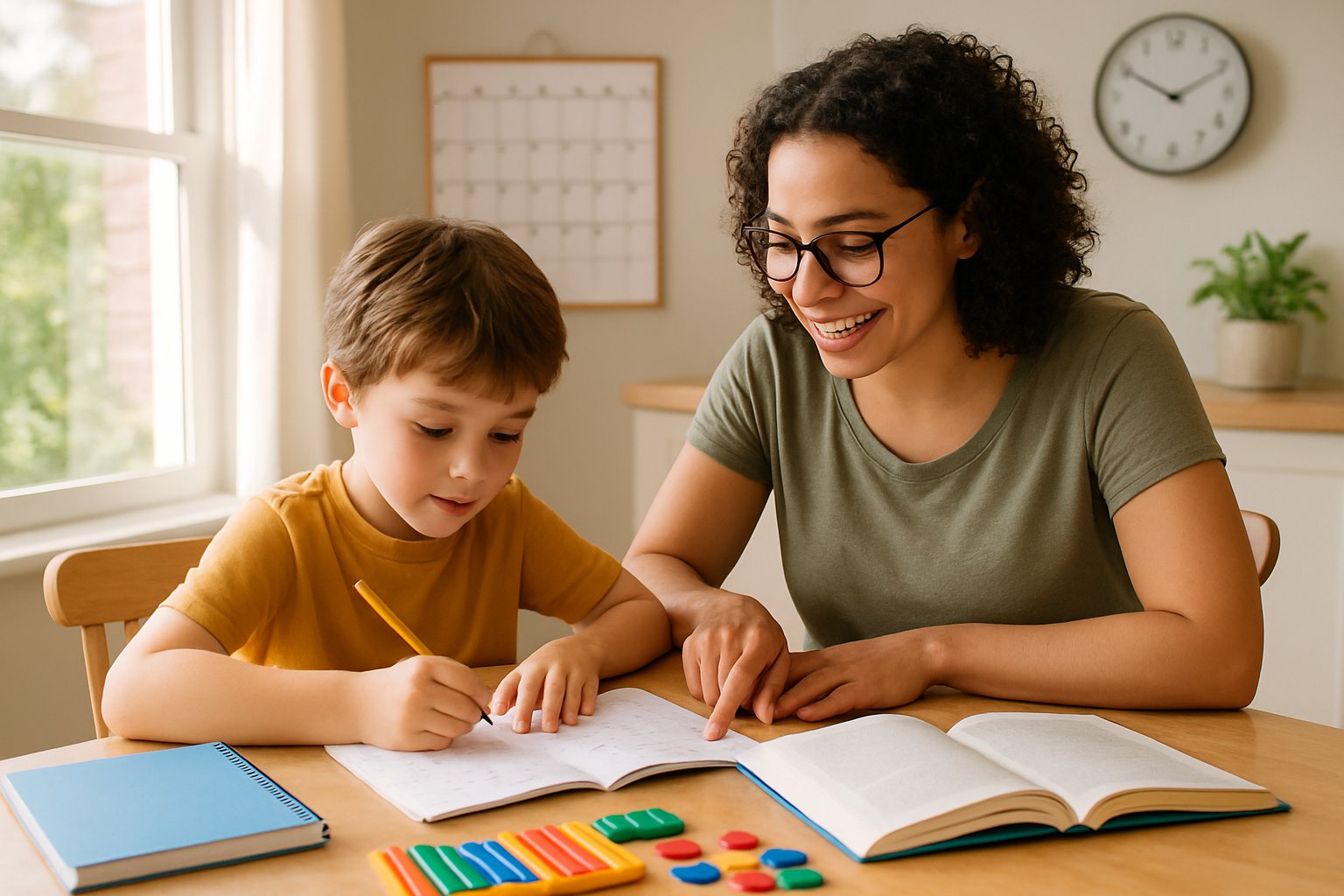
A parent and child sitting at a table in a bright room, working together on a learning activity during a homeschool morning.

A strong homeschool morning routine depends on simple habits that reduce stress and set a steady pace for the school day. Families often find the most success when they prepare in advance, start the day calmly, and keep learning spaces organized and ready.

Preparing the Night Before

Getting ready the evening before makes mornings smoother. Parents can set out lesson plans, gather supplies, and place books or worksheets in a visible spot. This step prevents wasted time searching for materials once the school day begins.

Some parents use a checklist system for each child. This might include:

  • Math practice sheets
  • Reading assignments
  • Chores or personal tasks

Packing clipboards or folders helps children know exactly what to do when the day starts. Setting an evening alarm also reminds parents to finish tasks before bed, which many families find helpful according to Pam Barnhill’s routine guide.

When the next morning arrives, everyone can begin on time without confusion. The night-before effort pays off by creating a sense of order and predictability.

Calm Wake-Up Strategies

A peaceful start makes the rest of the morning easier. Children often respond better when the household avoids rushing. Some families choose to wake earlier than the kids to enjoy quiet time with coffee, reading, or prayer. Others use gentle alarms or soft music to ease into the day.

Consistent sleep schedules matter too. Setting regular bedtimes helps children and parents wake rested and ready. Families who struggle with late nights often notice that mornings feel chaotic, so a steady sleep routine supports the homeschool rhythm.

It can also help to let kids take part in their own wake-up routine. Simple steps like brushing teeth, getting dressed, or choosing breakfast give them independence and reduce resistance later. A calm start lowers stress and creates a positive tone for learning.

Organizing Materials and Spaces

A tidy space encourages focus during lessons. Keeping pencils, notebooks, and art supplies in labeled bins or drawers makes it easy for children to find what they need. A small basket or caddy on the table can hold daily essentials so no one has to leave the room mid-lesson.

Families who use a loop schedule often prepare the next subject’s materials in advance. For example, if today’s focus is science, the supplies are set out the night before. This method, suggested by Schooling with Grace, reduces interruptions and keeps the day moving.

Even small steps, like clearing the table after breakfast or designating a shelf for homeschool books, make a big difference. When the learning space stays organized, children can transition smoothly from one subject to the next without frustration.

Breakfast and Fuel for the Day

A steady morning routine includes food that gives lasting energy and helps children focus. Balanced meals with protein, whole grains, and fruit keep everyone ready for learning without mid-morning crashes.

Quick and Healthy Breakfast Ideas

Parents often look for meals that are both fast and nourishing. Options like overnight oats, topped with fruit and nuts, can be prepared the night before and eaten cold or warmed up. Smoothies with yogurt, spinach, and frozen berries are another quick choice that kids usually enjoy.

Egg-based dishes also work well. Scrambled eggs with whole grain toast or a simple veggie omelet provide protein and healthy fats. For variety, nut butter on whole wheat toast with banana slices makes a filling option in minutes.

A small table of ideas can help families rotate choices:

Meal Prep Time Key Nutrients
Overnight oats 5 min (night before) Fiber, protein
Smoothie 3-4 min Vitamins, calcium
Scrambled eggs 7 min Protein, iron
Nut butter toast 2 min Healthy fats, carbs

These simple meals keep mornings calm while ensuring kids start the day with fuel that lasts.

Time-Saving Meal Prep Tips

Families save time when they plan ahead. Prepping breakfast ingredients the night before reduces stress in the morning. For example, chopping fruit in advance makes it easy to toss into yogurt or cereal.

Batch cooking also helps. Parents can bake a tray of egg muffins on Sunday and store them in the fridge for quick reheating. Preparing a large jar of overnight oats with different toppings allows for variety during the week.

Keeping a small list of go-to meals on the fridge can cut decision-making. Some families also set out bowls, spoons, and cups before bed so kids can serve themselves. These small steps add up, making mornings smoother and more predictable.

For more ideas on creating a healthy start, families can explore effective homeschool morning routines that highlight the role of good food and structure.

Incorporating Morning Basket and Together Time

Families often find that beginning the day with shared learning helps everyone feel connected and focused. A morning basket can hold key subjects, quiet reading, and creative activities that work across ages, making homeschool mornings smoother and more consistent.

What to Include in a Morning Basket

A morning basket usually gathers subjects that children of different ages can enjoy together. Parents often add items that might get skipped later in the day, like poetry, art, or music.

Typical contents may include:

  • Read-aloud books (fiction, history, or science)
  • Memory work such as math facts, poems, or prayers
  • Flashcards for vocabulary or geography
  • Short devotionals or inspirational readings

Some families rotate subjects during the week instead of covering everything daily. For example, they may do art on Mondays, poetry on Tuesdays, and nature study midweek. This flexible approach keeps the basket fresh and avoids long sessions that overwhelm younger children.

Morning baskets are especially helpful because they bring everyone together, no matter the grade level. As Pam Barnhill explains, this shared time allows parents to teach once while reaching multiple children.

Family Read-Alouds and Devotionals

Reading aloud creates a calm start and builds listening skills. Many families choose novels, biographies, or historical fiction that spark discussion. Younger children benefit from hearing advanced vocabulary, while older ones enjoy the shared experience.

A short devotional or prayer can also set a positive tone. Some families begin with a Bible reading, while others use story-based devotionals that apply to everyday life. According to Homeschooling in Progress, even a few minutes of prayer or reflection can provide a sense of routine and peace.

Parents often keep a list of books or devotionals ready in their basket so they don’t lose time deciding what to read each morning. Ending this part with a read-aloud helps transition smoothly into the rest of the homeschool day.

Creative Activities to Start the Day

Adding hands-on or artistic work can make morning time more engaging. Short activities like drawing, nature journaling, or listening to a composer help children wake up their minds in a relaxed way.

Some families use art study cards or picture books to introduce famous artists. Others enjoy simple music appreciation, such as listening to one piece by a composer while sketching. Activities like these can be rotated weekly to avoid overload.

Practical tools include:

  • Sketchbooks for quick drawing exercises
  • Chalk pastels or watercolors for open-ended art
  • Music playlists for composer study
  • Science or nature prompts for journaling

These activities don’t need to be long or formal. Even 15 minutes of creative work can add variety and help children look forward to morning basket time, as suggested by Treehouse Schoolhouse.

Building a Positive Flow for the Rest of the Day

A smooth start helps children stay focused, but keeping momentum depends on structure, balance, and flexibility. Families that mix independent study, short breaks, and age-appropriate adjustments often find the school day runs with less stress and more engagement.

Independent Work and Focused Study Blocks

Children benefit from a clear plan that includes time for independent learning. Many families use checklists or clipboards to guide tasks, similar to how some parents prepare lessons the night before in a peaceful homeschool routine. This reduces confusion and helps kids know what to expect.

Focused study blocks work best in short stretches. For younger students, 15–20 minutes is usually enough, while older children can handle 30–45 minutes. Breaking lessons into chunks keeps attention sharp.

Parents should stay nearby but avoid hovering. A quick check-in at the end of each block allows children to ask questions while still building independence. This balance encourages responsibility and frees up time for the parent to manage other parts of the school day.

Tip: Use a timer or visual clock so kids can see how long they have left. This makes transitions smoother and reduces resistance.

Movement and Mindfulness Breaks

Sitting too long makes it hard for children to focus. Short breaks with movement refresh the mind and body. Simple options include stretching, a quick walk outside, or a short dance session.

Mindfulness activities also help reset energy. A few minutes of quiet breathing, listening to calm music, or drawing can give kids space to recharge. Even preschoolers can join by practicing simple breathing with hand motions.

Some families schedule these breaks after each subject block. Others add them mid-morning to prevent restlessness. Mixing physical activity with calm reflection ensures children return to their lessons ready to learn.

Ideas for quick breaks:

  • 10 jumping jacks
  • 2 minutes of deep breathing
  • A short snack and water break
  • Listening to an audiobook while stretching

Adapting Routines for Different Ages

Homeschooling often includes children at different stages, so routines need flexibility. Younger children thrive on short lessons, hands-on activities, and frequent breaks. Older students can manage longer independent study blocks and may benefit from digital planners or subject rotations.

Parents can stagger start times to give focused attention to one child at a time. For example, older kids might begin with reading while younger siblings do simple chores or play quietly. This avoids constant interruptions and helps each child feel supported.

A flexible routine works best because it allows adjustments without losing structure. Families should expect to revisit and tweak schedules as needs change during the school year.

Quick guide by age:

  • Early elementary: 15–20 minute lessons, frequent breaks
  • Upper elementary: 25–35 minute lessons, gradual independence
  • Middle/high school: 40+ minute lessons, self-managed tasks with check-ins

Filed Under: Uncategorized

What is Charlotte Mason Homeschooling? Key Principles & Practices

September 24, 2025 by Valerie Leave a Comment

Image by Taras Yasinski from Pixabay

Core Principles of Charlotte Mason Homeschooling

Charlotte Mason homeschooling rests on a clear view of how children learn best. It values a broad education, strong habits, and respect for each child’s mind. These ideas shape the Charlotte Mason method into a practical approach to home education.

Philosophy of Education as a Whole

Charlotte Mason believed education should be more than memorizing lessons. She saw it as the formation of the whole person—mind, body, and character. Learning should include literature, history, nature, art, and music, not just basic academics.

Instead of narrowing subjects, the Charlotte Mason method encourages a wide curriculum. Children read living books—well-written works by authors with real knowledge and passion—rather than dry textbooks. This makes learning richer and more meaningful.

She also taught that ideas feed the mind like food feeds the body. Just as a child needs healthy meals, they also need inspiring thoughts. This belief shaped her call for a “liberal education” that gives children access to a broad range of knowledge.

In practice, this meant lessons were short and varied. Children stayed attentive without being overwhelmed, and they had time for outdoor play, observation, and creativity.

Atmosphere, Discipline, and Life

Mason summed up her view of education with three words: atmosphere, discipline, and life. She explained that children learn from the environment around them, from the habits they form, and from the ideas they encounter.

Atmosphere refers to the home setting. The values, routines, and tone of family life shape a child’s learning as much as formal lessons.

Discipline focuses on habits. Charlotte Mason homeschooling highlights small daily practices like attention, truthfulness, and responsibility. These habits build character and help children manage their own learning.

Life means education should be alive with ideas, not rote facts. Children should connect with real knowledge, whether through reading, nature walks, or meaningful discussions. This principle reminds parents that learning is not separate from life—it is part of it.

Emphasis on Respect and Individuality

A key part of the Charlotte Mason method is respect for the child as a person. She rejected the idea that children are empty vessels to be filled with facts. Instead, she saw them as individuals with their own thoughts and interests.

This respect shows up in how lessons are handled. Narration, for example, asks children to tell back what they have read. It values their voice and understanding, rather than relying only on tests or worksheets.

The approach also avoids heavy pressure or manipulation. Instead, it gives children freedom to grow while still offering structure. Parents guide, but they do not control every thought.

By honoring individuality, Charlotte Mason homeschooling encourages children to develop curiosity and confidence. Families who follow this method often find that children take ownership of learning because they feel trusted and respected.

For more detail on these principles, see the overview of Charlotte Mason’s core ideas.

Essential Methods and Practices

Charlotte Mason homeschooling uses specific techniques that help children build strong habits, enjoy meaningful literature, and learn in ways that encourage focus and independence. These practices support a rich education that balances academics with personal growth.

Living Books Approach

Instead of relying on dry textbooks, children read living books. These are well-written works by authors who are passionate about their subject. The goal is to spark curiosity and connect students to real ideas, not just facts.

Living books cover subjects like history, science, and literature. For example, a biography of a historical figure gives students a deeper sense of character and events compared to a summary in a textbook.

Families often choose living books from libraries, book lists, or recommended collections. They are read in full rather than in short excerpts. This helps children follow the author’s thought process and develop a stronger love for reading.

By using living books, children see learning as a lifelong process instead of a task limited to schoolwork. This approach also encourages critical thinking and empathy through exposure to diverse perspectives.

Short Lessons for Focus

Charlotte Mason recommended short lessons, usually 10–20 minutes for younger children and 30–45 minutes for older students. The purpose is to keep attention sharp and avoid mental fatigue.

Subjects are rotated throughout the day. For example, a child may do math for 20 minutes, then switch to reading or nature study. This variety keeps learning fresh and prevents boredom.

Short lessons also encourage children to give their best effort in a limited time. Instead of dragging through long assignments, they learn to work with focus and energy.

This method respects the child’s natural concentration span. It also leaves space in the day for free play, outdoor time, and creative activities, which are all considered vital parts of a Charlotte Mason education.

Habit Training and Character Development

Habit training is central to Charlotte Mason’s philosophy. She believed that small, repeated actions form character over time. Parents guide children in habits such as neatness, attention, courtesy, and perseverance.

Instead of constant correction, parents model and encourage positive behavior. For example, teaching a child to put away books after reading builds both responsibility and orderliness.

Charlotte Mason saw habits as tools that free children to focus on higher learning. When good routines are automatic, less energy is wasted on small struggles.

Habit training also supports moral growth. Respect, kindness, and self-control are taught as part of daily life, not as separate lessons. This builds a foundation for both academic success and personal maturity.

Copywork and Narration Techniques

Copywork and narration are two practices that strengthen language and comprehension skills. Copywork involves writing passages from quality literature, poetry, or scripture. This improves handwriting, spelling, and attention to detail.

Narration requires the child to retell what they have read or heard in their own words. This can be done orally at first, then later in written form. It develops memory, sequencing, and expression.

Together, copywork and narration replace worksheets or drills. They help students engage more deeply with ideas instead of memorizing isolated facts.

A typical lesson might include reading a passage from a living book, narrating it aloud, and then copying a sentence. This routine builds strong literacy skills while keeping learning meaningful and connected.

Unique Features and Daily Life

Charlotte Mason homeschooling stands out because it blends academics with real-world experiences. Children learn through books, habits, and daily practices that shape both character and knowledge. Families often find this approach practical because it values time outdoors, flexible learning, and creative expression.

Nature Study and Outdoor Exploration

Nature study plays a central role in the Charlotte Mason method. Children spend regular time outside observing plants, animals, and seasonal changes. This practice helps them notice details and develop a habit of careful observation.

Many homeschooling families keep a nature journal where children sketch leaves, record bird sightings, or write short notes about what they see. This activity encourages both science skills and creativity.

Instead of relying only on textbooks, students connect directly with the natural world. For example, a walk in the park can become a lesson in ecosystems, weather, or geography.

Charlotte Mason believed that time outdoors built not only knowledge but also health and curiosity. Homeschoolers often set aside daily or weekly outdoor time as a key part of their routine.

Curriculum Flexibility for Homeschooling Families

The Charlotte Mason method does not follow a rigid curriculum. Instead, it uses living books—well-written stories and biographies—rather than dry textbooks. These books help children engage with history, science, and literature in a more meaningful way.

Lessons are kept short, usually 15–30 minutes, which allows children to stay focused. This also makes it easier for homeschooling families with multiple children to manage different subjects throughout the day.

Another feature is narration. After reading, children retell the material in their own words. This simple practice strengthens memory and communication skills without worksheets or tests.

Flexibility also means parents can adjust the pace. Families can choose book lists from trusted resources like Ambleside Online or create their own plan. This makes the method adaptable for different ages and learning styles.

Art, Music, and Handicrafts Integration

Creative subjects are not treated as extras but as part of daily life. Children study the works of famous artists and composers, often focusing on one artist or musician at a time. This slow approach helps them build familiarity and appreciation.

Music appreciation might include listening to a symphony while discussing the instruments used. Art study could involve looking at a painting closely and describing its details. These activities encourage attention and thoughtful observation.

Handicrafts are also important. Children learn practical skills like knitting, woodworking, or sewing. These projects build patience and give them a sense of accomplishment.

By weaving art, music, and crafts into the homeschool day, families nurture both knowledge and creativity. This balance reflects Charlotte Mason’s view that education should enrich the whole person.

Filed Under: Uncategorized

What Is Montessori Homeschooling? A Friendly Guide for Parents

September 24, 2025 by Valerie Leave a Comment

Core Concepts of Montessori Homeschooling

Montessori homeschooling builds on a child’s natural curiosity, emphasizes independence, and relies on a carefully prepared learning space. It blends the Montessori method with the flexibility of homeschooling, giving families tools to support both academic and personal growth.

Origins and Philosophy

The Montessori method began with Dr. Maria Montessori, an Italian physician and educator in the early 1900s. She observed that children learn best through exploration and hands-on experience rather than passive instruction.

Her philosophy centered on respecting the child’s natural development. Instead of forcing a rigid curriculum, she believed education should adapt to the child’s pace and interests.

This educational approach values the “whole child.” That means focusing not only on academics but also on emotional, social, and practical life skills.

In homeschooling, families adopt these same ideas by creating environments that encourage curiosity and independence. A child-led model helps children build confidence while learning in ways that feel meaningful to them.

Montessori Principles in Homeschooling

Montessori homeschooling follows several core principles. One is independence—children choose activities and work at their own pace. Another is freedom within limits, where children have choices but also clear boundaries.

Learning is hands-on and often uses tactile materials. For example, math concepts are introduced with beads or blocks, making abstract ideas concrete. This aligns with the Montessori homeschool curriculum that emphasizes sensory learning and real-world application.

Mixed-age learning is another important feature. Older children can model skills for younger ones, while younger children benefit from observing peers.

Families also focus on practical life skills like cooking, cleaning, and gardening. These tasks are not chores but opportunities for children to practice responsibility and self-care.

Role of the Parent as Guide

In Montessori homeschooling, the parent does not act as a traditional teacher. Instead, the parent becomes a guide who prepares the environment, observes the child, and offers support when needed.

Observation is essential. Parents watch for signs of readiness, interests, and challenges, then adjust activities accordingly. This ensures learning feels natural and not forced.

The parent also curates the space. Materials are placed at child height, organized, and easy to access. This design encourages independence and reduces the need for constant adult direction.

Rather than giving direct answers, parents ask guiding questions or provide tools for discovery. This role helps children build problem-solving skills and confidence in their own abilities.

By stepping back, parents allow children to take ownership of their education while still feeling supported. This balance is what makes Montessori homeschooling both structured and flexible.

Key Features of the Montessori Homeschool Environment

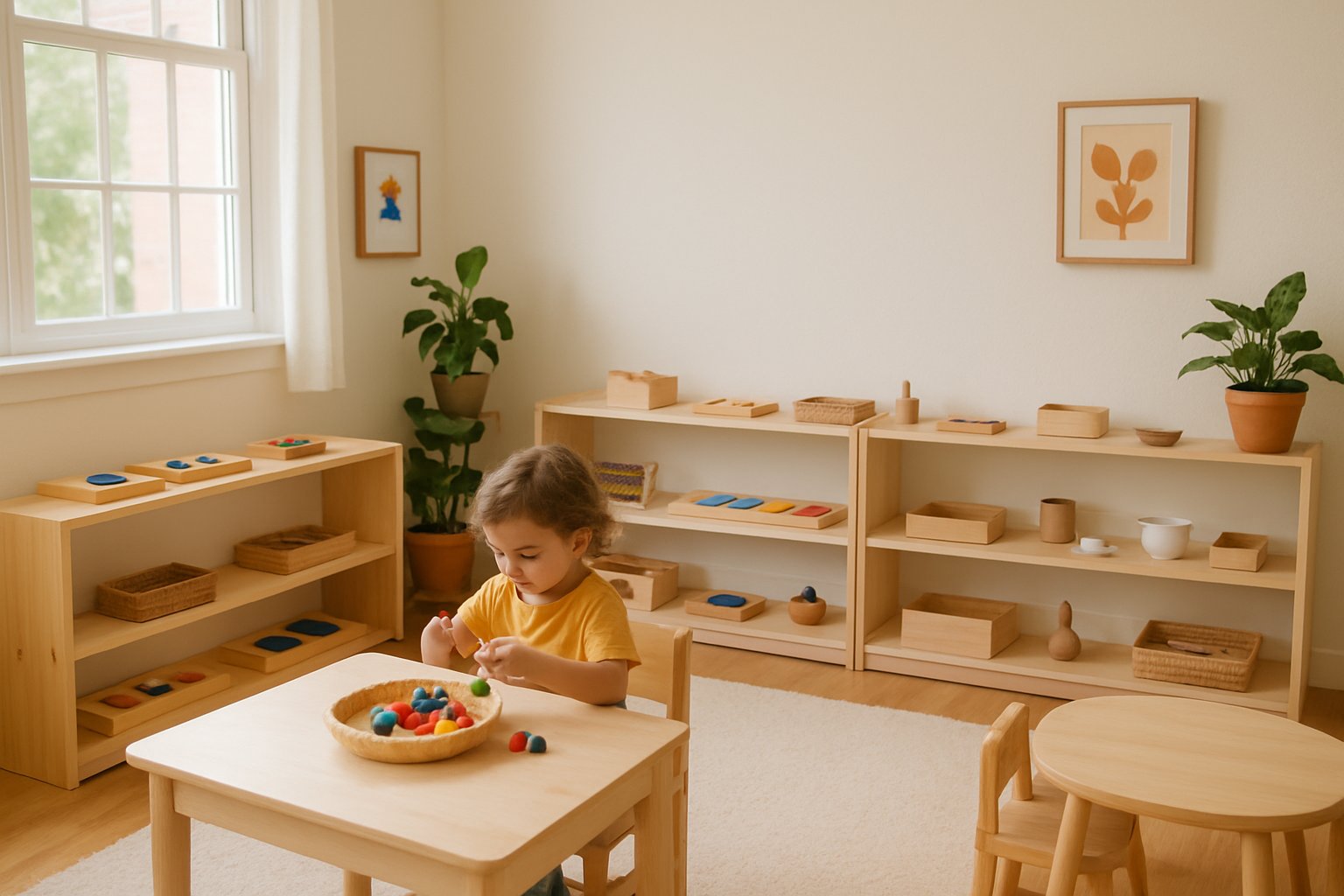
A child working with educational toys in a bright, organized homeschool classroom with wooden shelves and child-sized furniture.

A Montessori homeschool setting focuses on creating a space where children can explore with purpose, use materials that match their stage of growth, and learn at their own pace. It emphasizes independence, structure that feels natural, and activities that encourage curiosity and responsibility.

Prepared Environment and Learning Materials

The prepared environment is central to Montessori homeschooling. Parents set up a space that is orderly, calm, and scaled to the child’s size. Low shelves, child-sized furniture, and uncluttered areas make it easy for children to access materials independently.

Montessori materials are designed to be self-correcting and purposeful. For example, sandpaper letters help children connect touch with sound, while math beads make abstract concepts concrete. These tools guide learning without the constant need for correction from adults.

A well-prepared environment also includes practical life activities like pouring, sweeping, or buttoning. These tasks build coordination, independence, and confidence. By combining everyday life skills with academic tools, the environment supports both intellectual and practical growth.

Self-Directed and Hands-On Learning

Montessori homeschooling emphasizes self-directed learning. Children choose from a range of activities within the prepared space, allowing them to follow their interests while still working within clear boundaries. This approach fosters responsibility for their own progress.

Hands-on learning plays a key role. Instead of abstract lectures, children work directly with tactile materials. For example, they may learn math by counting beads or study geography with puzzle maps. These activities make concepts easier to understand and remember.

Parents act as guides rather than traditional teachers. They observe, introduce new materials when a child is ready, and step back to let exploration unfold. This balance helps children develop problem-solving skills and persistence.

Freedom Within Limits and Individualized Learning

Freedom within limits means children have choices, but those choices exist within a structured framework. For instance, a child may select which math activity to do but must complete it respectfully and return materials properly. This balance teaches independence while reinforcing responsibility.

Individualized learning ensures that each child progresses at their own pace. Some may excel in reading while taking more time with math. The Montessori approach allows for these differences without pressure to keep up with a group standard.

Multi-age learning environments are also common. Older children often help younger ones, reinforcing their own skills while building empathy. This structure mirrors real-life social settings and encourages cooperation.

Encouraging Intrinsic Motivation

Instead of relying on rewards or grades, Montessori homeschooling encourages intrinsic motivation. Children learn because they are curious and enjoy the process, not because they seek external approval.

Tasks are designed to provide natural satisfaction. Finishing a puzzle or mastering a pouring exercise gives a sense of accomplishment. These experiences build confidence and a lasting love for learning.

Parents support intrinsic motivation by observing rather than constantly praising. They acknowledge effort and progress but avoid turning every achievement into a reward-driven event. This helps children develop self-discipline and pride in their work.

By focusing on curiosity and independence, Montessori homeschooling nurtures motivation that comes from within—a skill that benefits children throughout life.

Montessori Homeschool Curriculum and Daily Life

The Montessori homeschool curriculum blends daily routines with structured learning. It emphasizes independence, hands-on activities, and a balance between practical life skills and academic subjects to support a child’s holistic development.

Structure of the Montessori Homeschool Curriculum

The Montessori homeschool curriculum follows a child-led but structured design. Children move through activities at their own pace, which encourages self-paced learning and independent decision-making. Parents act as guides rather than traditional teachers.

A key feature is the prepared environment. Materials are placed on low shelves so children can choose them freely. This setup supports self-directed exploration and problem-solving skills.

Daily work often includes long, uninterrupted blocks of time. This allows children to focus deeply on tasks without frequent transitions. A mix of individual and group activities helps balance independence with social learning.

The curriculum also integrates real-life experiences. For example, children may cook, garden, or care for pets as part of their day. These experiences connect classroom learning to daily living.

Practical Life Skills and Activities

Practical life skills are central to Montessori homeschooling. These activities build confidence, coordination, and responsibility. They also prepare children for larger academic challenges by strengthening focus and fine motor control.

Common tasks include:

  • Care of self: dressing, tying shoes, brushing teeth
  • Care of environment: cleaning, setting the table, watering plants
  • Grace and courtesy: polite greetings, taking turns, resolving conflicts

Children practice these skills through hands-on activities like pouring water, cutting fruit, or folding laundry. Such tasks may look simple, but they teach sequencing, concentration, and independence.

Parents often notice that children enjoy repeating these activities. Repetition reinforces mastery and encourages self-discipline. Over time, these skills become habits that support lifelong independence.

Academic Subjects and Cultural Studies

The academic side of the Montessori curriculum covers language, math, science, and cultural studies. Each subject is introduced with concrete materials before moving to abstract concepts.

For language development, children use sandpaper letters, movable alphabets, and reading cards. These tools help them connect sounds to symbols and build early writing skills.

In mathematics, bead chains, number rods, and golden beads provide a tactile way to understand counting, place value, and operations.

Cultural studies expand a child’s understanding of the world. Topics include geography, history, biology, and art. Children may explore maps, study animal life cycles, or learn about traditions in other countries.

This broad approach encourages curiosity and respect for diversity. It also supports holistic development by linking academic knowledge with real-world understanding.

For more detail on how subjects and skills fit together, families can explore a comprehensive Montessori homeschool curriculum guide.

Filed Under: Uncategorized

What Is Classical Homeschooling? A Complete Guide for Parents

September 24, 2025 by Valerie Leave a Comment

Image by Markus Trier from Pixabay

Core Principles of Classical Homeschooling

Classical homeschooling builds on a structured approach to learning that emphasizes language, reasoning, and communication. It encourages children to develop strong critical thinking skills while also gaining a broad foundation in literature, history, math, and science.

Definition and Philosophy

Classical education has roots in ancient Greece and Rome, where learning focused on cultivating wisdom and virtue rather than just memorizing facts. In a homeschool setting, this philosophy guides parents to teach children how to think clearly and express themselves well.

The method often draws from the Seven Liberal Arts and the study of the Great Books. These works and disciplines have shaped Western thought and remain central to the classical homeschooling approach.

At its core, this philosophy values truth, beauty, and goodness. Families who adopt it often see education as more than academics—it is also about character formation and building habits of lifelong learning.

The Trivium: Grammar, Logic, and Rhetoric Stages

A key feature of classical homeschooling is the Trivium, which organizes learning into three stages that match a child’s growth.

  • Grammar Stage (Grades 1–4): Children focus on memorization, vocabulary, and basic facts. They build a strong foundation in reading, writing, and arithmetic.
  • Logic Stage (Grades 5–8): Students begin analyzing information, asking questions, and making connections. This stage emphasizes reasoning and debate.
  • Rhetoric Stage (Grades 9–12): Teens practice clear and persuasive communication through writing, speech, and discussion.

Each stage prepares students for the next, moving from absorbing knowledge to applying it thoughtfully. This pattern helps children grow into independent learners who can both understand and explain complex ideas.

Critical Thinking and Lifelong Learning

Classical homeschooling places a strong emphasis on critical thinking skills. Instead of only memorizing information, students learn to question, analyze, and evaluate ideas. The Socratic Method, which uses guided questions, is often used to spark deeper thinking.

This approach also encourages students to see learning as a lifelong pursuit. By engaging with classic texts, exploring history, and practicing clear communication, they develop habits that extend beyond school years.

The goal is not only academic success but also the ability to make sound judgments and continue learning throughout life. Families who adopt this model often value both intellectual growth and personal responsibility.

Classical Curriculum and Resources

A classical homeschool curriculum usually emphasizes structured subjects, time-tested books, and a focus on clear thinking and communication. Families often use established programs and co-ops to organize studies while keeping flexibility at home.

Key Subjects: Language Arts, Liberal Arts, and Great Books

In classical homeschooling, language arts form the foundation. Children practice grammar, spelling, and writing skills early, then move into logic and persuasive writing as they grow. Copywork, dictation, and narration are common tools for building strong habits.

The liberal arts include grammar, logic, rhetoric, arithmetic, geometry, music, and astronomy. These subjects are taught in stages that match a child’s development. For example, younger students memorize facts, while older students debate and analyze ideas.

Families often use the Great Books approach. This means reading classic works from authors like Homer, Shakespeare, and Austen. The goal is to expose students to enduring ideas and help them think deeply about history, philosophy, and human nature.

StageFocusExample Activities
GrammarMemorizationReciting poems, Latin vocabulary
LogicReasoningDebates, analyzing arguments
RhetoricExpressionEssays, speeches

Popular Classical Homeschool Curriculum Options

Parents can choose from many structured programs that make planning easier. One well-known guide is The Well-Trained Mind, which outlines how to teach each stage of the Trivium at home.

Veritas Press offers a strong classical homeschool curriculum with history cards, literature, and online classes. Memoria Press provides ready-to-use lesson plans and emphasizes Latin, literature, and Christian studies. Families who want a creative approach often turn to Classical Academic Press, which publishes materials for logic, writing, and languages.

Many parents mix resources depending on their children’s needs. For example, they might use The Story of the World for history alongside Memoria Press for Latin. This flexibility allows families to stay rooted in the classical model while adapting to different learning styles.

Role of Classical Conversations and Co-ops

Some families prefer group learning through Classical Conversations, a Christian-based program that combines weekly community meetings with at-home assignments. Students recite memory work, practice presentations, and learn through structured cycles. Parents also receive support and training to guide lessons at home.

Co-ops extend this idea beyond one program. Local groups may form to study Latin, literature, or logic together. This gives children a chance to practice public speaking, engage in discussions, and build friendships.

For many families, co-ops provide accountability and encouragement. They also give parents a way to share the teaching load while keeping the classical curriculum consistent. These group settings often make the homeschooling journey feel less isolating and more collaborative.

History and Modern Adaptations

Classical homeschooling has deep roots in ancient traditions but has also been reshaped to fit the needs of modern families. Its history shows how education once centered on language, logic, and rhetoric, while today’s adaptations focus on making those same skills practical for home learners.

Origins and Evolution of Classical Education

Classical education began in ancient Greece and Rome, where students studied grammar, logic, and rhetoric as the foundation for learning. These three stages later became known as the Trivium, a structure that shaped much of Western education for centuries.

During the Middle Ages, the Trivium was paired with the Quadrivium—arithmetic, geometry, music, and astronomy. Together, they formed a complete system of liberal arts learning. This approach emphasized knowledge, reasoning, and communication.

The method declined with the rise of modern schooling but was revived in the 20th century. Influential works, such as Dorothy Sayers’ essay The Lost Tools of Learning, encouraged parents and educators to return to these time-tested methods.

Today, many families who choose classical homeschooling follow this historic model because it provides a clear, step-by-step way of teaching children how to think and express ideas with confidence.

Adapting Classical Methods for Today’s Homeschoolers

Modern classical homeschooling keeps the Trivium but adapts it for home use. In the Grammar Stage, children memorize facts through songs, chants, and stories. Parents often use structured guides like First Language Lessons or history programs such as The Story of the World.

In the Logic Stage, students begin to question and analyze. Homeschoolers may use resources like The Discovery of Deduction to practice formal logic. This stage often includes debates, essays, and early algebra.

The Rhetoric Stage focuses on clear and persuasive communication. High school students practice writing essays, speeches, and research papers. Programs such as Classical Conversations or Memoria Press provide ready-made curricula to support families through this phase.

By blending historic structure with modern tools, families can tailor classical education to fit their child’s pace and interests while still holding onto its original purpose: teaching students how to learn.

Filed Under: Uncategorized

What is Unschooling? Exploring Child-Led, Real-World Learning

September 24, 2025 by Valerie Leave a Comment

What is Unschooling?

Unschooling is a form of home education that focuses on child-led learning rather than structured lessons. It encourages children to follow their interests and learn through real-life experiences, play, and exploration instead of a set curriculum.

Core Principles of Unschooling

Unschooling is built on the belief that children are naturally curious and capable of directing their own education. Instead of textbooks and tests, learning happens through everyday activities, hobbies, and personal interests.

This approach values self-directed education, where children decide what to study and how deeply to explore a subject. For example, a child fascinated by insects might spend weeks observing bugs, reading about them, and drawing them. This process allows learning to feel meaningful and connected to real life.

Some families practice radical unschooling, which extends beyond academics into daily living. In this model, children also guide choices in routines, media, and social interactions. The idea is that autonomy fosters responsibility and lifelong curiosity.

Unschooling recognizes that learning is not separate from life. Skills like reading, math, and problem-solving often develop as by-products of pursuing personal goals.

How Unschooling Differs from Homeschooling

While both unschooling and homeschooling happen outside traditional schools, they differ in structure. Homeschooling usually follows a set curriculum, lesson plans, or online programs. Parents often act as teachers, guiding instruction and assessing progress.

Unschooling, by contrast, avoids formal lessons. Instead, it relies on child-led education where the learner decides what, when, and how to study. For example, a homeschooled student may complete daily math worksheets, while an unschooled child might learn math through cooking, budgeting, or building projects.

Another difference is flexibility. Homeschooling often mirrors school schedules, while unschooling adapts to each child’s pace. Families may spend mornings at museums, afternoons exploring nature, or evenings playing games that build critical thinking.

According to Healthline, unschooling emphasizes curiosity-driven exploration, while homeschooling is more structured. Both approaches fall under the larger category of home education but serve different learning styles.

Role of Parents in Unschooling

In unschooling, parents are not traditional teachers. Their role is to create an environment rich with opportunities and resources. They observe their child’s interests and provide materials, experiences, or connections that support those passions.

For example, if a child shows interest in astronomy, parents might borrow books, visit a planetarium, or set up a telescope. They act as facilitators rather than directors of learning.

Parents also help children access community resources such as libraries, online courses, or mentors. This support ensures that learning remains broad and not limited to what is available at home.

The Unschoolers.org community explains that parents encourage exploration without turning it into forced lessons. Instead of designing structured units, they respond to curiosity in flexible and practical ways.

This role requires trust in the child’s ability to learn at their own pace. Parents guide gently, offering tools and experiences, while respecting the child’s independence.

How Unschooling Works in Daily Life

Unschooling often centers on a child’s natural curiosity and the way they learn best. It also uses everyday activities and environments as opportunities for growth, instead of relying on a fixed curriculum.

Natural Curiosity and Learning Styles

Unschooled children usually follow their own interests, which can guide what they choose to study or explore. A child who loves animals might spend hours reading about habitats, while another who enjoys numbers may practice math through games or budgeting.

Parents often notice that learning styles differ. Some children prefer hands-on projects, while others learn best through reading or conversation. Recognizing these differences helps families support natural learning without forcing a single method.

Instead of worksheets or tests, progress often shows through conversations, projects, or skills gained in daily life. This approach trusts that curiosity naturally leads to deeper knowledge. Families who practice unschooling often see that children stay more engaged when they choose what to learn.

Key idea: Learning is not one-size-fits-all. By following a child’s style, families create an environment where curiosity drives growth.

Real-World Learning Experiences

Unschooling treats the world as the classroom. Children learn math by cooking and measuring ingredients, practice reading through signs and menus, and build social skills during community activities.

Many families use museums, libraries, parks, and even travel as part of their routine. These settings provide real-world learning that feels relevant and practical. For example, gardening can teach biology, responsibility, and patience all at once.

Unlike traditional schooling, unschooling blends education into daily life. Children may explore history at a museum one day and learn problem-solving by fixing a bike the next. This flexibility allows them to connect knowledge to real situations.

As unschooling families often report, these experiences help children see learning as continuous, not limited to “school hours.” It becomes part of how they live, not a separate activity.

Challenges and Considerations

A parent and child engaged in a hands-on learning activity together in a cozy home setting with books and educational materials around them.

Families who choose unschooling often face unique hurdles that differ from traditional homeschooling. These include the shift away from structured schooling habits and the difficulty of meeting outside academic requirements like standardized testing.

Deschooling and Transition

When children leave traditional school, they usually need time to adjust. This adjustment period is often called deschooling. It helps them break free from rigid schedules, grading systems, and teacher-led instruction.

During deschooling, children may spend more time resting, exploring hobbies, or rediscovering interests. Parents sometimes worry that little “schoolwork” is being done, but this stage is important for building trust in self-directed learning.

The length of deschooling varies. Some children adapt within weeks, while others take months. A common guideline is about one month of deschooling for each year spent in formal schooling.

Parents also need to adjust. They shift from directing lessons to observing and supporting curiosity. This can feel uncomfortable at first. Families who understand the process often find it easier to settle into a new rhythm of learning.

Standardized Testing and Assessment

Many states require proof of progress through standardized testing or portfolio reviews. For unschooling families, this can be challenging since learning does not follow a set curriculum.

Children may not cover subjects in the same sequence as schools. This makes preparing for standardized tests stressful. Some families choose practice tests or light review sessions to help children feel more confident.

Assessment options differ by location. In some areas, parents can submit work samples or evaluations instead of test scores. Checking local laws through state education departments is essential.

Unschooling parents often balance compliance with maintaining a flexible approach. They may document learning through photos, journals, or projects. These records can demonstrate growth while honoring a child’s unique learning path.

For more details on how families navigate these requirements, see this overview of unschooling challenges and benefits.

Filed Under: Uncategorized

The Science of Play: Why Play-Based Learning Works in Homeschooling

September 23, 2025 by Valerie Leave a Comment

The Science Behind Play-Based Learning

Play-based learning supports how children think, focus, and solve problems. Research shows that playful experiences shape brain development, strengthen focus, and encourage flexible thinking that children carry into later learning.

Cognitive Growth and Brain Development

Children’s brains grow rapidly in the early years, and play acts as a natural driver of that growth. When they explore through play, they form new neural connections that support memory, language, and reasoning.

Studies show that learning through play helps children build skills like curiosity and adaptability. These skills prepare them to keep learning as their brains mature.

Play also helps children connect abstract ideas to real experiences. For example, stacking blocks teaches balance and spatial awareness, while role-play supports language and social understanding.

In short, play strengthens both the structure and the function of the developing brain.

Executive Function and Attention

Executive function includes self-control, flexible thinking, and working memory. These skills help children manage tasks, follow directions, and stay focused. Play creates natural opportunities to practice them.

In guided play, children learn to wait their turn, follow simple rules, and adjust when something changes. Activities like board games or pretend scenarios encourage them to hold information in their minds while shifting attention as needed.

Research highlights that play-based learning in early education supports stronger attention spans than direct instruction alone. This is because children remain more engaged when they are active participants rather than passive listeners.

By practicing focus in playful ways, children build habits that support later academic success.

Critical Thinking and Problem-Solving Skills

Play also develops critical thinking and problem-solving skills. When children experiment, they test ideas, make mistakes, and try new approaches. This process builds resilience and flexible thinking.

For example, during pretend play, children negotiate roles and rules. In building activities, they solve structural challenges by trial and error. These experiences strengthen reasoning and decision-making.

According to Edutopia, play-based learning can be more effective than direct instruction for developing these skills in early learners.

Through playful problem-solving, children learn how to analyze situations, adapt strategies, and persist until they find solutions.

Social, Emotional, and Physical Benefits of Play

Play supports children’s growth by strengthening how they connect with others, manage their feelings, and build control over their bodies. It allows them to practice real-life skills in safe and enjoyable ways while also reinforcing learning goals.

Social Skills and Collaboration

When children play together, they learn how to share, take turns, and listen to one another. These small actions help them build strong social skills that carry into group learning and daily interactions.

Cooperative activities like building with blocks or role-playing games encourage collaboration. Children must negotiate roles, solve conflicts, and communicate ideas clearly. These moments strengthen both expressive language and listening skills.

Play also helps children understand group dynamics. For example, in guided play, they may work together to solve a puzzle. Each child contributes ideas, which fosters teamwork and respect for different viewpoints.

Research shows that play-based learning improves social development by promoting cooperation and problem-solving in early childhood classrooms. Activities that require joint effort create opportunities for children to practice leadership and compromise in authentic ways.

Emotional Regulation and Empathy

Through play, children explore emotions in a safe space. Pretend play, for example, lets them act out scenarios that involve joy, frustration, or disappointment. This practice supports emotional regulation by teaching them how to manage strong feelings.

Games with rules also help children develop self-control. Waiting for a turn or following agreed guidelines encourages patience and discipline. These skills are essential for both learning and relationships.

Playful interactions nurture empathy. When children role-play as caregivers, doctors, or friends, they begin to imagine how others feel. This builds emotional intelligence, which helps them connect with peers more meaningfully.

According to studies on social and emotional skill development, play-based learning gives children tools to recognize emotions in themselves and others. Over time, this ability supports conflict resolution and stronger friendships.

Physical Development and Motor Skills

Play also contributes to physical development. Running, climbing, and jumping build gross motor skills and overall coordination. These activities strengthen muscles, balance, and endurance.

Fine motor skills improve during activities like drawing, cutting, or building with small objects. These tasks enhance hand-eye coordination and prepare children for writing and other academic work.

Unstructured outdoor play is especially valuable. It allows children to explore movement freely, improving agility and confidence in their bodies.

Research from the American Academy of Pediatrics highlights that play supports both physical health and cognitive growth. By combining movement with exploration, children build strength while also engaging their thinking skills.

Physical play also supports self-control. For example, games like “Red Light, Green Light” require children to stop and start on cue, linking body movement with attention and discipline.

Types of Play in Homeschool Environments

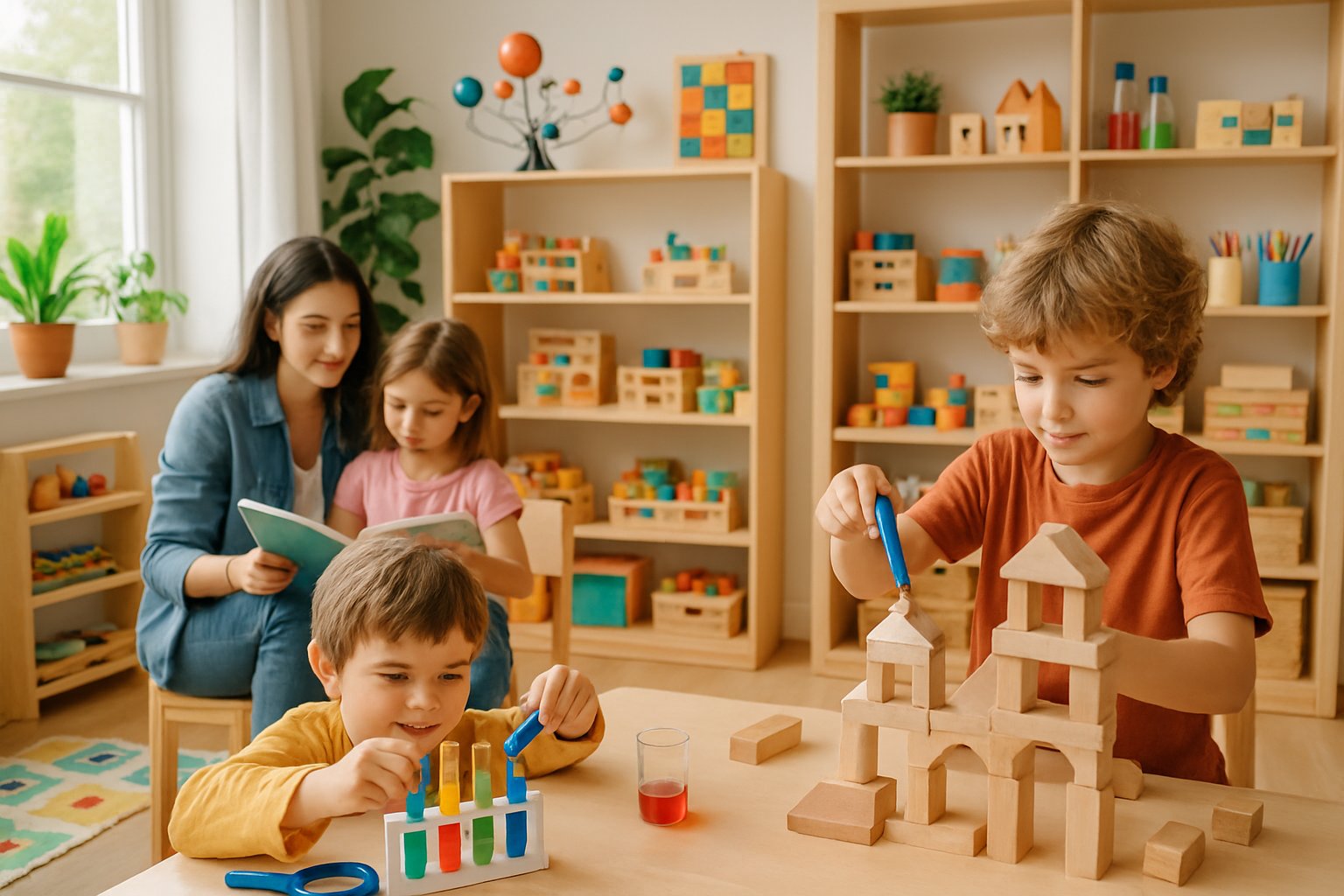
Children engaged in various play-based learning activities in a bright homeschool room with a parent assisting nearby.

Children learn in different ways through play. Some play is open-ended and child-led, while other play is guided with clear goals. Both structured and unstructured approaches can support skills like problem-solving, creativity, and social development.

Unstructured Play and Free Play

Unstructured play, also called free play, allows children to choose their own activities without adult direction. This type of play encourages independence and creativity because kids decide how to use their time and materials.

Examples include building with blocks, drawing, or inventing new games. Children practice decision-making and problem-solving while exploring freely. Unlike scheduled lessons, free play gives them space to follow their interests without pressure.

Research shows that free play helps develop social-emotional skills. Kids learn to negotiate rules, share, and resolve conflicts. In a homeschool setting, parents can set up safe play areas with open-ended materials like art supplies, puzzles, and loose parts such as sticks or pebbles.

A balance of free play with other learning methods supports both curiosity and self-motivation. Families who value unstructured time often notice that children stay more engaged when it comes time for structured lessons.

Pretend Play and Imaginative Play

Pretend play and imaginative play let children explore roles, ideas, and stories. They may act out real-life situations like running a store or caring for a pet, or they may create fantasy worlds with superheroes or magical creatures.

This type of play strengthens language, storytelling, and role-playing skills. Children practice empathy by taking on different perspectives. For example, pretending to be a doctor helps them understand caregiving, while play-acting as a shopkeeper builds early math skills through counting and exchanging items.

Imaginative play also supports problem-solving. When children invent rules for a game, they learn flexibility and cooperation. Parents can encourage this by providing costumes, puppets, or simple props. Even cardboard boxes can become castles or spaceships.

Homeschool families often use pretend play to connect lessons with creativity. A history lesson might turn into a play-acting activity where children dress up and retell events through skits or storytelling.

Outdoor Play and Sensory Experiences

Outdoor play gives children physical activity and exposure to nature. Running, climbing, and exploring outdoor playgrounds build strength, coordination, and confidence. Groups like KaBOOM! and Playful City USA highlight how access to outdoor play spaces benefits communities.

Outdoor play also provides sensory experiences. Children feel textures like grass, sand, or water, and they hear natural sounds like birds or wind. These sensory inputs support brain development and help regulate emotions.

Simple activities like gardening, nature walks, or playing with mud give children hands-on learning. Parents can set up scavenger hunts, build obstacle courses, or let kids collect leaves and rocks.

Outdoor play also connects to science and observation. Watching insects or measuring rainfall turns exploration into informal lessons. In homeschooling, this flexible environment makes learning active and engaging without relying only on books or screens.

Guided Play and Play-Based Activities

Guided play combines free exploration with adult support. Unlike unstructured play, it includes gentle direction toward a learning goal. Research from the University of Cambridge shows that guided play can improve skills like math and problem-solving better than direct instruction alone.

In guided play, adults set up activities and provide prompts but do not control every step. For example, a parent may offer blocks and ask, “How tall can you build this tower?” The child explores, while the adult nudges thinking with open-ended questions.

Play-based activities can include board games, building challenges, or storytelling prompts. Role-playing games also fit here, as they combine imagination with structured goals. For instance, pretending to run a grocery store can teach math, reading, and cooperation.

Homeschool parents can rotate play centers with materials tied to current lessons. A science corner might include magnifying glasses and natural objects, while a math center could use dice or counting games. This balance of freedom and guidance keeps learning enjoyable and purposeful.

Integrating Play-Based Learning in Homeschooling

Families can support learning by shaping the home into a space that encourages curiosity, choosing tools that make learning active, setting healthy limits on technology, and exploring the world beyond the house through real-life experiences. These approaches help children connect lessons to everyday life in meaningful ways.

Creating a Play-Rich Home Environment

A home that supports play-based learning gives children space to explore, build, and imagine. Parents can set up play zones with blocks, art supplies, puzzles, or pretend play items. These areas do not need to be large, but they should be organized and easy for kids to access on their own.

Allowing children to choose from open-ended materials encourages creativity. Items like building sets, dress-up clothes, or natural materials such as rocks and sticks can be used in many ways. This type of setup helps children practice problem-solving and social skills while they play at home.

Homeschoolers benefit when the environment changes over time. Rotating toys or rearranging spaces keeps activities fresh and prevents boredom. Even small adjustments, like adding a new basket of books or a sensory bin, can spark curiosity and extend play.

Choosing Educational Toys and Learning Resources

Educational toys and learning resources guide children toward specific skills while still keeping play fun. Parents can look for toys that build math, reading, or science skills without feeling like traditional lessons. For example, counting bears, letter tiles, or simple science kits can all be used as part of daily play.

Games that involve strategy, such as checkers or card games, also strengthen critical thinking. According to research on play-based learning in early childhood, guided play can improve problem-solving and task-switching skills more effectively than direct instruction.

It helps to choose resources that grow with the child. A set of magnetic tiles, for instance, can be used by preschoolers for simple shapes and by older children for complex structures. This flexibility makes toys more valuable for homeschool families who want long-term use.

Balancing Screen Time and Play

Technology can support homeschooling, but too much screen time can reduce opportunities for active play. Families should set clear boundaries to make sure screens do not replace hands-on learning. For example, they might limit device use to certain hours of the day.

Screens can still be useful when chosen carefully. Educational apps, virtual museum tours, or online science experiments can enrich lessons. Parents can connect digital activities with offline play, such as watching a video about animals and then creating habitats with toy figures.

Experts recommend mixing digital and physical learning techniques. A balanced plan allows children to enjoy the benefits of technology while still gaining the social and physical growth that comes from unstructured play.

Field Trips and Hands-On Learning

Field trips give homeschoolers a chance to connect lessons with real-world experiences. Visits to farms, science centers, or local museums encourage children to ask questions and apply what they have learned at home. These outings also provide social interaction with peers and adults.

Hands-on learning extends beyond formal trips. Nature walks, cooking, or gardening are everyday activities that build science, math, and life skills. For example, measuring ingredients in a recipe reinforces math concepts, while planting seeds shows children how living things grow.

Families can plan a mix of structured and unstructured experiences. Some trips may include guided tours, while others allow children to freely explore. This balance mirrors the idea of guided play, where children lead their own learning but still benefit from gentle direction.

Inclusivity and Equity in Play-Based Homeschooling

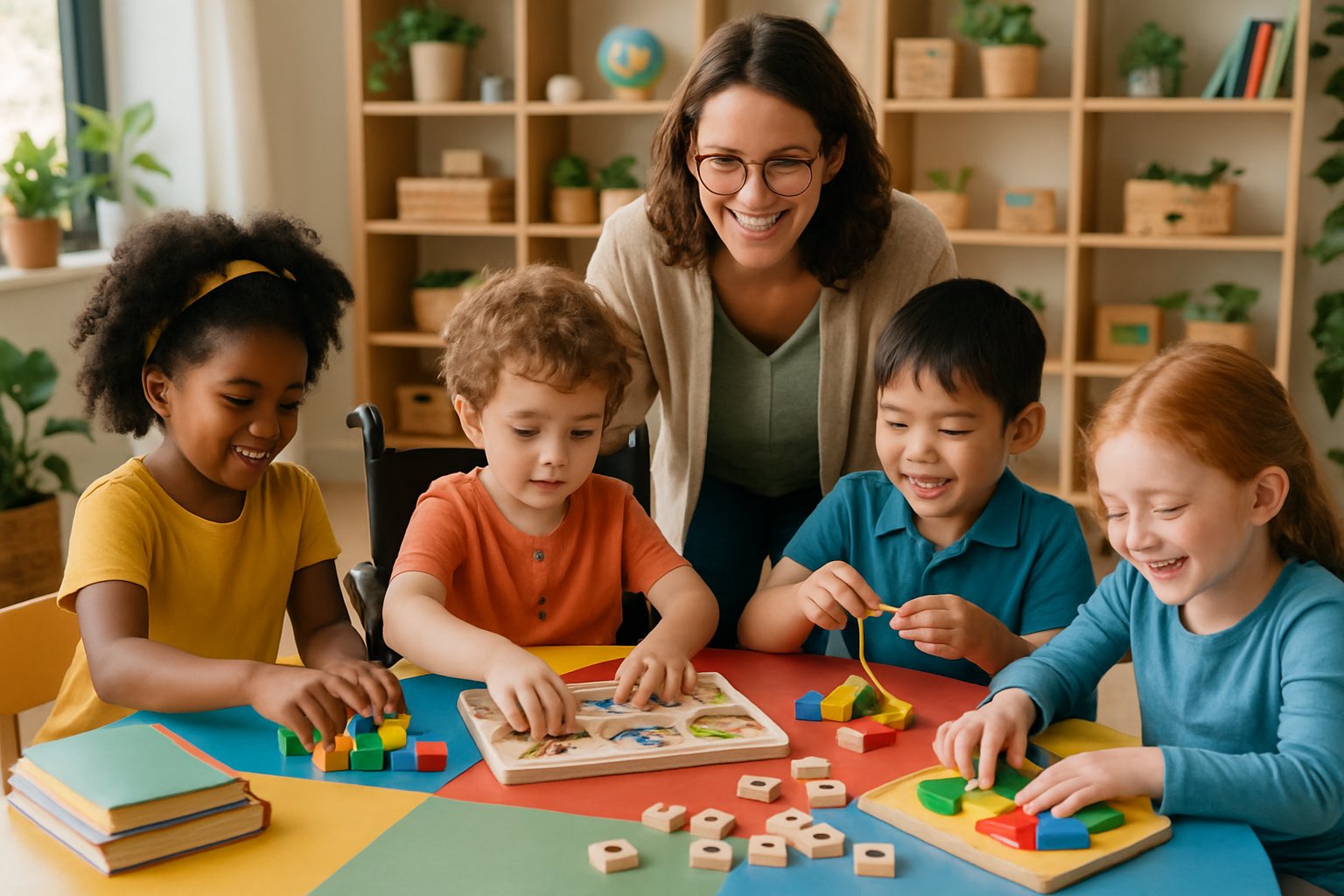
A diverse group of children playing and learning together around a table with educational toys and books, supervised by an adult in a bright homeschooling room.

Families who use play-based homeschooling often look for ways to make learning spaces fair, accessible, and supportive for all children. Creating equal chances to play, designing spaces that meet different needs, and addressing behavioral and emotional differences help children feel included and ready to learn.

Equal Play Space Opportunities

Children learn best when they all have a fair chance to join in play. In homeschooling, this means setting up play areas where no child feels left out. For example, rotating toys or creating shared activity zones can prevent one child from controlling all the resources.

Parents can also use structured turn-taking or small group play to make sure everyone participates. This approach mirrors practices seen in inclusive play-based learning classrooms, where teachers balance child choice with gentle guidance.

A simple table can help families plan equal opportunities:

Activity How to Ensure Fair Access
Building blocks Rotate sets among children
Outdoor play Assign time slots if space is limited
Pretend play Provide multiple roles for children

These small steps help children share, cooperate, and feel included in everyday learning.

Play Space Equity and Accessibility

Equity in play spaces means more than equal time. It also means making sure every child can access the space and materials regardless of ability. For example, children with mobility challenges may need low shelves, wide play areas, or adaptive seating.

Families can design flexible play zones with both quiet corners and active areas. This helps children who need calm settings as well as those who thrive in movement-based play. Research on inclusive play-based learning shows that adapting the environment can reduce barriers and increase social interaction.

Parents may also consider visual supports like picture labels or color-coded bins. These small adjustments create an environment where children of different abilities can play side by side.

Supporting Diverse Behavioral and Emotional Needs

Children bring different behavioral and emotional needs into play. Some may need help with self-regulation, while others may struggle with frustration or social cues. In homeschooling, parents can use play-based interventions that teach coping skills in natural ways.

For example, role-play games can help children practice sharing or calming strategies. Cooperative board games can support patience, turn-taking, and teamwork. These activities encourage holistic development by blending emotional growth with early education goals.

Parents can also set up predictable routines to reduce stress. When children know what to expect, they feel safer and more willing to engage. This mirrors strategies used in formal education settings where structure supports inclusion and reduces conflict.

By responding to each child’s needs through play, families create a supportive environment that values every learner.

Filed Under: Uncategorized

  • « Go to Previous Page
  • Page 1
  • Interim pages omitted …
  • Page 12
  • Page 13
  • Page 14
  • Page 15
  • Page 16
  • Interim pages omitted …
  • Page 25
  • Go to Next Page »

Primary Sidebar

Free Photo Lessons for Kids

Photo Lessons for kids

Categories

  • Photography
  • Preschool
  • Reading
  • Uncategorized
A child and parent working together on a science experiment at home using materials from a subscription box in a bright, organized study area.

Subscription Boxes As Curriculum: What Actually Works

Can A Monthly Kit Count As Real Curriculum? The honest answer is: it depends entirely on what … [Read More...] about Subscription Boxes As Curriculum: What Actually Works

A parent and child reviewing homeschool books together in a cozy study area with shelves of used educational materials and a tablet showing an online marketplace.

How To Buy And Sell Used Homeschool Curriculum On A Budget

Choose Materials With Savings In Mind The curriculum you pick determines how much you can save when … [Read More...] about How To Buy And Sell Used Homeschool Curriculum On A Budget

An illustration showing two classrooms side by side: one where students focus deeply on one math topic with a teacher's guidance, and another where students work on multiple math topics repeatedly in a spiral pattern.

Mastery Vs. Spiral Math: Choosing The Right Fit

How The Two Approaches Differ In Real Lessons The difference between spiral math and mastery math … [Read More...] about Mastery Vs. Spiral Math: Choosing The Right Fit

Students taking tests in a classroom while a teacher observes and takes notes, with visual symbols of timing and decision-making around them.

Curriculum Placement Tests: When and How to Use Them Well

What Placement Tests Tell You and When to Use Them Placement tests and standardized tests serve … [Read More...] about Curriculum Placement Tests: When and How to Use Them Well

A teacher reviewing a detailed curriculum planner spread out on a desk with educational tools around.

Scope and Sequence Explained: A Practical Planning Guide For Curriculum Planning

What Scope and Sequence Means in Real Curriculum Planning A scope and sequence is one of the most … [Read More...] about Scope and Sequence Explained: A Practical Planning Guide For Curriculum Planning

A family sitting at a kitchen table surrounded by homeschooling supplies, receipts, and a laptop, discussing and planning their homeschooling budget.

The Hidden Costs of Homeschool Curriculums and Smart Budgeting

What Families Actually Pay Beyond Curriculum The sticker price of a homeschool curriculum rarely … [Read More...] about The Hidden Costs of Homeschool Curriculums and Smart Budgeting

A parent and child working together at a table with books and a laptop in a bright room, with a bulletin board displaying charts and papers in the background.

How To Align Your Homeschool Curriculum With State Standards

What "Aligned To Standards" Actually Means At Home Standards alignment in homeschooling is not … [Read More...] about How To Align Your Homeschool Curriculum With State Standards

A parent and child working together on a homeschool lesson using a tablet with AI assistance in a bright study area.

Using AI To Enhance Your Homeschool Curriculum With ChatGPT

Build Customized Lessons With ChatGPT First ChatGPT can help you build a homeschool curriculum that … [Read More...] about Using AI To Enhance Your Homeschool Curriculum With ChatGPT

A group of children and adults of different ages working together around a table with educational materials in a bright learning space.

Family-Style Curriculums For Teaching Multiple Ages At Once

What Makes A Curriculum Work Across Multiple Ages A strong family-style homeschool curriculum saves … [Read More...] about Family-Style Curriculums For Teaching Multiple Ages At Once

A group of young people using digital devices surrounded by symbols of coding and computer science in a modern learning environment.

Coding And Computer Science: Best Curriculums Reviewed

How To Choose The Right Learning Path First Your child's age, current skill level, and long-term … [Read More...] about Coding And Computer Science: Best Curriculums Reviewed