Getting Started With Homeschooling on the Road
Families who choose roadschooling often balance structured lessons with hands-on experiences from travel. They need to understand how to select a learning style, follow state rules, and stay organized in small spaces like RVs or vans.
Choosing the Right Homeschooling Approach
Parents can choose from several methods when teaching on the road. Some prefer a structured curriculum, while others lean toward unschooling or a mix of the two. A hybrid style often works best, combining formal lessons in core subjects with real-world learning from travel.
For example, reading and math may follow a set program, but history and science often come from visiting museums, parks, or landmarks. Families using road schooling often find that children learn faster when lessons connect to their surroundings.
It helps to keep expectations realistic. One to two hours of focused work a day can cover essentials like reading, writing, and math. The rest of the day can be spent on travel-based activities, journaling, or hands-on projects that build problem-solving and critical thinking skills.
Understanding Legal Requirements for Travel Families
Each U.S. state has its own homeschooling laws. Families must follow the rules of their home state, even if they spend most of their time traveling. Some states require record keeping, annual testing, or notice of intent to homeschool. Others have fewer requirements.
Before starting, parents should review state laws through official education websites or trusted homeschool organizations. Families moving across states may need to refile paperwork or adjust to new rules, depending on residency.
Travel families should also consider how long they plan to be on the road. Short-term trips may only need simple lesson plans, while long-term roadschooling may require a more detailed approach to keep students on track with grade-level expectations.
Essential Supplies and Organization for RV Schooling
Space is limited in RVs, so families need to keep supplies simple and portable. A few key items include:
- Workbooks or digital curriculum
- Laptops or tablets with internet access
- Whiteboard or notebooks for daily practice
- Storage bins for easy organization
Many families use online platforms to reduce the need for heavy textbooks. Tools like Khan Academy or BrainQuest workbooks are lightweight and travel-friendly.
Keeping a routine helps children know when it’s time to learn and when it’s time to explore. Even in small spaces, a foldable table or designated learning spot can make school time feel more structured. Families who homeschool on the road often stress the importance of organization to avoid clutter and keep lessons consistent.
Creating a Flexible Roadschooling Routine
Families who practice roadschooling often find that flexibility, balance, and creativity help them keep learning consistent while traveling. They adjust lessons to fit their road schedule, blend structured academics with real-world exploration, and adapt to the needs of children at different ages and stages.
Adapting Schedules to Travel Life
Travel days look different from stationary days, so families often shift their homeschool routine to match the pace of the road. Some parents plan short lessons in the morning before driving, while others save reading and flash cards for the car.
Many fulltime families use travel-friendly activities like:
- Reading aloud
- Bible or memory work
- Math flashcards
- Audiobooks or podcasts
Creating a weekly outline instead of a strict daily plan helps. For example, they may set goals such as “finish three math lessons” or “complete one history project” rather than tying tasks to exact times. This approach allows them to stay consistent without feeling behind when travel delays occur.
Families who prefer unschooling often lean into spontaneous learning during travel days, using museums, parks, and historical sites as their classroom. This keeps education natural and connected to their journey.
Balancing Structured Learning and Exploration
A flexible roadschooling routine usually combines bookwork with hands-on experiences. Parents often schedule core subjects like math and language arts in the morning when children are fresh, then explore local sites in the afternoon.
This method mirrors what families describe in guides like How to Homeschool in an RV, where mornings are used for lessons and afternoons for field trips. By keeping academics short and focused, kids can enjoy both structured learning and real-world discovery.
Some families use a 2-part system:
- Non-negotiable basics (reading, writing, math)
- Flexible extras (history tied to local landmarks, science from nature walks)
This balance prevents burnout and ensures children meet educational goals while still enjoying the unique opportunities of travel.
Managing Multiple Ages and Learning Styles
Roadschooling families with more than one child often juggle different grade levels and learning preferences. One strategy is to group subjects like history, science, or art so siblings can learn together, even if assignments differ by age.
Parents may also rotate teaching duties. For example, one adult handles math with an older child while the younger one works on coloring, puzzles, or preschool activities. This keeps everyone engaged without long wait times.
Using resources that adapt to different levels, such as unit studies or open-and-go curricula, helps simplify planning. Families also add independent work like journaling or online lessons for older kids, giving younger ones time for play-based activities.
By recognizing that each child learns differently, whether through structured lessons or unschooling experiences, families can create a rhythm that supports all ages on the road.
Curriculum and Educational Resources for Travel
Families on the road balance flexibility with structure by blending online tools, real-world experiences, and adaptable curricula. Many combine digital platforms with location-based lessons to keep learning consistent while also making it meaningful.
Online Programs and Mobile Apps
Online programs give traveling families access to structured lessons no matter where they are. Platforms like Time4Learning provide full K-12 coverage in math, science, language arts, and social studies. Because it’s web-based, children can log in from a laptop or tablet whenever internet access is available.
Free resources like Khan Academy and Duolingo also help fill gaps. Khan Academy offers practice in core academic subjects, while Duolingo makes language learning simple for families traveling abroad.
Many parents also turn to apps for supplemental learning. Libby and OverDrive connect families to e-books and audiobooks from local libraries. YouTube channels with educational content can support subjects like history, art, or science.
Having a mix of online programs and apps ensures children stay on track academically while still leaving room for flexibility.
Hands-On and Location-Based Learning
Roadschooling often blends structured lessons with direct experiences. Families use travel as a teaching tool, turning destinations into classrooms. A visit to Gettysburg becomes a history lesson, while hiking in Yellowstone introduces geology, wildlife, and conservation.
This approach also connects well with unschooling, where children learn through natural curiosity and exploration. Parents may encourage journaling about travels, creating photo projects, or tracking wildlife sightings.
Museums, science centers, and national parks often offer educational programs designed for kids. Many parks even provide free junior ranger activities, which combine fun with structured learning.
By tying lessons to real places, children often remember and understand concepts more deeply than through textbooks alone.
Popular Curriculum Choices for RV Families
Many roadschooling families still prefer to follow an established homeschool curriculum for consistency. The Good and the Beautiful is popular for combining academics with art and nature studies, which fit well with travel.
Oak Meadow provides a creative, Waldorf-inspired approach with hands-on projects that adapt easily to small spaces like RVs. Families who want a more traditional structure often rely on Time4Learning for its online accessibility and clear progression through grade levels.
Some families mix and match, using a formal curriculum for core subjects while adding road-based projects and unschooling methods. This hybrid approach allows children to meet state requirements while still enjoying the freedom of travel.
For more ideas, families can explore guides like the Ultimate Guide to Roadschooling, which highlights resources and tips for RV-based education.
Community, Socialization, and Support on the Road
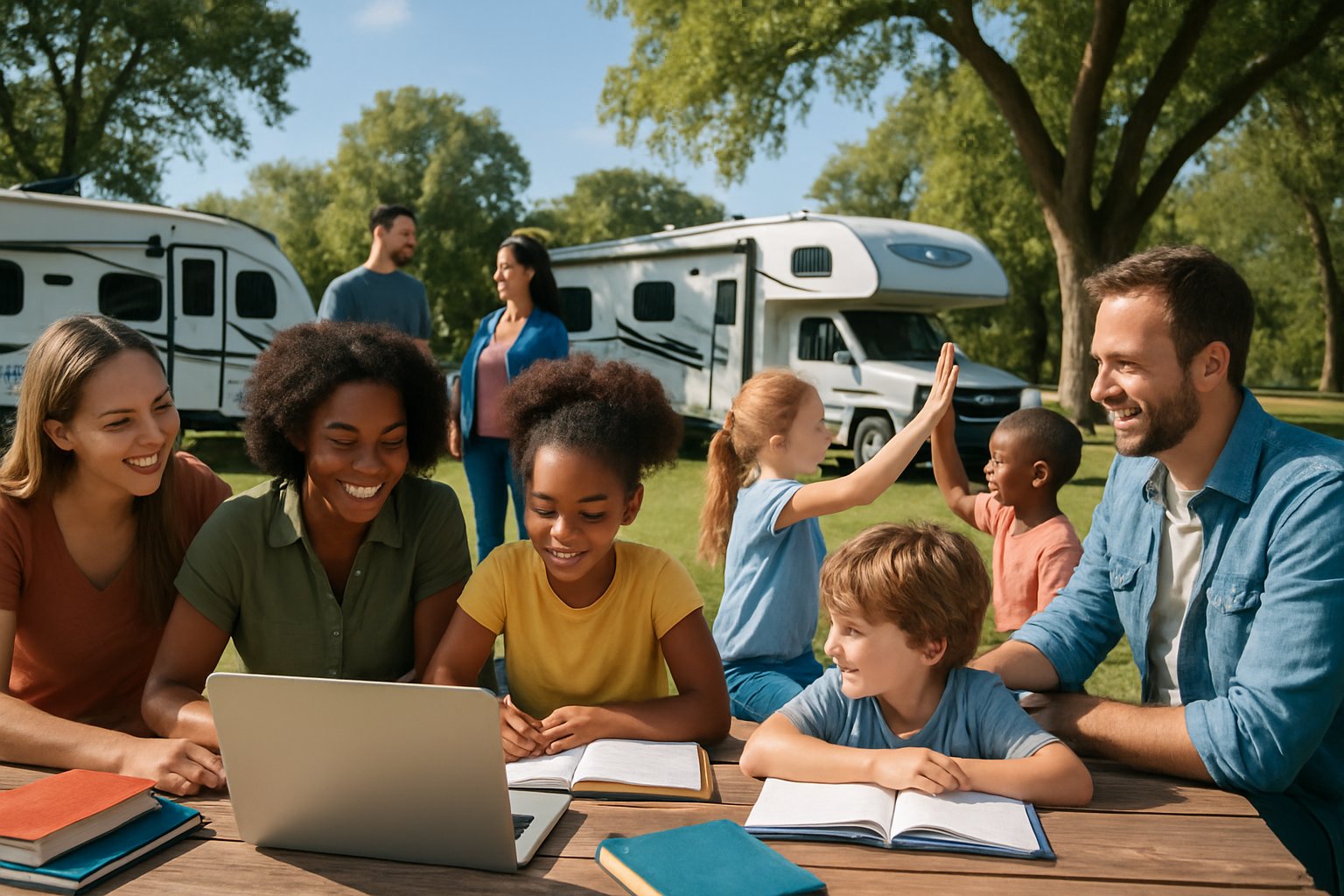
Families who choose roadschooling often look for ways to build friendships, give their kids chances to play with peers, and find support from others living the same lifestyle. They can connect through RV communities, campground activities, and organized events that bring traveling families together.
Connecting With Other Travel Families
Travel families often meet each other at campgrounds, RV parks, and popular travel routes. Many parents join Fulltime Families, a membership-based community that hosts rallies, meetups, and online groups. These gatherings help families form lasting bonds and even plan future trips together.
Parents also use Facebook groups and forums to connect with other RVers nearby. This makes it easier to arrange meetups, share resources, or caravan with others.
Families who stay at Thousand Trails campgrounds often find other kids and parents with similar routines. These parks are popular with full-time RVers, so repeated visits often lead to familiar faces and stronger friendships.
Social Opportunities for Kids
Children on the road benefit from meeting peers in many different settings. Campground playgrounds, swimming pools, and group activities give them natural chances to make friends. Many RV parks host events such as potlucks, craft sessions, or outdoor games.
Some kids join local homeschool groups when their family stays in one place for a few weeks. Parents often find these groups through community boards or online searches. This gives children a chance to participate in classes, sports, or field trips with other homeschoolers.
Families also use programs like Minecraft servers for roadschoolers or kid-friendly messaging apps to help children stay in touch with friends they meet along the way. These tools make it easier to maintain friendships across different states.
Finding Support Groups and Events
Support comes in many forms for road-school families. National organizations like Fulltime Families provide not only social opportunities but also practical resources such as discounts, scouting programs, and private online communities.
Events and rallies are especially valuable. Families often spend several days together, which helps create stronger relationships than short campground encounters. These events also include workshops for parents and activities designed for kids of different ages.
Other RV groups, such as Escapees and Xscapers, also host gatherings. While not always family-focused, they can still provide support and networking opportunities for parents who want to connect with other travelers.
Leave a Reply