• Skip to primary navigation
  • Skip to main content
  • Skip to primary sidebar

Clever Homeschool

Fun courses based on your child's interests!

  • Home
  • Free Photo Lessons for Kids
  • “Get That Shot!” photo tags

Uncategorized

What Is Classical Homeschooling? A Complete Guide for Parents

September 24, 2025 by Valerie Leave a Comment

Image by Markus Trier from Pixabay

Core Principles of Classical Homeschooling

Classical homeschooling builds on a structured approach to learning that emphasizes language, reasoning, and communication. It encourages children to develop strong critical thinking skills while also gaining a broad foundation in literature, history, math, and science.

Definition and Philosophy

Classical education has roots in ancient Greece and Rome, where learning focused on cultivating wisdom and virtue rather than just memorizing facts. In a homeschool setting, this philosophy guides parents to teach children how to think clearly and express themselves well.

The method often draws from the Seven Liberal Arts and the study of the Great Books. These works and disciplines have shaped Western thought and remain central to the classical homeschooling approach.

At its core, this philosophy values truth, beauty, and goodness. Families who adopt it often see education as more than academics—it is also about character formation and building habits of lifelong learning.

The Trivium: Grammar, Logic, and Rhetoric Stages

A key feature of classical homeschooling is the Trivium, which organizes learning into three stages that match a child’s growth.

  • Grammar Stage (Grades 1–4): Children focus on memorization, vocabulary, and basic facts. They build a strong foundation in reading, writing, and arithmetic.
  • Logic Stage (Grades 5–8): Students begin analyzing information, asking questions, and making connections. This stage emphasizes reasoning and debate.
  • Rhetoric Stage (Grades 9–12): Teens practice clear and persuasive communication through writing, speech, and discussion.

Each stage prepares students for the next, moving from absorbing knowledge to applying it thoughtfully. This pattern helps children grow into independent learners who can both understand and explain complex ideas.

Critical Thinking and Lifelong Learning

Classical homeschooling places a strong emphasis on critical thinking skills. Instead of only memorizing information, students learn to question, analyze, and evaluate ideas. The Socratic Method, which uses guided questions, is often used to spark deeper thinking.

This approach also encourages students to see learning as a lifelong pursuit. By engaging with classic texts, exploring history, and practicing clear communication, they develop habits that extend beyond school years.

The goal is not only academic success but also the ability to make sound judgments and continue learning throughout life. Families who adopt this model often value both intellectual growth and personal responsibility.

Classical Curriculum and Resources

A classical homeschool curriculum usually emphasizes structured subjects, time-tested books, and a focus on clear thinking and communication. Families often use established programs and co-ops to organize studies while keeping flexibility at home.

Key Subjects: Language Arts, Liberal Arts, and Great Books

In classical homeschooling, language arts form the foundation. Children practice grammar, spelling, and writing skills early, then move into logic and persuasive writing as they grow. Copywork, dictation, and narration are common tools for building strong habits.

The liberal arts include grammar, logic, rhetoric, arithmetic, geometry, music, and astronomy. These subjects are taught in stages that match a child’s development. For example, younger students memorize facts, while older students debate and analyze ideas.

Families often use the Great Books approach. This means reading classic works from authors like Homer, Shakespeare, and Austen. The goal is to expose students to enduring ideas and help them think deeply about history, philosophy, and human nature.

StageFocusExample Activities
GrammarMemorizationReciting poems, Latin vocabulary
LogicReasoningDebates, analyzing arguments
RhetoricExpressionEssays, speeches

Popular Classical Homeschool Curriculum Options

Parents can choose from many structured programs that make planning easier. One well-known guide is The Well-Trained Mind, which outlines how to teach each stage of the Trivium at home.

Veritas Press offers a strong classical homeschool curriculum with history cards, literature, and online classes. Memoria Press provides ready-to-use lesson plans and emphasizes Latin, literature, and Christian studies. Families who want a creative approach often turn to Classical Academic Press, which publishes materials for logic, writing, and languages.

Many parents mix resources depending on their children’s needs. For example, they might use The Story of the World for history alongside Memoria Press for Latin. This flexibility allows families to stay rooted in the classical model while adapting to different learning styles.

Role of Classical Conversations and Co-ops

Some families prefer group learning through Classical Conversations, a Christian-based program that combines weekly community meetings with at-home assignments. Students recite memory work, practice presentations, and learn through structured cycles. Parents also receive support and training to guide lessons at home.

Co-ops extend this idea beyond one program. Local groups may form to study Latin, literature, or logic together. This gives children a chance to practice public speaking, engage in discussions, and build friendships.

For many families, co-ops provide accountability and encouragement. They also give parents a way to share the teaching load while keeping the classical curriculum consistent. These group settings often make the homeschooling journey feel less isolating and more collaborative.

History and Modern Adaptations

Classical homeschooling has deep roots in ancient traditions but has also been reshaped to fit the needs of modern families. Its history shows how education once centered on language, logic, and rhetoric, while today’s adaptations focus on making those same skills practical for home learners.

Origins and Evolution of Classical Education

Classical education began in ancient Greece and Rome, where students studied grammar, logic, and rhetoric as the foundation for learning. These three stages later became known as the Trivium, a structure that shaped much of Western education for centuries.

During the Middle Ages, the Trivium was paired with the Quadrivium—arithmetic, geometry, music, and astronomy. Together, they formed a complete system of liberal arts learning. This approach emphasized knowledge, reasoning, and communication.

The method declined with the rise of modern schooling but was revived in the 20th century. Influential works, such as Dorothy Sayers’ essay The Lost Tools of Learning, encouraged parents and educators to return to these time-tested methods.

Today, many families who choose classical homeschooling follow this historic model because it provides a clear, step-by-step way of teaching children how to think and express ideas with confidence.

Adapting Classical Methods for Today’s Homeschoolers

Modern classical homeschooling keeps the Trivium but adapts it for home use. In the Grammar Stage, children memorize facts through songs, chants, and stories. Parents often use structured guides like First Language Lessons or history programs such as The Story of the World.

In the Logic Stage, students begin to question and analyze. Homeschoolers may use resources like The Discovery of Deduction to practice formal logic. This stage often includes debates, essays, and early algebra.

The Rhetoric Stage focuses on clear and persuasive communication. High school students practice writing essays, speeches, and research papers. Programs such as Classical Conversations or Memoria Press provide ready-made curricula to support families through this phase.

By blending historic structure with modern tools, families can tailor classical education to fit their child’s pace and interests while still holding onto its original purpose: teaching students how to learn.
Filed Under: Uncategorized

What is Unschooling? Exploring Child-Led, Real-World Learning

September 24, 2025 by Valerie Leave a Comment

What is Unschooling?

Unschooling is a form of home education that focuses on child-led learning rather than structured lessons. It encourages children to follow their interests and learn through real-life experiences, play, and exploration instead of a set curriculum.

Core Principles of Unschooling

Unschooling is built on the belief that children are naturally curious and capable of directing their own education. Instead of textbooks and tests, learning happens through everyday activities, hobbies, and personal interests.

This approach values self-directed education, where children decide what to study and how deeply to explore a subject. For example, a child fascinated by insects might spend weeks observing bugs, reading about them, and drawing them. This process allows learning to feel meaningful and connected to real life.

Some families practice radical unschooling, which extends beyond academics into daily living. In this model, children also guide choices in routines, media, and social interactions. The idea is that autonomy fosters responsibility and lifelong curiosity.

Unschooling recognizes that learning is not separate from life. Skills like reading, math, and problem-solving often develop as by-products of pursuing personal goals.

How Unschooling Differs from Homeschooling

While both unschooling and homeschooling happen outside traditional schools, they differ in structure. Homeschooling usually follows a set curriculum, lesson plans, or online programs. Parents often act as teachers, guiding instruction and assessing progress.

Unschooling, by contrast, avoids formal lessons. Instead, it relies on child-led education where the learner decides what, when, and how to study. For example, a homeschooled student may complete daily math worksheets, while an unschooled child might learn math through cooking, budgeting, or building projects.

Another difference is flexibility. Homeschooling often mirrors school schedules, while unschooling adapts to each child’s pace. Families may spend mornings at museums, afternoons exploring nature, or evenings playing games that build critical thinking.

According to Healthline, unschooling emphasizes curiosity-driven exploration, while homeschooling is more structured. Both approaches fall under the larger category of home education but serve different learning styles.

Role of Parents in Unschooling

In unschooling, parents are not traditional teachers. Their role is to create an environment rich with opportunities and resources. They observe their child’s interests and provide materials, experiences, or connections that support those passions.

For example, if a child shows interest in astronomy, parents might borrow books, visit a planetarium, or set up a telescope. They act as facilitators rather than directors of learning.

Parents also help children access community resources such as libraries, online courses, or mentors. This support ensures that learning remains broad and not limited to what is available at home.

The Unschoolers.org community explains that parents encourage exploration without turning it into forced lessons. Instead of designing structured units, they respond to curiosity in flexible and practical ways.

This role requires trust in the child’s ability to learn at their own pace. Parents guide gently, offering tools and experiences, while respecting the child’s independence.

How Unschooling Works in Daily Life

Unschooling often centers on a child’s natural curiosity and the way they learn best. It also uses everyday activities and environments as opportunities for growth, instead of relying on a fixed curriculum.

Natural Curiosity and Learning Styles

Unschooled children usually follow their own interests, which can guide what they choose to study or explore. A child who loves animals might spend hours reading about habitats, while another who enjoys numbers may practice math through games or budgeting.

Parents often notice that learning styles differ. Some children prefer hands-on projects, while others learn best through reading or conversation. Recognizing these differences helps families support natural learning without forcing a single method.

Instead of worksheets or tests, progress often shows through conversations, projects, or skills gained in daily life. This approach trusts that curiosity naturally leads to deeper knowledge. Families who practice unschooling often see that children stay more engaged when they choose what to learn.

Key idea: Learning is not one-size-fits-all. By following a child’s style, families create an environment where curiosity drives growth.

Real-World Learning Experiences

Unschooling treats the world as the classroom. Children learn math by cooking and measuring ingredients, practice reading through signs and menus, and build social skills during community activities.

Many families use museums, libraries, parks, and even travel as part of their routine. These settings provide real-world learning that feels relevant and practical. For example, gardening can teach biology, responsibility, and patience all at once.

Unlike traditional schooling, unschooling blends education into daily life. Children may explore history at a museum one day and learn problem-solving by fixing a bike the next. This flexibility allows them to connect knowledge to real situations.

As unschooling families often report, these experiences help children see learning as continuous, not limited to “school hours.” It becomes part of how they live, not a separate activity.

Challenges and Considerations

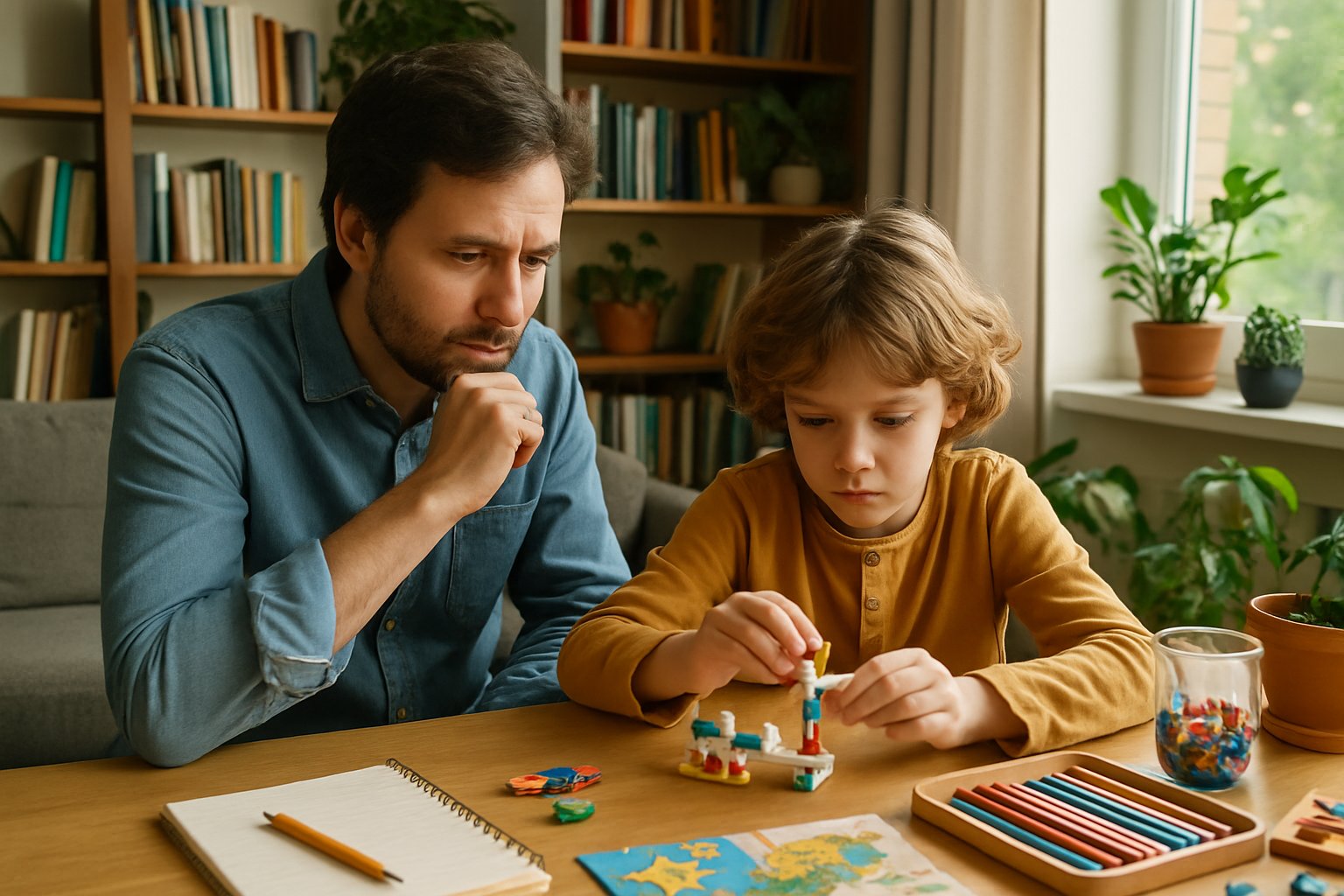
A parent and child engaged in a hands-on learning activity together in a cozy home setting with books and educational materials around them.

Families who choose unschooling often face unique hurdles that differ from traditional homeschooling. These include the shift away from structured schooling habits and the difficulty of meeting outside academic requirements like standardized testing.

Deschooling and Transition

When children leave traditional school, they usually need time to adjust. This adjustment period is often called deschooling. It helps them break free from rigid schedules, grading systems, and teacher-led instruction.

During deschooling, children may spend more time resting, exploring hobbies, or rediscovering interests. Parents sometimes worry that little “schoolwork” is being done, but this stage is important for building trust in self-directed learning.

The length of deschooling varies. Some children adapt within weeks, while others take months. A common guideline is about one month of deschooling for each year spent in formal schooling.

Parents also need to adjust. They shift from directing lessons to observing and supporting curiosity. This can feel uncomfortable at first. Families who understand the process often find it easier to settle into a new rhythm of learning.

Standardized Testing and Assessment

Many states require proof of progress through standardized testing or portfolio reviews. For unschooling families, this can be challenging since learning does not follow a set curriculum.

Children may not cover subjects in the same sequence as schools. This makes preparing for standardized tests stressful. Some families choose practice tests or light review sessions to help children feel more confident.

Assessment options differ by location. In some areas, parents can submit work samples or evaluations instead of test scores. Checking local laws through state education departments is essential.

Unschooling parents often balance compliance with maintaining a flexible approach. They may document learning through photos, journals, or projects. These records can demonstrate growth while honoring a child’s unique learning path.

For more details on how families navigate these requirements, see this overview of unschooling challenges and benefits.

Filed Under: Uncategorized

The Science of Play: Why Play-Based Learning Works in Homeschooling

September 23, 2025 by Valerie Leave a Comment

The Science Behind Play-Based Learning

Play-based learning supports how children think, focus, and solve problems. Research shows that playful experiences shape brain development, strengthen focus, and encourage flexible thinking that children carry into later learning.

Cognitive Growth and Brain Development

Children’s brains grow rapidly in the early years, and play acts as a natural driver of that growth. When they explore through play, they form new neural connections that support memory, language, and reasoning.

Studies show that learning through play helps children build skills like curiosity and adaptability. These skills prepare them to keep learning as their brains mature.

Play also helps children connect abstract ideas to real experiences. For example, stacking blocks teaches balance and spatial awareness, while role-play supports language and social understanding.

In short, play strengthens both the structure and the function of the developing brain.

Executive Function and Attention

Executive function includes self-control, flexible thinking, and working memory. These skills help children manage tasks, follow directions, and stay focused. Play creates natural opportunities to practice them.

In guided play, children learn to wait their turn, follow simple rules, and adjust when something changes. Activities like board games or pretend scenarios encourage them to hold information in their minds while shifting attention as needed.

Research highlights that play-based learning in early education supports stronger attention spans than direct instruction alone. This is because children remain more engaged when they are active participants rather than passive listeners.

By practicing focus in playful ways, children build habits that support later academic success.

Critical Thinking and Problem-Solving Skills

Play also develops critical thinking and problem-solving skills. When children experiment, they test ideas, make mistakes, and try new approaches. This process builds resilience and flexible thinking.

For example, during pretend play, children negotiate roles and rules. In building activities, they solve structural challenges by trial and error. These experiences strengthen reasoning and decision-making.

According to Edutopia, play-based learning can be more effective than direct instruction for developing these skills in early learners.

Through playful problem-solving, children learn how to analyze situations, adapt strategies, and persist until they find solutions.

Social, Emotional, and Physical Benefits of Play

Play supports children’s growth by strengthening how they connect with others, manage their feelings, and build control over their bodies. It allows them to practice real-life skills in safe and enjoyable ways while also reinforcing learning goals.

Social Skills and Collaboration

When children play together, they learn how to share, take turns, and listen to one another. These small actions help them build strong social skills that carry into group learning and daily interactions.

Cooperative activities like building with blocks or role-playing games encourage collaboration. Children must negotiate roles, solve conflicts, and communicate ideas clearly. These moments strengthen both expressive language and listening skills.

Play also helps children understand group dynamics. For example, in guided play, they may work together to solve a puzzle. Each child contributes ideas, which fosters teamwork and respect for different viewpoints.

Research shows that play-based learning improves social development by promoting cooperation and problem-solving in early childhood classrooms. Activities that require joint effort create opportunities for children to practice leadership and compromise in authentic ways.

Emotional Regulation and Empathy

Through play, children explore emotions in a safe space. Pretend play, for example, lets them act out scenarios that involve joy, frustration, or disappointment. This practice supports emotional regulation by teaching them how to manage strong feelings.

Games with rules also help children develop self-control. Waiting for a turn or following agreed guidelines encourages patience and discipline. These skills are essential for both learning and relationships.

Playful interactions nurture empathy. When children role-play as caregivers, doctors, or friends, they begin to imagine how others feel. This builds emotional intelligence, which helps them connect with peers more meaningfully.

According to studies on social and emotional skill development, play-based learning gives children tools to recognize emotions in themselves and others. Over time, this ability supports conflict resolution and stronger friendships.

Physical Development and Motor Skills

Play also contributes to physical development. Running, climbing, and jumping build gross motor skills and overall coordination. These activities strengthen muscles, balance, and endurance.

Fine motor skills improve during activities like drawing, cutting, or building with small objects. These tasks enhance hand-eye coordination and prepare children for writing and other academic work.

Unstructured outdoor play is especially valuable. It allows children to explore movement freely, improving agility and confidence in their bodies.

Research from the American Academy of Pediatrics highlights that play supports both physical health and cognitive growth. By combining movement with exploration, children build strength while also engaging their thinking skills.

Physical play also supports self-control. For example, games like “Red Light, Green Light” require children to stop and start on cue, linking body movement with attention and discipline.

Types of Play in Homeschool Environments

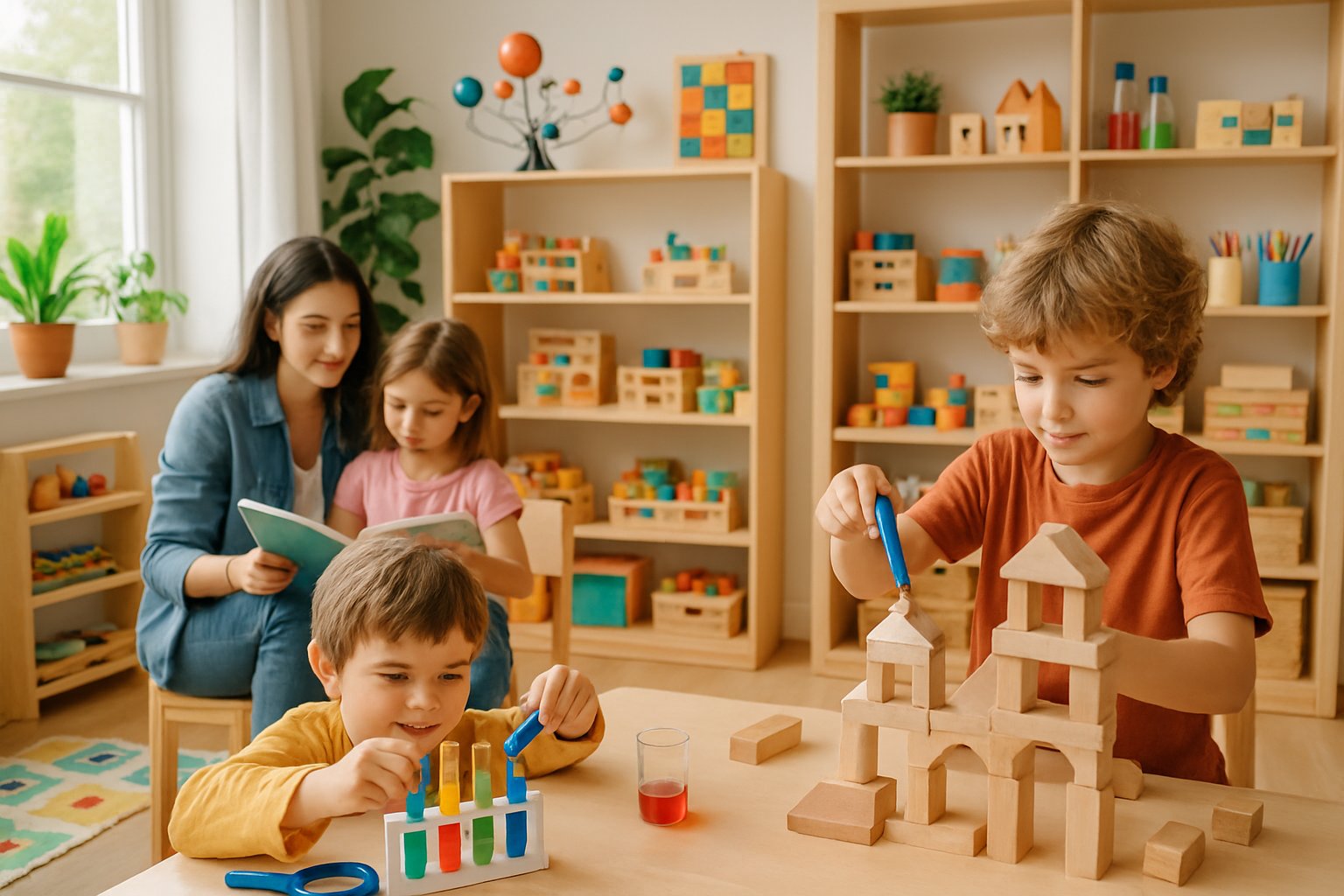
Children engaged in various play-based learning activities in a bright homeschool room with a parent assisting nearby.

Children learn in different ways through play. Some play is open-ended and child-led, while other play is guided with clear goals. Both structured and unstructured approaches can support skills like problem-solving, creativity, and social development.

Unstructured Play and Free Play

Unstructured play, also called free play, allows children to choose their own activities without adult direction. This type of play encourages independence and creativity because kids decide how to use their time and materials.

Examples include building with blocks, drawing, or inventing new games. Children practice decision-making and problem-solving while exploring freely. Unlike scheduled lessons, free play gives them space to follow their interests without pressure.

Research shows that free play helps develop social-emotional skills. Kids learn to negotiate rules, share, and resolve conflicts. In a homeschool setting, parents can set up safe play areas with open-ended materials like art supplies, puzzles, and loose parts such as sticks or pebbles.

A balance of free play with other learning methods supports both curiosity and self-motivation. Families who value unstructured time often notice that children stay more engaged when it comes time for structured lessons.

Pretend Play and Imaginative Play

Pretend play and imaginative play let children explore roles, ideas, and stories. They may act out real-life situations like running a store or caring for a pet, or they may create fantasy worlds with superheroes or magical creatures.

This type of play strengthens language, storytelling, and role-playing skills. Children practice empathy by taking on different perspectives. For example, pretending to be a doctor helps them understand caregiving, while play-acting as a shopkeeper builds early math skills through counting and exchanging items.

Imaginative play also supports problem-solving. When children invent rules for a game, they learn flexibility and cooperation. Parents can encourage this by providing costumes, puppets, or simple props. Even cardboard boxes can become castles or spaceships.

Homeschool families often use pretend play to connect lessons with creativity. A history lesson might turn into a play-acting activity where children dress up and retell events through skits or storytelling.

Outdoor Play and Sensory Experiences

Outdoor play gives children physical activity and exposure to nature. Running, climbing, and exploring outdoor playgrounds build strength, coordination, and confidence. Groups like KaBOOM! and Playful City USA highlight how access to outdoor play spaces benefits communities.

Outdoor play also provides sensory experiences. Children feel textures like grass, sand, or water, and they hear natural sounds like birds or wind. These sensory inputs support brain development and help regulate emotions.

Simple activities like gardening, nature walks, or playing with mud give children hands-on learning. Parents can set up scavenger hunts, build obstacle courses, or let kids collect leaves and rocks.

Outdoor play also connects to science and observation. Watching insects or measuring rainfall turns exploration into informal lessons. In homeschooling, this flexible environment makes learning active and engaging without relying only on books or screens.

Guided Play and Play-Based Activities

Guided play combines free exploration with adult support. Unlike unstructured play, it includes gentle direction toward a learning goal. Research from the University of Cambridge shows that guided play can improve skills like math and problem-solving better than direct instruction alone.

In guided play, adults set up activities and provide prompts but do not control every step. For example, a parent may offer blocks and ask, “How tall can you build this tower?” The child explores, while the adult nudges thinking with open-ended questions.

Play-based activities can include board games, building challenges, or storytelling prompts. Role-playing games also fit here, as they combine imagination with structured goals. For instance, pretending to run a grocery store can teach math, reading, and cooperation.

Homeschool parents can rotate play centers with materials tied to current lessons. A science corner might include magnifying glasses and natural objects, while a math center could use dice or counting games. This balance of freedom and guidance keeps learning enjoyable and purposeful.

Integrating Play-Based Learning in Homeschooling

Families can support learning by shaping the home into a space that encourages curiosity, choosing tools that make learning active, setting healthy limits on technology, and exploring the world beyond the house through real-life experiences. These approaches help children connect lessons to everyday life in meaningful ways.

Creating a Play-Rich Home Environment

A home that supports play-based learning gives children space to explore, build, and imagine. Parents can set up play zones with blocks, art supplies, puzzles, or pretend play items. These areas do not need to be large, but they should be organized and easy for kids to access on their own.

Allowing children to choose from open-ended materials encourages creativity. Items like building sets, dress-up clothes, or natural materials such as rocks and sticks can be used in many ways. This type of setup helps children practice problem-solving and social skills while they play at home.

Homeschoolers benefit when the environment changes over time. Rotating toys or rearranging spaces keeps activities fresh and prevents boredom. Even small adjustments, like adding a new basket of books or a sensory bin, can spark curiosity and extend play.

Choosing Educational Toys and Learning Resources

Educational toys and learning resources guide children toward specific skills while still keeping play fun. Parents can look for toys that build math, reading, or science skills without feeling like traditional lessons. For example, counting bears, letter tiles, or simple science kits can all be used as part of daily play.

Games that involve strategy, such as checkers or card games, also strengthen critical thinking. According to research on play-based learning in early childhood, guided play can improve problem-solving and task-switching skills more effectively than direct instruction.

It helps to choose resources that grow with the child. A set of magnetic tiles, for instance, can be used by preschoolers for simple shapes and by older children for complex structures. This flexibility makes toys more valuable for homeschool families who want long-term use.

Balancing Screen Time and Play

Technology can support homeschooling, but too much screen time can reduce opportunities for active play. Families should set clear boundaries to make sure screens do not replace hands-on learning. For example, they might limit device use to certain hours of the day.

Screens can still be useful when chosen carefully. Educational apps, virtual museum tours, or online science experiments can enrich lessons. Parents can connect digital activities with offline play, such as watching a video about animals and then creating habitats with toy figures.

Experts recommend mixing digital and physical learning techniques. A balanced plan allows children to enjoy the benefits of technology while still gaining the social and physical growth that comes from unstructured play.

Field Trips and Hands-On Learning

Field trips give homeschoolers a chance to connect lessons with real-world experiences. Visits to farms, science centers, or local museums encourage children to ask questions and apply what they have learned at home. These outings also provide social interaction with peers and adults.

Hands-on learning extends beyond formal trips. Nature walks, cooking, or gardening are everyday activities that build science, math, and life skills. For example, measuring ingredients in a recipe reinforces math concepts, while planting seeds shows children how living things grow.

Families can plan a mix of structured and unstructured experiences. Some trips may include guided tours, while others allow children to freely explore. This balance mirrors the idea of guided play, where children lead their own learning but still benefit from gentle direction.

Inclusivity and Equity in Play-Based Homeschooling

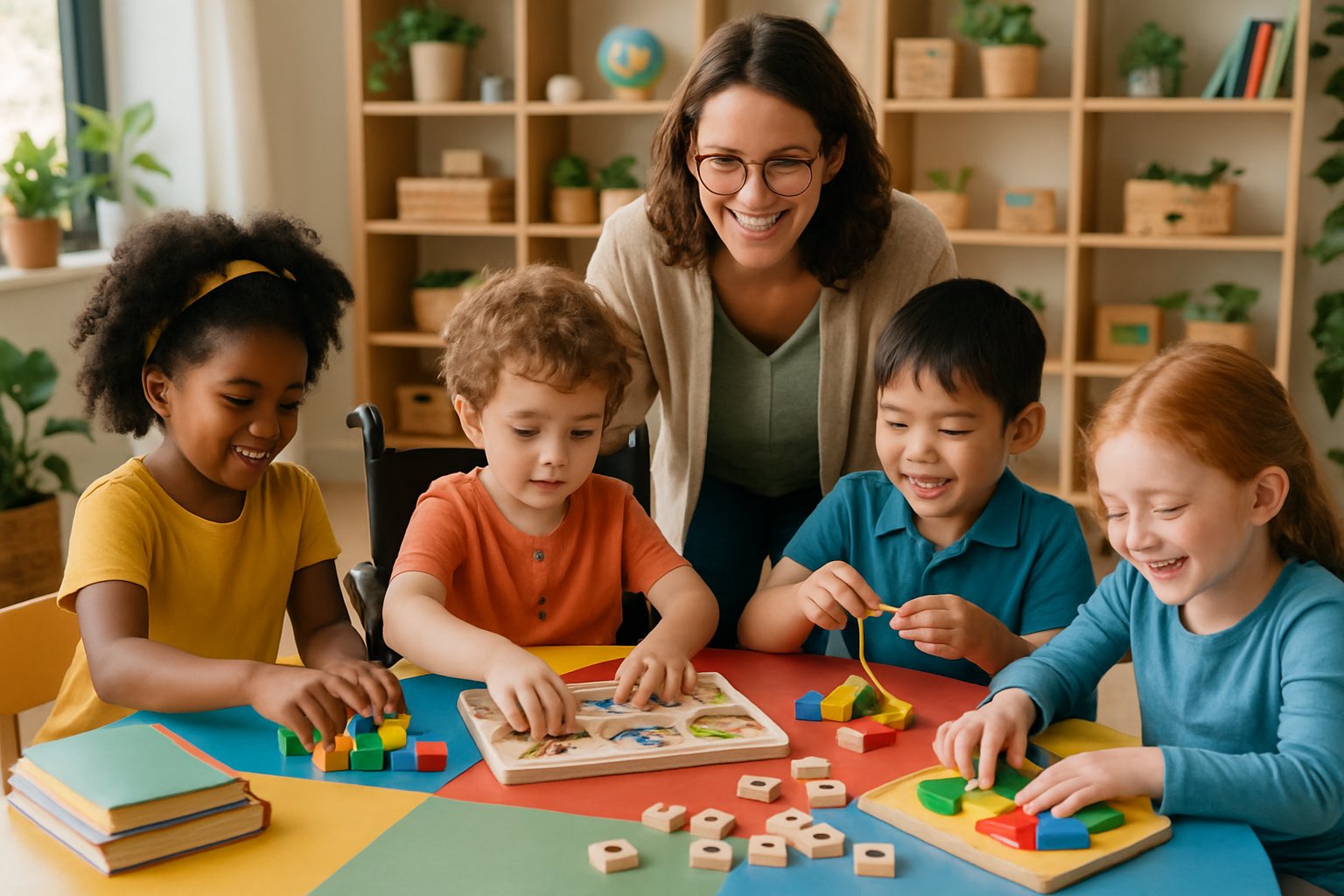
A diverse group of children playing and learning together around a table with educational toys and books, supervised by an adult in a bright homeschooling room.

Families who use play-based homeschooling often look for ways to make learning spaces fair, accessible, and supportive for all children. Creating equal chances to play, designing spaces that meet different needs, and addressing behavioral and emotional differences help children feel included and ready to learn.

Equal Play Space Opportunities

Children learn best when they all have a fair chance to join in play. In homeschooling, this means setting up play areas where no child feels left out. For example, rotating toys or creating shared activity zones can prevent one child from controlling all the resources.

Parents can also use structured turn-taking or small group play to make sure everyone participates. This approach mirrors practices seen in inclusive play-based learning classrooms, where teachers balance child choice with gentle guidance.

A simple table can help families plan equal opportunities:

Activity How to Ensure Fair Access
Building blocks Rotate sets among children
Outdoor play Assign time slots if space is limited
Pretend play Provide multiple roles for children

These small steps help children share, cooperate, and feel included in everyday learning.

Play Space Equity and Accessibility

Equity in play spaces means more than equal time. It also means making sure every child can access the space and materials regardless of ability. For example, children with mobility challenges may need low shelves, wide play areas, or adaptive seating.

Families can design flexible play zones with both quiet corners and active areas. This helps children who need calm settings as well as those who thrive in movement-based play. Research on inclusive play-based learning shows that adapting the environment can reduce barriers and increase social interaction.

Parents may also consider visual supports like picture labels or color-coded bins. These small adjustments create an environment where children of different abilities can play side by side.

Supporting Diverse Behavioral and Emotional Needs

Children bring different behavioral and emotional needs into play. Some may need help with self-regulation, while others may struggle with frustration or social cues. In homeschooling, parents can use play-based interventions that teach coping skills in natural ways.

For example, role-play games can help children practice sharing or calming strategies. Cooperative board games can support patience, turn-taking, and teamwork. These activities encourage holistic development by blending emotional growth with early education goals.

Parents can also set up predictable routines to reduce stress. When children know what to expect, they feel safer and more willing to engage. This mirrors strategies used in formal education settings where structure supports inclusion and reduces conflict.

By responding to each child’s needs through play, families create a supportive environment that values every learner.

Filed Under: Uncategorized

How to Teach Kids to Research and Think Critically Online: Essential Strategies and Tools

September 23, 2025 by Valerie Leave a Comment

Building Critical Thinking Skills for Online Research

Children working together on laptops and tablets at a classroom table, engaged in online research.

Children need clear guidance to question what they read, check if information is reliable, and reflect on their own reasoning. Strong thinking skills help them separate fact from opinion, spot bias, and make sense of different viewpoints in education and daily life.

Understanding Critical Thinking in the Digital Age

Critical thinking in online spaces means more than just finding facts. Kids must learn to evaluate the quality of information, not just its availability. With so many websites, videos, and posts, teaching them to pause and ask “Who made this?” or “Why was this written?” builds stronger judgment.

Educators can introduce simple checks for credibility. For example:

  • Author: Is the writer an expert?
  • Date: Is the information current?
  • Purpose: Is the content trying to inform, sell, or persuade?

Research shows that media literacy education helps students recognize falsehoods and resist manipulation. By breaking evaluation into small, repeatable steps, children build habits that make critical thinking skills part of everyday online use.

Developing Thinking Skills Through Inquiry

Inquiry-based learning encourages students to ask their own questions before searching online. Instead of starting with answers, they begin with curiosity. This process strengthens problem-solving and analysis, which are central to critical thinking skills.

Teachers can guide students to form open-ended questions such as “What are the effects of plastic on oceans?” rather than “Is plastic bad?” These kinds of questions lead to deeper exploration and more reliable results.

Digital tools can also support inquiry. Students can use search engines with carefully chosen keywords, compare results, and refine searches. The SLICE method for teaching research provides a structured way to evaluate and cite sources, which helps learners build confidence in their research process.

Fostering Meta-Cognitive Awareness

Meta-cognition means thinking about one’s own thinking. When students reflect on how they search, choose, and judge information, they become more aware of their strengths and gaps. This awareness improves both research and broader education outcomes.

Teachers can encourage reflection through journals, checklists, or short discussions. For example, students might write down:

  • What strategy worked well?
  • What was confusing?
  • How could they improve next time?

Using tools like digital journals or blogs, as suggested in critical thinking reflection practices, helps students track growth over time. This process turns critical thinking into an active, ongoing habit rather than a single skill taught once.

Teaching Effective Online Research Methods

Students benefit most when they learn how to check the reliability of what they read, act responsibly with digital information, and use the right tools to organize their work. These skills support better decision-making in school projects and help them avoid common mistakes when searching online.

Evaluating Sources for Credibility and Bias

Children often struggle to tell the difference between a trustworthy article and one that is misleading. Teachers can guide them by showing how to look at the author’s name, publication date, and publisher. If the author is unknown or the site has no clear purpose, it may not be reliable.

One simple way to teach this is through the CRAAP test (Currency, Relevance, Authority, Accuracy, Purpose). Students can practice by comparing two websites on the same topic and noting differences in tone, evidence, and accuracy.

Bias is another key factor. For example, a company promoting its own product may not give balanced information. Students should ask: Who wrote this? Why did they write it? Who benefits from me believing it?

Teachers can also introduce checklists or short evaluation forms. This gives students a repeatable process that builds confidence when reviewing online material.

Practicing Responsible Digital Citizenship

Good research habits also mean using information in an honest way. Students need to understand that copying text without credit is plagiarism. Even in grade school, they can learn to paraphrase and cite where they found their facts.

Educators can model this by building simple citations together in class. For instance, when using an article from Edutopia on teaching research skills, they can show how to record the title, author, and link.

Responsible online behavior also includes respecting privacy. Students should avoid sharing personal details when signing up for free tools or databases. Teachers can explain why using school-approved platforms is safer.

Class discussions about digital footprints help children see how their actions online can last. This prepares them to use the internet more carefully as they grow older.

Using Technology and Research Tools

Technology can make research easier when students know how to use it well. Tools like Google Scholar, library databases, and kid-friendly search engines give them access to higher-quality information than random websites.

For younger grades, resources such as kid-friendly research tools provide safe spaces to practice searching. These tools often filter out inappropriate results and explain information in simpler language.

Teachers can also introduce organizational tools. Digital note cards, citation generators, and bookmarking apps help students keep track of what they find. A simple chart or table can show which tools are best for different tasks:

Task Helpful Tool
Finding articles Google Scholar, library databases
Organizing notes Digital note cards, Google Docs
Creating citations Citation builders, manual practice

Practicing with these tools in class ensures students can use them independently. Over time, they gain confidence in managing information and producing stronger research projects.

Encouraging Interactive Learning and Collaboration

A group of children and a teacher working together around a table using tablets and laptops in a classroom.

Students build stronger critical thinking skills when they take part in interactive learning that lets them test ideas, share feedback, and solve problems together. Activities that mix hands-on practice with teamwork help them learn how to question information, evaluate sources, and communicate their reasoning clearly.

Implementing Hands-On Research Activities

Hands-on research tasks give students a chance to practice evaluating information instead of just reading about it. For example, they can compare two online articles on the same topic and list differences in tone, evidence, and reliability.

Teachers can guide this process with structured steps:

  • Identify the research question.
  • Search for at least two different sources.
  • Evaluate each source for accuracy, bias, and clarity.
  • Share findings in a short written or oral summary.

This type of activity encourages them to slow down and think about what makes information trustworthy. According to studies on interactive learning environments, students gain more from short, focused tasks that require them to analyze rather than memorize.

Even simple comparisons, like checking a news article against a government report, help them see how evidence supports—or fails to support—claims. By practicing these steps often, students get comfortable questioning information they find online.

Promoting Group Projects and Peer Review

Working in groups helps students learn from each other while practicing collaboration. In small teams, they can design presentations, create shared research reports, or solve open-ended problems. Project-based learning has been shown to improve critical thinking in online settings because it requires discussion, planning, and decision-making.

Peer review is another effective method. After finishing a draft, students exchange work and give feedback using clear criteria such as evidence use, clarity, and organization.

A simple peer review checklist might include:

Criteria Yes/No Notes
Uses reliable sources
Explains reasoning clearly
Provides evidence for claims

By reviewing each other’s work, students practice spotting weak arguments and suggesting improvements. This process strengthens their ability to evaluate information critically while also improving communication and teamwork.

Supporting Diverse Learners in Critical Thinking Online

A diverse group of children using laptops and tablets in a bright room while a teacher guides them through an online learning session focused on research and critical thinking.

Students learn in different ways, and online education must account for those differences. Effective strategies support both skill development and accessibility so that all learners can practice research and critical thinking in digital spaces.

Adapting Strategies for Different Learning Needs

Some students process information best through visuals, while others need text-based explanations or interactive tools. Teachers can combine videos, infographics, and short readings to meet these needs. For example, younger learners may benefit from kid-friendly websites that simplify research steps into manageable parts, such as those outlined in teaching online research skills to elementary students.

Breaking down tasks into smaller steps helps students with attention challenges stay focused. Graphic organizers, checklists, and guided questions can make the research process easier to follow.

Language learners may need glossaries or translation tools. Teachers can also model how to evaluate online sources by showing examples of both credible and biased websites. This gives students practice in recognizing fact versus opinion while keeping tasks at their level.

Providing multiple ways to demonstrate understanding—such as short presentations, visual posters, or written summaries—ensures that students with different strengths can show their critical thinking skills.

Improving Cognitive Flexibility in Digital Environments

Cognitive flexibility helps students shift between different perspectives and adapt to new information. In online learning, this skill is crucial because digital content often presents conflicting viewpoints.

Teachers can encourage flexibility by asking students to compare two articles on the same topic. For example, they might examine how language or tone signals bias, a practice linked to teaching students about bias in online sources.

Simple classroom activities like role-playing debates or switching sides in an argument also help students practice seeing issues from more than one angle.

Digital tools such as discussion boards or collaborative documents let students share different interpretations of the same material. This helps them recognize that valid conclusions can vary depending on evidence and reasoning.

By practicing these skills, learners become more open-minded and better prepared to evaluate online information critically.

Filed Under: Uncategorized

Creating a Year-End Homeschool Showcase or Celebration: Ideas & Planning

September 23, 2025 by Valerie Leave a Comment

Purpose and Benefits of a Year-End Homeschool Showcase

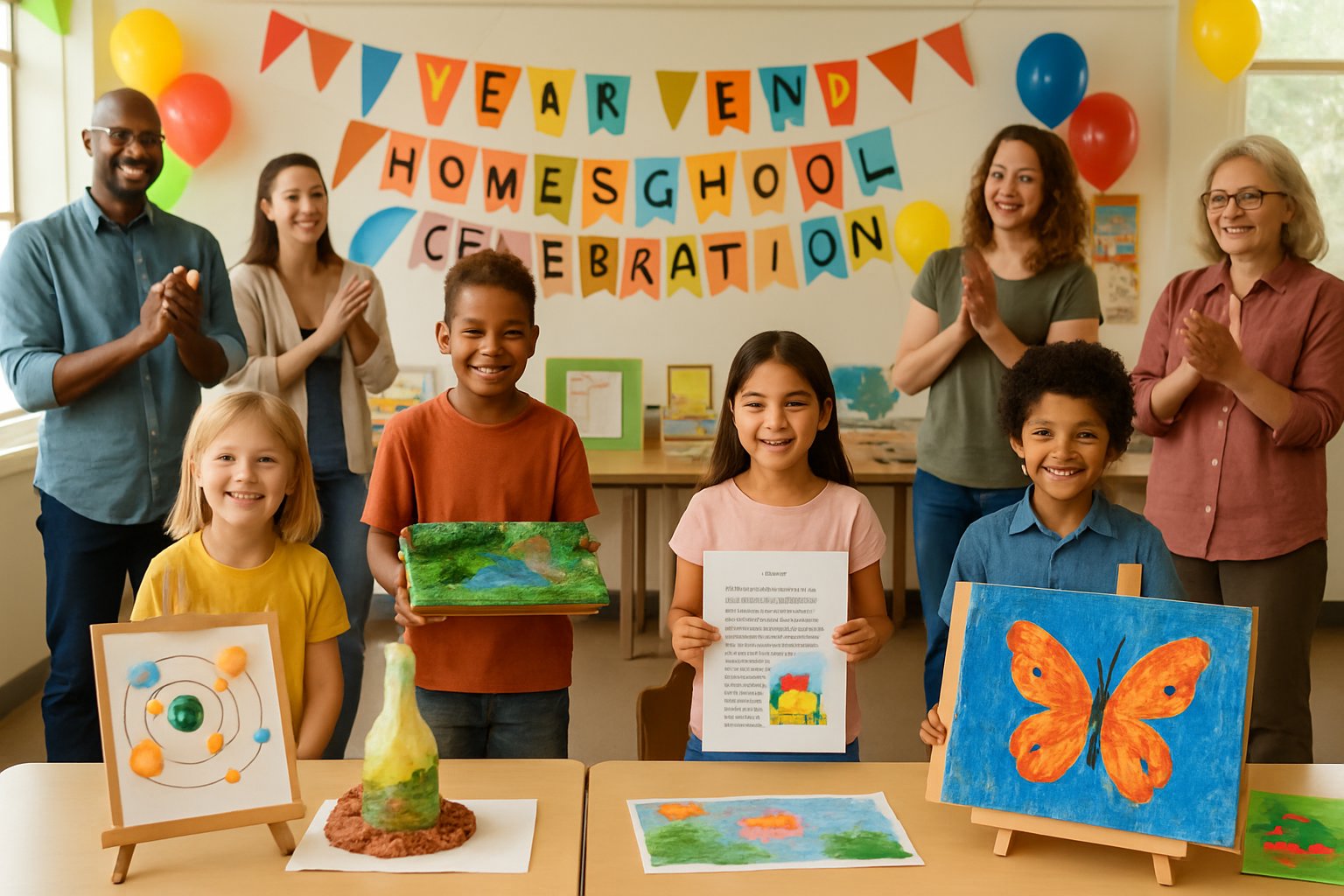
Children and family members gathered indoors, showcasing and celebrating homeschool projects and artwork in a festive environment.

A year-end homeschool showcase gives families a chance to highlight student growth, share meaningful learning with loved ones, and take time to reflect on the year’s progress. It adds value to the homeschool experience by combining celebration, connection, and thoughtful review.

Celebrating Student Progress and Achievements

A showcase allows students to display their best work from across subjects. They might present essays, science projects, art pieces, or math problem sets. Parents can include both early and recent assignments to show progress over time. This makes growth visible in a way that daily lessons sometimes do not.

Many families also display books read during the year. Seeing a stack of completed titles from a homeschool curriculum can be very motivating. Some families even prepare small presentations, such as reciting a poem, playing music, or giving a short talk about a favorite project.

Simple certificates or awards can add a sense of accomplishment. These do not need to be formal; even a homemade “Most Improved Reader” award can encourage pride. The key is to keep the focus on effort and learning rather than comparison.

Building Community and Family Connections

Inviting grandparents, friends, or other homeschool families helps build community. A showcase creates a natural way for children to explain their work and answer questions, which strengthens communication skills. It also gives extended family a clearer picture of the homeschool journey.

Some families host a small gathering at home with snacks and displays on the wall. Others plan a larger event with multiple families sharing projects together. A homeschool showcase can be as simple or as detailed as each family chooses, but the shared experience often becomes a tradition.

These gatherings also support parents. Seeing the year’s accomplishments laid out in one place can reduce feelings of doubt. It reminds them that steady, daily lessons add up to meaningful results.

Reflecting on the Homeschool Journey

A showcase is not only about showing work but also about reflection. Parents and students can look back at goals, assessments, and challenges to see what worked well and what might change for the next year.

Some families create a short portfolio with samples of writing, math tests, and artwork. This provides a record for personal use or for meeting state homeschool requirements. It also helps parents evaluate whether the homeschool curriculum met their child’s needs.

Reflection can also include making lists of skills gained, favorite subjects, or new interests that developed. This process helps children see learning as a journey, not just a task. It encourages them to take ownership of their education and look forward to what comes next.

Planning the Showcase or Celebration

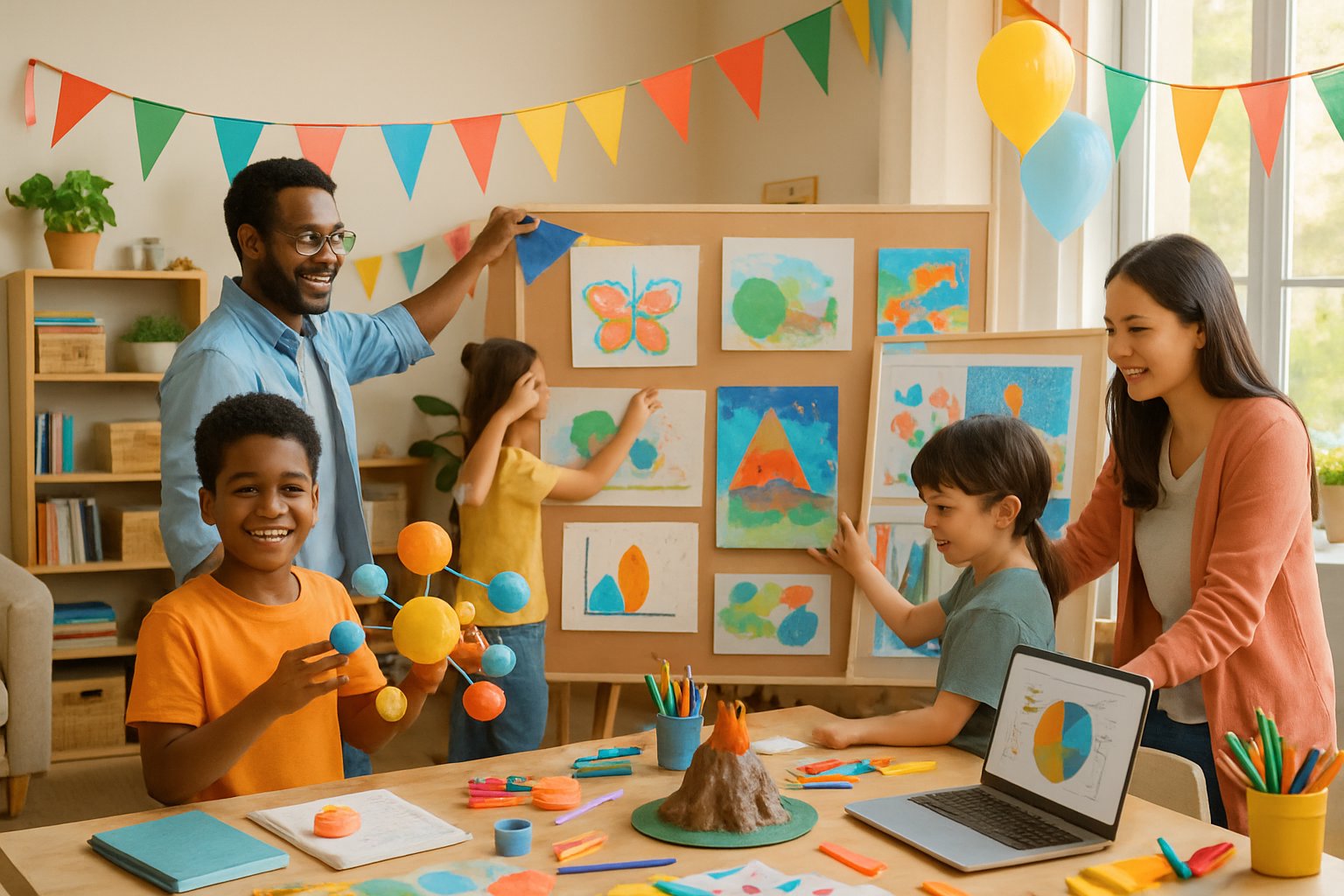
A family and children preparing decorations and projects for a year-end homeschool celebration in a bright, decorated room.

Families benefit from clear goals, practical planning, and shared responsibilities when preparing a homeschool showcase. A well-structured event gives students a chance to highlight their lessons, projects, and growth while making the day enjoyable for everyone.

Setting Goals and Choosing a Theme

Parents and students should first decide what they want the event to highlight. Some may focus on academic subjects like math, science, or history, while others may include art, music, or life skills. Setting goals helps guide decisions about displays, performances, and activities.

A theme can make the event more engaging. For example, a history-focused showcase might feature timelines, costumes, or reenactments, while a science theme could include experiments or models. A theme also helps unify the projects and presentations.

Students can select their favorite lessons or projects to display. This could be a completed writing piece, a science experiment, or a history diorama. Choosing meaningful work gives them ownership and pride in what they present. Parents can encourage variety so that different ages and skill levels are represented.

Themes can also extend into decorations, programs, or even food. A medieval theme might include banners and bread, while a nature theme could use plants or outdoor settings. Keeping the theme simple ensures it adds fun without creating extra stress.

Selecting a Date and Venue

Picking a date early makes planning easier. Families should consider the end of the homeschool year, testing schedules, and holidays. Many groups hold events in late spring when students have finished most lessons.

The venue should match the size and type of activities planned. A living room may work for a small family showcase, while a church hall or library meeting room may be better for larger groups. Some families even use outdoor spaces like parks for casual celebrations.

Accessibility matters. Parents should think about parking, seating, and whether the space allows for both displays and performances. For example, this homeschool celebration guide suggests using separate areas for tables and a stage area for presentations.

It also helps to plan for food and fellowship. A potluck meal or dessert table gives families time to connect and relax after the formal part of the event.

Organizing Volunteers and Roles

Even small events run more smoothly when responsibilities are shared. Parents can assign roles like communication, setup, cleanup, and food coordination. Larger events may also benefit from an emcee to introduce performances and keep the schedule on track.

A simple list of roles might include:

  • Communication lead – sends reminders and updates
  • Food coordinator – manages potluck sign-ups and supplies
  • Setup team – arranges tables and chairs
  • Cleanup crew – restores the space afterward
  • Emcee – guides the program

Regular reminders help keep families on track. Weekly updates during planning and daily notes in the final week work well. This approach is suggested in practical homeschool planning tips.

Children can also take part in preparation. Older students might help with setup or program design, while younger children can create signs or decorations. Involving students makes the event feel like a true family and community effort.

Showcasing Student Work and Accomplishments

Families can make a homeschool celebration meaningful by giving students a chance to display what they learned, share personal interests, and reflect on progress. Displays, performances, and simple records of growth help highlight both academic subjects and creative projects in a clear and encouraging way.

Displaying Projects and Portfolios

Students often enjoy showing work that represents their effort over the year. A portfolio can include writing samples, math worksheets, art pieces, or science experiments. Parents may organize these in binders or folders so visitors can flip through them easily.

For visual impact, families can hang posters, mount drawings, or set up tri-fold boards. Younger children might display favorite picture books, while older students can share essays or research papers.

A simple table works well for showcasing projects. For example:

Grade Level Project Type Display Idea
Early Years Art & Reading Picture books with hand-drawn covers
Middle School Science Lab reports with photos of experiments
High School History Timelines or themed presentations

This approach allows every student, regardless of age, to present something meaningful.

Highlighting Subjects and Special Interests

A showcase does not need to focus only on traditional subjects. Students can also share hobbies or unique skills. For example, one child may perform music, while another presents a Lego build or sewing project.

Families can encourage children to connect their homeschool curriculum to personal interests. A student studying U.S. history might create a state project, while another interested in animals could prepare a display about pet care.

Performances add variety. These could include dance routines, reciting poetry, or demonstrating a skill. Events like an end-of-year homeschool celebration often combine displays with short presentations, giving students a chance to speak about what they learned.

This balance between academics and personal passions helps students feel proud of both schoolwork and extracurricular growth.

Incorporating Assessments and Progress Reports

While creative displays are engaging, many families also want to highlight academic progress. Simple assessments, such as reading level charts, math fact fluency sheets, or writing samples from the beginning and end of the year, can show clear growth.

Some parents prepare a short progress report. This may include:

  • Subjects studied (math, science, language arts, history)
  • Skills mastered (multiplication, essay writing, lab experiments)
  • Areas for growth (spelling, handwriting, test-taking)

Students can also reflect on their own learning. A child might write a short paragraph about what they enjoyed most or what subject challenged them.

Events like an end-of-year homeschool showcase often encourage families to use these reports alongside displays. This helps parents track learning while giving children a sense of accomplishment.

Creative Activities and Event Ideas

Families can make a homeschool showcase more engaging by mixing academic displays with fun, interactive activities. Students gain confidence when they share what they’ve learned, while families and friends enjoy seeing creativity and effort come to life in different ways.

Hands-On STEAM Challenges and RAFT Projects

STEAM challenges give students a chance to apply science, technology, engineering, art, and math in practical ways. Simple activities, like building a bridge from craft sticks or testing paper airplane designs, encourage problem-solving and teamwork.

RAFT (Resource Area for Teaching) projects are also popular because they combine creativity with core lessons. Students might design a board game to review history facts, write a newspaper article about a science discovery, or create models that explain math concepts.

Parents can set up stations where kids rotate through activities. This keeps energy levels high and ensures everyone has a chance to participate. A display table can also highlight finished RAFT projects so families can see how lessons turned into something tangible.

Student Performances and Presentations

Performances give students a platform to showcase skills beyond written work. Some may sing, play an instrument, or perform a short skit. Others may prefer giving a short talk about a favorite subject, like a science experiment or history project.

A simple schedule helps keep the event smooth. An emcee can introduce each student and keep transitions short. Families who have hosted similar events often include a mix of formal and casual presentations, such as poems, storytelling, or even a Lego robot demonstration.

Students benefit by practicing public speaking in a safe space. Parents and peers learn more about each child’s interests, which makes the event feel personal and meaningful. Examples of past activities, such as student performances and displays, show how flexible this format can be.

Interactive Games and Field Day Events

Adding movement and play keeps kids engaged after sitting through displays or performances. Field day activities like relay races, tug-of-war, or scavenger hunts are easy to organize and appeal to a wide range of ages.

Indoor games can work too. Trivia contests, themed bingo, or review games based on the year’s lessons give students a chance to show knowledge in a relaxed way. Using simple materials like index cards or dice makes setup quick and affordable.

Organizers can divide kids into mixed-age teams. This encourages cooperation and gives older students a chance to guide younger ones. Families may also enjoy joining in, turning the games into a shared experience rather than just a student activity.

Involving Family and Community Members

Family and community involvement adds depth to the event. Parents can contribute by helping with setup, food, or leading small group activities. Grandparents often enjoy attending and may even share stories or skills that connect to lessons.

Inviting community members, such as local artists, librarians, or science club leaders, can bring fresh perspectives. A guest might lead a short workshop, judge a project, or simply attend to encourage students.

Shared meals, like a potluck dinner, also strengthen connections. Many homeschool groups include this tradition, as seen in homeschool celebrations with potlucks. These gatherings give families time to relax and build friendships beyond the structured program.

Filed Under: Uncategorized

How to Plan a Homeschool Graduation Ceremony: Step-by-Step Guide

September 22, 2025 by Valerie Leave a Comment

Establish Graduation Requirements

A group of people sitting around a table with charts and notebooks, planning a homeschool graduation ceremony in a home office.

Families who homeschool often need to set clear expectations before planning a graduation. They must decide what academic work counts, make sure they follow state rules, and choose a date that works for both the student and the guests.

Determine Academic Criteria

Homeschoolers should first decide what coursework and credits will qualify a student for graduation. Many families use the same structure as public schools, such as four years of English, three to four years of math, and a mix of science, history, and electives.

Some parents create a transcript that lists completed courses, grades, and credits earned. This record helps if the graduate applies to college, trade school, or the military.

It can also be helpful to set goals beyond academics. For example, families may include volunteer hours, job experience, or personal projects as part of the graduation requirements. These additions give a fuller picture of the student’s high school experience.

Review State Homeschooling Laws

Each state has its own rules about homeschooling high school and graduation. Some states require parents to file annual reports or keep detailed records, while others leave most of the responsibility to the family.

Parents should check their state’s department of education website or a trusted homeschool organization to confirm what is needed. For example, HSLDA offers guidance on planning homeschool graduations and outlines how state laws may affect requirements.

In some states, parents can issue a diploma without outside approval. In others, homeschoolers may need to register with a local district or umbrella school. Knowing these details early prevents last-minute problems and ensures the diploma is recognized.

Select Graduation Date

Choosing a graduation date gives the family a clear timeline to finish coursework and prepare for the ceremony. Many homeschoolers hold graduations in late spring or early summer, but the exact timing depends on the student’s schedule.

It’s best to set the date several months in advance, especially if renting a venue or inviting extended family. Guidance from resources like 7 Sisters Homeschool suggests booking locations early since June can be busy with weddings and other graduations.

Families should also consider practical details, like travel plans for relatives, availability of caps and gowns, and how much time is needed to finish final assignments. A set date helps keep the student on track and makes the event feel official.

Design the Graduation Ceremony

A group of homeschool graduates in caps and gowns celebrating outdoors with family and friends around a decorated stage in a sunny park.

Families can shape a homeschool graduation ceremony to fit their student’s personality, available space, and guest list. Planning involves choosing the right format, arranging a location that feels meaningful, and creating a clear flow of events so the day runs smoothly.

Choose Ceremony Format

The first step is deciding how formal or casual the graduation should be. Some families prefer a structured event with speeches, caps and gowns, and a diploma presentation. Others enjoy a relaxed gathering that blends a short ceremony with a party.

A homeschool group may host a joint ceremony for multiple graduates. This option provides a larger audience, shared responsibilities, and a more traditional feel. Families who want a personal touch often plan a private event at home, inviting only close relatives and friends.

It helps to think about what the graduate values most. If they want a moment to shine, a stage and microphone may be important. If they prefer simplicity, a living room or backyard ceremony can be just as meaningful. The chosen format should reflect the graduate’s preferences, not outside expectations.

Select Venue and Setup

The venue sets the tone. A family can reserve a church hall, community center, or park pavilion for a larger group. For smaller gatherings, the backyard, living room, or even a rented room at a library can work well. Choosing early is important, especially if the location requires reservations.

Setup should include seating for guests, a space for the graduate to walk in, and a spot for photos. A podium or small table can hold the diploma. Decorations like banners, flowers, or a memory board help personalize the space.

Families who want to keep costs low often use simple touches such as balloons or printed signs. A homeschool graduation ceremony doesn’t need to be elaborate to feel special. What matters most is creating a comfortable place where the graduate feels celebrated.

Plan the Order of Events

A clear schedule keeps the ceremony organized. Most events include:

  • Welcome message from a parent or organizer
  • Opening remarks or prayer (optional)
  • Graduate recognition and diploma presentation
  • Short speech from the graduate or parent
  • Closing words and transition to photos or party

Some families add music, a slideshow, or recognition of achievements. Others keep it short and focused.

When planning with a homeschool group, it helps to assign roles such as emcee, photographer, or program coordinator. This avoids confusion and ensures each part of the ceremony flows smoothly.

Families hosting at home can keep the order simple. Even a short ceremony with a diploma handoff, applause, and photos can feel complete when it is planned with care.

Personalize the Celebration

A homeschool graduation feels more meaningful when it reflects the graduate’s life, family values, and accomplishments. Families can shape the event with traditions, heartfelt words, and displays that highlight the student’s unique journey.

Incorporate Family Traditions

Families often want the ceremony to reflect their own culture and values. This can include opening with a favorite prayer, lighting a candle, or sharing a family song. Some homeschoolers choose to include a symbolic gesture, such as presenting a keepsake or passing down a family heirloom.

Food is another way to bring in tradition. Serving a favorite meal or dessert at the reception creates comfort and familiarity. Parents may also decorate with colors or themes that hold personal meaning.

A helpful idea is to create a short list of traditions and decide which ones fit well into the ceremony. Keeping it simple avoids overwhelming the schedule while still making the event personal. Families can look at examples of unique homeschool graduation ideas for inspiration.

Prepare Speeches and Presentations

Personal speeches add warmth to a homeschool graduation. Parents often give a short address to their graduate, sharing memories and encouragement. This moment is usually one of the most touching parts of the ceremony.

Graduates may also prepare their own speech to thank parents, mentors, or friends. Some families invite a close relative or trusted teacher to speak as well. Keeping speeches between 3–5 minutes ensures the program stays focused.

Visual presentations can also add meaning. A slideshow of photos with music or short video clips lets guests see the graduate’s growth over the years. Families planning a group event can follow structured tips like those in step-by-step homeschool graduation guides to organize speakers and presentations.

Display Achievements and Memories

Displaying the graduate’s work and accomplishments gives guests a clear picture of their homeschool journey. A memory table can include awards, art projects, essays, or science fair photos. Some families also showcase sports medals, volunteer certificates, or musical instruments.

Adding personal touches helps guests connect with the graduate’s story. A scrapbook or poster board with photos from field trips, co-op classes, and family activities works well.

Graduates can also set up a digital slideshow or memory wall. For larger gatherings, families may follow suggestions from creative homeschool graduation celebrations to design displays that highlight both academic and personal milestones.

Organize Graduation Essentials

Families often focus on the visible details that make a graduation feel official. Items like the cap and gown, diploma, and traditional music play a big role in creating a ceremony that feels both personal and meaningful.

Order Cap and Gown

The cap and gown symbolize the student’s achievement and add a sense of tradition. Families can choose classic black or select colors that match the student’s style or future school. Many companies allow bulk orders, but single sets are also available for homeschool graduates.

It helps to order early, at least two months before the ceremony, to avoid delays. Sizes vary, so checking height and weight charts is important. Caps often come with a tassel, which can be customized with the graduation year.

Some families rent caps and gowns, but purchasing ensures a keepsake for photos or future events. A simple ironing or steaming before the ceremony keeps the gown looking neat. Including a stole or honor cord can highlight special achievements or activities.

Prepare Diplomas

A diploma gives the graduate a tangible reminder of their hard work. Parents can create their own using templates, or they can order custom-printed diplomas from homeschool organizations. Both options are widely accepted for personal records and college applications.

Diplomas often include the graduate’s full name, the date of graduation, and the name of the homeschool. Some families add signatures from both parents or a homeschool leader. Decorative covers protect the document and make presentation during the ceremony more formal.

For families with multiple graduates, preparing diplomas ahead of time avoids last-minute stress. It also allows time to double-check spelling and formatting. A diploma presented in front of family and friends gives the ceremony a professional touch.

Arrange for Pomp and Circumstance

Playing Pomp and Circumstance adds a traditional element that signals the start of the ceremony. Families can use a recorded version, which is easy to play on a speaker, or invite a musician to perform it live.

The music usually begins as the graduate walks in wearing the cap and gown. Timing the song to match the pace of the entrance makes the moment feel organized.

If the family prefers a personal touch, they may choose a different piece of music. However, many still select Pomp and Circumstance because it creates a recognizable and formal atmosphere. This small detail helps the event feel complete and memorable.

Announce and Celebrate

Families often want to share the graduate’s achievement with relatives and friends while also creating a special event to mark the milestone. Taking time to send out formal notices and planning a thoughtful gathering helps make the occasion memorable and meaningful.

Send Graduation Announcements

Graduation announcements let family, friends, and community members know about the student’s accomplishment. These can be mailed, handed out in person, or even sent digitally if preferred.

Some families design custom cards with the graduate’s name, photo, and homeschool details. Others keep it simple with a printed template. Adding the ceremony date, time, and location ensures guests have all the information they need.

It helps to order announcements early. This allows time for printing, addressing, and mailing without stress. Parents may also want to include a short personal note or a favorite quote from the graduate.

For those who want more ideas, families can look at how others plan homeschool graduations to see examples of announcements and ceremony details. Keeping the design personal while still clear and professional makes the announcement both practical and memorable.

Host a Graduation Party

A graduation party gives the graduate a chance to celebrate with the people who supported them. It can be as simple as a backyard cookout or as formal as a rented hall with decorations and music.

Planning starts with choosing a location, guest list, and menu. Some families prefer a casual potluck, while others hire catering. A reception-style setup with finger foods often works well for larger groups.

Adding personal touches makes the party stand out. Displaying a photo board, slideshow, or memory table helps guests reflect on the graduate’s journey. Parents may also prepare a short speech to honor the student.

For ideas on combining both ceremony and reception, families can see how others host a homeschool graduation ceremony. Whether large or small, the party should reflect the graduate’s personality and achievements.

Filed Under: Uncategorized

  • « Go to Previous Page
  • Page 1
  • Interim pages omitted …
  • Page 8
  • Page 9
  • Page 10
  • Page 11
  • Page 12
  • Interim pages omitted …
  • Page 20
  • Go to Next Page »

Primary Sidebar

Free Photo Lessons for Kids

Photo Lessons for kids

Categories

  • Photography
  • Preschool
  • Reading
  • Uncategorized
A family learning together at a table with books, a tablet, science experiments, and art supplies in a bright room.

How to Blend Homeschool Styles for a Custom Approach: A Step-by-Step Guide

Blending Homeschool Styles for a Tailored Education Families often mix homeschooling methods to … [Read More...] about How to Blend Homeschool Styles for a Custom Approach: A Step-by-Step Guide

Illustration of parents and children learning together in a bright, home setting with books, nature, and a digital device.

Pros and Cons of Each Homeschool Style: What Parents Should Know

Pros and Cons of Popular Homeschool Styles Parents often find that homeschool success depends on … [Read More...] about Pros and Cons of Each Homeschool Style: What Parents Should Know

Multiple homeschooling families in their homes, with parents and children engaged in various learning activities like reading, science experiments, and homework.

Real Life Examples: A Peek Into Different Homeschooling Families’ Journeys

Real Life Examples Of Homeschooling Families Families use homeschooling to create schedules that … [Read More...] about Real Life Examples: A Peek Into Different Homeschooling Families’ Journeys

A parent and child sitting together at a home study area with books and learning materials, focusing on planning and studying.

How to Reevaluate and Adjust Your Homeschool Style Over Time: A Practical Guide

Why and When to Reevaluate Your Homeschool Style Families often notice that a learning approach … [Read More...] about How to Reevaluate and Adjust Your Homeschool Style Over Time: A Practical Guide

A parent and child sitting at a table with learning materials, engaged in a homeschooling activity tailored to the child

How to Choose the Best Homeschool Curriculum for Your Child’s Learning Style: A Practical Guide for Parents

Identify Your Child’s Learning Style Each child learns in unique ways that shape how they … [Read More...] about How to Choose the Best Homeschool Curriculum for Your Child’s Learning Style: A Practical Guide for Parents

Children learning at home using books, tablets, and science experiments in a bright, organized classroom setting.

Top 5 Homeschool Curriculums for Elementary Students in 2026: Comprehensive Guide

Top 5 Homeschool Curriculums for Elementary in 2026 Families seeking a reliable elementary … [Read More...] about Top 5 Homeschool Curriculums for Elementary Students in 2026: Comprehensive Guide

A split scene showing a student learning online with a laptop and digital tools on one side, and a student studying with books and notebooks in a traditional homeschool setting on the other side.

Comparing Online vs. Traditional Homeschool Curriculums: Pros and Cons Explained

Key Differences Between Online and Traditional Homeschool Curriculums Families exploring … [Read More...] about Comparing Online vs. Traditional Homeschool Curriculums: Pros and Cons Explained

A family of four gathered around a table with educational materials, engaged in learning activities together in a home study area.

How to Customize a Homeschool Curriculum to Fit Your Family’s Needs: A Practical Guide

Identifying Your Family’s Needs and Learning Styles Families who homeschool succeed best when they … [Read More...] about How to Customize a Homeschool Curriculum to Fit Your Family’s Needs: A Practical Guide

A parent and child studying together at a desk surrounded by books and learning materials in a bright, organized homeschool room.

Budget-Friendly Homeschool Curriculums That Don’t Sacrifice Quality: Top Options and Smart Strategies

Best Budget-Friendly Homeschool Curriculum Choices Families looking for affordable homeschool … [Read More...] about Budget-Friendly Homeschool Curriculums That Don’t Sacrifice Quality: Top Options and Smart Strategies

A parent and child learning together at a table with books, tablets, and educational materials in a cozy home setting.

Integrating Multiple Curriculums: A Blended Approach to Homeschooling Success

Key Elements of a Blended Approach to Homeschooling A blended homeschooling method uses … [Read More...] about Integrating Multiple Curriculums: A Blended Approach to Homeschooling Success