• Skip to primary navigation
  • Skip to main content
  • Skip to primary sidebar

Clever Homeschool

Fun courses based on your child's interests!

  • Home
  • Free Photo Lessons for Kids
  • “Get That Shot!” photo tags

Valerie

How to Manage Screen Time in a Homeschool Environment Effectively

September 10, 2025 by Valerie Leave a Comment

Establishing Screen Time Boundaries and Rules

Setting clear boundaries helps homeschooling families balance educational technology with other learning activities. The key is creating rules that work for different ages, defining specific areas where screens aren’t allowed, and planning when devices fit into the homeschool routine.

Creating Age-Appropriate Limits

Homeschooling parents need different screen time rules for different ages. Young children between 2-5 years old should have about 1 hour of high-quality educational content per day.

Elementary-aged children (6-12) can handle 1-2 hours of educational screen time during school hours. They might use iPads for math apps, reading programs, or virtual field trips.

Middle and high school students need more flexibility. They often use computers for research, online classes, and digital projects. Parents can focus on balancing educational screens with non-screen activities rather than strict time limits.

Age-Based Screen Time Guidelines:

  • Ages 2-5: 1 hour educational content
  • Ages 6-12: 1-2 hours during school time
  • Ages 13+: Focus on balance over time limits

The American Academy of Pediatrics suggests involving kids in screen time decisions. When children help make the rules, they’re more likely to follow them.

Homeschooling families should also consider the child’s maturity level. Some 10-year-olds can self-regulate better than others.

Defining Screen-Free Zones at Home

Screen-free zones help families stay connected and focused. The most important areas to keep screen-free are bedrooms and eating spaces.

Essential Screen-Free Zones:

  • Bedrooms (especially at night)
  • Kitchen and dining areas
  • Study spaces during focused work time
  • Family gathering areas during certain hours

Many homeschooling families find success with tech-free zones and times. These boundaries become routine instead of daily battles.

The family car can also be screen-free except for long trips. This encourages conversation and observation skills.

Some families designate certain rooms for educational screen use only. For example, iPads might only be used in the learning room, not on couches or beds.

Physical boundaries work better than time-based rules for younger children. They can see where screens belong and where they don’t.

Scheduling Screen Time in the Homeschool Day

Planning when screens fit into the homeschool schedule prevents overuse. Many families start with non-screen subjects in the morning when focus is strongest.

Sample Daily Screen Schedule:

  • 9:00-11:00 AM: Non-screen subjects (math, writing)
  • 11:00-12:00 PM: Educational screen time
  • 1:00-3:00 PM: Hands-on activities, outdoor time
  • 3:00-4:00 PM: Optional recreational screen time

Homeschooling parents often find that creating schedules with boundaries around other activities works well. This includes family meals, chores, and outdoor play.

Some families use timers to help children transition between screen and non-screen activities. Visual schedules work especially well for younger learners.

Educational vs. recreational screen time should be clearly defined. Learning apps and educational videos count differently than games or entertainment videos.

Building in screen breaks every 30-45 minutes helps prevent eye strain and keeps children engaged with their learning.

Integrating Educational Screen Time Into Learning
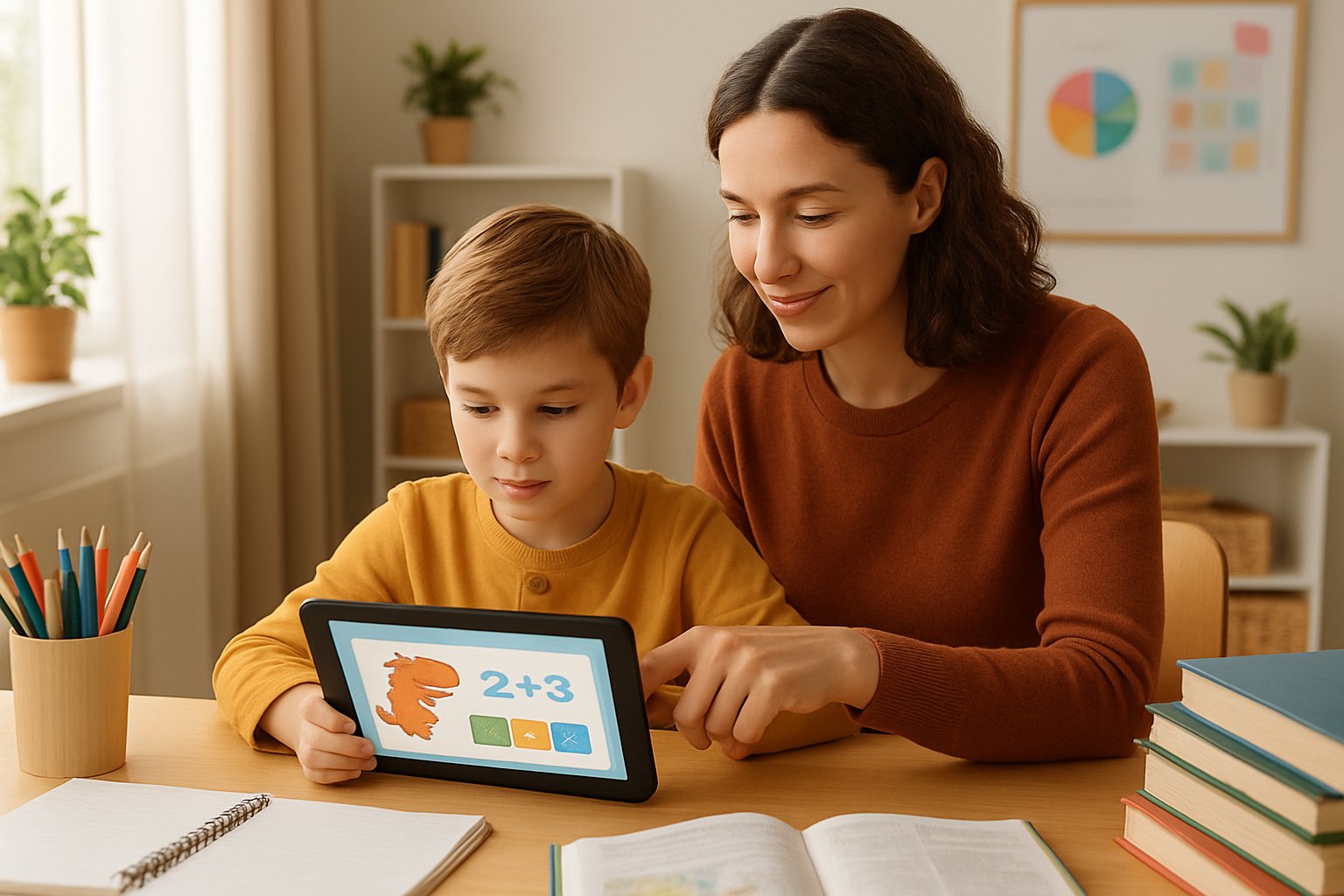
Parent and child sitting at a table using a tablet together in a bright homeschool learning space with books and educational materials around them.

Smart parents can turn screen time into powerful learning moments by choosing the right videos, apps, and online activities. The key lies in selecting quality educational content and balancing screen time with educational content across different subjects.

Utilizing Educational Videos and Apps

Educational apps serve as excellent tools for homeschool families when chosen carefully. Parents should look for apps that encourage active participation rather than passive watching.

Key Features to Look For:

  • Interactive quizzes and games
  • Progress tracking capabilities
  • Age-appropriate content
  • Clear learning objectives

Popular educational apps like Khan Academy Kids offer structured lessons in multiple subjects. These programs adapt to each child’s learning pace and provide instant feedback.

Parents can evaluate the quality of educational content by checking if apps align with learning goals. Quality apps encourage children to think critically and solve problems actively.

Educational videos work best when parents watch alongside their children. This approach allows for discussions about the content and helps reinforce key concepts.

Balancing Math, Reading, and Interactive Learning Online

Online learning platforms offer structured approaches to core subjects like math and reading. Parents can create weekly schedules that rotate between different subject areas.

Sample Daily Schedule:

  • Morning: Math apps (30 minutes)
  • Afternoon: Reading programs (20 minutes)
  • Evening: Science videos (15 minutes)

Math programs like IXL provide practice problems that adjust to skill levels. Children receive immediate feedback and can work at their own pace.

Reading apps often include phonics games and comprehension exercises. These tools help children build vocabulary while making learning enjoyable.

Interactive learning tools engage multiple senses and learning styles. Children learn better when they can touch, drag, and manipulate objects on screen.

Parents should limit each subject to specific time blocks. This prevents screen fatigue and maintains focus throughout learning sessions.

Choosing High-Quality Content on Platforms Like YouTube

YouTube contains millions of educational videos, but parents must filter content carefully. Not all educational content meets quality standards for homeschool learning.

Quality Indicators:

  • Videos from established educational channels
  • Clear explanations with visual aids
  • Appropriate length for attention spans
  • Positive viewer comments from educators

Channels like Crash Course and TED-Ed create content specifically for learning environments. These creators follow educational best practices and present information clearly.

Parents should preview videos before showing them to children. This ensures content matches learning objectives and maintains appropriate difficulty levels.

Creating playlists helps organize educational videos by subject or skill level. Children can access approved content without browsing through unrelated material.

Many educational YouTube channels offer supplementary materials like worksheets or discussion questions. These resources extend learning beyond the video content.

Promoting Healthy Habits and Physical Activity

Homeschooling families can maintain balance by mixing active breaks with learning time and creating regular opportunities for movement. Setting up screen-free zones and planning offline activities helps children develop healthy relationships with technology while staying physically active.

Alternating Screen Lessons With Physical Activities

Smart scheduling makes all the difference when managing digital learning time. Parents can plan 20-30 minute screen lessons followed by 10-15 minute movement breaks.

This approach helps children stay focused during online lessons. Their attention spans improve when they know a fun break is coming next.

Effective Movement Break Ideas:

  • Jump rope or jumping jacks
  • Dance to favorite songs
  • Quick outdoor walks
  • Stretching exercises
  • Ball games in the yard

Physical activity helps kids maintain healthy weight and builds strong bones. It also reduces stress and improves mood during learning time.

Parents should set timers to keep breaks consistent. Children learn to expect these movement periods as part of their daily routine.

Encouraging Breaks to Prevent Screen Fatigue

Screen fatigue happens when children spend too long looking at devices without rest. Their eyes get tired and their bodies become stiff from sitting.

The 20-20-20 rule works well for homeschool families. Every 20 minutes, children should look at something 20 feet away for 20 seconds.

Signs of Screen Fatigue:

  • Rubbing eyes frequently
  • Complaining of headaches
  • Slouching or poor posture
  • Difficulty focusing on lessons

Better sleep quality comes from reducing blue light exposure before bed. Parents should end screen lessons at least one hour before bedtime.

Standing desks or exercise balls can replace regular chairs during some lessons. These options keep children moving even while using screens.

Regular water breaks also help. Children should drink water and move around between different subjects or activities.

Incorporating Family Time and Offline Hobbies

Family activities that get everyone moving together create strong bonds while reducing screen dependence. Parents can plan daily or weekly activities that involve no screens at all.

Screen-Free Family Activities:

  • Nature walks and hiking
  • Board games and puzzles
  • Cooking projects together
  • Arts and crafts time
  • Gardening activities

Children develop better social skills through face-to-face interactions. They learn to communicate without relying on digital devices.

Parents who model healthy screen habits help their children follow the same patterns. When adults prioritize offline time, kids do the same.

Homeschooling allows flexible scheduling for these activities. Families can plan outdoor adventures during nice weather or indoor hobbies during bad weather.

Setting up dedicated spaces for offline hobbies encourages regular use. A craft corner or reading nook gives children appealing alternatives to screens.

Fostering Digital Skills and Critical Thinking

Teaching children how to use technology wisely helps them become better learners and safer internet users. Parents can guide kids to think carefully about online information while building the tech skills they need for school and work.

Teaching Research and Online Safety

Homeschooling parents need to teach children how to find good information online and stay safe while browsing. This means showing kids the difference between trustworthy websites and unreliable ones.

Parents should start by choosing safe websites together with their children. Government sites ending in .gov and educational sites ending in .edu are usually good choices. News sites from well-known companies are also reliable.

Teaching kids to check multiple sources helps them learn better research skills. When a child finds information about a topic, they should look at two or three different websites to see if the facts match.

Basic online safety rules include:

  • Never share personal information like full name or address
  • Tell a parent if something online makes them uncomfortable
  • Only visit websites that parents have approved
  • Use strong passwords and keep them private

Parents can practice these skills by working on academic essays together with their children. This lets kids watch how adults evaluate websites and ask questions about what they find.

Developing Critical Thinking Through Guided Use

Critical thinking skills help children question what they see online instead of believing everything. Parents can teach these skills by asking good questions while kids use screens.

When children watch videos or read articles, parents should ask them to think about who made the content. Questions like “Why did this person write this?” and “What do they want you to think?” help kids understand that not all information is neutral.

Comparing different viewpoints on the same topic builds strong thinking skills. If a child reads about a historical event, they can look at how different sources describe what happened.

Parents should also teach children to spot bias in online content. This means noticing when writers use emotional words or only show one side of a story.

Good questions to ask while browsing:

  • Who created this content?
  • What facts support this claim?
  • Are there other ways to look at this?
  • Does this seem fair and balanced?

Teaching kids to pause and think before sharing or believing online content creates lifelong habits for smart internet use.

Building Tech Proficiency for Future Success

Children need basic computer skills to succeed in school and work. Homeschooling parents can teach these skills gradually as part of regular learning time.

Starting with simple tasks works best for younger children. They can learn to open programs, save files, and use a mouse and keyboard properly. These basic skills form the foundation for more advanced learning.

Older children benefit from learning practical programs they will use later. Email, word processing, and presentation software are essential for most jobs and college courses.

Important tech skills by age:

  • Ages 6-8: Mouse control, typing basics, opening programs
  • Ages 9-11: Email, saving documents, basic research
  • Ages 12+: Presentations, spreadsheets, advanced typing

Teaching basic computer skills like emailing and typing gives children confidence with technology. Parents can then move on to more complex skills like using spreadsheets or creating presentations.

Coding and programming skills are becoming more important in many careers. Even basic coding helps children understand how computers work and improves their problem-solving abilities.

Parents should focus on teaching one new skill at a time. This prevents children from feeling overwhelmed and helps them master each ability before moving forward.
Filed Under: Uncategorized

Teaching History Through Hands-On Activities and Projects: Engaging, Memorable Classroom Ideas

September 10, 2025 by Valerie Leave a Comment

The Power of Hands-On History Learning

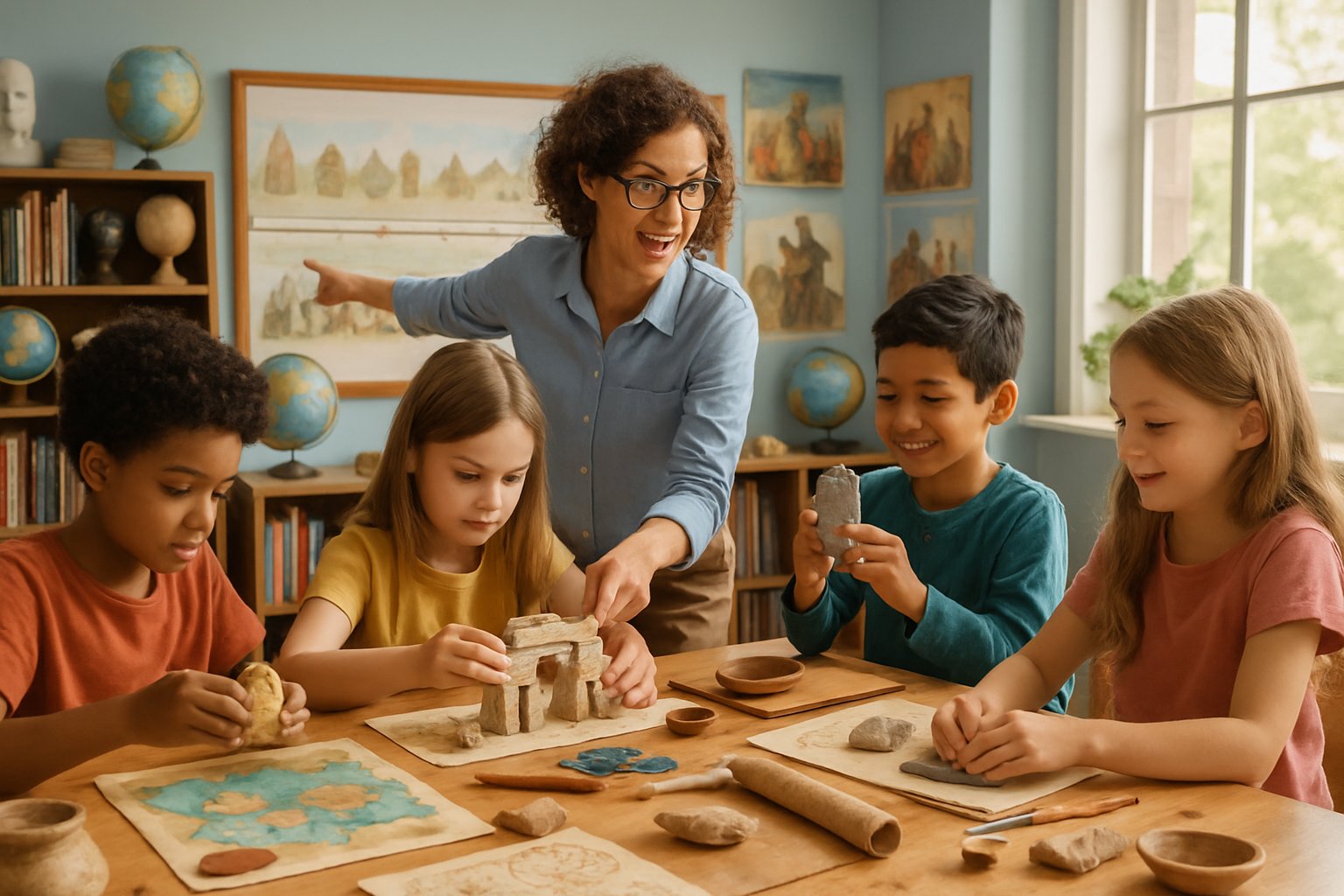
Children and a teacher engaged in hands-on history activities around a table with historical artifacts and models in a bright classroom.

When students touch, build, and role-play historical scenarios, they develop stronger connections to the past than traditional textbook methods allow. These interactive approaches help different types of learners succeed while making abstract historical concepts feel real and meaningful.

Engaging Different Learning Styles

Traditional history classes often favor students who learn best by reading and listening. Hands-on history activities help students with different learning preferences succeed in ways that textbooks cannot provide.

Visual learners benefit from creating timelines, maps, and historical artwork. They can sketch battle formations or design period-appropriate costumes. These activities help them see patterns and connections between events.

Kinesthetic learners thrive when they can move and touch objects during history lessons. They excel at building models of ancient structures or acting out historical scenes. Physical movement helps them remember information better than sitting still.

Auditory learners gain from storytelling activities and group discussions about historical events. They can create podcasts about historical figures or participate in debates. Speaking and hearing information helps cement their understanding.

Tactile learners need to handle materials and work with their hands. Crafting historical artifacts or digging through mock archaeological sites appeals to their need for physical interaction. Creating historical artifacts like Roman coins or Native American pottery gives them concrete connections to the past.

Teachers who use multiple activity types reach more students effectively. Each student can find ways to connect with historical content that match their natural learning preferences.

Building Deeper Understanding of Historical Events

Hands-on activities transform abstract dates and names into meaningful experiences. Students develop empathy for historical figures when they face similar challenges through simulations and role-playing exercises.

When students build medieval catapults, they understand the engineering skills people needed centuries ago. They realize that historical people were intelligent problem-solvers, not just names in textbooks. This physical experience makes ancient technology feel real and impressive.

Reenacting historical events helps students grasp the emotions and pressures people faced. Acting out a Continental Congress debate shows them how difficult political decisions really were. Students learn that historical outcomes were not inevitable.

Creating period crafts teaches students about daily life in different eras. Making soap or candles the colonial way shows them how much work simple tasks required. They appreciate modern conveniences more after experiencing historical methods.

Archaeological simulations demonstrate how historians piece together incomplete evidence. Students learn that history involves detective work and educated guessing. They understand why historians sometimes disagree about events.

These experiences stick in memory longer than reading alone. Students remember the frustration of starting a fire with flint or the satisfaction of completing a historical craft. Physical memories reinforce factual learning.

Connecting Classroom Activities to Real Life

Hands-on history activities that use local resources help students see connections between past and present in their own communities. These activities make history feel relevant rather than distant and unrelated to modern life.

Students can interview elderly community members about their experiences during historical events. A conversation with someone who lived through the Civil Rights era makes that period more real than any textbook description. Local perspectives add personal dimensions to national events.

Field trips to nearby historical sites show students that history happened in places they can visit. Walking through a preserved battlefield or historic house makes events feel tangible. Students often express surprise that historical events occurred so close to home.

Community archaeology projects let students contribute to actual historical research. They learn that history is still being discovered and interpreted. Their work might uncover artifacts that add to local historical knowledge.

Local history research projects help students understand how national events affected their specific area. They might discover how the Great Depression impacted their town or how local people contributed to World War II efforts. These connections make large historical events feel personally meaningful.

Students begin seeing historical patterns in current events when they understand how past decisions shaped their communities. They develop critical thinking skills that apply to modern civic participation and decision-making.

Top Hands-On Activities for History Lessons

Interactive timeline projects help students visualize historical events in chronological order. Role-playing activities let students step into the shoes of famous historical figures to understand their perspectives. Artifact reproduction brings ancient cultures to life through hands-on creation.

Timelines and Creative History Timeline Projects

History timeline projects give students a visual way to understand when events happened. Teachers can have students create large floor timelines using masking tape and index cards.

Interactive Timeline Ideas:

  • 3D timelines using boxes or poster board stands
  • Digital timelines with photos and videos
  • Living timelines where students act out events in order

Students can focus on specific time periods like Ancient Egypt or World War II. They add important dates, key people, and major events to their timelines.

Timeline Materials:

  • Poster board or butcher paper
  • Colored markers and pencils
  • Photos or drawings of historical events
  • String or yarn for connections

The timeline becomes a reference tool throughout the unit. Students see how events connect to each other over time.

Historical Figure Role-Plays and Interviews

Students dress up as famous people from history for interactive presentations. They research their character’s life, beliefs, and time period before the role-play activity.

Role-Play Activities:

  • Living museum where students pose as historical figures
  • Talk show interviews with historical personalities
  • Debates between people from different time periods
  • Day-in-the-life presentations showing typical activities

Teachers can set up interview stations around the classroom. Students rotate and ask questions to different historical figures.

Character Research Elements:

  • Clothing and appearance of the time period
  • Important achievements and challenges
  • Daily life and customs
  • Speaking style and vocabulary

This activity helps students understand that historical figures were real people. They learn about different perspectives and viewpoints from the past.

Art and Artifact Reproduction Projects

Students create replicas of historical objects to understand how people lived in different time periods. Art activities provide hands-on ways to learn history while developing creativity.

Artifact Projects:

  • Egyptian hieroglyphics on papyrus paper
  • Medieval illuminated manuscripts with decorative letters
  • Native American pottery using clay
  • Roman mosaics with small tiles or paper squares

Students research the original artifacts before creating their versions. They learn about materials, techniques, and cultural significance.

Art Supply Options:

  • Clay for pottery and sculptures
  • Paints and brushes for decorative items
  • Paper and markers for documents
  • Fabric scraps for historical clothing

These projects help students connect with daily life in historical periods. They understand the time and skill needed to create items without modern tools.

Project-Based Learning Approaches in the History Classroom

Students learn history best when they actively engage with the material through extended research projects and creative activities. These approaches help students develop critical thinking skills while exploring historical events in depth.

Research-Driven Group Projects

Project-based learning transforms history lessons by letting students work together on real historical questions. Teachers can assign groups to investigate specific time periods or events over several weeks.

Students might create documentaries about World War II battles. They research primary sources like letters and photographs. Each group member takes on different roles like researcher, writer, or video editor.

Another effective approach involves oral history projects. Students interview family members about their experiences during historical events. They record stories and create presentations to share with the class.

Popular Research Project Ideas:

  • Community history investigations
  • Biography studies of historical figures
  • Comparative studies of different time periods
  • Archaeological site explorations

Teachers should provide clear rubrics and check-in points. This helps students stay on track with their research. Regular feedback ensures projects meet learning goals while keeping students engaged.

Interactive Lapbooks and Notebooks

Lapbooks offer a hands-on way for students to organize information about historical events. These folded paper books contain mini-books, flaps, and pockets that students fill with facts and drawings.

Students create different sections for causes, effects, and key figures. They might include timelines, maps, and vocabulary words. Each lapbook becomes a personal reference tool.

Interactive notebooks work similarly but use regular composition books. Students add foldables, graphic organizers, and illustrations. The left side contains creative activities while the right side has notes and facts.

Essential Lapbook Components:

  • Timeline foldables for chronological events
  • Character pockets with biographical information
  • Map sections showing geographical importance
  • Vocabulary wheels with key terms

These activities work well for all grade levels. Younger students focus on basic facts while older students analyze deeper connections. The physical act of creating helps students remember information better.

Comics and Visual Storytelling for Historical Events

Comics make complex historical events easier to understand and remember. Students create their own comic strips showing important moments in history. They draw characters, write dialogue, and design action scenes.

This approach works especially well for dramatic historical events. Students might illustrate the Boston Tea Party or the signing of important treaties. They must research accurate details about clothing, settings, and dialogue.

Digital tools make comic creation even more engaging. Students use apps and websites to design professional-looking comics. They can add sound effects, colors, and special fonts to enhance their stories.

Comic Strip Elements for History:

  • Accurate historical settings and costumes
  • Dialogue that reflects the time period
  • Clear sequence of events
  • Educational captions explaining context

Visual storytelling helps students with different learning styles. Some students struggle with traditional writing but excel at drawing and design. Comics combine both skills while making classroom activities more enjoyable and memorable.

Making History Fun With Games and Collaborative Activities

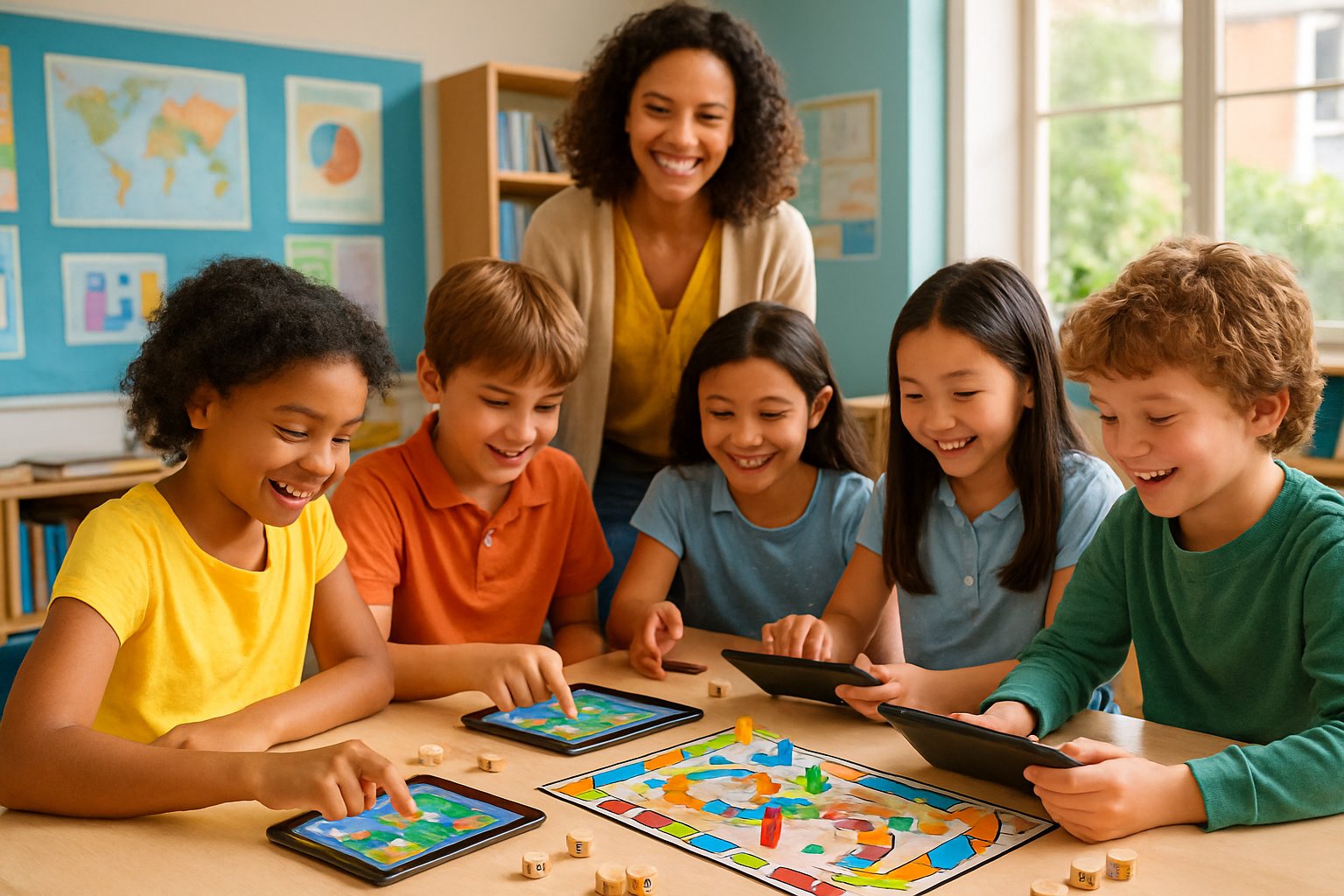
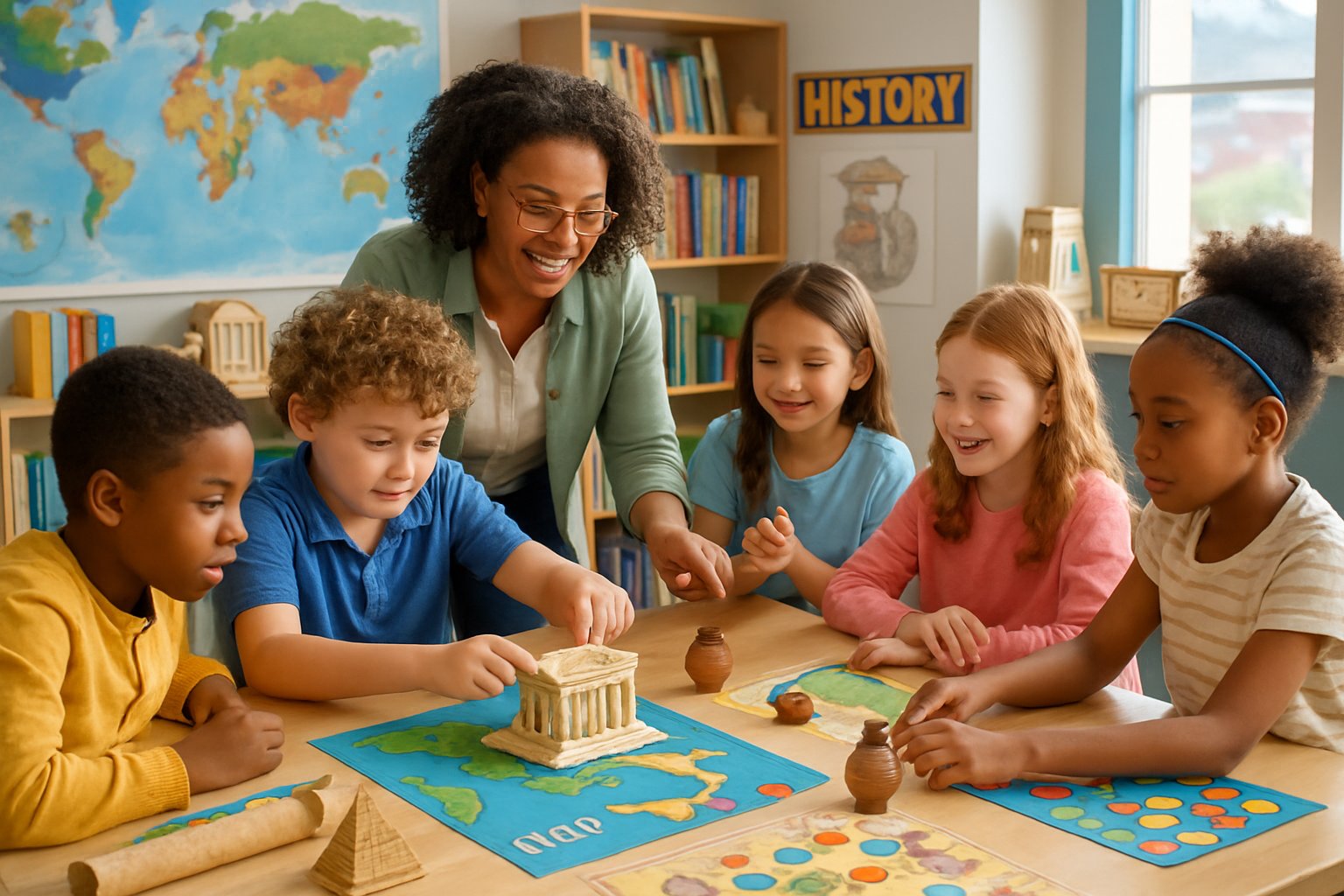
Children and a teacher collaborating on hands-on history projects and games around a table in a classroom.

Games and group projects turn boring history lessons into exciting adventures that students actually want to join. These activities help kids remember historical events better while working together and having fun.

Card Games and Board Games About History

Teachers can create simple card games using index cards with historical figures on one side and facts on the other. Students match presidents with their accomplishments or wars with their dates.

Board games work great for collaborative learning in the history classroom. Kids can design their own games about the Civil War or World War II.

Popular History Game Ideas:

  • Timeline races with event cards
  • Historical figure guessing games
  • Geography games with ancient maps
  • Trading games about colonial America

Students enjoy making quiz games for each other. They write questions about historical events they just studied. This helps them remember facts better than just reading textbooks.

Scavenger Hunts and Escape Room Challenges

Scavenger hunts get students moving around the classroom or school grounds. Teachers hide clues about the American Revolution or ancient Egypt in different locations.

Students solve puzzles to find the next clue. Each clue teaches them something new about historical events or famous people.

Escape rooms challenge groups to work together. They might need to decode a message from George Washington or solve math problems about Egyptian pyramids.

Escape Room Setup Ideas:

  • Lock boxes with combination codes from historical dates
  • Puzzles using maps from different time periods
  • Riddles about famous historical figures
  • Code-breaking activities with ancient languages

These hands-on activities make history more tangible for students. They remember lessons better when they have to think and move around.

Cooking and Crafts from Historical Periods

Cooking historical recipes helps students understand daily life in different time periods. They can make hardtack like Civil War soldiers ate or corn bread like Native Americans made.

Students learn about available ingredients and cooking methods from each era. They discover why people ate certain foods and how they preserved them without refrigerators.

Craft projects bring historical events to life through art. Students might make Egyptian jewelry, medieval shields, or colonial candles.

Historical Craft Projects:

  • Paper making like ancient Chinese people
  • Weaving on simple looms
  • Creating cave paintings with natural materials
  • Building mini log cabins or pueblos

These activities show students how people lived and worked long ago. They understand history through their hands and senses, not just their minds.

Art activities give insight into culture and people from different eras. Students see how creativity and daily needs shaped what people made and ate.

Filed Under: Uncategorized

Building a Support Network: Connecting with Other Homeschool Families Effectively

September 10, 2025 by Valerie Leave a Comment

Why a Support Network Matters for Homeschool Families

A group of homeschool families with parents and children gathered outdoors in a park, talking and sharing educational activities together.

Homeschooling can feel isolating when families navigate educational challenges alone, but building a supportive community transforms the experience through shared belonging, emotional encouragement, and enriched opportunities for children.

Establishing a Sense of Belonging

Homeschool families often feel different from their neighbors who send children to traditional schools. A support network creates connections with people who understand their daily routines and educational choices.

Finding your tribe happens when families connect with others who share similar values and approaches to education. These relationships help parents feel less alone in their decision to homeschool.

Local homeschool groups provide regular meetups where families can share experiences. Parents discover they’re not the only ones dealing with curriculum struggles or difficult learning days.

Shared experiences create bonds that go beyond casual friendships. When families participate in group activities like park days or field trips, they build lasting relationships based on common goals.

Online communities extend this sense of belonging beyond geographic boundaries. Parents can connect with homeschooling families from different states who face similar challenges and celebrate similar victories.

The feeling of belonging reduces the stress that comes with making unconventional educational choices. Families gain confidence knowing they’re part of a larger community that supports their decisions.

Encouragement and Emotional Support

Homeschooling parents face unique pressures that friends and family members might not understand. A support network provides emotional relief during challenging seasons.

Veteran homeschoolers offer perspective when new families feel overwhelmed by curriculum choices or state requirements. They share practical advice from years of experience navigating similar situations.

Difficult learning days become more manageable when parents can text a friend who understands. Quick encouragement from another homeschooling parent often provides the motivation needed to continue.

Prayer chains and check-ins from supportive community members help families through personal crises. When illness or family emergencies disrupt schooling, other families often step in with meals or childcare assistance.

Parents need validation that their teaching efforts matter. Connecting with other homeschool families provides regular encouragement and celebrates educational milestones together.

The emotional support extends beyond educational concerns to general parenting challenges. Homeschool networks often become close-knit communities where families support each other through all aspects of life.

Benefits for Homeschooling Children

Children in homeschool families need social connections with peers who understand their educational experience. Support networks provide natural opportunities for meaningful friendships.

Group learning activities expose children to different teaching styles and approaches. When families organize science labs or history discussions together, kids benefit from varied perspectives on the same topics.

Homeschooled children often develop strong friendships within their support network because they spend quality time together during educational activities. These relationships tend to be deeper than typical school friendships.

Collaborative projects like drama productions or science fairs give children chances to work together toward common goals. They learn teamwork skills while building confidence in group settings.

Older children in the network often mentor younger ones, creating natural leadership opportunities. This multi-age interaction helps develop social skills and empathy.

Children see their parents building positive relationships with other adults, which models healthy community involvement. They learn the importance of maintaining supportive friendships throughout life.

Finding and Connecting with Homeschool Families

The key to building strong connections lies in exploring multiple avenues where homeschool families naturally gather. Local groups provide face-to-face interaction while online platforms offer broader reach and 24/7 support.

Joining Local Groups and Co-ops

Local homeschool groups serve as the backbone of most families’ support networks. These established communities offer structured meetups, shared learning opportunities, and instant access to experienced parents.

Finding groups starts with simple online searches for “homeschool groups” plus your city name. Facebook often hosts local homeschooling pages where families share events and resources.

Co-ops take collaboration further by organizing shared classes and activities. Parents take turns teaching subjects like art, science, or foreign languages. This arrangement reduces individual teaching loads while exposing children to different teaching styles.

Many groups organize regular activities:

  • Weekly park days for socializing
  • Monthly field trips with group discounts
  • Seasonal celebrations and parties
  • Curriculum swaps and book exchanges

Getting involved means attending a few meetings before committing. Most groups welcome newcomers and offer trial periods. Building connections through local homeschool groups creates lasting friendships while providing practical teaching support.

Exploring Online Forums and Social Media

Online platforms connect homeschool families across geographic boundaries. These digital spaces provide instant access to advice, encouragement, and specialized resources at any hour.

Facebook groups offer the largest selection of homeschooling communities. Search for groups focused on your curriculum, teaching style, or children’s grade levels. Popular options include general homeschool support groups and subject-specific communities.

Reddit forums like r/homeschool provide anonymous discussion spaces. Parents ask sensitive questions without judgment and receive honest feedback from experienced families.

Specialized websites host dedicated homeschooling forums:

  • Well-Trained Mind forums for classical education
  • Homeschool World for general discussions
  • Charlotte Mason communities for nature-based learning

Participating actively builds stronger connections than lurking. Share successful activities, ask specific questions, and offer encouragement to struggling parents. Many online friendships develop into real-world meetups and lasting support relationships.

Making Connections at Community Events

Community events create natural meeting opportunities where homeschool families gather around shared interests. These casual settings often lead to deeper friendships than formal group meetings.

Library programs frequently attract homeschooling families during school hours. Story times, science workshops, and maker space activities provide built-in conversation starters with other parents.

Museums and nature centers host special homeschool days with educational programming. These events offer group discounts while connecting families who value hands-on learning experiences.

Local festivals and community celebrations draw diverse groups of families. Homeschoolers often stand out during weekday events, making identification and connection easier.

Sports leagues and activity groups designed for homeschoolers create regular meeting opportunities. Many communities offer homeschool bowling leagues, game days, and seasonal sports teams.

Strike up conversations by complimenting other families’ children or asking about interesting curriculum materials you notice. Most homeschooling parents enjoy sharing their experiences and recommendations.

Using Libraries and Community Centers

Libraries and community centers serve as unofficial headquarters for many homeschooling families. These public spaces offer free resources while fostering natural connections between like-minded families.

Librarians often know which families homeschool and can facilitate introductions. Children’s librarians especially understand homeschool needs and recommend appropriate programs and materials.

Many libraries host specific homeschool programming:

  • Daytime story sessions
  • STEM workshops and maker activities
  • Research skills classes
  • Book clubs for different age groups

Community centers frequently rent space to homeschool groups for co-op classes and meetings. Attending these programs introduces families to established local networks.

Some centers offer homeschool-friendly amenities like study rooms, educational materials, and flexible scheduling for group activities.

Building relationships with staff members creates ongoing support for finding connections with other homeschooling families. Regular visits during school hours naturally lead to conversations with other homeschooling parents using the same resources.

Participating in Group Activities and Building Relationships

Group activities create natural opportunities for homeschool families to connect and form meaningful bonds. Regular interaction through organized events helps children develop social skills while parents build their own support networks.

Organizing Playdates and Meetups

Planning regular playdates gives homeschool families structured time to connect. Parents can rotate hosting duties at homes, parks, or community centers.

Start small with 2-3 families to keep things manageable. Choose activities that work for different ages like nature walks, craft time, or simple games.

Popular playdate ideas include:

  • Park visits with picnic lunches
  • Library story time sessions
  • Museum exploration days
  • Seasonal activities like pumpkin picking

Set up a group text or messaging app to coordinate schedules. This makes planning easier and helps families stay connected between meetups.

Consider themed playdates around holidays or learning topics. These give structure to gatherings and create shared experiences that strengthen bonds.

Engaging in Group Learning and Projects

Collaborative learning projects bring homeschool families together around shared educational goals. Group classes split costs while giving children peer interaction.

Effective group learning options:

  • Science experiment clubs
  • Book discussion groups
  • Foreign language practice sessions
  • History reenactment activities
  • Art and craft workshops

Parents can share teaching responsibilities based on their skills and interests. One parent might lead math lessons while another handles science experiments.

Building supportive networks through group activities helps create lasting educational partnerships. Families often discover new teaching methods and resources through these collaborations.

Plan projects that span several weeks or months. This gives relationships time to develop naturally while children work toward common goals.

Fostering Lasting Friendships

Deep friendships take time and consistent interaction to develop. Moving beyond casual meetups requires intentional effort from all families involved.

Create regular traditions that bring the same families together repeatedly. Monthly game nights or seasonal celebrations help deepen connections.

Be open about challenges and successes in your homeschool journey. Honest conversations about struggles create authentic bonds between parents.

Ways to strengthen friendships:

  • Share resources and curriculum recommendations
  • Offer childcare help during appointments
  • Plan family vacation trips together
  • Celebrate milestones and achievements

Remember that not every family will become close friends. Focus energy on relationships that feel natural and mutually beneficial.

Building strong community networks requires patience and genuine care for others. The most supportive homeschool communities develop when families prioritize authentic relationships over networking.

Expanding Your Network Through Homeschool Conferences and Events

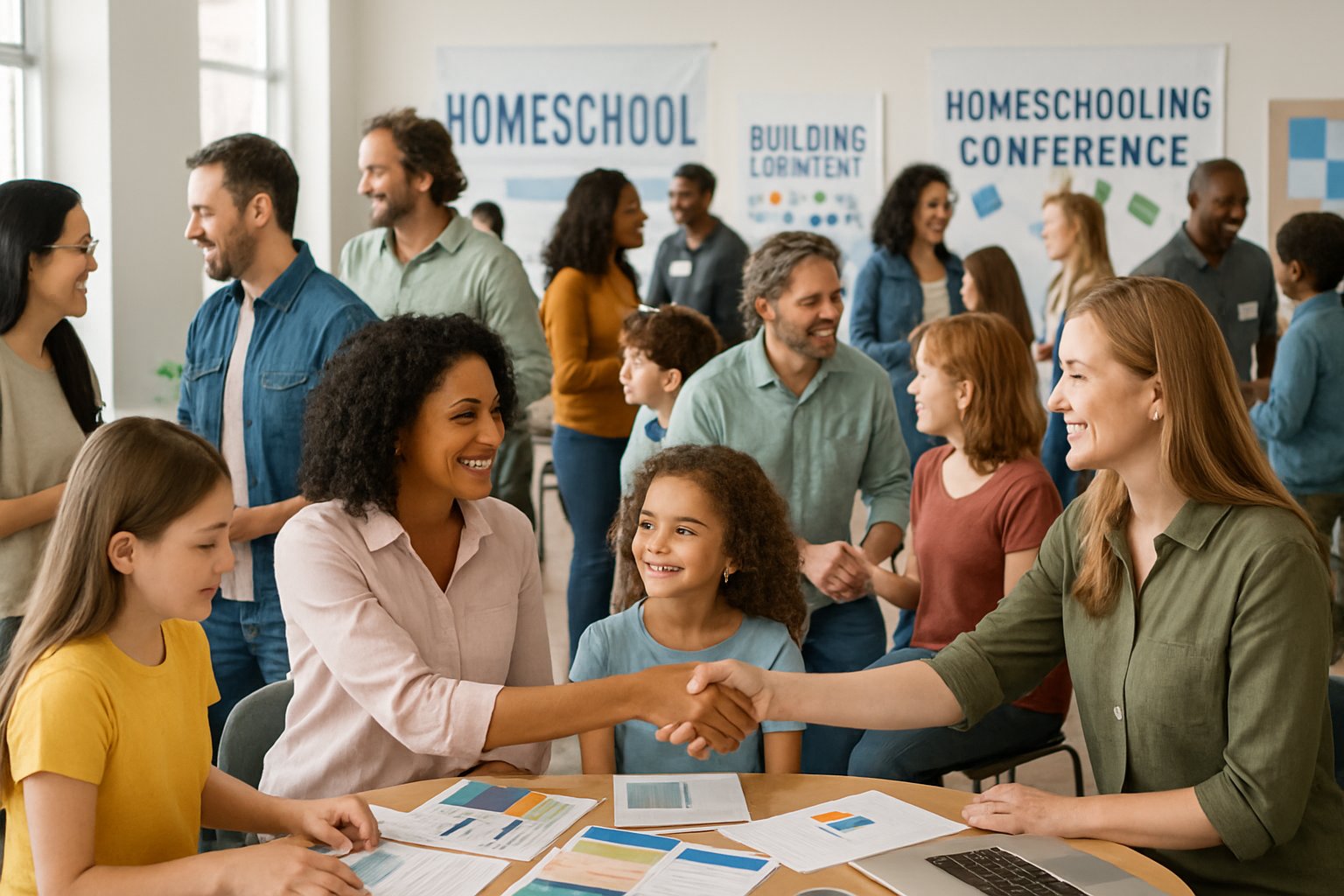
A group of homeschool families interacting and connecting at a conference event with tables of educational materials.

Homeschool conferences offer unmatched opportunities to connect with hundreds of families who share your educational values. These events combine learning opportunities with natural networking moments that can transform your homeschooling experience.

Discovering Homeschool Conferences

Local and regional homeschool conferences happen throughout the year in most areas. Families can find these events through state homeschool associations, local co-ops, and online homeschool groups.

National conferences attract thousands of families and feature renowned speakers, extensive vendor halls, and specialized workshops. Popular events include the Great Homeschool Conventions and regional gatherings hosted by major curriculum publishers.

State-level conferences provide more intimate settings where families can connect with others in their area. These events often cost less and make it easier to find local resources and support groups.

Many conferences offer early bird discounts and family packages that make attendance more affordable. Some provide childcare or teen programs, allowing parents to focus on workshops and networking opportunities.

Religious organizations, secular groups, and specialized learning communities each host their own conferences. This variety helps families find events that match their educational philosophy and family values.

Attending Workshops and Seminars

Conference workshops cover everything from curriculum selection to teaching challenging subjects. Homeschool conferences feature workshops and seminars that focus on specific educational approaches, making it easy to connect with families who share similar teaching methods.

Subject-specific sessions help parents tackle difficult topics like high school math or foreign languages. These workshops naturally attract families dealing with similar challenges, creating instant conversation starters.

Special needs workshops bring together families navigating learning differences. Parents often exchange contact information and form ongoing support relationships after these sessions.

Teaching method seminars focus on approaches like Charlotte Mason, Classical education, or unit studies. Families can identify others who use the same methods and arrange future meetups or resource sharing.

Most conferences provide session handouts and contact lists that help families stay connected after the event ends.

Meeting Like-Minded Families

Conference environments make it easy to start conversations with other families during meals, vendor hall visits, and between sessions. Many families wear name tags that include their children’s ages and homeschool approaches.

Meal times offer natural opportunities to sit with new families and share experiences. Conference organizers often arrange group seating to encourage networking among attendees.

Vendor halls create relaxed settings where families browse curriculum together and discuss their educational choices. Parents often ask for recommendations and share what works for their children.

Children’s programs allow kids to meet peers while parents attend workshops. These connections often lead to pen pal relationships or playdates when families live nearby.

Many conferences host meet-and-greet events specifically designed for networking. These might include regional breakfasts, newcomer orientations, or interest-based gatherings for specific teaching methods or family situations.

Filed Under: Uncategorized

How to Handle Homeschooling During Family Travel: Practical Tips & Strategies

September 10, 2025 by Valerie Leave a Comment

Preparing for Homeschooling on the Move

Success with homeschooling during travel starts with choosing an educational approach that fits your family’s needs and understanding the legal requirements for different locations. Families must also set clear learning goals that balance structured education with travel experiences.

Choosing the Right Homeschooling Approach

Different homeschooling methods work better for traveling families than others. Online homeschool programs offer flexibility since they only need internet access to function.

Digital-First Options:

  • Online curriculum platforms
  • Educational apps and games
  • Video-based lessons
  • Virtual tutoring sessions

Traditional textbook approaches can work but add weight and bulk to luggage. Many families find success with a hybrid approach that combines digital resources with a few essential workbooks.

Worldschooling approaches use travel destinations as part of the curriculum. This method turns museums, historical sites, and cultural experiences into classroom lessons.

Unschooling relies on natural learning opportunities during travel. This approach works well for families who want maximum flexibility in their daily schedules.

Parents should consider their child’s learning style and their own teaching comfort level. Some children need more structure while others thrive with flexible, experience-based learning.

Setting Educational Goals for Your Trip

Clear educational goals help families stay focused on learning while managing travel logistics. Parents should identify core subjects that must continue during the trip versus areas where they can be more flexible.

Essential Subject Areas:

  • Math skills – These build on each other and are hard to catch up on later
  • Reading comprehension – Can be maintained through travel journals and local books
  • Writing practice – Travel experiences provide excellent writing topics

Families can set location-specific learning goals too. A trip to Rome might focus on ancient history while a beach destination could emphasize marine biology.

Some families slim down their homeschooling schedule during travel transitions. This approach frees up time for travel activities while maintaining basic skill practice.

Parents should write down weekly learning targets rather than rigid daily schedules. This flexibility helps when travel days don’t go as planned.

Age-appropriate expectations matter too. Younger children can learn through play and exploration while older students might need more structured academic time.

Researching Local Curriculum Requirements

Different states and countries have varying homeschool laws that traveling families must follow. Some locations require specific subjects or testing while others have minimal oversight.

Key Legal Considerations:

  • Home state reporting requirements
  • Destination state temporary residency rules
  • International homeschool recognition
  • Required standardized testing schedules

Families should research these requirements months before traveling. Many states allow temporary travel without changing residency status for homeschool purposes.

Some destinations offer educational opportunities that can fulfill curriculum requirements. Museums often provide structured programs that count toward science or history credits.

Parents should keep detailed records of educational activities during travel. Photos, ticket stubs, and travel journals can serve as documentation for curriculum compliance.

International travel may require additional paperwork proving children are receiving appropriate education. Some countries ask for homeschool documentation at border crossings.

Consulting with other traveling homeschool families can provide practical insights about specific destinations and their requirements.

Organizing Your Homeschooling Routine While Traveling

A well-organized routine helps families maintain consistent learning while exploring new places. The key is building flexibility into daily schedules and finding creative ways to blend education with travel experiences.

Creating a Flexible Daily Schedule

Successful homeschooling families use scheduling software and planning tools to stay organized on the road. Digital tools like Google Calendar, Trello, or simple spreadsheets work well for tracking lessons and activities.

Parents should create a basic framework rather than rigid hourly schedules. A typical day might include core subjects in the morning, exploration time midday, and quiet learning in the afternoon.

Sample Daily Framework:

  • Morning (2-3 hours): Math, reading, writing
  • Midday (3-4 hours): Sightseeing, hands-on activities
  • Afternoon (1-2 hours): Journaling, independent reading

Travel days require different approaches. Long car rides become perfect opportunities for audiobooks, educational podcasts, or geography games using road maps.

Time zone changes and unexpected delays happen frequently. Smart families build buffer time into their schedules and prepare backup activities for these situations.

Balancing Schoolwork with Travel Activities

The best homeschooling families turn destinations into learning opportunities rather than treating travel and school as separate activities. This approach makes both more enjoyable and educational.

Location-based learning works exceptionally well. Families visiting national parks can study geology and wildlife. Those exploring historical cities can dive into local history and culture.

Ways to Blend Learning and Travel:

  • Museum visits for science and history lessons
  • Cooking local foods for cultural studies
  • Nature hikes for biology and physical education
  • Language practice with locals

Parents should involve children in trip planning as part of their education. Kids can research destinations, calculate distances, manage budgets, and create itineraries.

The key is setting realistic expectations. Not every day needs intensive academic work. Some days focus more on experiences, while others emphasize traditional subjects.

Incorporating Downtime Learning

Smart homeschooling families recognize that rest and buffer time prevent burnout and actually improve learning outcomes. Quiet time helps children process new experiences and information.

Downtime doesn’t mean stopping education completely. Low-energy learning activities work well during rest periods or lazy travel days.

Quiet Learning Activities:

  • Travel journaling about daily experiences
  • Sketching local architecture or nature
  • Reading books related to destinations
  • Educational documentaries about visited places

Audio learning proves especially valuable during downtime. Podcasts, audiobooks, and language learning apps require minimal setup and work in various environments.

Parents should recognize that some of the best learning happens naturally during unstructured time. Children often ask thoughtful questions or make connections between experiences when they have space to think and reflect.

Maximizing Learning Opportunities Through Family Travel

Family travel creates natural learning moments that traditional classrooms cannot offer. Parents can turn destinations into living textbooks while building essential life skills through real-world experiences.

Using Field Trips and Local Experiences

Every destination becomes a massive outdoor classroom when families approach travel with an educational mindset. Museums, historical sites, and cultural landmarks offer hands-on learning that textbooks simply cannot match.

Local markets provide lessons in math, economics, and cultural studies. Children can practice counting money, learn about different currencies, and observe how people from other cultures live and work.

Turning family travel into learning opportunities allows families to explore subjects like history and geography through direct experience. Walking through ancient ruins teaches history more effectively than reading about them.

National parks offer science lessons in geology, biology, and environmental studies. Children can observe ecosystems firsthand and learn about conservation efforts in action.

Popular Educational Destinations:

  • Science museums for hands-on experiments
  • Historical sites for living history lessons
  • Nature centers for environmental education
  • Art galleries for creative inspiration

Integrating Life Skills and Cultural Insights

Travel naturally teaches children important life skills they need as adults. Navigation, budgeting, and problem-solving become daily activities during family trips.

Children learn to read maps, understand directions, and navigate airports or train stations. These skills build confidence and independence in young learners.

Cultural immersion happens automatically when families visit new places. Children observe different languages, foods, customs, and ways of life without formal instruction.

Money management becomes practical when children help plan budgets for meals, souvenirs, or activities. They learn the value of money and how to make spending choices.

Key Life Skills Developed:

  • Communication: Talking to locals and asking for directions
  • Adaptation: Adjusting to new environments and schedules
  • Independence: Making decisions and solving problems
  • Cultural awareness: Understanding and respecting differences

Time management skills develop as families coordinate schedules, catch flights, and balance activities with rest periods.

Leveraging Reading and Educational Resources

Audio books and soundtracks keep learning going during long car rides or flights. Families can listen to stories related to their destination before arriving.

Digital resources make homeschooling portable and flexible. Educational apps work without internet connections, making them perfect for remote locations or long journeys.

Libraries offer books about destinations before trips begin. Children can research places they will visit and build excitement for upcoming adventures.

Recommended Travel Resources:

  • Kindle loaded with destination-related books
  • Educational podcasts about local history
  • Language learning apps for international travel
  • Geography games and apps

Notebooking pages related to trips help children document experiences and reflect on learning. They can draw pictures, write observations, and record new facts discovered during travel.

Travel journals encourage daily writing practice. Children can describe new foods, interesting people they meet, or exciting places they visit.

Staying Connected and Supported on the Road

A family inside a car with a parent helping a child use a tablet for homeschooling while traveling.

Building connections with other homeschooling families and maintaining communication with educators helps traveling families create a strong support network. Online communities and regular contact with teachers provide resources, encouragement, and social opportunities for both parents and children.

Joining Homeschooling Communities

Online homeschooling groups offer valuable support for families on the road. Facebook groups connect traveling parents with others who understand the unique challenges of educating children while moving.

These communities share practical tips about curriculum choices and travel logistics. Members often recommend educational apps and online resources that work well without internet access.

Parents can ask questions about state requirements and get advice from experienced road schooling families. Many groups focus specifically on RV families or international travelers.

Local connections matter too. Some areas have homeschooling hubs where visiting families can join planned activities. These meetups give children chances to socialize with peers.

Parents should research groups before joining long trips. Active communities with regular posts provide better ongoing support than inactive ones.

Communicating with Educators and Peers

Regular contact with teachers helps children stay engaged with their learning. Video calls allow face-to-face interaction even from remote locations.

Parents can schedule weekly check-ins with online instructors or tutors. These meetings help track progress and adjust learning plans as needed.

Technology makes communication easier:

  • Email for sending assignments and updates
  • Video calls for real-time discussions
  • Messaging apps for quick questions
  • Shared documents for collaborative projects

Children need peer interaction beyond family members. Online classes through platforms create opportunities for real-time engagement with other students.

Parents should set up reliable internet access before traveling. Mobile hotspots and campground WiFi help maintain consistent communication with educational support networks.

Filed Under: Uncategorized

Using Educational Games to Make Learning Fun: Strategies & Tools

September 10, 2025 by Valerie Leave a Comment

Core Principles of Using Educational Games

Children and a teacher engaging with educational games and tablets around a table in a bright classroom.

Educational games work best when they blend learning goals with engaging gameplay mechanics. The key is understanding how game-based activities increase motivation and interaction while supporting different types of learners.

Defining Game-Based Learning

Game-based learning uses actual games to teach specific skills or concepts. Students learn by playing games that have clear educational goals built into the gameplay.

This approach works because games naturally encourage active participation. Players must make decisions, solve problems, and apply knowledge to succeed. The learning happens through doing, not just listening or reading.

Research shows that games increase emotional involvement and enjoyment in the classroom. Students stay focused longer when they find activities fun and engaging.

Key Elements of Game-Based Learning:

  • Clear learning objectives tied to game goals
  • Interactive challenges that require knowledge application
  • Immediate feedback on student choices and actions
  • Progressive difficulty that builds skills over time

The games can be digital or physical. Board games, card games, and role-playing activities all count as game-based learning when designed with educational purposes.

Gamification vs. Game-Based Learning

Gamification adds game elements like points, badges, and leaderboards to regular lessons. Game-based learning uses complete games as the teaching tool.

Gamification might give students points for completing homework or badges for good behavior. The core activity stays the same, but game features make it more engaging.

Game-based learning changes the entire learning experience. Students play actual games where the educational content is built into the gameplay itself.

Gamification Examples:

  • Points for correct answers
  • Badges for completing modules
  • Leaderboards showing class progress

Game-Based Learning Examples:

  • Math puzzle games that teach fractions
  • History simulation games about ancient civilizations
  • Science games where students conduct virtual experiments

Both approaches can improve student engagement. Games make learning more engaging and fun for students when used correctly.

The choice depends on learning objectives and available resources.

Essential Features of Effective Educational Games

Effective educational games balance fun gameplay with solid teaching methods. The game mechanics must support the learning goals, not distract from them.

Clear Learning Integration means the educational content connects directly to game actions. Students learn by playing, not by stopping the game to read lessons.

Appropriate Challenge Levels keep students engaged without causing frustration. Games should manage cognitive load while fostering engagement to be effective.

Immediate Feedback helps students understand their progress right away. Good games show what students did right or wrong and help them improve.

Feature Why It Matters
Clear objectives Students know what they’re learning
Progressive difficulty Builds skills step by step
Multiple attempts Students learn from mistakes
Social interaction Encourages collaboration and discussion

Critical Thinking Skills develop when games require students to analyze situations and make strategic decisions. Players must think through problems rather than just memorize facts.

Educational games can support various types of learning from basic knowledge to complex problem-solving skills. The best games adapt to different learning styles and paces.

Popular Educational Game Types and Tools

Teachers can choose from many different types of educational games to engage their students. Each type offers unique benefits for different subjects and learning goals.

Quizzes and Trivia Platforms

Interactive quiz platforms help teachers create engaging assessments that feel more like games than tests. Students compete against classmates while reviewing important concepts.

Kahoot stands out as one of the most popular choices. Teachers create colorful quiz questions that students answer using their phones or tablets. The platform shows real-time leaderboards that motivate students to participate.

Quizizz offers a different approach by letting students work at their own pace. Each student sees questions on their device instead of sharing one screen. This reduces pressure and helps shy students feel more comfortable participating.

Both platforms include features like:

  • Timer options for added excitement
  • Question pools to prevent cheating
  • Analytics to track student progress
  • Multimedia support for images and videos

Teachers can use these tools for warm-up activities, review sessions, or exit tickets. The competitive element keeps students engaged while providing valuable feedback about their understanding.

Word and Puzzle Games

Word games and puzzles help students build vocabulary and critical thinking skills. These games work well for language arts classes and foreign language learning.

Crossword puzzles challenge students to recall definitions and spelling. Teachers can create custom crosswords using vocabulary from their current unit. Students work individually or in small teams to solve clues.

Word search puzzles help students recognize important terms. They work especially well for introducing new vocabulary before starting a lesson.

Digital word games like online Wordle variations let teachers customize word lists. Students enjoy the challenge of guessing the mystery word while practicing spelling patterns.

Popular word game formats include:

  • Scrambled letters for spelling practice
  • Rhyming games for phonics skills
  • Synonym matching for vocabulary building
  • Story completion for creative writing

These games help students practice language skills without feeling like traditional homework assignments.

Math and Logic Games

Math games transform abstract concepts into concrete, visual experiences. Students develop number sense and problem-solving skills through hands-on practice.

Number puzzles like Sudoku teach logical reasoning. Students must use deduction to fill in missing numbers while following specific rules.

Online math games adapt to each student’s skill level. Programs adjust difficulty automatically based on student responses. This keeps everyone challenged without causing frustration.

Logic games help students think step-by-step through complex problems. These games often involve patterns, sequences, or spatial reasoning challenges.

Effective math game types include:

  • Fact fluency games for basic operations
  • Fraction games using visual models
  • Geometry puzzles with shapes and angles
  • Word problem scenarios with real-world contexts

Students often request extra time to play these games because they feel entertaining rather than educational.

Scavenger Hunts in Education

Scavenger hunts combine movement with learning as students search for clues around the classroom or school. This active approach works well for kinesthetic learners who need to move while they think.

Digital scavenger hunts use QR codes or online platforms. Students scan codes to reveal questions or tasks related to their current studies. This adds technology integration to the traditional format.

Subject-based hunts can cover any topic. Science teachers might hide clues about the periodic table. History teachers could create hunts about historical figures or events.

Collaborative hunts encourage teamwork as small groups work together. Students must communicate and divide tasks to succeed. This builds social skills alongside academic content.

Scavenger hunt variations include:

  • Photo challenges where students document their findings
  • Research missions requiring library or internet investigation
  • Physical clues hidden around the learning space
  • Virtual reality hunts using educational apps

These activities get students moving and thinking at the same time.

Boosting Engagement With Gamification Strategies

Smart gamification turns regular lessons into exciting challenges that keep students motivated and focused. Teachers can use points-based systems, public recognition tools, and group activities to create learning experiences that feel more like playing than studying.

Leaderboards and Achievement Badges

Leaderboards create excitement by showing student progress in a visual way. They work best when teachers focus on effort and improvement rather than just final scores.

Weekly subject challenges let students earn points for completing assignments or participating in class. A math leaderboard might track problem-solving streaks, while a reading board could show books finished or pages read.

Teachers should include different categories to give every student a chance to succeed:

  • Most improved score
  • Best team player
  • Most creative solution
  • Perfect attendance streak

Digital badges reward specific skills and milestones in ways that feel personal and meaningful. Unlike grades, badges celebrate individual achievements that students can collect and display.

A science class might award “Lab Safety Expert” badges for following procedures correctly. English teachers could give “Grammar Guru” badges when students master punctuation rules.

Badge levels add extra motivation. Students might earn Bronze badges as beginners, Silver for intermediate work, and Gold for advanced skills. This progression encourages continuous improvement.

Reward Systems for Motivation

Effective reward systems give students clear goals and immediate feedback on their progress. The best rewards match what students actually want and value.

Point systems work well when students can see their progress building toward something meaningful. Teachers might offer 5 points for homework completion, 10 points for helping classmates, and bonus points for creative thinking.

Students can spend earned points on privileges like:

  • Choosing their seat for a week
  • Picking a class activity
  • Getting extra computer time
  • Leading a group discussion

Progress bars show students exactly how close they are to reaching their goals. A reading challenge might fill up as students complete chapters, making big tasks feel more manageable.

Research shows that recognizing progress helps students stay motivated and encourages them to keep trying even when work gets difficult.

Friendly Competition and Social Learning

Group competitions build teamwork skills while making learning more social and fun. Students work together toward shared goals instead of competing against each other individually.

Class-wide challenges unite students around common objectives. Teams might compete to solve math puzzles, build science projects, or complete geography challenges together.

Teachers can create competitions that highlight different strengths:

Competition Type Skills Developed Example Activity
Problem-solving Critical thinking Engineering challenges
Creative projects Artistic expression Story writing contests
Knowledge games Memory and recall History trivia teams
Skill challenges Technical abilities Coding competitions

Collaborative learning happens naturally when students help teammates succeed. Weaker students get support from stronger peers, while advanced students reinforce their own learning by teaching others.

Team-based activities promote communication skills and show students that everyone brings different talents to group work. This approach reduces stress while building confidence in a supportive environment.

Supporting Effective Learning and Tracking Progress

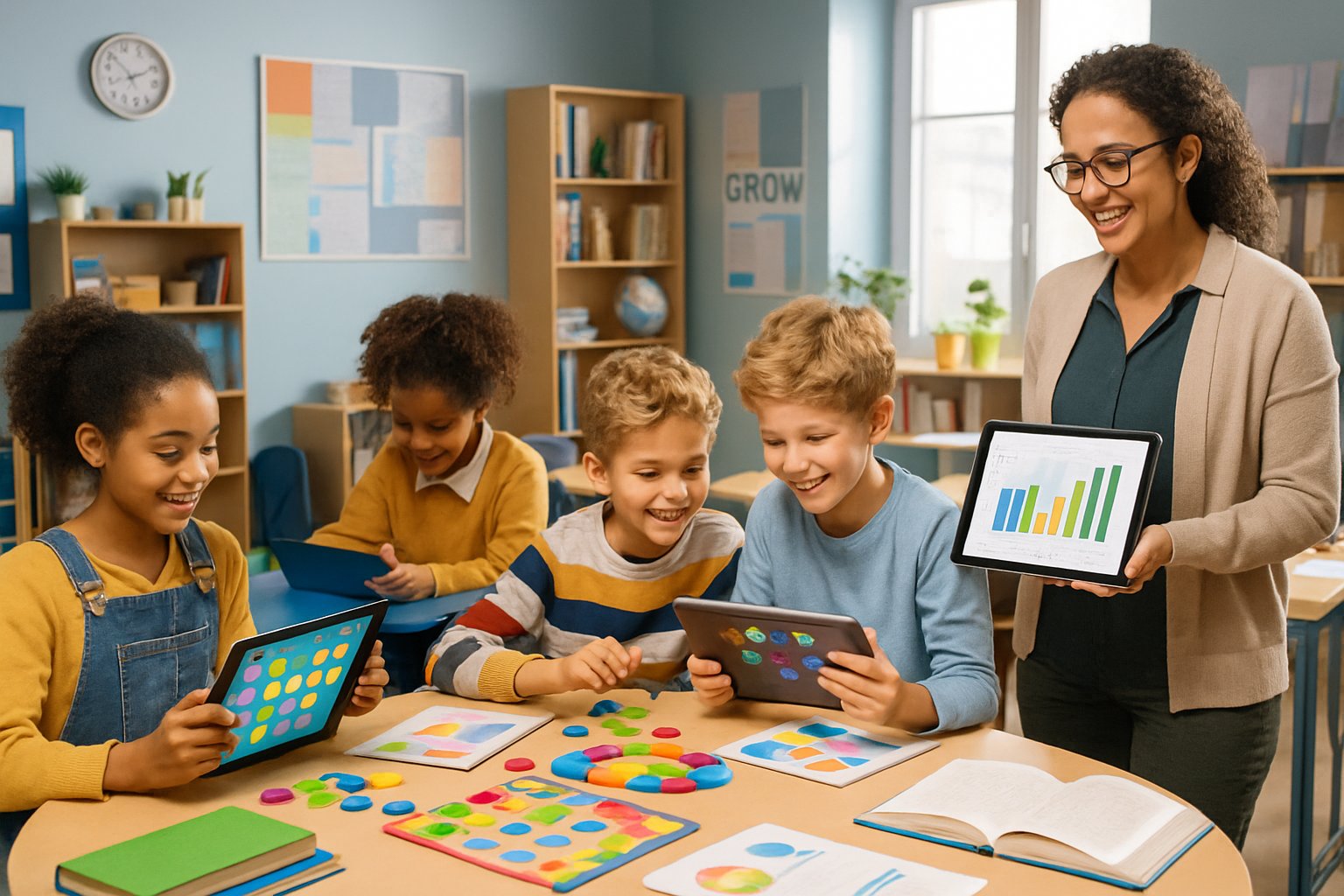
Children playing educational games on tablets in a classroom while a teacher guides them, showing a supportive learning environment.

Educational games provide teachers with powerful tools to monitor student understanding and create collaborative learning environments. These games deliver instant feedback while building skills through teamwork and shared problem-solving experiences.

Providing Real-Time Feedback

Real-time feedback helps students learn faster by showing them their mistakes right away. When students answer questions in educational games, they get immediate responses about whether they are right or wrong.

This quick feedback prevents students from practicing wrong answers. Instead of waiting days for test results, they can fix their understanding immediately.

Interactive educational tools use features like instant scoring and explanations. Students see their progress as they play, which keeps them motivated to continue learning.

Teachers can watch how students perform in real-time too. They can spot which concepts need more practice and help struggling students right away.

Games with multimedia elements make feedback even more effective. Visual and audio cues help students understand their mistakes better than text alone.

Benefits of Instant Feedback:

  • Prevents wrong answers from becoming habits
  • Keeps students engaged and motivated
  • Helps teachers identify learning gaps quickly
  • Improves knowledge retention through immediate correction

Tracking Student Progress Through Games

Educational games provide structured ways to track student progress through built-in analytics and reporting tools. Teachers can see detailed information about how each student performs over time.

Game platforms record important data like completion rates, time spent on tasks, and accuracy scores. This information helps teachers understand which students need extra help.

Progress tracking works especially well with daily challenges and streaks. Students build consistent study habits while teachers monitor their participation.

Key Tracking Features:

  • Completion rates – Shows which students finish assignments
  • Accuracy scores – Reveals understanding levels
  • Time data – Indicates student engagement
  • Streak counters – Tracks consistent participation

Leaderboards improve learning by providing structured progress tracking. Teachers can create weekly challenges and award points to top performers.

Digital certificates and badges give students visible proof of their achievements. These rewards motivate continued participation and celebrate learning milestones.

Encouraging Collaborative Problem-Solving

Team-based games help students work together to solve problems and learn from each other. Collaborative activities build important social skills while reinforcing academic concepts.

Students can compete in groups or work together toward common goals. This approach reduces individual pressure while encouraging peer support.

Effective Collaboration Strategies:

  • Small group competitions with 3-4 students
  • Class-wide challenges where everyone contributes
  • Peer tutoring through game partnerships
  • Team problem-solving activities

Teachers can assign different roles within game teams. Some students might be researchers while others present findings or check answers.

Collaborative games also help shy students participate more actively. Working in groups feels less intimidating than answering questions alone in front of the class.

These social learning experiences improve communication skills and build classroom community. Students learn to explain their thinking and listen to different perspectives.

Integrating Educational Games Into Modern Classrooms

Today’s classrooms blend digital and physical learning spaces where games support both in-person and remote instruction. Teachers can build positive study routines by using game mechanics that encourage consistent practice and celebrate small wins.

Hybrid and Remote Learning Applications

Educational games work well in hybrid classrooms where some students attend in person while others join remotely. Teachers can use digital educational games and gamified learning platforms to keep all students engaged regardless of location.

Popular platforms like Kahoot and Blooket let teachers create live quizzes that work on any device. Students can compete in real-time whether they’re sitting in class or learning from home.

Key benefits for hybrid learning:

  • Students get the same interactive experience
  • Teachers can track progress from all participants
  • Games work on tablets, computers, and phones
  • No special equipment needed

Many teachers use breakout rooms during remote learning where small groups play collaborative games. This helps students work together even when they’re apart.

Board games also translate well to virtual classrooms through apps like Tabletopia or simple screen sharing. Students can play strategy games that teach math concepts or historical thinking skills.

Establishing Healthy Learning Habits

Games naturally create habits through daily challenges and reward systems. Teachers can gamify learning to make regular practice feel rewarding rather than like work.

Effective habit-building strategies:

  • Daily streaks for completing assignments
  • Points systems that reward consistent effort
  • Level progression that shows gradual improvement
  • Badge collections for mastering new skills

Teachers often set up learning stations where students rotate through different game-based activities. This creates routine while keeping lessons fresh and engaging.

Short 10-15 minute game sessions work better than long gaming periods. Students stay focused and don’t get overwhelmed by screen time.

Progress tracking helps students see their improvement over weeks and months. Many educational games show visual progress bars or skill trees that make learning feel like advancing in a video game.

Simple classroom competitions between teams can motivate students to practice vocabulary, math facts, or science concepts at home. The game element makes homework feel less like a chore.

Filed Under: Uncategorized

How to Foster Critical Thinking Skills in Homeschoolers: Practical Strategies

September 10, 2025 by Valerie Leave a Comment

Core Elements of Critical Thinking for Homeschoolers

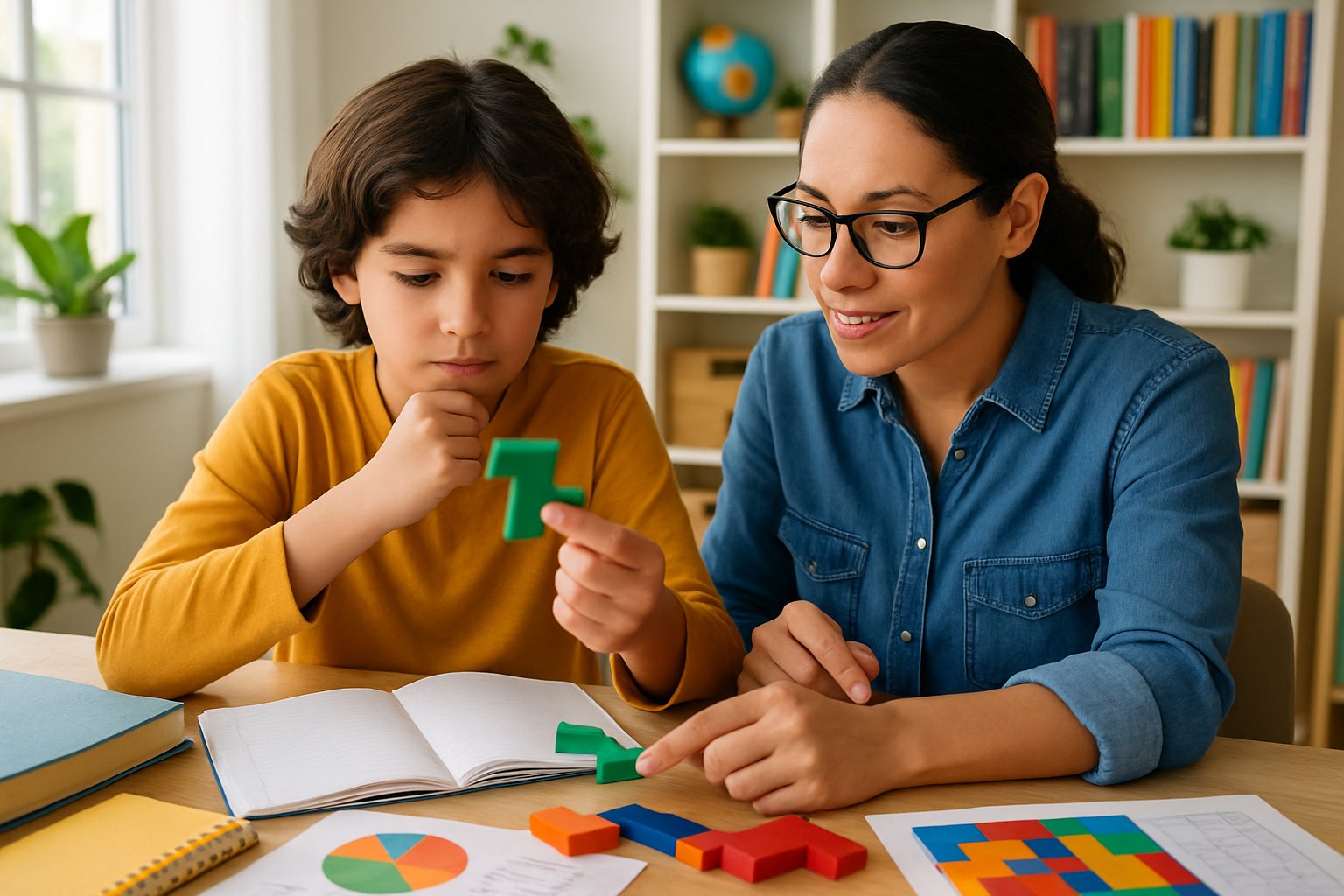
A parent and child working together on a puzzle at a table in a bright homeschooling space filled with books and educational materials.

Critical thinking involves specific skills that homeschoolers can develop through focused practice and guidance. These foundational abilities help students analyze information, ask better questions, and make thoughtful decisions in their learning journey.

Defining Critical Thinking Skills

Critical thinking is evaluating information, recognizing biases, making logical connections, and solving problems effectively. It goes beyond memorizing facts and encourages students to ask why and how.

Critical thinking skills include several key components. Students learn to question sources and examine evidence. They practice identifying patterns and making connections between different ideas.

Core skills include:

  • Analyzing information for accuracy
  • Identifying bias in sources
  • Drawing logical conclusions
  • Evaluating different perspectives
  • Solving problems step by step

These abilities work together to help homeschoolers become independent learners. They develop the confidence to challenge ideas respectfully and think through complex topics.

Why Critical Thinking Matters in Homeschooling

Homeschoolers have unique advantages for developing these skills. They enjoy personalized learning that can focus on their specific needs. The flexible environment allows for deeper exploration of topics.

Critical thinking ensures students don’t just absorb information but learn to question, analyze, and use it in the real world. This preparation helps them succeed in higher education and careers.

Parents can tailor lessons to their child’s learning style. They have time to pause and explore interesting questions that come up. This flexibility creates natural opportunities for critical thinking practice.

Students also learn to evaluate online information critically. This skill becomes essential as they research topics independently. They develop the ability to spot reliable sources and avoid misinformation.

Key Critical Thinking Abilities to Develop

Several specific abilities form the foundation of strong critical thinking. These skills can be practiced across all subject areas in homeschooling.

Essential abilities include:

Skill Description Practice Method
Questioning Asking meaningful questions about information Use open-ended questions during lessons
Analysis Breaking down complex ideas into parts Compare different viewpoints on topics
Evaluation Judging the quality of information or arguments Assess source credibility together
Synthesis Combining ideas to form new understanding Connect lessons across subjects

Problem-solving skills deserve special attention in homeschooling. Students need practice working through challenges independently. They benefit from seeing multiple approaches to the same problem.

Decision-making abilities also require regular practice. Homeschoolers can weigh options for their learning activities. They can participate in family decisions appropriate for their age level.

These abilities develop gradually with consistent practice and patient guidance from parents.

Building a Home Environment That Encourages Thinking

The physical and emotional atmosphere of a homeschool setting plays a big role in developing critical thinking skills. Parents can create spaces and routines that naturally spark curiosity, demonstrate thoughtful reasoning, and build regular habits of reflection into everyday learning.

Creating a Curious Learning Atmosphere

A supportive home environment starts with love and structure as foundations. Parents should set up learning spaces that invite exploration and questioning.

Physical Space Setup:

  • Display thought-provoking books at eye level
  • Create a dedicated area for experiments and hands-on activities
  • Post interesting maps, charts, and visual aids on walls
  • Keep art supplies and building materials easily accessible

The key is making materials visible and available. When children see interesting resources around them, they naturally want to explore and ask questions.

Encouraging Wonder:
Parents can encourage curiosity by responding positively to questions. Instead of quick answers, they should say things like “That’s a great question” or “Let’s find out together.”

Creating regular time for free exploration works well too. Children need unstructured moments to follow their interests and make discoveries on their own.

Modeling Critical Thinking at Home

Children learn best by watching how adults approach problems and make decisions. Teaching critical thinking skills at home requires parents to be intentional about showing their own thinking process.

Daily Thinking Examples:

  • Talk through grocery store decisions out loud
  • Explain how they evaluate news stories or social media posts
  • Show how they research before making purchases
  • Discuss different viewpoints on current events

Parents should verbalize their thought process regularly. When planning a family trip, they might say “I’m comparing these three options by looking at cost, travel time, and activities available.”

Problem-Solving Together:
When household problems arise, parents can include children in finding solutions. This might involve fixing a broken appliance, organizing a messy room, or planning a family budget.

The goal is showing that thinking through challenges is normal and valuable. Children see that adults don’t have all the answers right away but work through problems step by step.

Integrating Reflection and Analysis Into Daily Life

Regular reflection helps children process their learning and develop deeper thinking skills. Providing opportunities for reflection should become a natural part of the homeschool routine.

Daily Reflection Practices:

  • End each day by discussing what they learned
  • Keep learning journals for thoughts and questions
  • Review completed projects to identify what worked well
  • Talk about mistakes and what they taught

Simple Analysis Activities:

Activity Time Needed Skills Developed
Compare two book characters 10 minutes Analysis, evaluation
Discuss family decisions 5 minutes Reasoning, perspective
Review science experiments 15 minutes Cause and effect, inference

Parents can weave analysis into regular conversations. During meal prep, they might ask children to compare different cooking methods or explain why certain ingredients work well together.

Making Thinking Visible:
Families can create thinking maps or charts that show how they approached different problems. This helps children see patterns in good thinking and apply similar approaches to new situations.

The homeschooling environment offers unique chances to build these habits naturally throughout the day.

Practical Methods to Teach Critical Thinking at Home

Teaching critical thinking at home requires specific techniques that engage children’s natural curiosity. Parents can use questioning techniques that promote deeper understanding and help children analyze information before making decisions.

Using Open-Ended Questions

Open-ended questions cannot be answered with simple yes or no responses. They force children to think deeper and explain their reasoning.

Parents should ask questions like “What do you think would happen if…” or “How would you solve this problem?” These questions help children explore different possibilities.

Examples of effective open-ended questions:

  • What might happen if we changed this part of the experiment?
  • How do you think this story character feels and why?
  • What other ways could we approach this math problem?

The key is asking follow-up questions when children give their first answer. Parents can ask “Why do you think that?” or “Can you explain how you reached that conclusion?”

This technique works well during everyday activities. Children can think about cooking measurements, discuss book characters, or analyze current events through open-ended questioning.

Encouraging Children to Question Everything

Children naturally ask many questions, but parents can teach them to question information more deeply. This skill helps them become better thinkers and learners.

Parents should model questioning behavior by wondering aloud about things they encounter. They can say things like “I wonder why this works this way” or “What evidence supports this claim?”

Ways to encourage questioning:

  • Ask children what questions they have about new topics
  • Teach them to look for evidence before accepting information
  • Show them how to research answers to their questions
  • Praise them for asking thoughtful questions

When children read books or watch videos, parents can encourage them to ask questions about the content. They should question the author’s purpose, the accuracy of information, and whether other viewpoints exist.

This approach helps children become independent thinkers who don’t accept everything they hear without thinking about it first.

Promoting Decision-Making Skills

Decision-making teaches children to weigh options and consider consequences. Parents can give children age-appropriate choices throughout their day.

Young children can choose between two activities or decide how to organize their study space. Older children can plan their daily schedule or choose research topics for projects.

Steps to teach decision-making:

  1. Present the problem clearly
  2. List possible solutions together
  3. Discuss pros and cons of each option
  4. Let the child make the final choice
  5. Review the outcome later

Parents should avoid jumping in to fix poor decisions immediately. Children learn better when they experience natural consequences of their choices.

During family discussions, parents can ask children what they would do in different situations. This practice helps them think through problems before they actually face them.

The goal is helping children become confident decision-makers who can analyze situations and choose the best course of action.

Engaging Activities and Resources to Strengthen Skills

Hands-on activities like logic puzzles and strategy games build reasoning abilities while real-world challenges help students apply critical thinking to everyday situations. Digital platforms and educational tools provide structured learning paths that complement traditional homeschool methods.

Incorporating Logic Puzzles and Games

Logic puzzles form the backbone of critical thinking development. Students learn to analyze patterns, make connections, and solve problems step by step.

Simple puzzles work best for beginners. Young learners can start with sorting objects by color, size, or shape. This builds basic reasoning skills.

Sudoku puzzles adapt to any age. Simple 4×4 grids work for younger children. Older students can tackle standard 9×9 puzzles.

Strategy board games develop planning skills. Chess teaches students to think several moves ahead. Checkers offers a simpler introduction to strategic thinking.

Here are effective puzzle types by age:

Age Range Best Puzzles Skills Developed
5-8 years Pattern games, simple mazes Basic logic, sequencing
9-12 years Sudoku, word puzzles Problem solving, deduction
13+ years Chess, complex riddles Strategic planning, analysis

Memory card games strengthen attention to detail. Students must remember card locations and develop strategies for finding matches.

Exploring Real-World Problem Solving

Real-world applications make critical thinking meaningful. Students see how reasoning skills apply to daily life situations.

“What if” questions spark deep thinking. Parents can ask questions like “What if animals could talk?” or “What if there were no traffic rules?” These open-ended scenarios encourage curiosity.

Detective games build evidence analysis skills. Students can solve mysteries using clues like footprints or handwriting samples. They learn to draw logical conclusions from available information.

Current events discussions develop evaluation skills. Families can analyze news stories together. Students learn to identify bias and consider multiple viewpoints.

Community problem-solving projects connect learning to action. Students might research local issues like traffic safety or environmental concerns. They develop solutions and present findings.

Scavenger hunts with riddles combine fun with reasoning. Instead of listing items directly, parents provide clues that require interpretation and inference.

Utilizing Educational Tools and Platforms

Digital resources provide structured critical thinking instruction. These platforms offer interactive lessons and progress tracking.

Khan Academy offers free critical thinking courses. The platform includes logic exercises and problem-solving activities. Students work at their own pace through interactive lessons.

Online puzzle websites provide endless practice. Sites offer daily brain teasers and logic challenges. Students can choose difficulty levels that match their abilities.

Educational apps make learning portable. Many apps focus specifically on logic and reasoning skills. Students can practice during travel or free time.

Video tutorials explain complex concepts clearly. Visual learners benefit from step-by-step problem-solving demonstrations. Parents can find tutorials for specific puzzle types or thinking strategies.

Virtual reality programs create immersive problem-solving experiences. Students can explore historical events or scientific concepts firsthand. They make decisions and see consequences in realistic settings.

Filed Under: Uncategorized

  • « Go to Previous Page
  • Page 1
  • Interim pages omitted …
  • Page 8
  • Page 9
  • Page 10
  • Page 11
  • Page 12
  • Interim pages omitted …
  • Page 17
  • Go to Next Page »

Primary Sidebar

Free Photo Lessons for Kids

Photo Lessons for kids

Categories

  • Photography
  • Preschool
  • Reading
  • Uncategorized

📚 Printable Homeschool Reading Log: A Simple Way to Build a Lifelong Love of Reading

If there’s one thing every homeschool parent wants to nurture, it’s a genuine love of reading. Books … [Read More...] about 📚 Printable Homeschool Reading Log: A Simple Way to Build a Lifelong Love of Reading

A cozy reading nook with DIY wooden ladders holding open books next to a comfortable armchair and plants.

DIY Blend Ladders: Simple Materials, Big Reading Results!

DIY Blend Ladders Basics DIY blend ladders help children connect letters and sounds in a hands-on … [Read More...] about DIY Blend Ladders: Simple Materials, Big Reading Results!

A person working at a desk with a laptop, notebooks, and educational materials, focusing on notes and charts related to creating reading level guides.

Step-by-Step Guide: How to Create Custom Blend Ladders for Any Reading Level

Essential Concepts for Custom Blend Ladders Creating custom blend ladders requires understanding … [Read More...] about Step-by-Step Guide: How to Create Custom Blend Ladders for Any Reading Level

Young children working together with letter tiles on blend ladders in a bright classroom, guided by a teacher.

10 Fun Ways to Teach Phonics Using Blend Ladders: Creative Activities Kids Love

Essential Phonics Skills with Blend Ladders Blend ladders help children connect sounds to letters, … [Read More...] about 10 Fun Ways to Teach Phonics Using Blend Ladders: Creative Activities Kids Love

A parent and child doing creative activities together in a cozy, sunlit room filled with natural materials, art supplies, and plants.

What is Waldorf Homeschooling? Nurturing Creativity and Imagination at Home

Key Principles of Waldorf Homeschooling Waldorf homeschooling centers on nurturing the whole … [Read More...] about What is Waldorf Homeschooling? Nurturing Creativity and Imagination at Home

A child and an adult in a homeschool room reading together with a set of colorful books arranged like a ladder on a table.

Why Every Homeschool Needs Blend Ladders: Build Confident Readers Fast

What Are Blend Ladders and Why Are They Essential? Blend ladders help children connect sounds and … [Read More...] about Why Every Homeschool Needs Blend Ladders: Build Confident Readers Fast

Children climbing a colorful ladder made of letter blends, progressing from individual sounds at the bottom to words and sentences at the top, symbolizing early literacy development.

From Sounds to Sentences: How Blend Ladders Boost Early Literacy Skills Fast

How Blend Ladders Accelerate Early Literacy Skills Blend ladders help children connect spoken and … [Read More...] about From Sounds to Sentences: How Blend Ladders Boost Early Literacy Skills Fast

A family learning together at a table in a bright, organized home setting with books and educational materials.

7 Reasons Homeschooling Might Be the Best Decision for Your Family

The Top Reasons to Choose Homeschooling Families often choose homeschooling because it offers … [Read More...] about 7 Reasons Homeschooling Might Be the Best Decision for Your Family

A parent and diverse children learning together in a bright room filled with books and educational materials, with a sunrise visible through a window symbolizing growth and future potential.

10 Ways Homeschooling Can Change Your Child’s Future Forever: Key Benefits & Lasting Impact

Personalized Education That Empowers Lifelong Success Homeschooling allows families to design … [Read More...] about 10 Ways Homeschooling Can Change Your Child’s Future Forever: Key Benefits & Lasting Impact

A diverse group of children and a parent engaged in various life skills activities like cooking, budgeting, gardening, and DIY projects in a bright, cozy home setting.

9 Life Lessons Only Homeschoolers Learn — and Why They Matter Most

Essential Life Skills Homeschoolers Master Homeschoolers often gain strong independence through … [Read More...] about 9 Life Lessons Only Homeschoolers Learn — and Why They Matter Most