• Skip to primary navigation
  • Skip to main content
  • Skip to primary sidebar

Clever Homeschool

Fun courses based on your child's interests!

  • Home
  • Free Photo Lessons for Kids
  • “Get That Shot!” photo tags

Valerie

10 Ways Homeschooling Can Change Your Child’s Future Forever: Key Benefits & Lasting Impact

November 4, 2025 by Valerie Leave a Comment

Personalized Education That Empowers Lifelong Success

A parent and diverse children learning together in a bright room filled with books and educational materials, with a sunrise visible through a window symbolizing growth and future potential.

Homeschooling allows families to design learning experiences that match each child’s pace, interests, and abilities. This approach encourages confidence, deeper understanding, and lasting motivation for academic success and personal growth.

Tailoring Curriculum to Individual Strengths

A tailored education helps students focus on subjects that match their interests and abilities. Homeschooling parents can design a custom homeschool curriculum that connects lessons to real-world experiences and goals.

For example, a child who loves science might spend extra time on experiments, while another who enjoys writing can focus on storytelling and analysis. This flexibility supports stronger engagement and better comprehension.

According to Schoolio’s discussion on homeschooling, parents who customize coursework often see improved motivation and performance. Personalized learning also helps identify areas where students need extra support, allowing for immediate adjustments.

Benefit Description
Focused learning Students spend more time on subjects they enjoy
Targeted support Parents can fill skill gaps quickly
Real-world relevance Lessons connect to personal goals and interests

Embracing Unique Learning Styles

Every child learns differently. Some absorb information best through visuals, others through discussion or hands-on practice. Homeschooling gives families the freedom to adapt teaching methods to each child’s learning style.

This adaptability helps children grasp complex ideas more easily and stay engaged. For instance, a visual learner might use charts and diagrams, while a kinesthetic learner might build models or conduct experiments.

Educational Customization in the 21st Century notes that personalized learning fosters curiosity and a lasting love of learning. By matching instruction to how a child learns best, homeschooling nurtures confidence and long-term academic growth.

Parents often use a mix of reading, discussion, and projects to balance different learning needs within the same home education setting.

Flexible Scheduling for Optimal Growth

A flexible schedule is one of homeschooling’s most practical benefits. Students can learn when they are most alert and productive, not just when a traditional school day dictates.

This flexibility allows more time for rest, family activities, and community involvement. It also supports academic flexibility, letting students progress faster in some subjects while taking extra time in others.

The benefits of homeschooling include the ability to balance academics with life skills and family bonding. With control over their schedule, students can explore hobbies, volunteer, or pursue early career interests.

Such balance helps children develop time management and independence—skills that prepare them for the future of education and lifelong success.

Building Essential Life Skills and Strong Family Bonds

A parent and child working together on a science experiment at a table in a bright room, with another child playing a musical instrument nearby and a pet sitting close by.

Homeschooling helps children gain practical life skills, emotional awareness, and stronger family bonds. It creates an environment where learning extends beyond academics, shaping confident and capable individuals who value connection and well-being.

Fostering Independence and Self-Discipline

Homeschooled children often learn to manage their time and take ownership of their studies. This self-directed learning approach encourages them to plan lessons, set goals, and evaluate progress. Over time, they build independence and self-discipline, traits that prepare them for adulthood.

Parents can guide children by offering choices in subjects or projects. For example, letting a child design a science experiment or research a topic of interest increases accountability and motivation.

A helpful strategy is using a simple weekly planner:

Task Responsibility Deadline
Reading assignment Student Friday
Science project Parent and student Next Monday
Daily reflection Student Each evening

By practicing these routines, children learn consistency and perseverance—qualities that support lifelong success.

Strengthening Family Relationships

Homeschooling families spend more time together, which naturally strengthens family bonds. Shared learning experiences—like a family book club or group science project—build trust and teamwork. Activities that involve collaboration help children see their parents as mentors rather than just authority figures.

Intentional family traditions, such as weekly game nights or morning walks, also nurture connection. According to 10 Homeschool Activities to Build Family Connections, simple shared experiences can foster joy and unity.

Open communication plays a key role. When parents listen to children’s ideas and frustrations, they model empathy and respect. This supportive environment helps children feel secure and valued within the homeschooling community.

Prioritizing Mental Health and Well-Being

Homeschooling allows flexibility to support each child’s emotional and mental health. Parents can adjust schedules to include breaks, outdoor time, or sensory activities that reduce stress and improve focus.

In Powerful Connections: Nurturing Life Skills in Homeschooling, experts highlight how physical activities and calm routines help children regulate emotions. This balance encourages a healthy relationship between learning and well-being.

Families can create a “calm corner” at home with soft lighting, books, and quiet activities. Such spaces teach children to recognize their emotions and practice self-regulation—skills that benefit them far beyond their school years.

Expanding Real-World Learning and Social Opportunities

Children of different backgrounds learning and socializing together outdoors and indoors, exploring nature, working on projects, and interacting with others.

Homeschooling gives children the flexibility to explore real-world experiences that build both academic knowledge and social confidence. Through direct engagement with their communities and environments, students can apply what they learn, develop teamwork, and gain a deeper understanding of how the world works.

Hands-On Learning Through Field Trips

Field trips turn lessons into practical experiences. Visiting museums, farms, or science centers helps children connect classroom topics to real-life examples. These outings make subjects like history, biology, and art more meaningful because students see and touch what they study.

Parents can plan trips that match their child’s interests or current lessons. For example, a visit to a local nature preserve can support a biology unit on ecosystems. According to Inclusive Teach, everyday activities can align with curriculum goals and create rich learning experiences.

Field trips also help children interact with others. Meeting guides, peers, and professionals encourages communication and curiosity. These experiences promote independent thinking and make learning active, not passive.

Example Field Trip Ideas Learning Focus
Historical sites Social studies, history
Art museums Visual arts, creativity
Science centers STEM, experimentation
Local farms Agriculture, sustainability

Engaging in Extracurricular Activities and Community Service

Extracurricular activities help homeschooled children build friendships and teamwork skills. They can join local sports leagues, music groups, or art classes. These settings allow them to collaborate and practice discipline while pursuing personal interests.

Community service adds another layer of growth. Volunteering at shelters or environmental projects teaches empathy and responsibility. The Kids on the Yard article notes that managing group tasks and resolving conflicts during shared projects builds problem-solving and communication skills.

These experiences also connect homeschoolers with people of different ages and backgrounds. Participating in community events or local clubs helps them feel part of a larger group, supporting both social and emotional development.

Encouraging Physical Activity and Experiential Learning

Physical activity supports both health and learning. Homeschooling families can include sports, hiking, or dance in their schedules. These activities improve concentration and reduce stress while teaching teamwork and persistence.

Experiential learning goes beyond textbooks. It includes cooking, gardening, or building simple projects that apply academic lessons in real situations. The Compass Classroom article explains that homeschooling fosters real-world connections that extend beyond traditional classrooms.

By combining movement and hands-on experiences, children stay active and engaged. They learn how effort leads to results, building confidence and practical understanding that supports lifelong learning.


Filed Under: Uncategorized

9 Life Lessons Only Homeschoolers Learn — and Why They Matter Most

November 4, 2025 by Valerie Leave a Comment

Essential Life Skills Homeschoolers Master

A diverse group of children and a parent engaged in various life skills activities like cooking, budgeting, gardening, and DIY projects in a bright, cozy home setting.

Homeschoolers often gain strong independence through hands-on lessons that connect academics with real-world tasks. They learn to manage time, handle money, prepare meals, and care for their surroundings with purpose and confidence.

Time Management and Organization

Homeschooling naturally builds time management and organization skills because students help structure their own days. They learn to plan lessons, track assignments, and balance study with daily responsibilities.

Many families use visual schedules, planners, or digital tools to teach accountability and focus. Students often create daily routines that include chores, study blocks, and breaks. This structure helps them develop discipline and flexibility.

A simple chart like the one below helps students stay organized:

Task Time Priority
Math Practice 9:00–9:45 a.m. High
Gardening 10:00–10:30 a.m. Medium
Reading 1:00–2:00 p.m. High

These habits prepare them for college, work, and personal goals where planning and follow-through matter most.

Financial Literacy and Money Management

Homeschoolers often learn financial literacy early by managing allowances, saving for purchases, or helping with family budgets. Parents integrate money management into lessons about math, economics, and responsibility.

Through activities like budgeting for a project or tracking spending, students see how saving and investing work in real life. They might compare prices during shopping trips or plan a small business project to understand profit and cost.

The Homeschool Toolbox notes that teaching kids about spending and saving gives them a strong foundation for adulthood. These practical lessons make money less abstract and more manageable.

By high school, many homeschoolers create mock budgets, calculate taxes, or explore simple investing concepts. These experiences encourage long-term thinking and self-reliance.

Cooking, Meal Planning, and Home Maintenance

Cooking and home maintenance often become part of the homeschool curriculum. Children learn to follow recipes, plan balanced meals, and understand nutrition. They also practice meal planning and grocery budgeting, which strengthen both math and decision-making skills.

Younger students might wash produce or set the table. Older ones learn to cook full meals, clean up, and manage kitchen safety. The guide on life skills every homeschooler should master highlights how these tasks build confidence and independence.

Home maintenance lessons often include first aid, cleaning routines, and small repairs. These practical life skills teach problem-solving and responsibility while showing that caring for a home is part of everyday learning.

Gardening, Stewardship, and Outdoor Learning

Many homeschoolers use gardening and outdoor projects to connect biology, geography, and environmental care. Planting and maintaining a garden teaches patience, observation, and stewardship of natural resources.

Students learn about soil health, composting, and sustainable practices. Gardening also supports lessons in science and problem-solving, as they observe growth cycles and weather patterns.

Outdoor learning goes beyond gardening. Families might study local ecosystems, track wildlife, or map hiking trails. The Homeschool Mastery Academy explains that these experiences help children understand how daily choices affect their environment.

Through these activities, homeschoolers gain respect for nature and practical knowledge about food sources and sustainability.

Building Character and Real-World Confidence

A group of children and teenagers engaged in various activities like presenting a project, reading, volunteering, and running a lemonade stand in a home and community setting.

Homeschooled students often gain confidence by solving real problems, managing time independently, and practicing empathy in daily interactions. They develop traits like resilience, initiative, and responsibility that prepare them for both academic and personal success.

Entrepreneurship and Initiative

Homeschooling encourages children to take ownership of their learning, which naturally builds entrepreneurial thinking. When they design projects, manage schedules, or start small ventures like craft sales or tutoring, they learn how effort connects to results.

Parents often support this independence by guiding goal setting and reflection. Through these experiences, students practice problem-solving and decision-making that mirror real-world challenges.

Some families use structured programs, such as the American Emergent Curriculum, which integrates leadership and creative thinking into core subjects. This approach helps children see how ideas can become action, nurturing initiative and self-confidence that extend beyond academics.

Compassion, Resilience, and Responsibility

Homeschooling provides space for children to grow emotionally as well as intellectually. They often interact with people of different ages, which builds compassion and patience.

When lessons don’t go as planned, students learn resilience by adjusting and trying again. Parents model accountability and empathy, showing that mistakes are part of learning.

Character-focused programs like those described in Character Building Curriculum for Homeschoolers emphasize virtues such as honesty, gratitude, and perseverance. These values help children understand responsibility not as a rule to follow but as a choice that shapes trust and relationships.

Trait How It Develops Real-Life Benefit
Compassion Working with siblings or community members Builds empathy and teamwork
Resilience Facing academic or social challenges Encourages persistence
Responsibility Managing personal goals and chores Strengthens integrity

Adaptability Through Hands-On Learning

Homeschoolers often learn through hands-on activities that connect lessons to real life. Cooking, budgeting, or building projects teach practical life skills while reinforcing academic concepts.

This approach fosters adaptability, as students must think critically and adjust when outcomes differ from expectations. They see learning as a process of testing, revising, and improving.

Programs that emphasize life skills, such as Incorporating Life Skills into Your Homeschool Curriculum, show how daily tasks can teach independence and confidence. By practicing flexibility and problem-solving, homeschoolers become comfortable navigating new situations with calm and competence.

Filed Under: Uncategorized

Top 10 Ways to Turn Everyday Life Into a Homeschool Lesson! Practical Ideas for Real-World Learning

November 3, 2025 by Valerie Leave a Comment

10 Everyday Activities That Double as Homeschool Lessons

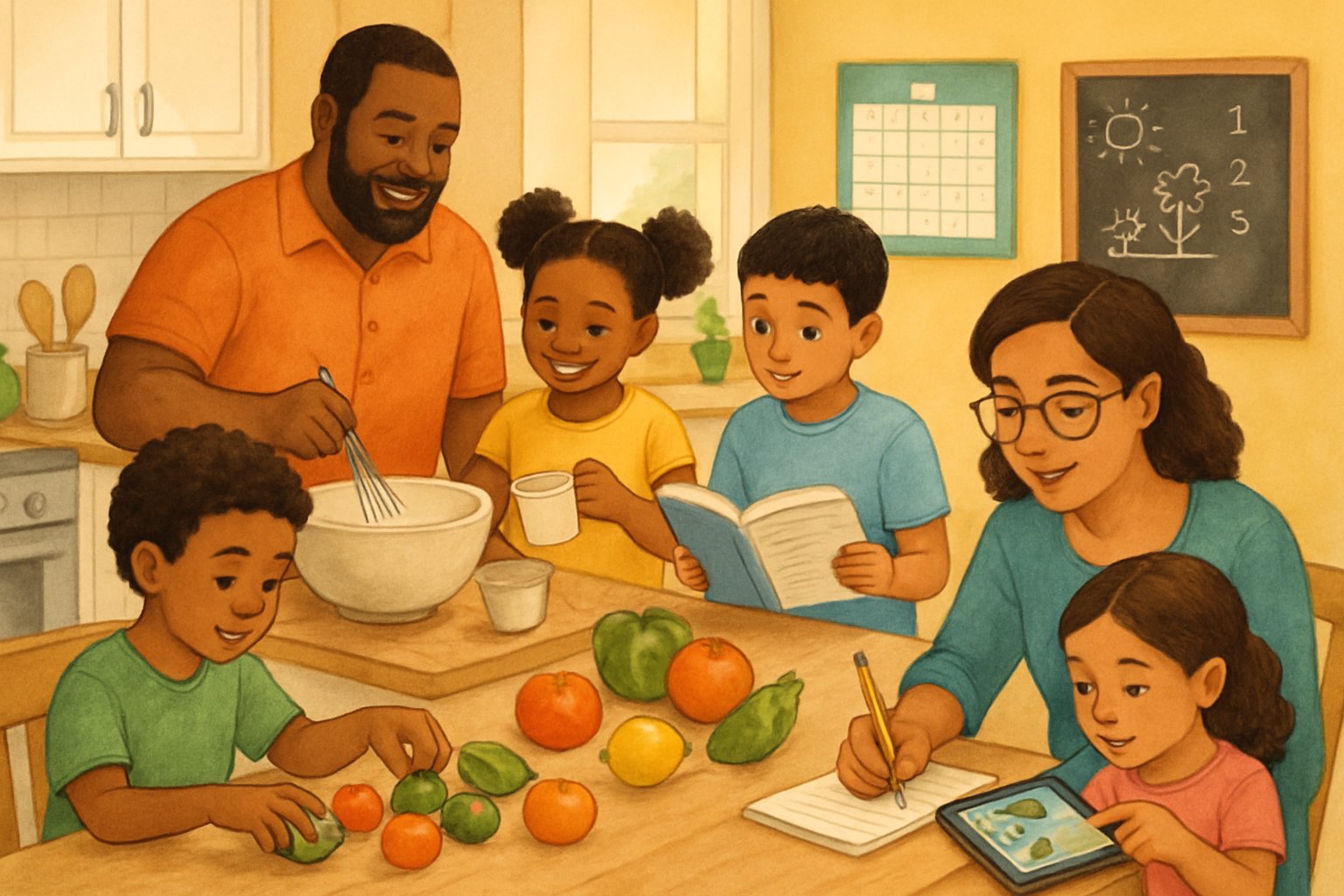
A family cooking and learning together in a bright kitchen, with children measuring ingredients, sorting fruits, and using a tablet while a parent assists.

Children learn best when they connect lessons to real life. Simple daily routines—like cooking, cleaning, or managing money—can teach math, science, reading, and problem-solving in natural ways that fit easily into a homeschool day.

Cooking and Kitchen Math

Cooking turns the kitchen into a hands-on classroom. Children practice measuring, estimating, and fractions while following recipes. Doubling or halving a recipe builds real-world math confidence.

Parents can ask kids to convert measurements or compare ingredient weights. This helps them apply math to daily life.

Cooking also introduces basic chemistry, such as how heat changes food. Families can explore why bread rises or butter melts, similar to ideas shared in Everyday Moments That Double as Science Lessons.

A simple chart can help track learning:

Skill Example Activity
Fractions Halve a cookie recipe
Estimation Guess ingredient amounts
Science Observe boiling and melting

Sorting and Organizing Chores

Sorting chores teach classification, organization, and responsibility. Children can group toys by type, match socks, or arrange books by size or color.

These tasks build early math and logic skills. Sorting also helps children notice patterns and relationships, key foundations for problem-solving.

Parents can make it fun by timing how fast items are sorted or by turning it into a color-matching game. This approach encourages independence and order while reinforcing homeschool lessons on categorization and sequencing.

Grocery Shopping for Real-World Math

A trip to the grocery store becomes a math and budgeting lesson. Children can compare prices, estimate totals, and calculate discounts.

They learn to read labels, weigh produce, and decide between brands based on cost per unit. This connects math to everyday decision-making.

Families can use a notepad or calculator to track spending and discuss needs versus wants. These activities mirror practical learning ideas found in Creative Ways to Get Homeschool Hours from Everyday Activities.

It’s also a good time to talk about financial literacy, helping kids understand how budgets work in real life.

Storytelling and Language Development

Storytelling builds strong language skills and encourages creativity. Children can retell favorite stories, create new ones, or act out short scenes.

This practice strengthens vocabulary and sentence structure. It also supports reading comprehension and public speaking.

Parents can record stories or write them down together to build writing confidence. Using prompts or family memories keeps storytelling fun and personal.

These activities make language learning natural and memorable, a key part of effective homeschooling.

Outdoor Nature Exploration

Nature walks and gardening connect children to science and observation. They can study plants, weather, and animal behavior, turning curiosity into learning.

Families might collect leaves, track the temperature, or record bird sightings. These experiences help children understand ecosystems and environmental cycles.

Outdoor exploration also builds mindfulness and appreciation for the natural world. The approach aligns with the hands-on learning ideas described in 10 Everyday Moments That Double as Science Lessons.

Simple tools like notebooks or magnifying glasses make this activity both fun and educational.

Budgeting and Financial Literacy

Budgeting teaches children how to manage money responsibly. They can plan spending for a family outing or track allowance savings.

Using a simple spreadsheet or notebook helps them visualize income and expenses. Parents can explain the difference between fixed and flexible costs.

These lessons build financial literacy and decision-making skills. Children begin to see how math applies to everyday life, a valuable homeschool lesson in responsibility and independence.

Learning Time with Clocks and Schedules

Time management is a core life skill. Teaching children to read analog and digital clocks strengthens number recognition and sequencing.

Creating a daily homeschool schedule helps them understand how time passes and how to plan tasks. Parents can use timers to make transitions smoother.

Children can also estimate how long chores or lessons take, comparing guesses to real results. This builds awareness of time and improves organization.

Laundry and Sorting Activities

Laundry offers a natural way to teach sorting, counting, and responsibility. Children can group clothes by color, fabric type, or family member.

They can also learn about temperature settings, fabric care, and how detergents work—practical science in action.

Parents might ask questions like “Why do we use warm water for towels?” or “What happens if we mix colors?” These conversations turn chores into meaningful homeschool lessons.

This mirrors the hands-on learning approach described in Everyday Moments That Double as Science Lessons.

Role-Playing and Decision-Making

Role-playing helps children practice social and reasoning skills. They can act out real-life situations, such as visiting a store or solving a disagreement.

These activities build empathy and communication. They also teach problem-solving and decision-making in a safe environment.

Parents can guide discussions about choices and consequences. This approach strengthens both emotional intelligence and language development—important parts of homeschooling that go beyond textbooks.

Bedtime Storytelling for Language Skills

Bedtime stories provide a calm time for reading, listening, and imagination. Parents and children can take turns reading aloud or predicting what happens next.

This habit supports literacy, comprehension, and memory. It also strengthens emotional bonds and creates a positive end to the homeschool day.

Encouraging children to retell the story or describe characters helps build confidence in language use. Storytime becomes both relaxing and educational, reinforcing the joy of learning through daily life.

Building Critical Life Skills Through Daily Routines

Daily routines give children real chances to practice responsibility, make choices, and think through problems. Simple activities like chores, planning, and reflection help them strengthen problem-solving, critical thinking, and emotional intelligence in natural ways.

Problem-Solving with Household Tasks

Everyday chores teach children how to analyze problems and find workable solutions. When a child helps cook dinner or fix a small household issue, they learn to plan steps, test ideas, and adjust when things don’t go as expected.

Parents can guide this process by asking questions such as, “What should we do first?” or “How could we make this easier next time?” These prompts encourage logical thinking and independence.

Assigning age-appropriate tasks—like sorting laundry or organizing a shelf—builds both confidence and responsibility. According to Learning Life Skills at Home, household routines help children develop self-reliance and problem-solving habits that carry into school and friendships.

Task Type Skill Developed Example
Cooking Sequencing and planning Following a recipe
Cleaning Organization Deciding what to keep or donate
Repairs Resourcefulness Finding tools and steps to fix a toy

Fostering Critical Thinking in Everyday Decisions

Critical thinking grows when children face daily choices and reflect on outcomes. They might compare prices while shopping, decide how to spend free time, or plan the best route for a walk.

Adults can model this by talking through their reasoning aloud: “I chose this because it saves time and money.” This shows how to weigh pros and cons before acting.

Encouraging kids to explain their choices builds self-awareness and decision-making skills. As noted by Essential Strategies for Developing Critical Thinking in Everyday Life, regular reflection helps children evaluate information more carefully and make thoughtful judgments.

Organizing to Strengthen Executive Function

Organization supports strong executive function—the ability to plan, focus, and complete tasks. Setting up visual schedules, checklists, or color-coded bins helps children manage time and stay on track.

Breaking big tasks into smaller steps prevents frustration and teaches persistence. For instance, cleaning a bedroom can be divided into sorting clothes, making the bed, and arranging toys.

Parents can review progress together and celebrate small wins. The article 15 Ways to Improve Daily Living Skills in 2025 highlights how structured routines and digital tools can improve organization and self-management in daily life.

Growing Emotional Intelligence at Home

Emotional intelligence develops when families talk openly about feelings and reactions. During mealtime or bedtime, parents can ask, “What made you happy today?” or “What was hard for you?”

These short conversations teach empathy and emotional awareness. Children learn to recognize their own emotions and understand others’ perspectives.

Helping with family responsibilities, volunteering, or caring for pets also builds compassion. The guide Tips for Building Strong Life Skills in Kids Through Everyday Activities explains that daily routines can nurture empathy, resilience, and social understanding—key parts of emotional intelligence.

Filed Under: Uncategorized

7 Homeschool Morning Routines That Actually Work—Stress-Free Strategies

November 3, 2025 by Valerie Leave a Comment

7 Homeschool Morning Routines That Actually Work

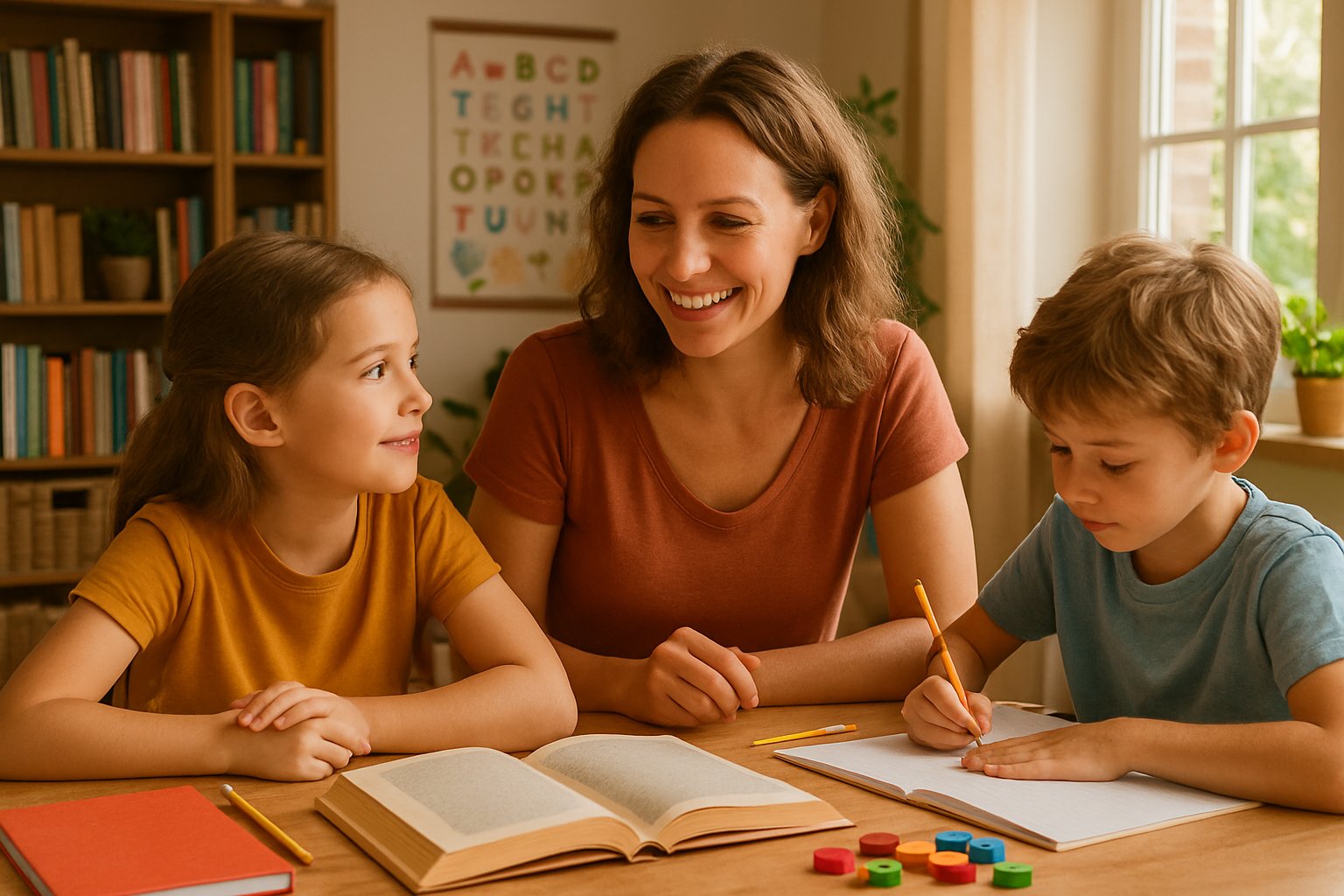
A parent and two children engaged in a morning homeschool routine at a wooden table with books and learning materials in a bright room with natural sunlight.

Families who follow a consistent homeschool morning routine often see calmer starts, fewer delays, and better focus. Setting up a plan that includes preparation, structure, and flexibility helps children ease into learning while giving parents a smoother day.

Start the Night Before for a Smoother Morning

A peaceful morning often begins the evening before. Parents can prepare lesson materials, print worksheets, and set out supplies for each child. This reduces stress and eliminates the rush to find books or pencils after breakfast.

Some families use checklists or clipboards to organize daily tasks. Preparing the next day’s lessons the night before, as suggested in this step-by-step guide, helps everyone know what to expect.

It also helps to set an evening alarm as a reminder to start winding down. A regular bedtime makes it easier to wake up rested and ready to teach or learn.

Wake Up With Purpose—No Coffee Needed

A successful homeschool morning starts with intention. Instead of relying on caffeine, families can use natural motivators like fresh air, stretching, or upbeat music.

Parents who wake up a few minutes before the children can get dressed, open curtains, and prepare breakfast quietly. This small head start sets a calm tone for the day.

Many find it helpful to start with something enjoyable—like reading, journaling, or a short walk. As shared by PlanItHomeschool, doing something you look forward to makes it easier to get out of bed and start the day with energy.

Morning Chores to Kickstart the Day

Simple chores give structure and teach responsibility. Tasks like making beds, feeding pets, or loading the dishwasher help children learn routine and teamwork.

Parents can turn chores into a quick “morning challenge” by setting a timer or playing music. This keeps the mood light and encourages kids to move quickly.

A short checklist can make expectations clear:

Task Time Limit
Make bed 5 minutes
Get dressed 10 minutes
Breakfast cleanup 10 minutes

When chores are done early, the transition into lessons feels smoother and more focused.

Incorporate Devotional or Quiet Time

Quiet time helps children center their thoughts before learning. Some families read a short devotional, while others journal or listen to calming music.

This moment of stillness can include prayer, reflection, or gratitude. According to Clever Homeschool, this practice helps set a positive tone and reduces stress.

Even five minutes of silence or reading can make a difference. It gives everyone a mental reset before diving into subjects that require focus, like math or writing.

Independent Work and Learning Blocks

Independent work builds confidence and allows parents to focus on one child at a time. Tasks like handwriting, reading, or review worksheets are ideal for this part of the morning.

Parents can prepare checklists the night before so children know exactly what to do. This helps them stay on track without constant reminders.

Many families begin their homeschool day with independent work, as noted by Simply Learning Together. It’s a gentle way to start learning while everyone settles into the day.

Flexible Science and Math Activities

Science and math lessons can be both structured and flexible. Short, hands-on activities keep students engaged and curious.

Families might use kitchen experiments, math games, or nature walks to make learning active. For example:

  • Science: Mix baking soda and vinegar to explore reactions.
  • Math: Use measuring cups for fractions during cooking.

Keeping lessons short helps maintain focus. If a topic sparks interest, parents can extend it into a project later in the week. A flexible plan allows deeper learning without feeling rushed.

Wrap Up and Transition to the Rest of the Day

Ending the morning with a clear wrap-up helps signal that school time is shifting. Families can review what they learned, tidy up materials, and talk about what’s next.

A short reflection—like naming one thing each child enjoyed—builds a sense of accomplishment.

Some families plan lunch or outdoor play right after lessons. This smooth transition keeps the day moving forward and gives everyone a mental break before afternoon activities or household tasks.

Tips for Creating a Consistent Homeschool Morning

A parent and two children engaged in a calm homeschool morning routine at a wooden table filled with books and school supplies in a bright, organized room.

A strong homeschool morning starts with structure, realistic planning, and the right motivation. Parents who balance flexibility with consistency often find their mornings calmer and more productive.

Routine vs. Schedule: What Really Works for Homeschool Moms

Many homeschool moms wonder whether they need a strict schedule or a flexible routine. A routine focuses on the order of activities, while a schedule assigns exact times.

Families who prefer less pressure often start with a routine. It allows children to move naturally from breakfast to lessons without watching the clock. This approach helps reduce stress and keeps learning enjoyable.

When consistency is the goal, a loose schedule can still help. Setting time blocks for reading, math, and outdoor play provides structure without rigidity. According to PlanItHomeschool, having a clear pattern helps kids know what to expect each day, making transitions smoother.

Approach Focus Best For
Routine Order of tasks Families who value flexibility
Schedule Specific times Families who need structure

Setting Up a Practical Morning Schedule

A practical morning schedule supports both parents and kids. It works best when it fits the family’s natural rhythm instead of copying a traditional school day.

Start with three main blocks: prep time, learning time, and break time. Prep time may include breakfast and simple chores. Learning time should begin with subjects that need the most focus, like math or writing. Break time allows movement and resets attention.

Homeschool moms can use visual charts or whiteboards to make the plan clear. A consistent morning routine helps children stay on track and reduces repeated reminders. Keeping supplies ready in one place also saves time and prevents delays.

Motivation and Tools for Sticking With Your Routine

Even the best homeschool schedule only works if families stick to it. Motivation often comes from small wins and visible progress.

Using checklists or planners helps track completed tasks. Kids enjoy marking off finished lessons, and parents can see where adjustments are needed. Some families use simple rewards, like extra outdoor time, to keep motivation high.

Digital tools, such as timer apps or printable charts, can make routines easier to follow. As shared by Clever Homeschool, predictable habits lower stress for both parents and children, making mornings smoother and more focused.

Filed Under: Uncategorized

10 Ways to Keep Your Sanity While Homeschooling Multiple Kids: Practical Solutions

November 3, 2025 by Valerie Leave a Comment

Essential Strategies for Homeschooling Multiple Kids

A parent helping multiple children with homeschooling activities at a table in a bright room.

Families who homeschool multiple kids often find success when they focus on structure, flexibility, and teamwork. Using shared lessons, one-on-one time, and independent learning helps keep each child engaged and reduces stress for parents.

Prioritizing the Core Subjects

When homeschooling multiple ages, parents should start each day with core subjects like reading, writing, and math. These areas build essential skills and give structure to the day. Once these are complete, they can move on to other lessons or activities.

A simple schedule helps manage time. For example:

Time Subject Focus
9:00–9:45 Reading Family read-aloud or individual books
10:00–10:45 Math Worksheets or online lessons
11:00–11:30 Writing Journals or creative writing

Keeping lessons short helps children stay focused. As recommended by My Little Poppies, short sessions and frequent breaks maintain energy and attention across different age levels.

Combining Subjects for Group Learning

Teaching some subjects together saves time and builds connection among siblings. Group lessons work well for history, science, and art. Parents can choose a shared topic—like plants or ancient Egypt—and then tailor assignments by age.

Younger children might draw or label pictures, while older ones write reports or research projects. This approach encourages teamwork and keeps everyone learning the same theme at their own level.

Families can also use group reading or storytelling. According to Triad Moms on Main, reading aloud while kids do quiet activities such as drawing or building helps them listen and learn together without chaos.

Structuring One-on-One Time

Each child benefits from personal attention. Setting aside short one-on-one sessions allows parents to focus on individual needs, especially in reading and math. Even 15–20 minutes per child can make a difference.

During this time, other kids can work independently or use a “busy box” filled with quiet toys or learning games. This idea, shared by Triad Moms on Main, keeps younger children occupied while older ones receive focused instruction.

Parents can rotate one-on-one time daily or weekly based on who needs extra help. Keeping a simple checklist of goals for each child ensures no subject or skill gets overlooked.

Teaching Independence and Responsibility

Encouraging independence helps children take ownership of their learning. Older students can follow checklists, track assignments, or use planners. Younger ones can handle small tasks like organizing materials or cleaning up their workspace.

This not only builds responsibility but also frees parents to assist others. As noted by Clever Homeschool, using clear systems and daily schedules helps families stay organized and balanced.

Parents can introduce independence gradually. For example, assign one self-guided subject per day, such as handwriting or reading. Over time, children learn to manage their tasks confidently, making homeschooling multiple kids smoother for everyone.

Organization and Time Management for a Calm Homeschool

A parent calmly helping two children with homeschooling at a tidy table filled with educational materials in a bright room.

Staying organized helps families reduce stress, save time, and keep learning on track. A clear plan, realistic routines, and flexible tools make it easier to balance multiple children’s needs without feeling overwhelmed.

Creating Flexible Schedules

Families benefit from structure, but too much rigidity can cause frustration. A flexible schedule allows adjustments when lessons take longer or when a child needs extra attention.

Many parents find success by blocking time for subjects instead of assigning exact minutes. For instance, “Math from 9–10” can become “Math block in the morning.” This approach keeps the day predictable but forgiving.

Homeschooling experts at Homeschool Connections suggest setting realistic goals and including short breaks to recharge. A mix of learning, rest, and free play helps everyone stay focused and calm.

Tip: Post the daily plan where everyone can see it. Kids feel more secure when they know what comes next.

Utilizing a Homeschool Planner

A homeschool planner keeps lessons, materials, and goals in one place. Parents can track progress, record grades, and plan future topics. It also helps avoid last-minute stress when preparing reports or evaluations.

Digital planners work well for families who prefer quick edits and reminders. Paper planners appeal to those who like writing things down and reviewing them later. Some parents use both—digital for scheduling and paper for journaling.

Websites like Homeschool.com emphasize that planning tools reduce time wasted searching for resources or redoing forgotten tasks. A consistent planner habit supports accountability and keeps the homeschool running smoothly.

Planner essentials:

Category Example
Lesson Plans Weekly subject outlines
Resources Book lists, websites
Goals Academic and personal
Notes Reflections, reminders

Managing Routines and Expectations

Routines give children a sense of order and help parents manage energy throughout the day. Predictable patterns—like morning reading or afternoon cleanup—make transitions smoother.

Parents can start with a simple rhythm and add more structure as needed. The key is consistency, not perfection.

According to Learning Without Limits, families who stick to manageable routines feel less overwhelmed. Setting clear expectations about schoolwork, chores, and free time helps children build independence.

Simple routine ideas:

  • Begin with group subjects, then move to independent work.
  • Include snack and movement breaks.
  • End the day with review or reading together.

Small, steady routines create a calm, productive homeschool atmosphere.

Making Learning Enjoyable and Sustainable

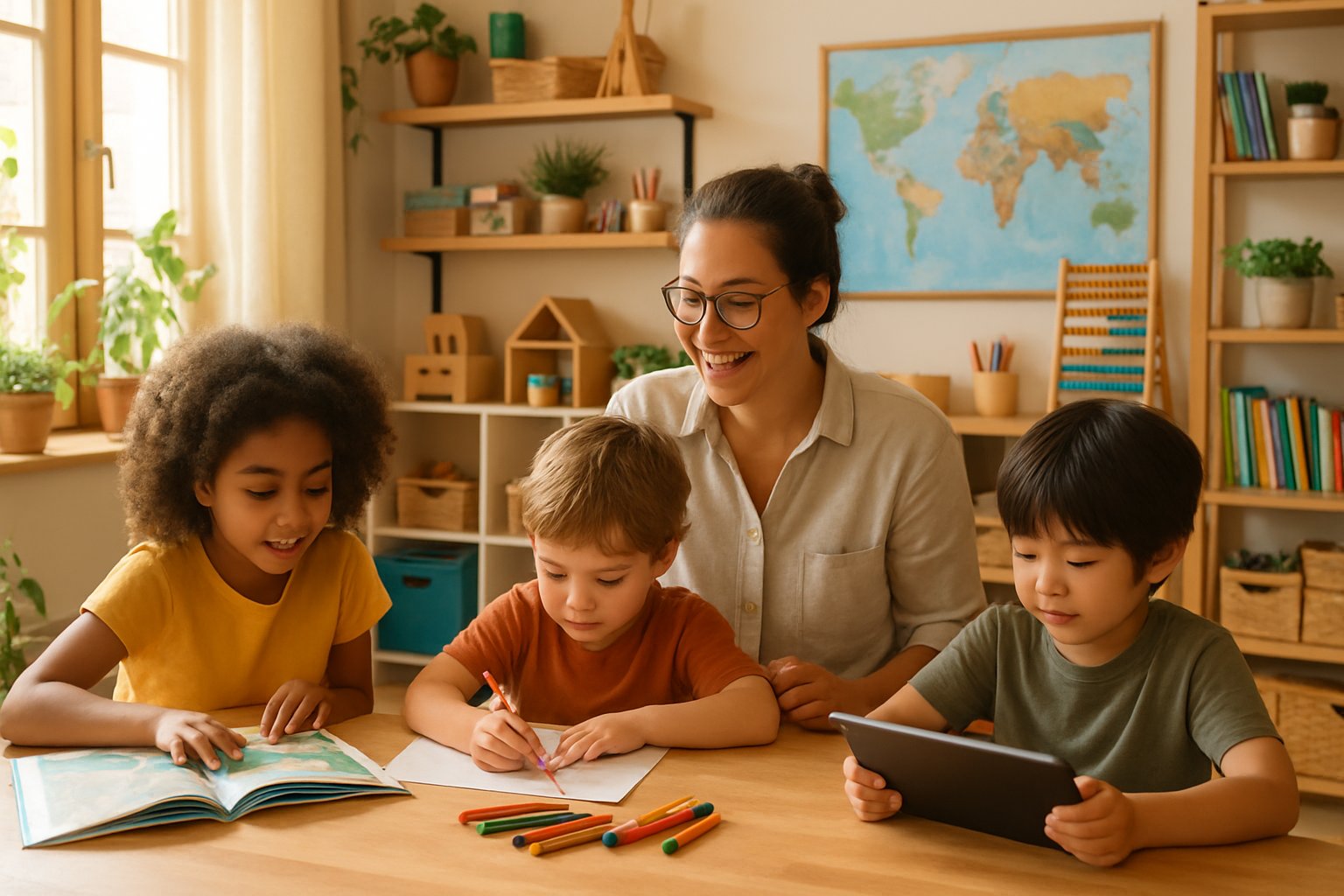
A parent happily teaching three children at a table with books, drawings, and a tablet in a bright, cozy home classroom.

Families can help children stay focused and curious by adding variety, movement, and creativity to their homeschool days. Mixing hands-on projects, outdoor exploration, and digital tools keeps lessons balanced and meaningful.

Incorporating Hands-On Activities

Hands-on activities help children learn by doing. They can build, experiment, or create something that connects with what they study. For example, kids can start a small garden to learn about plant life or use recycled materials to build models that explain science concepts.

A simple table of ideas for different subjects:

Subject Hands-On Activity
Science Grow bean plants or build a volcano
Math Use measuring cups for fractions
History Create a timeline poster
Art Make nature collages

Parents can find more creative ideas for eco-friendly projects from 12 ways to teach sustainability through hands-on projects. These activities help children apply what they learn and stay engaged longer.

Encouraging Outdoor Exploration

Outdoor learning gives children a change of scenery and helps them connect lessons to real life. Nature walks, gardening, or bird watching can turn science or geography into experiences rather than just reading tasks.

Families might try a “nature journal” where kids record what they see, draw plants, or note weather changes. This builds observation skills and encourages curiosity.

Parents can also teach environmental care through small projects like composting or recycling. Activities such as those found in 10 fun ways to teach kids about sustainability at home make outdoor learning enjoyable and meaningful.

Using Visual and Digital Resources

Visual and digital tools can make complex ideas easier to understand. Short videos, virtual tours, and educational apps allow children to see and interact with lessons.

Parents can use free online platforms for math practice, science experiments, or history documentaries. Digital flashcards and interactive maps keep learning active and visual.

A mix of printed materials and digital media helps balance screen time while keeping lessons fresh. Using visuals appeals to different learning styles and supports children who learn best through seeing rather than only reading or listening.

Filed Under: Uncategorized

8 Things Homeschool Moms Know That Public School Parents Don’t! Insider Insights

October 30, 2025 by Valerie Leave a Comment

8 Things Homeschool Moms Know That Public School Parents Don’t

A mother and her two children learning together at a table in a bright, cozy home setting.

Homeschool moms understand that education looks different when it happens at home. They see how learning blends into daily life, how flexibility shapes growth, and how each child’s needs guide the pace and style of teaching. Their experience offers insight into how children thrive when curiosity leads the way.

Learning Happens Everywhere, Not Just in a Classroom

Homeschool moms know that lessons don’t stop when books close. Kids learn during grocery trips, nature walks, and kitchen experiments. A walk through a park can spark a science lesson about ecosystems, while cooking teaches fractions and chemistry.

This approach turns everyday experiences into opportunities for discovery. According to The Cut, play and exploration help children build early skills in math, language, and literacy.

Homeschool families value this freedom because it keeps learning active and meaningful. They see curiosity as the best teacher, not a desk or a bell schedule.

Personalized Homeschool Curriculum Beats One-Size-Fits-All

Homeschooling allows parents to design lessons that fit each child’s learning style. A homeschool mom might use hands-on activities for one child and reading-based lessons for another. This flexibility helps children move faster in subjects they enjoy and take more time where they need support.

A LoveToKnow article explains that homeschool moms follow state guidelines but still have freedom to choose materials and methods. This balance keeps education structured yet adaptable.

Example of customization:

Subject Approach Tools Used
Math Visual and tactile Math manipulatives, games
Science Project-based Experiments, field trips
Reading Interest-led Book clubs, audiobooks

This personalized focus helps homeschooled students stay engaged and confident.

Socialization Is Real—Just Different

Many people assume homeschooled kids lack social opportunities, but homeschool moms know that’s not true. Their children often join co-ops, sports teams, and community programs. They meet peers at church groups, clubs, and neighborhood events.

The LoveToKnow article notes that homeschoolers socialize in many ways outside the classroom. These experiences teach children how to interact with people of all ages, not just classmates.

Homeschool moms view socialization as a skill learned through real-world experiences. Their kids often develop strong communication and confidence because they practice it daily in varied settings.

You Don’t Need a Degree in Education to Teach Your Kids

A common misconception is that parents need a degree in education to homeschool. In reality, most homeschool moms rely on structured curricula, online resources, and community support. They act as facilitators, guiding their children through lessons and helping them find answers.

As explained by The Homeschool Mom, parents don’t have to be experts in every subject. They help their children connect with online classes, tutors, or local workshops when needed.

This approach builds independence. Homeschooled students learn how to research, ask questions, and take responsibility for their education—skills that serve them long after school ends.

Homeschooling Offers Flexibility and Freedom

Homeschooling gives families control over their schedule and learning environment. Lessons can happen in the morning, afternoon, or even during road trips. This flexibility allows families to travel, explore interests, and adapt to life changes without missing school days.

Homeschool moms appreciate the ability to pause when a child needs rest or focus longer on a tough concept. They can teach in the backyard, at a museum, or online.

This freedom helps children see learning as part of life, not something separate. It also reduces stress and encourages creativity in both teaching and learning.

Parenting and Teaching Go Hand in Hand

Homeschool moms understand that parenting and teaching often overlap. They guide their children’s behavior, emotions, and academics in one continuous process. This creates strong relationships built on trust and shared goals.

They also learn patience and adaptability. When a child struggles, the parent-teacher adjusts the method rather than labeling the child as behind.

According to LoveToKnow, homeschool moms practice self-discipline to keep lessons consistent while balancing family life. This blend of structure and care helps children feel supported both emotionally and academically.

Homeschooled Students Thrive on Unique Opportunities

Homeschooled students often explore subjects that interest them deeply. They might study astronomy, coding, or art for hours without worrying about a bell schedule. This freedom encourages mastery and creativity.

Many homeschool families take advantage of internships, volunteer work, and dual-enrollment college courses. These experiences prepare students for real-world challenges earlier than traditional settings might.

Homeschool moms see education as preparation for life, not just tests. Their children learn practical skills like budgeting, time management, and communication through daily routines and community involvement.

Unschooling and Alternative Approaches Work

Some homeschool families practice unschooling, a method that lets children lead their own learning based on interests and curiosity. Instead of following a set curriculum, parents provide resources and guidance as needed.

Unschooling encourages independence and critical thinking. Children learn by doing—building projects, researching topics, or starting small businesses.

While it may seem unconventional, many families find it effective for developing lifelong learners. As shared on Mom.com, homeschool moms often discover that less structure can lead to deeper understanding.

This approach works best when parents trust the learning process and stay involved as mentors, not just instructors.

How Homeschooling Transforms Family Life

A mother teaching her two children at a table in a bright, cozy home filled with books and learning materials.

Homeschooling changes how families spend time together, how children learn, and how parents guide growth. It often leads to closer relationships, flexible routines, and learning that connects directly to daily life.

Homeschooling Parents Build Stronger Family Bonds

Homeschooling parents spend more time with their children, which helps them understand each child’s personality, strengths, and struggles. Shared learning experiences build trust and teamwork.

Families often describe this closeness as one of the biggest rewards of homeschooling. In Life Lessons I’ve Learned as a Homeschool Mom, one mom explains how teaching at home helped her see her children grow in ways she might have missed otherwise.

Daily routines like reading together, cooking lessons, or science experiments create natural opportunities for conversation. Parents guide not only academics but also values, empathy, and problem-solving.

Homeschooling also allows siblings to spend more time together. Many families notice stronger sibling relationships because they share projects and responsibilities throughout the day.

Benefit Description
Time Together Parents and children interact through shared lessons and activities.
Emotional Growth Children feel supported and understood.
Stronger Sibling Ties Brothers and sisters learn cooperation and patience.

Flexible Routines Support Individual Growth

Homeschooling gives families the freedom to design schedules that match each child’s pace and interests. Some kids learn best early in the morning, while others focus better later in the day.

This flexibility helps reduce stress and supports mental health. Parents can adjust lessons when a child struggles or move ahead when a topic clicks quickly. As described in Cool Things You Might Not Know That Can Help Your Homeschool, adapting to each child’s learning rhythm makes education more effective.

Homeschoolers can also explore personal passions. A child who loves art might spend extra time painting, while another dives deeper into coding or history. Parents act as guides, helping children take ownership of their learning.

Flexible routines also allow families to include rest, outdoor time, and community activities without the limits of a traditional school schedule.

Homeschoolers Embrace Real-World Learning

Homeschooling often extends beyond textbooks. Parents use everyday experiences—like shopping, volunteering, or field trips—as lessons in math, communication, and responsibility.

Families may join local co-ops or community programs to connect with others and gain hands-on experience. According to Homeschooling: The Lifeline We Didn’t Know We Needed, many homeschoolers benefit from partnerships with charter programs or online teachers that blend home study with real-world opportunities.

This approach helps children see how learning applies to life. They learn budgeting through grocery shopping, geography through travel, and science through gardening.

Homeschooling parents often say these experiences teach practical skills and confidence. Children learn to interact with people of different ages and backgrounds, preparing them for life beyond the classroom.

Filed Under: Uncategorized

  • « Go to Previous Page
  • Page 1
  • Interim pages omitted …
  • Page 8
  • Page 9
  • Page 10
  • Page 11
  • Page 12
  • Interim pages omitted …
  • Page 25
  • Go to Next Page »

Primary Sidebar

Free Photo Lessons for Kids

Photo Lessons for kids

Categories

  • Photography
  • Preschool
  • Reading
  • Uncategorized
A child and parent working together on a science experiment at home using materials from a subscription box in a bright, organized study area.

Subscription Boxes As Curriculum: What Actually Works

Can A Monthly Kit Count As Real Curriculum? The honest answer is: it depends entirely on what … [Read More...] about Subscription Boxes As Curriculum: What Actually Works

A parent and child reviewing homeschool books together in a cozy study area with shelves of used educational materials and a tablet showing an online marketplace.

How To Buy And Sell Used Homeschool Curriculum On A Budget

Choose Materials With Savings In Mind The curriculum you pick determines how much you can save when … [Read More...] about How To Buy And Sell Used Homeschool Curriculum On A Budget

An illustration showing two classrooms side by side: one where students focus deeply on one math topic with a teacher's guidance, and another where students work on multiple math topics repeatedly in a spiral pattern.

Mastery Vs. Spiral Math: Choosing The Right Fit

How The Two Approaches Differ In Real Lessons The difference between spiral math and mastery math … [Read More...] about Mastery Vs. Spiral Math: Choosing The Right Fit

Students taking tests in a classroom while a teacher observes and takes notes, with visual symbols of timing and decision-making around them.

Curriculum Placement Tests: When and How to Use Them Well

What Placement Tests Tell You and When to Use Them Placement tests and standardized tests serve … [Read More...] about Curriculum Placement Tests: When and How to Use Them Well

A teacher reviewing a detailed curriculum planner spread out on a desk with educational tools around.

Scope and Sequence Explained: A Practical Planning Guide For Curriculum Planning

What Scope and Sequence Means in Real Curriculum Planning A scope and sequence is one of the most … [Read More...] about Scope and Sequence Explained: A Practical Planning Guide For Curriculum Planning

A family sitting at a kitchen table surrounded by homeschooling supplies, receipts, and a laptop, discussing and planning their homeschooling budget.

The Hidden Costs of Homeschool Curriculums and Smart Budgeting

What Families Actually Pay Beyond Curriculum The sticker price of a homeschool curriculum rarely … [Read More...] about The Hidden Costs of Homeschool Curriculums and Smart Budgeting

A parent and child working together at a table with books and a laptop in a bright room, with a bulletin board displaying charts and papers in the background.

How To Align Your Homeschool Curriculum With State Standards

What "Aligned To Standards" Actually Means At Home Standards alignment in homeschooling is not … [Read More...] about How To Align Your Homeschool Curriculum With State Standards

A parent and child working together on a homeschool lesson using a tablet with AI assistance in a bright study area.

Using AI To Enhance Your Homeschool Curriculum With ChatGPT

Build Customized Lessons With ChatGPT First ChatGPT can help you build a homeschool curriculum that … [Read More...] about Using AI To Enhance Your Homeschool Curriculum With ChatGPT

A group of children and adults of different ages working together around a table with educational materials in a bright learning space.

Family-Style Curriculums For Teaching Multiple Ages At Once

What Makes A Curriculum Work Across Multiple Ages A strong family-style homeschool curriculum saves … [Read More...] about Family-Style Curriculums For Teaching Multiple Ages At Once

A group of young people using digital devices surrounded by symbols of coding and computer science in a modern learning environment.

Coding And Computer Science: Best Curriculums Reviewed

How To Choose The Right Learning Path First Your child's age, current skill level, and long-term … [Read More...] about Coding And Computer Science: Best Curriculums Reviewed