• Skip to primary navigation
  • Skip to main content
  • Skip to primary sidebar

Clever Homeschool

Fun courses based on your child's interests!

  • Home
  • Free Photo Lessons for Kids
  • “Get That Shot!” photo tags

Valerie

Step-by-Step Guide: How to Create Custom Blend Ladders for Any Reading Level

November 14, 2025 by Valerie Leave a Comment

Essential Concepts for Custom Blend Ladders

A person working at a desk with a laptop, notebooks, and educational materials, focusing on notes and charts related to creating reading level guides.

Creating custom blend ladders requires understanding how letter sounds connect to reading skills. Students must learn to hear, see, and combine consonants and vowels accurately to form words. Strong phonemic awareness and clear knowledge of graphemes help them move from simple sound patterns to more complex blends with confidence.

Understanding Blend Ladders and Their Purpose

Blend ladders are structured tools that help students practice combining sounds step by step. They show how letters and sounds build into words through a visual and hands-on format. Students climb each “rung” by adding or changing one sound at a time.

Teachers use blend ladders to strengthen decoding and spelling skills. Each ladder begins with a familiar word, then adds blends like bl, cr, or st. This gradual change helps students focus on new sound patterns without feeling overwhelmed.

According to Clever Homeschool, this method supports struggling readers by reducing cognitive load and providing clear visual progression. The ladders can be printed, built with magnetic letters, or used digitally to match any reading level.

Key Phonics Skills: Consonants, Vowels, and Graphemes

Phonics connects written letters to spoken sounds. Students must recognize how consonants, vowels, and graphemes work together to form words. A grapheme is the written symbol that represents one or more sounds, such as sh or th.

Blend ladders focus on consonant blends like fl, gr, and st. Each sound remains distinct, unlike digraphs that create new sounds. Teachers often begin with L-blends and R-blends, since they are easier to pronounce and identify before moving to more complex S-blends.

Blend Type Examples Difficulty Level
L-blends bl, cl, fl Easier
R-blends br, dr, gr Moderate
S-blends sp, st, sk Harder

Students benefit when lessons use repetition and visual cues. Color-coding blends and vowels helps them see patterns and remember sound relationships.

Phonemic Awareness and Letter Sound Blending

Phonemic awareness is the ability to hear and manipulate individual sounds in words. It forms the foundation for blending and decoding. Without this skill, students may struggle to connect letters to their sounds.

Teachers can build phonemic awareness through oral games, tapping sounds, and Elkonin boxes. These activities train students to notice each sound before blending them together.

Blend ladders reinforce this skill by letting students move from single sounds to full words. As noted by Exceed in Learning, this approach strengthens both phonemic awareness and phonics by linking what students hear with what they see on the page.

Hands-on practice, such as sliding fingers up the ladder or using letter tiles, helps students connect motion, sound, and sight into one clear learning process.

Step-by-Step Process to Design and Use Blend Ladders

Educators discussing colorful charts and diagrams about blend ladders in a bright classroom setting.

Creating custom blend ladders helps students connect letter sounds, build decoding skills, and strengthen reading fluency. The process involves selecting consonants and vowels carefully, organizing them into clear templates, and using hands-on tools that support visual and kinesthetic learning.

Choosing the Right Consonants and Vowels

Teachers start by selecting consonants and vowels that match students’ reading levels. Early learners often begin with simple L-blends like bl, cl, and fl, which are easier to pronounce. More advanced readers can move to R-blends and S-blends such as br, cr, sp, and st.

Each blend should include vowels that students already recognize. For example, pairing bl with a, e, i, o, and u produces bla, ble, bli, blo, and blu. This helps students see how vowel changes affect word pronunciation.

Teachers can use a quick reference table to organize blends:

Blend Type Example Blends Example Words
L-blends bl, cl, fl blue, clap, flag
R-blends br, cr, dr brown, crab, drop
S-blends sp, st, sm spot, star, small

Selecting appropriate blends ensures students practice sounds they can master without frustration.

Building and Arranging Blend Ladder Templates

A blend ladder works best when it shows a clear visual sequence from simple to complex. Teachers can design ladders vertically or horizontally using paper, whiteboards, or digital slides. Each “rung” adds one new sound or letter combination.

For instance, a ladder might begin with at, then move to bat, brat, and strap. This step-by-step structure supports gradual learning and reinforces phonemic awareness.

Teachers can create reusable templates by printing or laminating ladders. Laminated blend ladders allow students to write, erase, and reuse during group or independent practice. Printable templates, such as those from Clever Homeschool, give visual support and structure for consistent practice.

To keep practice organized, teachers can color-code blends and vowels. Using one color for consonants and another for vowels helps students visually separate sound parts.

Incorporating Short Vowel Sounds and CVC Words

Short vowel sounds form the foundation of early reading. Teachers should start with CVC words (consonant-vowel-consonant) like cat, lip, and pot before adding blends. Once students can read these confidently, they can move to clap, flip, or spot.

This approach builds from familiar word patterns. Students recognize most of the word and focus only on the new blend. For example, turning lap into clap adds one consonant sound but keeps the rest of the word the same.

Teachers can use short vowel ladders that isolate each vowel:

Vowel Example Ladder
a at → bat → brat
e ed → bed → bred
i it → fit → flit
o op → top → stop
u up → cup

This clear sequence helps students hear how blends change the sound structure while keeping vowel sounds consistent.

Using Blend Cards, Laminated Ladders, and Interactive Tools

Hands-on materials make blend ladders more engaging and effective. Blend cards let students rearrange consonants and vowels to form new combinations. They can physically move cards to explore patterns and build confidence in decoding.

Laminated blend ladders are useful for repeated practice. Students can write with dry-erase markers, erase mistakes, and try again without wasting paper. Teachers can also post large phonics ladders on classroom walls for group activities.

Digital and interactive tools, such as online phonics games or drag-and-drop letter apps, add variety. Websites like Exceed in Learning suggest using sound ladders that adjust difficulty as students progress.

Combining visual, auditory, and tactile methods helps every learner. Students can trace letters, say sounds aloud, and use finger motions to “climb” the ladder as they blend sounds into complete words.

Differentiation and Advanced Techniques
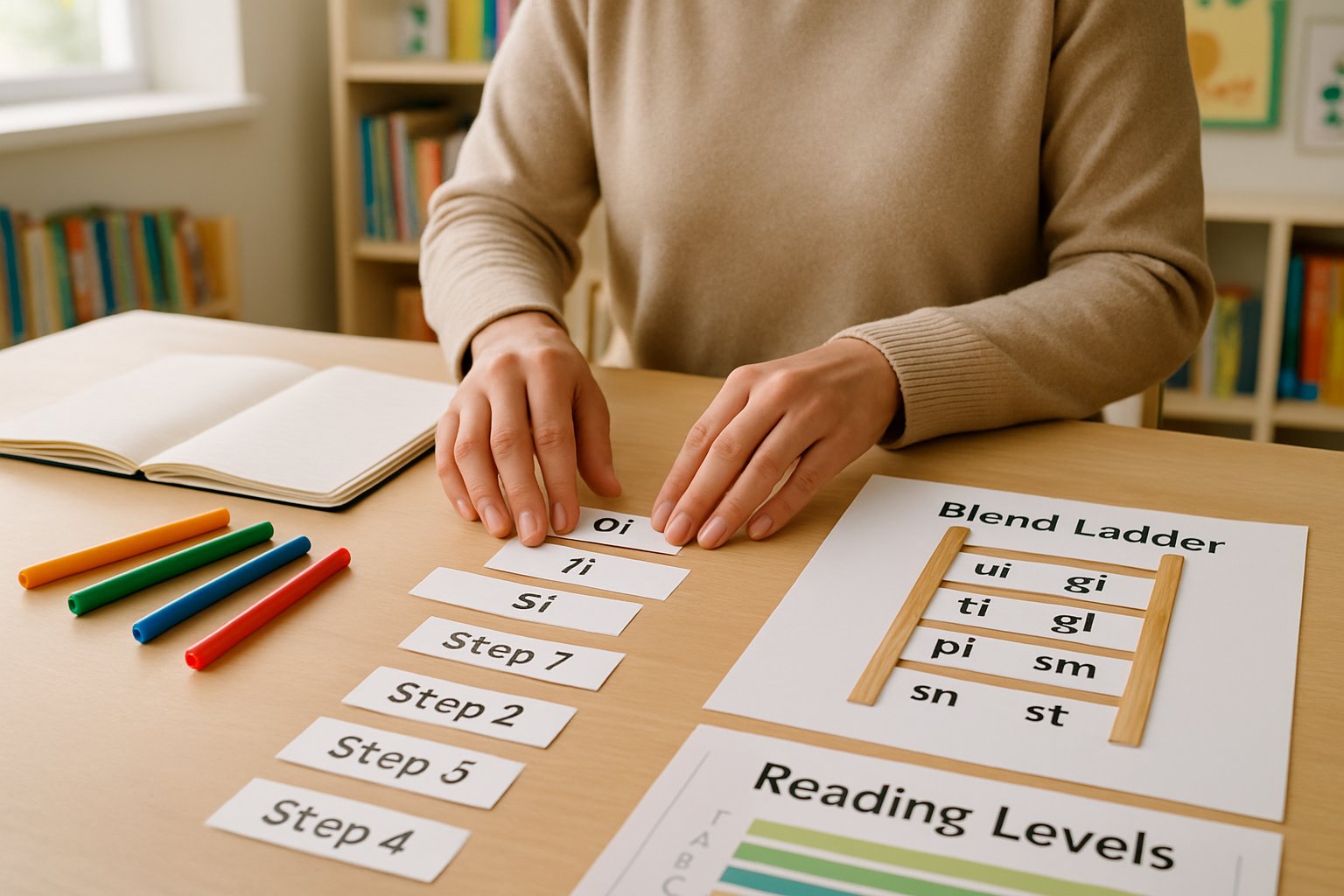
An educator's hands arranging reading materials and flashcards on a desk in a classroom with bookshelves and educational posters in the background.

Teachers can tailor custom blend ladders to match each student’s reading readiness and skill level. By adjusting blends, digraphs, and ending sounds, they can create targeted activities that build decoding skills and strengthen word recognition through focused word work.

Adapting Ladders for Various Reading Levels

Differentiated instruction helps meet the needs of diverse learners. Educators can adjust the difficulty of blend ladders by changing the type of blends, word length, or support materials.

For early readers, ladders might include simple l blends like bl, cl, or fl paired with short-vowel words (e.g., blip, flag). More advanced readers can work with multi-syllable words or irregular vowel sounds.

A helpful strategy is to use tiered assignments, where all students practice blending but at different complexity levels. For example, one group may build words with basic consonant blends, while another decodes longer words with controlled vowels. Teachers can find examples of tiered reading strategies in differentiated instruction for reading.

Regular check-ins and progress notes allow teachers to adjust ladders as students grow more confident. This ensures each learner works at a level that challenges but does not overwhelm them.

Integrating L Blends, Digraphs, and Ending Sounds

Effective ladders combine a range of phonics elements. L blends like cl, pl, and sl help students connect consonant clusters smoothly. Digraphs such as sh, ch, and th teach them that two letters can make one sound.

Adding ending sounds like -nd, -st, or -mp reinforces complete word decoding. Teachers can organize these elements in a simple chart for guided practice:

Focus Example Words Skill Targeted
L blends clap, plum, slip Beginning blend recognition
Digraphs ship, chat, thin Two-letter sound awareness
Ending sounds hand, mist, jump Word closure and fluency

Using flexible grouping, as explained in differentiated learning strategies, allows students to rotate through stations that emphasize each sound type. This keeps lessons active and engaging.

Creative Word Work and Practice Activities

Word work builds fluency by giving students hands-on ways to apply blending skills. Teachers can use choice boards or learning contracts to let students pick from several practice tasks.

Some may sort words by blend type, while others build word ladders using letter tiles. Digital tools like online whiteboards or phonics apps can make practice more interactive.

To deepen learning, students can record themselves reading blend ladders aloud or create mini word books featuring l blends and digraphs. These activities reinforce both phonemic awareness and spelling patterns.

Teachers who use flexible and creative word work approaches, like those described in 9 effective differentiation strategies for special needs students, can help all learners gain confidence with vowel and consonant blends through consistent, meaningful practice.

Filed Under: Reading

10 Fun Ways to Teach Phonics Using Blend Ladders: Creative Activities Kids Love

November 12, 2025 by Valerie Leave a Comment

Essential Phonics Skills with Blend Ladders

Young children working together with letter tiles on blend ladders in a bright classroom, guided by a teacher.

Blend ladders help children connect sounds to letters, build decoding confidence, and strengthen early reading fluency. These activities combine movement, sound manipulation, and visual cues to make phonics instruction both clear and hands-on.

Building Phonemic Awareness

Phonemic awareness means hearing and working with the smallest parts of spoken words—individual sounds called phonemes. When students use a phonics ladder, they listen carefully as one sound changes at a time.

Teachers can ask children to say a word like cat, then replace the first sound to make bat or mat. This step-by-step change helps them notice how a single sound shift can create a new word.

Using tools like letter tiles or magnetic letters makes the process interactive. Students can move letters physically as they pronounce each new word. Activities like these, described in engaging blend ladder games, turn sound practice into a game.

Children also benefit from short listening challenges. For example, they can identify whether two words rhyme or begin with the same sound. These tasks strengthen their ability to hear and separate sounds before they even start reading text.

Mastering Letter Sounds and Blending

Once children can hear sounds clearly, they learn to connect those sounds to written letters. Blend ladders help them see how letter sounds combine to form blended sounds like bl, st, and tr.

Teachers often start with simple blends, such as fl in flag or gr in green. Students climb the ladder by changing one letter at a time—flag, flap, slap, slip. This reinforces both recognition and pronunciation of blends.

Games such as hands-on blend ladder activities give learners repeated practice in reading and spelling patterns. The clear structure helps them understand that each letter or blend contributes a distinct sound to a word.

Visual aids like pocket charts or whiteboard ladders make it easy to track progress. As students read each new word aloud, they strengthen both decoding and fluency skills.

Practicing CVC Words and Word Building

CVC words—consonant-vowel-consonant patterns like cat, dog, and sun—form the foundation for early reading. They allow students to practice word building in a predictable way while applying blending skills.

Teachers can guide learners to replace one letter at a time on the ladder. For instance:

Step Word Change
1 cat starting word
2 bat change /c/ to /b/
3 bit change vowel to /i/
4 sit change /b/ to /s/

This process helps children see how written letters match spoken sounds. Activities like these, highlighted in phonics-based word mapping, build automatic recognition of sound-letter connections.

As students gain confidence, teachers can introduce blends or digraphs into their ladders. By combining movement, repetition, and visual support, blend ladders make phonics practice structured and enjoyable for young readers.

10 Fun Blend Ladder Activities Kids Will Love

Young children happily working together on phonics activities using colorful learning tools in a bright classroom.

Children learn best when they can move, play, and explore while practicing phonics. These activities build reading skills through hands-on games that focus on blending sounds, matching letters, and recognizing patterns in words.

Blend Ladder Race Games

Students race to climb their blend ladders by reading or building words correctly. Each step on the ladder represents one correct blend or word.

Teachers can use blend cards with s blends, r blends, and l blends to guide practice. For example, one student reads “slip,” and the next changes it to “slap.” The first to reach the top wins.

A fun twist involves using timers or dice rolls to decide how many rungs students can move. This keeps the pace lively while encouraging accurate reading.

Sound Hunt Challenges

Sound hunts turn phonics lessons into scavenger games. Students search the classroom for objects or pictures that begin with specific blends or digraphs.

They might look for items starting with br, st, or ch. Each correct find adds a step to their blend ladder. Teachers can display ladders on a board and let students attach their discoveries.

This activity works well in literacy centers or at home. It strengthens phonemic awareness and helps children connect real-world objects to letter sounds.

Story Building with Ladder Words

Students use blend ladder words to create short stories. Each rung adds a new word that must appear in the next sentence.

For example, a ladder might include “slip,” “slap,” “snap,” and “trap.” Students write or tell a story using each word in order. This encourages creativity while reinforcing word recognition.

Teachers can group students to share and read their stories aloud. The activity combines writing, speaking, and reading practice in one engaging format.

Blend Ladder Hopscotch

Blend ladder hopscotch combines movement with sound recognition. Teachers draw a hopscotch grid outside or tape one on the floor indoors.

Each square contains a blend or short word such as “bl,” “gr,” or “st.” Students hop to the next space only after saying the blend correctly. Missed or misread blends send them back one step.

This game works well for kinesthetic learners who benefit from physical activity during phonics lessons. It also helps improve balance and coordination while reinforcing reading patterns.

Flip-and-Read Blends

Flip-and-read games use blend cards that students flip to reveal new combinations. Each card shows a blend on one side and a word or picture on the other.

For instance, a card might show “fl” on the front and “flag” on the back. Students flip, read, and say the sound aloud before moving up their ladder. Teachers can group cards by s blends, r blends, and l blends for focused practice.

This low-prep activity supports small-group instruction and independent learning. It’s easy to adapt for different reading levels.

Blend Card Memory Match

Memory match games help students connect blends and words through repetition. Teachers prepare pairs of cards—one with a blend and one with a matching word or picture.

Students take turns flipping two cards at a time, trying to find pairs like “gr” and “green.” Each correct match earns a ladder step. The player with the most matches wins.

This game reinforces visual memory and sound-symbol connections. Printable versions like these free blend ladders make setup quick and easy for classroom or home use.

Blends Puzzles and Sorting

Sorting and puzzle activities help children see how blends fit into words. Teachers can cut apart word cards so each piece contains one part of a blend.

Students match beginnings and endings to form complete words such as “pl” + “ant” = “plant.” They can also sort cards into groups of r blends, s blends, or digraphs.

Using color-coded cards simplifies the process for younger learners. This structured, hands-on approach builds confidence with decoding and spelling patterns.

Beanbag Blend Toss

This active game combines movement with reading practice. Teachers label buckets or hoops with blends like “br,” “cl,” and “st.”

Students toss a beanbag into a target, then read or name a word using that blend. For example, if it lands in “br,” they might say “brick.” Each correct response moves them up their blend ladder.

The game encourages quick recall of blends and works well in small groups. It’s ideal for outdoor play or classroom movement breaks.

Blends Fishing Game

Teachers create a fishing pond using paper fish labeled with blend words. Students “catch” fish using magnetic rods or paper clips.

After catching a fish, they read the word aloud and identify its blend. Correct answers earn ladder points. Words can include crab, flag, or snow depending on the blends being practiced.

This game keeps students engaged while improving decoding skills. Printable templates from Clever Homeschool’s blend ladder activities make it easy to set up.

Interactive Digital Blend Ladders

Digital blend ladders bring phonics practice to tablets or computers. Students drag and drop letters to form words, climb ladders, or complete sound challenges.

Programs can include r blends, s blends, and common digraphs like sh or ch. Many tools provide instant feedback, helping students correct mistakes right away.

Teachers can project digital ladders for group play or assign them individually. Online options like printable and digital blend ladder ideas allow customization for different reading levels and lesson goals.

Filed Under: Reading

What is Waldorf Homeschooling? Nurturing Creativity and Imagination at Home

November 12, 2025 by Valerie Leave a Comment

Key Principles of Waldorf Homeschooling

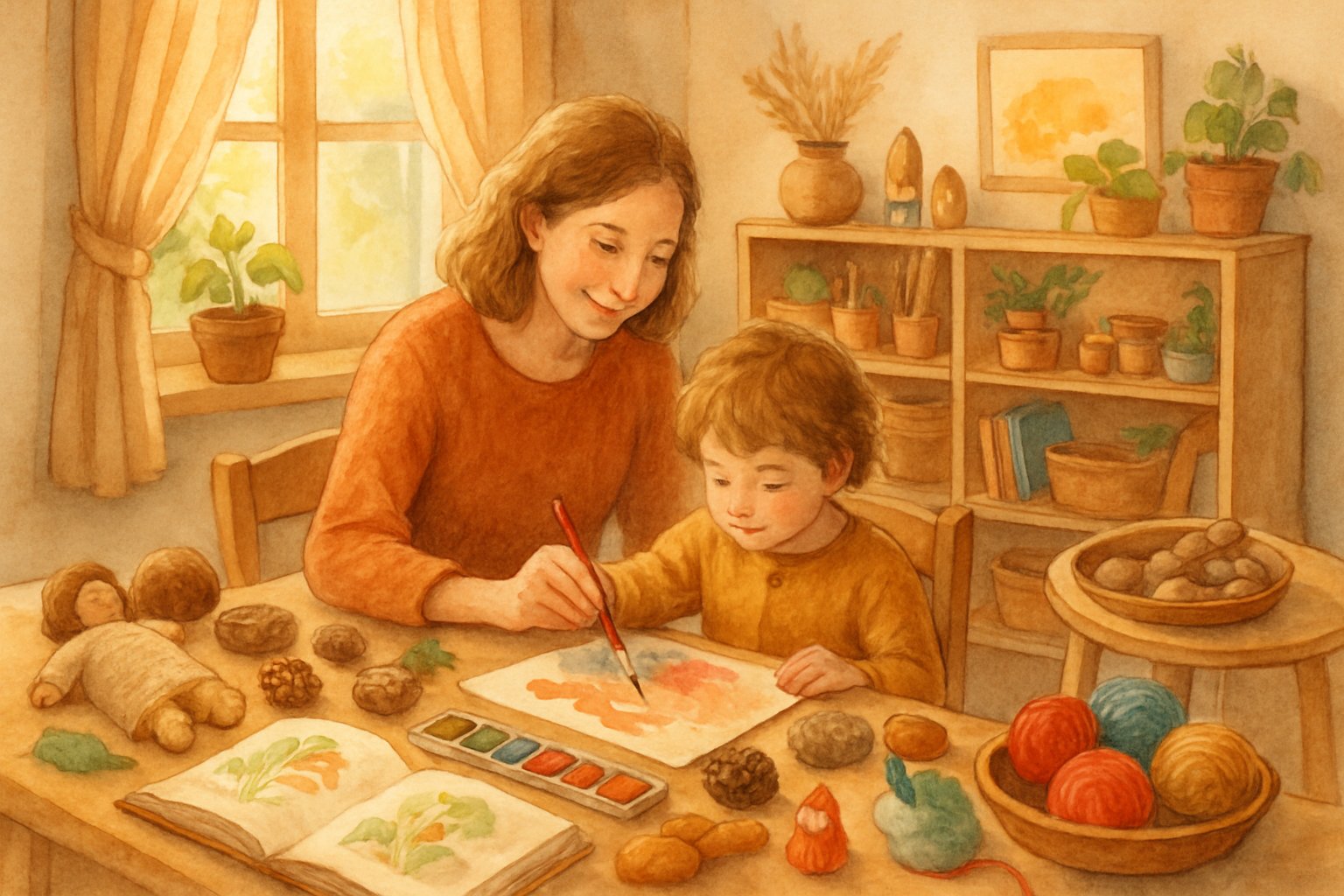
A parent and child doing creative activities together in a cozy, sunlit room filled with natural materials, art supplies, and plants.

Waldorf homeschooling centers on nurturing the whole child—mind, body, and spirit. It encourages creativity, hands-on learning, and a balanced rhythm to daily life. This approach values imagination, nature, and developmentally appropriate teaching rather than early academic pressure or heavy screen use.

Holistic Education and Child Development

The Waldorf method, founded by Rudolf Steiner, views education as a journey that unfolds in stages. Each phase of childhood has specific needs, and lessons match these stages to support balanced growth.

In early childhood, learning happens through imitation and play. During the grade years, storytelling and artistic work help children explore academic ideas in a meaningful way.

Teachers or parents who follow Waldorf education often plan lessons that engage the head, heart, and hands—thinking, feeling, and doing. This balance helps children develop intellectually, emotionally, and physically.

A Waldorf homeschool may include activities like painting, handcrafts, and movement exercises to strengthen focus and coordination. Such practices reflect the belief that education should nurture the whole person, not just academic performance.

Role of Imagination and Creativity

Imagination plays a central role in Waldorf homeschooling. Instead of relying on textbooks, parents often use stories, art, and music to spark curiosity. Lessons are presented artistically to help ideas come alive for the child.

According to Homeschooler Pro, the Waldorf method cultivates imagination and moral responsibility through creative expression. Children might paint a math concept, act out a history story, or learn science through observation and drawing.

This approach helps children connect emotionally to what they learn. It also encourages flexible thinking and problem-solving. By presenting lessons in an artistic and narrative way, parents help children see learning as joyful and meaningful rather than routine or forced.

Minimal Use of Technology

Waldorf homeschooling encourages limited use of screens, especially in early childhood. The focus stays on hands-on, sensory-rich experiences that support real-world learning.

As noted by Our Homeschool Resources, Waldorf philosophy values play, movement, and creativity over digital interaction. Children may spend more time crafting, cooking, or building rather than using computers or tablets.

This approach helps develop attention, patience, and imagination naturally. When technology is introduced later, it’s done intentionally and with purpose—usually after children have built strong foundational skills in focus and creativity.

Connection to Nature and Seasonal Rhythms

A strong connection to nature is at the heart of Waldorf education. Families often follow the rhythm of the seasons, celebrating seasonal festivals and spending time outdoors.

Activities like gardening, nature walks, and observing weather patterns help children understand the cycles of the earth. This rhythm creates a sense of stability and harmony in daily life.

According to ABCmouse, integrating art, nature, and rhythm encourages holistic development. In Waldorf homeschooling, these natural patterns guide lessons and daily routines, helping children feel grounded and connected to the world around them.

Essential Elements of the Waldorf Homeschooling Approach

A parent and child doing a creative craft together in a cozy, nature-inspired homeschooling room filled with wooden toys, plants, and art supplies.

Waldorf homeschooling encourages children to learn through doing, creating, and exploring. It blends academics with art, movement, and nature to support emotional, intellectual, and practical growth.

Experiential Learning and Main Lesson Blocks

In the Waldorf method of homeschooling, lessons center on experiential learning. Children learn through hands-on activities rather than memorization. This approach helps them connect ideas to real experiences.

A key feature of the Waldorf curriculum is the use of main lesson blocks, where one subject is studied deeply for several weeks. This rhythm allows students to focus fully on a topic before moving to another.

For example, a child might explore botany through gardening, sketching plants, and writing about them. This method supports understanding and retention. The Waldorf Homeschool Method emphasizes developing the “head, heart, and hands,” balancing thinking, feeling, and doing.

Storytelling and Imaginative Play

Storytelling is central to Waldorf homeschooling. Teachers and parents use folk tales, fables, and myths to introduce moral lessons and academic ideas. Listening to stories builds language, memory, and empathy.

Children often act out these stories through imaginative play, turning learning into a creative process. This kind of play fosters problem-solving skills and emotional awareness.

In the Waldorf style of learning, imagination is seen as a foundation for intellectual growth. When children imagine, they practice thinking flexibly and creatively—skills that help them approach challenges with confidence.

Creative Arts: Painting, Drawing, and Music

The creative arts form a core part of the Waldorf method of homeschooling. Subjects like painting, drawing, and music are not separate from academics—they are woven into daily lessons.

For example, students may illustrate a math concept through color and form or learn history through songs. This artistic approach, as described in Waldorf Homeschooling, nurtures creativity and helps children express understanding in personal ways.

A simple table shows how arts connect to subjects:

Art Form Example Integration
Painting Depicting plant growth in science
Drawing Creating geometric forms in math
Music Learning rhythm through poetry recitation

These activities engage both logic and emotion, helping children experience learning as a living process.

Movement and Outdoor Activities

Movement is essential in Waldorf homeschooling. Activities like circle games, handwork, and dance build coordination and focus. Physical rhythm supports mental rhythm, which helps children learn more easily.

Outdoor activities also play a major role. Time in nature strengthens observation skills and deepens respect for the environment. Many families use nature walks or gardening as part of their daily lessons.

According to ABCmouse’s overview of Waldorf homeschooling, learning outdoors nurtures creativity and holistic development. These experiences teach children to connect with the world around them while developing physical health and emotional balance.

Daily Life and Learning in a Waldorf Homeschool

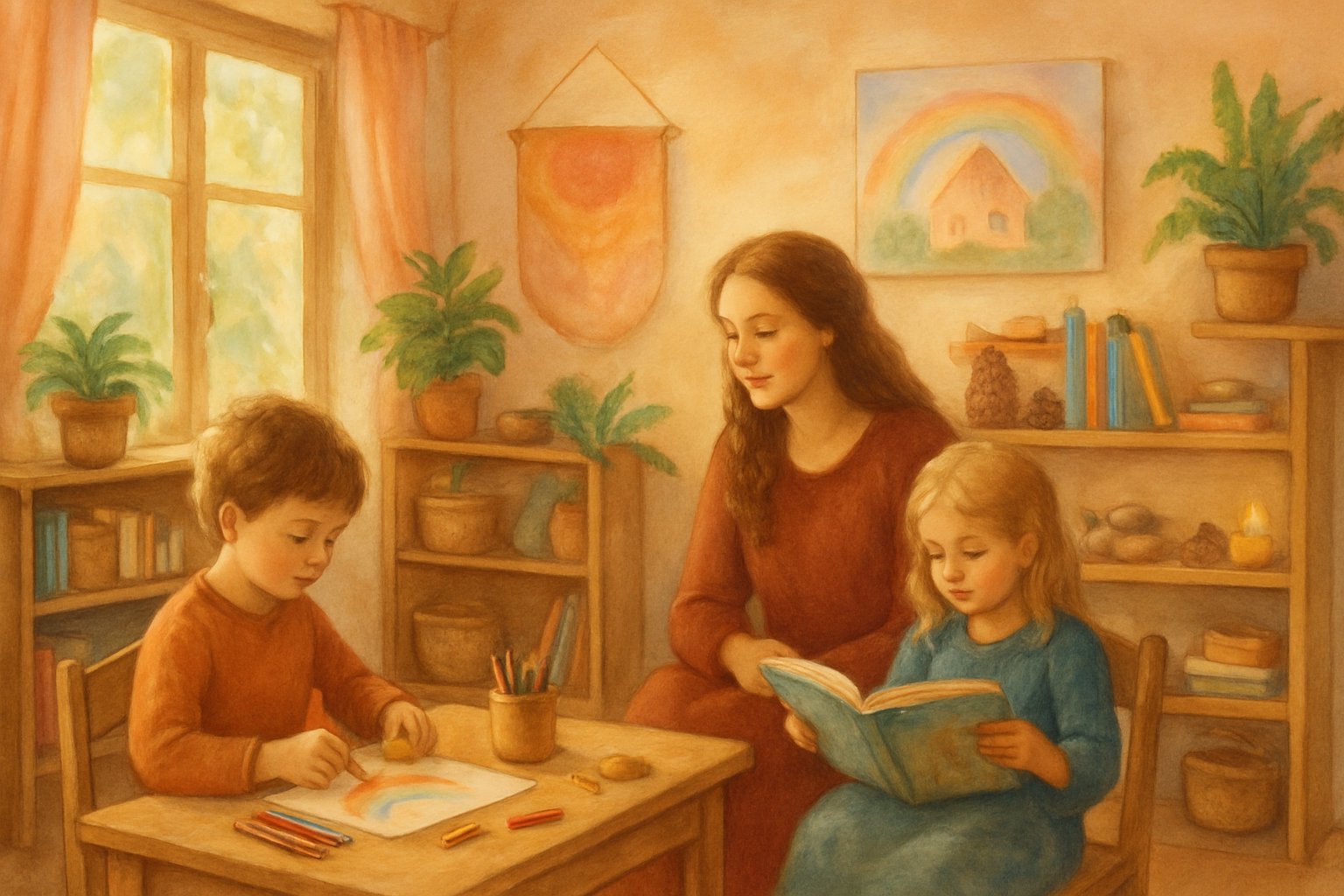
A child drawing at a wooden table in a bright room with natural materials and an adult guiding them, surrounded by books, plants, and handmade educational items.

A Waldorf homeschool day moves with a gentle rhythm that balances focused learning, creative work, and time in nature. Parents guide lessons through storytelling, art, and practical activities that connect children to real experiences instead of screens or worksheets.

Establishing Rhythm and Routine

Families using the Waldorf homeschool method often follow a daily rhythm rather than a strict schedule. This rhythm gives children a sense of security and flow throughout the day.

A typical morning might include:

  • Circle time with songs and movement
  • Main lesson block focusing on one subject for several weeks
  • Outdoor play or nature walk after lessons

Afternoons often feature handwork, music, or art. Evenings slow down with reading or storytelling.

Each day of the week may have a theme—painting on Monday, baking on Tuesday, or gardening on Wednesday. Seasonal changes also shape the rhythm, with crafts and stories tied to nature’s cycles. This predictable flow helps children feel calm and grounded while still leaving room for creativity and exploration.

Parent as Guide and Observer

In Waldorf homeschooling, the parent acts as both teacher and learner. They guide lessons but also observe the child’s mood, interests, and growth. This approach creates a warm, trusting relationship that supports learning through connection rather than pressure.

Parents often prepare lessons ahead of time using a Waldorf curriculum but adapt them based on the child’s needs. They present new material through stories, art, or movement, allowing the child to experience concepts before analyzing them.

Observation is key. Parents notice how the child responds to rhythm, art, and play, adjusting the pace or activities accordingly. This reflective teaching style builds confidence and encourages self-directed learning.

Integrating Real-World Experiences

Waldorf homeschooling values learning through doing. Children engage in daily life tasks that connect lessons to the real world.

Examples include:

Activity Learning Connection
Baking bread Fractions, patience, sensory learning
Gardening Science, responsibility, observation
Handcrafts Fine motor skills, focus, creativity

Families often spend time outdoors, where nature becomes the classroom. According to Open Waldorf, integrating these experiences nurtures mindfulness and appreciation for the environment.

By blending academics with meaningful work, children see learning as part of everyday life, not something separate from it.

Filed Under: Uncategorized

Why Every Homeschool Needs Blend Ladders: Build Confident Readers Fast

November 4, 2025 by Valerie Leave a Comment

What Are Blend Ladders and Why Are They Essential?

A child and an adult in a homeschool room reading together with a set of colorful books arranged like a ladder on a table.

Blend ladders help children connect sounds and letters in a clear, structured way. They strengthen phonemic awareness, support decoding, and build word recognition—skills that make reading smoother and more confident.

How Blend Ladders Work for Homeschoolers

Blend ladders are visual tools that guide students through small sound changes in words. Each “rung” on the ladder changes one letter or sound at a time, such as moving from cat to bat to bit. This step-by-step approach makes it easier for children to hear and see how sounds form words.

Homeschool parents use blend ladders to give daily, hands-on reading practice. Students can move at their own pace while building confidence in decoding. Printable and digital versions make it simple to fit into any reading routine.

This structured method helps children connect phonemic awareness directly to phonics instruction. The process supports both early readers and those who need extra reinforcement in sound blending.

Difference Between Blend Ladders, Sound Ladders, and Letter Ladders

Although the terms are often used together, each ladder type has a slightly different focus.

  • Blend ladders emphasize combining consonant and vowel sounds to form complete words.
  • Sound ladders focus on hearing and blending individual phonemes.
  • Letter ladders highlight letter patterns and spelling sequences.

Exceed in Learning explains that all three tools strengthen the link between hearing, seeing, and saying words. Teachers and parents can choose one or combine them depending on a child’s reading stage.

This variety allows homeschoolers to target specific skills. For example, sound ladders help with early listening skills, while letter ladders support spelling and word pattern recognition.

Benefits for Beginning and Struggling Readers

Blend ladders give beginning readers a clear path to understanding how sounds connect to letters. The repetition builds automatic word recognition, which leads to smoother reading and better comprehension.

For struggling readers, ladders break reading into smaller, achievable steps. Changing one sound at a time reduces frustration and builds confidence. Teachers can adjust the ladder’s difficulty to match each learner’s needs.

The Clever Homeschool guide notes that this approach also improves spelling and phonics fluency. Regular practice helps students move from slow decoding to fluent reading, making blend ladders an effective support tool for literacy growth at home.

The Science Behind Blend Ladders: Building Strong Reading Foundations

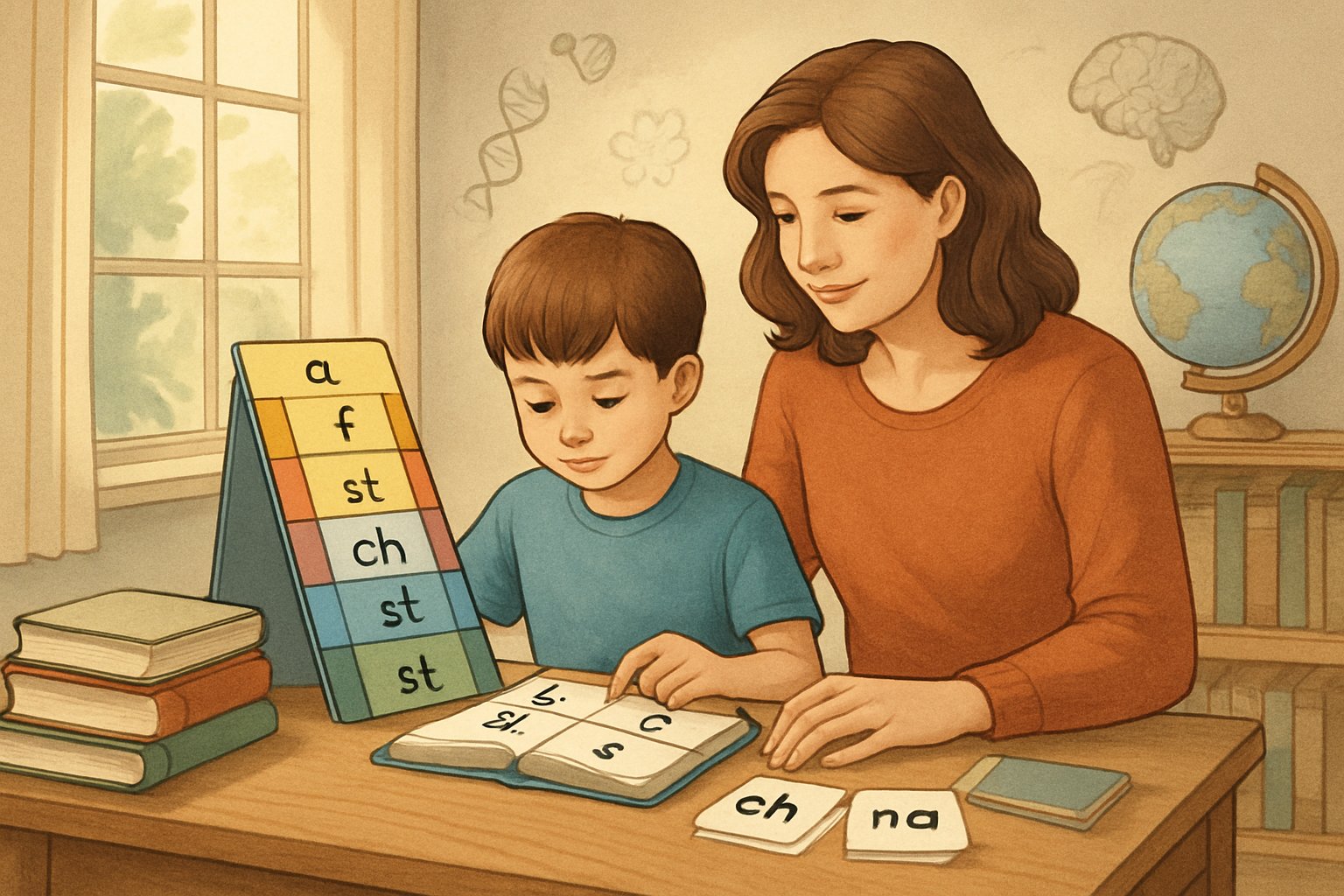
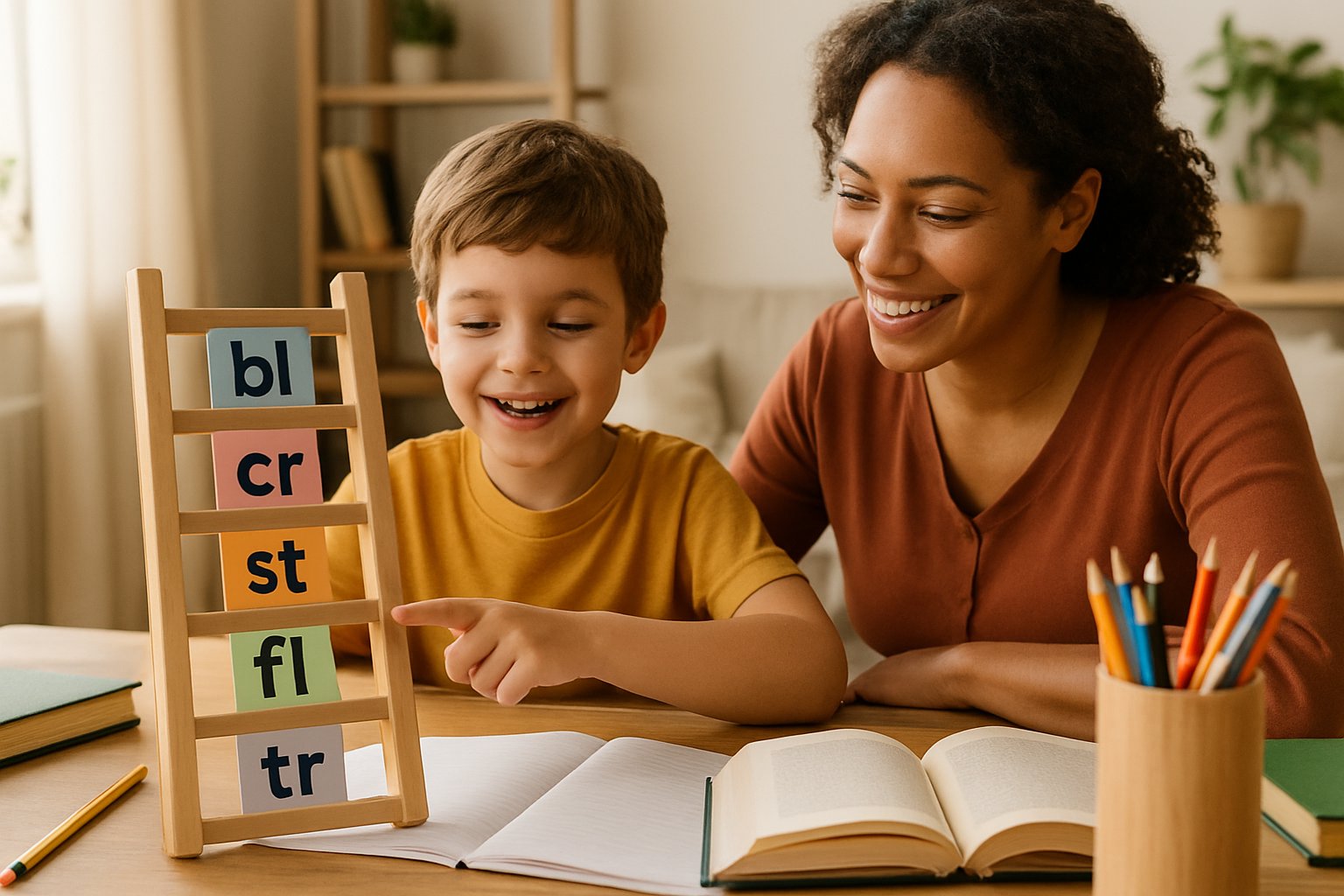
A parent and child reading together at a desk with a colorful ladder-shaped chart showing letters and blends, surrounded by books and educational materials in a cozy homeschool classroom.

Blend ladders help students connect spoken and written language by strengthening phonemic awareness, letter-sound relationships, and decoding accuracy. They use repetition and pattern recognition to make reading automatic and spelling more consistent.

Phonemic Awareness and Letter-Sound Relationships

Phonemic awareness is the ability to hear and manipulate individual sounds in words. Students use this skill to break apart and blend sounds when reading. Tools like blend ladders give students structured practice with these skills in a simple, hands-on way.

Each step in a ladder changes one sound, such as moving from cat to bat. This small shift helps children notice how one letter changes a word’s meaning. It also reinforces the connection between phonemes (sounds) and graphemes (letters).

Teachers often begin with simple consonant-vowel-consonant (CVC) words. This builds a strong base for recognizing patterns before moving to more complex blends.

Key skills developed:

  • Sound isolation and blending
  • Letter-sound correspondence
  • Phoneme substitution and deletion

These activities help students link what they hear with what they see, a core part of any effective phonics program.

Mastering Short Vowel and Vowel Sounds

Short vowel sounds are some of the first patterns students master. They appear in words like cat, bed, and hop. Blend ladders make these patterns clear by letting students practice one vowel sound across many words.

A structured phonics approach ensures students recognize how vowel sounds change meaning. For example, switching bit to bat highlights how a single vowel alters pronunciation and word identity.

Students also learn to identify long and short vowel contrasts through repetition. Teachers might use a simple table like this to guide practice:

Vowel Short Sound Example
a /ă/ cat
e /ĕ/ bed
i /ĭ/ sit
o /ŏ/ hop
u /ŭ/ sun

This routine helps students internalize vowel patterns, improving both decoding and spelling accuracy.

Developing Decoding and Spelling Skills

Decoding means turning letters into sounds to read words. Blend ladders give students repeated practice decoding in small, manageable steps. Each rung of the ladder changes one sound, helping students focus on letter-sound relationships without feeling overwhelmed.

As they decode more accurately, students begin to recognize familiar word patterns faster. This supports automatic word recognition and smoother reading. According to research on blend ladders, this structured repetition also strengthens spelling skills by reinforcing consistent sound-symbol connections.

Benefits for decoding and spelling:

  • Better recognition of word families
  • Improved accuracy in sound blending
  • Stronger retention of phonics rules

Students who practice decoding through blend ladders gain confidence in reading and spelling because they understand how letters and sounds fit together.

Practical Strategies for Using Blend Ladders at Home

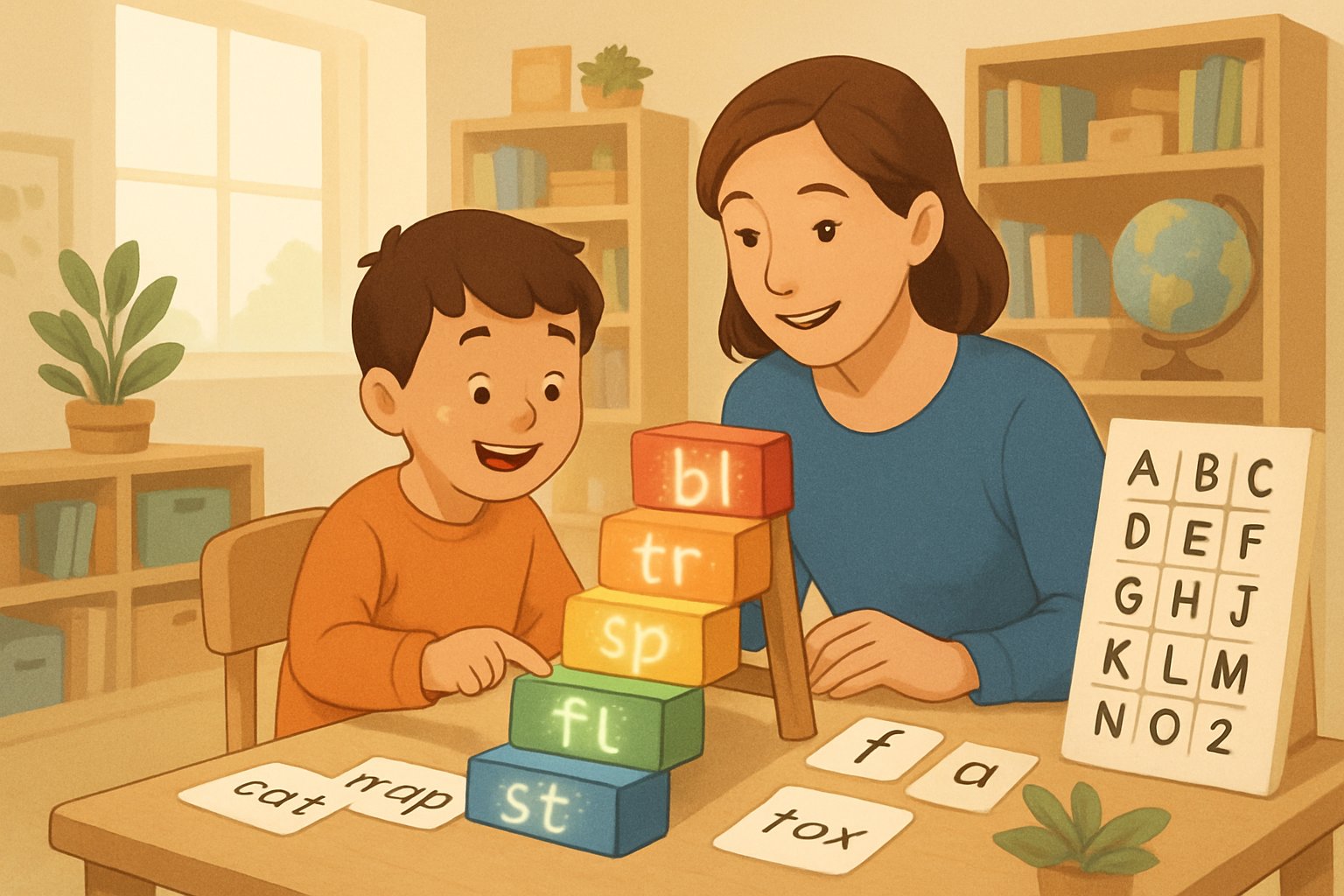
A child and parent reading together at a table with a wooden blend ladder holding colorful letter tiles, surrounded by books and learning materials in a cozy home setting.

Families can use blend ladders to help children connect letter sounds, build fluency, and strengthen decoding skills. Simple routines, short practice times, and varied word types make learning more effective and enjoyable.

Step-by-Step Guide to Introducing Blend Ladders

Parents can start by showing a simple ladder with one consonant and several vowels. For example, a “B” ladder might include ba, be, bi, bo, bu. Children point to each pair while saying the sounds aloud.

Keep sessions short—about 5 to 10 minutes. This helps students stay focused and prevents fatigue. Once they understand the pattern, they can blend sounds smoothly from left to right.

A helpful daily routine might include:

  1. Say the vowel sound first.
  2. Add the consonant sound.
  3. Blend both sounds together.
  4. Move down to the next rung.

Parents can find detailed examples and printable templates here. Visual aids and repetition help children see how letters form predictable sound patterns.

Using CVC Words and Nonsense Words for Practice

After mastering consonant-vowel blends, children can add an ending consonant to form CVC words such as bat, bet, bit, bot, and but. This step reinforces how sounds combine to make real words.

Practicing nonsense words like baf or dut builds strong decoding skills. These words train children to rely on phonics rather than memorization. Teachers often use this method to measure true sound manipulation skills.

A simple table can guide daily practice:

Type of Word Example Skill Focus
Real CVC Word cat Reading fluency
Nonsense Word lat Sound blending accuracy

Printable ladders and word lists from Exceed in Learning help keep lessons structured and engaging.

Supporting RTI and Differentiated Instruction

Blend ladders fit well within RTI (Response to Intervention) frameworks. They allow teachers or parents to adjust instruction for different reading levels.

Students who need extra help can work with fewer sounds and use large, colorful ladders. Advanced learners can add blends like bl, cl, or st to increase difficulty.

Differentiated instruction ensures that every child practices at the right level. Teachers can track progress by noting how quickly students blend sounds or read CVC words correctly.

Resources like Using Blend Ladders to Support Struggling Readers describe how these tools strengthen phonemic awareness and confidence across skill levels.

Filed Under: Preschool, Reading

From Sounds to Sentences: How Blend Ladders Boost Early Literacy Skills Fast

November 4, 2025 by Valerie Leave a Comment

How Blend Ladders Accelerate Early Literacy Skills

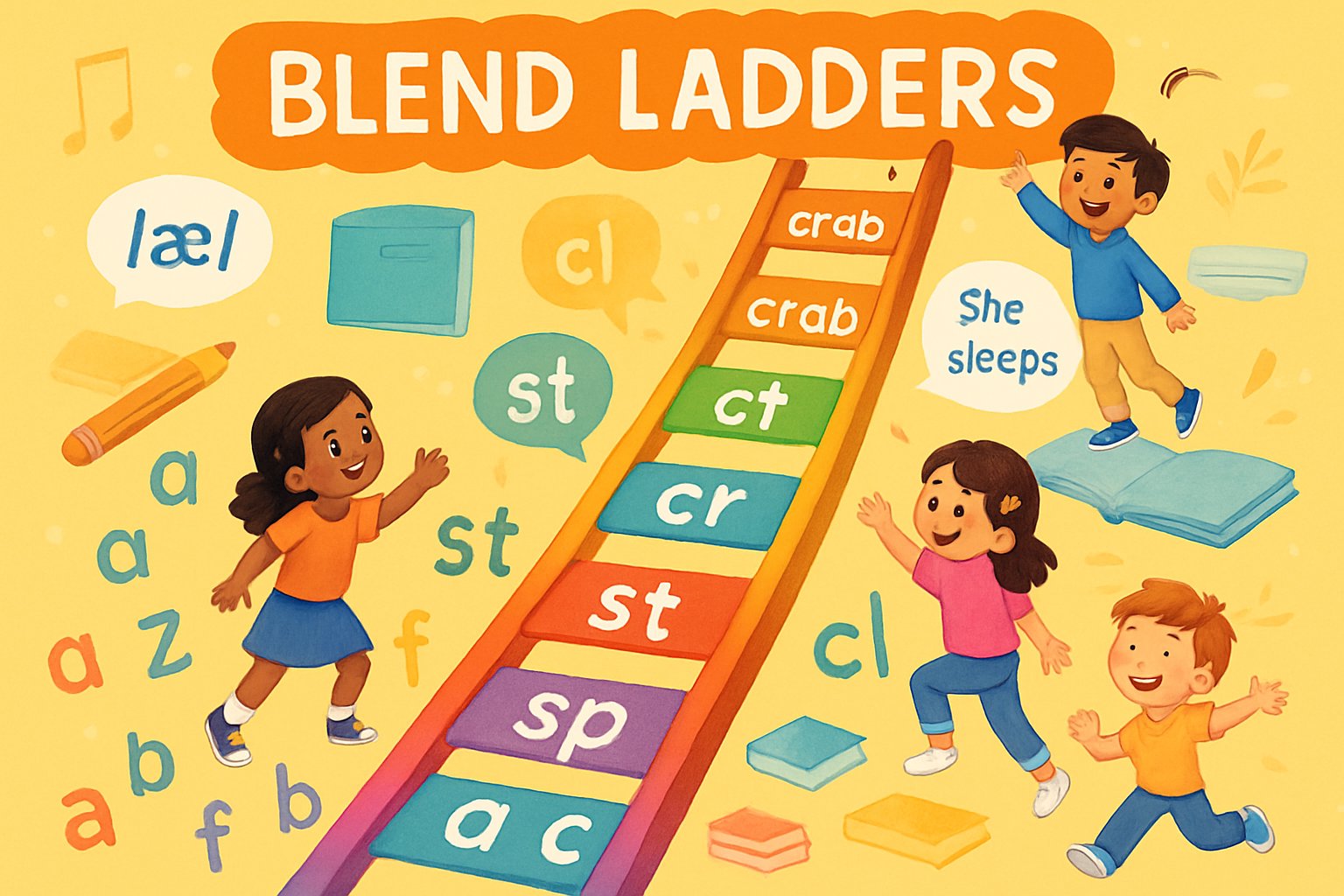
Children climbing a colorful ladder made of letter blends, progressing from individual sounds at the bottom to words and sentences at the top, symbolizing early literacy development.

Blend ladders help children connect spoken and written language by strengthening how they hear, see, and combine sounds. They build confidence in decoding and spelling by turning phonemic awareness into hands-on practice that supports lasting reading growth.

What Are Blend Ladders?

Blend ladders are structured reading tools that guide students through small sound changes to form new words. Each “rung” of the ladder changes one letter or sound, such as moving from cat → bat → bit. This step-by-step process supports clear letter-sound correspondence and helps students see patterns in how words are built.

Teachers use blend ladders to teach phonics skills in a visual and interactive way. Students often point to or write each word as they sound it out, reinforcing both auditory and visual memory.

blend ladders improve decoding and recognition by giving repeated practice with familiar word families. They make abstract sound manipulation concrete and easy for young readers to grasp.

The Science Behind Blending Sounds

Reading research shows that phonemic awareness—the ability to hear and blend individual sounds—is a strong predictor of reading success. Blend ladders target this skill by having students isolate, substitute, and combine sounds in a controlled sequence.

When children practice blending /c/ /a/ /t/ into cat, they develop the foundation for fluent reading. The structured repetition strengthens neural pathways that connect sounds to letters.

Activities like those described by Understood.org show that systematic blending practice supports accurate decoding. Students learn to apply these skills to new words, which builds confidence and fluency.

Teachers can track progress by noting how quickly and accurately students blend sounds. This data helps identify which phonics patterns need more review or support.

Blend Ladders vs. Traditional Phonics Activities

Traditional phonics lessons often focus on memorizing letter-sound rules or reading word lists. Blend ladders take a more interactive and scaffolded approach, encouraging students to manipulate one sound at a time.

This focused change keeps cognitive load low while still building complexity. For example, a student might move from pan → pen → pen → pet, reinforcing vowel and consonant shifts.

In contrast to worksheets, blend ladders engage multiple senses—seeing, saying, and writing—which improves retention. Exceed in Learning explains that this multisensory method helps children internalize sound patterns faster than rote repetition.

Teachers find that blend ladders fit easily into small-group instruction or literacy centers. Their flexibility allows for differentiation, supporting both emerging and advanced readers.

Practical Strategies for Using Blend Ladders in Reading Instruction

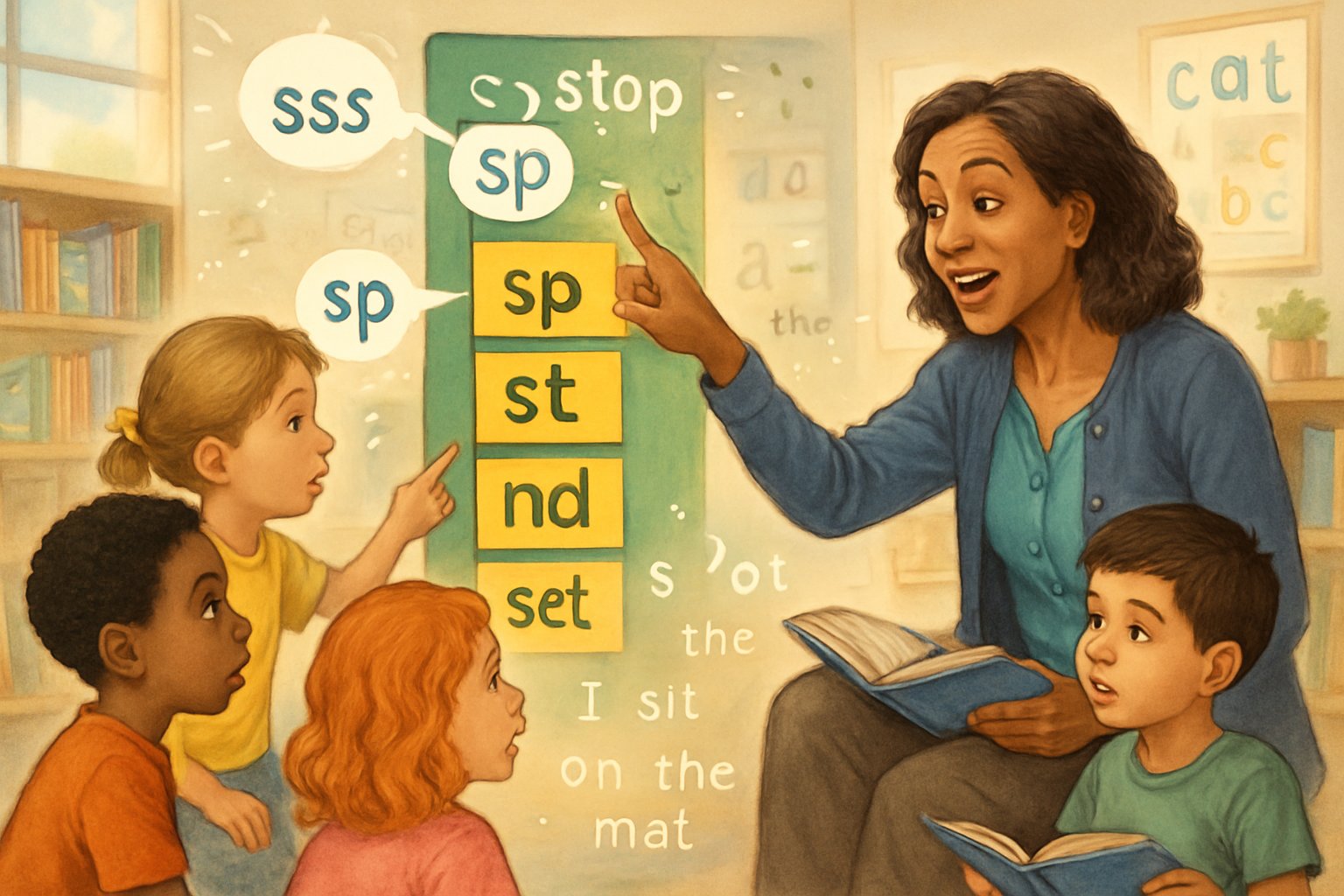
A teacher helps young children use a colorful blend ladder chart to learn phonetic sounds, progressing from letters to sentences in a bright classroom.

Effective use of blend ladders helps students connect sounds to letters, strengthen decoding, and gain fluency with common word patterns. Teachers can adapt these tools to match student levels, moving from simple CVC words to more complex blends and digraphs while keeping practice focused and engaging.

Building CVC Words and Short Vowel Mastery

Students begin with CVC words (consonant-vowel-consonant) to build a strong foundation in short vowel sounds. Starting with words like cat, bat, and bag helps them focus on one sound change at a time.

Teachers can use a simple ladder format:

Step Word Focus Sound
1 cat /a/
2 bat /b/
3 bag /g/

This pattern shows how changing one letter alters the sound. Repeated practice builds automatic recognition of vowel patterns.

Students should say each sound aloud, blend them smoothly, and write the word. This multisensory approach strengthens both reading and spelling. Using short sessions of 10–15 minutes keeps attention high and encourages consistent progress.

Integrating Consonant Blends and Digraphs

Once students master short vowels, teachers can add consonant blends like bl, st, and tr, along with digraphs such as ch and sh. These patterns help students decode longer words accurately.

Blend ladders that focus on blends might include examples like flag → flat → flit → flip. For digraphs, teachers can use ship → chip → chap → chat.

Students should listen carefully to hear how the beginning or ending blend changes each word. Teachers can model continuous blending to connect sounds smoothly, as suggested in this guide on teaching blending.

Visual aids, such as color-coded letters for blends and digraphs, help students recognize patterns faster. Gradual introduction of new blends keeps lessons manageable and reduces confusion.

Step-by-Step Decoding with Blend Ladder Printables

Printable ladders provide structured, hands-on practice. Many educators use blend ladder printables to guide students through sound changes while offering visual support.

Students start by reading each word down the ladder, blending sounds aloud. Next, they write each word and underline the letter that changes. This step-by-step decoding process helps them see and hear the link between letters and sounds.

Using both real and nonsense words like lat, lit, lot, and lut strengthens decoding skills by encouraging attention to phonics rather than memorization. Teachers can track progress by noting how quickly and accurately students complete each ladder.

Incorporating Blend Ladders in Literacy Centers

Literacy centers give students a chance to practice blend ladders independently or in small groups. Each station can focus on a specific pattern, such as short vowels, blends, or digraphs.

Teachers can rotate activities weekly to maintain interest. For example:

  • Center 1: Build CVC ladders with letter tiles
  • Center 2: Match pictures to blend ladder words
  • Center 3: Use digital ladders for timed decoding practice

According to Clever Homeschool’s overview of blend ladders, short, focused sessions help struggling readers gain confidence without feeling overwhelmed.

By combining movement, sound, and visual cues, literacy centers make decoding practice interactive and effective for all learners.

Expanding Skills: Word Families, Spelling, and Free Resources

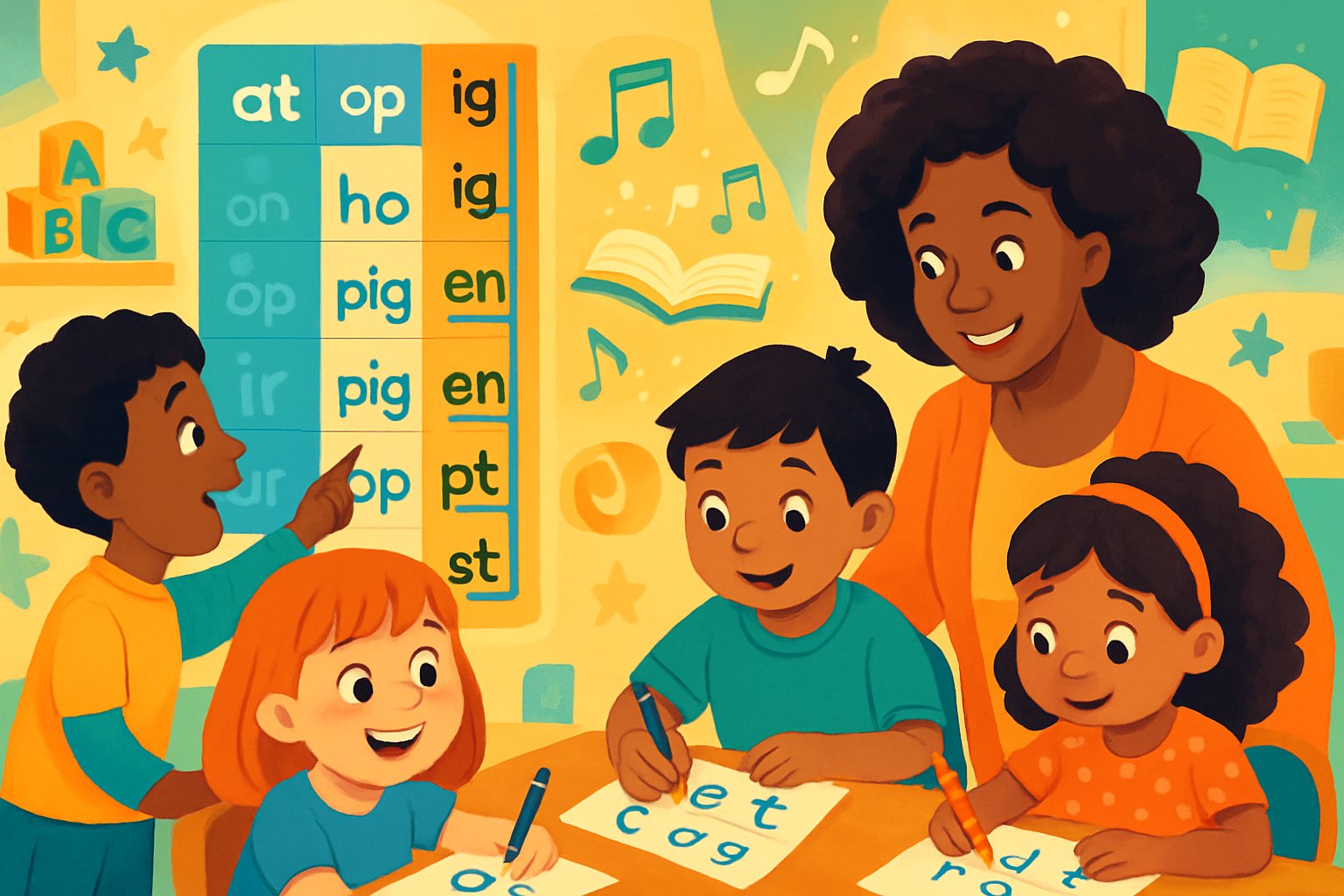
Children learning to read and spell with a teacher, showing word families and blend ladders as visual aids in a colorful classroom.

Children strengthen their reading and writing when they connect sounds, patterns, and letters in meaningful ways. Activities like word families, spelling ladders, and printable resources give them hands-on practice that builds fluency and confidence.

Using Word Families to Enhance Blending

Word families group words that share the same ending pattern, such as -at, -ig, or -op. This helps children recognize common spelling patterns and predict how new words sound. They begin to see that cat, bat, and hat all share a similar structure.

Working with word families supports phonemic awareness and decoding. Students learn to blend beginning sounds with familiar endings, which improves reading fluency. According to Education.com, this pattern-based approach helps children decode new words more easily and strengthens early spelling skills.

Teachers can use short lists, flashcards, or sorting games. For example:

Word Family Example Words
-at cat, hat, mat
-in pin, fin, win
-ug bug, rug, hug

These small sets make practice focused and manageable.

Developing Spelling Skills Through Ladders

Word ladders, also known as blend ladders, help children analyze how small letter changes create new words. Students start with one word and change one letter at a time. For example, cat → cot → dot → dog.

This method builds both decoding and encoding skills. As described by Literacy Learn, students listen for sounds, identify which letter changes, and write the new word. This connects phonemic awareness with written spelling.

Teachers can guide students by dictating each new word and encouraging them to say the sounds aloud. Repeating this process daily helps learners recognize spelling patterns and understand how sounds map to letters. Over time, their accuracy and confidence grow naturally.

Accessing and Using Free Blend Ladder Printables

Printable blend ladders make it easy to bring structured phonics practice into classrooms or homes. Sites like Literacy Learn and Storytime Standouts offer free materials that include CVC word lists and sound boxes.

Teachers can print these ladders, laminate them, and reuse them for small group lessons. Students fill in each rung as they change one sound at a time.

To make practice more interactive, children can:

  • Use letter tiles or magnets to build each word.
  • Read the ladder aloud from bottom to top.
  • Highlight vowel changes in different colors.

Free blend ladders save preparation time and provide consistent, structured phonics practice that supports early literacy growth.

Filed Under: Preschool, Reading

7 Reasons Homeschooling Might Be the Best Decision for Your Family

November 4, 2025 by Valerie Leave a Comment

The Top Reasons to Choose Homeschooling

A family learning together at a table in a bright, organized home setting with books and educational materials.

Families often choose homeschooling because it offers flexibility, safety, and stronger relationships. It allows parents to create a learning plan that fits each child’s personality while removing many of the social and environmental challenges found in public school settings.

Personalized Learning for Every Child

Homeschooling gives parents the ability to tailor lessons to their child’s learning style and pace. Unlike traditional classrooms that follow a fixed schedule, homeschooling allows children to spend more time on difficult subjects and move faster through topics they understand well.

Parents can use a mix of textbooks, online programs, and hands-on projects to make learning engaging. Many families find that this approach helps children stay motivated because lessons match their interests and abilities.

According to Kingdom First Homeschool, homeschooling also encourages deeper understanding since students can explore topics in more detail. This flexibility helps children develop confidence and a love for learning that often lasts into adulthood.

Benefit How It Helps
Custom pacing Reduces frustration and boredom
Flexible materials Supports different learning styles
Individual attention Improves comprehension and retention

A Safe and Supportive Learning Environment

Many parents value homeschooling because it creates a safe learning environment. At home, children learn without the distractions or risks often found in large school settings. Parents can control the physical space, choose who their children interact with, and foster a calm atmosphere for study.

Homeschooling reduces exposure to bullying, violence, and unhealthy peer behavior. Families can also address emotional needs more quickly since parents notice changes in mood or motivation right away.

As noted by Kingdom First Homeschool, this level of control allows parents to build a positive environment where children feel secure and supported. A safe space encourages focus, creativity, and curiosity—key ingredients for meaningful learning.

Building Stronger Family Bonds

Homeschooling naturally increases family time. Parents and children spend their days learning, exploring, and solving problems together. This shared experience often strengthens trust and communication between family members.

When families learn side by side, they understand each other’s strengths and challenges better. Parents can guide values, character, and life skills in daily lessons, not just academics.

The Kingdom First Homeschool article highlights that homeschooling helps families connect on a deeper level because they share more quality time. These bonds can create a strong emotional foundation that supports both learning and personal growth.

Freedom from Peer Pressure and Negative Influences

Traditional schools can expose children to peer pressure, competition, and social stress. Homeschooling gives families the ability to reduce those pressures and focus on positive influences instead.

Children who learn at home can develop confidence without worrying about fitting in or keeping up with trends. Parents can guide friendships and group activities that match their family’s values.

According to Power Homeschool, this freedom helps children stay focused on learning and personal growth rather than social comparison. Without constant pressure to conform, students often become more independent thinkers and maintain healthier self-esteem.

How Homeschooling Creates Unmatched Flexibility

A parent and child learning together at a table in a bright, cozy home with educational materials and symbols of flexible scheduling around them.

Homeschooling gives families the freedom to shape education around their children’s learning styles and daily lives. It allows parents to plan lessons that fit natural rhythms instead of fixed schedules, helping children stay engaged and reducing stress for everyone at home.

Learning at Their Own Pace

Every child learns differently. Some grasp math quickly but need extra time with reading. Homeschooling lets students learn at their own pace instead of keeping up with a class timetable. Parents can slow down or move ahead as needed, building confidence and deeper understanding.

Traditional classrooms often follow one curriculum for all students. At home, families can adjust lessons to match interests, abilities, and goals. For example, a child who loves science can spend more time on experiments, while another who enjoys writing can focus on creative projects.

Studies show that personalized learning improves engagement and retention. Families can use flexible programs like customized homeschool curriculums to tailor subjects to each child’s strengths and needs. This approach encourages curiosity and helps children take ownership of their education.

Flexible Schedules for Family Life

Homeschooling gives families control over their daily and yearly routines. Instead of following a public school calendar, parents can plan around family activities, travel, or community events. This freedom helps balance schoolwork with quality family time.

Flexible schedules also support better rest and focus. Some children learn best in the morning, while others do better later in the day. Families can adjust start times, take breaks when needed, and mix learning with everyday life.

Many parents appreciate how homeschooling allows them to design days around their family’s needs. It turns learning into a natural part of life rather than something confined to a classroom schedule.

Enriching Experiences Beyond the Classroom

Homeschooling gives families the freedom to connect learning with real life. Children can explore through hands-on projects, real-world experiments, and travel that deepens their understanding of people, places, and ideas.

Hands-On Activities and Experiments

Homeschooling allows students to learn by doing, not just by reading. They can build models, test science concepts, or cook to explore math and chemistry in action. This type of learning strengthens understanding and keeps children engaged.

Parents can use simple materials for science experiments, such as testing plant growth under different light or mixing baking soda and vinegar to study reactions. These activities help children observe, predict, and record results—skills that build critical thinking.

A short list of common hands-on ideas includes:

  • Building small machines to learn physics
  • Conducting kitchen chemistry experiments
  • Creating art projects tied to history or culture

Studies show that interactive learning improves memory and motivation. According to Learnopoly’s overview of homeschooling benefits, low student-teacher ratios and flexible schedules make it easier to include personalized experiments and practical lessons that match each child’s interests.

Field Trips and Travel Opportunities

Homeschooling families often turn the world into their classroom. They can plan field trips to museums, farms, or factories to connect lessons to real-world experiences. These trips help children see how academic subjects apply to daily life.

Some families take learning further with travel. Visiting historical sites or national parks supports lessons in geography, history, and science. As described by Sonlight’s discussion of homeschooling experiences, exploring outside the home encourages curiosity and helps children retain knowledge more effectively.

A simple table of possible learning destinations:

Type of Trip Learning Focus Example Activity
Museum Visit Art, History Sketch exhibits or write reflections
Nature Hike Biology, Ecology Identify plants and animals
Cultural Tour Geography, Culture Compare regional foods or traditions

These experiences make education more meaningful and connect academic learning with the world around them.

Filed Under: Uncategorized

  • « Go to Previous Page
  • Page 1
  • Interim pages omitted …
  • Page 7
  • Page 8
  • Page 9
  • Page 10
  • Page 11
  • Interim pages omitted …
  • Page 25
  • Go to Next Page »

Primary Sidebar

Free Photo Lessons for Kids

Photo Lessons for kids

Categories

  • Photography
  • Preschool
  • Reading
  • Uncategorized
A child and parent working together on a science experiment at home using materials from a subscription box in a bright, organized study area.

Subscription Boxes As Curriculum: What Actually Works

Can A Monthly Kit Count As Real Curriculum? The honest answer is: it depends entirely on what … [Read More...] about Subscription Boxes As Curriculum: What Actually Works

A parent and child reviewing homeschool books together in a cozy study area with shelves of used educational materials and a tablet showing an online marketplace.

How To Buy And Sell Used Homeschool Curriculum On A Budget

Choose Materials With Savings In Mind The curriculum you pick determines how much you can save when … [Read More...] about How To Buy And Sell Used Homeschool Curriculum On A Budget

An illustration showing two classrooms side by side: one where students focus deeply on one math topic with a teacher's guidance, and another where students work on multiple math topics repeatedly in a spiral pattern.

Mastery Vs. Spiral Math: Choosing The Right Fit

How The Two Approaches Differ In Real Lessons The difference between spiral math and mastery math … [Read More...] about Mastery Vs. Spiral Math: Choosing The Right Fit

Students taking tests in a classroom while a teacher observes and takes notes, with visual symbols of timing and decision-making around them.

Curriculum Placement Tests: When and How to Use Them Well

What Placement Tests Tell You and When to Use Them Placement tests and standardized tests serve … [Read More...] about Curriculum Placement Tests: When and How to Use Them Well

A teacher reviewing a detailed curriculum planner spread out on a desk with educational tools around.

Scope and Sequence Explained: A Practical Planning Guide For Curriculum Planning

What Scope and Sequence Means in Real Curriculum Planning A scope and sequence is one of the most … [Read More...] about Scope and Sequence Explained: A Practical Planning Guide For Curriculum Planning

A family sitting at a kitchen table surrounded by homeschooling supplies, receipts, and a laptop, discussing and planning their homeschooling budget.

The Hidden Costs of Homeschool Curriculums and Smart Budgeting

What Families Actually Pay Beyond Curriculum The sticker price of a homeschool curriculum rarely … [Read More...] about The Hidden Costs of Homeschool Curriculums and Smart Budgeting

A parent and child working together at a table with books and a laptop in a bright room, with a bulletin board displaying charts and papers in the background.

How To Align Your Homeschool Curriculum With State Standards

What "Aligned To Standards" Actually Means At Home Standards alignment in homeschooling is not … [Read More...] about How To Align Your Homeschool Curriculum With State Standards

A parent and child working together on a homeschool lesson using a tablet with AI assistance in a bright study area.

Using AI To Enhance Your Homeschool Curriculum With ChatGPT

Build Customized Lessons With ChatGPT First ChatGPT can help you build a homeschool curriculum that … [Read More...] about Using AI To Enhance Your Homeschool Curriculum With ChatGPT

A group of children and adults of different ages working together around a table with educational materials in a bright learning space.

Family-Style Curriculums For Teaching Multiple Ages At Once

What Makes A Curriculum Work Across Multiple Ages A strong family-style homeschool curriculum saves … [Read More...] about Family-Style Curriculums For Teaching Multiple Ages At Once

A group of young people using digital devices surrounded by symbols of coding and computer science in a modern learning environment.

Coding And Computer Science: Best Curriculums Reviewed

How To Choose The Right Learning Path First Your child's age, current skill level, and long-term … [Read More...] about Coding And Computer Science: Best Curriculums Reviewed